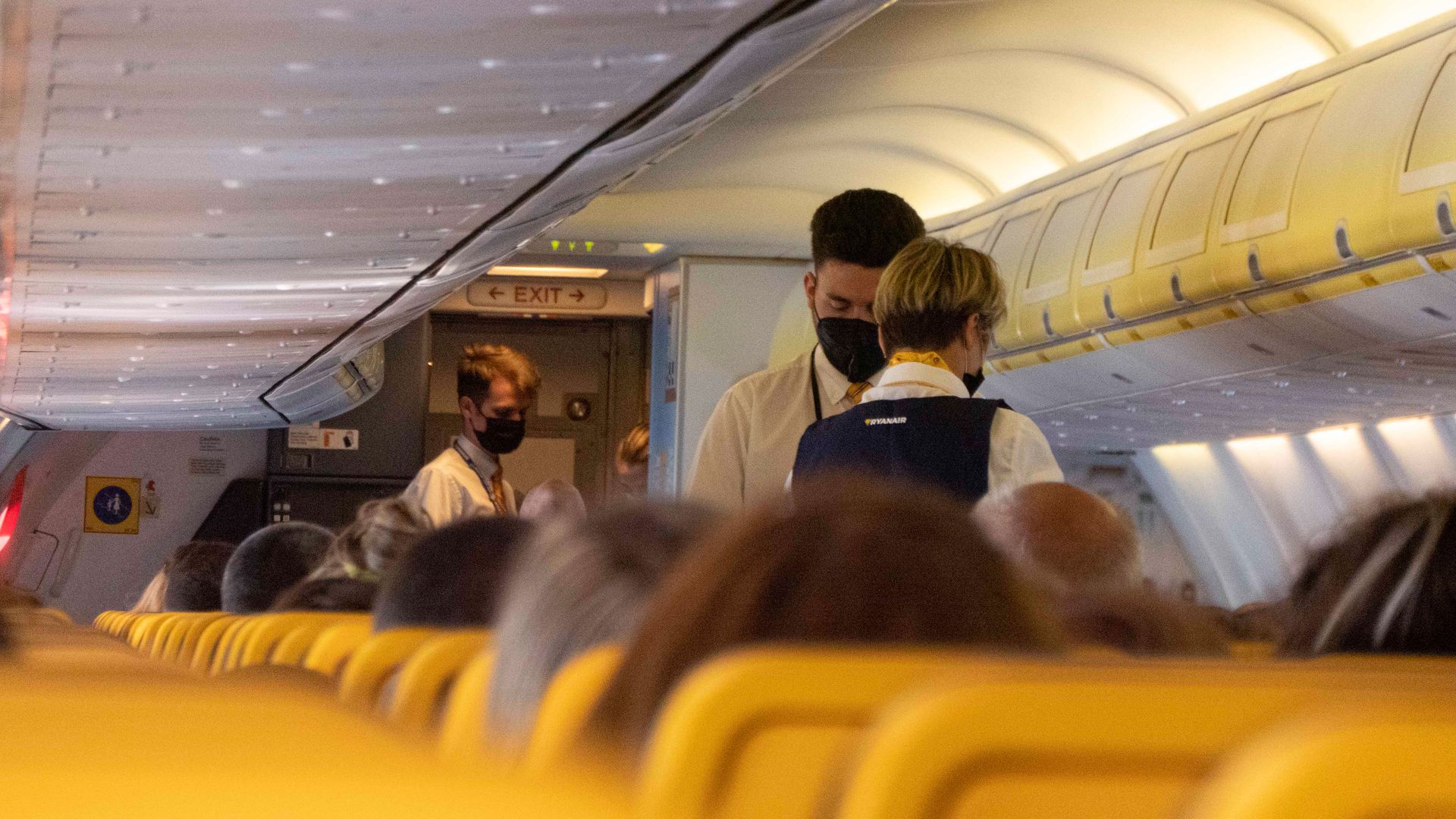
A coalition of airline industry partners asked the Justice Department on Monday to begin prosecuting disruptive passengers.
Why it matters: Increased political divisions and conflict over pandemic guidelines have led the Federal Aviation Administration to take some form of enforcement action over 400 times in the first five months of 2021, compared to 146 in all of 2019, according to the coalition.
The European Union has been trying to regulate Big Tech from the other side of the Atlantic, but now its countries are teaming up with the U.S. to figure out an even bigger framework of regulation.
Why it matters: Tech's nightmare is inconsistent regulation across the globe. When the E.U. and U.S. come together on broad-based principles, tech applauds (slowly). The more the E.U. and U.S. are in alignment, the better it is for tech.
The Securities and Exchange Commission is probing whether some U.S. companies failed to disclose that they had been a victim of the massive SolarWinds breach by Russian hackers, according to Reuters.
Why it matters: U.S. securities law requires companies to disclose information, like a cyberattack, that could impact their share prices.
Netflix announced a partnership with Amblin Partners on Monday, a film and television studio led by director Steven Spielberg, and said the deal will generate "multiple" new films every year.
Why it matters: Spielberg in the past has been critical of streaming services like Netflix, suggesting in 2019 that movies which debut on such services should be disqualified for Oscar nominations.
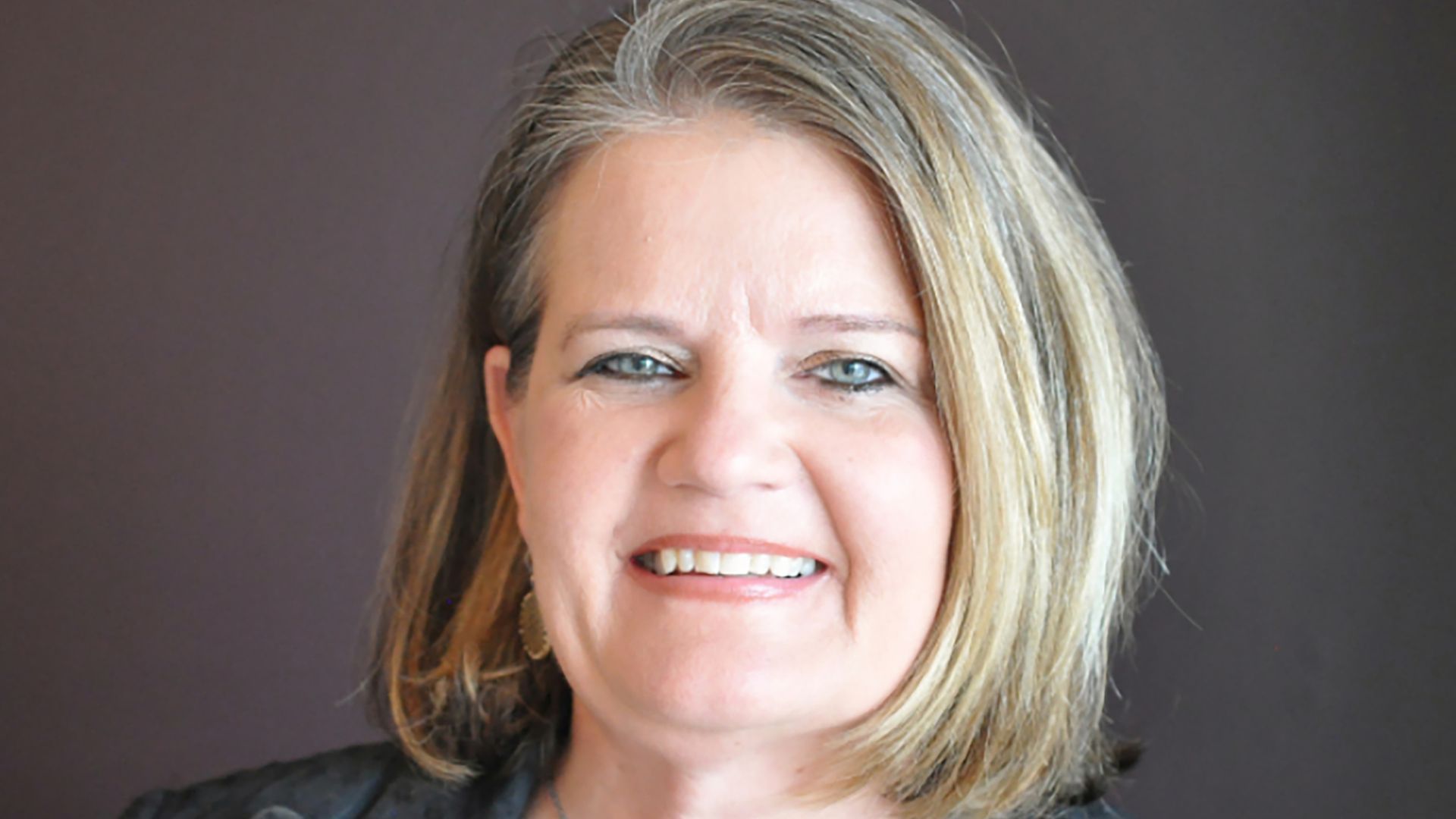
NewsNation, the cable news network operated by Nexstar Media Inc., has hired veteran Fox News executive Cherie Grzech to oversee its day-to-day newsgathering and production efforts, Axios has learned.
Why it matters: The network, which says it does not have a political bias, has reportedly struggled internally with how it positions itself politically.
Five top Lordstown Motors executives sold roughly $8 million in stock over the course of three days in February, before reporting end-of-year financial results for the first time as a public company, the Wall Street Journal reports.
The big picture: The electric-vehicle startup went public via SPAC last year at a $1.6 billion valuation, despite having never made or sold one of its vehicles. It reported losses in March that were more than double analyst expectations, according to the Journal.
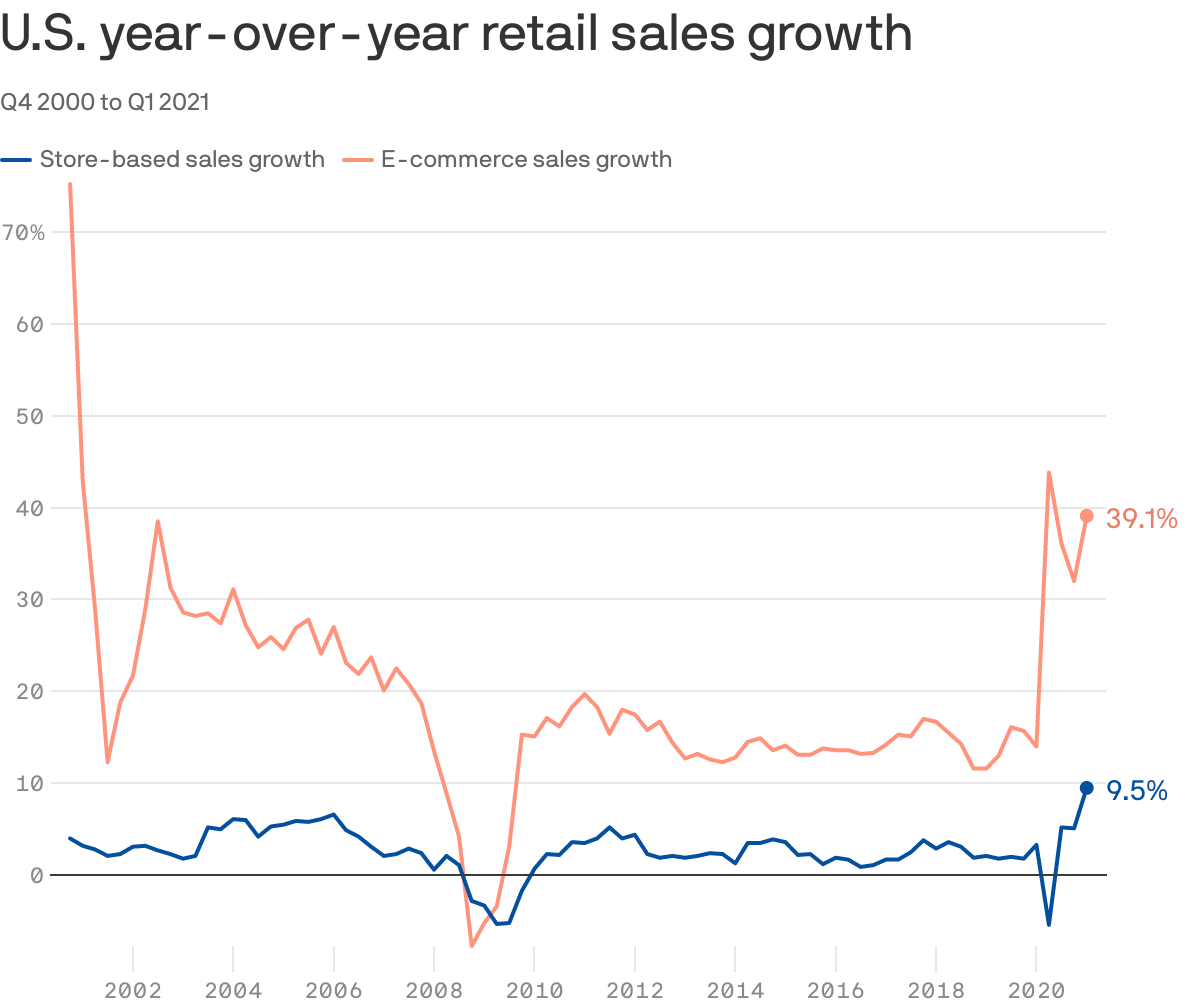
Data: U.S. Census Bureau and FTI Consulting analysis; Chart: Axios Visuals
Expect retail's recent boom to ebb after June.
What's new: FTI Consulting writes in a report, out this morning, that for many retailers, the second quarter "might represent the last hurrah in a one-year period of above-average consumer spending on goods, largely subsidized by Uncle Sam."
Univision plans to launch a unified streaming service next year that will include a premium subscription tier, the company said Monday.
Be smart: The expanded service comes on the heels of an announcement this year that Univision will merge with Grupo Televisa S.A.B ("Televisa"), one of the largest media companies in Latin America.
Sweetgreen, one of the earliest "better for you" quick-serve restaurant chains, has filed confidentially for an IPO, Axios has learned from multiple sources.
Why it matters: The company has been a rumored IPO candidate for years, and now is coming out as a post-pandemic growth play.
Investors entered 2021 concerned about the transition to a new U.S. president, the form of new fiscal stimulus, the distribution of vaccines and the reopening of the economy. Now, top risks include supply chain bottlenecks, labor shortages, inflation and slower GDP growth.
Why it matters:Stocks have rallied almost unabated for over a year, leaving many to wonder if the market is overdue for a big selloff. Last week's declines amplify those concerns.
COVID-19 isn't as big of a concern for U.S. investors as it was a year ago. But market experts tell Axios it's still a risk to watch as investors look to the second half of the year.
Why it matters: Many Americans remain unvaccinated. The spread of the more infectious "Delta" variant could prove disruptive to economic activity, and in turn, could spark volatility in markets.
Facebook on Monday rolled out long-awaited audio features, including a live audio product and a new tool that allows users to listen to their favorite podcasts while browsing its app.
Why it matters: Facebook is in a race with several of its peers for creators' attention in the audio space, including Twitter, Spotify and Clubhouse.
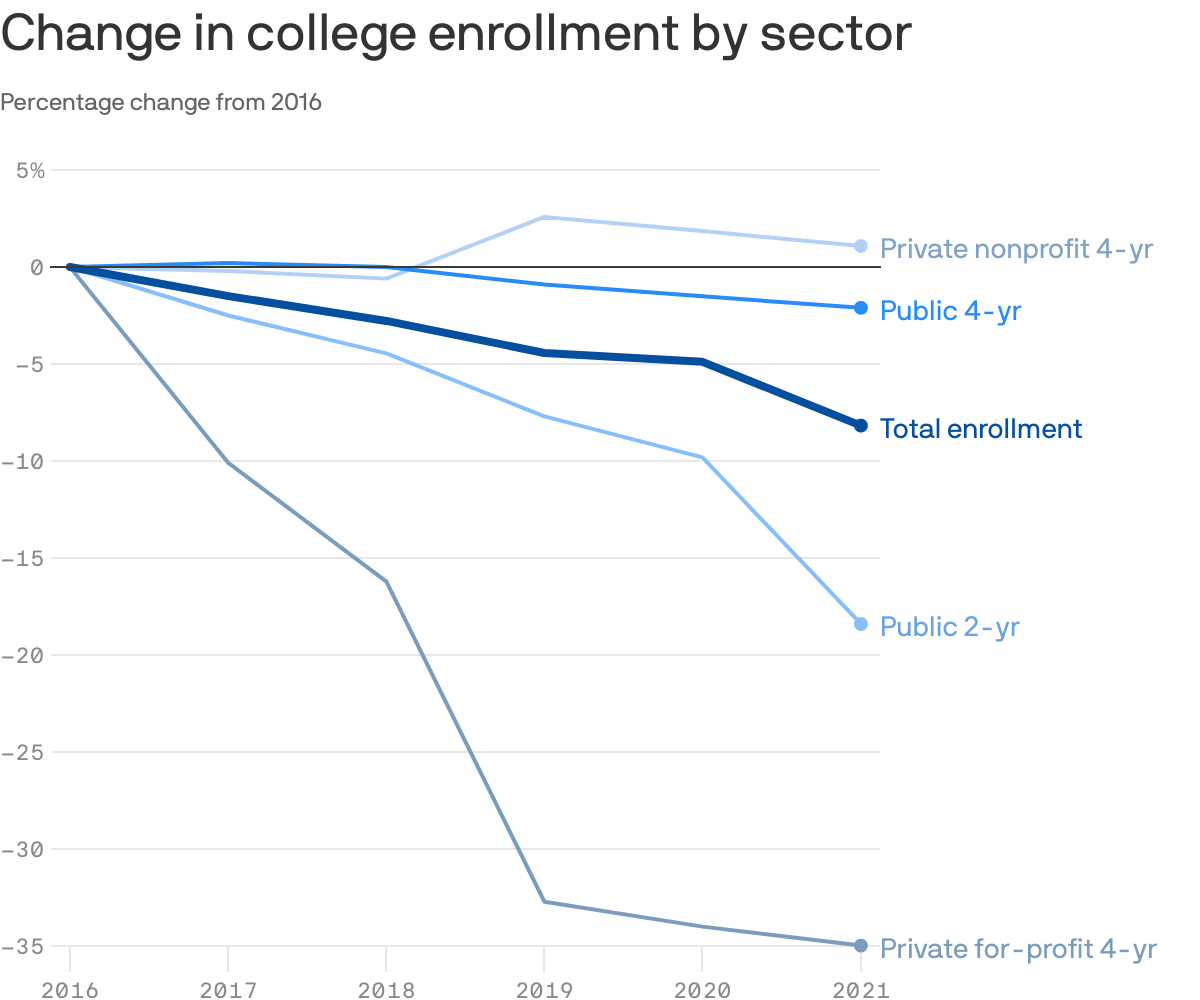
Data: National Student Clearinghouse Research Center; Chart: Danielle Alberti/Axios
The pandemic's effects, along with a decline in the number of young adults, have depressed college enrollment, with community colleges bearing much of the brunt.
Why it matters: A college degree is becoming more important as the demand for higher skills sharpens. The drop in college enrollment — which is especially steep for Black and Latino students — is bad news for both the higher education industry and broader social mobility.
As more companies lean towards a hybrid setup, many are cutting back their headquarters and putting smaller offices close to where workers are.
Why it matters: White-collar employees want flexibility, but they don't necessarily want to keep working from their bedrooms. Smaller satellite offices could give employees places to work without the pre-pandemic commute.
The coronavirus pandemic forced hospitals and patients to delay care — everything from heart procedures and knee replacement surgeries to lab tests and X-rays — but people have been flocking back to their doctors as coronavirus cases wane.
Why it matters: A return to normal levels of care means health care spending is back on the rise, which will continue to strain governmental budgets and people's paychecks.
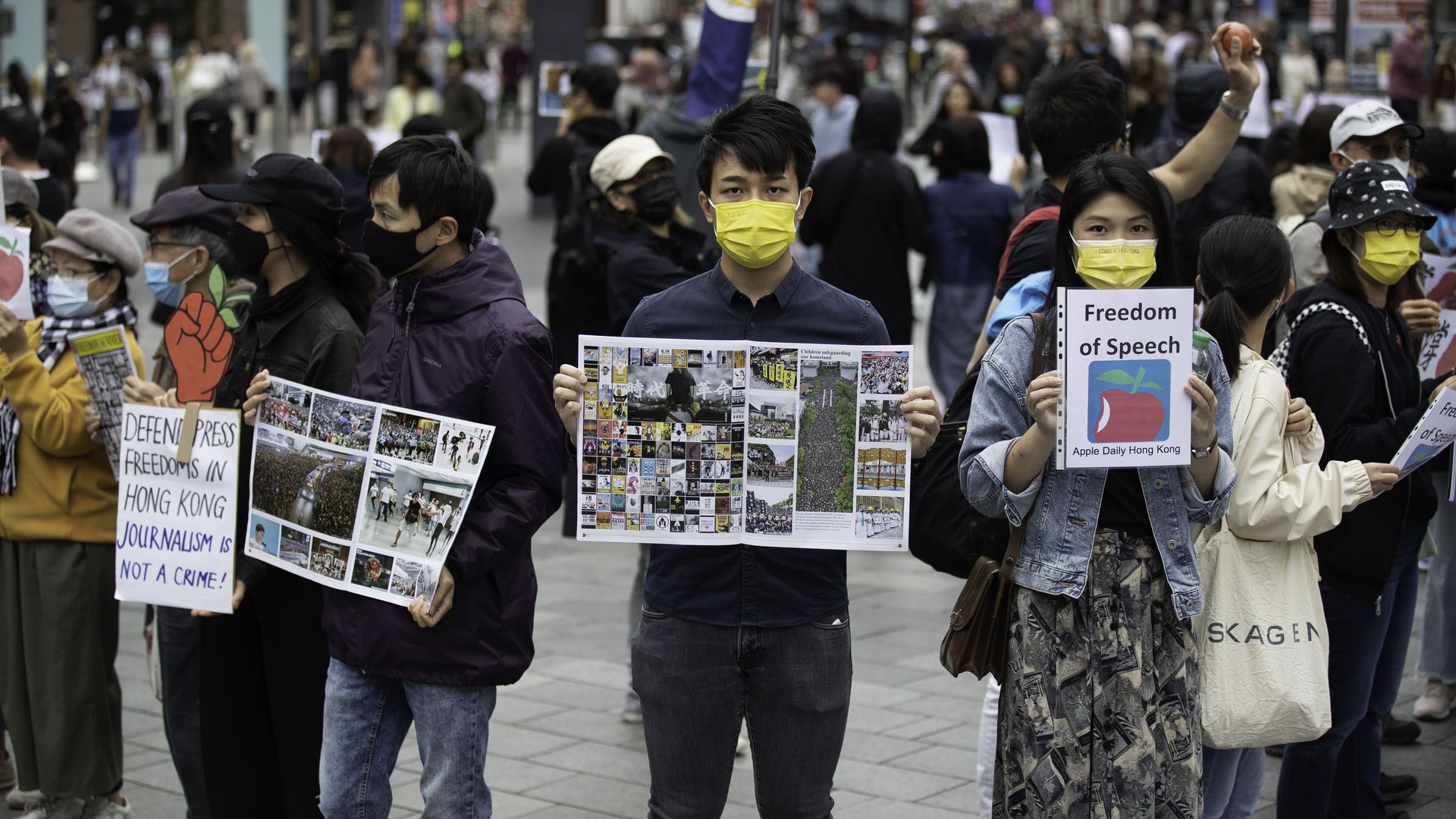
Hong Kong's Apple Daily will close within days because the pro-democracy newspaper's assets have been frozen under China's national security law, an adviser to the company's imprisoned founder Jimmy Lai told media Sunday night.
Why it matters: It's the latest blow to the democratic movement in the Asian financial hub, as Beijing continues to crack down on dissent under the law, which landed Lai and other pro-democracy leaders in jail and led to the arrest last week of five senior Apple Daily executives.
American Airlines announced Sunday that it's cutting some 950 flights from its schedule, including 296 this weekend, to reduce potential pressure on its operations, the Wall Street Journal first reported.
Driving the news: The U.S. vaccine rollout has led to a massive increase in travel bookings. The airline noted in an emailed statement that it's facing an "incredibly quick ramp up of customer demand."
United Airlines CEO Scott Kirby tells "Axios on HBO" that America could be headed toward a pilot shortage, because "the military produces far fewer pilots today than they did ... in the Cold War era."
Why it matters: The U.S. travel industry is roaring back, with leisure air travel exceeding pre-pandemic levels, and now must protect itself from future disruptions.