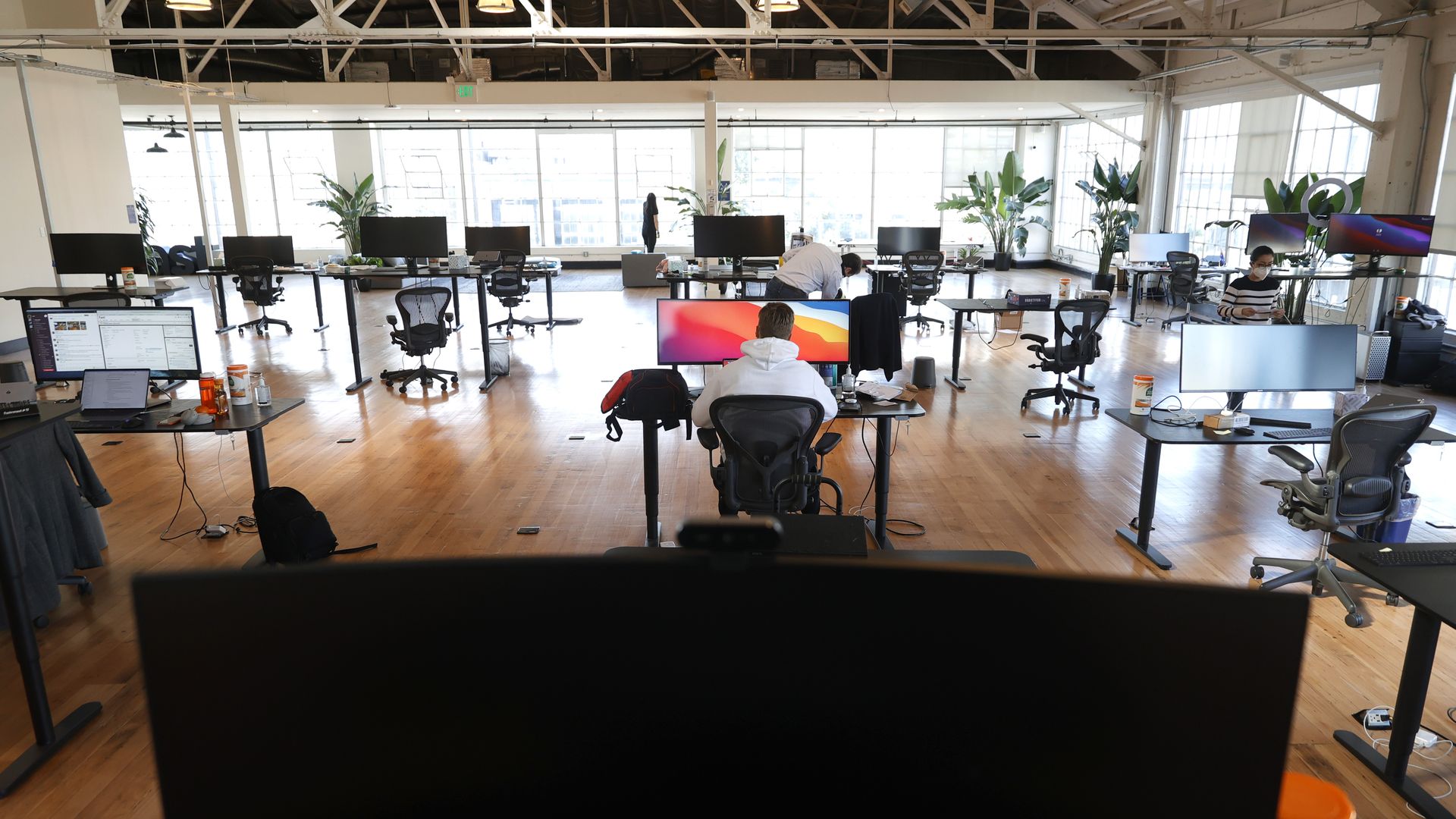
Editorial staff of Washingtonian magazine chose to unionize today, the latest in a spate of media unionizations that is just part of a broader trend of post-pandemic tensions between employers and employees.
Axios Re:Cap goes deeper with Jessica Sidman, a food editor at Washingtonian, about the situation at her workplace, at the restaurants she covers and if work will ever be the same.
Giant Spoon, a marketing agency known for its work with big brands like HBO and HP is relaunching American Express’ luxury lifestyle magazine Departures as a digital publication for members.
Why it matters: Ad agencies don't typically act as publishers, although they often create content for their clients. But given the pressure for brands to connect with audiences online, it makes sense that American Express would shift its publishing operations to an agency with digital expertise.
Express Scripts is suing the U.S. government, according to a lawsuit filed this week. The pharmacy benefit manager, owned by health insurer Cigna, is demanding $43 million in tax refunds from 2010 and 2011, alleging the IRS wrongfully denied the company's use of a now-repealed income tax deduction.
The bottom line: Cigna, one of the largest medical and pharmacy benefit administrators in the country, is suing for an amount that equates to 0.5% of its net profit in 2020 — a year in which the company boosted income as people delayed care due to the pandemic.
Charles Duhigg has a wonderful profile of billionaire financier Chamath Palihapitiya in the New Yorker. His piece includes 31 instances of the word "story" or its cognates ("stories," "storytellers").
Why it matters: As financial markets have matured, the importance of old-fashioned storytelling has generally waned. The stock market is no longer governed by brokers phoning up clients and sweet-talking them into a certain company; instead it has increasingly rewarded lightning speed and brute computational power.
Quanergy Systems, a Sunnyvale, Calif.-based developer of solid-state lidar sensors, agreed to go public at an implied $1.4 billion equity value via CITIC Capital Acquisition Corp. (NYSE: CCAC).
Why it matters: There's likely to be political scrutiny on this one, given that the SPAC sponsor is backed by the Chinese government and the SPAC target onceangled to have its technology integrated into Trump's border wall (although its current business appears focused on auto and IoT applications).
Electronic Arts this morning announced that it will pay $1.4 billion to buy Playdemic, a mobile gaming studio whose titles include "Golf Clash," from Warner Bros.
Why it matters: This comes just months after EA paid $2.1 billion to buy Glu Mobile. It also resolves talk that not all of WB Games would get included in the Discovery merger.
Kickstarter announced Tuesday that it plans to experiment with a four-day work week in an effort to offer workers more flexibility and additional time to spend on creative pursuits.
The big picture: Lots of tech companies are planning to offer flexibility around where employees work post-pandemic. Now some companies are also rethinking when people work.
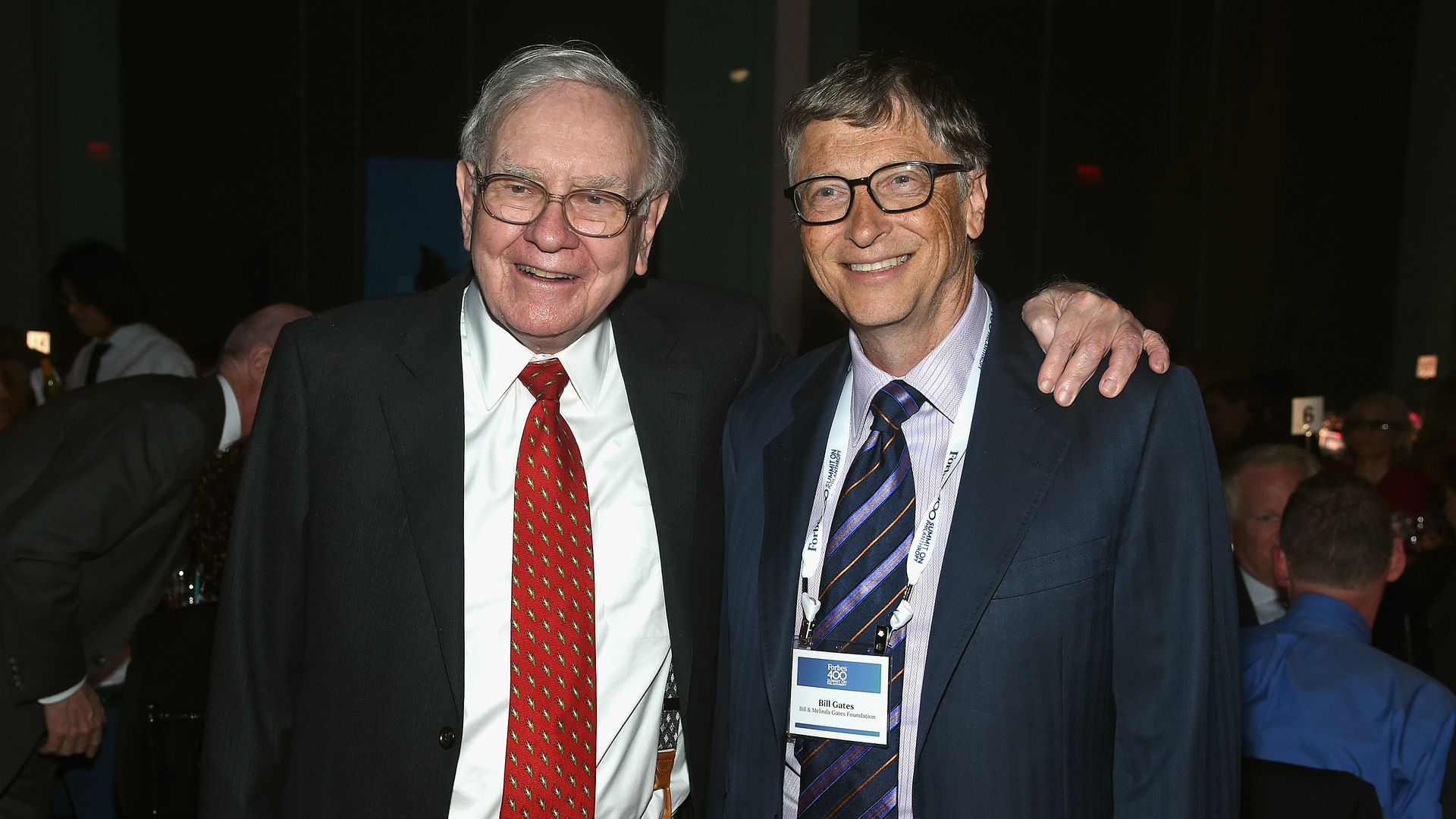
The Bill and Melinda Gates Foundation — the second-largest philanthropy in the world — is now governed by just two trustees, after Warren Buffett announced on Wednesday that he had resigned his position there.
Why it matters: The two remaining trustees, Bill Gates and Melinda French Gates, are going through a divorce.
If this year's No. 1 NFL draft pick Trevor Lawrence had a do-over, maybe he wouldn't have placed his April signing bonus into a cryptocurrency account.
Driving the news: Nearly all of bitcoin's price gains this year have been wiped out, and the cryptocurrency has fallen about 50% from its peak in April. Ethereum is also down more than 50% from its April high.
Inequality in the U.S.expanded during June, as measured by the Morning Consult/Axios Inequality Index, which ticked up to 6.71 from 6.53 in May.
Why it matters: The latest data show that middle-income Americans have a significantly improving employment outlook and feel more secure in their jobs than groups of lower-income and higher-income adults.
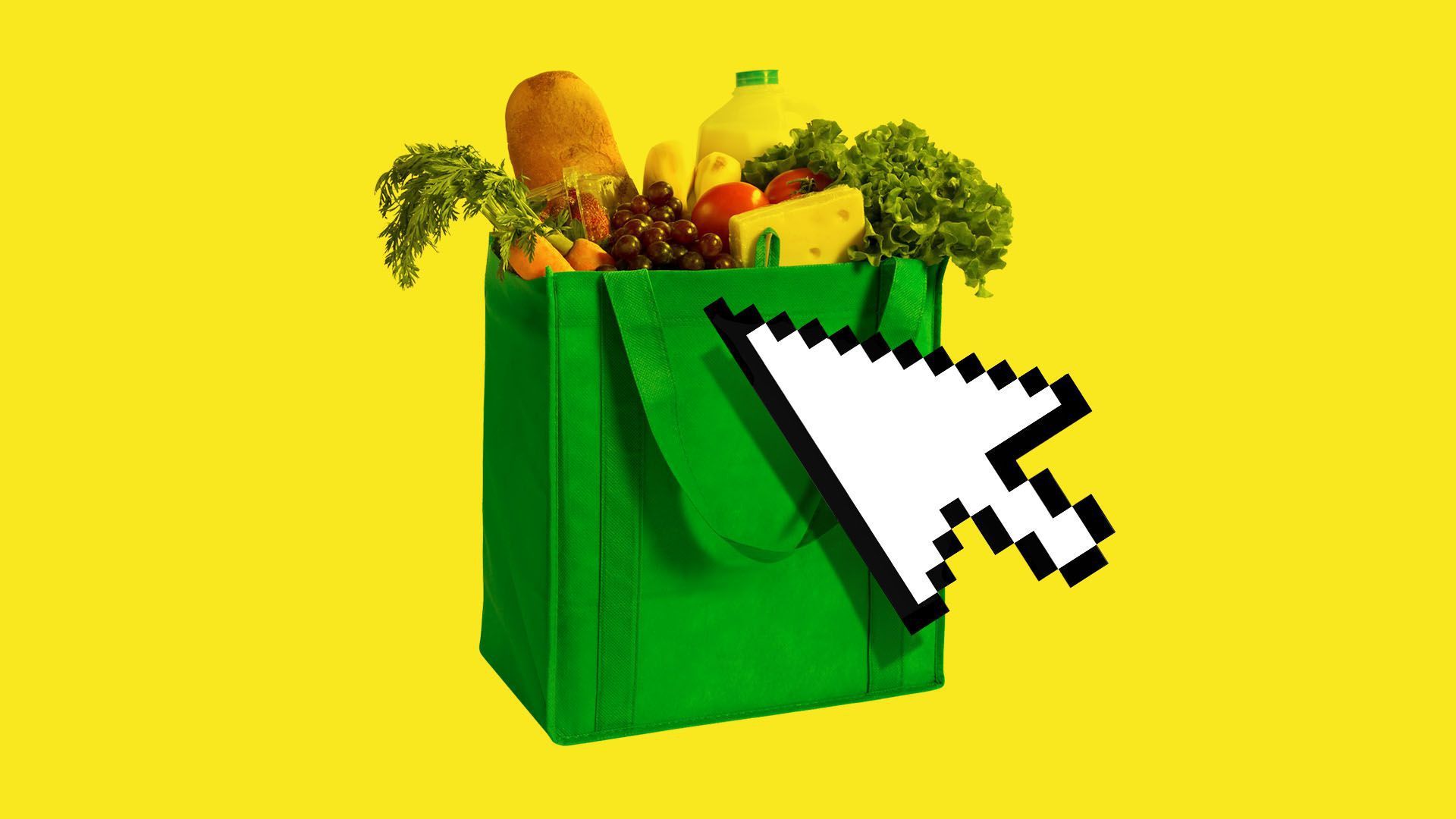
Online grocery was a minuscule part of food retail before the pandemic. Now, about 60% of U.S. consumers have bought groceries online in the last 12 months, and most of them plan to keep doing so post-pandemic, according to a report from Coresight Research.
Why it matters: The rise of online food shopping is leaving behind smaller chains or mom-and-pop grocers that can't afford to offer delivery — turning grocery into a survival of the biggest players.
Vehicles are being reimagined as autonomous, electric, toaster-shaped robotaxis. Now their safety has to be reworked too.
The big picture: There's more to self-driving cars than just removing the steering wheel and pedals. The entire vehicle needs to be redesigned for riders, not drivers, so their safety can be assured even when they're not in control.
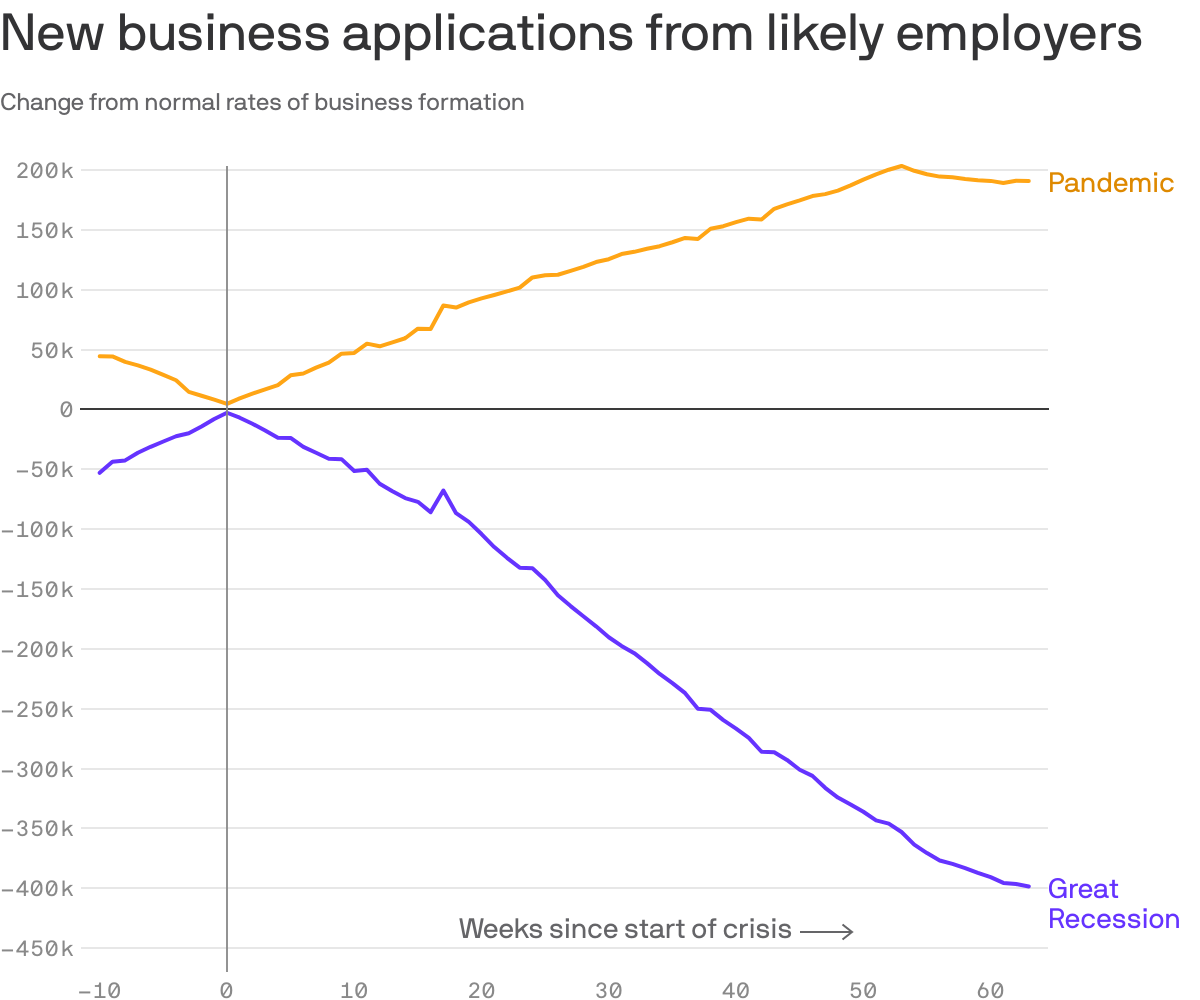
Data: Census Bureau via John C. Haltiwanger of the University of Maryland; Chart: Axios Visuals
One of the most unexpected pandemic winners might just turn out to be new small businesses.
Why it matters: The number of entrepreneurs starting a business easily hit a record high in 2020, according to a new analysis by University of Maryland economist John Haltiwanger. That's a surprising result, given the severity of the crisis.
The head of the health insurance industry's main lobbying group doesn't think the $56,000 annual price tag for Biogen's unproven Alzheimer's treatment, Aduhelm, is justified, but the group won't call on insurance companies to deny coverage of it.
The big picture: Instead, insurers are relying heavily on Medicare and an independent drug pricing group for their coverage decisions.
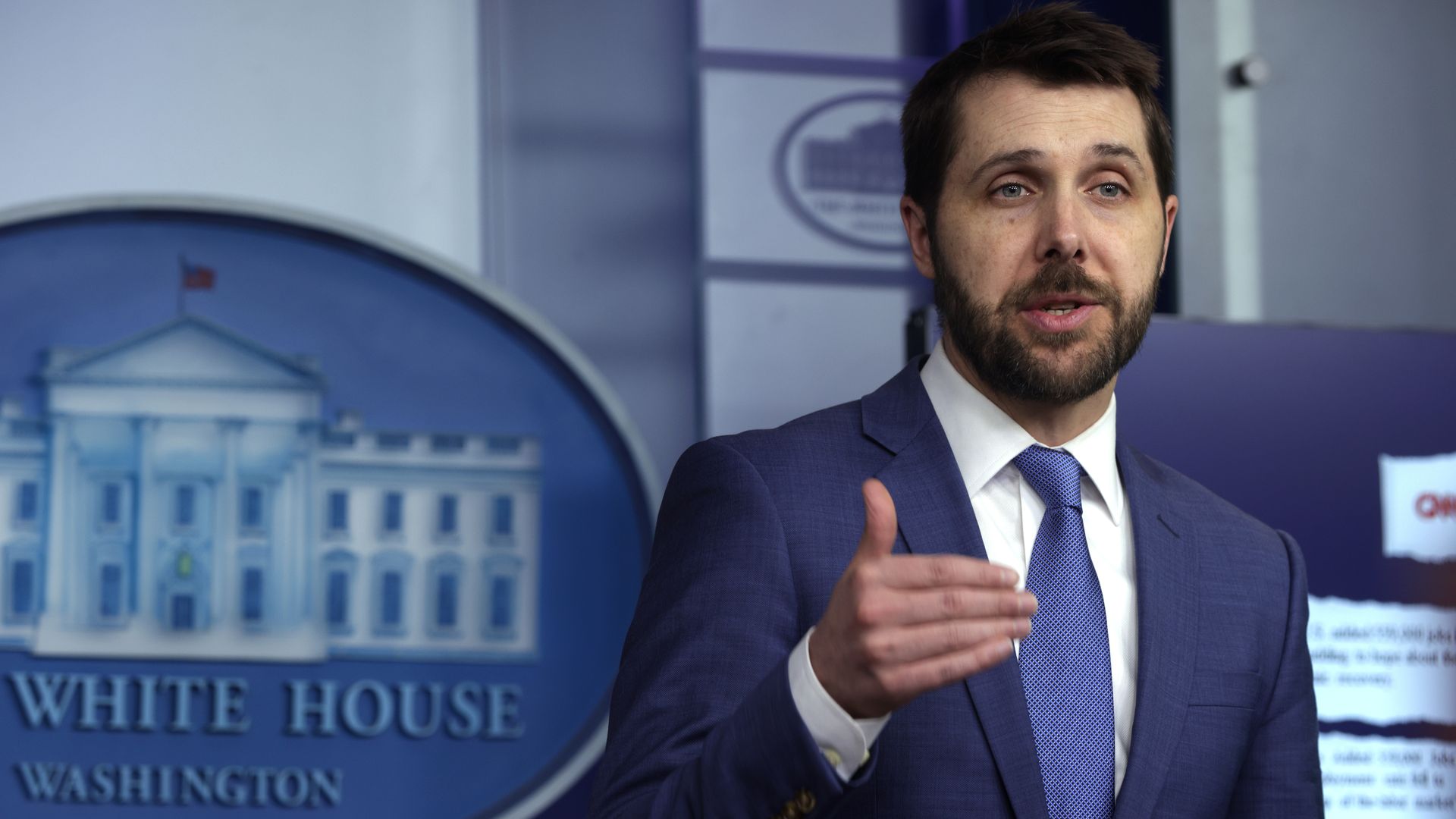
National Economic Council director Brian Deese will label the coronavirus pandemic a "wake-up call" to bring manufacturing jobs back to America in a speech Wednesday unveiling the Biden administration’s industrial policy, Axios has learned.
Why it matters: President Biden’s campaign was predicated on providing well-paying jobs for millions of Americans who've seen the country’s industrial heartland hollowed out by automation and competition for lower-cost labor from other countries.