Major companies have said in recent job postings that Colorado residents are ineligible to apply for certain remote positions because a new state law requires businesses to disclose the expected salary or pay range for positions, according to the Wall Street Journal.
Why it matters: The law, which went into effect in January, is meant to help close the gender wage gap and to promote wage transparency for employees, but companies have said Coloradans need not apply to avoid disclosing the information.
More than ever, businesses are being pressured — by employees, consumers and shareholders — to fix systemic problems they have helped build.
Why it matters: The top ranks of America's businesses have a huge void of people who look like the Black, Latino, Asian and Native American consumers from whom they collectively rake in billions of dollars each year.
The two paths to financial success aren't linear, and sometimes they meet in the middle.
Case in point: Porter Braswell, co-founder and CEO of Jopwell, a technology platform that enables diversity hiring, went to Yale, then worked successfully for several years in sales at Goldman Sachs. When Braswell, who is Black, tried breaking into entry-level sales positions at tech companies, he was told his skills weren't transferrable.
"I had to go out and build my own tech company to break into tech," he says.
Now Braswell is building that company to reflect what he thinks corporate America should look like.
The big picture: Across the country, companies are increasingly looking for ways to move forward, by attacking the entrenched lack of diversity. Here's how.
Doubling down on sponsorship. Sponsoring goes beyond mentoring. It's championing someone else’s career and opening doors for them. "Sponsorship — at scale — is the most important thing we can do,” says PwC U.S. chairman Tim Ryan.
Tying CEO pay to diversity. The boards of some large companies have set metrics that, based on whether or not they're achieved, will affect executive compensation.
Investment in Employee Resource Groups. ERGs are groups for people with a shared identity like race or gender to come together for support. Some companies have begun paying ERG leaders to show that diversity is a priority.
Diversity riders. In venture capital, these contractual agreements ensure that investors from underrepresented backgrounds get a chance to invest in — and profit from — startup deals.
There's a broken pipeline to the C-suite for executives of color in Corporate America.
The big picture: If companies continue at their current glacial pace, it'll take nearly a century for Black and Latino professionals to get to proportional representation at the manager level.
Climbing the corporate ladder is one of two paths to financial success — but getting to the top in America is nearly impossible for people of color.
Why it matters: Having to navigate blind spots at all levels of the corporate chain creates a system of barriers that can be hard for organizations to acknowledge, much less address.
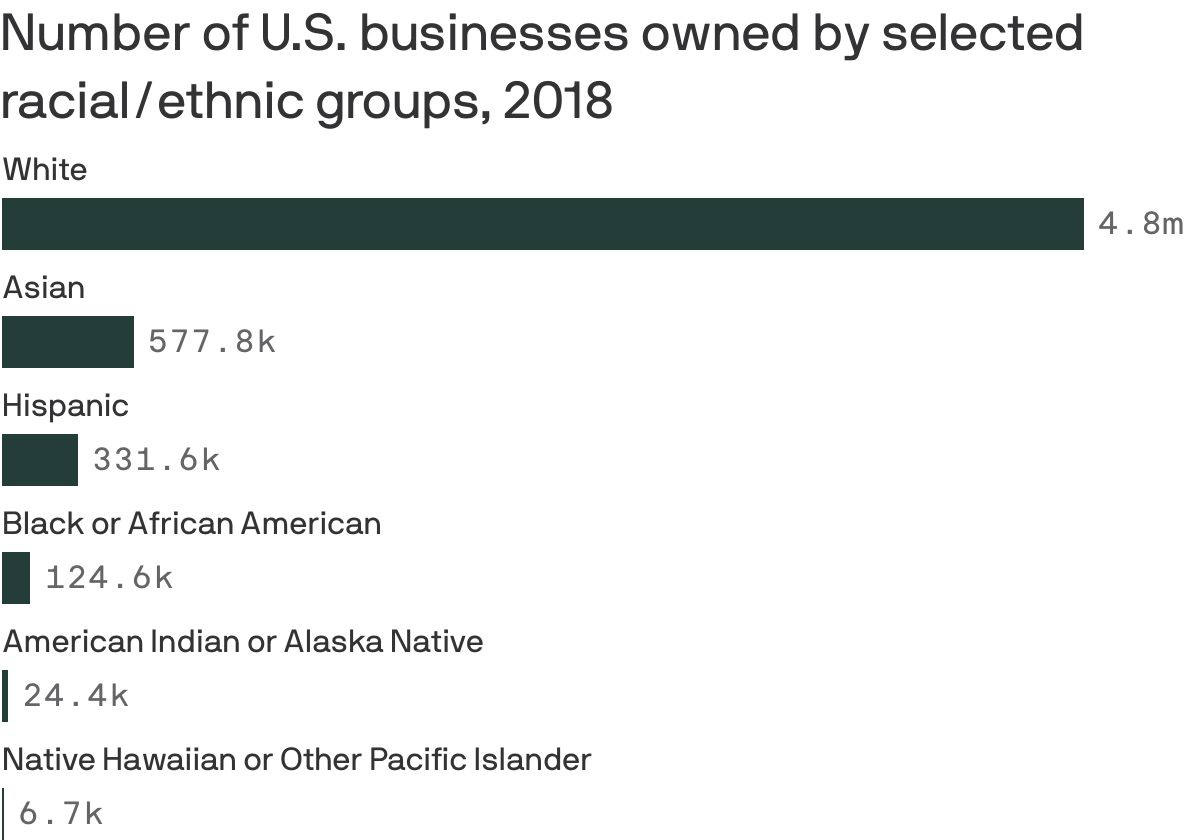
Data: U.S. Census Bureau, Annual Business Survey. (Hispanic respondents also identify with a racial group, so they are double counted.) Chart: Connor Rothschild/Axios
Only 18.3% of American businesses are minority-owned, according to the U.S. Census Bureau, despite minorities comprising 40.3% of the population.
Why it matters: Business ownership can create wealth, and wealth begets wealth in America.
When a bank turned down George Johnson for a business loan, he got creative. He returned and told the bank he needed $250 to take his wife on a vacation — and was approved. Then he invested the cash in his business, which became the first Black enterprise to trade on the American Stock Exchange.
Why it matters: The highways to success in the U.S. market economy — in entrepreneurship, corporate leadership and wealth creation — are often punctuated with roadblocks and winding detours for people of color.
Business ownership and corporate diversity initiatives are seen as paths toward closing the racial wealth gap. But for people of color, systemic barriers along both routes still hobble success.
The federal government for years has recommended that companies do not pay criminals during ransomware attacks, but the feds have a consolation for those who do pay: the ransoms may be tax deductible.
Why it matters: The IRS offers no formal guidance on ransomware payments. But multiple tax experts interviewed by AP said deductions are usually allowed under law and established guidance.
Food Rocket, a new San Francisco-based mobile app, promises to deliver grocery items within 10 to 15 minutes in certain areas. It’s the latest in a slew of similar apps cropping up in the U.S. and abroad.
Why it matters: Startups and VCs are far from done with on-demand services.
Ride-hailing service The Drivers Cooperative recently debuted in New York City, claiming that its lack of VC funding would result in better driver pay and lower passenger costs.
Why it matters: TDC’s approach is a direct rebuke to the venture capital-fueled gig economy model.
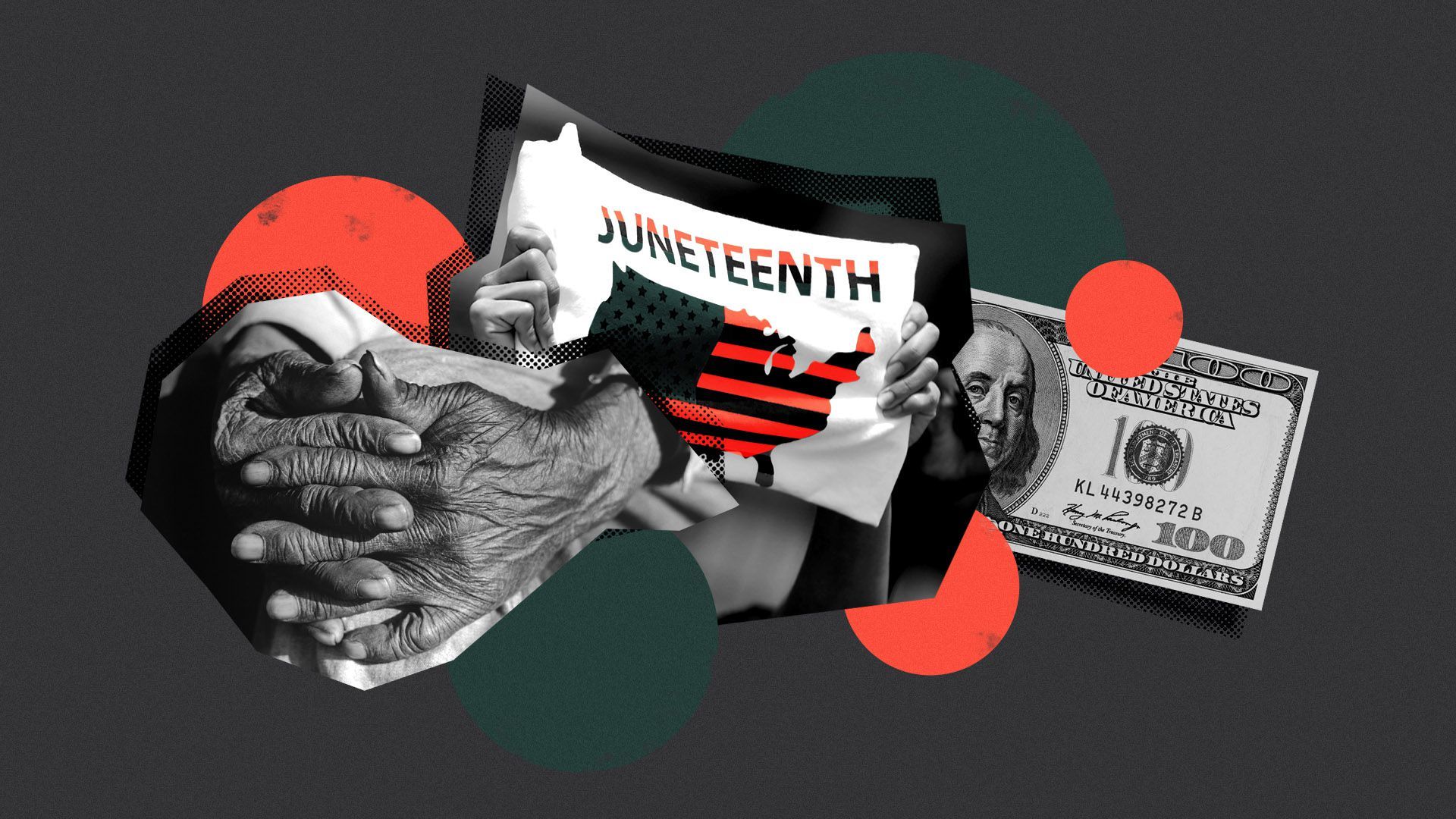
Juneteenth, a once-obscure commemoration of emancipation of enslaved people in Texas, has transformed into an annual reminder about how slavery robbed Black Americans of generational wealth.
Why it matters: That lack of generational wealth still denies Black families the economic security that many white families take for granted.