Diamond prices are up because demand is growing — despite the country's recent emergence from various forms of lockdown.
Why it matters: Diamonds were a big pandemic-era winner, when U.S. spending flowed out of service, travel and experiences into goods and high-end products.
House lawmakers last week introduced a series of five bipartisan bills designed to curb the power of Big Tech, targeting Apple, Amazon, Facebook and Google in all but name.
Axios Re:Cap speaks with Rep. David Cicilline (D-R.I.), chair of the House antitrust committee and a sponsor on most of the bills, to learn how he plans to get these measures over the finish line. The congressman from Rhode Island also faces a slate of other priorities and in the wake of a spending package to bolster the U.S. tech sector’s ability to compete with China.
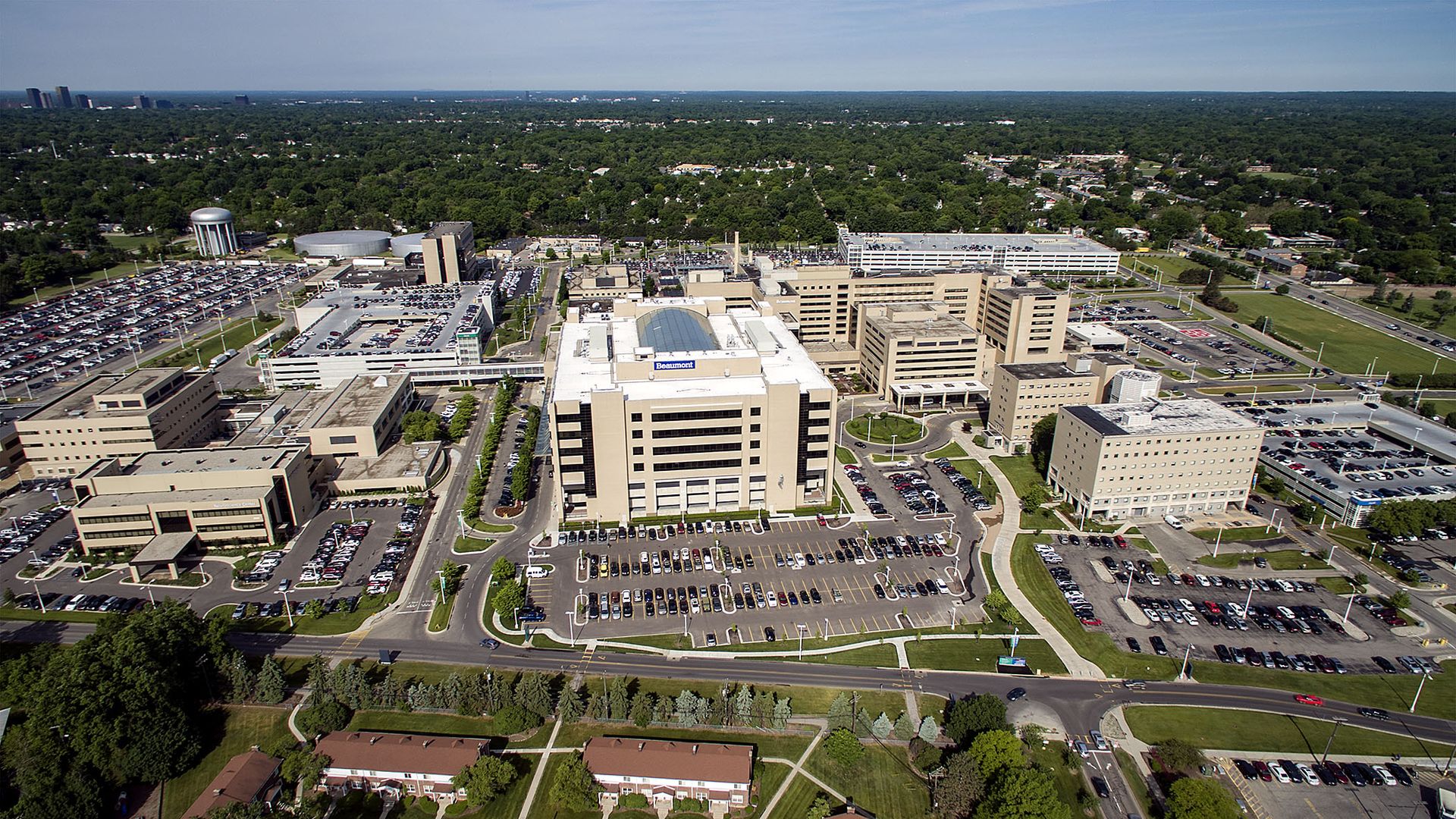
Spectrum Health and Beaumont Health have signed a merger agreement that would combine a health insurance company and 22 hospitals into one tax-exempt system with almost $13 billion in annual revenue.
Why it matters: This deal would form the largest hospital system in Michigan, raising new concerns about what would happen to hospital and physician prices if the merger is ultimately approved.
ID.me, a private company founded to make it as easy as possible for individuals to prove who they say they are, was most recently valued at $1.5 billion. It has emerged over the course of the pandemic as the leading provider of anti-fraud software for state unemployment offices.
How it works: The company says it does not directly profit from fraud. Quite the opposite: CEO Blake Hall tells Axios that it costs his company $7 for each video chat session, and makes $0.50 for every applicant who goes through the system without needing to talk to one of his employees.
The fraud is not hard to see in economic statistics, once you realize it's there.
By the numbers: Before the pandemic, continued unemployment claims — the number of Americans claiming unemployment benefits for two weeks or longer — were counted at 2,152,733. That was one-third of the official number of unemployed Americans, as measured in the monthly household employment survey, which was 6,504,000.
Experiences similar to Arizona's can be seen across the country.
Florida's official dashboard shows 111,904 unemployment claims in the week ending Jan. 30, and then 10,480 the following week, when fraud controls were introduced — a drop of 90.6%.
In Colorado, according to the official state dashboard, 2,107,988 claims have been sent to ID.me for testing. Of those, 268,060 — or just 12.7% — have been verified.
In Nebraska, the overall fraud rate within the unemployment program was 65.97%, according to a report from the state auditor.
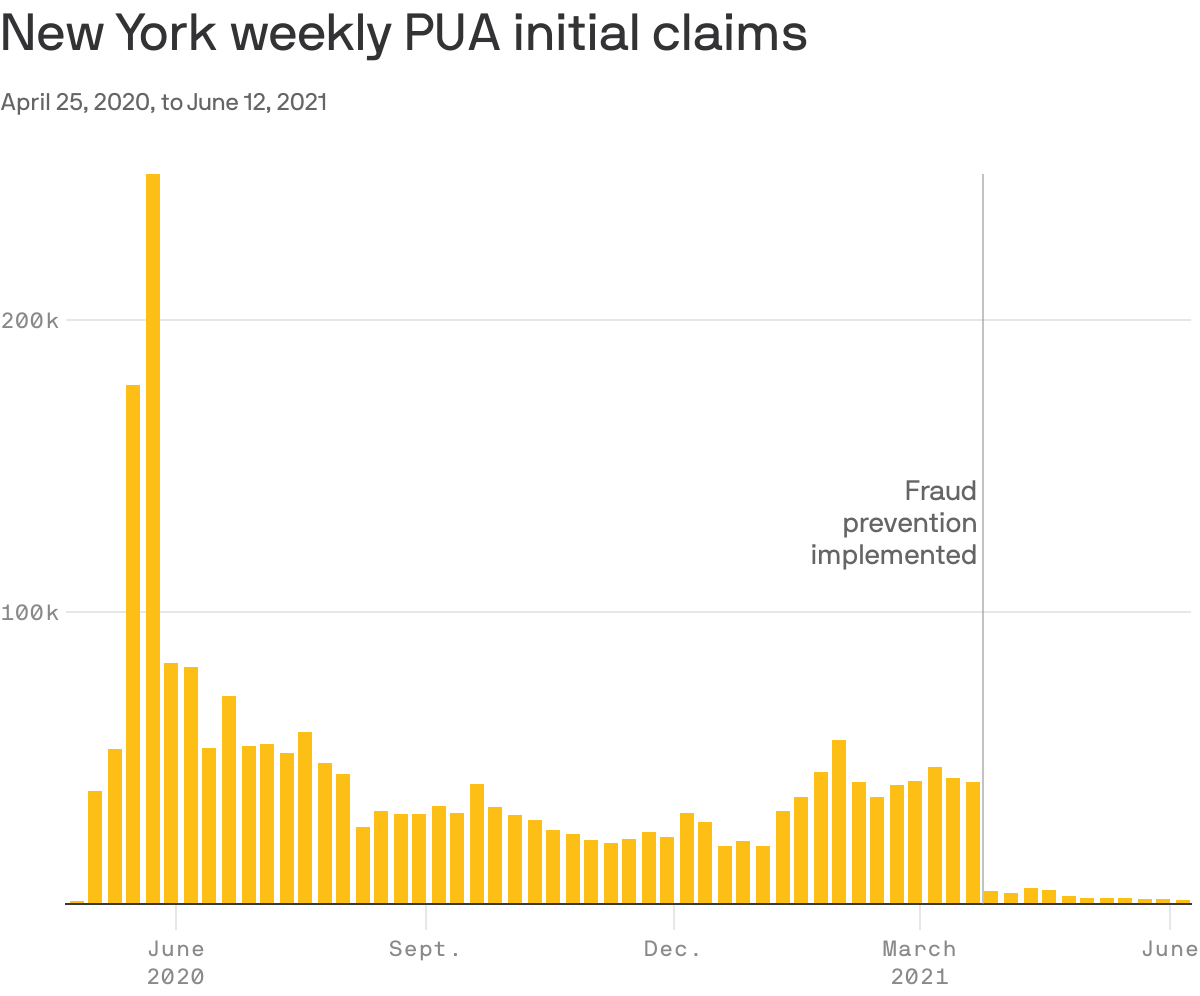
In New York, weekly PUA claims averaged 43,863 in the four weeks to March 20. Then fraud-prevention measures were put in place, and the average immediately dropped to 3,421 — a fall of 92.2%.
In California, PUA claims hit 405,878 in the week of August 29, and 440,882 in the week of September 5. After October 1, when it became harder for fraudsters to game the system, the numbers immediately crashed — there were just 14,843 in the week ending October 3 — and have stayed low ever since.
The big picture: Fraud doesn't happen evenly. Every state has a different system for claiming benefits, and tends to see a surge in fraudulent claims when a criminal syndicate manages to hack that particular system. (Pennsylvania, for instance, saw a large spike in fraudulent claims in May 2020.)
If fraud rates fall dramatically in one program or in one state, that doesn't mean fraud overall has fallen — it is just as likely to have moved to a different program or location.
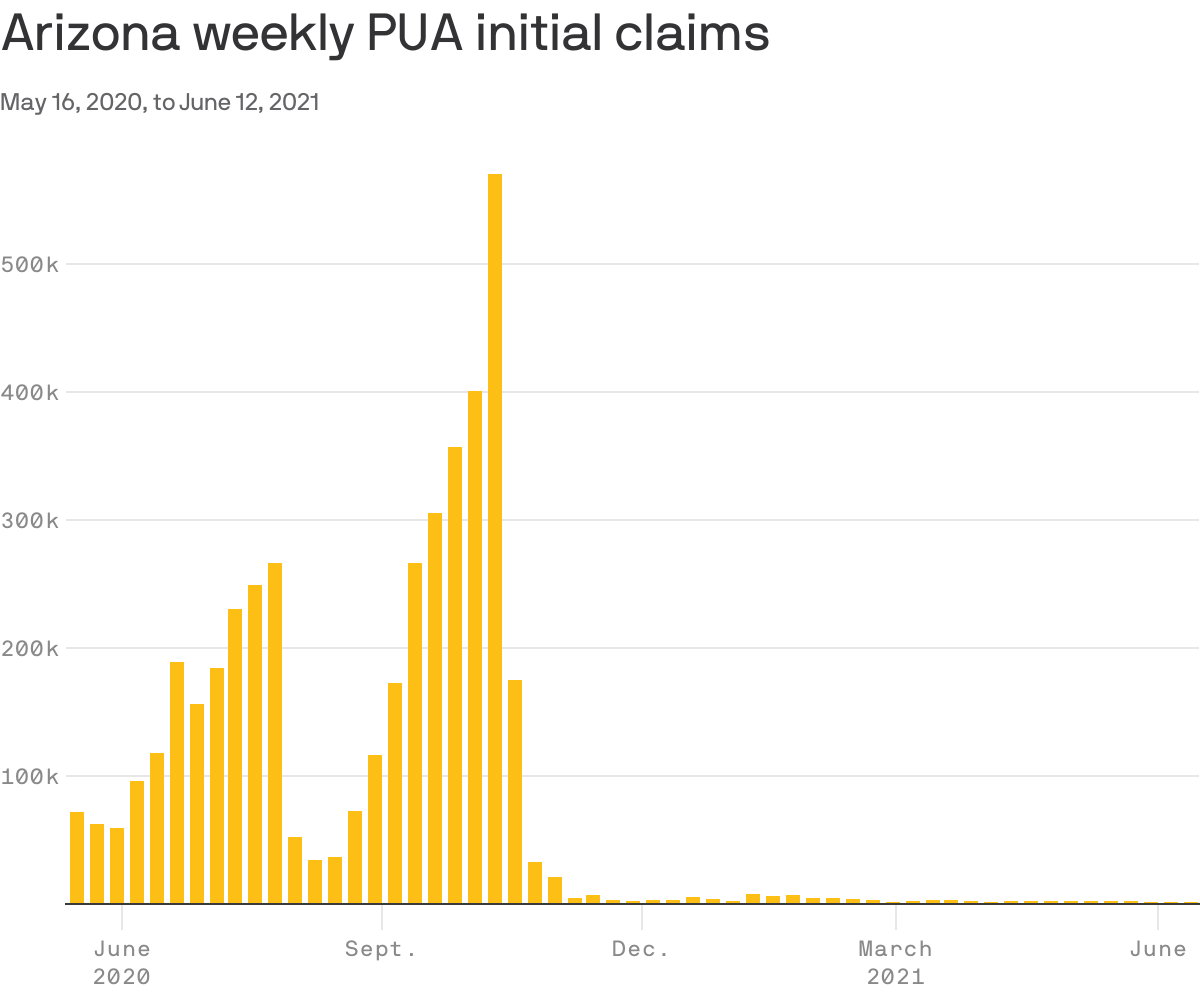
Data: Arizona Department of Economic Security; Chart: Axios Visuals
Arizonahas been particularly public about the anti-fraud controls in its unemployment office.
By the numbers: Arizona has said that it saw 570,400 initial PUA claims filed in the week ending October 10, 2020. A month later, after hiring ID.me to filter new applications, that number had plunged by 99% to 6,700.
COVID-19, and the government’s response to it, created a perfect storm for unemployment fraud — which Axios reported could have accounted for half of all the payments made throughout the pandemic.
Why it matters: The government has not officially audited the issue. But there are good reasons to believe that the number is enormous.
The U.S. governmentis clear that unemployment fraud is a huge problem, and has budgeted $2 billion to try to fix it.
Where it stands: The Department of Labor inspector general reported last month that 20 states did not perform what was required of them in terms of detecting improper payments, and 44 states did not do what was recommended (but not required).
Last week, when I reported on the astonishing extent of unemployment fraud over the course of the pandemic, I was met with a chorus of both supporters and critics asking for more information on what has been going on.
America's labor shortage crisis has been exacerbated by immigration restrictions that have reduced the number of both skilled and unskilled workers.
Between the lines: Most of the labor scarcity blame has been aimed at expanded unemployment benefits, hard-to-find child care and low wages. But there is a fourth leg to the stool.
The Federal Reservesurprised the market Wednesday with new hints about its timeline for a rate liftoff — and an acknowledgment of taper talk.
Driving the news: Investors were on one hand relieved the Fed may act to keep the market from getting (more) overheated, and on the other skittish about the pending removal of the punchbowl.
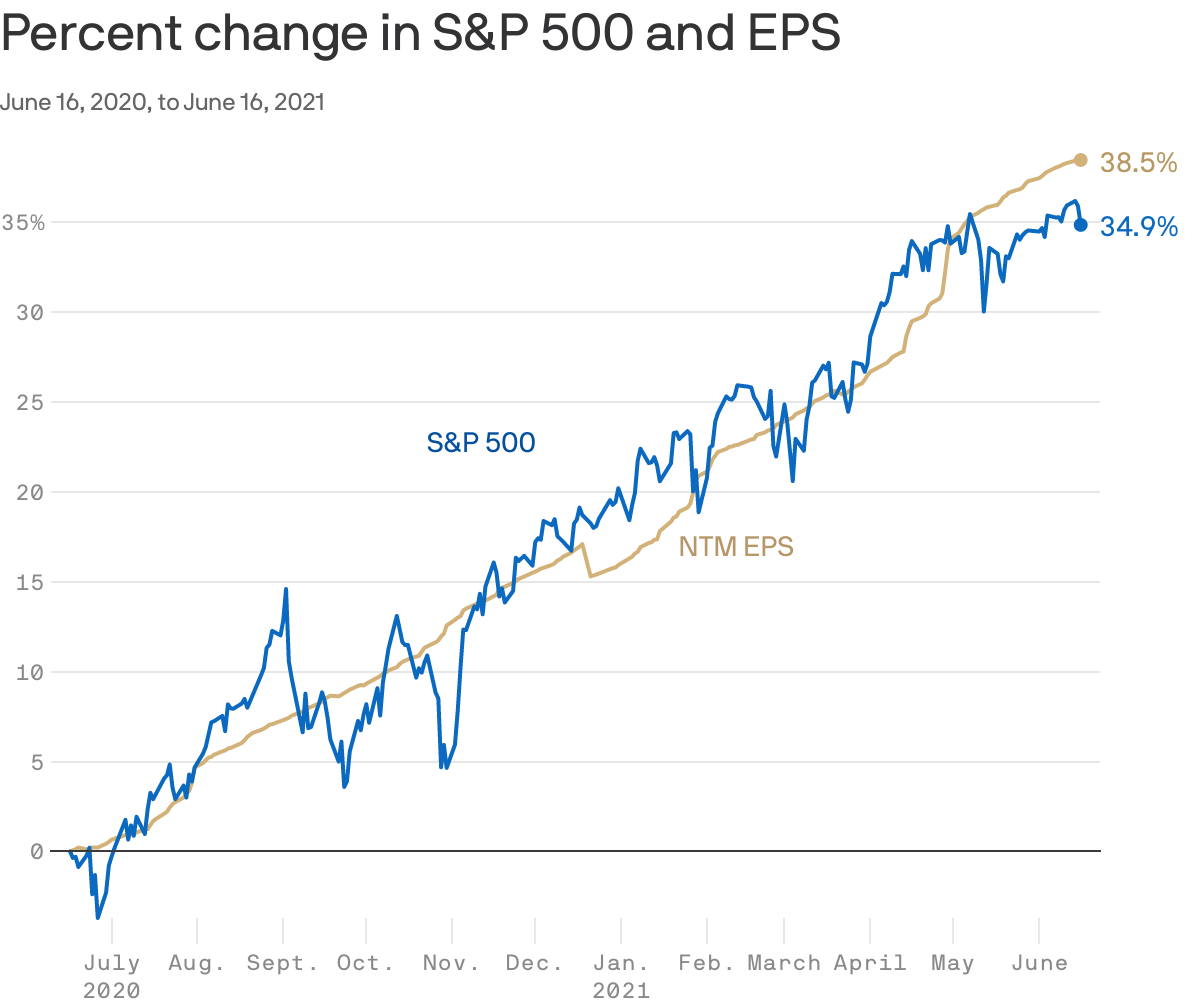
The stock market’srecent trend could be described as just going higher — with the S&P 500 setting its intraday record high of 4,257 on Tuesday. Despite bubble concerns and pockets of investing mania, fundamentals are supporting it.
Why it matters: The stock market has rallied almost unabated in the past year, more than recovering all of its early pandemic losses, leading some to question if prices have detached from economic reality and gotten frothy.
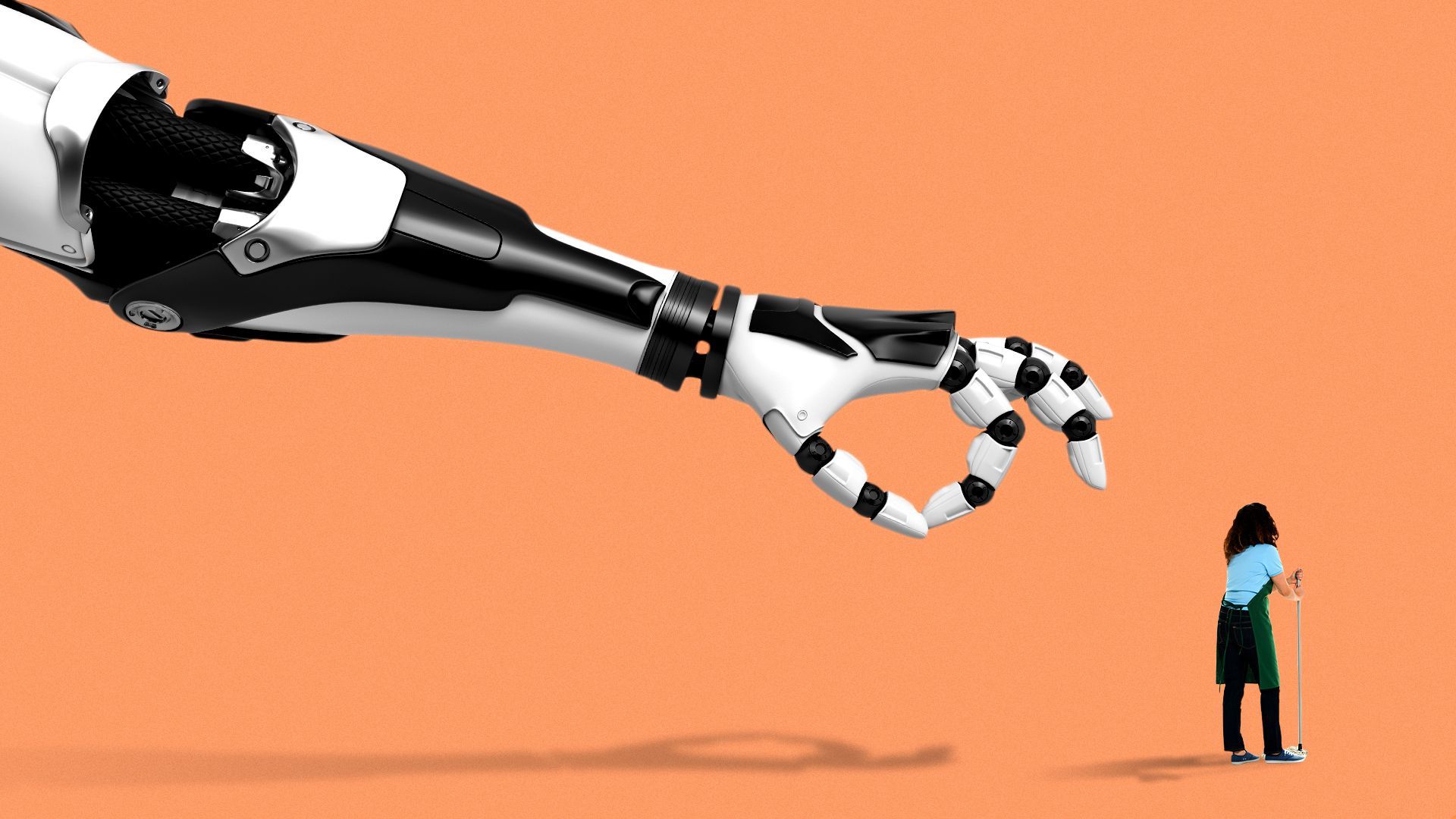
Automation technology has been the primary driver in U.S. income inequality over the past 40 years, according to a new paper by two prominent economists in the field.
Why it matters: Offshoring, the decline of unions, and corporate concentration have all played a part in widening the gap between lower-skilled and higher-skilled workers, but automation is the single most significant factor, and will likely grow even more important in the years ahead.
Tech giants like Facebook, Spotify and Twitter are racing to build and acquire new tools that will help them compete with smaller upstarts for the attention of individual creators.
Why it matters: The attention economy shifted significantly during the pandemic towards individual creators who make content for niche groups of fans. Now that brands and consumers are catching on, Big Tech firms want in.
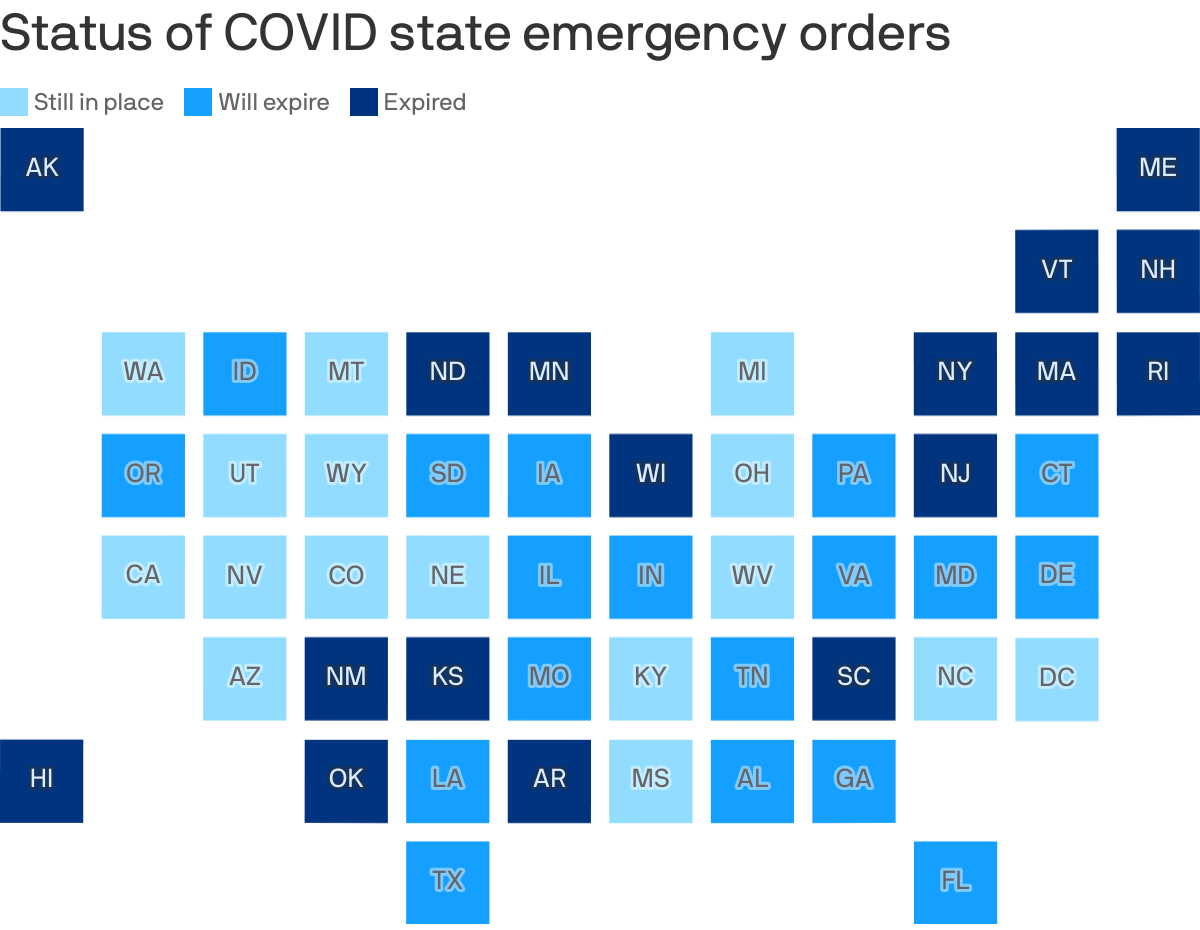
Data: National Academy for State Health Policy and various governor declarations; Chart: Sara Wise/Axios
Soon, more than half the states will have ended their formal emergency declarations for the pandemic — which could have ripple effects across the economy.
Why it matters: Lifting those orders will allow businesses to serve more customers, but will also end certain safety nets, including expanded food and housing assistance, as well as eviction protections.
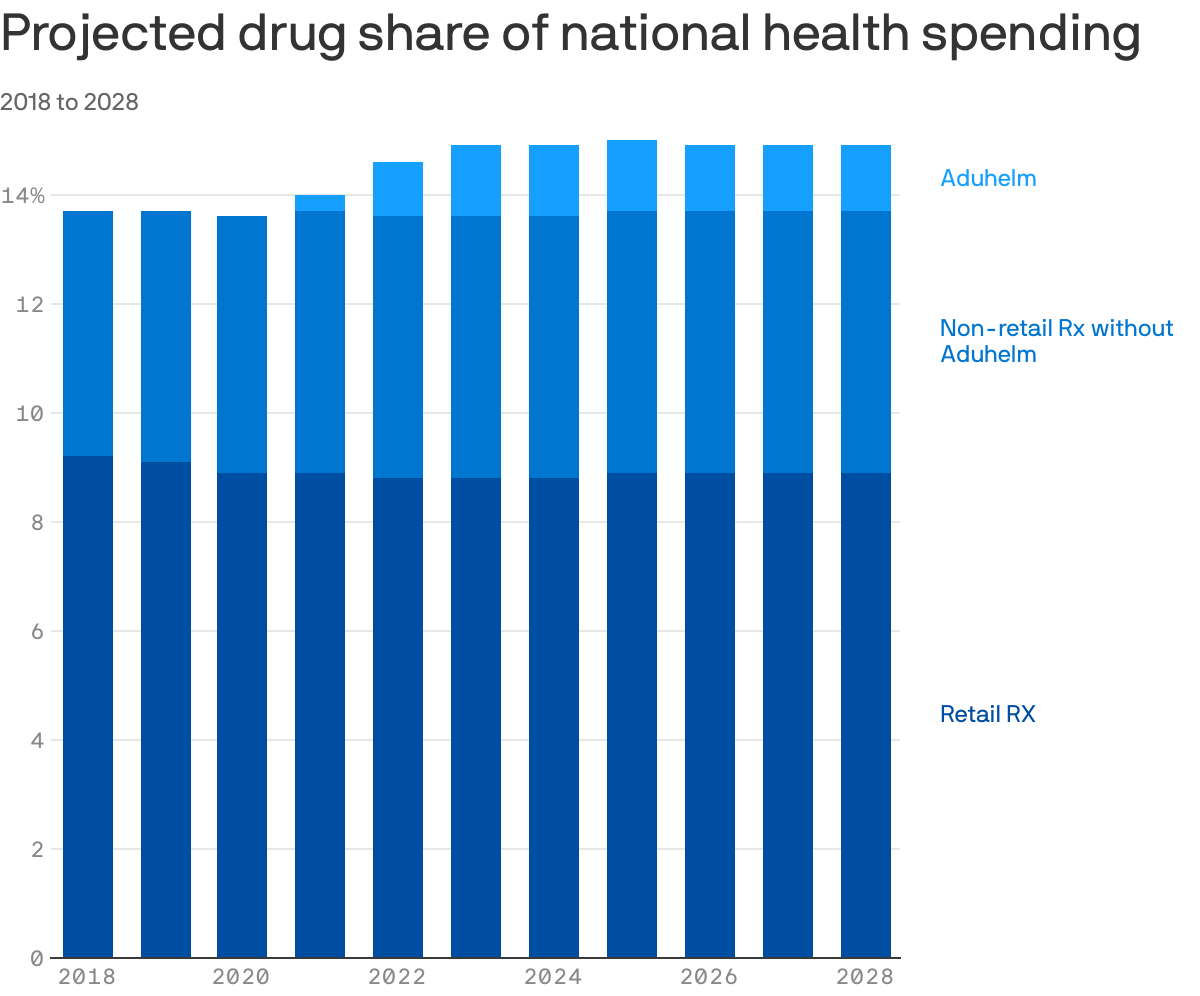
Aduhelm, the Alzheimer's treatment controversially approved by the FDA, won't just put Medicare's budget in peril. The $56,000-per-year drug could single-handedly represent one percentage point of all health care spending by next year, according to an analysis from Altarum.
Why it matters: Americans already pay more for health care than any other country. But since Aduhelm is not close to being a cure — and not even proven to halt the progression of Alzheimer's — "the resultant growth in spending will therefore be sustained for the foreseeable future," Altarum researchers wrote.
The World Bank has rejected the government of El Salvador's request to help the country implement Bitcoin as legal tender, Reuters first reported late Wednesday.
Why it matters: The international lender's rejection could hamper the government's goal of making the digital currency accepted across the country within three months.



/2021/06/17/1623964432667.gif?w=3840)