Thursday's world stories

Axios House: Brands are losing opportunities with Latino consumers
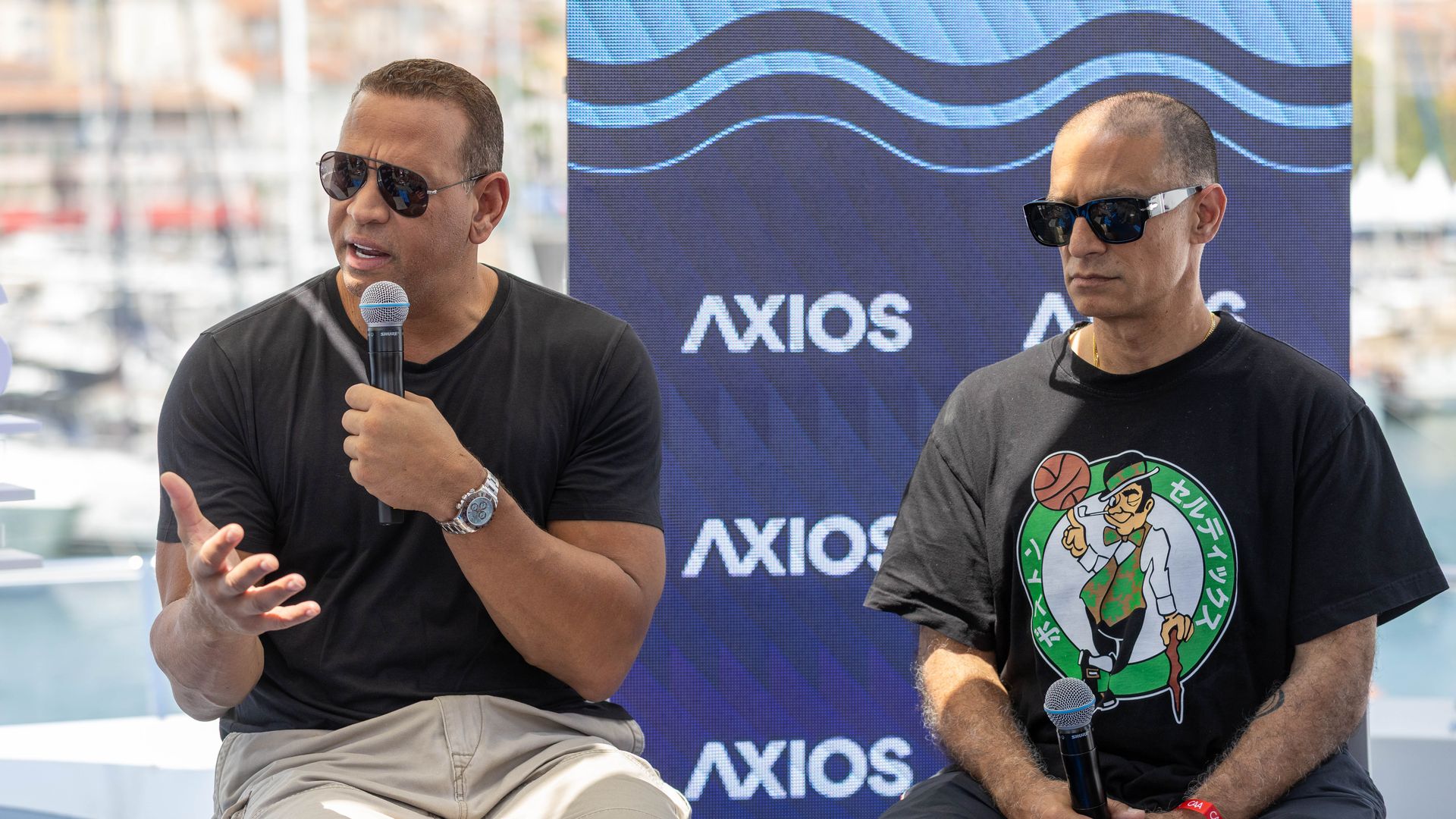
CANNES, France — Latino purchasing power in the U.S. has hit $4 trillion — yet the marketing and ad dollars aimed at the Latino consumer still doesn't match it, leaders said at an Axios event.
Why it matters: Undervaluing this audience has real consequences across industries, said former professional baseball player Alex Rodriguez, who is chairman and CEO of A-Rod Corp.
- As an illustration, Rodriguez pointed to women's sports: top WNBA broadcasts can draw similar viewership numbers as Sunday Night Baseball, yet the MLB commands 25 to 30 times more in rights fees.
- "The same math applies to how we [Latinos] are valued," Rodriguez said.
Axios' Sara Fischer and Kerry Flynn moderated discussions with Rodriguez, co-founder of Religion of Sports Gotham Chopra, Atlassian Williams Formula 1 Team driver Carlos Sainz, and Pablo Torre, host and executive editor of "Pablo Torre Finds Out." The June 24 event was sponsored by TelevisaUnivision.
What they're saying: Brands treat the Latino community as a monolith and that's the core mistake, Rodriguez and Torre both said.
- "The way a Latino shows up in LA is so different than the way a Latino shows up in Miami or in New York," Rodriguez said. "You got to really micro-study these things."
- "Race is a concept that is imposed upon you — it is not one that you choose," Torre said. "We need to be careful about that."
Between the lines: Brands' one-size-fits-all approach to Latino communities often reflects a lack of diversity among the decision-makers, Rodriguez said.
- "It's not good enough to be the only man or woman of color in the room," Rodriguez said. "Leave that door open. Make sure you bring others with you."
Zoom out: Sports and music are the two most powerful entry points and live events are where Latino fandom converts to commerce, Sainz and Torre said.
- Sainz said F1 is finally paying attention, as it is now translating all of its social content to Spanish and this year will host its first Grand Prix in Madrid in over 40 years. "When we do things, we like to do them properly," Sainz said.
- The NFL's Bad Bunny decision was business, not culture, Torre added. "The prime directive is growth. By that standard, Bad Bunny makes all the sense in the world."
Yes, but: Reaching this audience authentically takes time and many brands won't invest it, Chopra said.
- "You cannot show up on day one with a camera and say, 'Go be vulnerable,'" Chopra said. "Everything we have done successfully has been a function of time and earning trust."
The bottom line: "Sports and music are the two last elements that bring us together," Rodriguez said, explaining that the brands that invest in the Latino audience year-round, not just during special events like the World Cup, are the ones that will win.
Content from the sponsor's segment:
In a View from the Top conversation, TelevisaUnivision president of U.S. advertising sales and marketing John Kozack said media fragmentation has made it harder to reach the Latino audience, but live sports, music and drama remain the exception.
- TelevisaUnivision holds over 50% of all U.S. soccer viewership and has secured the Spanish-language broadcast rights for Super Bowl LXI in 2027, Kozack said.
- "It's not if you should invest in reaching Hispanics — it's how."

Polestar blocked from selling cars in U.S. over national security concerns
Polestar, the Chinese-owned electric vehicle company, is withdrawing from the U.S. market after the U.S. Commerce department banned its high-tech cars, citing national security concerns.
The big picture: It's the latest sign of a new, fractured era in the auto industry. After decades of globalization, the industry is splintering into regional markets and supply chains, driven by geopolitics and the rise of low-cost, high-tech competition from China.

UN pauses Hormuz sailor evacuations after "attack" in strait
The UN paused efforts to evacuate more than 11,000 sailors stranded in the Strait of Hormuz after Iran objected to the plan and a cargo ship was reportedly struck near Oman.
Why it matters: The pause and the apparent attack highlight how quickly the flow of people and goods through one of the world's busiest shipping lanes can be disrupted, even after the U.S.-Iran truce.

China's new open-source model accelerates AI hacking threat
GLM-5.2 — the latest Chinese open-source model capturing Silicon Valley's attention — is raising fresh concerns among security researchers that advanced AI hacking capabilities are becoming dramatically cheaper and more accessible.
Why it matters: The barrier to entry for malicious hackers eager to automate and personalize their attacks is getting lower and lower.

Why prices at the pump are slow to follow oil lower
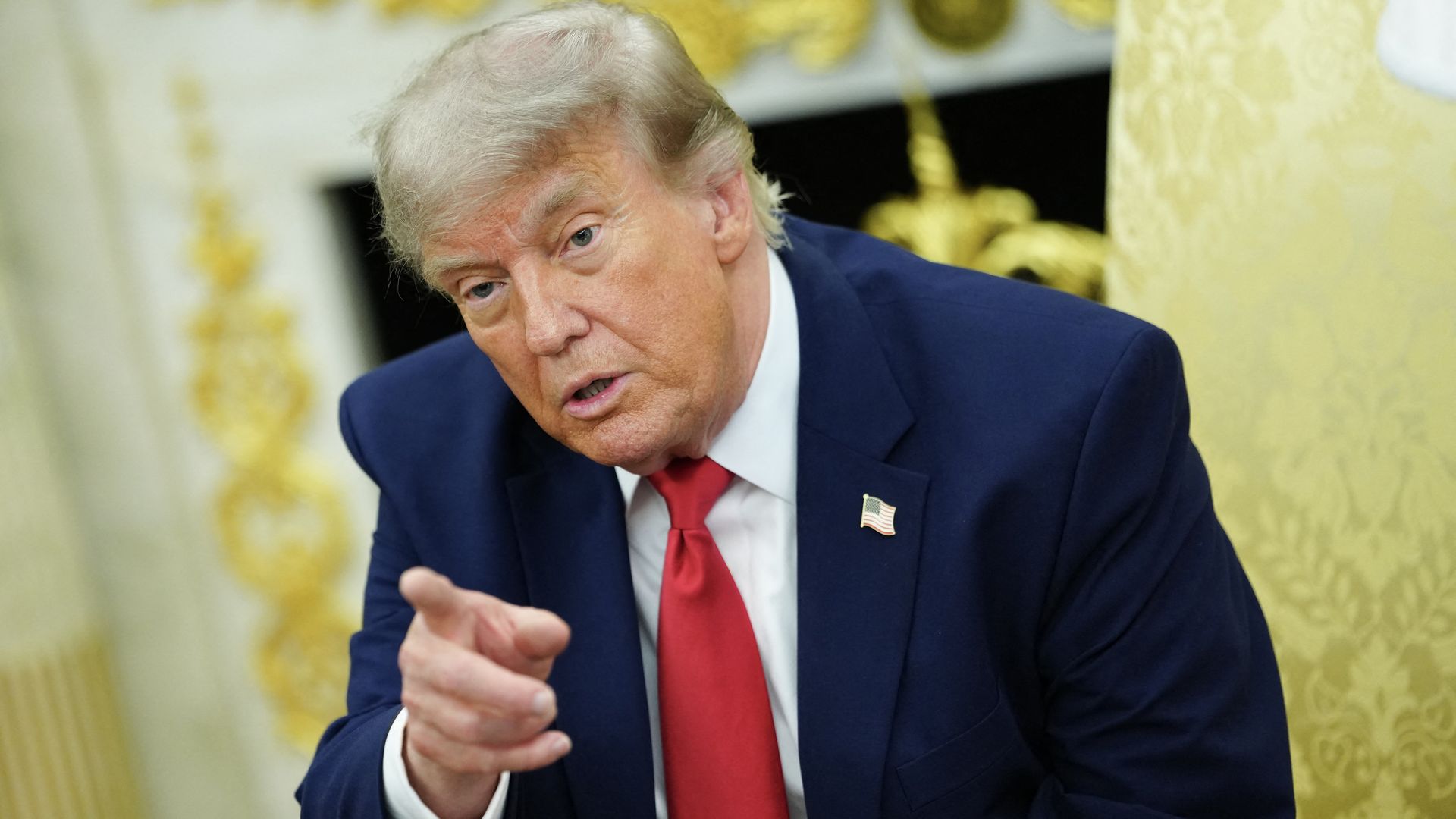
President Trump's attempt to strike a deal with Iran was supposed to quickly cut U.S. gasoline prices. It's a slower process than he might like.
Why it matters: American anger over gas prices has hammered Trump's approval rating on the economy, imperiling GOP control of Congress.

Powerful earthquakes devastate Venezuela
Two powerful earthquakes struck Venezuela about 100 miles west of Caracas on Wednesday, killing at least 164 people, injuring 971 others and causing widespread damage.
The big picture: The U.S. Geological Survey issued its highest-level alert, signaling the back-to-back magnitude 7.2 and 7.5 earthquakes were expected to cause extensive casualties and severe economic damage.

Rise in gas prices caused "financial hardship" for two-thirds of households surveyed


The war-driven spike in gas prices has caused "financial hardship" for about two-thirds of American households, per survey data from Gallup out Thursday.
Why it matters: Although it's becoming clear that the rise in oil prices wasn't a huge hit to the overall U.S. economy, high prices at the pump certainly slammed people in the pocketbook.

Trump asks Congress for $87.6B, mostly for Iran war
The Trump administration asked Congress on Wednesday for $87.6 billion in supplemental funding, most of it to cover costs related to the Iran war.
Why it matters: The request is likely to intensify debate over presidential war powers as lawmakers in both parties question whether Congress should have authorized military action against Iran.


Inside the Trump-Senate meltdown
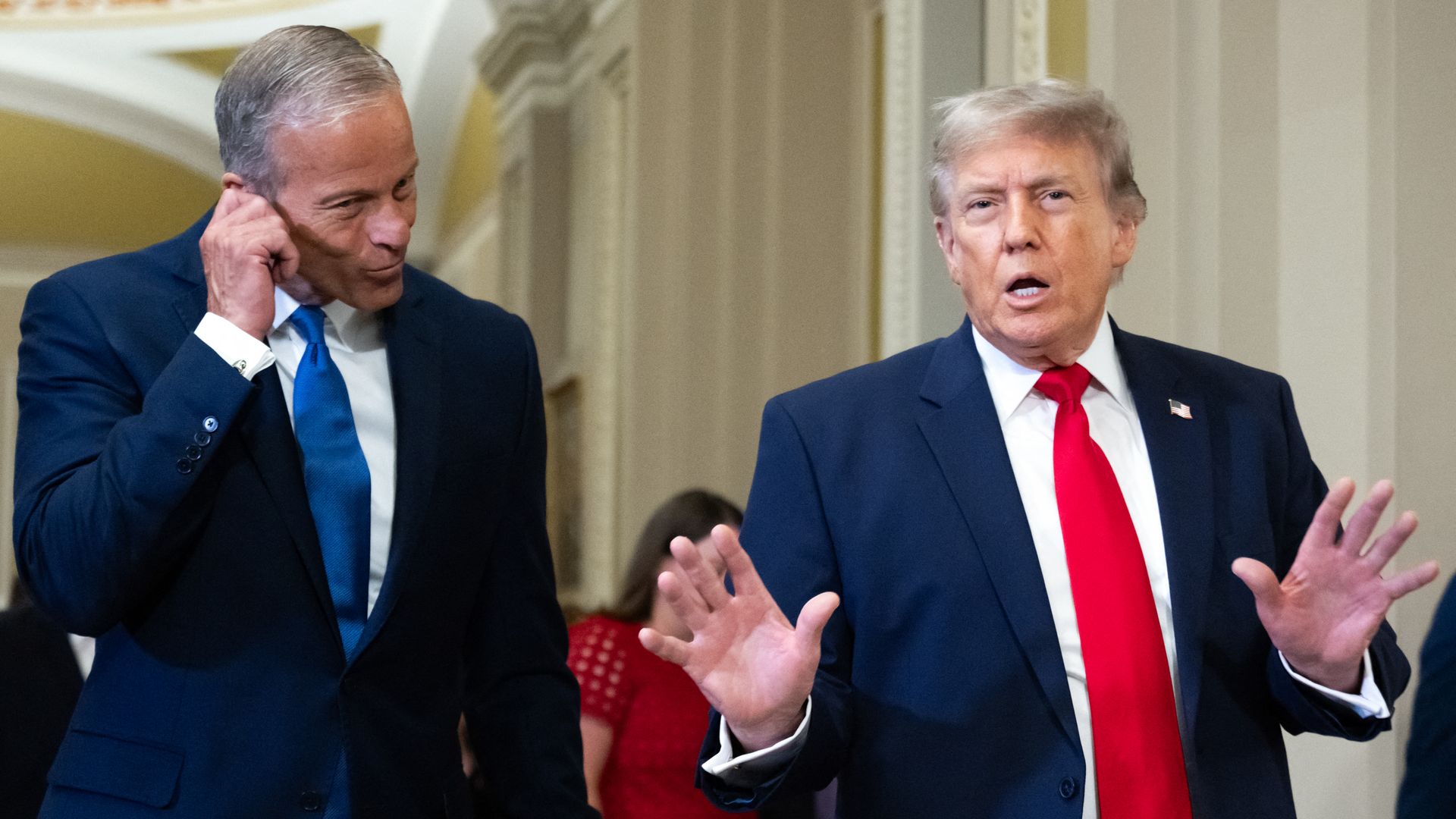
President Trump's lunch with GOP senators devolved into a lengthy shouting match between him and outgoing Sen. Bill Cassidy (R-La.).
Why it matters: Trump's handling of the war in Iran and the Senate's passage of a war powers resolution consumed the conversation, despite Trump's renewed pressure to pass a voter ID bill and kill the filibuster.

Trumponomics 2.0 throws out old globalization playbook
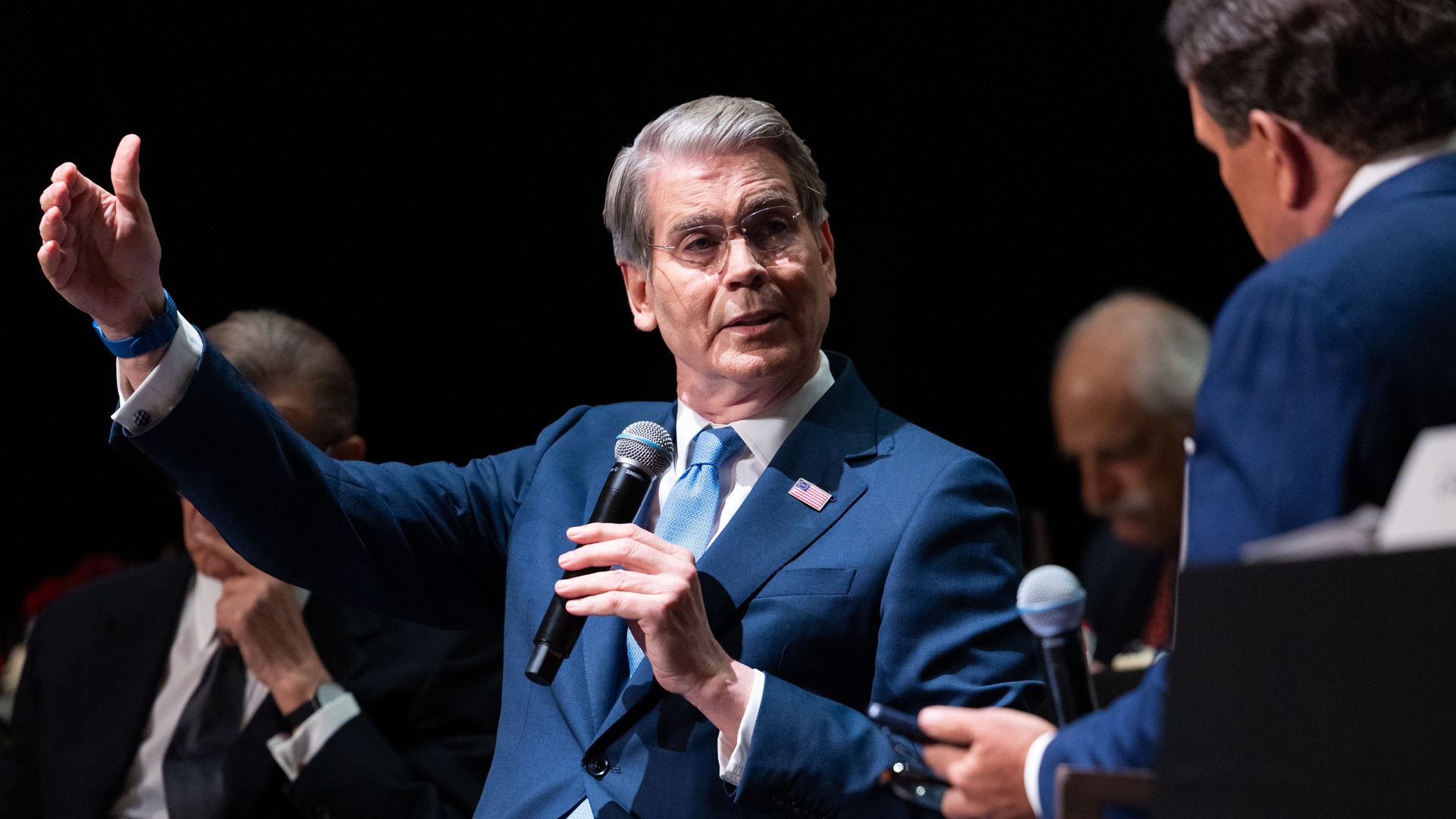
In a speech in New York on Tuesday night, Treasury Secretary Scott Bessent said that a long-running bet on cheaper goods and deeper economic integration making America richer and safer had failed.
Why it matters: The speech set a framework for President Trump's economic policies since his second term, including tariffs and calls for reshoring.
- But it also suggests that those policies may be part of a broader rethinking of globalization that extends well beyond one administration.
- If that's right, investors betting on a return to the old globalization playbook may be waiting a long time.

Why the Iran oil shock hasn't walloped U.S. growth


When Iran shut the Strait of Hormuz in early March, cutting back the global oil supply, it was easy to imagine domestic economic damage along the lines of 1970s oil shocks.
The big picture: It hasn't happened, and that reflects a central shift in how the U.S. fits into global energy markets. Turns out, when you produce your own energy, an oil shock doesn't hurt the way it used to.
- That, in a nutshell, is the takeaway of new Dallas Federal Reserve Bank research that quantifies how small the GDP hit has been and how much more severe the pain would have been in decades past.

Trump threatens DOJ probe of oil companies
President Trump says he ordered the Justice Department to probe whether oil companies are gouging consumers.
Why it matters: It shows a new level of Trump's frustration with prices at the pump — and introduces a new wild card for oil companies, depending on what the Justice Department decides to do with the president's overnight Truth Social post.

Micron earnings expectations have gone vertical


Memory chip and data storage stocks plunged Tuesday, even though few see explosive, AI-driven demand for such products abating any time soon.
Why it matters: Memory stocks have been key market beneficiaries of the AI boom. But their recent swoon reflects a micro-crisis of confidence in the AI trade.
Driving the news: U.S. memory chipmaker Micron Technology — one of the biggest gainers in the S&P 500 this year — reports results for its fiscal third quarter after the market close Wednesday, following a decline of 13.2% on Tuesday.
- It was the second-worst performer in the S&P 500, behind Sandisk (-13.6%), another high-flying data storage stock riding the AI boom.
Stunning stat: Micron shares are up over 250% so far this year, and more than 750% over the last 12 months.
- Analysts largely say that remarkable surge is justified by the soaring prices of chips Micron sells, which have supercharged profit margins.
What they're saying: "We expect Micron to report a beat-and-raise as continued pricing increases, broadening AI demand and constrained supply extend the memory upcycle," wrote Kevin Cassidy, an analyst at Rosenblatt Securities. "We believe demand remains strong enough to absorb higher pricing without meaningful demand destruction."
Yes, but: Those expectations of profit didn't prevent the recent tumble.
- The drop seems to reflect shifting investor psychology — South Korean memory chip stocks also tumbled during Monday's overnight session — rather than to any changing views on Micron's financial fundamentals.
What we're watching: How Micron trades after the numbers hit the tape Wednesday afternoon after the close of trading.
- A selloff after strong results could signal a more significant shift in sentiment among the AI bulls that investors should pay attention to.

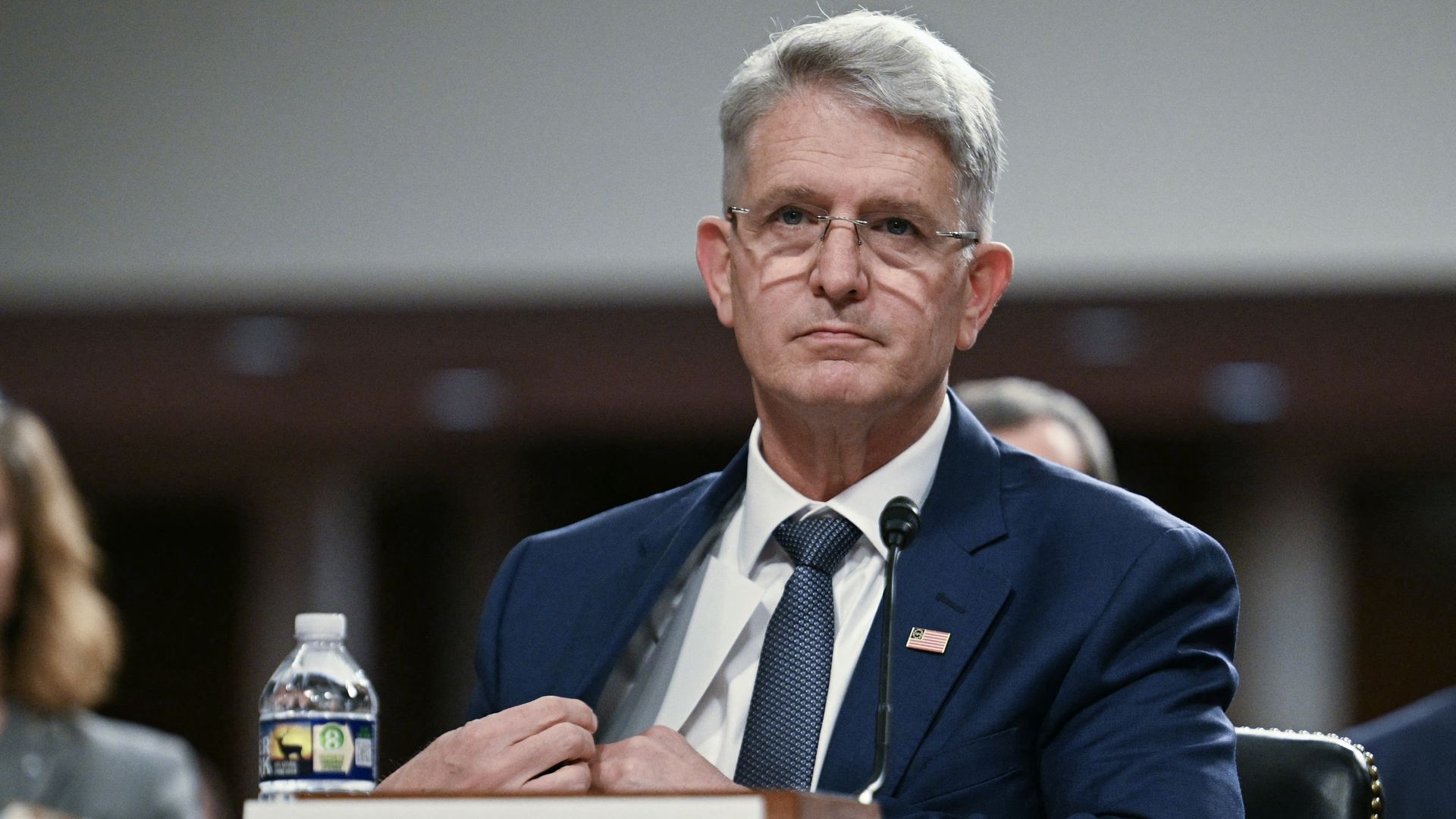
Russian nuke threats signal "weakness," NNSA boss says
Russian threats to use nuclear weapons during the war in Ukraine are a sign of "weakness" and fail to spook NATO and other nearby countries, the head of the National Nuclear Security Administration said.
Why it matters: A new nuclear paradigm is creeping in.

How friends and foes are converging on the Philippines
China's extraterritorial aggression under Xi Jinping is hardening the resolve of the Philippines and pushes Manila and its neighbors closer together every day, Defense Secretary Gilberto Teodoro told Axios.
Why it matters: It pays to have friends in the Indo-Pacific, a place so big, so complex and so vital to the interests of two nuclear-armed powers.
- While Beijing and Washington are playing nice right now, no one in the region is blind to the possibility of the next great conflict kicking off there.

Europe braces for Trump's wrath
What looked like a typical round of President Trump insulting European leaders last weekend could turn into a wholesale reordering of the trans-Atlantic relationship.
Why it matters: Administration officials are pointing to Europe's reluctance to get involved in Iran to question why the U.S. should continue underwriting its defense.
- Against that backdrop, NATO Secretary General Mark Rutte is due in Washington tomorrow for what may be the alliance's most consequential encounter with Trump since his return to office.


Behind the Curtain: Global AI wars
The Five Eyes intelligence alliance issued a rare joint warning this week that frontier AI capable of crippling governments and businesses is close. The fast rise of Chinese and Japanese models helps explain the urgency and fear, officials tell us.
Why it matters: Yes, Anthropic's Mythos model is the most cyber-lethal threat in the world. But OpenAI is close here in America. And China and Japan, using much cheaper models, have gotten closer, faster than intelligence agencies anticipated.
- "The timeline is not years, it is months," Five Eyes warned.

Tech stock slump could be a reality-check moment


Investors seem to be hitting pause on the AI run-up. Chip stocks in particular are slumping from their record highs.
Why it matters: We're in a bit of a reality-check moment in the AI buildout — both for the businesses blowing their budgets on compute and for the investors bidding up stock prices for any company engaged in the new technology.

Congressional Hispanic Caucus chair unseated by socialist challenger
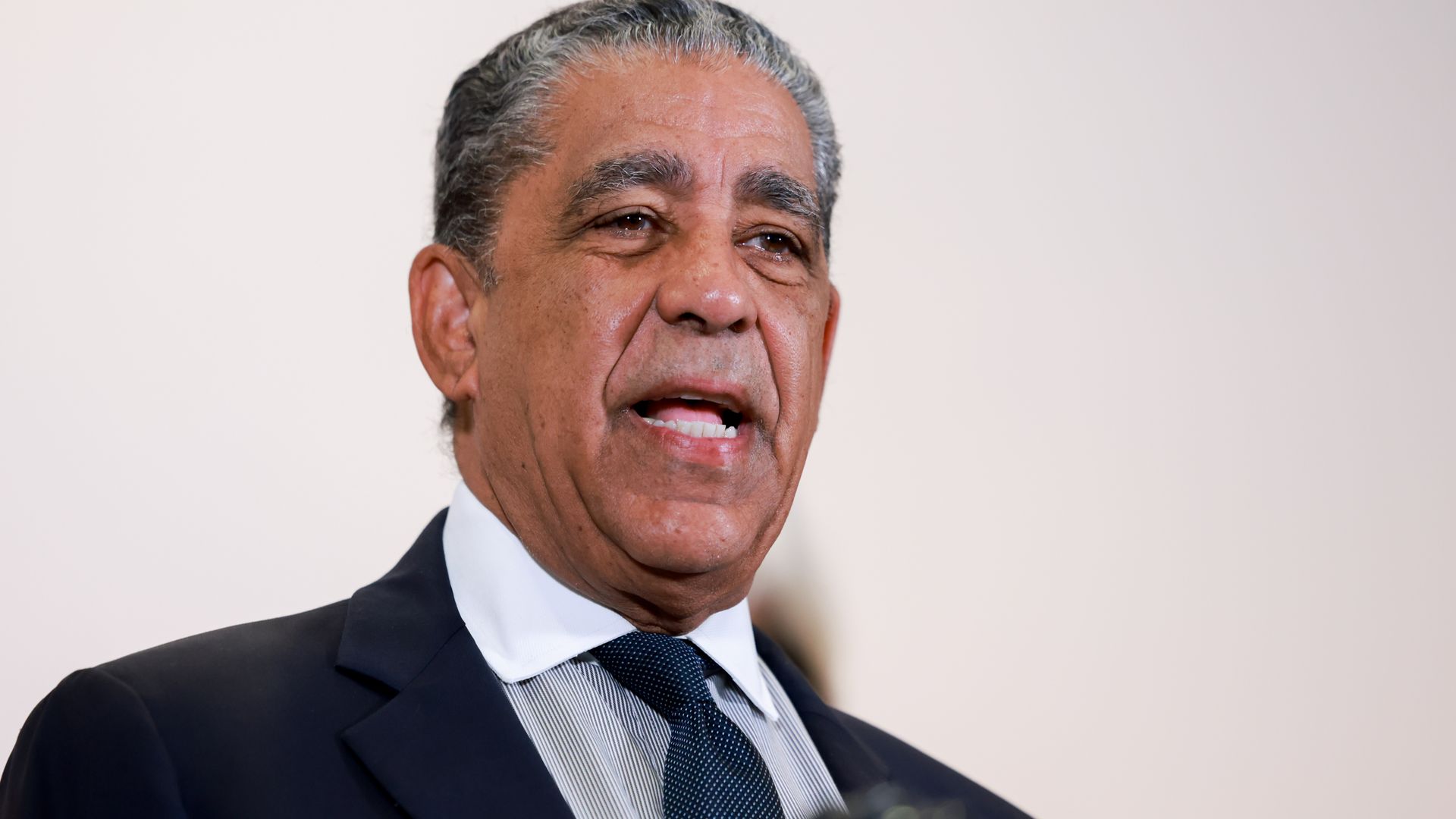
Congressional Hispanic Caucus chair Adriano Espaillat (D-N.Y.) lost his primary Tuesday to democratic socialist challenger Darializa Avila Chevalier, the Associated Press projects.
Why it matters: It's a major blow to the Democratic Party establishment and underscores the liberal grassroots' growing frustration with party leaders.