The U.S. military conducted strikes against Iranian targets around the Strait of Hormuz, U.S. Central Command said in a statement.
Why it matters: These are the first U.S. strikes against Iranian targets since the signing last week of the memorandum of understanding (MOU), which declared an end to the war.
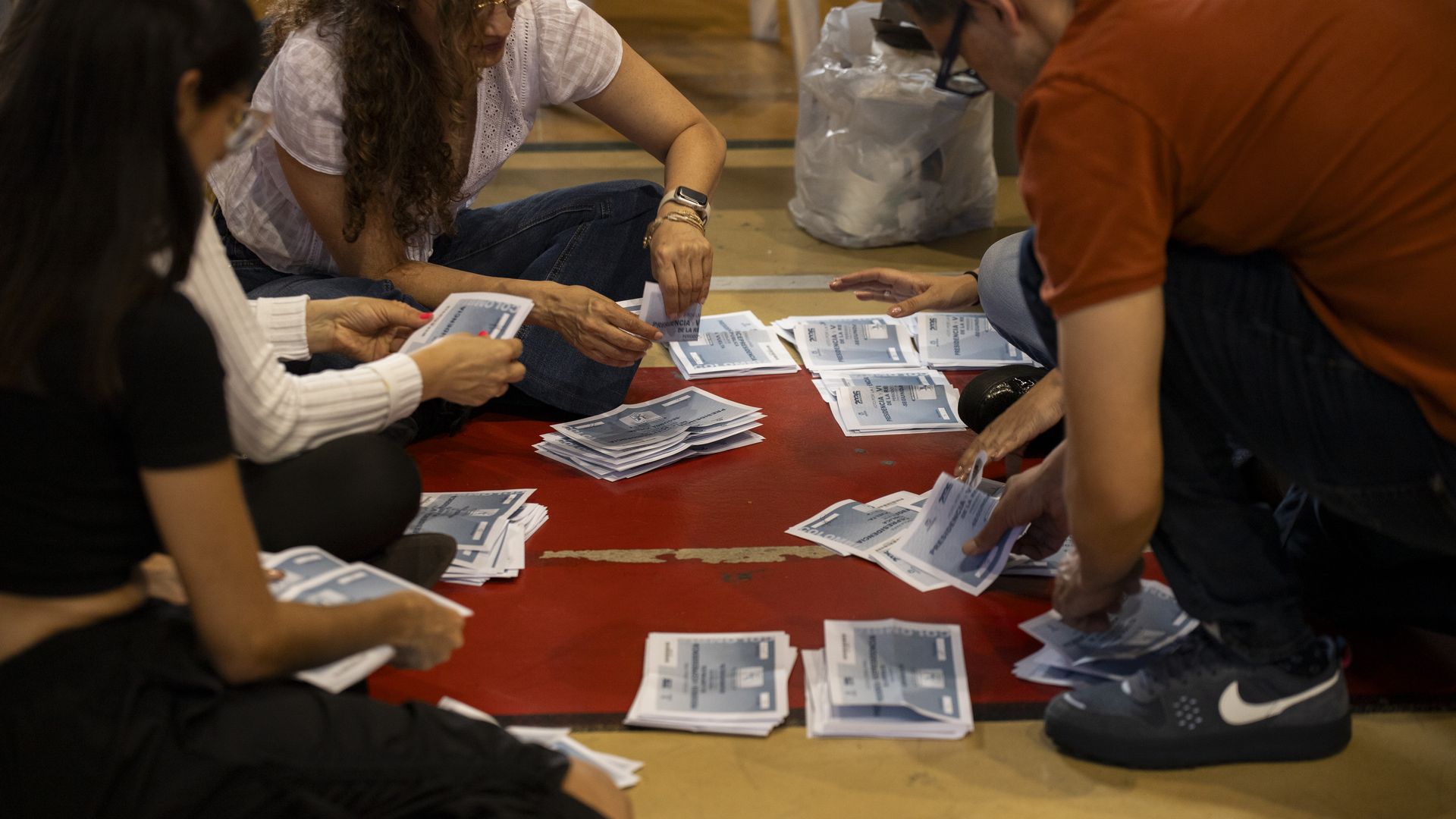
Senate Republicans are elevating Colombia as a role model in their push for stricter voting rules in the U.S. — and using California as their foil.
Why it matters: Republicans don't have the votes to jam through President Trump's SAVE Act, but some conservatives are using Colombia's election system to keep the up the pressure on GOP leaders.
Volkswagen reportedly plans to lay off as many as 100,000 employees worldwide in a massive downsizing that illustrates how Chinese competition is reshaping the global automotive industry.
Why it matters: European automakers are faltering in China and on their home front as Chinese automakers like BYD deliver high-quality, low-cost electric vehicles.
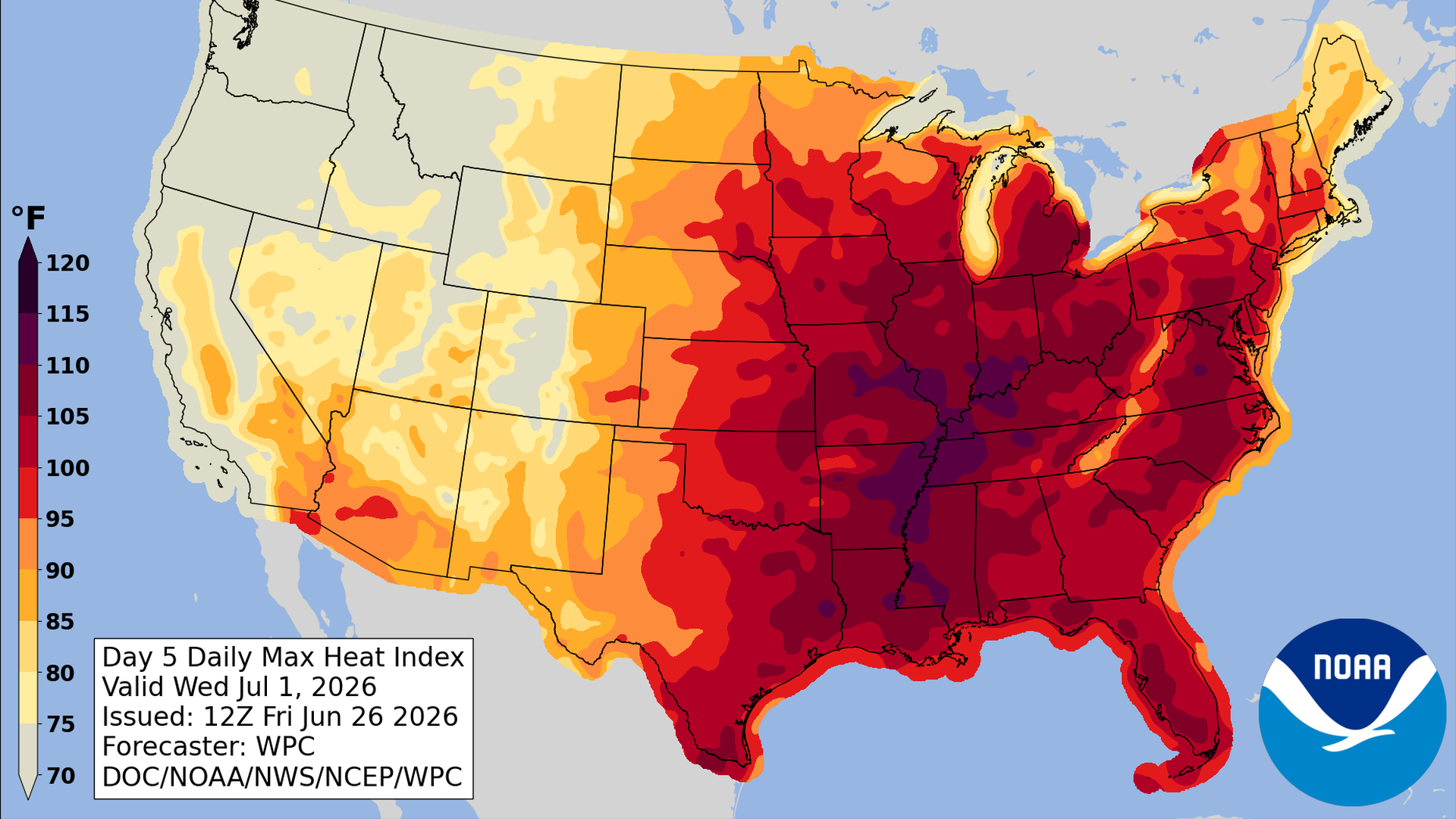
A "heat dome" is forecast to bring dangerously high temperatures to much of the eastern half of the U.S. next week.
The extreme heat could last through July 4 celebrations.
Driving the news: "Widespread temperatures into the 90s to low 100s, combined with high humidity, will result in heat indices approaching or exceeding 105-110 in many places," NOAA forecasters write.
"Overnight lows will also be quite warm, with some record high minimums possible, bringing little to no relief from the heat in the nighttime hours."
Zoom in: Cities from Minneapolis and Chicago to Nashville and Atlanta will be under extreme heat risk next week, NOAA says.
Such conditions affect"anyone without cooling/hydration as well as health systems, industries, and infrastructure."
🥵 Meanwhile: The heat wave baking Europe this week wouldn't be possible without climate change, a World Weather Attribution rapid study found.
Israel and Lebanon signed a framework agreement on Friday after four days of negotiations in Washington, mediated by the Trump administration.
Why it matters: The signing is a significant diplomatic breakthrough, but it's unclear how much of it can be implemented as long as Hezbollah is still armed and influential in the country.
Finance social media was honking over this one: billionaire SoftBank CEO Masayoshi Son's latest shareholder slide deck, replete with geese and dozens of their golden eggs.
Why it matters: It's fun — plus maybe a sign of rising animal spirits during a bubbly moment — and it offers some protein-rich food for thought.
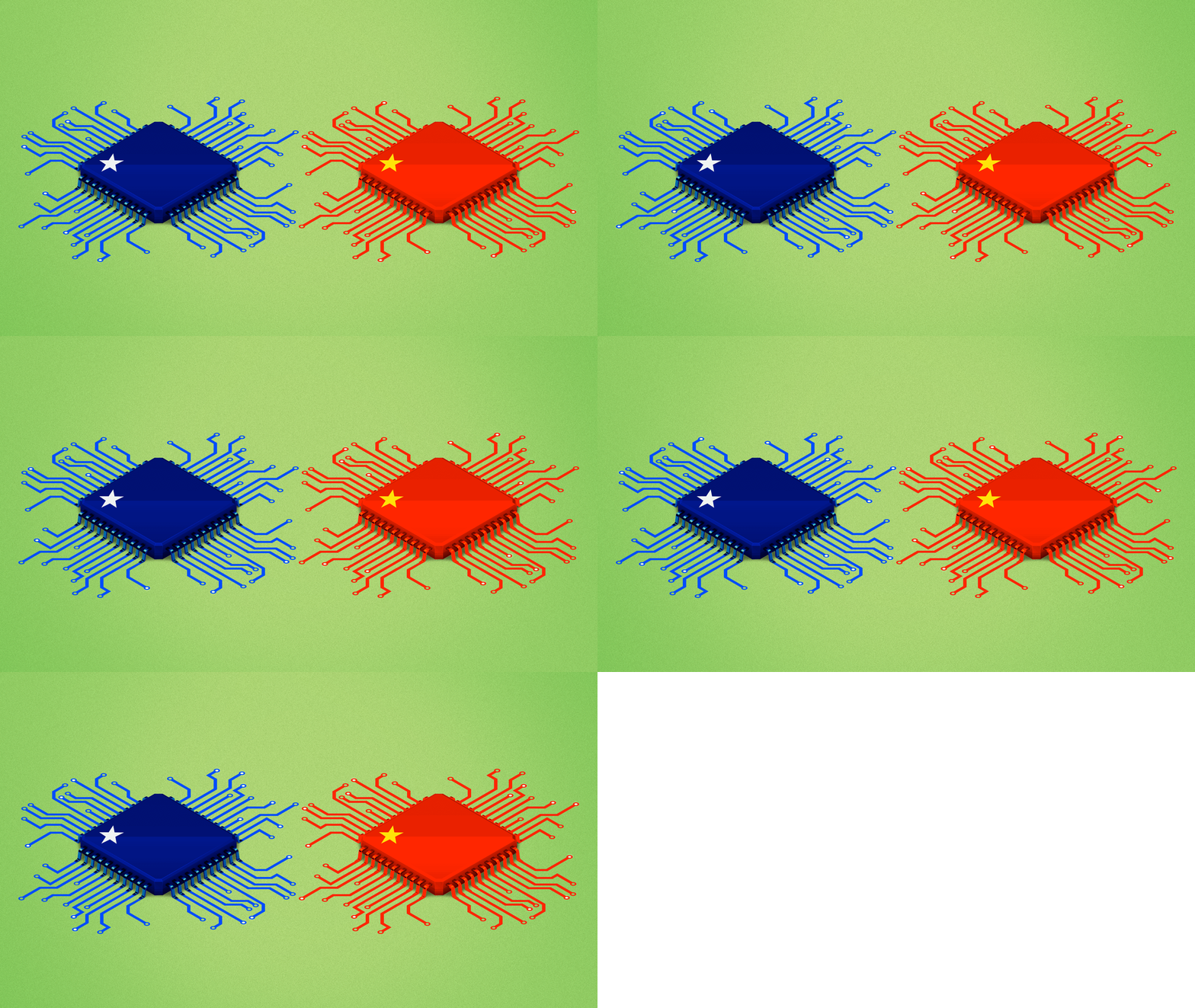
Washington is racing to sell the world on American AI just as China's cheap and capable models are becoming harder to ignore.
Why it matters: Chinese models don't have to beat OpenAI or Anthropic to reshape the global AI order. They just have to be useful, available and widely adopted.
New June temperature records were set in the U.K. and France this week as a deadly heat wave grips much of Europe.
Why it matters: A new World Weather Attribution analysis found human-caused climate change made this week's extreme heat "virtually impossible" 50 years ago.
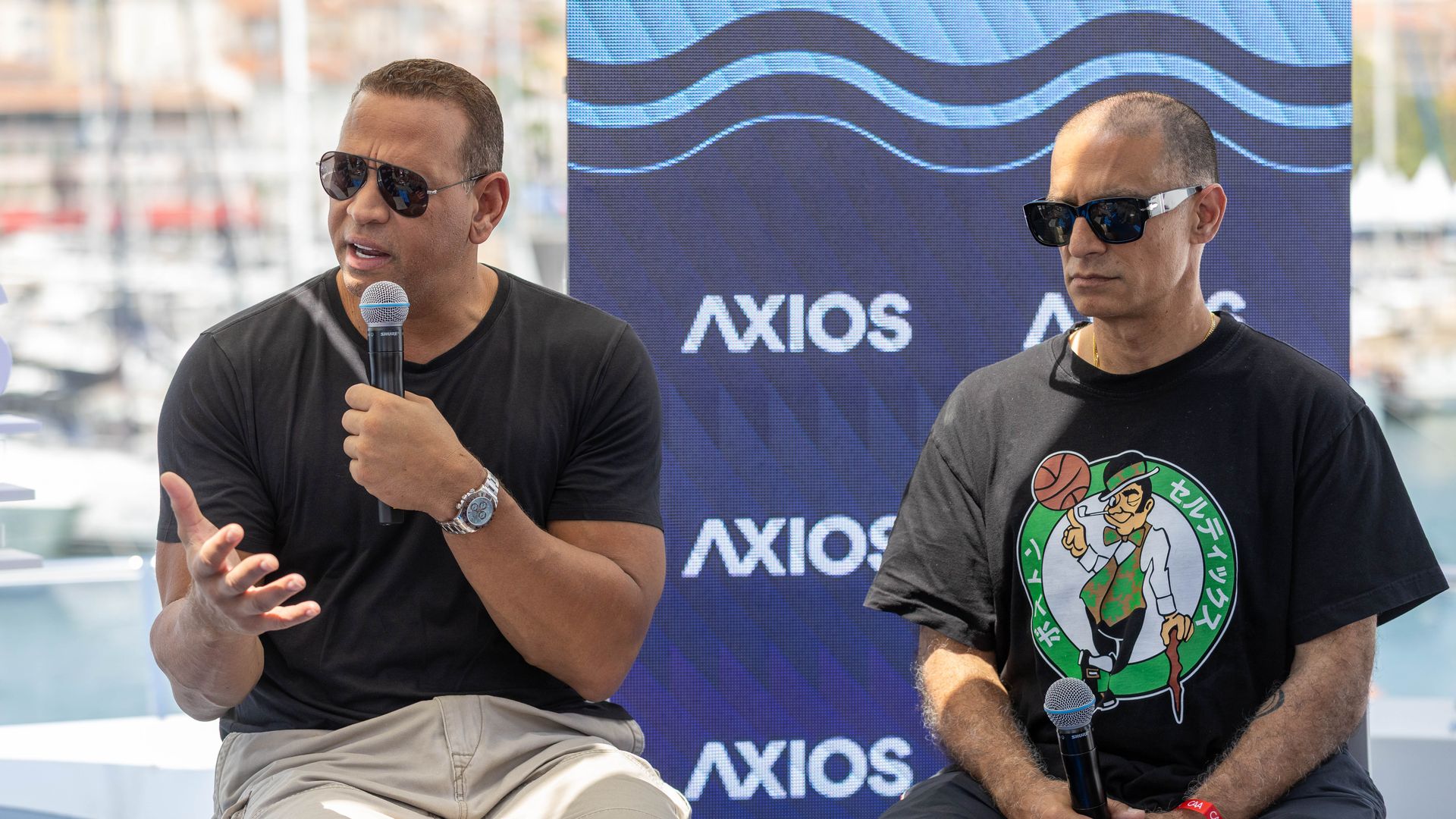
CANNES, France — Latino purchasing power in the U.S. has hit $4 trillion — yet the marketing and ad dollars aimed at the Latino consumer still doesn't match it, leaders said at an Axios event.
Why it matters: Undervaluing this audience has real consequences across industries, said former professional baseball player Alex Rodriguez, who is chairman and CEO of A-Rod Corp.
As an illustration, Rodriguez pointed to women's sports: top WNBA broadcasts can draw similar viewership numbers as Sunday Night Baseball, yet the MLB commands 25 to 30 times more in rights fees.
"The same math applies to how we [Latinos] are valued," Rodriguez said.
Axios' Sara Fischer and Kerry Flynn moderated discussions with Rodriguez, co-founder of Religion of Sports Gotham Chopra, Atlassian Williams Formula 1 Team driver Carlos Sainz, and Pablo Torre, host and executive editor of "Pablo Torre Finds Out." The June 24 event was sponsored by TelevisaUnivision.
What they're saying: Brands treat the Latino community as a monolith and that's the core mistake, Rodriguez and Torre both said.
"The way a Latino shows up in LA is so different than the way a Latino shows up in Miami or in New York," Rodriguez said. "You got to really micro-study these things."
"Race is a concept that is imposed upon you — it is not one that you choose," Torre said. "We need to be careful about that."
Between the lines: Brands' one-size-fits-all approach to Latino communities often reflects a lack of diversity among the decision-makers, Rodriguez said.
"It's not good enough to be the only man or woman of color in the room," Rodriguez said. "Leave that door open. Make sure you bring others with you."
Zoom out: Sports and music are the two most powerful entry points and live events are where Latino fandom converts to commerce, Sainz and Torre said.
Sainz said F1 is finally paying attention, as it is now translating all of its social content to Spanish and this year will host its first Grand Prix in Madrid in over 40 years. "When we do things, we like to do them properly," Sainz said.
The NFL's Bad Bunny decision was business, not culture, Torre added. "The prime directive is growth. By that standard, Bad Bunny makes all the sense in the world."
Yes, but: Reaching this audience authentically takes time and many brands won't invest it, Chopra said.
"You cannot show up on day one with a camera and say, 'Go be vulnerable,'" Chopra said. "Everything we have done successfully has been a function of time and earning trust."
The bottom line: "Sports and music are the two last elements that bring us together," Rodriguez said, explaining that the brands that invest in the Latino audience year-round, not just during special events like the World Cup, are the ones that will win.
Content from the sponsor's segment:
In a View from the Top conversation, TelevisaUnivision president of U.S. advertising sales and marketing John Kozack said media fragmentation has made it harder to reach the Latino audience, but live sports, music and drama remain the exception.
TelevisaUnivision holds over 50% of all U.S. soccer viewership and has secured the Spanish-language broadcast rights for Super Bowl LXI in 2027, Kozack said.
"It's not if you should invest in reaching Hispanics — it's how."
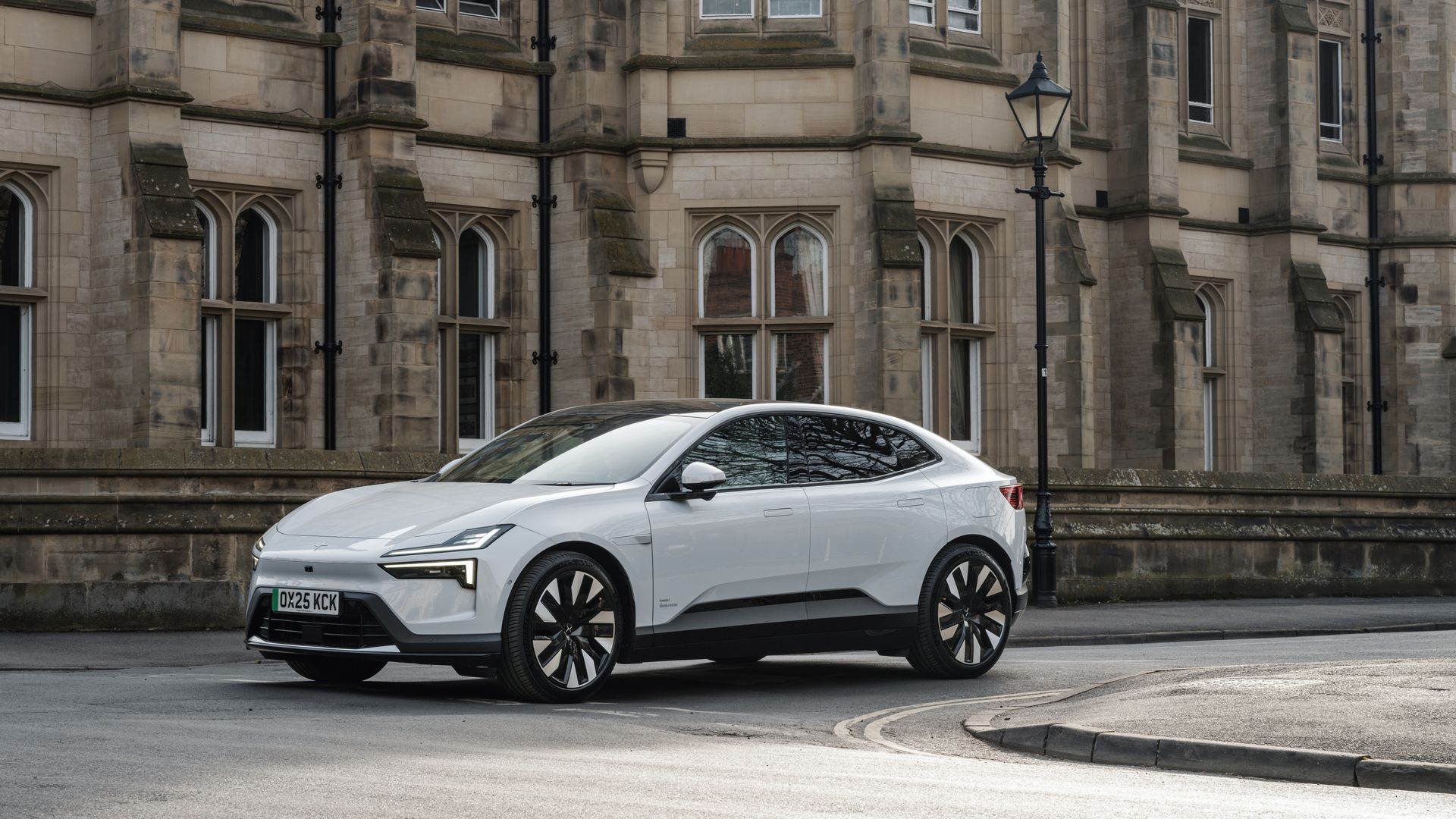
Polestar, the Chinese-owned electric vehicle company, is withdrawing from the U.S. market after the U.S. Commerce department banned its high-tech cars, citing national security concerns.
The big picture: It's the latest sign of a new, fractured era in the auto industry. After decades of globalization, the industry is splintering into regional markets and supply chains, driven by geopolitics and the rise of low-cost, high-tech competition from China.
The UN paused efforts to evacuate more than 11,000 sailors stranded in the Strait of Hormuz after Iran objected to the plan and a cargo ship was reportedly struck near Oman.
Why it matters: The pause and the apparent attack highlight how quickly the flow of people and goods through one of the world's busiest shipping lanes can be disrupted, even after the U.S.-Iran truce.
GLM-5.2 — the latest Chinese open-source model capturing Silicon Valley's attention — is raising fresh concerns among security researchers that advanced AI hacking capabilities are becoming dramatically cheaper and more accessible.
Why it matters: The barrier to entry for malicious hackers eager to automate and personalize their attacks is getting lower and lower.
Two powerful earthquakes struck Venezuela about 100 miles west of Caracas on Wednesday, killing at least 164 people, injuring 971 others and causing widespread damage.
The big picture: The U.S. Geological Survey issued its highest-level alert, signaling the back-to-back magnitude 7.2 and 7.5 earthquakes were expected to cause extensive casualties and severe economic damage.
The war-driven spike in gas prices has caused "financial hardship" for about two-thirds of American households, per survey data from Gallup out Thursday.
Why it matters: Although it's becoming clear that the rise in oil prices wasn't a huge hit to the overall U.S. economy, high prices at the pump certainly slammed people in the pocketbook.
The Trump administration asked Congress on Wednesday for $87.6 billion in supplemental funding, most of it to cover costs related to the Iran war.
Why it matters: The request is likely to intensify debate over presidential war powers as lawmakers in both parties question whether Congress should have authorized military action against Iran.