Israel and Lebanon sign framework agreement

Add Axios as your preferred source to
see more of our stories on Google.
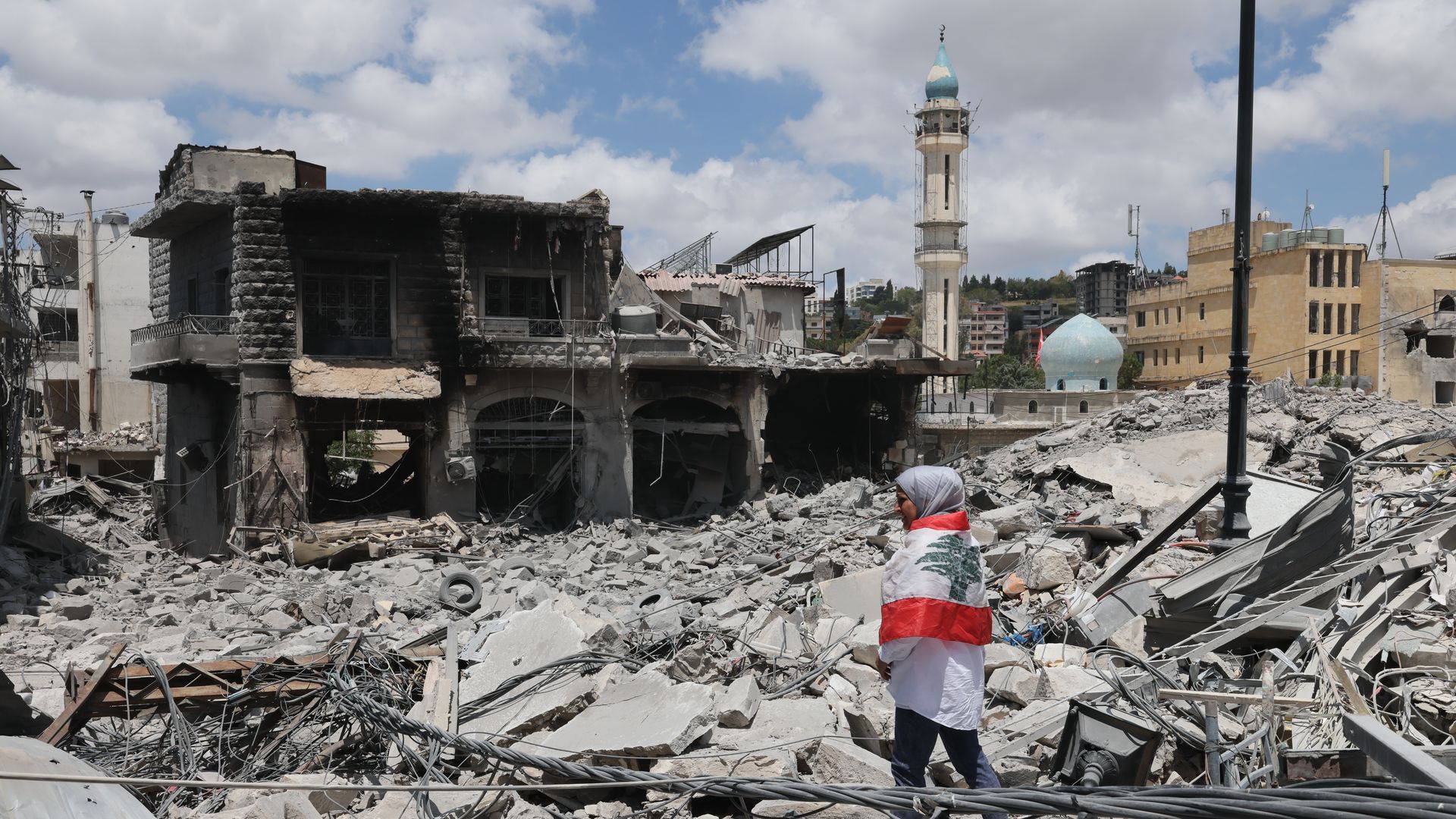
Nabatieh, Lebanon, after Israeli strikes, June 15. Photo: Houssam Shbaro/Anadolu via Getty
Israel and Lebanon signed a framework agreement on Friday after four days of negotiations in Washington, mediated by the Trump administration.
Why it matters: The signing is a significant diplomatic breakthrough, but it's unclear how much of it can be implemented as long as Hezbollah is still armed and influential in the country.
- The framework is designed to eventually end Israel's occupation of southern Lebanon and restore the country's territorial integrity, but that appears a long way off.
- A senior Israeli official said after the signing of the agreement that "Israel will maintain its security zone within the borders of the Yellow Line in Lebanon until the day when Hezbollah and the other terrorist organizations in Lebanon are disarmed and there is no longer a threat from Lebanon to the territory of the State of Israel."
- A senior Hezbollah-affiliated lawmaker, Hassan Fadlallah, condemned the agreement and said Lebanese authorities would need to fight a "civil war" if they wanted to enforce it.
Breaking it down: The framework agreement describes a path for a future peace agreement and includes immediate steps on the ground the parties will take.
- One such step is the launching of two "pilot projects" where the Israeli military is to withdraw from small areas it currently occupies and the Lebanese army is to deploy there.
- Israeli and U.S. officials said that U.S. military officers will be involved in working with the Lebanese army on the "pilot projects," mainly to verify these areas have no Hezbollah presence.
- One of the two areas is north of the Litani River and the other is to the south of it, two Israeli officials said.
State of play: A fragile ceasefire between Israel and Hezbollah has largely held since last Saturday, though Israel has conducted several strikes on what it claimed were immediate threats from Hezbollah.
- While the Israeli withdrawal is expected to be limited, it will be the first such move since Israel expanded its occupation of southern Lebanon during the war with Iran.
- The senior Israeli official said the Israeli military's "freedom of military action will be maintained throughout the security zone to eliminate threats of any kind."
Driving the news: The agreement was signed by the Israeli and Lebanese ambassadors to Washington and State Department counselor Dan Holler.
- Secretary of State Marco Rubio said at the signing ceremony at the State Department that "it is a good day" but stressed "there is a lot of work ahead."
- In a written statement afterwards, Rubio said the agreement "establishes a clear and structured process to restore Lebanon's sovereignty, disarm Hizballah and dismantle its terrorist infrastructure, and enable Israel to return to its borders once that threat to its citizens is removed." He said the U.S. would provide $100 million in humanitarian assistance and to train Lebanese troops.
- The Israeli ambassador said at the signing ceremony that the final goal is to get "real peace" between Israel and Lebanon. He called the agreement "performance-based" and said "Iran is out, Hezbollah is out and the road to peace between Israel and Lebanon is in."
Behind the scenes: Rubio held calls on Thursday with Israeli Prime Minister Benjamin Netanyahu and with Lebanese President Joseph Aoun to try to solve final disagreements, a U.S. official said.
- Rubio joined the talks between the negotiating teams on Friday morning.
