Axios House: Brands are losing opportunities with Latino consumers

Add Axios as your preferred source to
see more of our stories on Google.
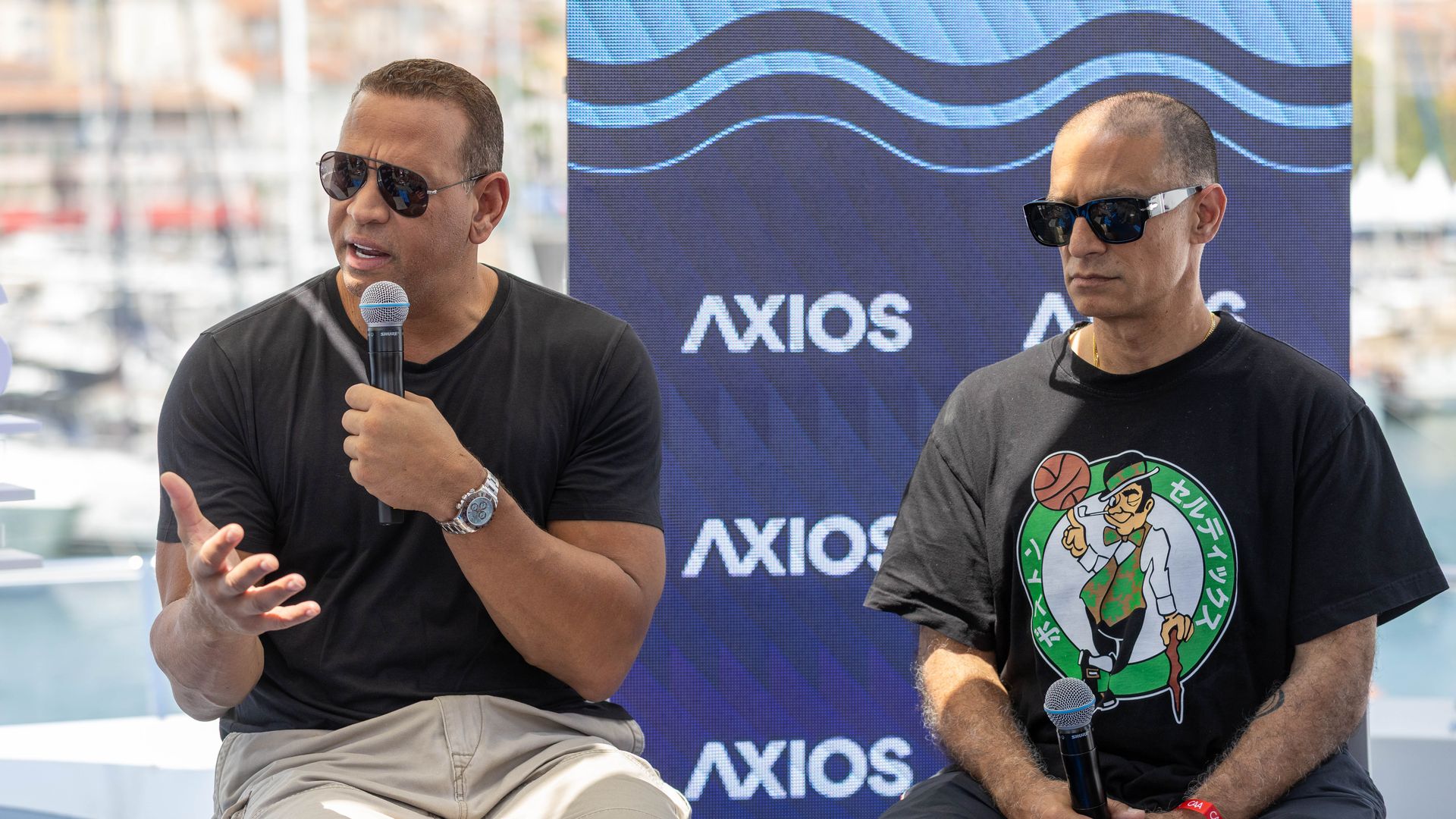
Photographer Nicolas Gavet for Axios
CANNES, France — Latino purchasing power in the U.S. has hit $4 trillion — yet the marketing and ad dollars aimed at the Latino consumer still doesn't match it, leaders said at an Axios event.
Why it matters: Undervaluing this audience has real consequences across industries, said former professional baseball player Alex Rodriguez, who is chairman and CEO of A-Rod Corp.
- As an illustration, Rodriguez pointed to women's sports: top WNBA broadcasts can draw similar viewership numbers as Sunday Night Baseball, yet the MLB commands 25 to 30 times more in rights fees.
- "The same math applies to how we [Latinos] are valued," Rodriguez said.
Axios' Sara Fischer and Kerry Flynn moderated discussions with Rodriguez, co-founder of Religion of Sports Gotham Chopra, Atlassian Williams Formula 1 Team driver Carlos Sainz, and Pablo Torre, host and executive editor of "Pablo Torre Finds Out." The June 24 event was sponsored by TelevisaUnivision.
What they're saying: Brands treat the Latino community as a monolith and that's the core mistake, Rodriguez and Torre both said.
- "The way a Latino shows up in LA is so different than the way a Latino shows up in Miami or in New York," Rodriguez said. "You got to really micro-study these things."
- "Race is a concept that is imposed upon you — it is not one that you choose," Torre said. "We need to be careful about that."
Between the lines: Brands' one-size-fits-all approach to Latino communities often reflects a lack of diversity among the decision-makers, Rodriguez said.
- "It's not good enough to be the only man or woman of color in the room," Rodriguez said. "Leave that door open. Make sure you bring others with you."
Zoom out: Sports and music are the two most powerful entry points and live events are where Latino fandom converts to commerce, Sainz and Torre said.
- Sainz said F1 is finally paying attention, as it is now translating all of its social content to Spanish and this year will host its first Grand Prix in Madrid in over 40 years. "When we do things, we like to do them properly," Sainz said.
- The NFL's Bad Bunny decision was business, not culture, Torre added. "The prime directive is growth. By that standard, Bad Bunny makes all the sense in the world."
Yes, but: Reaching this audience authentically takes time and many brands won't invest it, Chopra said.
- "You cannot show up on day one with a camera and say, 'Go be vulnerable,'" Chopra said. "Everything we have done successfully has been a function of time and earning trust."
The bottom line: "Sports and music are the two last elements that bring us together," Rodriguez said, explaining that the brands that invest in the Latino audience year-round, not just during special events like the World Cup, are the ones that will win.
Content from the sponsor's segment:
In a View from the Top conversation, TelevisaUnivision president of U.S. advertising sales and marketing John Kozack said media fragmentation has made it harder to reach the Latino audience, but live sports, music and drama remain the exception.
- TelevisaUnivision holds over 50% of all U.S. soccer viewership and has secured the Spanish-language broadcast rights for Super Bowl LXI in 2027, Kozack said.
- "It's not if you should invest in reaching Hispanics — it's how."
