WWE chairman Vince McMahon is a playable character in the latest WWE 2K23 video game, despite controversies that have largely kept him out of the public eye.
Why it matters:McMahon announced last summer he would retire from the WWE shortly after the Wall Street Journal reported that the longtime wrestling promoter had secretly paid off a former employee with whom he allegedly had an affair.
Former GitHub CEO Nat Friedman is helping fund $250,000 in prizes aimed at seeing if someone can use machine learning and computer vision to make sense of papyrus scrolls that were buried by the deadly Mount Vesuvius eruption nearly 2,000 years ago.
Why it matters: The eruption obscured the text in the scrolls, but also preserved them such that modern technology might be able to uncover what was written.
Details: The scrolls, known as the Herculaneum papyri, were part of a library in a villa once owned by the father-in-law of Julius Caesar. The villa, buried in 79 A.D., was discovered by a farmer in 1750, but many scrolls were destroyed by early attempts to open and decode them.
More recently, X-rays have allowed the 600 remaining scrolls to be virtually unrolled, but they have remained unreadable.
Friedman and co-sponsor Daniel Gross are funding $250,000 in prizes, with $50,000 going to individuals or teams who can detect ink from X-rays of the document. Another $150,000 will be shared among those who are able to read at least four separate passages of at least 140 characters long.
What they're saying: Friedman said that researchers have recently proven that machine learning can help recognize ink in papyrus fragments, convincing him the tech is up to the challenge.
"We live in an age of miracles," he told Axios. "We're using high energy physics and AI to peer into the past."
Crypto staking is a way of maintaining consensus over bookkeeping systems with thousands of simultaneously updated copies — that is, a blockchain.
Why it matters: A massive amount of value is tied up in staking. On Ethereum alone, 17.6 million ethers (about $30 billion in value, or 14% of ether's total market cap) is staked on the network, guaranteeing its transactions are provably fair.
Snapchat on Wednesday said it will begin publishing guidelines that detail what types of content gets algorithmically distributed in its app to users.
Why it matters: To date, only vetted publishing partners and professional creators on the platform have had access to the guidelines. Now, Snapchat is making them public to give parents more assurance about what their teens see on the app.
Mozilla called on entrepreneurs to create trustworthy AI applications as it announced a "Responsible AI" challenge Tuesday at the South by Southwest festival in Austin, Texas.
Why it matters: At a festival where companies could not be more eager to share their plans, half-baked and otherwise, for the explosive field of generative AI, Mozilla offered an opportunity to do so with a little more foresight.
With Tuesday's release of OpenAI's new GPT-4, generative AI just got a lot more powerful — and we got a fresh reminder of just how unprepared we are to deal with these new machines.
Why it matters: The amazing computer systems that can now ace standardized tests and maybe even do your taxes are still disturbingly prone to errors, bias and hallucinations.
Google showed off an array of new artificial intelligence (AI)-driven health care tools on Tuesday, from a souped-up chatbot that can shed light on your medical symptoms to enhanced search features that tell you if a doctor takes Medicaid.
Why it matters: There's an arms race among big tech companies to infuse their products with AI — but the results, particularly in health care, can have unwanted consequences or pitfalls, like racial bias, privacy concerns and ethical problems.
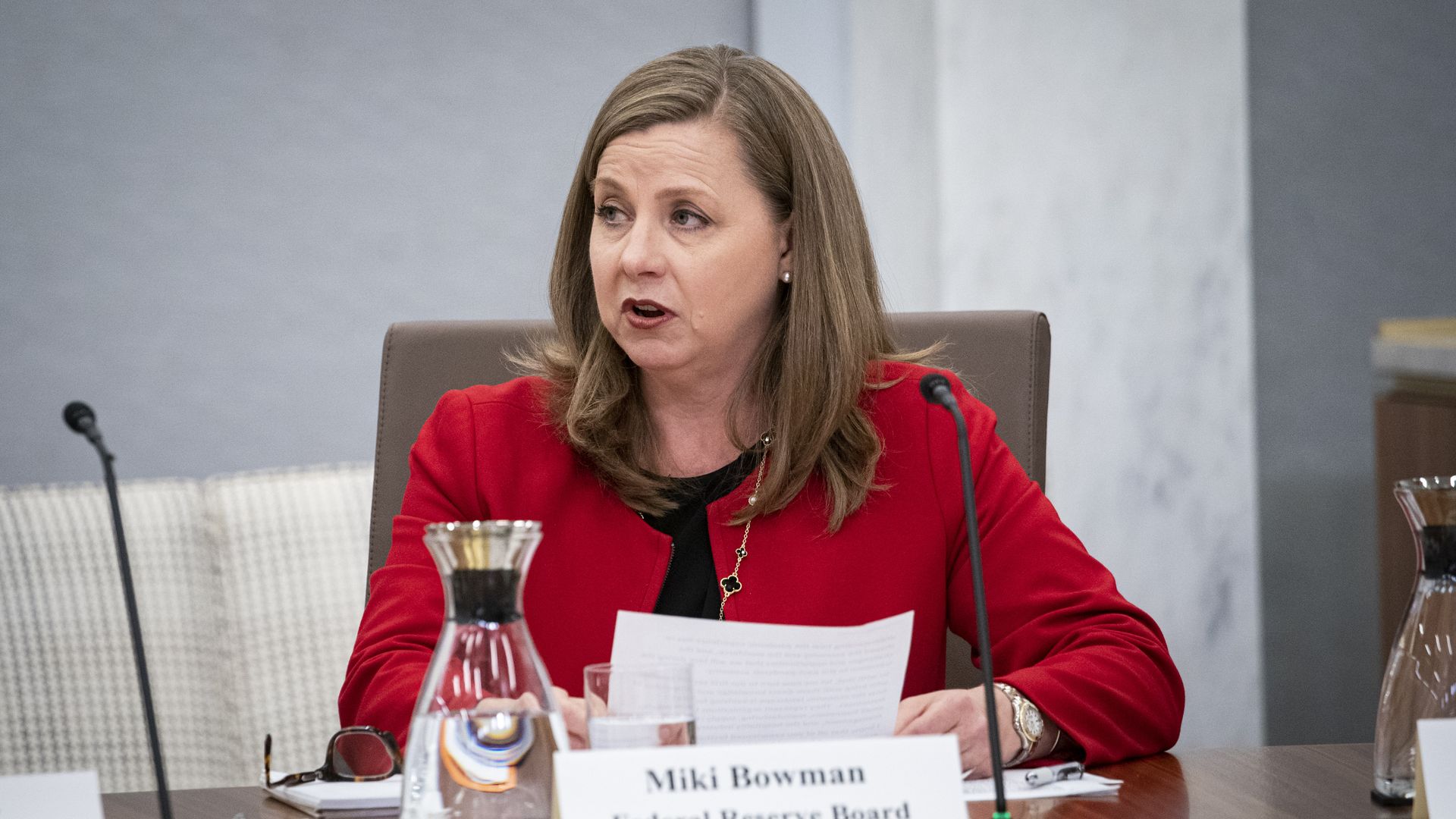
Federal Reserve governor Michelle Bowman on Tuesday said the U.S. banking system remained on solid footing in the first public speech from a policymaker after the high-profile failures of Silicon Valley Bank and Signature Bank.
Why it matters: Bowman made short remarks acknowledging the fallout from those bank closures, which forced the Fed and other regulators to step in with emergency measures, during a speech that focused on innovation in the banking system.
OpenAI on Tuesday released GPT-4, a more powerful update of its text generator engine that will power its own AI products as well as those from Microsoft and other companies.
Why it matters: The world is already enamored with ChatGPT, which is based on an earlier version. Improvements could go a long way to addressing criticisms of the hot new chatbot-powering tool about its errors and other shortcomings.
Driving the news: As one bank failed and another closed, bitcoin and other crypto got a boost, market experts tell Axios — all linking the weekend banking crisis to changing expectations.
Major cybersecurity companies and startups appear to have contained their risk from the sudden collapse of Silicon Valley Bank over the weekend.
Driving the news: Several cybersecurity companies, including big names like CrowdStrike, relied on SVB for some of their financial needs before the bank's unexpected failure late last week — leaving leadership teams and investors in limbo until regulators stepped in Sunday night.
Ransomware gangs are starting to go public with the sensitive information they steal to ensure victims pay up.
Driving the news: In the last week alone, ransomware criminals have threatened to leak private photos from breast cancer patients' files and published a video showcasing the data they could access while digging through Minneapolis Public Schools' systems.
As it opens up to self-publishers, the Epic Games Store will not allow pornographic video games, one of the store’s few content prohibitions alongside hateful content and fraudulent games.
Why it matters: The ban on adult content, common for many major online gaming storefronts, is another point of distinction between Epic’s marketplace and Valve’s Steam service, which allows some types of sexual games and sees them chart well.
Silicon Valley Bank's share sale announcement last Wednesday night caused concern at Founders Fund, a large venture capital firm that did most of its own banking with SVB, Axios has learned.
Behind the scenes: By Thursday morning, Founders Fund's top operations executives were on the phone, quickly deciding to move firm capital to a number of bigger banks. Firm founder Peter Thiel was not part of the conversation.
Beta Technologies, an electric aviation company that has an electric vertical takeoff and landing (eVTOL) aircraft in flight testing, announced sales of a less futuristic battery-powered model on Tuesday.
Driving the news: The company is pursuing certification of an electric conventional takeoff and landing aircraft, or eCTOL, which uses airport runways, while simultaneously working on eVTOL technology.
Meta is laying off 10,000 people and cutting 5,000 open roles as part of a larger plan to flatten the company's management structure, CEO Mark Zuckerberg said Tuesday.
Why it matters: It's the second round of layoffs to hit the tech giant in the past few months. In November, Meta cut 13% of its staff — or more than 11,000 people.
In what has become a race to incorporate generative AI across their products, Microsoft and Google are both announcing efforts this week that will allow businesses to harness the technology in conjunction with their proprietary data.
Why it matters: While competition is often good for customers, some worry that peer pressure is prompting companies to rush deployment of an unproven technology replete with risks and unknowns.
A recent lawsuit in Texas against women who helped a friend access abortion medication is renewing calls for tech giants to make end-to-end encryption the default on their messaging services.
Driving the news: A Texas man recently filed a civil lawsuit against three women who he alleges helped his ex-wife obtain abortion-inducing medication and terminate her pregnancy, according to the Texas Tribune.





















/2023/03/14/1678807123209.gif?w=3840)