Books are up against the stiffest competition ever for our increasingly wandering eyes and shortening attention. Fortnite, Netflix, Facebook and a bottomless well of news make it hard to get through a chapter of a novel that once would have consumed an afternoon.
What's happening: Buoyed by the success of audiobooks, developers are deploying an array of new tech to pull words off the printed page and capture a generation hooked on whiz-bang entertainment.
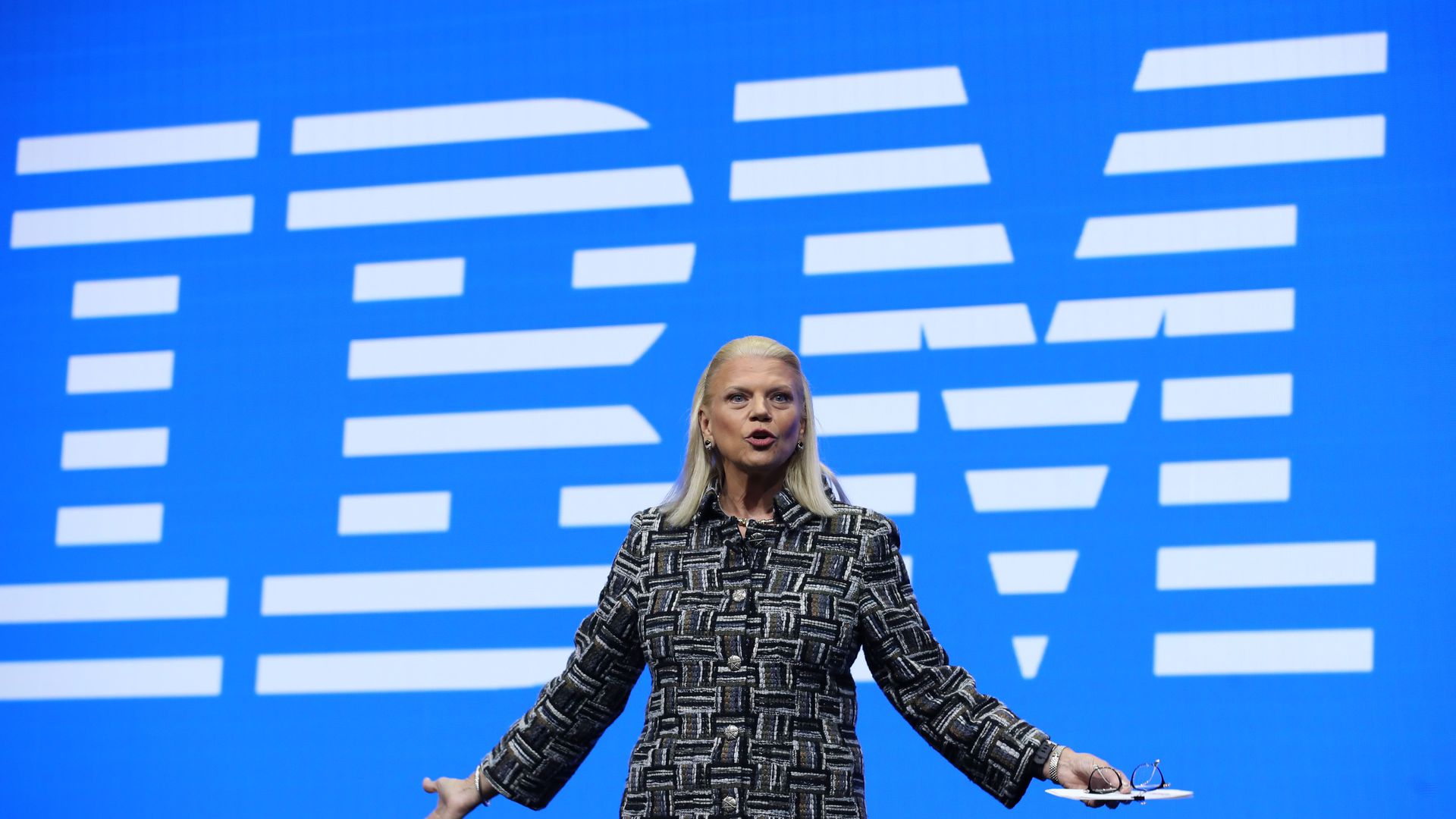
IBM CEO Ginni Rometty, in her leadership role at the Business Roundtable, has penned a sharply worded letter calling on Congress to pass the Equality Act, which would protect LGBTQ Americans from a broad range of discrimination.
Why it matters: While IBM has supported such legislation in the past, it's the first time the Business Roundtable has taken on the issue in such a high-profile and concerted manner.
Mark Zuckerberg's vision for a new Facebook that focuses on private conversations could end up deepening the social network's misinformation problems.
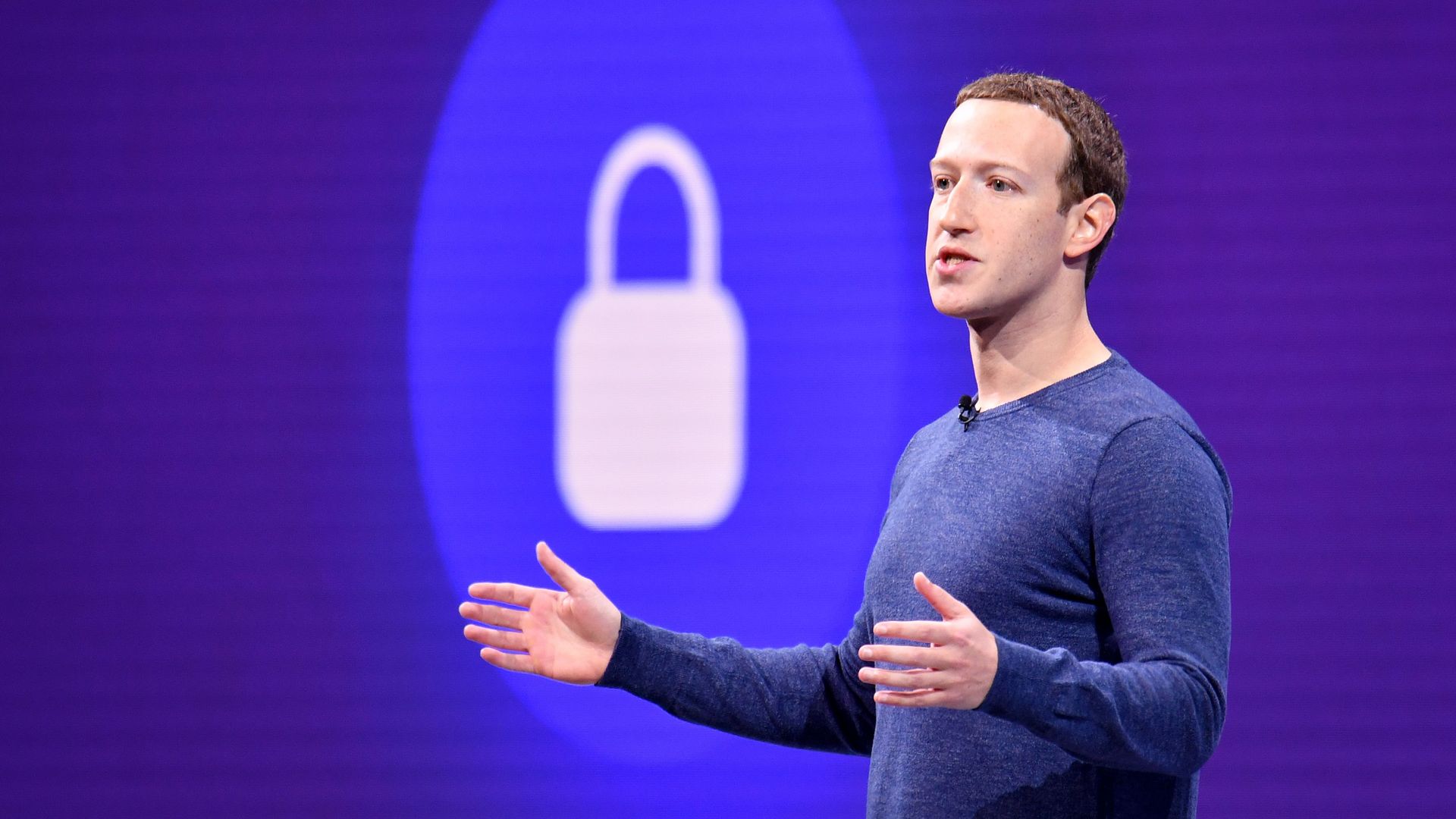
Driving the news: Zuckerberg posted Wednesday outlining a new emphasis on privacy at Facebook, foreseeing a future that de-emphasizes the News Feed's "digital public square" in favor of private messaging's "digital living room."
Apple said Wednesday it plans to hire 1,200 people over the next 3 years to staff its expanded offices in San Diego — home to chipmaker Qualcomm, with whom Apple is currently embroiled in a bitter legal battle.
Why it matters: The move comes as Apple is reportedly looking to beef up its in-house modem chip operations, although the iPhone maker stressed it is hiring for a wide range of engineering functions.
Yesterday's privacy announcement from Facebook CEO Mark Zuckerberg has been framed as a response to public outcry about the company's lax data privacy standards, but it's really about Facebook going all in on what it sees as the future of communication, payments and life.
What's next? The new "Facebook coin," even if not quickly adopted by payment processors, can become a global currency that users of Facebook, WhatsApp and Instagram can use to complete transactions among themselves anywhere in the world.
Facebook's decision to shift gears to focus on encrypted private messaging will either cement the social network's global dominance or end it. Either way, it will change the way more than one-third of the world's population engages with the internet.
Driving the news: Zuckerberg's Wednesday announcement is a clear response to public outcry over Facebook's flawed custody of users' data. But the shift, if it actually happens, could go a lot further than privacy principles.
Huawei said Wednesday night that it has filed a federal lawsuit against the U.S. government, challenging the constitutionality of a law that keep it from selling its telecommunications gear here.
Why it matters: The U.S. has launched an all-out blitz aimed at stopping the Chinese equipment vendor from selling its current and future products throughout the world.
15 years after he launched the "digital equivalent of a town square," Facebook founder Mark Zuckerberg is promising a major shift in the other direction. "I believe the future of communication will increasingly shift to private, encrypted services where people can be confident what they say to each other stays secure and their messages and content won't stick around forever," he announced today.
Why it matters: "That would mark a sharp reversal for Facebook, which has grown into one of the world’s wealthiest companies by inventing exotic new methods of personal data collection," The Verge's Casey Newton writes.
Mark Zuckerberg announced Wednesday in a 3,000-word note that Facebook plans to rebuild its services around several privacy-focused principles: "private interactions," "encryption," "reducing permanence," "safety," "interoperability" and "secure data storage."
The big picture: Zuckerberg’s note reflects how Facebook finds itself perpetually on the defensive over privacy issues. The social giant’s reputation has spiraled since last year, when reporters exposed the Cambridge Analytica scandal and Facebook was hit with its first major data breach, according to a Harris Poll survey produced in partnership with Axios.
A new study suggests black people are more likely to get hit by an autonomous vehicle than white people, Vox writes.
Why it matters: The findings are the latest example of how human bias seeps into artificial intelligence. If AVs are trained with data that includes only light-skinned people as examples of what constitutes a "human," they won't recognize dark-skinned people as also "human" in the real world.
A proposal from the Trump re-election campaign to create a national, wholesale 5G network is drawing criticism from FCC commissioners on both sides of the aisle.
What's happening: On Tuesday, Republican FCC commissioner Brendan Carr joined Democratic colleague Jessica Rosenworcel in speaking out against the plan.
Cities are souring on the controlled chaos of current ride-hailing systems, and fleet management systems could work in concert with policy and infrastructure to mitigate the issue.
Why it matters: If autonomous vehicles make ride-hailing cheaper and more efficient, city traffic could slow even further — but fleet management systems could help cities manage the challenge, ideally before AVs are widely deployed.
Officials in Arlington County, Virginia Tuesday laid out details of the deal that will give Amazon incentives to bring its headquarters expansion to the Washington, D.C. suburb.
Why it matters: A vote by the Arlington County Board on the draft deal approaches amid mounting scrutiny of financial incentives promised for corporate expansions. A political backlash to Amazon's planned office in New York — announced as a pair with Virginia's — already caused the company to back out.
Facebook's reputation took a long dive over the past year, staggering under an avalanche of controversies, a new Harris Poll survey in partnership with Axios has found.
Why it matters: Other tech giants, including Google and Apple, have seen their reputations decline as well. But Facebook's drop in the Axios Harris Poll 100, a new partnership between Axios and Harris Poll, is in a class of its own — suggesting that the social network may be uniquely vulnerable to a loss of public confidence.
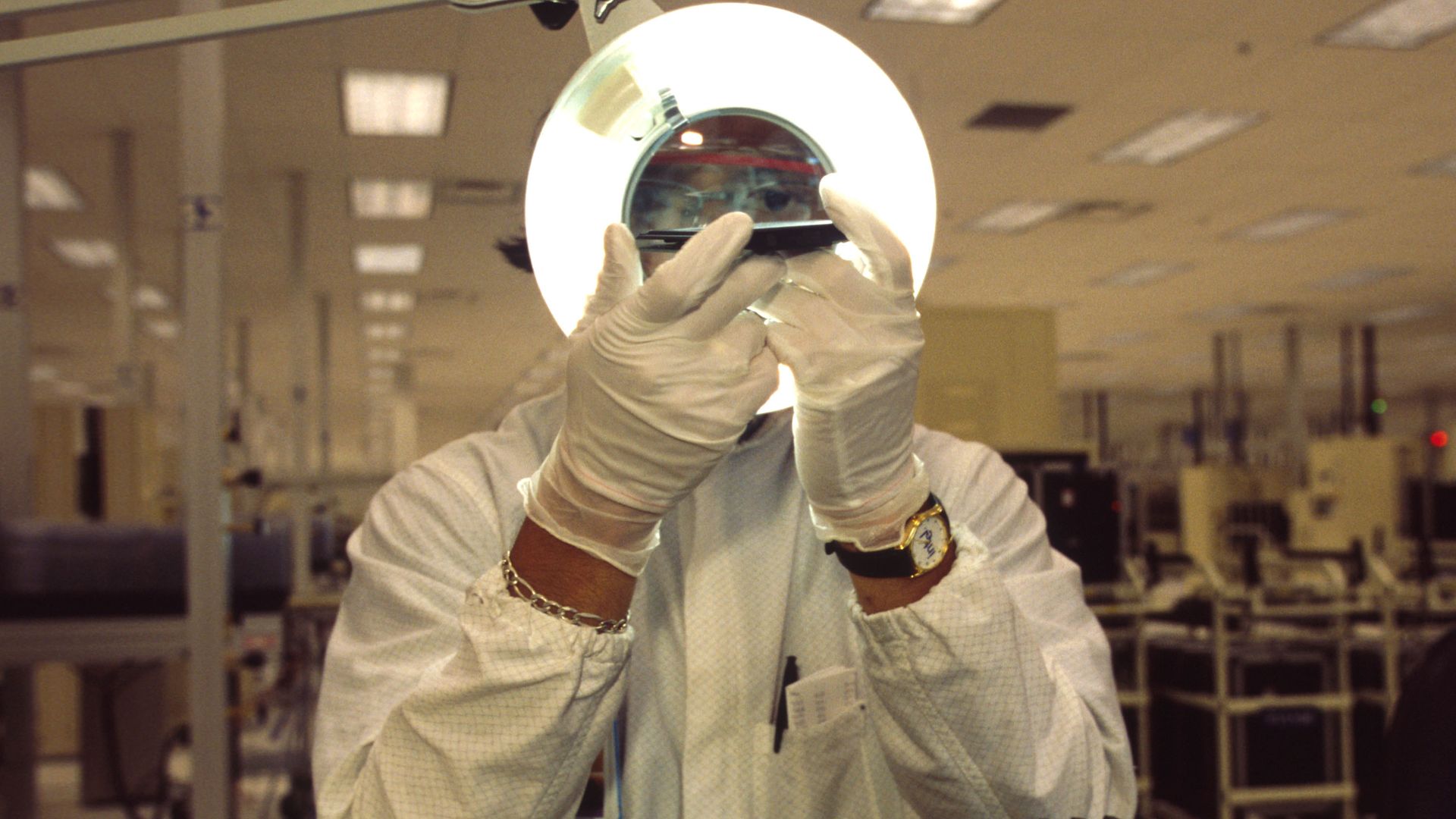
One of the most important and overlooked arenas of high-stakes tech competition is the global race among companies and nations to invent and manufacture the brains of future technologies — a rivalry for the commanding heights in advanced computer chips for artificial intelligence.
What's happening: For decades, U.S. companies have held the lead in chips. But now, they are losing ground. America's biggest chipmaker says Chinese companies could catch up with U.S. chip advances within 5 years.
Just 9 rich tech companies have come to dominate the development of AI. In the process they have made monumental errors, leading to privacy meltdowns and biased algorithms.
In a new book, New York University professor Amy Webb stakes out the controversial position that these companies — though they stirred up the trouble — are also the best hope to fix it.




















/2019/03/06/1551835998018.gif?w=3840)