The grand bargain of the digital age, in which consumers have traded their data for free services, is coming apart. And it may be too late to regain control of the personal data that's been bought, sold and leaked all over the web for the past three decades.
Why it matters: If information is power, our lackadaisical approach to safeguarding details about our lives has made a handful of companies more powerful than we ever expected, and it's made consumers more vulnerable than ever.
Most consumers (58%) think the threat to online privacy is a crisis, an uptick from last June when consumers were more evenly split.
Young people are more willing to accept things as they are, according to an Axios-SurveyMonkey poll.
18–24-year-old are most split with only 1 percentage point separating those who accept some risks (48%) and those who want to force change (47%).
But for those 65 and older, 62% say the current situation is a crisis.
Methodology : These data are from a SurveyMonkey online poll conducted among adults ages 18 and older in the United States. Respondents were selected from the more than 2 million people who take surveys on the SurveyMonkey platform each day. The survey was conducted March 5-6, 2019 among 2,122 adults. The modeled error estimate for the full sample is plus or minus 3.5 percentage points and full crosstabs are available here.
Consumer data has long been the core asset of the internet economy, but consumers have never been able to put a tangible price on the data they share.
Scoop: Sen. Mark Warner (D-Va.) is drafting a bill that would require web platforms of a certain size, including Facebook and Google, to regularly tell users the value of their data, according to a person with direct knowledge of the proposal.
The little-known companies that underpin millions of transactions on and off the internet probably know more about you than your closest relatives or friends.
Why it matters: Data brokers have been around for decades, but they've grown increasingly powerful in the internet era due to their ability to instantaneously capture information about people as they surf the web.
Most data brokers avoid scrutiny by saying the data they collect and sell is “anonymized,” or a summary of a lot of people's information, rather than a single individual’s data.
Yes, but: That "anonymous" data can be used to pinpoint real people, or match that data to other supposedly anonymous profiles.
The world’s data is estimated to balloon to 5 times its size between 2018 and 2025, a result of companies’ increasingly frantic data collection for marketing, personalization, and training AI systems.
Why it matters: China’s data trove is growing particularly fast — 3% faster than the global average. This is an enormous asset for Chinese AI companies, which can use it to train more accurate facial recognition algorithms, or develop a nationwide “social credit” scoring system.
AI may seem untethered from humans, but it actually hinges on data produced by people — and gathered by companies.
Why it matters: Information about who you are, what you own and how you behave will only become more coveted in the coming years, because they are the chief drivers of decision-making algorithms, voice assistants and self-driving cars.
Pinar Yanardag and Emily Salvador, two MIT researchers, developed an AI that can design a unique little black dress. To get there, they fed in thousands of designs. The result is an asymmetrical, V-neck dress. The researchers topped off the outfit with AI-designed jewelry, shoes and a necklace — and it doesn't look half bad.
Context: For many women, the "little black dress" — first conceptualized by Chanel in the 1920s flapper years — is a wardrobe staple. It's a classic color, perfect for nights out (with a pair of heels) or a day in the office (with a blazer). But these days, with every big-time and small-time designer adding the LBD to their collections, the market is flooded with every kind of black dress imaginable — and it's hard to stand out.
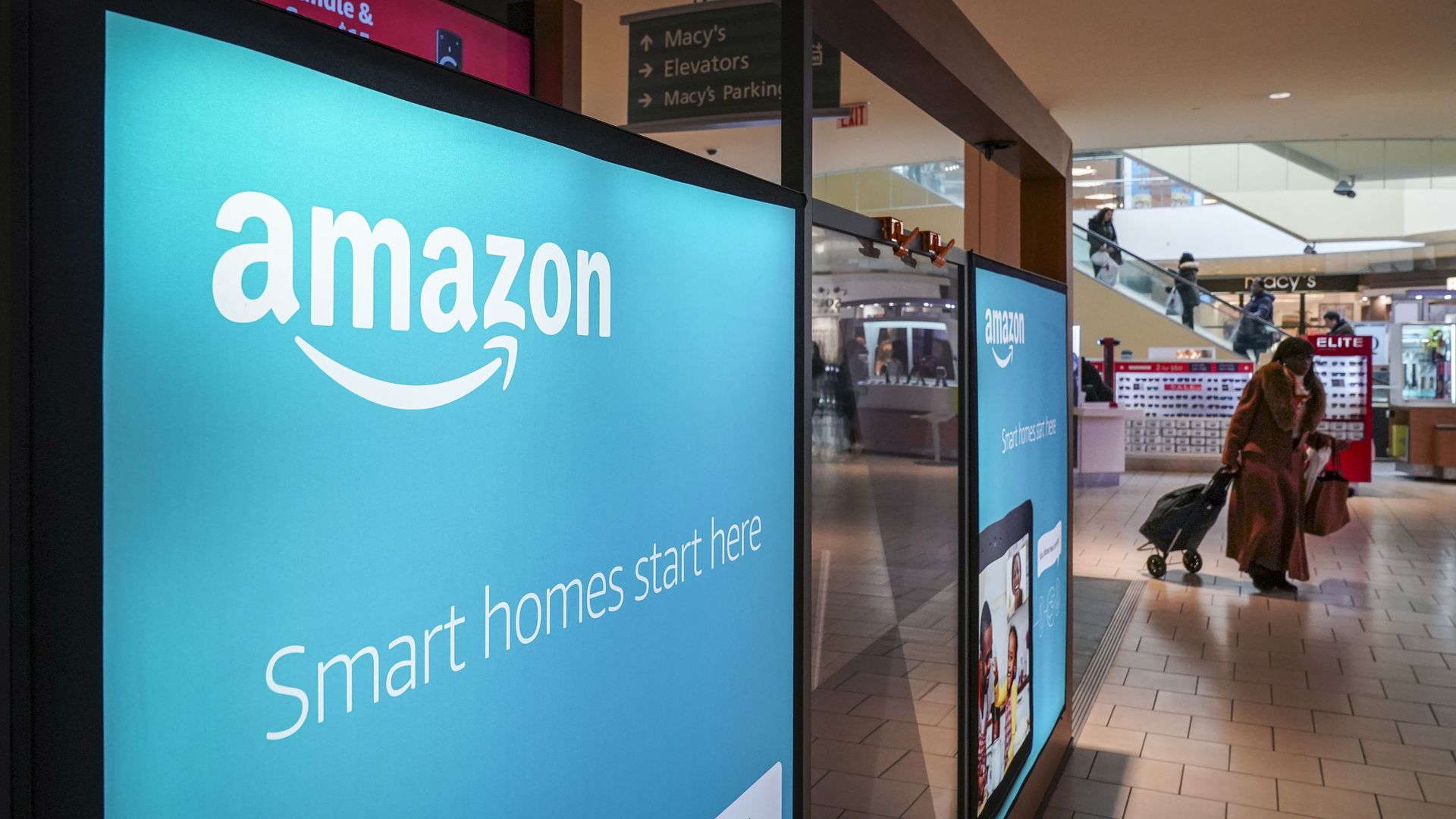
When Amazon announced the closure of all 87 of its pop-up stores in the U.S., it seemed to signal a failed experiment, but temporary shops can be a proving ground to test different physical experiences and gather data.
Why it matters: The pop-ups likely gave Amazon's strategists proprietary data and insights as the company prepares to open more brick-and-mortar outlets like Amazon Books, Amazon 4-Star, and Amazon Go convenience stores.
AVs built in China will look, feel and drive differently because they're being developed in an ecosystem of infrastructure, technical standards and regulatory requirements distinct from those of their U.S. and European counterparts.
Why it matters: Infrastructure investments in particular will help China meet its goal of 10% of vehicles reaching Level 4/5 autonomy by 2030. However, China’s walled-garden approach to AVs will also make it harder for foreign firms to enter the market, and in the long run may limit Chinese AV players as they seek to expand beyond the country’s borders.
Privacy policies have been the standard approach to online privacy for the entire existence of the commercial internet. Now key Democrats are souring on them.
Why it matters: Moving away from relying on the so-called "notice and consent" requirements would be a sea change for users and could put the United States at odds with Europe's sweeping privacy regulation.
Unmanned aerial vehicles, or drones, have the potential to transform our daily lives but not until regulators can be sure they won't fall from the sky or crash into other aircraft.
The big picture: UAVs have almost unlimited uses — from combatting disease to delivering pizza — and their numbers are expected to soar across multiple industries in the next few years. The Federal Aviation Administration wants to relax some of its rules to allow that growth but in doing so it has to determine how safe is safe enough.
Carmakers are in a frantic race to own the driverless road. But a little-noticed parallel contest is under way in the world of autonomous vehicles — a competition for who will dominate a shift of motor traffic from the road to the air.
Why it matters: The competition to control the air could more profoundly impact how we live and work, with the potential to change the face of cities, how we measure time, and what we regard as our activity space.
In the mad dash for the still-tiny slice of top AI talent, companies are competing to beef up increasingly lucrative businesses, doling out sky-high salaries reaching well into 6 digits, on top of the usual tech office perks.
Spoiler alert: Microsoft is hugely outhiring its peers.















/2019/03/07/1551987819087.gif?w=3840)