This chart comes from Lyft's IPO filing, and it shows how much money Lyft takes out of every dollar spent on its platform. It's not a perfect proxy for the amount siphoned from each fare before the driver gets paid, but it's close. As platforms like Lyft become bigger, they invariably take an increasing cut of total revenues.
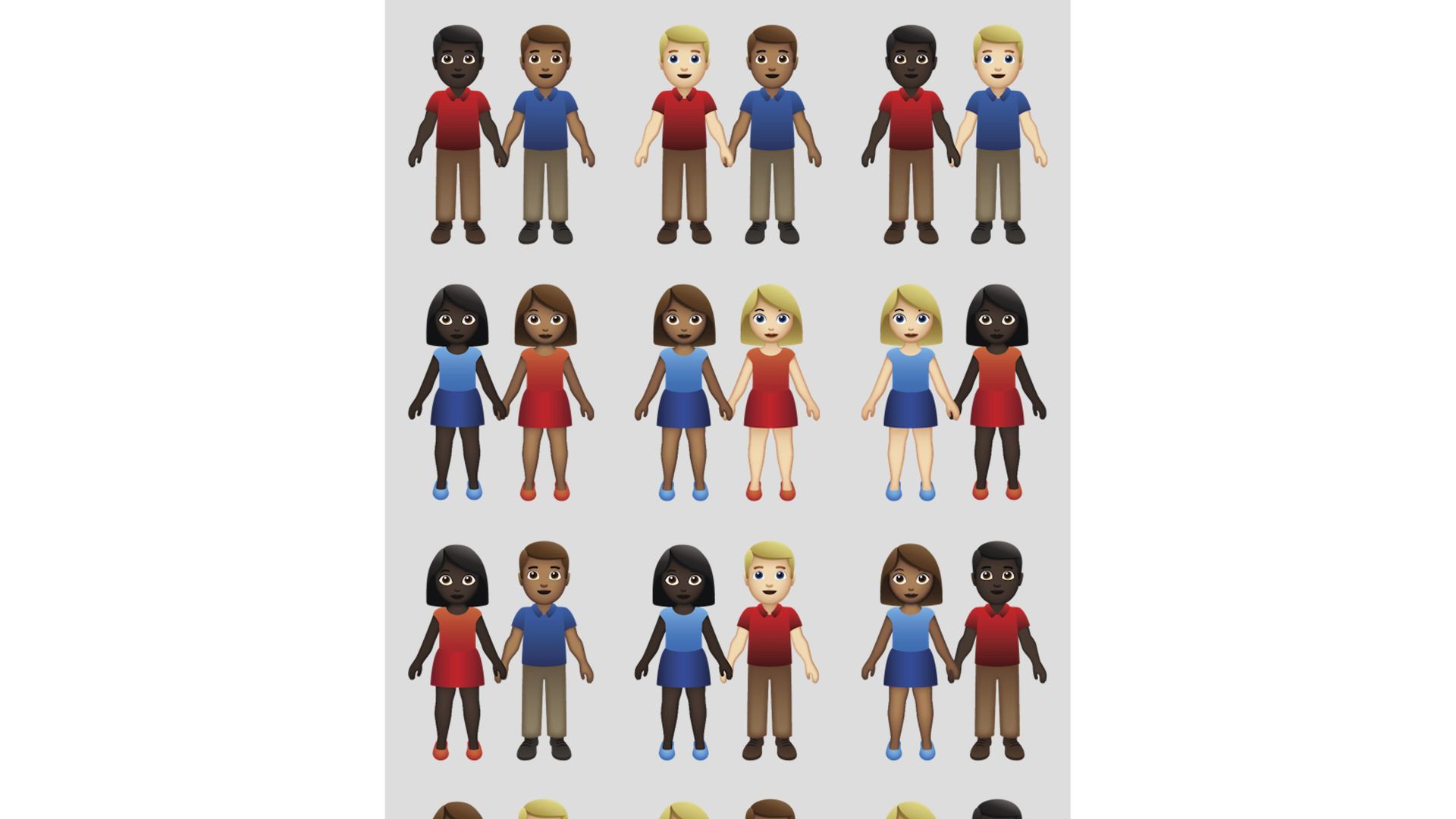
Finally recognizing couples of color, the emoji gods (known as the Unicode Consortium) have approved the addition of characters technically referred to as people "holding hands," AP's Leanne Italie writes.
Details: While the Unicode Consortium signed off on the skin-tone additions, user companies (Google, Microsoft and Apple) will decide for themselves starting later this year whether to add them and how they will look.
The grand bargain of the digital age, in which consumers have traded their data for free services, is coming apart. And it may be too late to regain control of the personal data that's been bought, sold and leaked all over the web for the past three decades.
Why it matters: If information is power, our lackadaisical approach to safeguarding details about our lives has made a handful of companies more powerful than we ever expected, and it's made consumers more vulnerable than ever.
Most consumers (58%) think the threat to online privacy is a crisis, an uptick from last June when consumers were more evenly split.
Young people are more willing to accept things as they are, according to an Axios-SurveyMonkey poll.
18–24-year-old are most split with only 1 percentage point separating those who accept some risks (48%) and those who want to force change (47%).
But for those 65 and older, 62% say the current situation is a crisis.
Methodology : These data are from a SurveyMonkey online poll conducted among adults ages 18 and older in the United States. Respondents were selected from the more than 2 million people who take surveys on the SurveyMonkey platform each day. The survey was conducted March 5-6, 2019 among 2,122 adults. The modeled error estimate for the full sample is plus or minus 3.5 percentage points and full crosstabs are available here.
Consumer data has long been the core asset of the internet economy, but consumers have never been able to put a tangible price on the data they share.
Scoop: Sen. Mark Warner (D-Va.) is drafting a bill that would require web platforms of a certain size, including Facebook and Google, to regularly tell users the value of their data, according to a person with direct knowledge of the proposal.
The little-known companies that underpin millions of transactions on and off the internet probably know more about you than your closest relatives or friends.
Why it matters: Data brokers have been around for decades, but they've grown increasingly powerful in the internet era due to their ability to instantaneously capture information about people as they surf the web.
Most data brokers avoid scrutiny by saying the data they collect and sell is “anonymized,” or a summary of a lot of people's information, rather than a single individual’s data.
Yes, but: That "anonymous" data can be used to pinpoint real people, or match that data to other supposedly anonymous profiles.
The world’s data is estimated to balloon to 5 times its size between 2018 and 2025, a result of companies’ increasingly frantic data collection for marketing, personalization, and training AI systems.
Why it matters: China’s data trove is growing particularly fast — 3% faster than the global average. This is an enormous asset for Chinese AI companies, which can use it to train more accurate facial recognition algorithms, or develop a nationwide “social credit” scoring system.
AI may seem untethered from humans, but it actually hinges on data produced by people — and gathered by companies.
Why it matters: Information about who you are, what you own and how you behave will only become more coveted in the coming years, because they are the chief drivers of decision-making algorithms, voice assistants and self-driving cars.