Internet providers that want to see net neutrality rules repealed pointed Tuesday to Google's move to block YouTube from Amazon's Fire TV as evidence that Silicon Valley giants, not telecom companies, are threatening competition on the web.
What they're saying: "Broadband ISPs are committed to providing an open internet for their customers, including protections like no content blocking or throttling," said Jonathan Spalter, the chief executive of the trade association USTelecom. "Seems like some of the biggest internet companies can't say the same. Ironic, isn't it?"
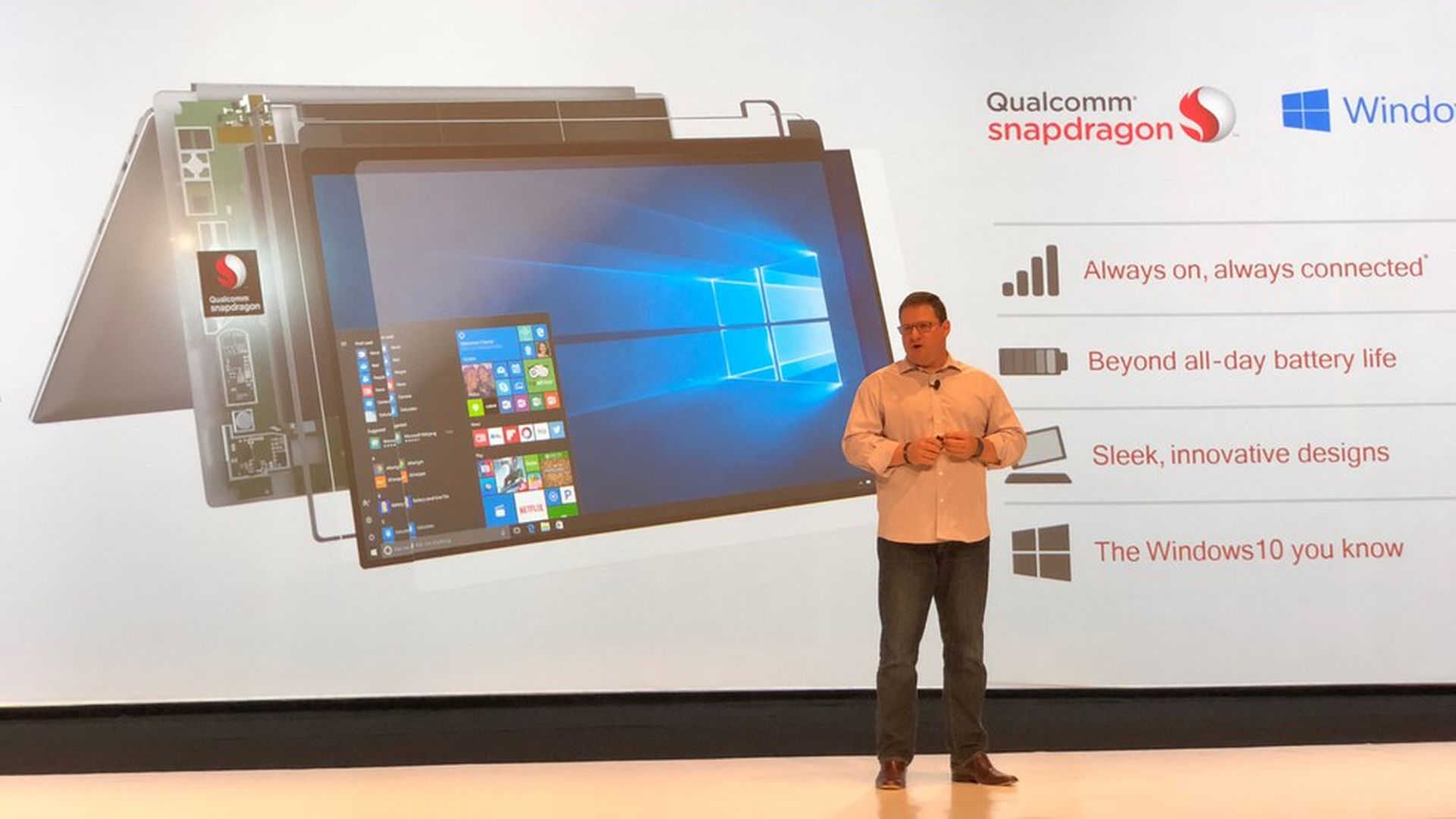
After several years of planning, Qualcomm, Microsoft and several PC makers are showing off a new crop of "always-connected" computers Tuesday that run Windows on top the kinds of chips used in smartphones rather than traditional Intel processors.
The result, the companies say, are thin, light machines that have built-in cellular connections along with enough battery life to run for 20 hours between charges. The first such PCs could show up by the end of the year, with broader availability and more options expected in the spring.
Why it matters: For consumers, the new type of PC could be a good option for road warriors. For Qualcomm, it offers the potential to gain a share of the PC market as its core smartphone business comes under increasing pressure from a range of rivals.
Awkward: Fidelity is the latest addition to a small list of investors that have backed both Uber and Lyft. Others include Troy Carter and Alphabet (via separate investment arms). But making things even more awkward is that Fidelity was among the group of investors that pushed Uber co-founder Travis Kalanick to resign in June.
Australia is the latest major ad market to launch an antitrust probe into the dominance that is big U.S. tech. Its competition regulator said Monday that it would investigate whether Facebook and Google "have disrupted the news media market to the detriment of publishers and consumers," per Reuters.
Why it matters: All of the most sophisticated ad markets in the world are very publicly tackling tech antitrust, except for the U.S., which has seen a significant portion of its ad revenue and e-commerce move to Google, Facebook and Amazon. This follows Japan and the E.U. in efforts this year to curb the dominance of the likes of Google, Amazon and Facebook.
Machine learning is a core technology driving advances in artificial intelligence. This week, some of its earliest practitioners and many of the world's top AI researchers are in Long Beach, CA, for the field's big annual gathering—the Neural Information Processing Systems (NIPS) conference. In all, some 7,700 people are to attend AI's version of high tech's glitzy South by Southwest conference, and the electronic device industry's even bigger annual CES conference.
It's NIPS' 31st year in what originally drew just a few hundred participants — computer scientists, physicists, mathematicians and neuroscientists all interested in AI. Terrence Sejnowski, a computational neuroscientist at the Salk Institute for Biological Studies and president of the NIPS Foundation, spoke with Axios about growth in the field and what's next.
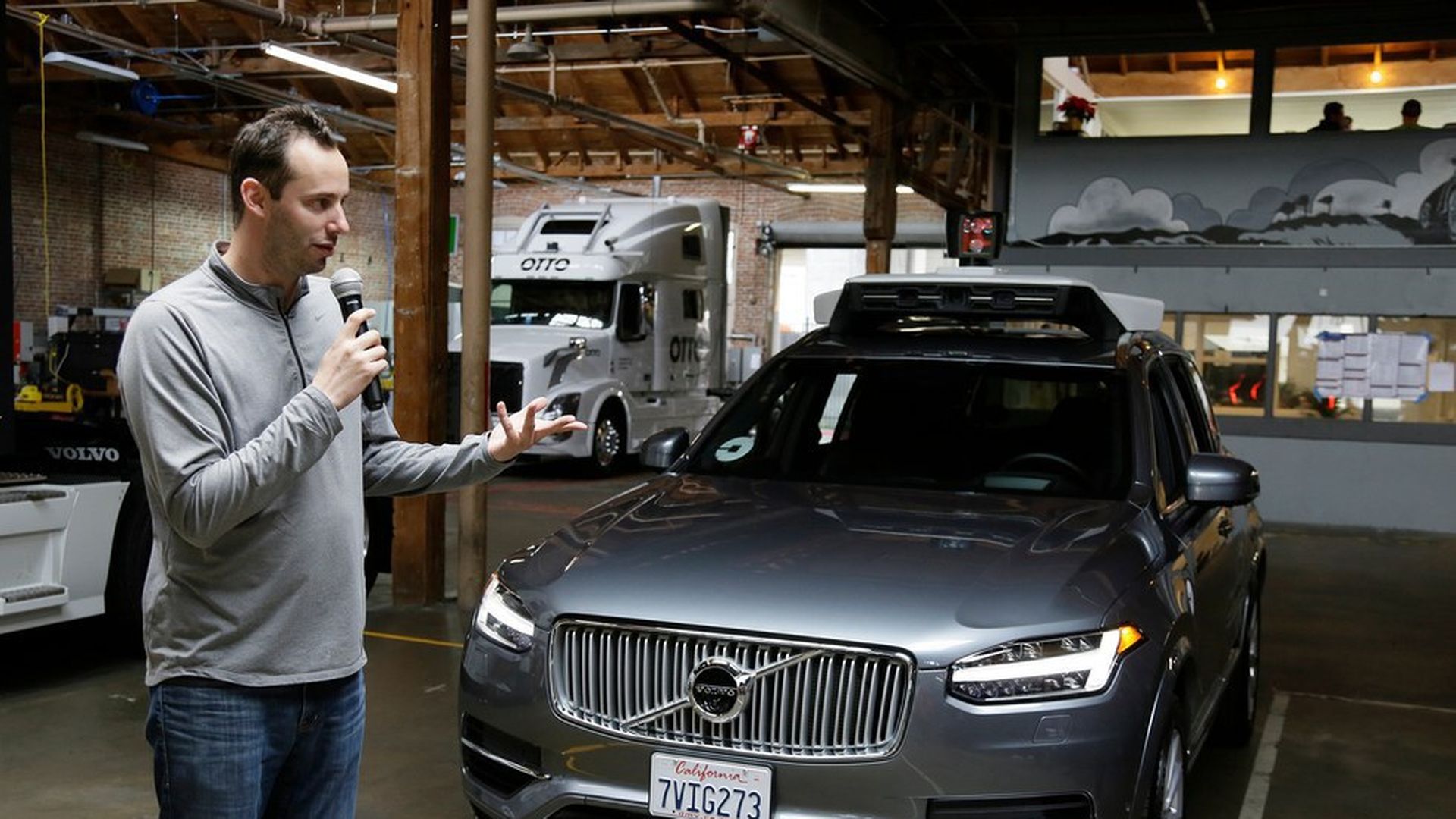
As Waymo and Uber head into the final stretch before the trial over alleged trade secret theft, the two companies bickered in court over Uber's failure to bring up critical documents, how Uber can inquire about Waymo's workplace policies, and Waymo's request for monetary damages.
Why it matters: Uber could be in for an even bumpier trial if the judge decides that Uber's delays in producing documents and apparent attempts to conceal some of them can be revealed to the jury.
"The question that I am trying to figure out is how much of that story should be told to the jury," said Judge William Alsup. "If both sides were playing fair and square…Then you get to decide the case strictly on the merits."
Monday's hearing was also a reminder of Waymo's own attempts to keep its business as confidential as possible while trying to expose as much of Uber's in open court: Waymo is seeking to close the courtroom for significant portions of the trial.
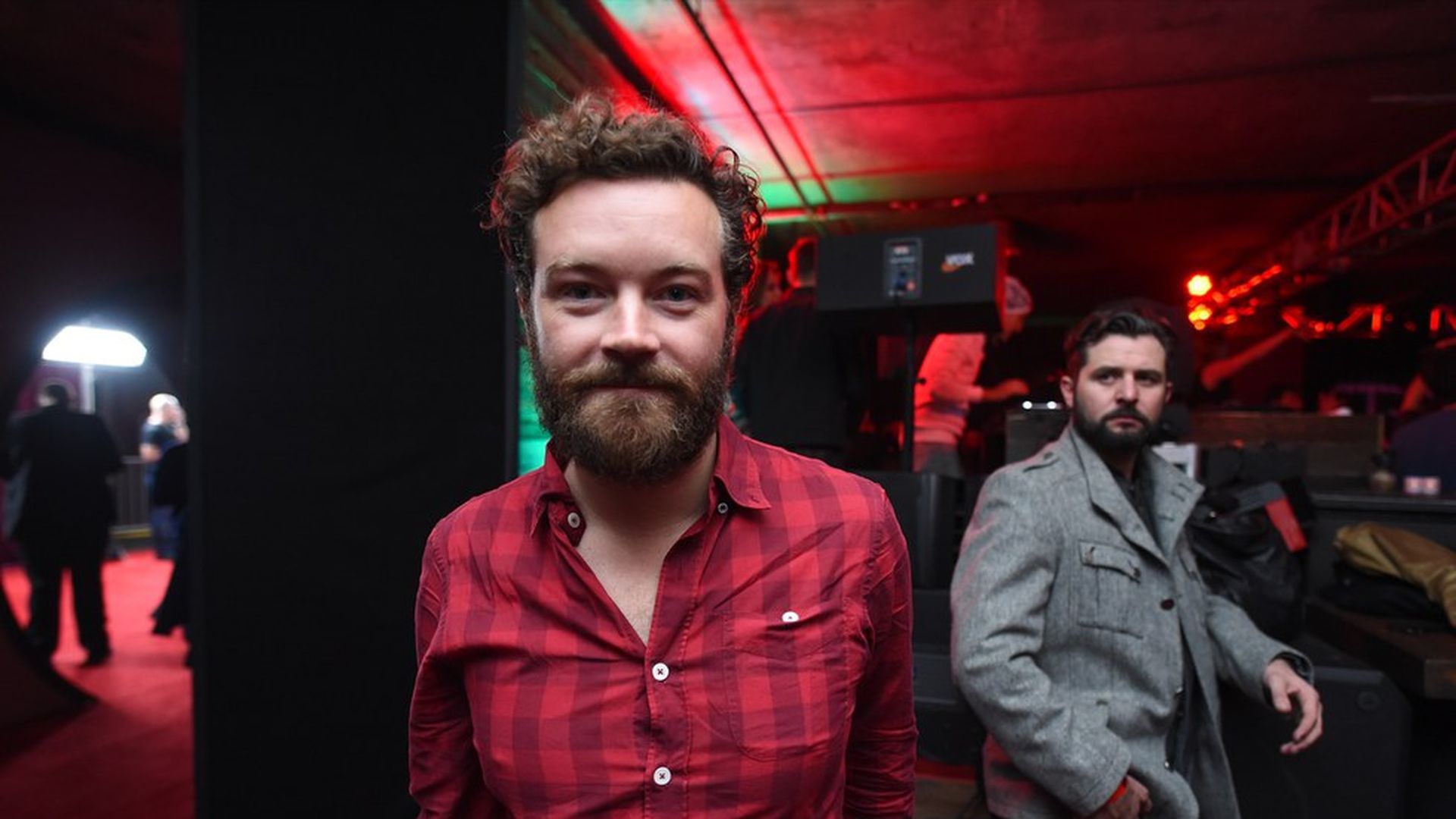
Netflix confirmed today that one of its executives told a woman who accused The Ranch star Danny Masterson of rape that the company doesn't believe Masterson's accusers, per The Huffington Post. The encounter occurred during a children's soccer game in Los Angeles that included the kids of Andy Yeatman, Netflix's head of global kids content, and the accuser on opposing teams.
Why it matters: Though Netflix branded Yeatman's comments as "careless" and "uninformed," and it took swift action after Kevin Spacey was accused of sexual misconduct, it still has yet to take any action against Masterson after four women — three of whom were members of the Church of Scientology, where Masterson is a prominent member — accused him of drugging and raping them in the early 2000s. Masterson, who is best known for his role on That 70's Show, denies the allegations.
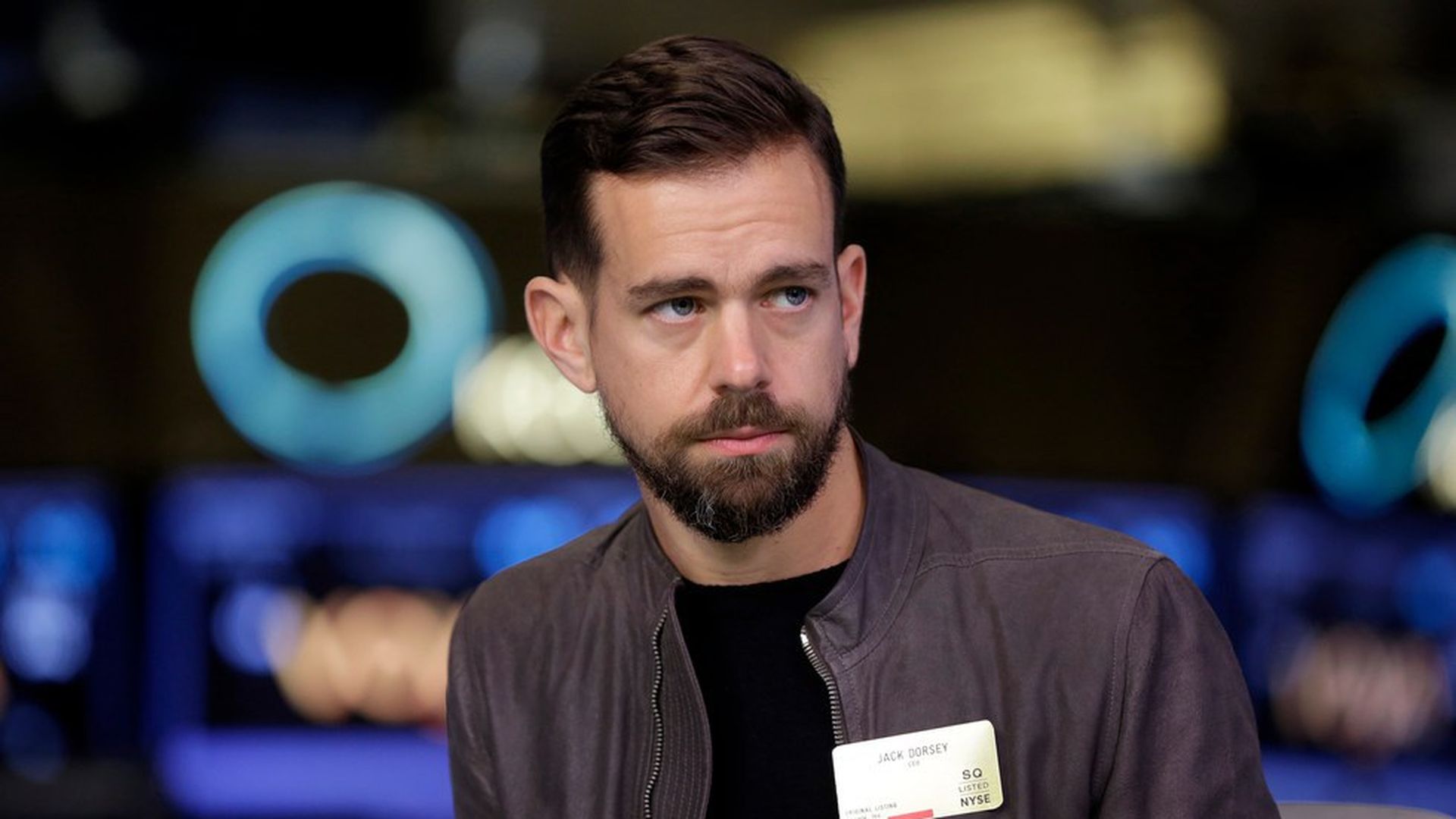
Twitter has been defending its choices not to interfere with Donald Trump's tweets for quite a while now—like it did last week after he retweeted anti-Muslim videos—but many critics are growing frustrated with the company's stance.
What happened: On Wednesday, Trump retweeted anti-Muslim videos posted by Jayda Fransen, the deputy leader of Britain First, an ultranationalist group. Though Twitter originally said that it's not taking down the videos because they are newsworthy and of public interest, it issued a correction the following day, clarifying that it was because the company's policy for media permits them.
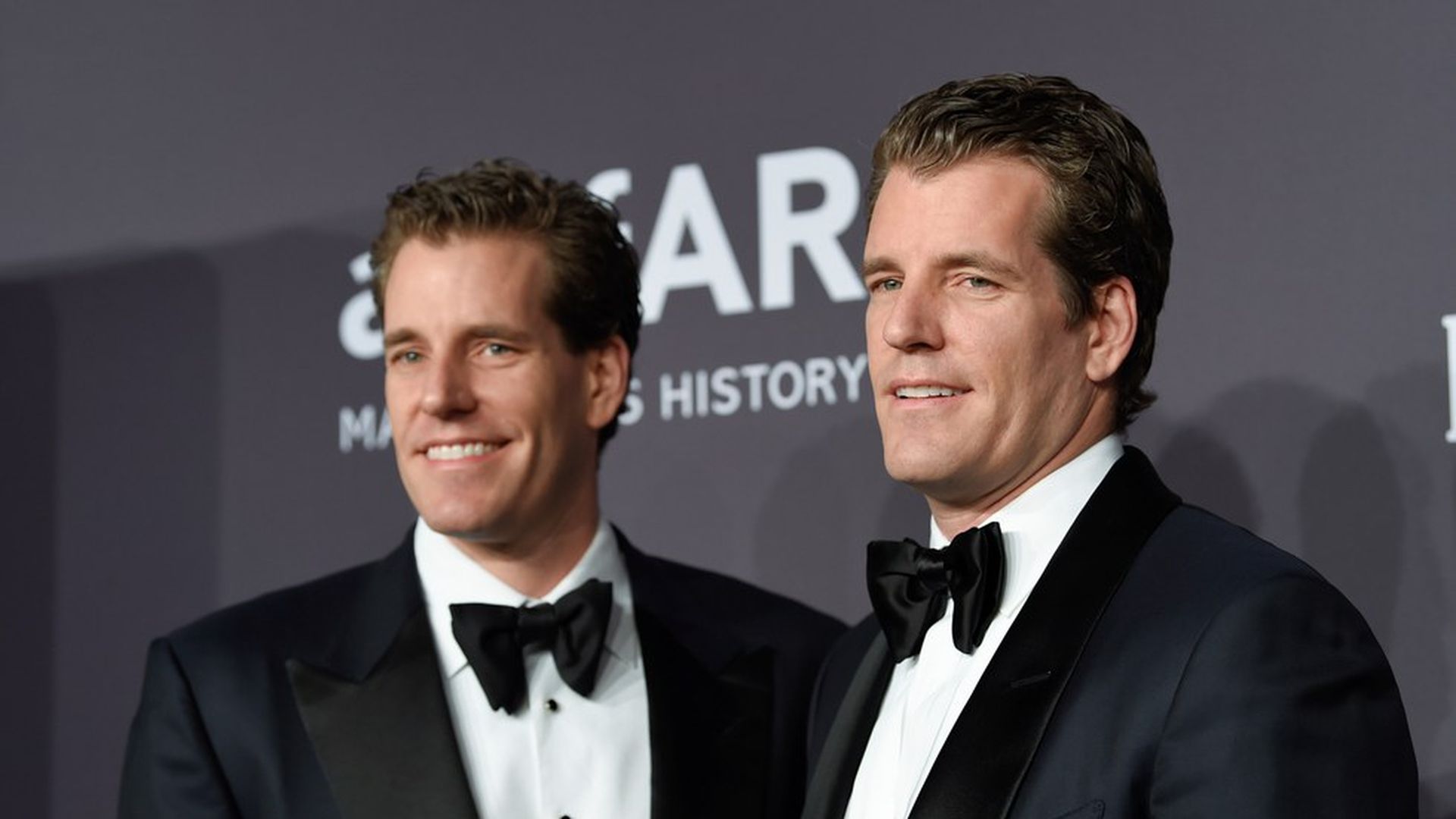
The brothers who gained notoriety for suing Mark Zuckerberg over the idea that started Facebook have done quite well in the wake of Bitcoin's record gains, The Verge reports. Cameron and Tyler Winklevoss won $65 million in the Facebook lawsuit, invested $11 million of it into Bitcoin in 2011, and now own more than $1 billion in holdings.
Why it matters: Winklevoss twins aside, Bitcoin is in the midst of a dramatic price surges after being dismissed as a fad in its early days. Some currency experts warn of a bubble, and some critics still say it won't catch on as a viable form of currency.
Broadcom announced it intends to nominate 11 new directors whom it would like appointed to Qualcomm's board, after its proposed acquisition fell through last month. Broadcom's CEO Hock Tan said that his company would prefer to "engage in a constructive dialogue with Qualcomm" despite this step.
Why it matters: It's the start of a hostile takeover move by Broadcom as it attempts to push through an acquisition that is sure to be heavily watched by regulators worldwide. Qualcomm had rejected its $103 billion bid last month.
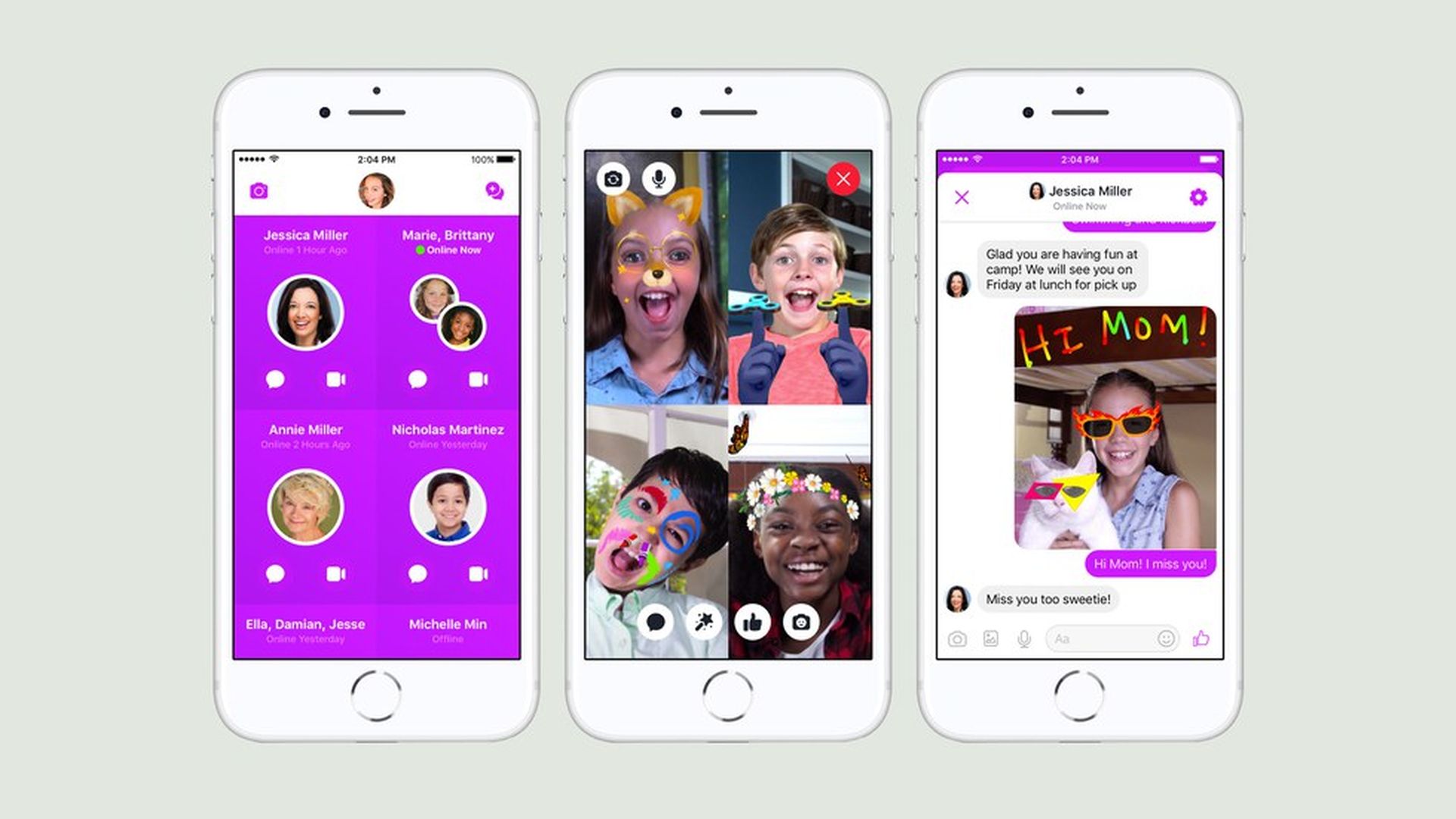
Facebook is launching a kids-focused messaging app with tight parental controls that includes group video chat in the vein of Houseparty, the video chat application popular with young people that Facebook has had in its sights for a year.
Why it matters: Facebook is always trying to make sure that the next generation is using its services, hence its purchases of Instagram and WhatsApp as well as its repeated efforts to clone popular features from Snapchat.
Not for the first time, Qualcomm is trying to find a place inside the personal computer.
The last time was a flop, in large part because the operating system — Windows RT — didn't really run all the programs people expect from their computer. Flash forward a couple of years and Microsoft and Qualcomm are taking another swing, promising that in the new crop of always connected PCs, you will get cellular connectivity in a thin, light device with all-day battery life — and it will run all the Windows apps people care about.
Why it matters: Qualcomm is facing increasing pressure in its core mobile phone business as market leaders Samsung and Apple increasingly look to others. Getting even a small slice of the PC business could be a big deal.
Many of the largest U.S. companies — especially big tech players like Apple and Microsoft and pharmaceutical giants like Johnson & Johnson and Pfizer — have trillions of dollars parked in offshore subsidies. And they'd benefit immensely from the Republican tax overhaul, which would allow them to bring cash back into the U.S. at very low tax rates.