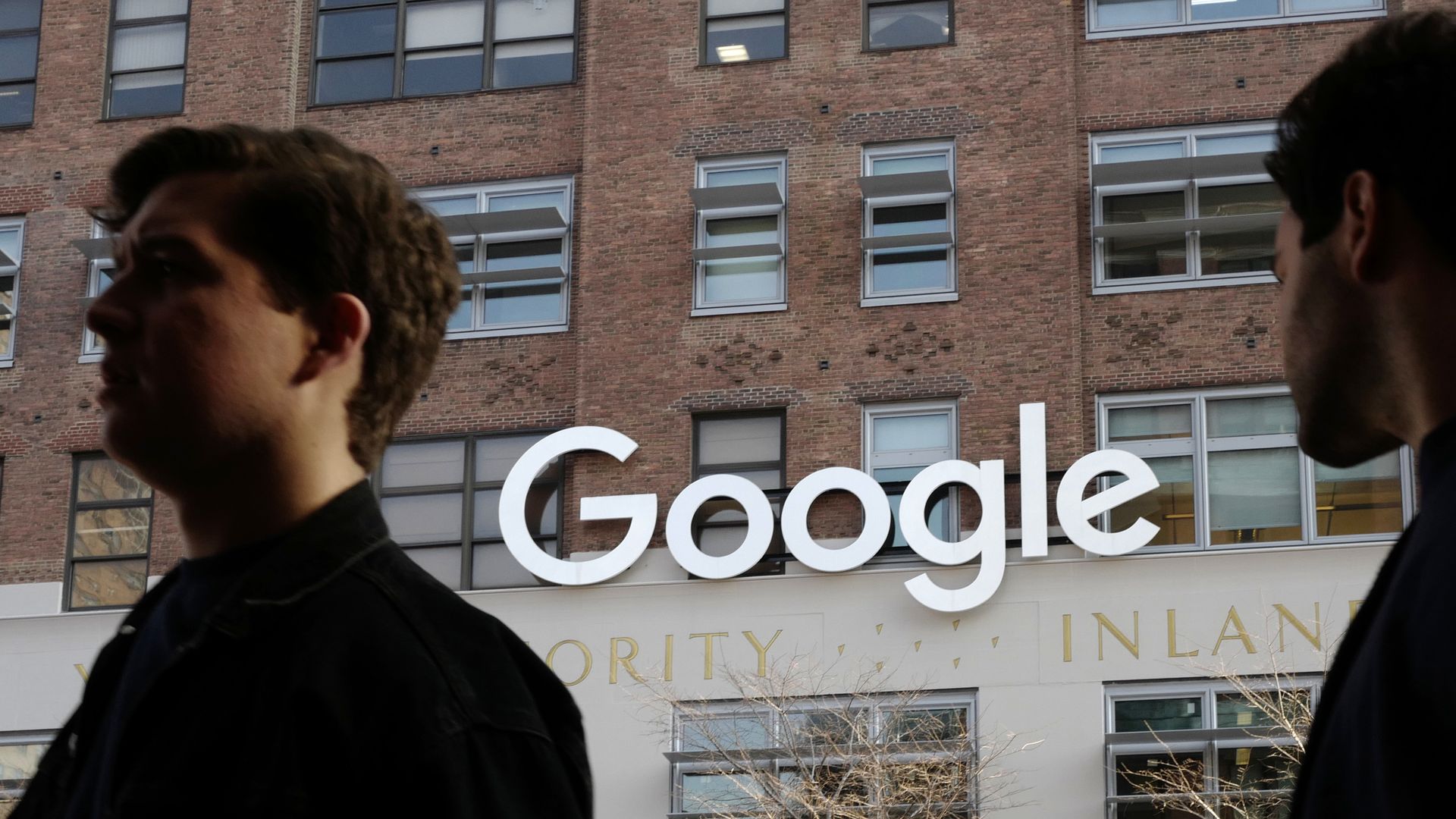
A San Francisco judge has dimissed a recent class action lawsuit against Google for gender-based pay discrimination, according to Reuters.
The judge said that the lawsuit didn't show that it applied to an entire class of people — all women in California who have worked for Google — and that two of the three plaintiffs didn't demonstrate they did work comparable to male counterparts for less pay.
Apple released its list of top iPhone apps for the year and, once again, the list was dominated by titles created by Facebook, Google and Snap. Their apps combined for all of the top seven spots among free iPhone apps followed by Netflix, Spotify and Uber.
Uber paid a 20-year-old man in Florida $100,000 to destroy data from 57 million passengers and 600,000 drivers that he'd stolen in a 2016 breach, Reuters reports, citing sources familiar with the events. Reuters was unable to establish the identity of the hacker.
The backdrop: On Nov. 21, Uber announced that it had paid a hacker to delete stolen data, but did not specify who was paid, or how. The man was paid through a "bug bounty" program companies use to pay hackers to test their software for vulnerabilities, although it appears that the hacker stole the information first and was then retroactively entered into the bug bounty.
Qualcomm offered up details on its next high-end smartphone chip Wednesday, promising the Snapdragon 845 will provide higher quality video and photo capture and better battery life, among other features. It's set to start showing up in phones early next year.
Why it matters: Because it powers the vast majority of the world's high-end smartphones, whatever features Qualcomm puts into its Snapdragon chips foretell what the next crop of flagship devices will provide.
Despite all of the potential for artificial intelligence to solve our most vexing problems, it's still in a primitive state, according to a new report by Stanford University. But a separate paper, this one by Alphabet's DeepMind, suggests again that it has made some of its best progress in the narrow realm of games.
Why it matters: Those advances are important, but life isn't a game. AI progress outside of these areas has been harder to define and track. "The most important thing for AI is to go from exceptional promise to use in actual everyday life," Martial Hebert, director of the Robotics Institute at Carnegie Mellon University, tells Axios.
Note: Funding data for 2017 is partial through July. Data: Artificial Intelligence Index; Chart: Chris Canipe / Axios
Technology companies are facing growing international obstacles affecting how their most valuable asset — data — flows across borders. New trade agreements and laws are affecting how companies share and store their troves of data around the world.
Why it matters: For decades, trade talks centered around tangible goods such as oil, agriculture and cars. But now that the economy is rooted in data that has to cross borders to meet the demands of global business, rules governing how data is housed and accessed are at the forefront of trade conversations.