Only months ago, we were warned of the robot apocalypse — runaway automation that will vaporize swaths of today's jobs, too quickly and profoundly for the economy to create replacements. More recently, we hear an industrywide defense of the robots — the argument that, as has always happened since the early days of the industrial revolution, jobs we never imagined will overcome automation, employing everyone who wants to work. The trouble with both camps is one of forecasting everywhere:
We hear an abundance of assertion; and since professionals are paid to make these forecasts, we also hear a lot of certitude. What has been in short supply is fact. So we just don't know what the future holds.
The case for robots: We sat down this week with senior company executives from Deloitte, which sits in the "don't worry" camp. Eamonn Kelly, a Deloitte futurist, gave the best case we have yet heard for that scenario.
Kelly's argument
When technological disruption has happened, it has done the following three things:
Displaced people
Augmented what people can do; and
Created a new art of the possible, including new work
For two centuries, catastrophe has been routinely forecast from new technology, but "it's never happened because No. 3 is massively bigger than No. 1," Kelly said.
When it comes to motorcycle racing, unlike in Chess and Go, humans are still king.
In September, Yamaha pitted a robotic motorcycle named Motobot (photo above) against Italy's Valentino Rossi, the nine-time Grand Prix world champion. The contest was a single lap on a two-mile track at Thunderhill Raceway, 145 miles north of San Francisco in Willows, CA.
The outcome: Rossi 85.7 seconds. Motobot — exceeding 125 miles an hour — 117.5 seconds, reports The Drive.
Facebook said Wednesday that as many as 146 million Americans may have seen content associated with Russian election meddling, more than they had disclosed earlier in the week, but that it had no evidence that voter registration data was used by the Russians to target individuals.
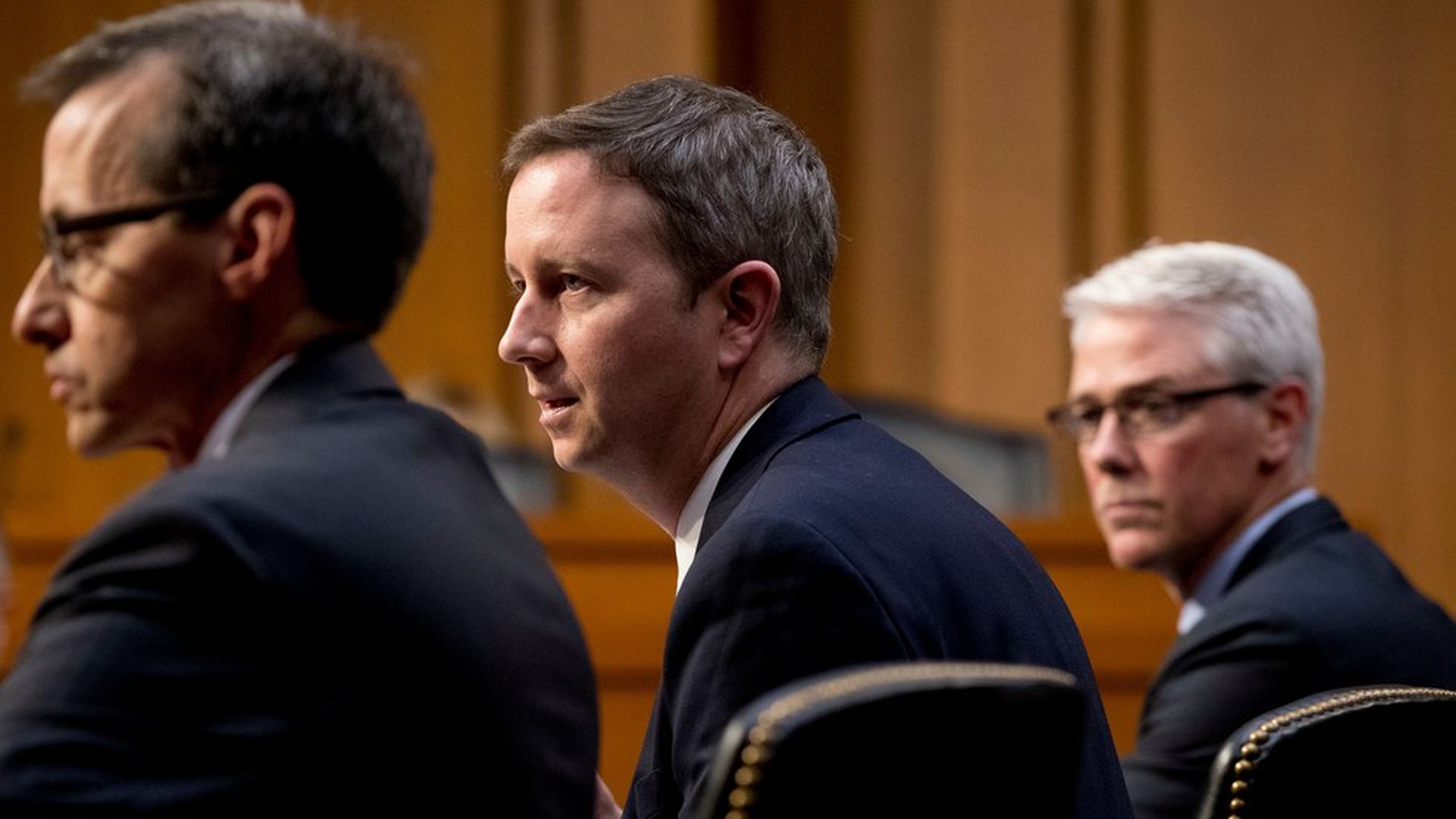
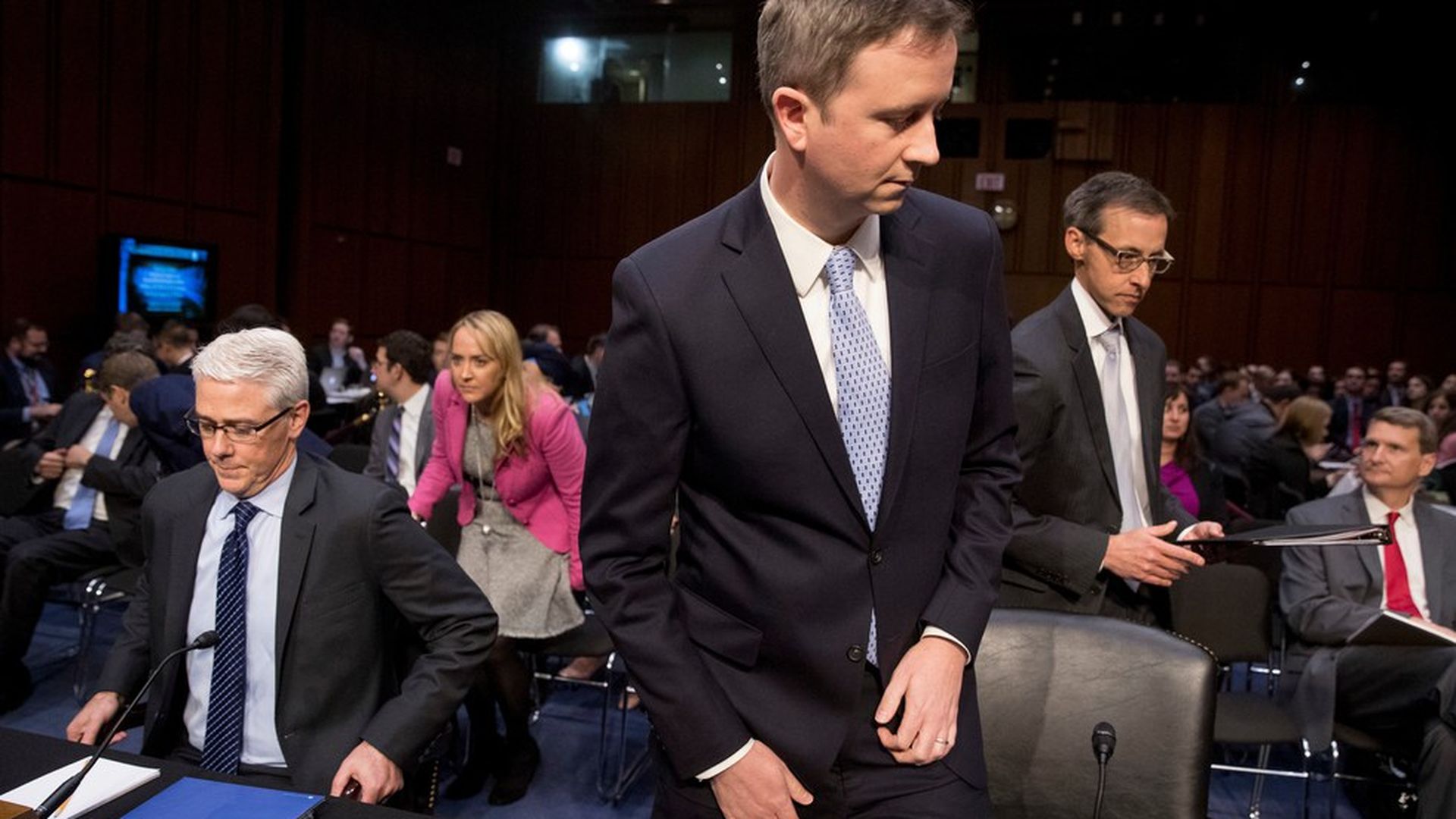
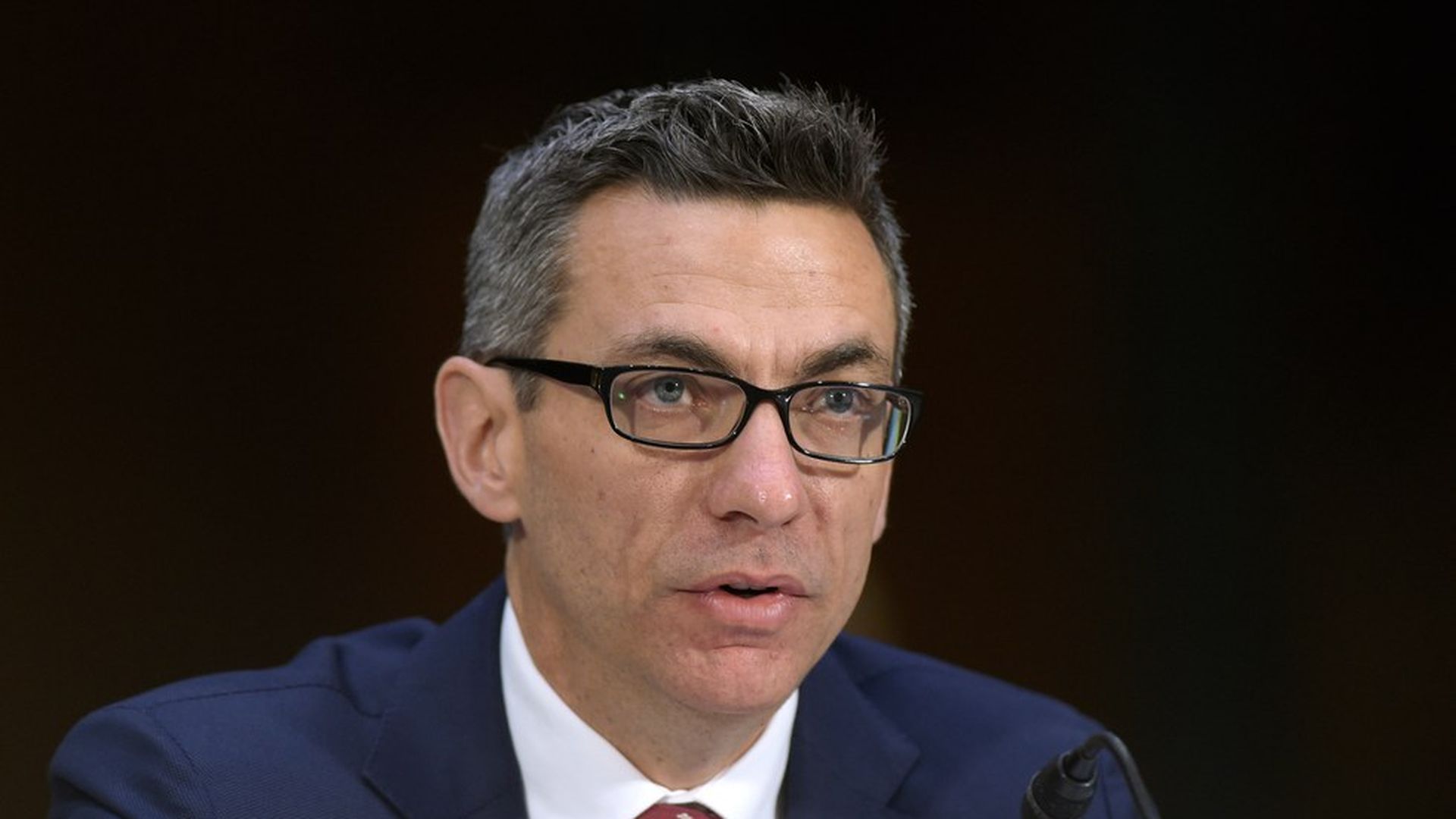
Those admissions came as lawmakers on the Senate Intelligence Committee slammed the top lawyers for Facebook, Google and Twitter for their response to Russian election meddling on their platforms. It's the second day of grilling for the tech giants, who appeared before a Senate Judiciary Committee panel on Tuesday. "I don't think you get it," Sen. Dianne Feinstein told the companies. "You have a huge problem on your hands." More highlight here:
The head of Ukraine's presidential administration, Dmytro Shymkiv, told the Financial Times that his country's government warned Facebook and U.S. officials in 2015 that Russia was using "aggressive behavior" to spread disinformation on social media in an "information war." Shymkiv said Facebook's response was that they're an "open platform" that allows everyone to communicate.
Why it matters: The Ukrainian assertions suggest that Russian fake news was detected much earlier than the tech giants have so far let on. Axios reported yesterday that a former FBI agent had detected Russia's use of fake news and automated bots in 2014. The investigation into Russia's interference in the 2016 election and big tech's role has come to a head this week with interrogations of Google, Twitter and Facebook by both the House and Senate Intelligence Committees.
The top lawyers for Google, Twitter and Facebook spent more than two hours yesterday explaining how they are cracking down on malicious activity by foreign actors, but we walked away from the hearing with a few unanswered questions. The tech execs will have two more interrogations today by both the House and Senate Intelligence Committees.
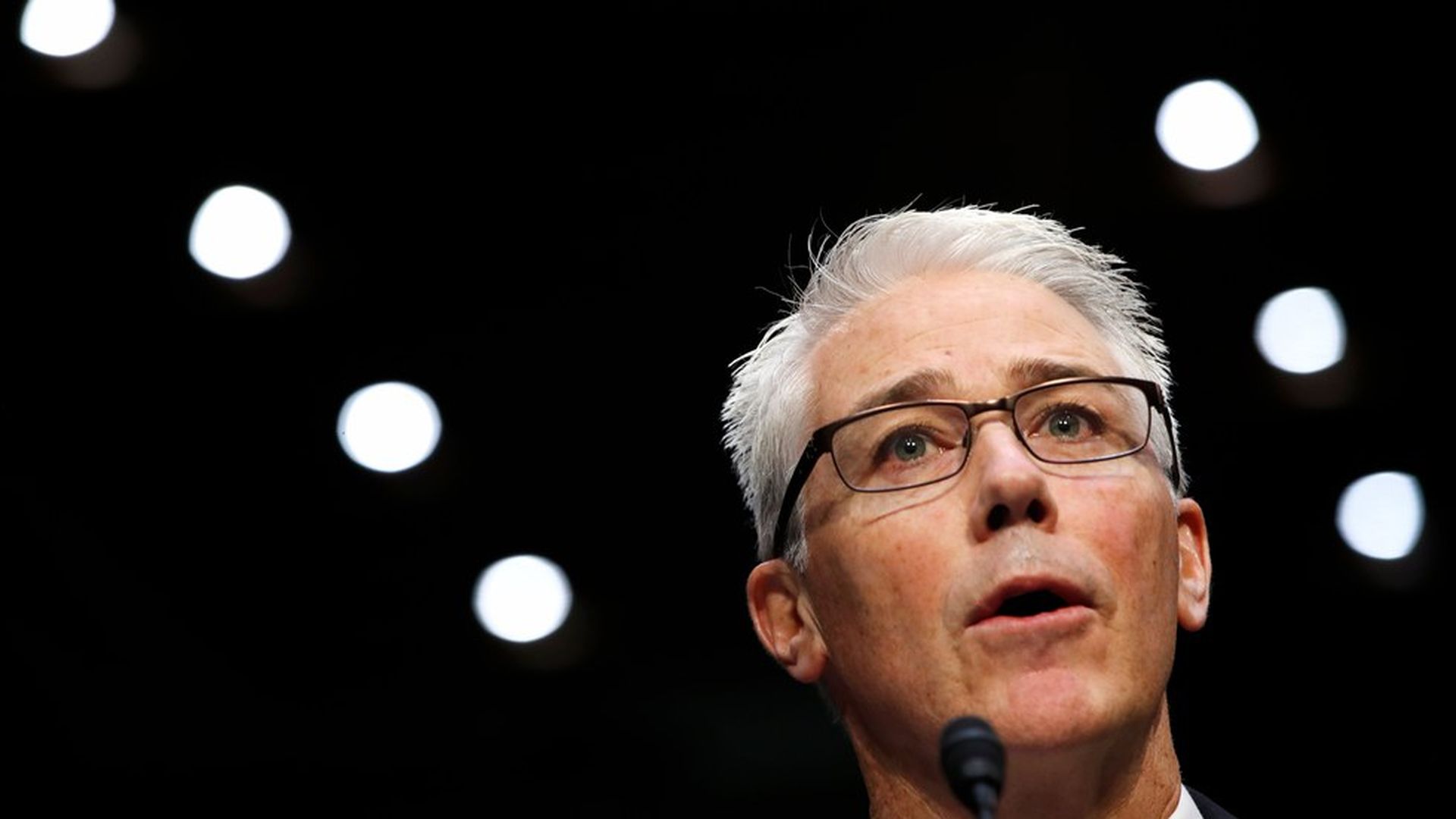
What was the overall influence of this Russian campaign? This question is at the heart of the investigation into social media's impact on the election, and it was posed by Hawaii's Sen. Mazie Hirono. But Facebook's general counsel Colin Stretch said he wasn't able to make judgements on voters' motivations last November.
"We are horrified by this senseless act of violence," said an Uber spokesperson. "Our hearts are with the victims and their families. We have reached out to law enforcement to provide our full assistance."
Déjà vu: Similarly to a series of deadly shootings in Kalamazoo, Mich. last year by an Uber driver, the company is finding itself under the spotlight. In both cases, the drivers passed Uber's mandatory background check, which includes driving and criminal records over the past seven years, and had no prior safety reports from passengers that would have alerted Uber. The company has been criticized for years for not following in the footsteps of the taxi industry and mandating fingerprinting, though it argues that its own methods are more thorough.
A former FBI agent says that Russia was using fake news and automated bots on Twitter and Facebook to manipulate American opinion all through 2014 in something of a dry run before its on-line escalation in the U.S. presidential campaign two years later. Clint Watts, a former special agent with the FBI who will testify this afternoon in a Senate subcommittee, calls the 2014 activity "capabilities development."
Why it matters: Watts' assertions highlight Russian activities substantially earlier than the tech companies have so far disclosed. The issue of Russia's manipulation of the 2016 election has reached a new level this week with special counsel Robert Mueller's indictment of two former Trump campaign officials, and the coming testimony by Google, Facebook and Twitter officials on Russia's use of their platforms in the campaign.
Watts tells Axios that he has no evidence that Russia attempted to manipulate the 2014 midterm elections. Instead, he said Russia was initially attempting to steer American opinion on issues like Syria. But early in 2015 and on into 2016, he said, the bots began to get into American political issues, like stirring up a rumor that a planned U.S. military exercise in Texas, called Jade Helm, was actually a plot to take over the state.
No one — not the government nor the companies — took the actions seriously because they did not seem important. They also did not violate the platforms' terms of service. "They were a little naive," Watts said. "They and the US government didn't think they were having any impact."
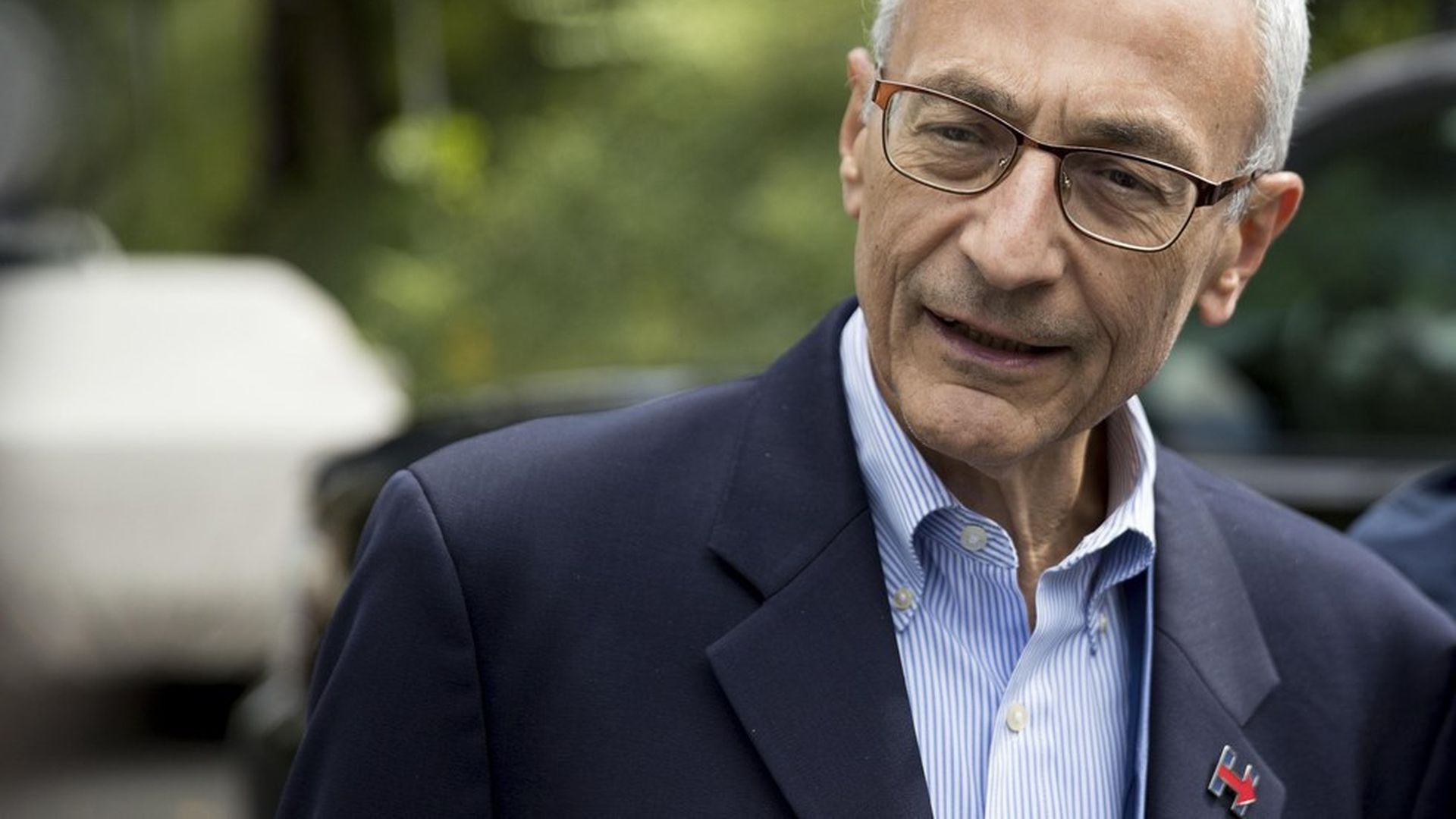
Hillary Clinton's former campaign chair John Podesta — who infamously had his emails hacked by the Russian government during the 2016 presidential race — is speaking out against the "big lie campaign" propagated against him by President Trump.
His tweets: "Not bad enough that I was the victim of a massive cyber crime directed by the Russian President ... Now I'm the victim of a big lie campaign by the American President. [Trump] seems a lot more worried now than July 2016 when he asked the Russians to hack our campaign."
Some context: Trump attacked Tony Podesta, John's older brother, on Twitter earlier today, saying that the brothers have "earth shattering" information about Democrats that "could Drain the Swamp."
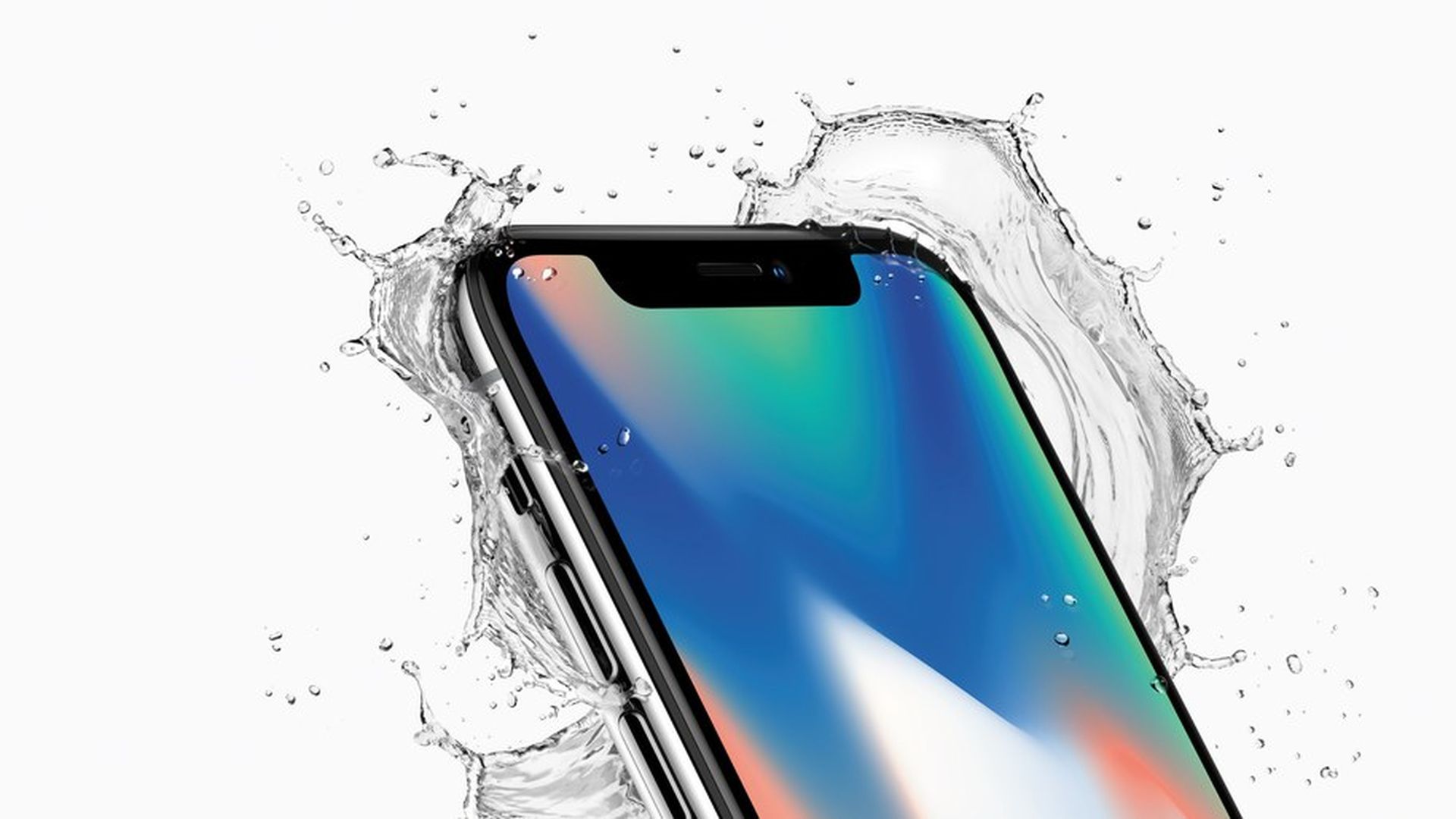
My nephew Anders texted me an animated dog — an Animoji, from the same family as the alien you see above — that said, in the 19-year-old's voice and with his facial tilt: "Hey, Uncle Mike, it's me!" I knew Anders had figured out to set up the iPhone X ("10") that Apple loaned me ahead of its release in stores this Friday. Preorders for the $999 "future of the smartphone" began last Friday in 55+ countries. (The Animoji choices include unicorn, pig and panda.)
Burberry shares fell by as much as 2% today after the announced departure of Christopher Bailey, the visionary designer behind the brand's iconic British swagger, the FT reports. Though he will stay on for continuity through December 2018, Bailey will leave the board as president in March.
Bailey's bona fides as a design talent were never challenged, but he was unable to translate that into confidence in his shrewdness as a businessman over the last three years. The British company has been in turmoil at the top since 2014, when CEO Angela Ahrendts went to Apple to head up its retail efforts. Bailey then became CEO, a position he relinquished three months ago to Marco Gobbetti, and took the title of president.
President Trump tweeted his opinion that "the biggest story yesterday" was the departure of Tony Podesta from his powerhouse lobbying firm The Podesta Group, saying that Podesta's knowledge of "Crooked Dems" is "earth shattering."
Yes, but: Podesta's departure came about after pro-Ukraine public relations work that The Podesta Group did for Paul Manafort got swept into Special Counsel Robert Mueller's Russia probe...which issued Manafort's indictment yesterday.
New artificial intelligence, detailed in a paper published today in Nature Human Behavior, has helped researchers to teach machines to spot suicidal tendencies and help identify those at risk, per MIT Technology Review.
Why it matters: The success of the study reveals the great potential there is for AI to aid in psychiatry, in addition to the medical developments that AI has already contributed to, such as in detecting tumors and predicting depressive disorders.
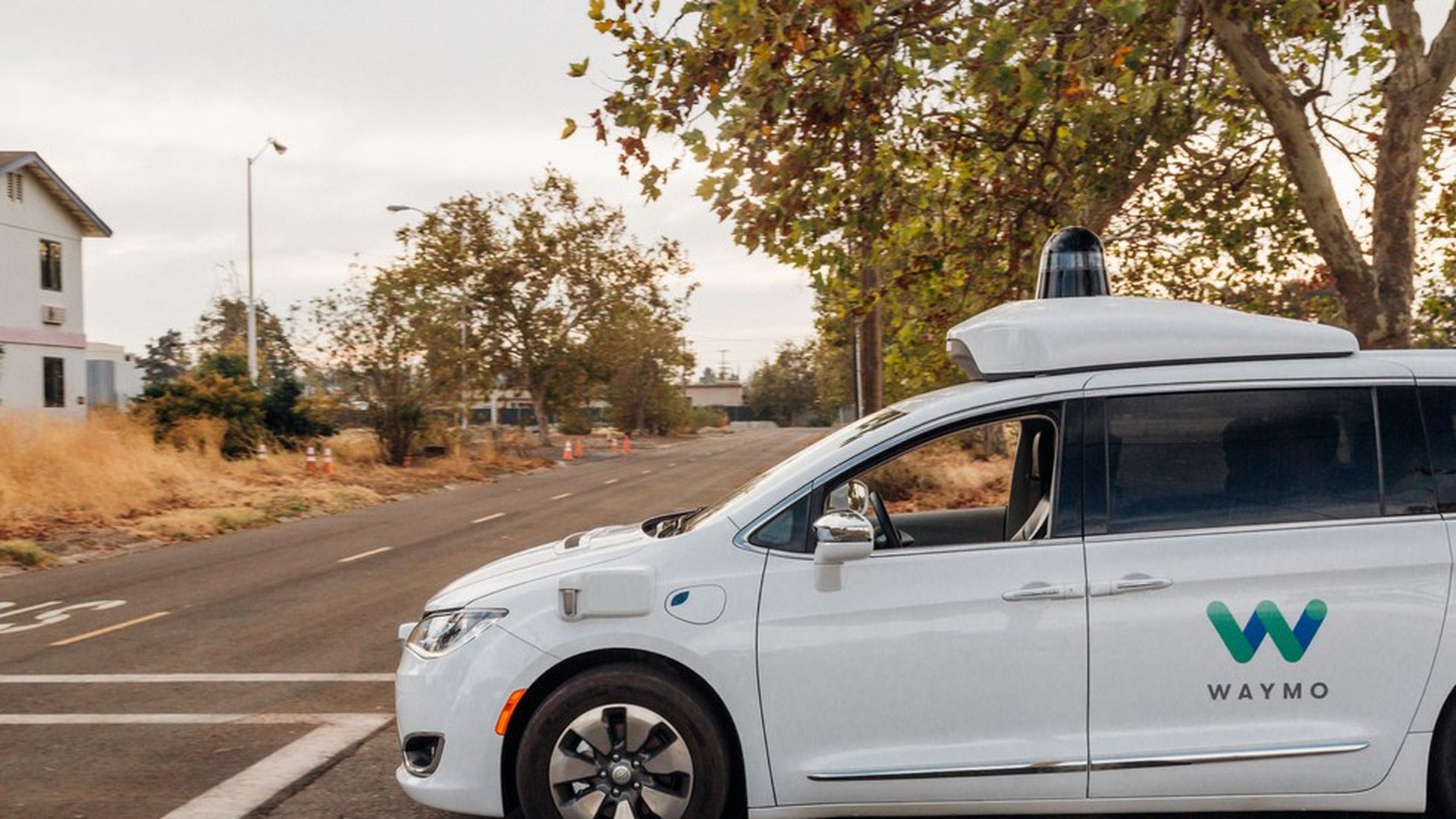
ATWATER, Calif. — For the past four years, Waymo, Alphabet's self-driving car unit, has been quietly testing its technology in a former air force base three hours away from San Francisco. On Monday, it invited several journalists to experience a fully driverless ride—albeit along a preset and highly practiced course—as well as observe some testing exercises and hear from some of the company's executives.
Why it matters: Self-driving cars are undoubtedly the future. But getting there is incredibly complex, even for companies like Waymo, that have sophisticated technology and lots of experience (i.e. 3.5 million autonomous miles under its belt). Monday's demonstrations showed all that promise, but also reinforced that a truly driverless future is still quite far away.
The signature new feature on the iPhone X is its face recognition, which powers its FaceID authentication system. But that's not necessarily its biggest selling point. While Apple's FaceID is leaps above any other face recognition technology on the market, it's replacing fingerprint recognition on other recent iPhones that also works quickly and consistently.
Between the lines: The real advantage of the iPhone X is you get a bigger screen and dual cameras in a smaller phone. And it's on that front where the iPhone X really earns its money. It delivers more screen real estate for Web browsing, e-mails and movie watching, plus the benefits of a second camera, all in a device that fits comfortably in the hand.
Data: SurveyMonkey poll conducted from Oct. 23 to Oct. 26. Poll data. Poll methodology; Chart: Axios Visuals
Why it matters: It's unlikely these companies face serious regulatory threats under the Trump administration, which has rolled back regulations and passed new laws that have favored tech and telecom companies. But they risk a narrative forming around whether they can be trusted to police themselves, and that could alter user confidence and thus affect their lucrative advertising businesses.
Calls to regulate technology platforms like Google and Facebook aren't likely to result in new regulations anytime soon — and that's fine by a narrow majority of people who say they are concerned the government will go too far, according to an Axios/SurveyMonkey poll.
Data: SurveyMonkey poll conducted from Oct. 23 to Oct. 26. Poll data. Poll methodology; Chart: Axios Visuals










/2017/12/15/1513306529711.gif?w=3840)