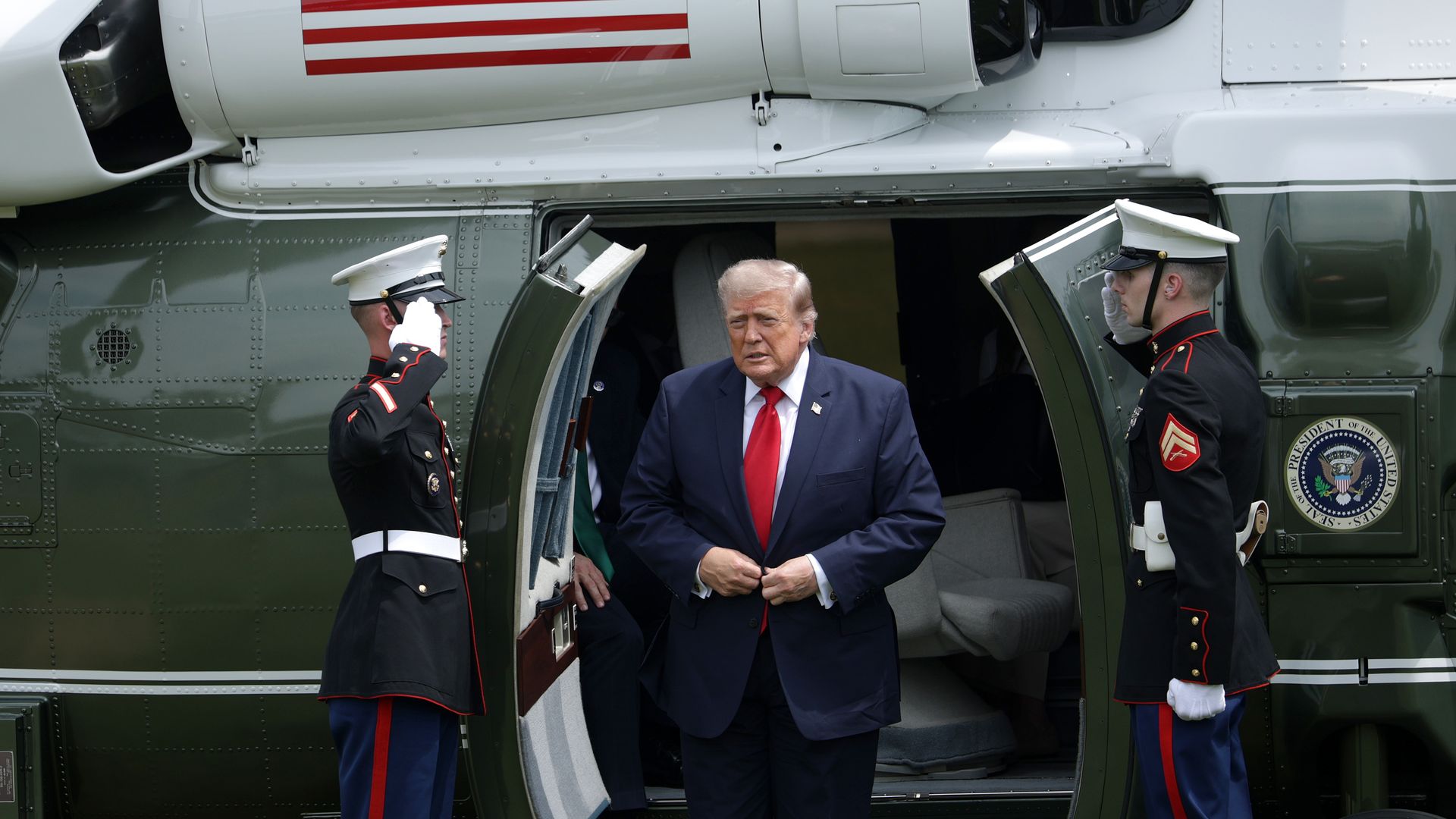
President Trump said Wednesday that Iran released an American woman who had been wrongfully detained since December 2024.
Why it matters: The release comes as Trump weighs expanding U.S. military strikes on Iran. Tehran has taken similar steps in the past as a way to de-escalate tensions with the U.S.
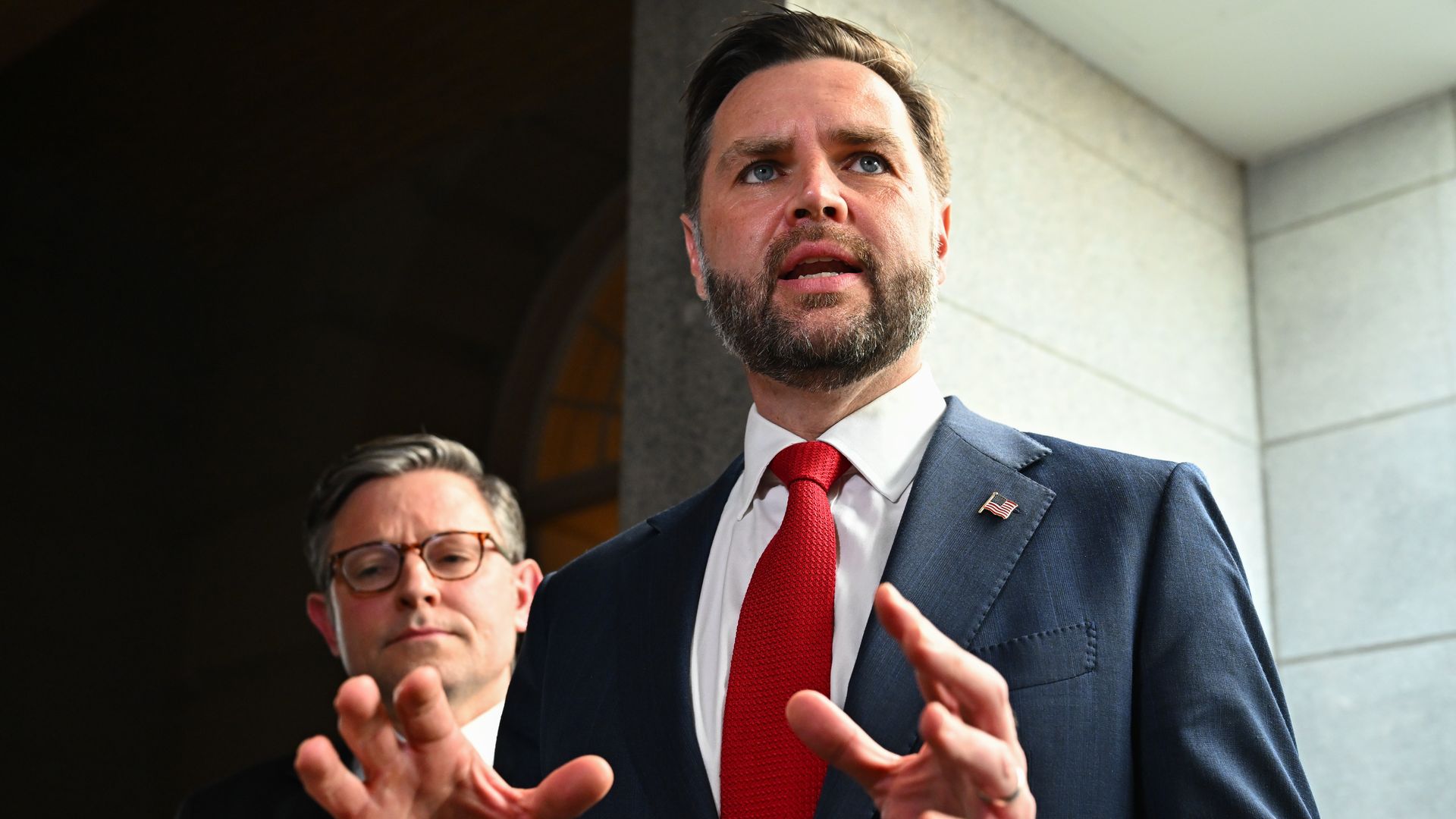
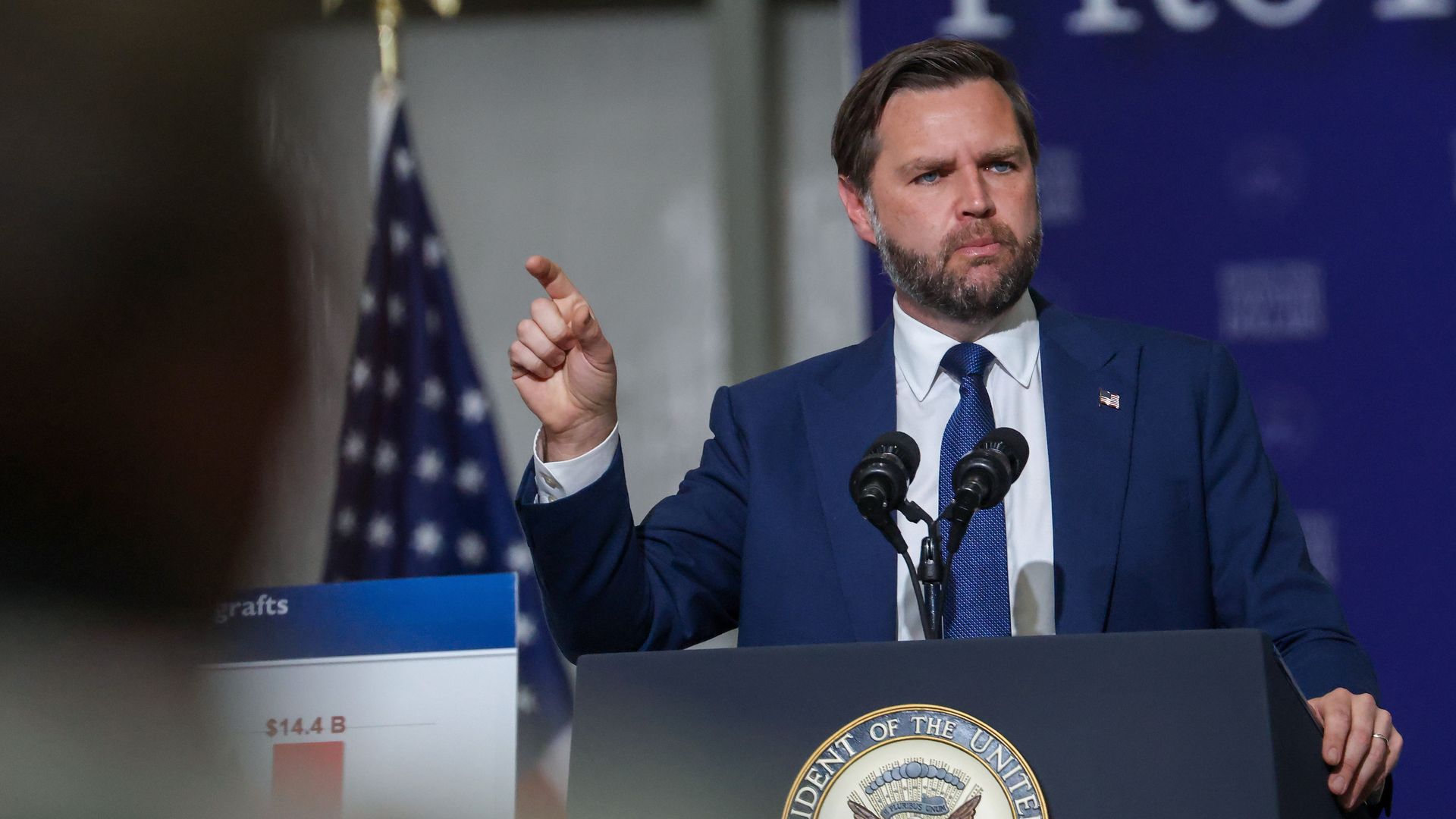
Vice President Vance's pitch to House Republicans on Wednesday did little to ease concerns over Speaker Mike Johnson's $95 billion reconciliation package, leaving GOP leaders with work to do ahead of a planned floor vote next week.
Why it matters: Johnson's conference members remain uneasy about the lack of spending offsets, and disagreements persist over the details of their signature election bill.
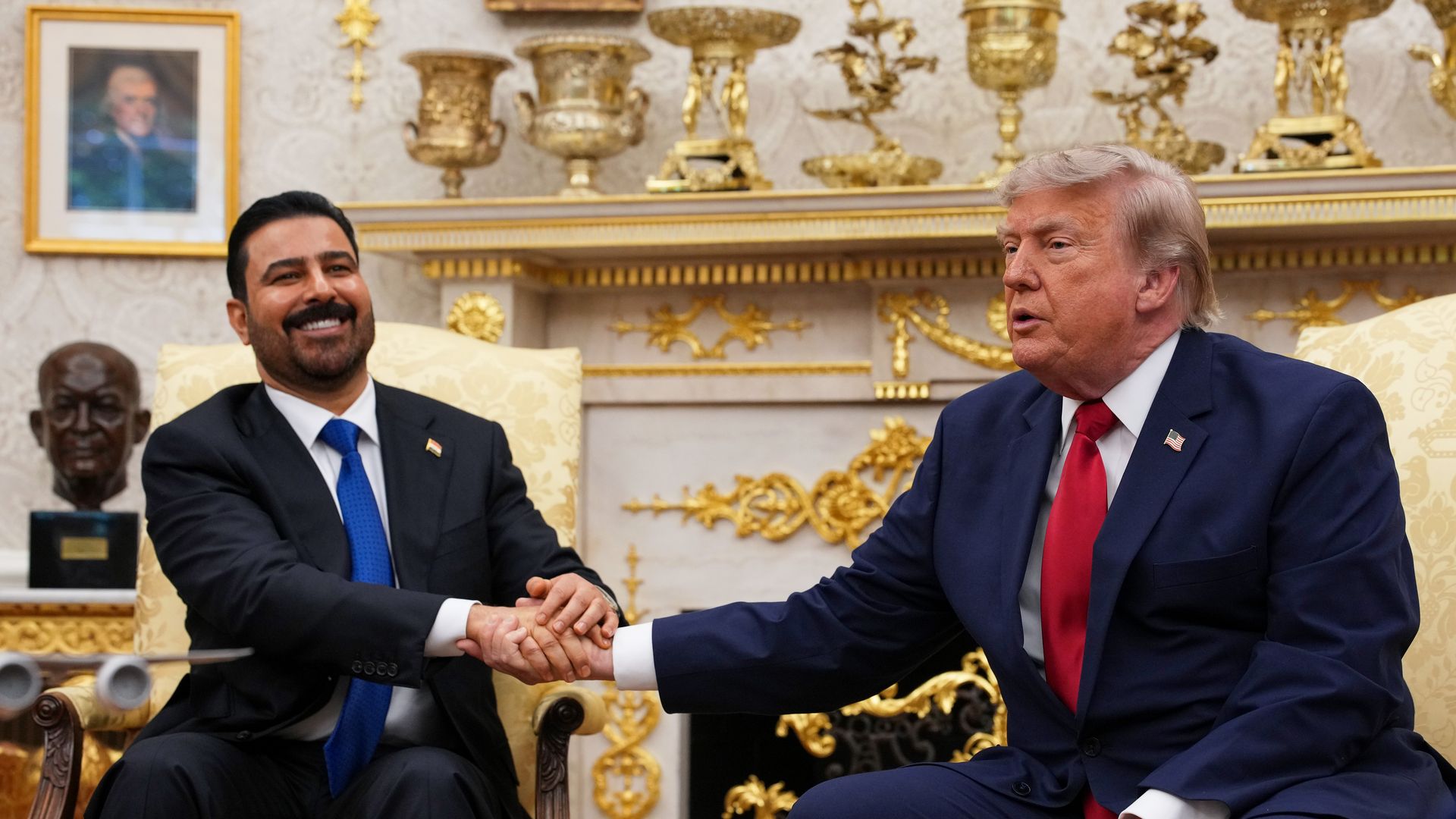
Last week, Iraqi Prime Minister Ali al-Zaidi attended the funeral procession of Iran's supreme leader. This week, he shook hands in the Oval Office with the man who had him killed.
Why it matters: Like every Iraqi prime minister in the last two decades, Zaidi has to conduct a delicate balancing act between strategic relations with Washington and Tehran. When both sides are shooting at each other, it's much harder.
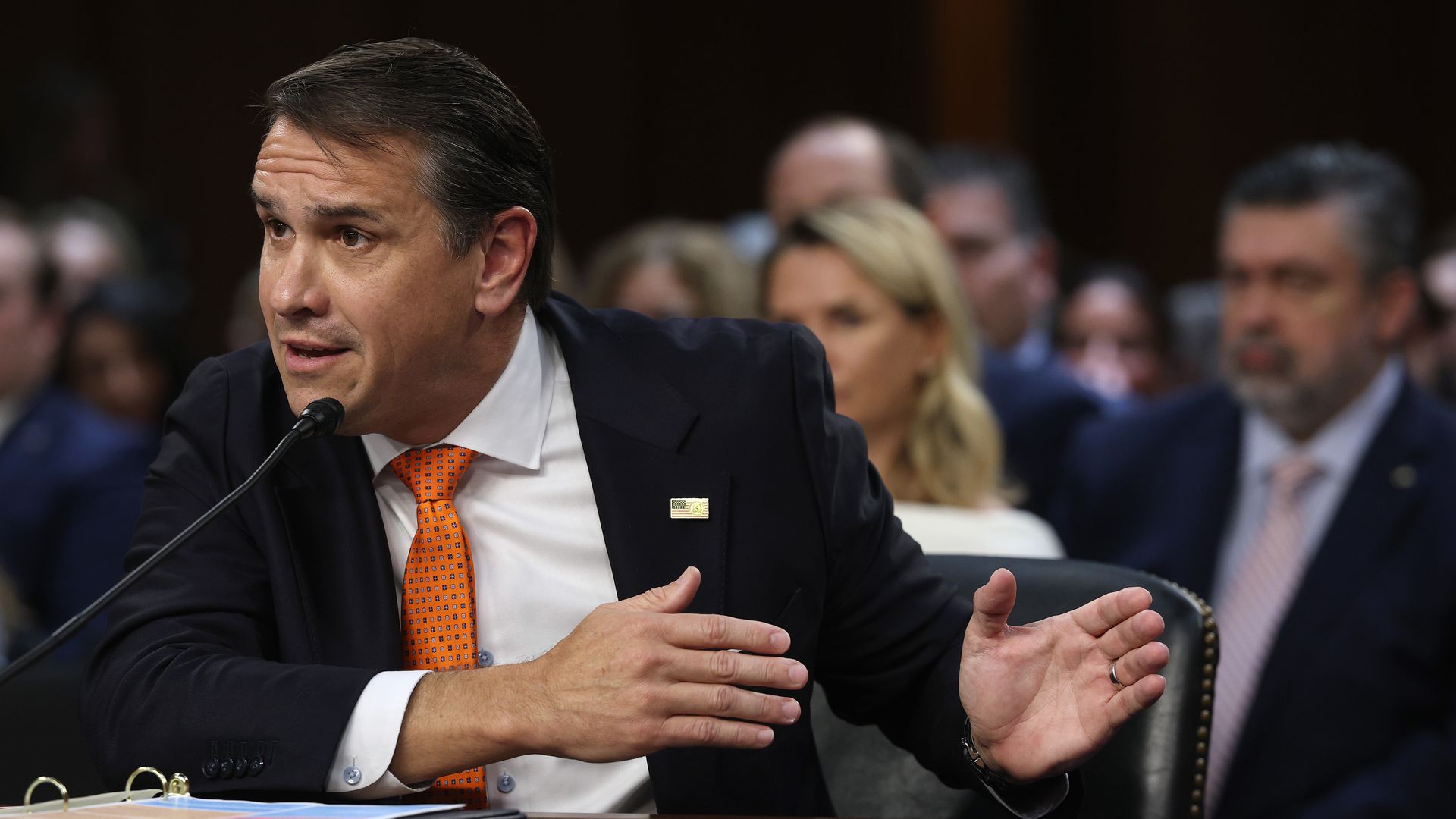
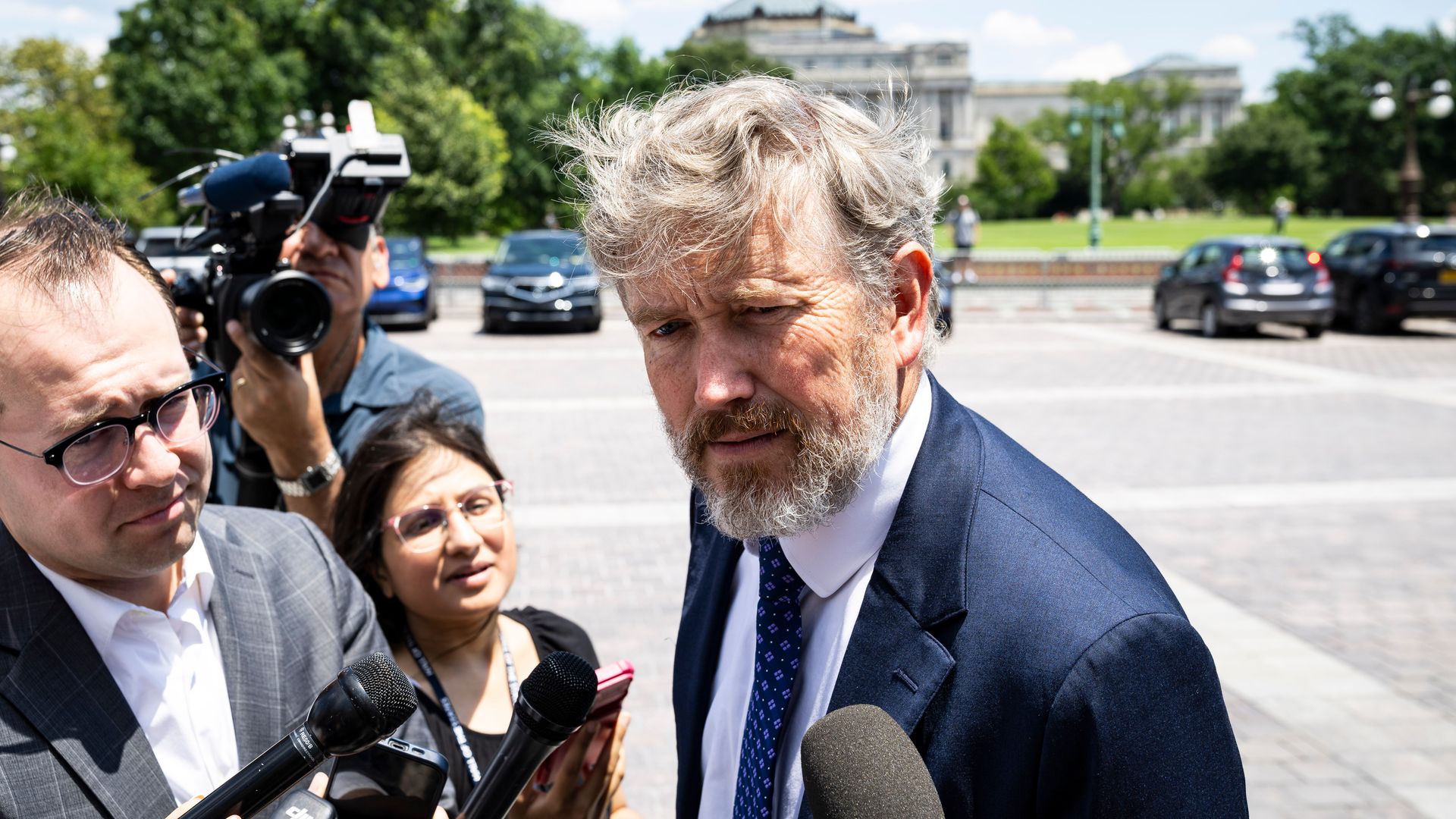
Acting Attorney General Todd Blanche declined Wednesday to explicitly rule out deploying federal agents to polling places, saying only that he would "follow the law."
Why it matters: Lawsuits challenging the Trump administration's use of federal agents near polling places are setting up a legal fight over whether those deployments violate federal protections against voter intimidation.
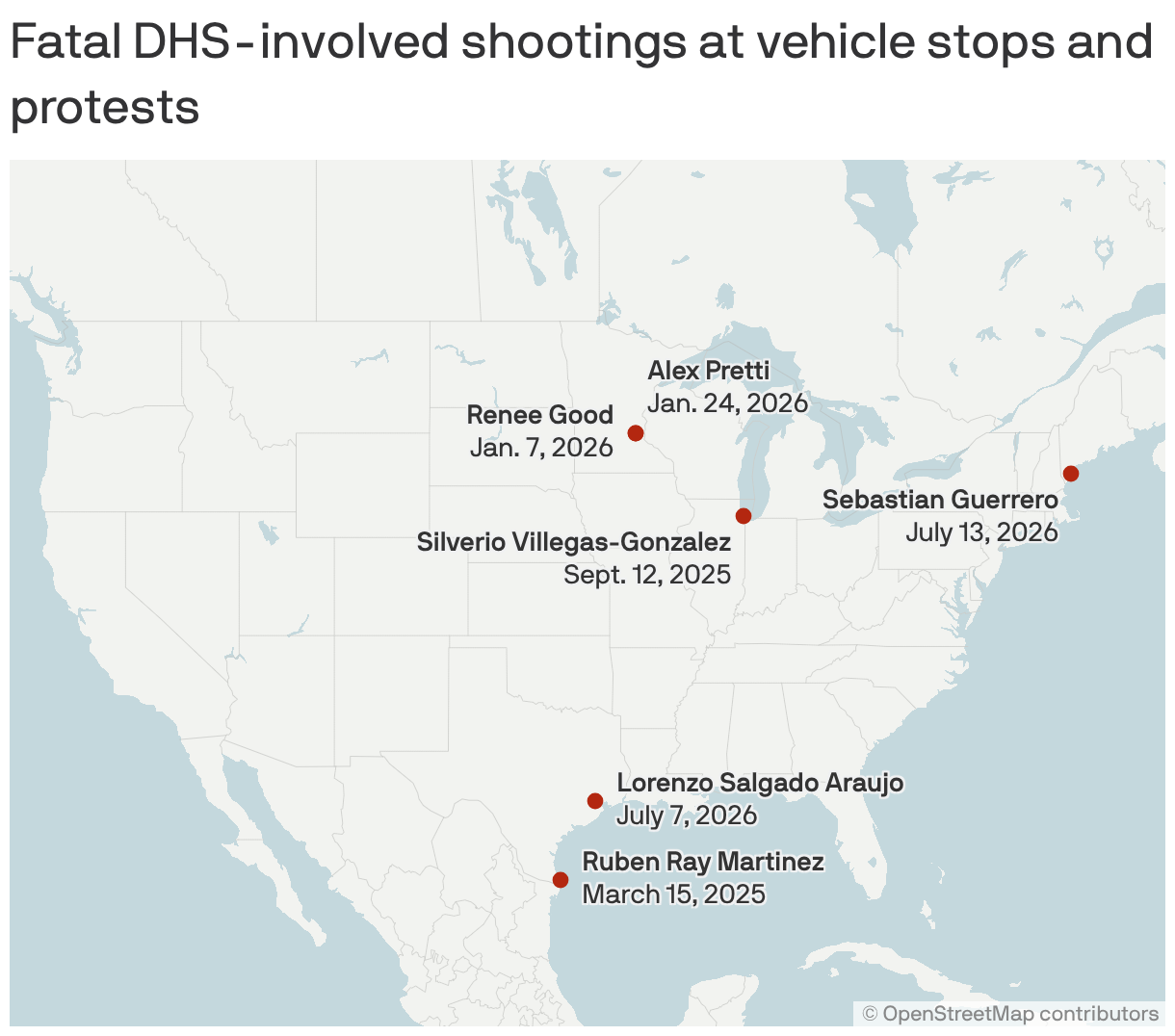
Johan Sebastián Guerrero, who was shot to death in Maine, is the latest in a string of people killed by federal immigration authorities since President Trump launched a nationwide immigration crackdown in his second term.
Vice President JD Vance said the Trump administration "mishandled" last year's release of the Epstein files during an appearance on "The Joe Rogan Experience."
Why it matters: Vance's comments are among the clearest public acknowledgments yet from the Trump administration that the Epstein files release became a major political liability.
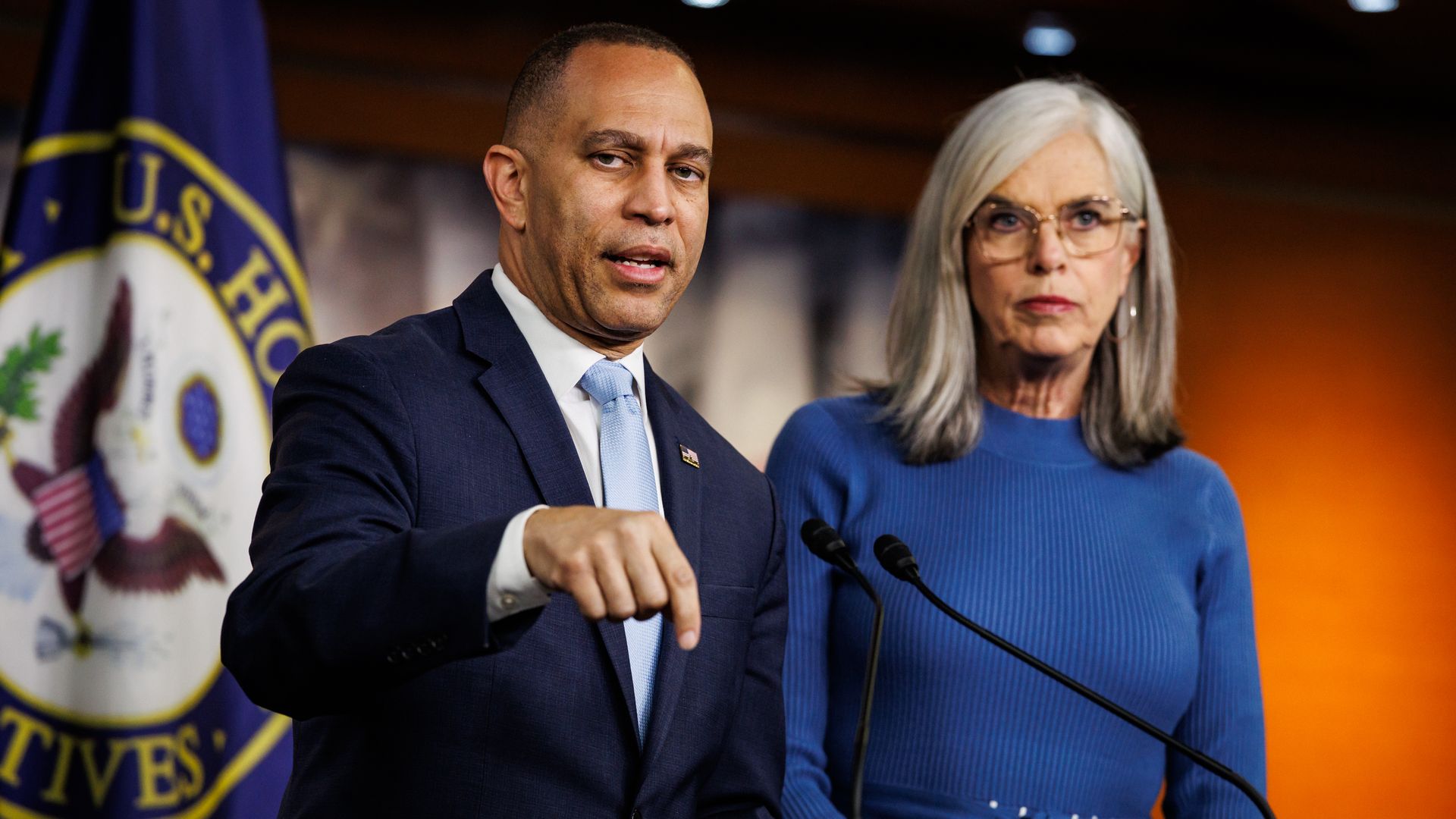
House Democrats' internal split over a vote to cut off U.S. aid to Israel has extended to leadership, with Minority Leader Hakeem Jeffries (D-N.Y.) and Minority Whip Katherine Clark (D-Mass.) planning to vote differently.
Why it matters: Such a divergence between the caucus' top two leaders is exceedingly rare and underscores just how much anxiety this vote is giving some in the party.
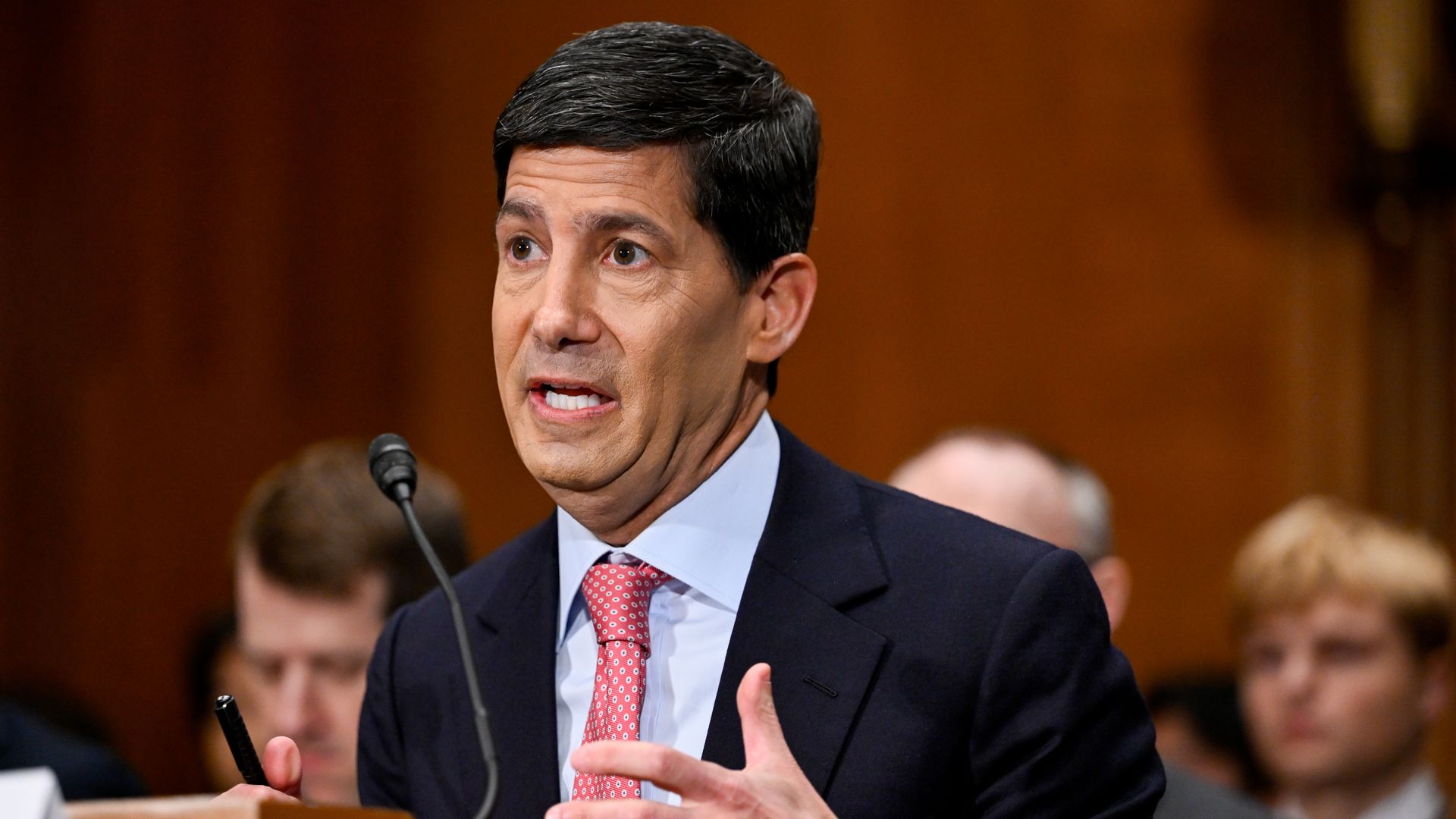
Federal Reserve chairman Kevin Warsh said on Wednesday that the AI investment boom will likely raise prices over the next year, but argued that those increases might not automatically be inflationary.
Why it matters: Warsh drew one of his clearest distinctions yet between the AI boom's immediate price effects and persistent inflation — a nuance that could shape policymakers' response as investment remains strong.
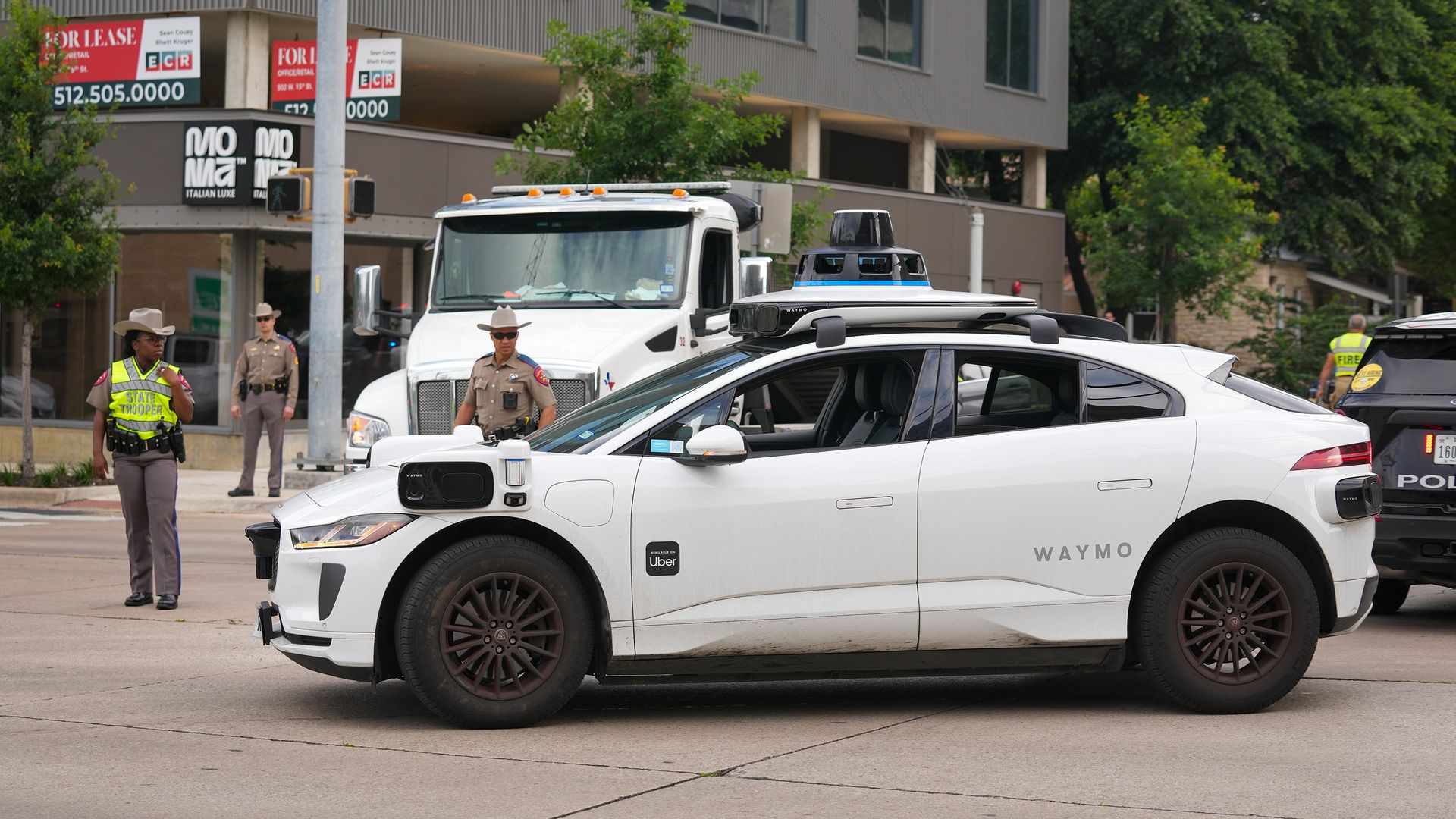
The Trump administration is simultaneously loosening federal rules to accelerate AV deployment while also slapping robotaxis for getting in the way of first responders during emergencies.
Why it matters: It's a reflection of how government regulations aren't keeping pace with the emerging technology. Self-driving cars are here, but uniform safety standards are not.
The rules of the road for autonomous vehicles are being written in real time, one debate at a time, in Washington and in statehouses and city halls across America.
Why it matters: The growing patchwork of federal, state and local rules could become the next major hurdle to scaling robotaxis in the U.S.
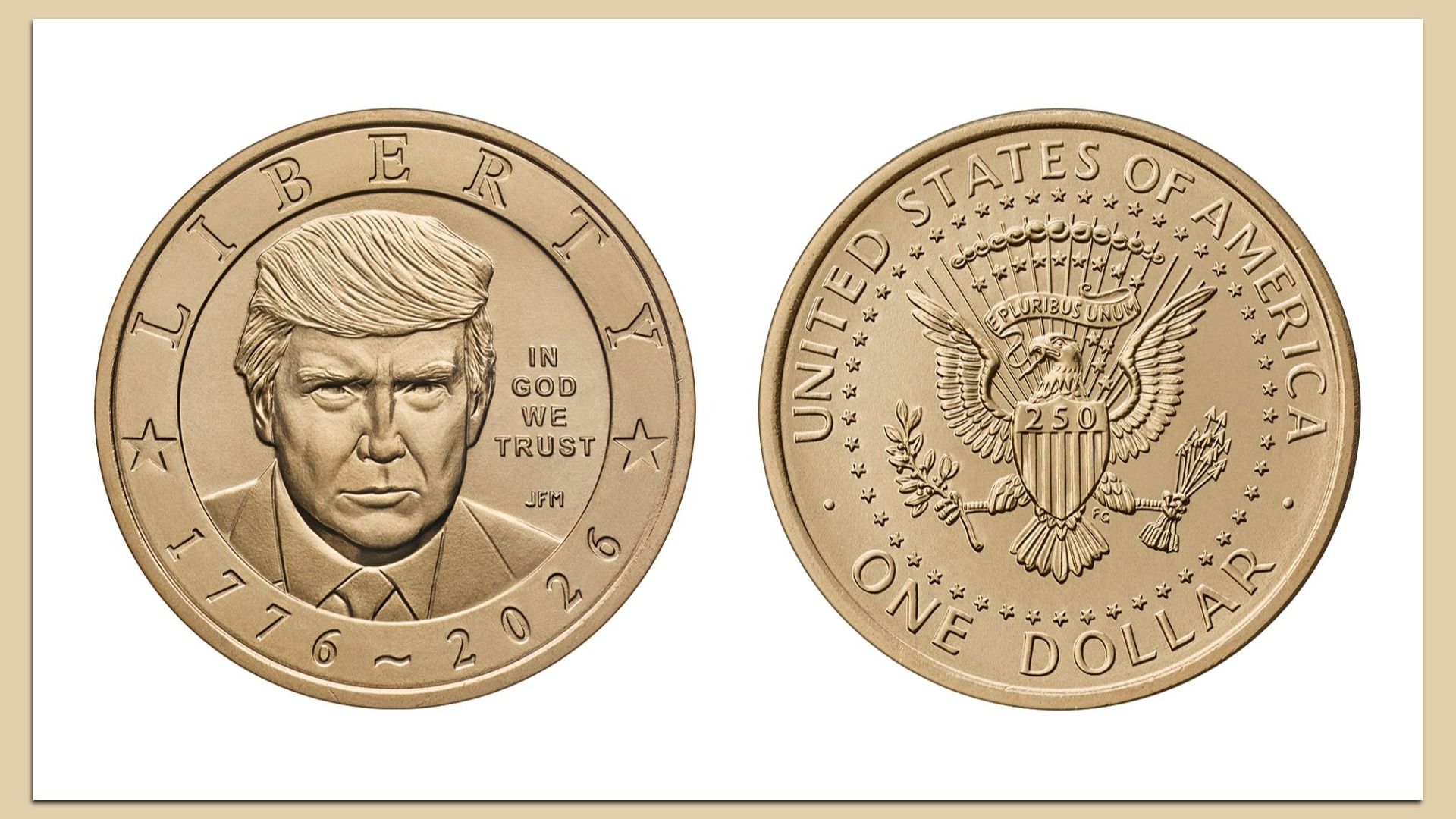
Treasury Secretary Scott Bessent on Wednesday unveiled new photos of a proposed $1 gold-colored coin featuring President Trump to commemorate America's 250th anniversary.
Why it matters: Trump's interest in reshaping U.S. currency reflects a broader effort by his administration to leave his imprint on federal symbols and institutions.
Lockheed Martin and nLight are developing high-energy laser weapons that, eventually, will be capable of downing both drones and cruise missiles, the U.S. Defense Department announced.
Why it matters: The initial contracts, announced July 9, are worth $86 million.
Senra Systems, a wire-harness startup,plans to open a third factory and hire engineers and technicians on the heels of a $65 million Series B.
Why it matters: Wire harnesses are a major national-security bottleneck, as they serve as the nervous systems inside everything from munitions to aircraft, satellites to cars.
"Without wire harnessing, nothing turns on," CEO Jordan Black told Axios.
"We are standardizing something that's never been standardized before," he said, "and that's the only way to scale this."
Armenia is pursuing "diversification," seeking to shake up its sources of energy, its future artificial intelligence clientele, its supply chain components and the countries it relies on for weapons, ambassador Narek Mkrtchyan told Axios.
Why it matters: Armenia is wedged between Iran and Russia, two of the most pressing national security hazards juggled by the U.S.
It's also party to a peace agreement, brokered and touted by the Trump administration, that could reshape the Southern Caucasus.
"A lot of potential was blocked because of the absence of peace," Mkrtchyan said. "Once we bring the peace agenda, prosperity will come."
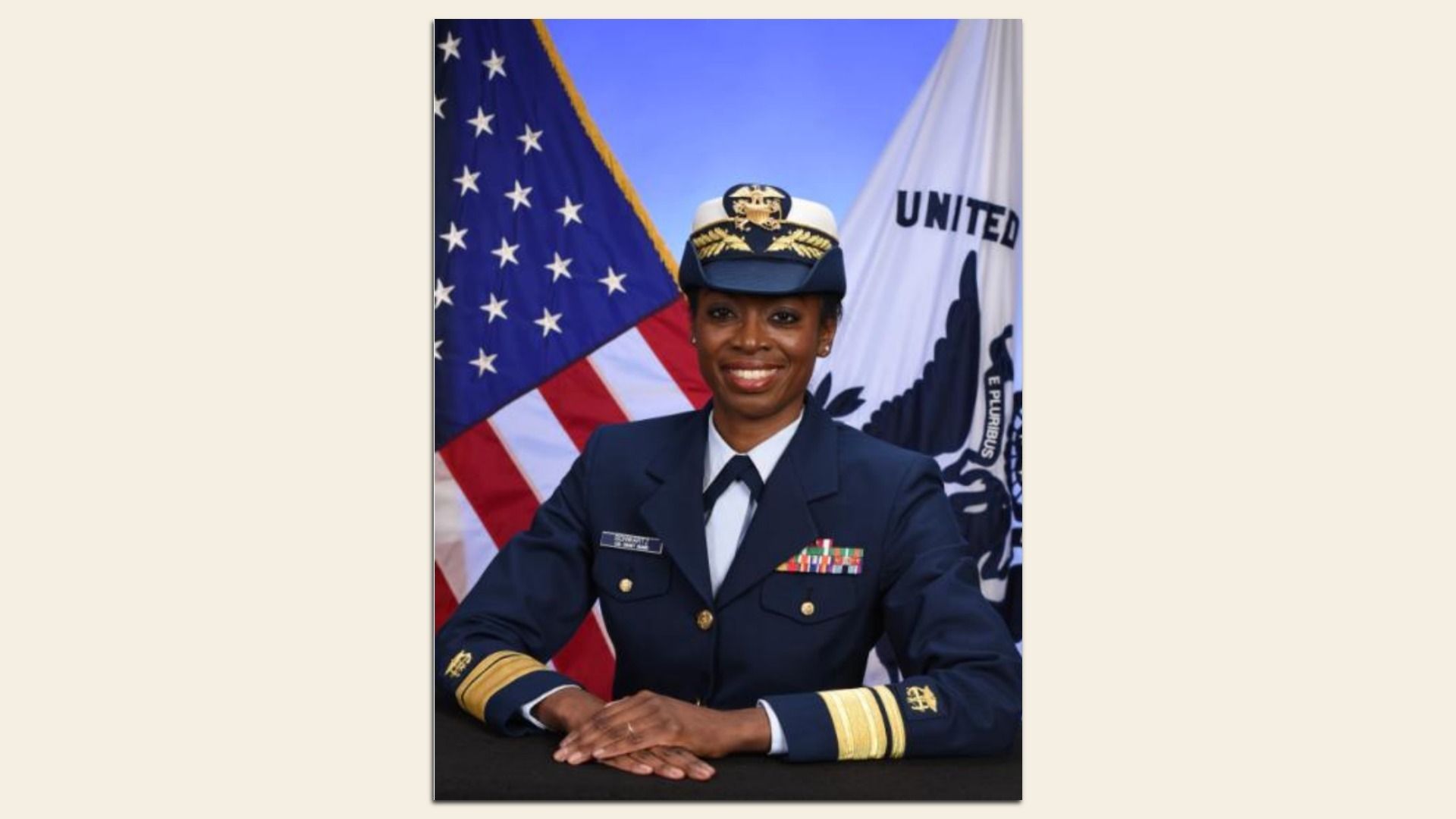
The latest Senate debate over a Trump health appointment kicks off Wednesday with a less polarizing nominee than some of the president's previous picks — but that doesn't mean controversies around vaccines and public health are over.
Why it matters: Former deputy surgeon general Erica Schwartz will have to convince lawmakers she has a vision to lead the Centers for Disease Control and Prevention but can still work with Health Secretary Robert F. Kennedy Jr., who clashed with the last full-time CDC director over vaccine policy changes.
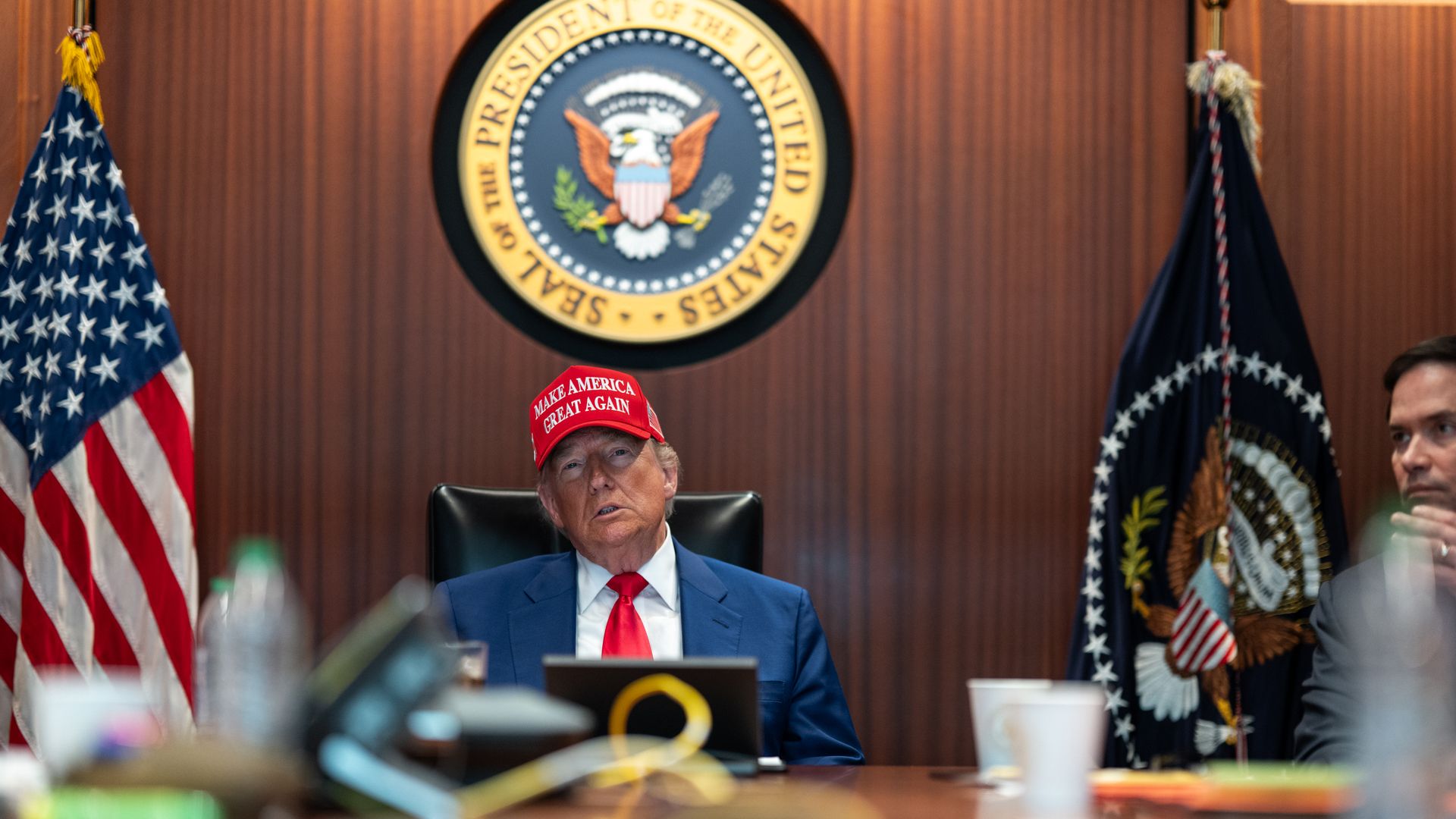
President Trump held a Situation Room meeting Tuesday to discuss a massive offensive in Iran that will be wider in scope than the current strikes around the Strait of Hormuz, three sources with knowledge said.
Why it matters: Trump appears willing to escalate the war to cause enough damage that the Iranian regime will open the Strait of Hormuz and accept Trump's nuclear demands.
In Abu Dhabi, the largest emirate in the United Arab Emirates, AI is as much a part of daily life as reporting a pothole or making a doctor's appointment or paying a parking ticket — because AI does all that for you.
Abu Dhabi, the capital of one of the world's wealthiest and most globalized business hubs, has near-universal adoption of an app that knows when you need to renew your national ID or health insurance or vehicle registration.
The app's "AutoGov" feature goes a step further: It handles the paperwork and pays what's owed without being asked.
Why it matters: The UAE made a massive bet on AI, spending billions on infrastructure and research, backed by long-term thinking and alignment from top leaders. Before the war with Iran, the bet was paying off massively. "People make money here and bring money here," a UAE resident told Jim VandeHei and me when we visited just before the war.
The war rattled the UAE's AI ambitions and stirred fears about visiting, given the constant threat of Iranian attack. UAE leaders tell us they remain all-in on AI: They're willing to work with both the U.S. and China, and see the technology as the key to their future beyond oil.
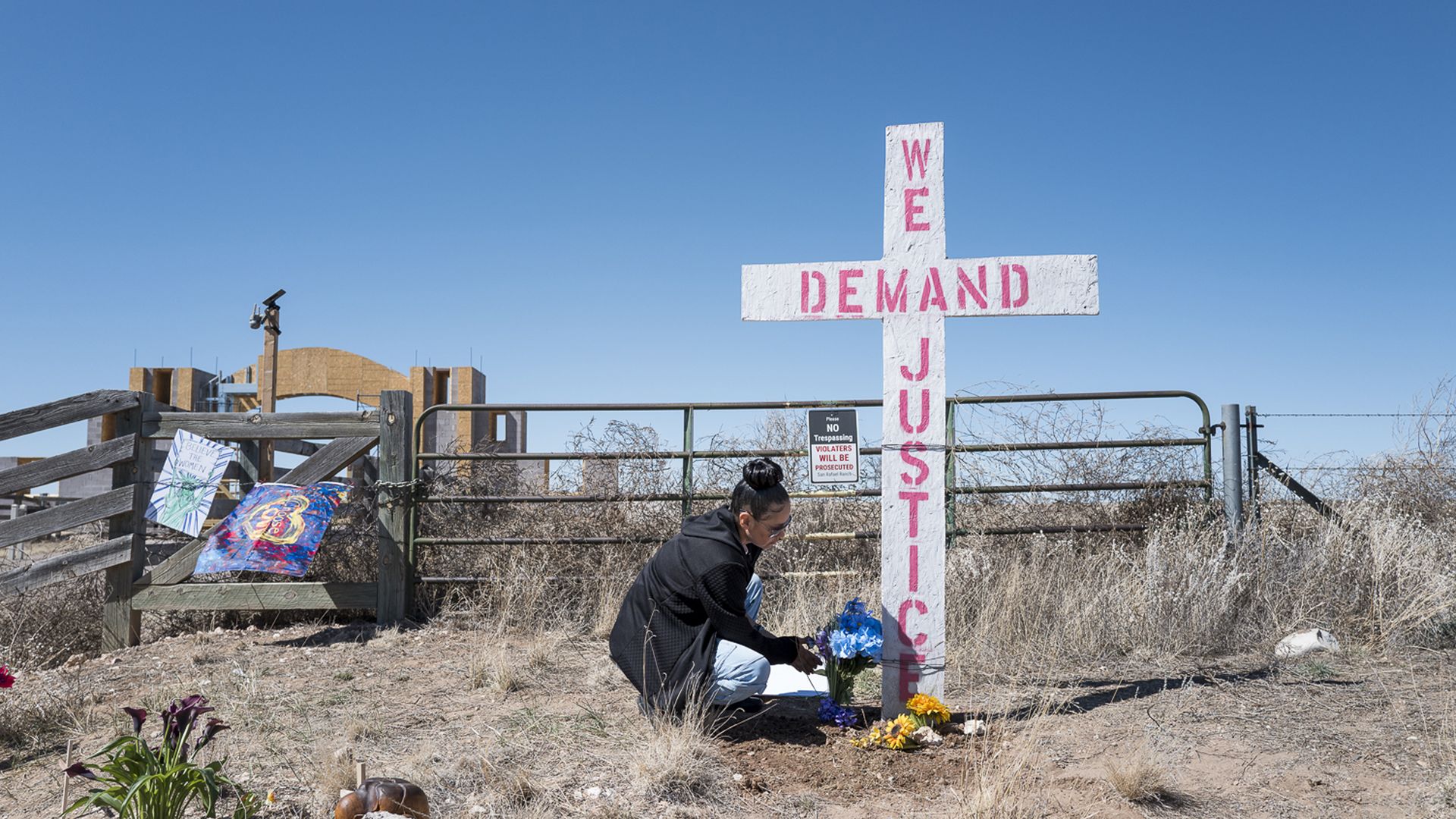
A public dispute between New Mexico's attorney general and the U.S. Department of Justice escalated Tuesday over records sought in the state's Jeffrey Epstein investigation.
Why it matters: The clash underscores questions about whether federal privacy restrictions and court orders are preventing state investigators from pursuing potential criminal leads tied to Epstein's former Zorro Ranch in New Mexico.