Blanche sidesteps questions on federal agents at polls

Add Axios as your preferred source to
see more of our stories on Google.
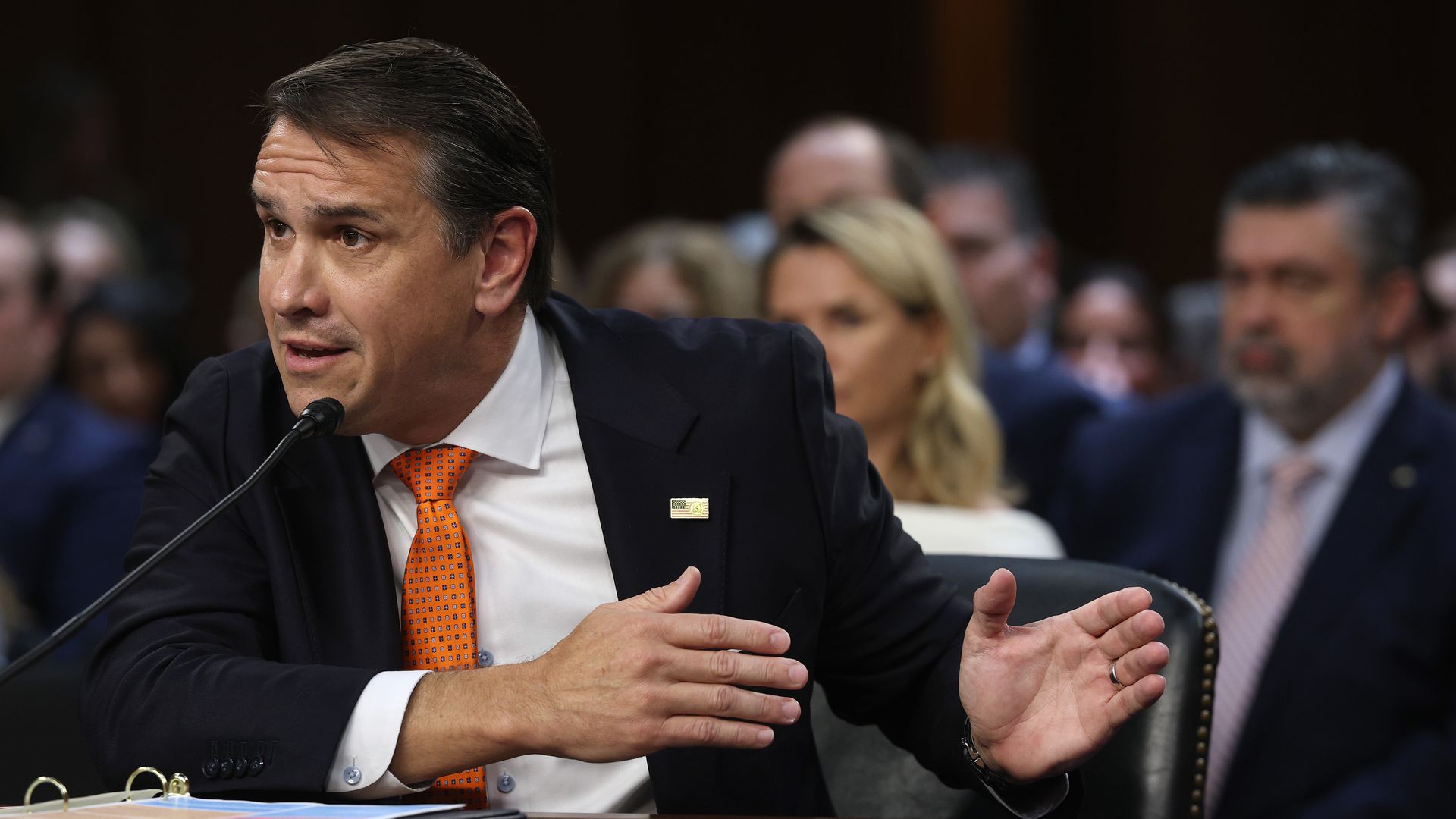
Acting AG Todd Blanche on Capitol Hill July 15, 2026. Photo: Win McNamee/Getty Images.
Acting Attorney General Todd Blanche declined Wednesday to explicitly rule out deploying federal agents to polling places, saying only that he would "follow the law."
Why it matters: Lawsuits challenging the Trump administration's use of federal agents near polling places are setting up a legal fight over whether those deployments violate federal protections against voter intimidation.
What they're saying: When Sen. Amy Klobuchar (D-Minn.) asked whether Blanche would "commit to following clear federal law" by not deploying armed federal agents to polling places, Blanche replied that he would "commit to following the law … no matter what it includes."
- Klobuchar also asked if he understood why federal agents are a concern to voters, as some advocacy groups say it's a form of voter intimidation.
- "I'm not aware of armed agents being at polling places, so I don't. I'm not aware of that concern, but I will tell you we will follow the law."
Context: Federal law generally prohibits "troops or armed men" from being deployed to polling places, except in narrow circumstances, such as repelling "armed enemies" of the U.S.
Driving the news: In response to an FOIA request, U.S. Customs and Border Protection denied it had any documents related to ICE deployments at polling places.
- The agency later reversed course after the plaintiff pointed to agents deployed outside active voting sites in both Texas and California.
- A federal judge then ordered CBP to begin processing any documents relating to potential ICE deployments at polling locations on Monday.
Between the lines: Multiple administration officials have also declined to explicitly rule out ICE presence near polling places, including DHS Secretary Markwayne Mullin and White House Press Secretary Karoline Leavitt.
- Mullin said ICE wouldn't be present for "intimidation" purposes, but could be present if a "specific threat" arises. He said he was unable to predict what kind of threat might warrant ICE presence.
- Leavitt said in February that she couldn't "guarantee that an ICE agent won't be around a polling location in November," but noted the president wasn't considering such a proposal.
Zoom in: A Homeland Security spokesperson told Axios that "ICE is not planning operations targeting polling locations."
- The spokesperson added in the email: "ICE conducts intelligence-driven targeted enforcement, and if an active public safety threat endangered a polling location, they may be arrested as a result of that targeted enforcement action."
Flashback: Blanche told attendees at CPAC earlier this year that Americans shouldn't have objections to ICE at polling places.
- "Why is there objection to sending ICE officers to polling places?" Blanche asked. "Illegals can't vote. It doesn't make any sense."
The latest: Department of Justice spokesperson Kiersten Pels told Axios that Blanche was highlighting what she called "an obvious irony": that people who say they support voting rights object to ICE seeking to prevent people living in the U.S. illegally from voting unlawfully
- She added in the email that the DOJ "follows the law with respect to election integrity."
Zoom out: There is no evidence that undocumented immigrants have illegally voted in U.S. elections in numbers large enough to sway the outcome.
- Voting rights groups say federal agents at polls can intimidate voters, causing some Americans to feel unsafe and chilling voter turnout.
- Multiple federal statutes prohibit voter intimidation, making it illegal to intimidate, threaten, or coerce a person with the intent of "interfering" with that person's right to vote.
Go deeper: Exclusive: ICE obtains local voter files in Texas and North Carolina
Editor's note: This story has been updated with comment from spokespeople for the Departments of Justice and Homeland Security.
