How RFK Jr. could exploit the CDC's power vacuum

Add Axios as your preferred source to
see more of our stories on Google.
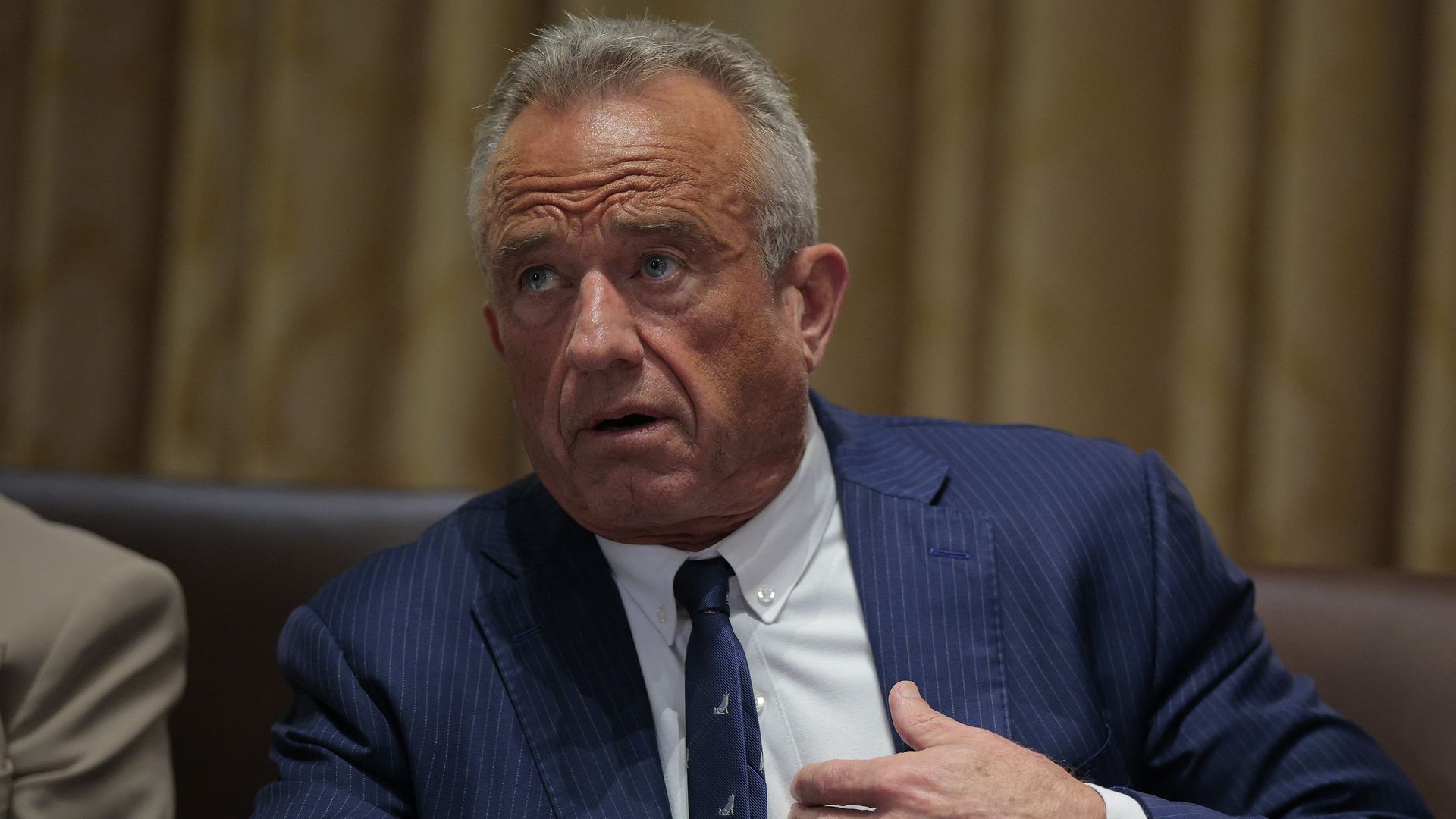
Health Secretary Robert F. Kennedy Jr. speaks during a cabinet meeting on August 26. Photo: Chip Somodevilla/Getty Images
Health Secretary Robert F. Kennedy Jr. could emerge in an even stronger position due to the fallout from the resignations and turmoil atop the Centers for Disease Control and Prevention.
The big picture: The upheaval from the ousting of CDC Director Susan Monarez will make it difficult to win Senate confirmation for any administration nominee who's willing to sign off on Kennedy's controversial vaccine policy changes.
- But without a permanent director, Kennedy could actually end up with more power, since he and handpicked lieutenants could step into the power vacuum and put the CDC's stamp on his agenda.
- Three CDC officials who resigned Wednesday were escorted out of the Atlanta headquarters by security Thursday, per the New York Times, and a staff walkout took place.
The latest: President Trump selected Jim O'Neill, the current deputy secretary of HHS, as acting CDC director, Axios confirmed Thursday afternoon.
- The Senate confirmed O'Neill as Kennedy's No. 2 in June. A biotech investor with close ties to billionaire Peter Thiel, he criticized the CDC during the COVID pandemic but told lawmakers in May that he was "strongly pro-vaccine."
What they're saying: "It will be difficult to find another CDC director that can walk the line of MAHA and gain the trust of the Senate to allow for confirmation," David Mansdoerfer, a former senior HHS official in the first Trump administration, told Axios.
- On the other hand, the resignation of CDC leaders will allow Kennedy to put people he trusts in those positions, he said.
Zoom in: When a principal officer role is vacant, federal law allows the president to appoint an acting director who has sufficient seniority at the agency or already has been confirmed by the Senate for a different role — such as the current heads of FDA or NIH, said Dorit Reiss, law professor at UC Law San Francisco.
- That individual could serve as the CDC's acting leader for up to 210 days. But that term could be extended if the White House nominates someone who the Senate rejects.
- "There are ways to string it, probably up to the four years of an administration," Reiss said.
Kennedy could have also requested that the position remain vacant until someone is confirmed for the role, she said.
- In that case, official acts requiring approval — like adopting vaccine recommendations — would have fallen to Kennedy himself.
Catch up quick: President Trump initially selected former GOP congressman Dave Weldon to serve as CDC director. But he pulled Weldon's nomination before the Senate formally considered it, following concerns from senators over Weldon's skeptical views on vaccines.
- Trump then turned to Monarez, a career federal scientist, who was confirmed with little rancor on July 29. The White House said she was fired after barely a month on the job on Wednesday, over a dispute with Kennedy that included vaccine policy changes.
- Monarez's lawyers said that night that she was targeted because she "refused to rubber-stamp unscientific, reckless directives."
- As of Thursday morning, they said that she will not resign, and had not received the proper legal notice informing her of her termination.
- Four senior leaders at CDC did resign Wednesday night, citing their inability to sufficiently protect public health after Kennedy's recent changes at the agency. Kennedy could select political appointees to fill their roles, Reiss said.
It wasn't clear who was in charge at CDC for most of the day Thursday.
- The CDC director position was listed as vacant on the agency's website, as of Thursday afternoon.
- HHS and the White House did not respond to multiple requests for comment from Axios.
- One CDC employee told Axios Thursday morning that they did not know who was in charge at the moment. "I'm so stressed I can't think," another staffer said.
Reality check: The Senate has been largely accommodating of Trump and Kennedy so far, Reiss said.
- The administration at some point will get a nominee confirmed — the questions are who it will be, and how long it will take, she said.
What we're watching: Senate health committee chair Bill Cassidy (R-La.), a physician who provided a key vote to advance Kennedy's nomination, has expressed concern about the upheaval at CDC and Kennedy's views on vaccines.
- Cassidy posted on X Wednesday that the CDC leadership departures "will require oversight by the HELP Committee," but didn't say what kind of oversight he's planning.
- On Thursday, he urged a panel of outside vaccine advisors to the CDC that Kennedy selected to postpone its September meeting, saying "serious allegations have been made about the meeting agenda, membership, and lack of scientific process being followed."
- Cassidy's vote would likely be necessary to approve the next CDC director.
Go deeper: "Unable to serve": CDC vaccine chief slams Kennedy in resignation post
Rebecca Falconer contributed.
