Three labor unions sued the Trump administration Thursday in New York federal court for "scouring" non-U.S. citizens' social media accounts to revoke the visas of those who expressed views critical of the administration.
Why it matters: Unlike previous lawsuits fighting visa revocation, Thursday's filing is the first to challenge the administration's surveillance program, which monitors more than 55 million U.S. visa holders.
President Trump's tariffs will cost businesses more than $1.2 trillion this year, with most of that cost being passed on to consumers, according to a new study from S&P Global.
Why it matters: It's the latest sign that Americans will end up bearing the brunt of Trump's trade war.
The White House on Thursday announced measures aimed at expanding access to in vitro fertilization, including a new "most-favored nation" pricing deal with the manufacturer of a leading fertility drug.
Why it matters: The effort combines two Trump priorities: lowering drug prices and making IVF treatment more affordable.
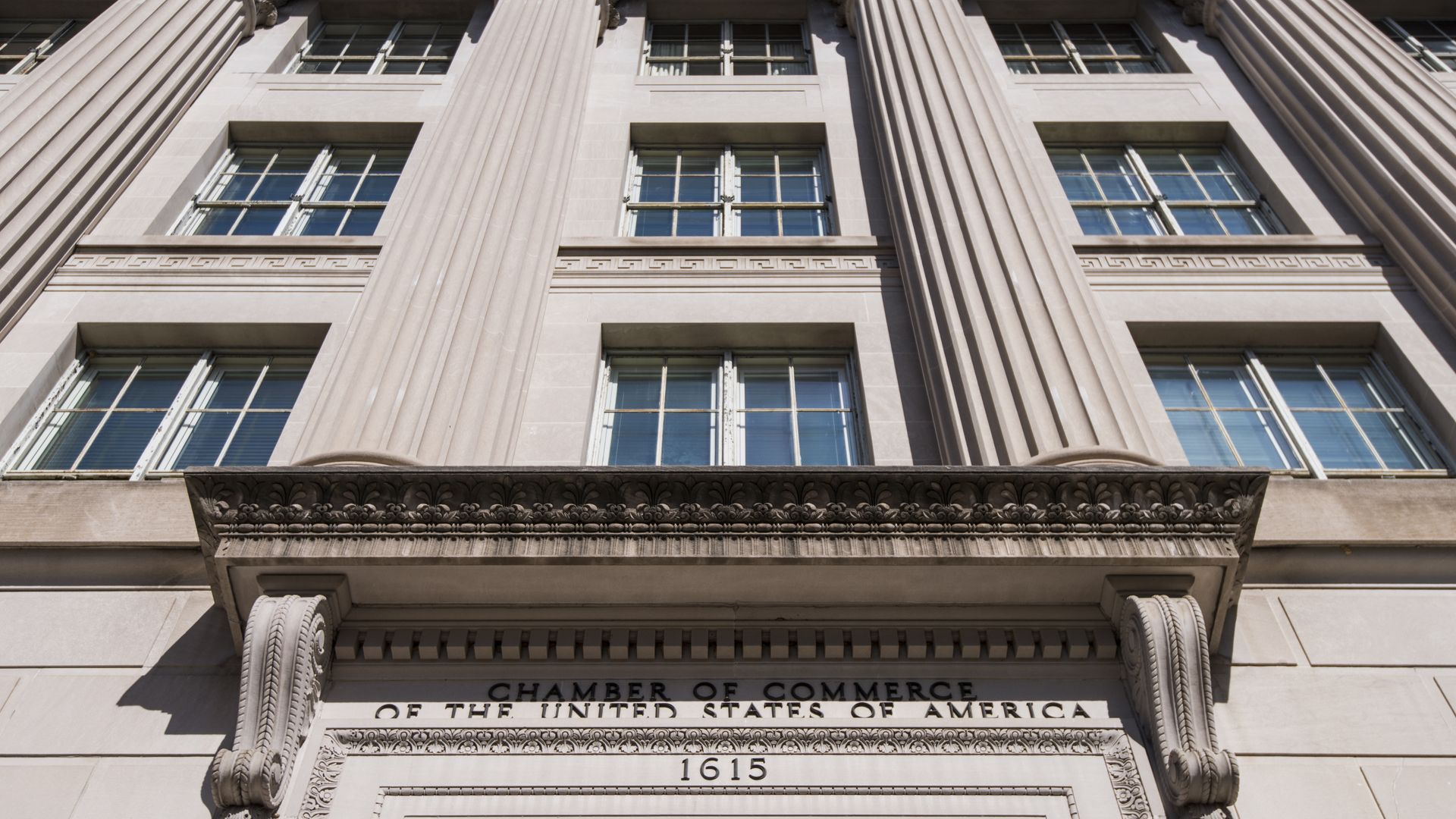
The U.S. Chamber of Commerce on Thursday sued to block the Trump administration's plan to charge a $100,000 fee for H-1B visas, a move businesses say could deprive them of skilled foreign workers.
Why it matters: For all of the actions taken by the administration that pressured corporate America, from DOGE to tariffs, the proposed visa changes proved a bridge too far for the influential business lobby.
Ukrainian President Volodymyr Zelensky hopes his meeting with President Trump at the White House on Friday will lead to clear decisions from the U.S. about which weapons systems it's prepared to provide, Zelensky's chief of staff Andriy Yermak told Axios in an interview.
"I think we need decisions that will help to change Putin's attitude that he is in a strong position. He needs to understand that with President Trump, it's impossible to play games," Yermak said.
Why it matters: Zelensky, who arrived in Washington on Thursday afternoon, has been very optimistic in recent days about his planned meeting with Trump and the president's willingness to supply long-range Tomahawk missiles.
Two people have been indicted on terrorism charges in connection with the July 4 attack on a North Texas Immigration and Customs Enforcement detention facility.
Why it matters: The indictments are the first antifa-related federal terrorism charges filed since President Trump signed an executive order last month labeling the antifascist group a domestic terrorist organization.
The Defense Department's new rules for press credentials led to a mass exodus this week of nearly every Pentagon reporter from almost every major media outlet.
Why it matters: News outlets argue that the Pentagon is effectively asking their journalists to accept — as a condition of access — that they can be penalized for routine newsgathering activities, like asking a source for information they have not been explicitly authorized to discuss.
A federal judge on Thursday said she wants federal agents in Illinois to turn on their body cameras during encounters with immigration protesters, multipleoutletsreported.
Why it matters: Protests against the Trump administration's immigration crackdown have grown increasingly violent, with federal law enforcement likely defying a court order by using tear gas on demonstrators.
The White House's political operation is telling congressional Republicans to hold firm on the government shutdown, citing internal and external polling that show Democrats' numbers are eroding.
Why it matters: Since the shutdown started Oct. 1, Democrats have boasted that public opinion is on their side. But the trend line appears to be shifting, according to internal White House polling data viewed by Axios.
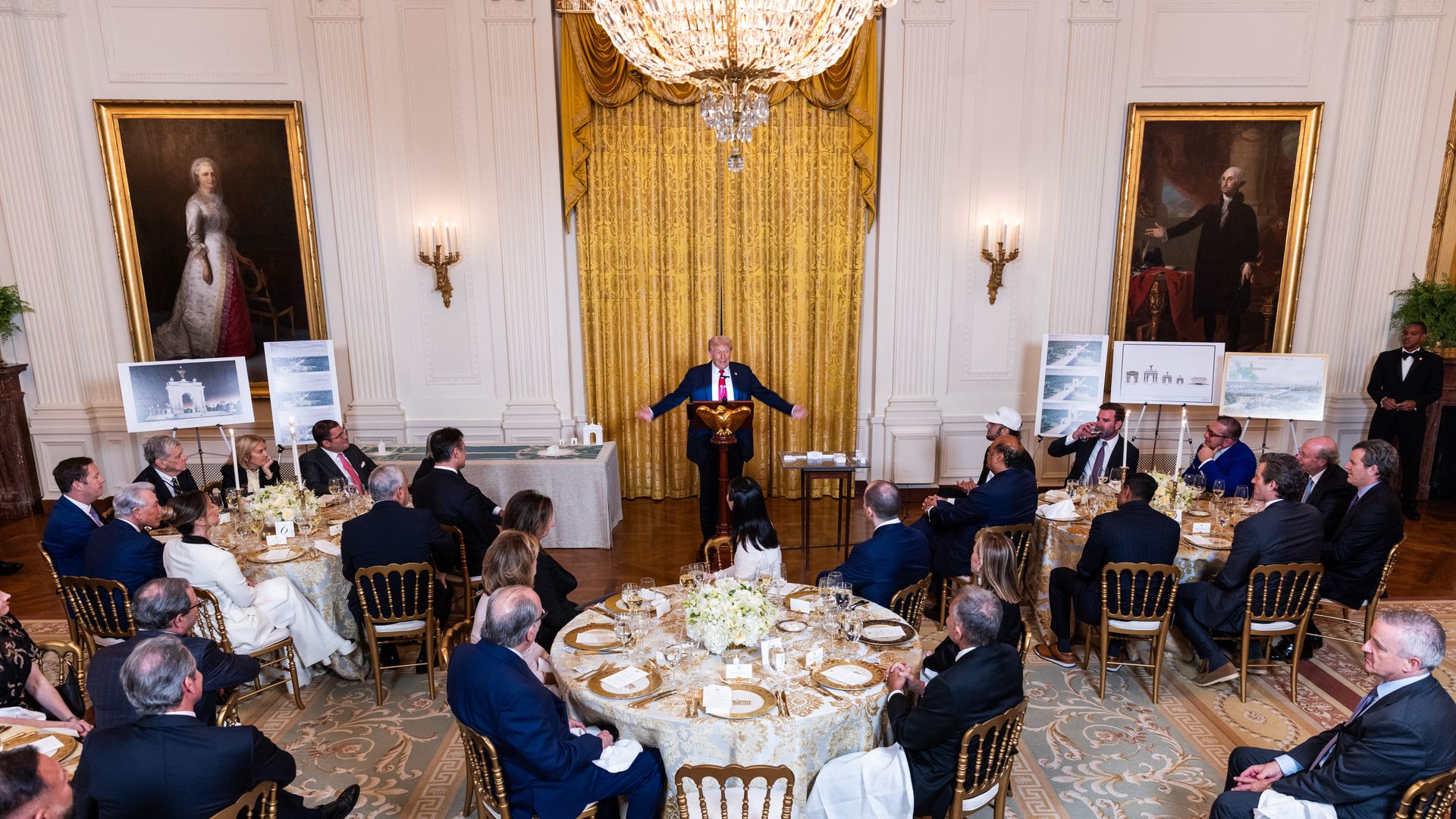
President Trump's gold-tinted dinner Wednesday for wealthy sponsors of his planned White House ballroom served yet another example of how corporate America has curried favor for access to his administration, ethics experts told Axios.
The big picture: That pay-for-play relationship between Trump and business leaders under his second White House stay, critics argue, oversteps norms of presidential behavior.
Harvard University ended its most recent fiscal year with an operating deficit, despite increased giving, according to an annual report released on Thursday.
Why it matters: The Trump administration's efforts to cut Harvard's federal funding took a toll, even though a federal judge has reinstated much of the money.
American companies are bundling years' worth of planned U.S. investments into one package and delivering it to the White House, hoping to strengthen government relations and make a PR splash.
Why it matters: This tactic is the latest addendum to the corporate Trump playbook.
The Energy Department on Thursday finalized a $1.6 billion loan guarantee for American Electric Power to optimize and rebuild around 5,000 miles of transmission lines across five states.
Why it matters: Getting new interstate lines approved is really hard even as power demand rises, and grid analysts see lots of potential in boosting capacity along existing infrastructure and corridors.
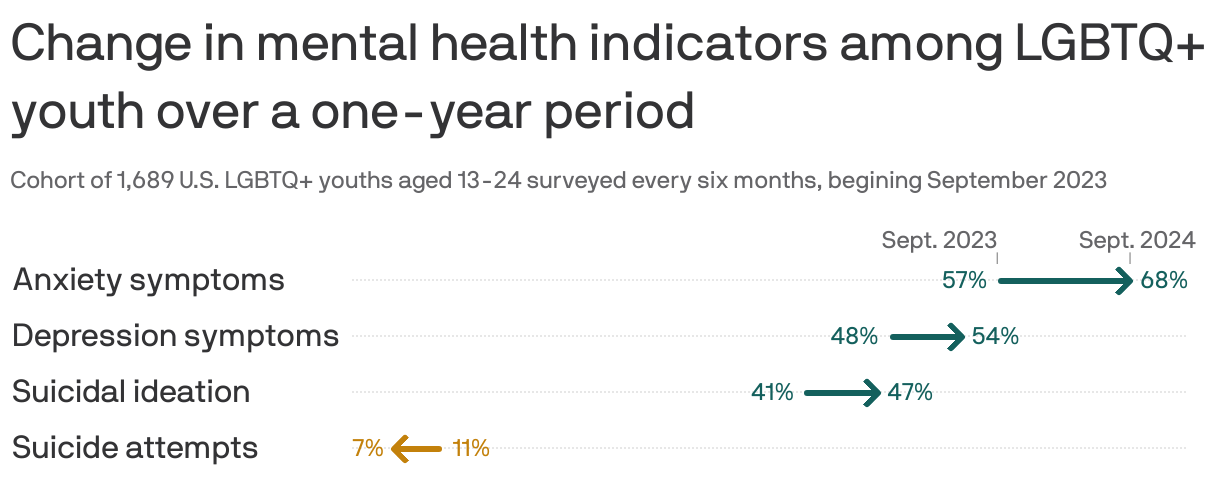
LGBTQ+ youth anxiety and depression symptoms, as well as suicidal ideation, rose over the course of a year, according to a Trevor Project report published Thursday.
Why it matters: The survey charted youth well-being before, during and after the presidential election, as President Trump has targeted LGBTQ+ rights since his inauguration.
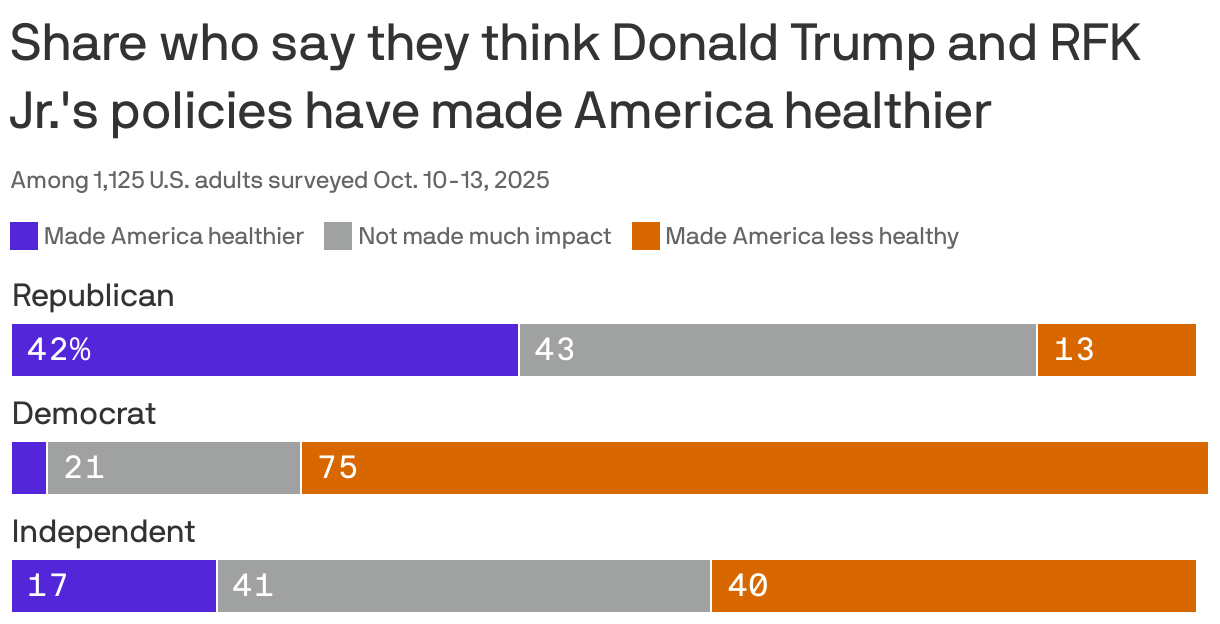
Americans who say the U.S. is less healthy under the leadership of President Trump and Health Secretary Robert F. Kennedy Jr. now outnumber believers 2-to-1, per the latest Axios-Ipsos American Health Index.
The big picture: Skepticism over child vaccine requirements has ticked up since Trump took office in January, while Americans' trust in the Centers for Disease Control and Prevention, National Institutes of Health and Food and Drug Administration is declining.
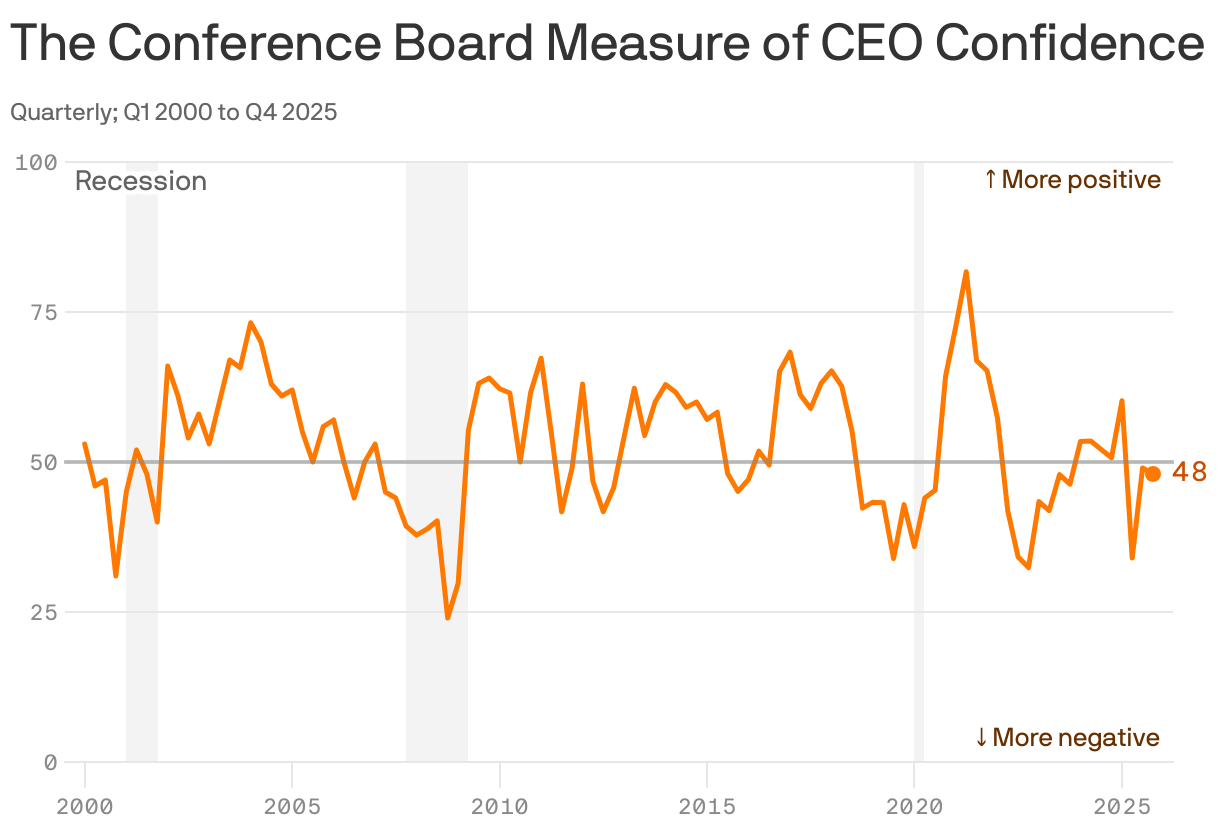
Data: The Conference Board and The Business Council; Chart: Axios Visuals
A key measure of CEO confidence dipped slightly lower into negative territory, according to a survey of executives out Thursday morning.
About two-thirds said they expect stagflation over the next year and a half.
Why it matters: It's a sign of the uncertain business environment — as leaders grapple with a constantly changing policy landscape, particularly around tariffs.
The man who made TED a household name is moving from ideas to (climate) action.
Why he matters: After nearly 25 years at TED, Chris Anderson is stepping back to launch a new initiative seeking to mobilize businesses on climate change — as political focus wanes and investor energy shifts to AI.
Top Democrats in Pennsylvania are maneuvering to run against Sen. John Fetterman in a 2028 primary contest, threatening to tear the party apart in the biggest battleground state in the nation.
Why it matters: Democrats haven't flipped a GOP Senate seat since Fetterman did it in 2022. He's still popular with Pennsylvania voters, even as Democrats turn on him over his softened approach to President Trump.
The U.S. passport dropped from the world's top 10 most powerful list for the first time in the 20-year history of a key rankings index.
Why it matters: The declining strength of the U.S. passport since its No. 1 spot in 2014 "signals a fundamental shift in global mobility and soft power dynamics," per a statement from Christian Kaelin, chairman of Henley & Partners and creator of the Henley Passport Index.
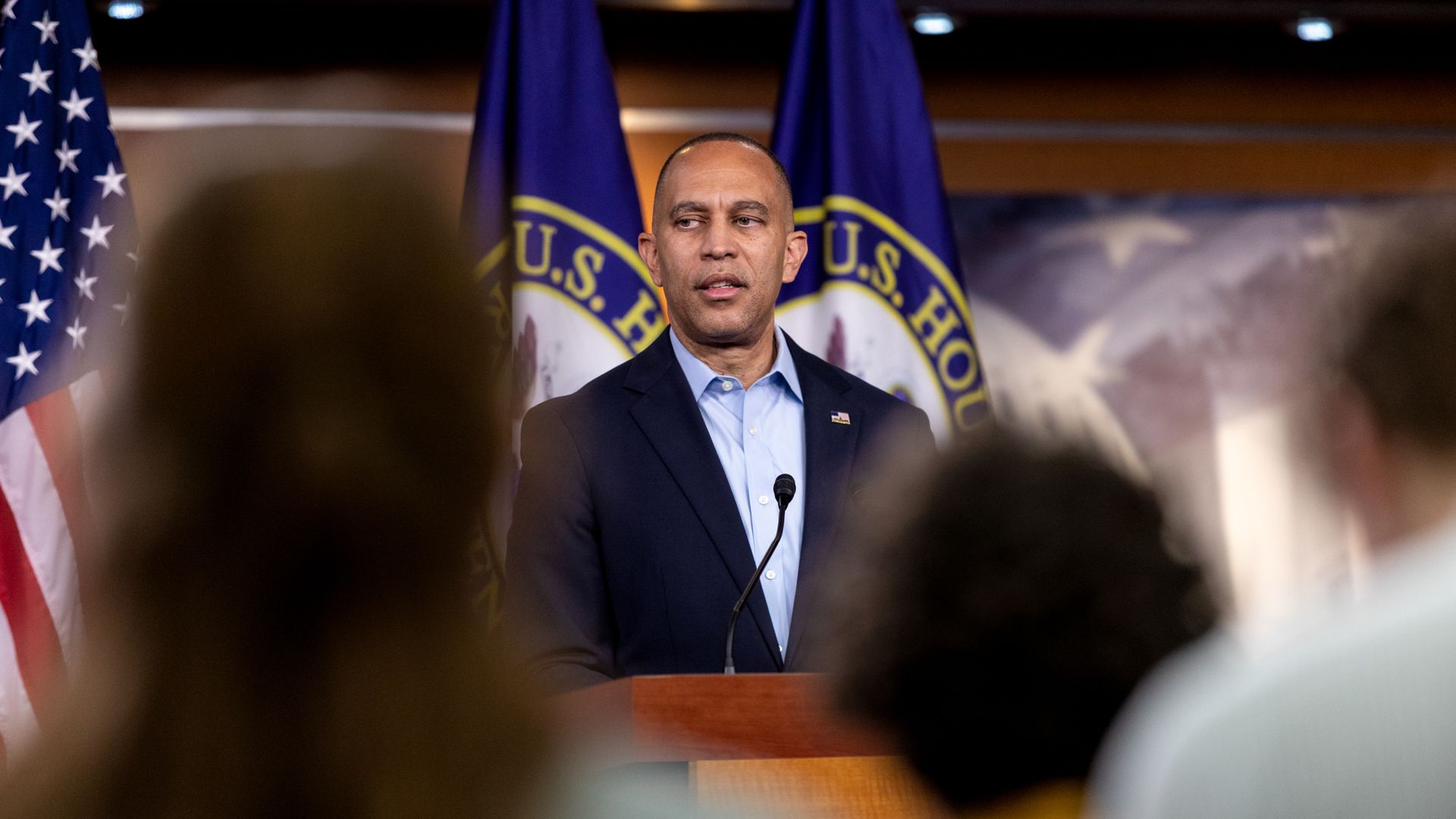
Dozens of Democrats running for U.S. House seats across the country told Axios they either wouldn't vote for House Minority Leader Hakeem Jeffries (D-N.Y.) as party leader or declined to commit to doing so.
Why it matters: Jeffries has enjoyed the unanimous support of his caucus since becoming Democratic leader in 2022. That may no longer be the case next Congress amid growing grassroots frustration toward his leadership, particularly on the left.
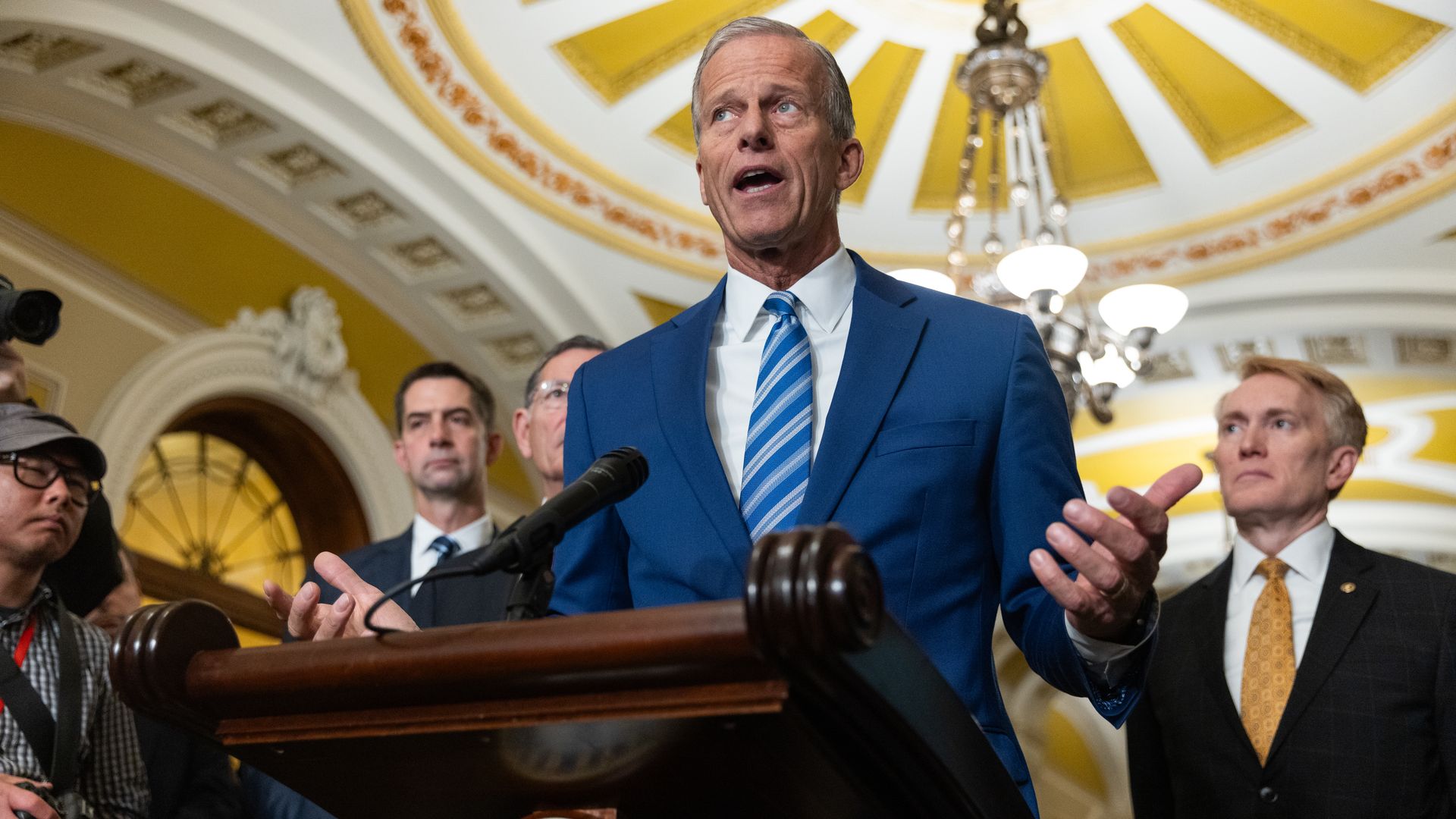
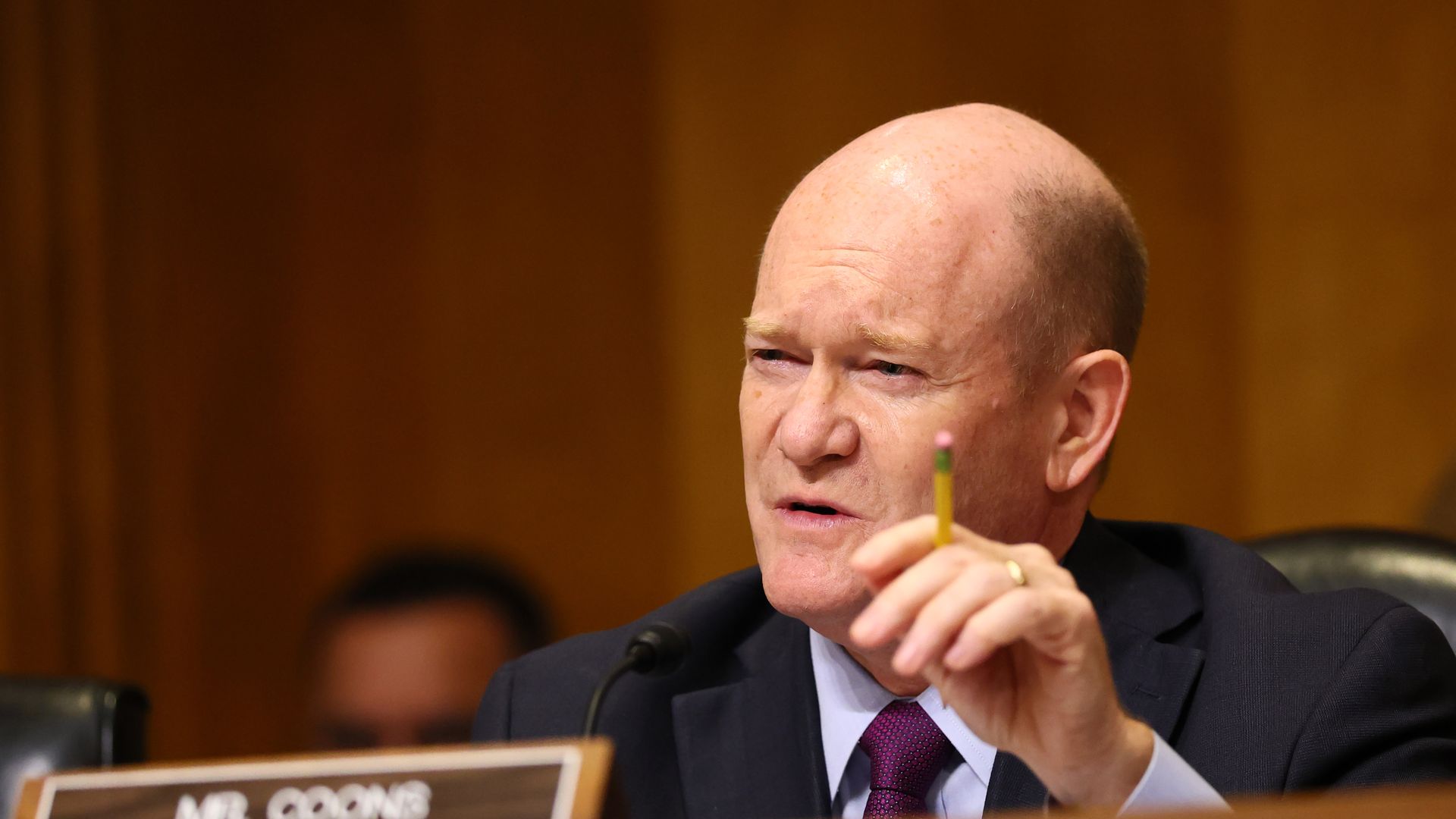
Senate Democrats privately debated on Wednesday how to respond to Senate Majority Leader John Thune's plan to jam them on a vote over funding the Defense Department.
Why it matters: Key Democrats signaled to Axios they were prepared to block a procedural motion to advance the defense funding bill on Thursday.
Rep. James Walkinshaw, whose Northern Virginia district has one of the country's highest concentrations of federal workers, is expecting the government shutdown to last around 30 days.
Why it matters: Walkinshaw is the newest sworn-in member of Congress, but he served as chief of staff to the late Rep. Gerry Connolly during the previous three government funding lapses.