Judge calls for federal agents to use body cameras during Chicago protests

Add Axios as your preferred source to
see more of our stories on Google.
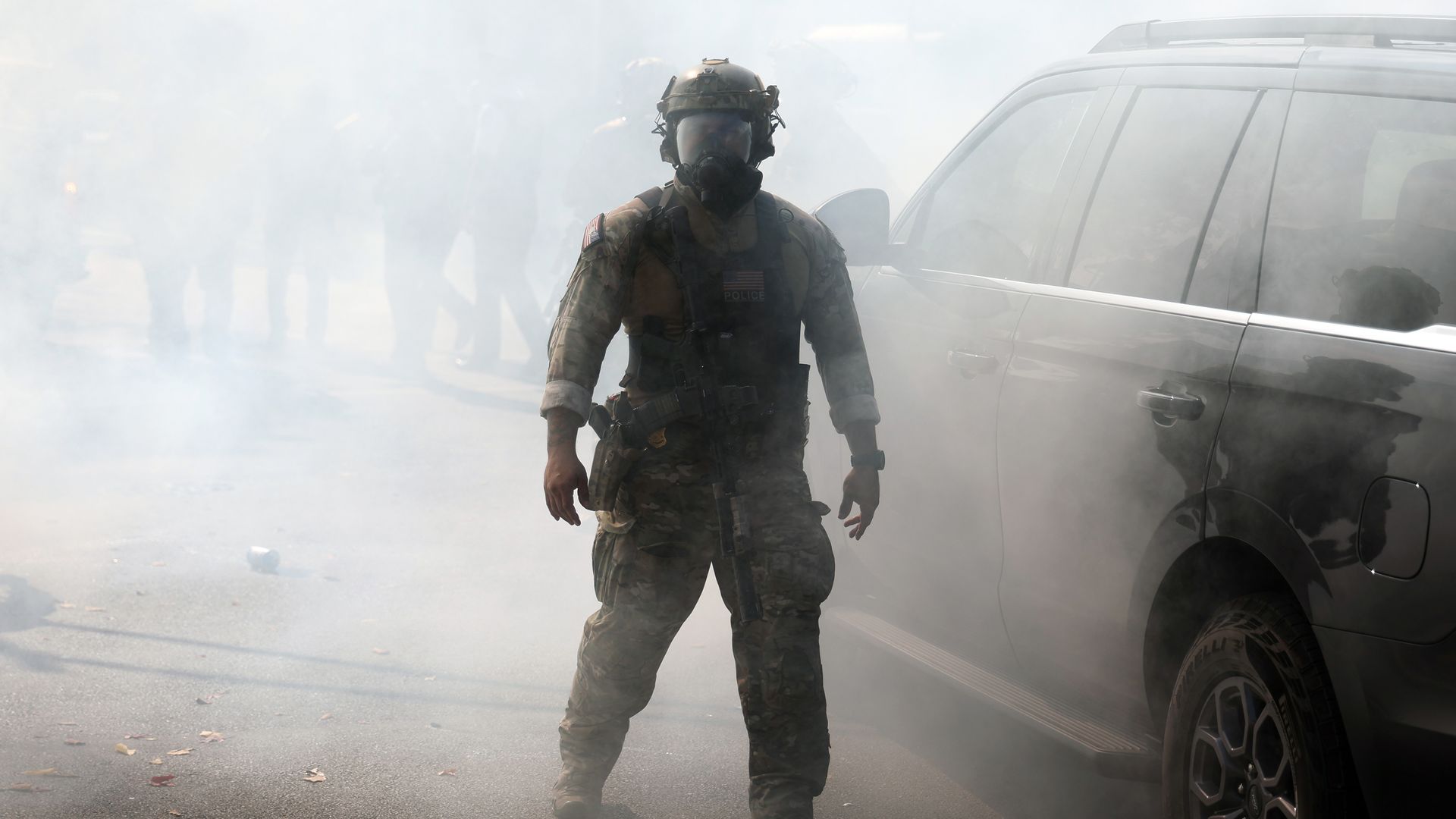
A Border Patrol agent walks through a cloud of tear gas on Oct. 14 in Chicago. Photo: Terrence Antonio James/Chicago Tribune/Tribune News Service via Getty Images
A federal judge on Thursday said she wants federal agents in Illinois to turn on their body cameras during encounters with immigration protesters, multiple outlets reported.
Why it matters: Protests against the Trump administration's immigration crackdown have grown increasingly violent, with federal law enforcement likely defying a court order by using tear gas on demonstrators.
Driving the news: Thursday's hearing created confusion over whether a formal order was issued.
- While multiple outlets reported that U.S. District Court Judge Sara Ellis ordered federal agents to wear body cameras, the Department of Homeland Security denies any such order is in effect.
- The court's official docket shows Ellis modified a temporary restraining order, but it does not detail the specifics of that modification. Ellis will hold another hearing Monday.
State of play: Ellis said Thursday she was concerned about whether agents were following her order to avoid violent encounters with protesters and journalists in Chicago. Ellis said she was "startled" after seeing images of clashes between agents and the public.
- A coalition of Chicago journalists, organizations and protesters sued the Trump administration earlier this month over a "pattern of extreme brutality" from federal agents at a local Immigration and Customs Enforcement facility.
- Ellis previously ruled that federal agents couldn't target journalists and protesters with riot control weapons.
The other side: An attorney representing the federal government at the hearing told Ellis the agents don't have body cameras, and DHS isn't in a position to immediately distribute them, AP reports.
- DHS noted the judge has not officially entered an order on the court docket yet. A hearing is set for Monday for parties to submit proposed modifications to Ellis' proposed order.
- "DHS will continue to oppose all efforts to vilify law enforcement and prop up the cause of violent rioters," DHS spokesperson Tricia McLaughlin said. "Were a court to enter such an order in the future, that would be an extreme act of judicial activism."
What they're saying: "I believe it's a fantastic judgment," Chicago alderperson Jessie Fuentes, told Axios of the judge's decision to modify the restraining order. She was handcuffed earlier this month by DHS agents after asking them to present a judicial warrant for a man in a hospital in her ward.
- DHS "continues to create their own narratives of why they are creating these atrocities and committing these lawless acts," she said. "These body cams will allow us to ensure that the real story is being told that there's transparency now, will Donald Trump and DHS follow the law? Well, that's to be determined."
Context: The Trump administration launched "Operation Midway Blitz" in September to deport immigrants living in Chicago.
- A judge earlier this month temporarily blocked the president's deployment of some 500 National Guard troops to protect ICE officers in the course of their work, as well as federal property.
- The White House has indicated it will appeal the ruling and has left the door open for a rare use of emergency powers to circumvent court rulings impeding its use of guard troops for Trump's agenda.
Go deeper:
- Chicago journalists sue Trump over "extreme brutality" at ICE protests
- "No Kings" events roll across Illinois on Saturday
Editor's note: This story and headline have been updated to clarify that U.S. District Court Judge Sara Ellis is calling for federal agents in Illinois to use body cameras and has been updated with comment from the Department of Homeland Security.
Axios' Monica Eng contributed reporting.
