What the new Pentagon media rules actually say

Add Axios as your preferred source to
see more of our stories on Google.
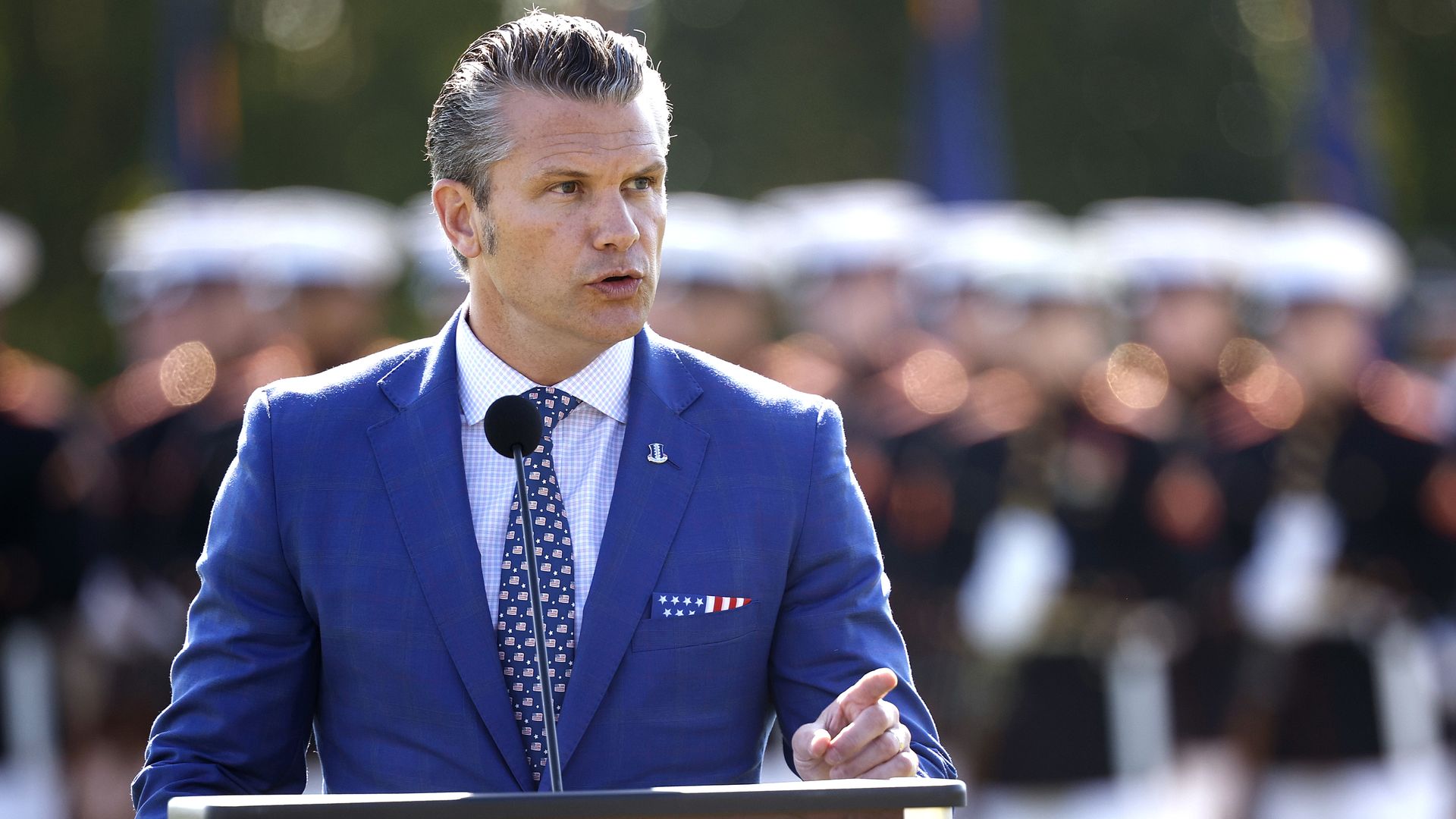
Secretary of Defense Pete Hegseth speaks during a POW/MIA Recognition Day ceremony at the Pentagon. Photo: Kevin Dietsch/Getty Images
The Defense Department's new rules for press credentials led to a mass exodus this week of nearly every Pentagon reporter from almost every major media outlet.
Why it matters: News outlets argue that the Pentagon is effectively asking their journalists to accept — as a condition of access — that they can be penalized for routine newsgathering activities, like asking a source for information they have not been explicitly authorized to discuss.
- "Independent coverage of the U.S. military is essential to public trust and oversight. A Pentagon that limits scrutiny limits understanding and weakens the very institution it seeks to protect. The First Amendment does not stop at the Pentagon's gates," the National Press Club said in a statement.
- Critics say the restrictions reflecting an erosion of press freedoms under the Trump administration.
Driving the news: The Pentagon announced the new rules in September, giving news outlets until Oct. 15 to sign an agreement to follow the new guidelines.
- Media companies almost universally rejected the plan. Outlets including Axios, Fox News, NBC, ABC, CNN, NPR, AP, the Washington Post and the New York Times said they wouldn't sign.
The other side: The Pentagon isn't backing down.
- "We stand by our policy because it's what's best for our troops and the national security of this country," Chief Pentagon spokesperson Sean Parnell said in a statement to Axios.
- Defense Secretary Pete Hegseth, a former Fox News Channel host, said he wants Pentagon press access to mirror White House practices.
- President Trump backed Hegseth on the issue: "I think he finds the press to be very disruptive in terms of world peace and maybe security for our nation. The press is very dishonest."
Here's what the rules say.
New credentials for the press
The new rules, shared to the press in a memo from the Pentagon, set out guidelines for reporters who wish to receive and keep the press passes they use to access the building.
- "Nothing in this document requires you to waive any constitutional rights. This in-brief constitutes a description of DoW policies," the memo says, referring to the department by its preferred acronym for Department of War.
Generally, the memo asks correspondents not to gather information that hasn't been approved for release — or risk losing access.
- It also limits how much independent access the press has to move throughout the Pentagon building.
Screenings, escorts and badges required
In addition to standard security screenings, the rules call for reporters to be accompanied by an escort upon entry.
- "If news media require access to other areas or offices within the Pentagon for in-person interviews or other engagements, they must be escorted to and from those spaces by authorized DoW personnel," the memo says.
- While Pentagon correspondents had previously been able to move freely through much of the building, the plan stresses that access is a "privilege" and "legally, the press has no greater right of access than the public."
- The rules state that press credentials "must always worn above the waist while in the Pentagon" except during certain press events, so that members of the media can be easily identified as such.
Limits on information
The Defense Department seeks to limit how much information personnel can share with reporters by requiring prior approval from officials.
- The department "remains committed to transparency to promote accountability and public trust. However, DoW information must be approved for public release by an appropriate authorizing official before it is released by any military member, DoW civilian employee or contract employee, even if it is unclassified," the rules say.
The Pentagon clarifies in the rules that these standards only apply to military members, civilian employees and contractors — not the press.
- "Members of the news media are not required to submit their writings to DoW for approval. However, they should understand that DoW personnel may face adverse consequences for unauthorized disclosures," the rules say.
The Pentagon warns reporters in particular about asking for classified national security information (CNSI), and controlled unclassified information (CUI) because of how it might impact their sources.
- Per the memo, receiving classified information "is generally protected by the First Amendment and would not, on its own, normally trigger denial, revocation, or non-renewal" of credentials.
Yes but: Reporters who solicit or encourage personnel to disclose the information without authorization may be deemed a safety risk, which is grounds for credential revocation, per the rules.
- "There is a critical distinction between lawfully requesting information from the government and actively soliciting or encouraging government employees to break the law," the memo says.
- "The First Amendment does not permit journalists to solicit government employees to violate the law by providing confidential government information," per the memo.
Friction point between Pentagon and press
The Pentagon argues in the memo that press rights "are not absolute and do not override the government's compelling interest in maintaining the confidentiality of sensitive information."
- "Soliciting or encouraging government employees to break the law falls outside the scope of protected newsgathering activities," the memo says.
The rules define solicitation as "direct communications with specific" personnel, "or calls for tips encouraging DoW employees to share non-public DoW information."
- "For example, an advertisement or social media post by an individual journalist or media outlet that directly targets DoW personnel to disclose non-public information without proper authorization would constitute a solicitation that could lead to revocation," the memo says.
Between the lines: Most news organizations view soliciting tips as part of standard newsgathering.
- It's also very typical in reporting — particularly on national security issues — to ask for and receive information from officials that has not been explicitly cleared for release by their superiors.
- The language around penalties for soliciting such information for both reporters themselves and their sources was a cause of concern for many outlets that declined to sign.
- But for the Pentagon, which has gone to great lengths to hunt for leakers during Hegseth's tenure, discouraging leaks appears to be one of the primary motivations behind the new policy.
Ultimatum for the press corps
In an "acknowledgements" segment, the memo asks for a general sign-off from the correspondents, and nods at criticisms of the new policy.
- "My signature represents my acknowledgement and understanding of such DoW policies and procedures, even if I do not necessarily agree with such policies and procedures. Signing this acknowledgment does not waive any rights I may have under law."
Last Friday, the Pentagon sent an email to reporters with an ultimatum to sign the new agreement or face losing their credentials.
- All reporters declining to sign were told to submit their credentials to the Pentagon Press operations office no later than 5 p.m. on Oct. 15.
- Resident media were told to clear their desks, too.
- Nearly every media outlet that had Pentagon credentials, including Axios, gave them up rather than sign.
More from Axios:
The Pentagon's dramatic divorce from D.C. orthodoxy
