LGBTQ+ youth mental health metrics worsen: Trevor Project

Add Axios as your preferred source to
see more of our stories on Google.
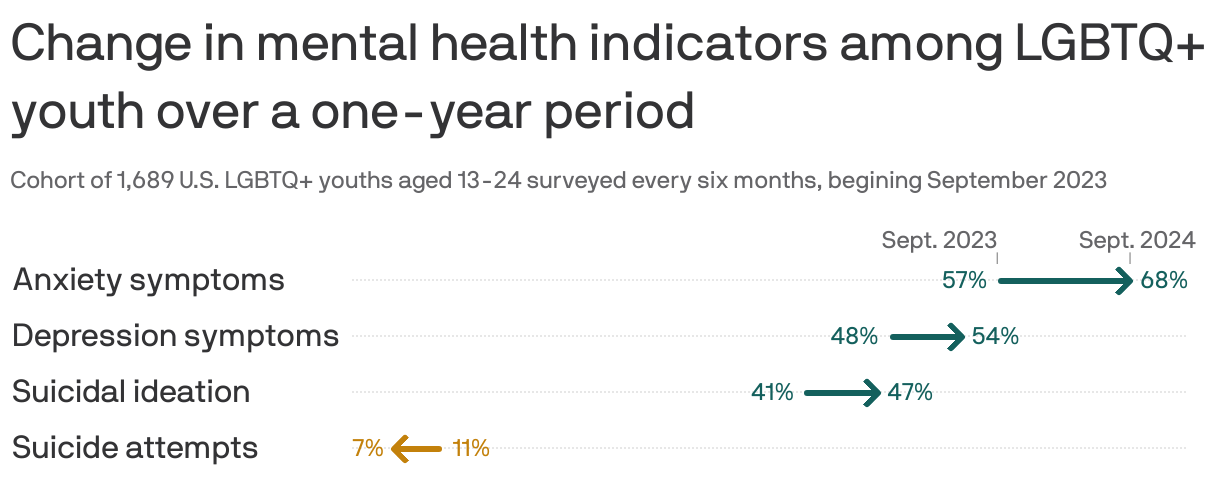
LGBTQ+ youth anxiety and depression symptoms, as well as suicidal ideation, rose over the course of a year, according to a Trevor Project report published Thursday.
Why it matters: The survey charted youth well-being before, during and after the presidential election, as President Trump has targeted LGBTQ+ rights since his inauguration.
- The research is from the first year of collection of the Trevor Project's debut longitudinal study on the mental health of LGBTQ+ youth.
Threat level: Access to mental health care decreased from 80% to 60% over the course of the year, with the top barriers being affordability, fear of not being taken seriously and involuntary hospitalization.
- Transgender, nonbinary and gender-questioning youth had the poorest mental health outcomes and the highest risk for suicide.
- Past year suicide attempts decreased, but the rate remains higher than estimates for cisgender and heterosexual peers.
State of play: The Trump administration has moved to restrict youth gender-affirming care and disregard gender identity recognized on official documents.
- Meanwhile, the administration stopped connecting youth in crisis to counselors trained in helping LGBTQ+ people.
Behind the scenes: Within a year, conversion therapy threats increased from 11% to 22%, and actual exposure increased from 9% to 15%.
- Major medical and psychological associations have condemned conversion therapy as harmful, discriminatory and ineffective.
Zoom out: The report marked an increase in the rate of LGBTQ+ youth seeking help while experiencing a crisis, including from partners, friends, family, mental health professionals and phone helplines.
- Gender euphoria increased over the year.
Go deeper: Suicide counselors for LGBTQ+ youth removed from hotline by Trump admin
Methodology: The longitudinal study followed 1,689 LGBTQ+ young people between 13 and 24 years old in the U.S. from September 2023 to March 2023. It captured three waves of data at six-month intervals.
