The Trump administration welcomed on Wednesday Palestinian President Mahmoud Abbas' decision to revoke the system of payments to families of Palestinian prisoners in Israeli jails or to families of Palestinians who were killed or wounded during attacks against Israelis.
Why it matters: The Trump administration's positive response is an achievement for the Palestinian Authority, which wanted to prove that it conducted a serious reform in the payment system that was dubbed by its critics "pay for slay."
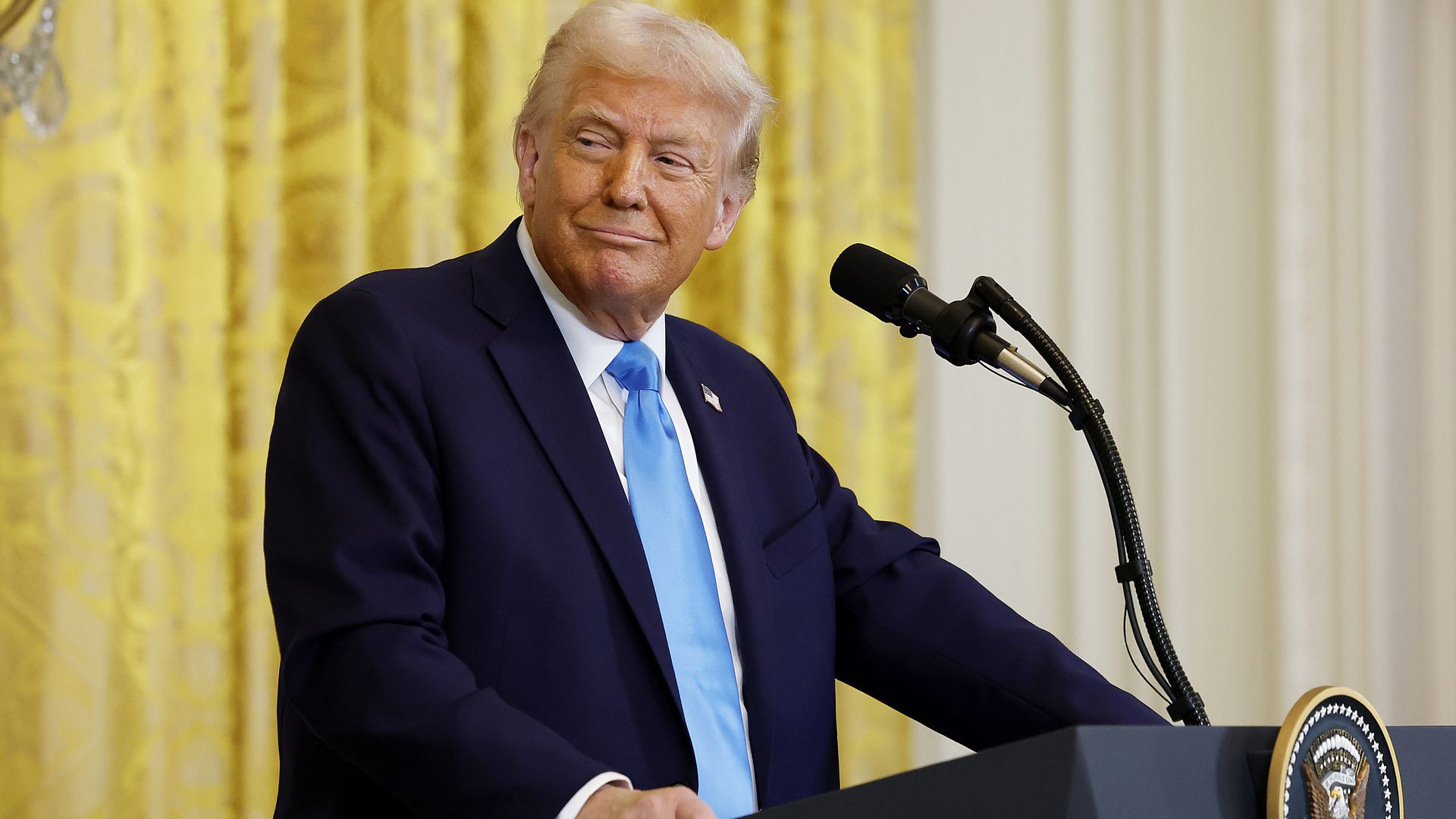
President Trump was unanimously elected chairman of the Kennedy Center board of trustees on Wednesday, the president said on Truth Social.
Why it matters: Trump, who had a tense relationship with the arts organization during his first term, removed rivals its board last week to lay the ground for his takeover.
President Trump said Wednesday that he might meet with Russian President Vladimir Putin in Saudi Arabia.
Why it matters: Trump made the comment a few hours after speaking with Putin in their first publicly disclosed call since Trump took office. Trump said they had agreed on "starting negotiations immediately" to end the war in Ukraine, which is approaching its third anniversary.
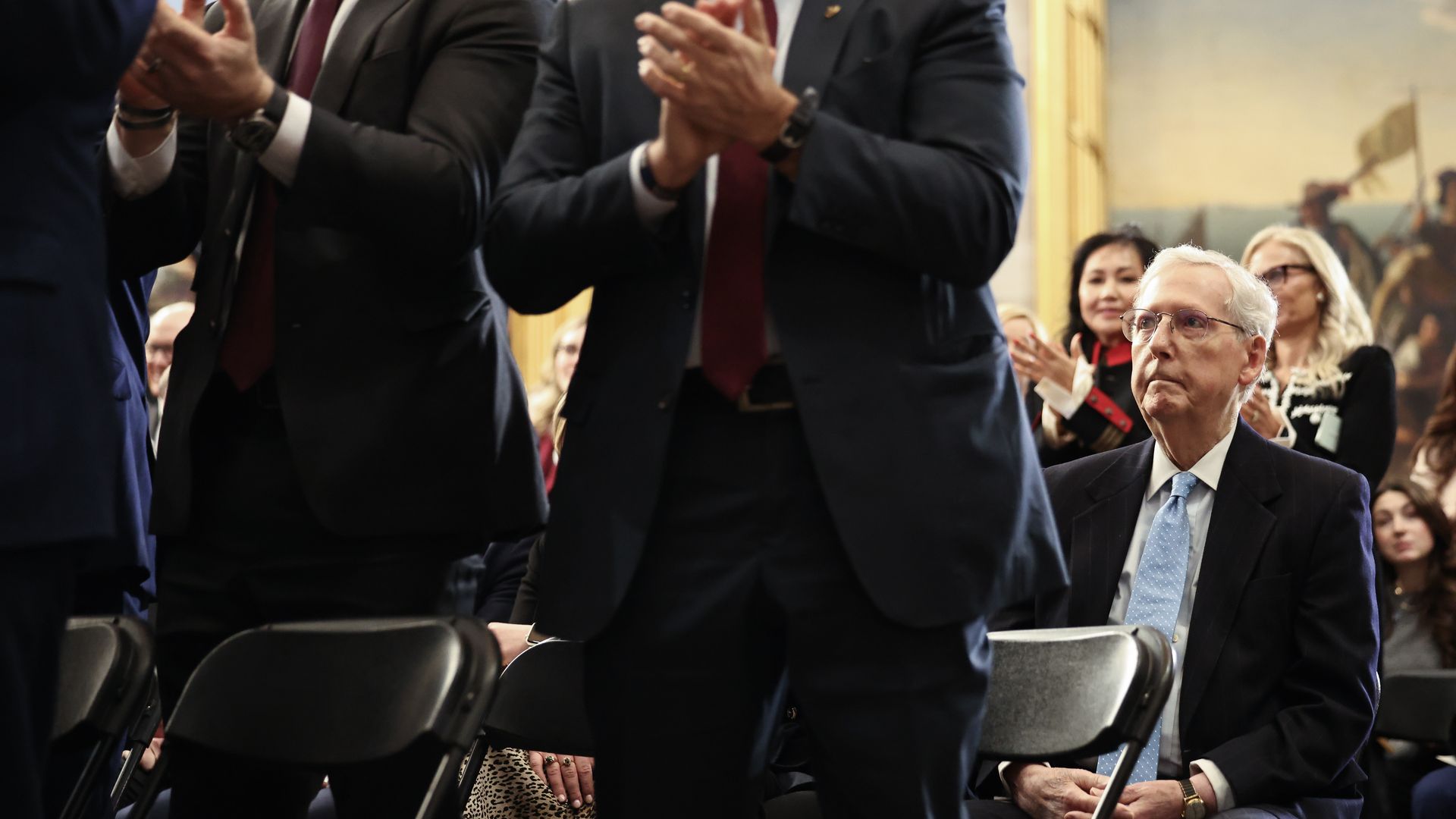
Sen. Mitch McConnell (R-Ky.) continued to lash out against the Trump 2.0 agenda in a Wednesday op-ed, warning that President Trump's sweeping tariff proposals could bruise Kentucky businesses.
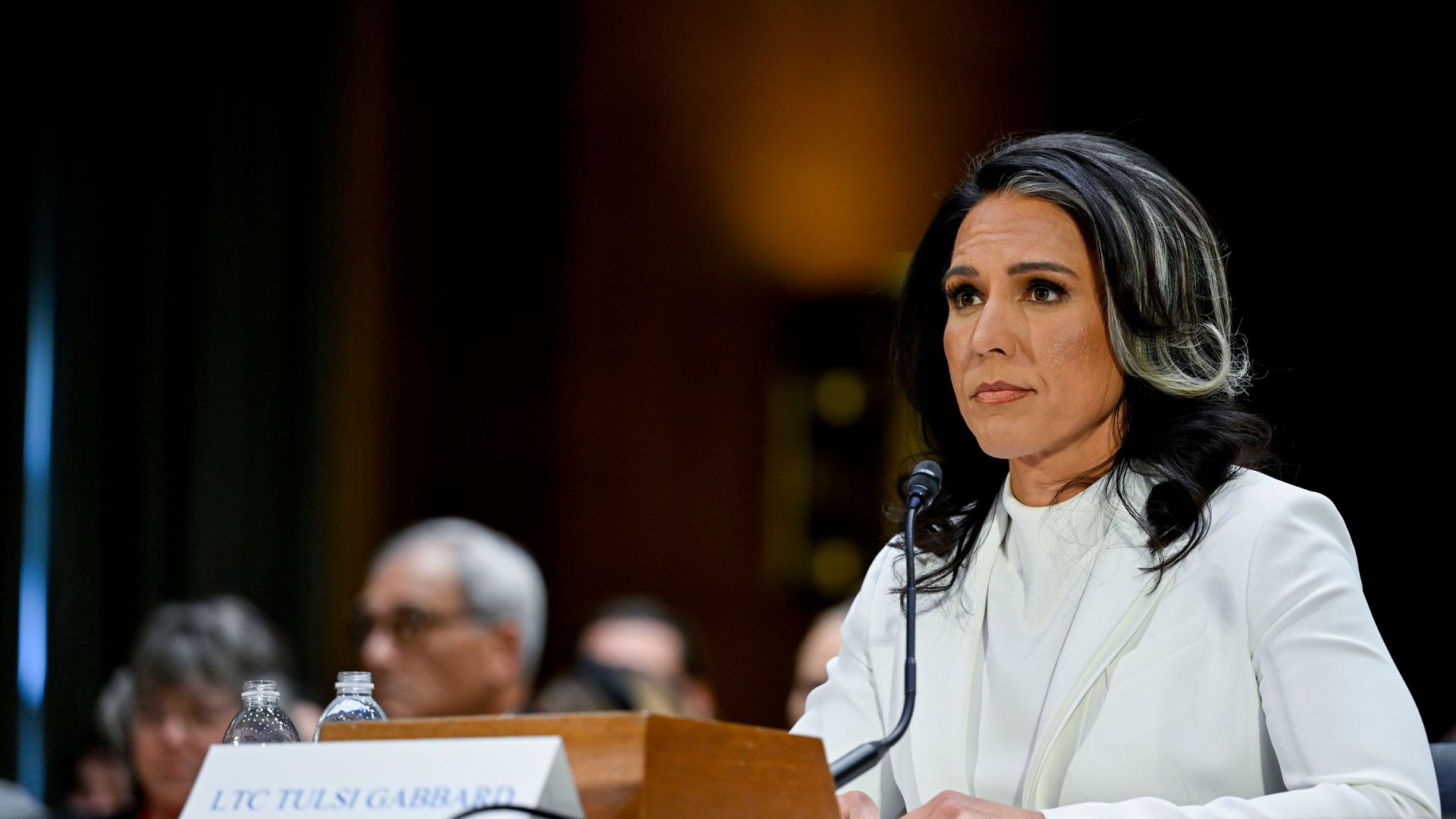
Why it matters: In an essay published hours before he voted against Trump's newly confirmed director of National Intelligence Tulsi Gabbard, McConnell bashed the president's tariffs, warning his "aggressive proposals leave big, lingering concerns for American industry and workers."
A coalition of civil liberties and immigrant rights groups are suing to get access to immigrants transferred from the U.S. to detention at Guantánamo Bay in Cuba under President Trump's recent order.
The big picture: The lawsuit filed Wednesday is the latest legal challenge to the Trump administration's moves for mass detentions and mass deportations of immigrants suspected of being in the country illegally.
President Trump contended he knew nothing about Project 2025 — but several of his Cabinet picks certainly do.
The big picture: Trump has apparently plucked a number of officials and nominees straight from the pages of the 900-plus-page Heritage Foundation-backed blueprint, which laid out plans to dramatically expand executive power and implement hardline conservative policies.
The Trump administration has released a slate of nominations this week, and key positions, such as to head the Commodities Futures Trading Commission and a major banking regulator in the OCC, have gone to nominees with ties to the cryptocurrency industry.
Why it matters: There's an adage that personnel is policy, and the appointment of crypto industry veterans — who served during an era of regulatory skepticism — is further signal that the President intends to make digital assets a priority.
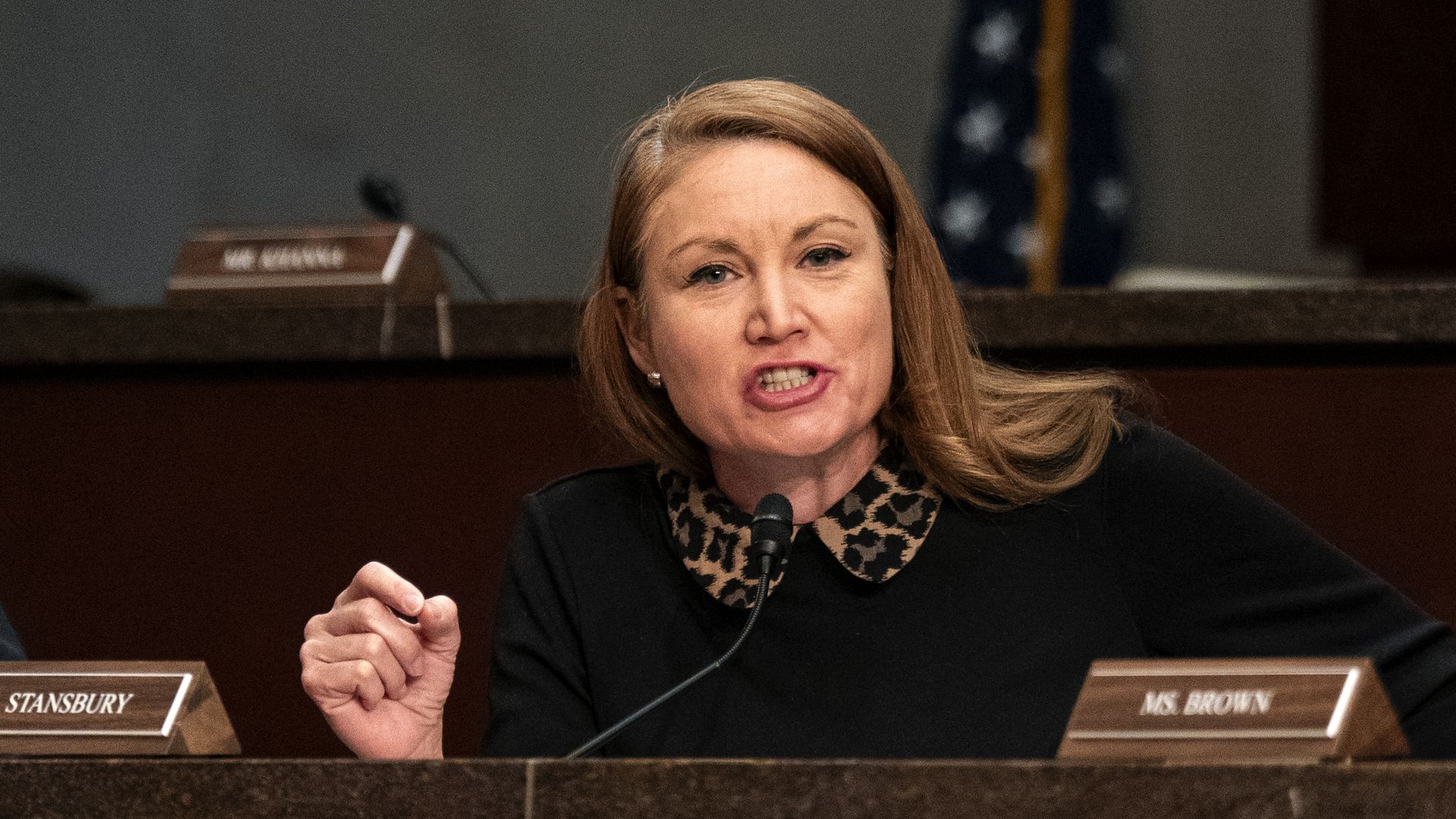
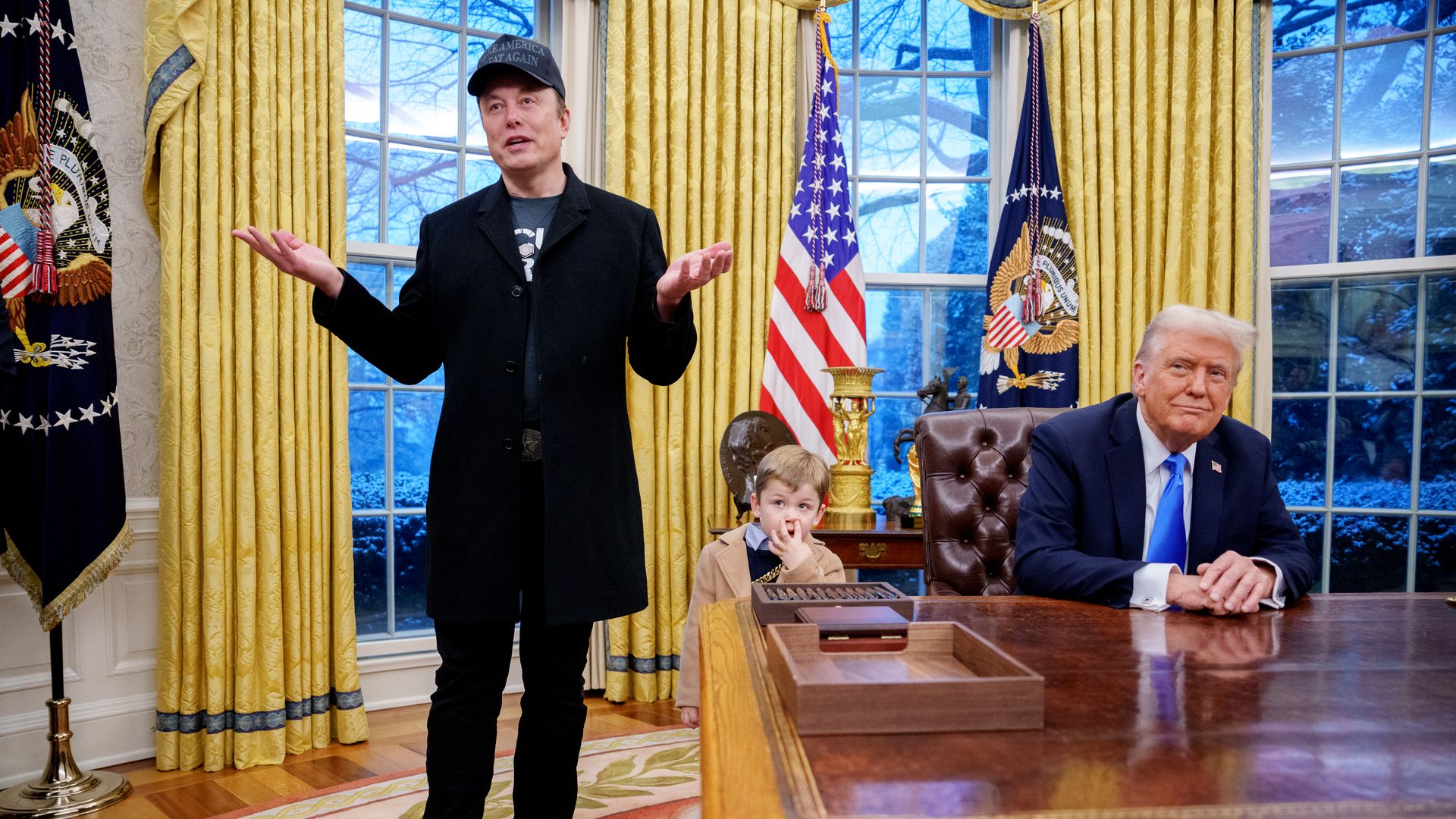
Rep. Melanie Stansbury (D-N.M.), the top Democrat on the House's DOGE subcommittee, called on Elon Musk to testify before the body during its first meeting Wednesday.
Why it matters: Stansbury delivered a blistering criticism of the new Department of Government Efficiency, accusing President Trump and DOGE head Musk of wielding the new department to break the law.
Senate Democrats are pressing Republicans to investigate and hold a public hearing looking into President Trump's mass firing of government watchdogs, Axios has learned.
Why it matters: Trump's widespread purge of inspectors general is a rare example of an early second-term move that has drawn criticism from inside the president's own party, creating a leverage point for Democrats.
Black History Month this year falls on the 60th anniversary of many crucial moments of the Civil Rights Movement that would transform the nation and spark new fights still being played out today.
Through the lens: From the last days of Malcolm X to the climatic marches in Selma, Alabama, to the Watts Riots foreshadowing what was to come, Axios is sharing images of joy, tragedy and triumphs of 1965.
Google's removal of certain holidays and cultural events from the default settings on Google Calendar has gained more attention this month, even though the company said themoves took place last year.
Why it matters: The removal of events like Pride Month from G-cal comes asPresident Trump has taken aim at diversity, equity and inclusion policies. As a result, major companies have rolled back their DEI efforts.
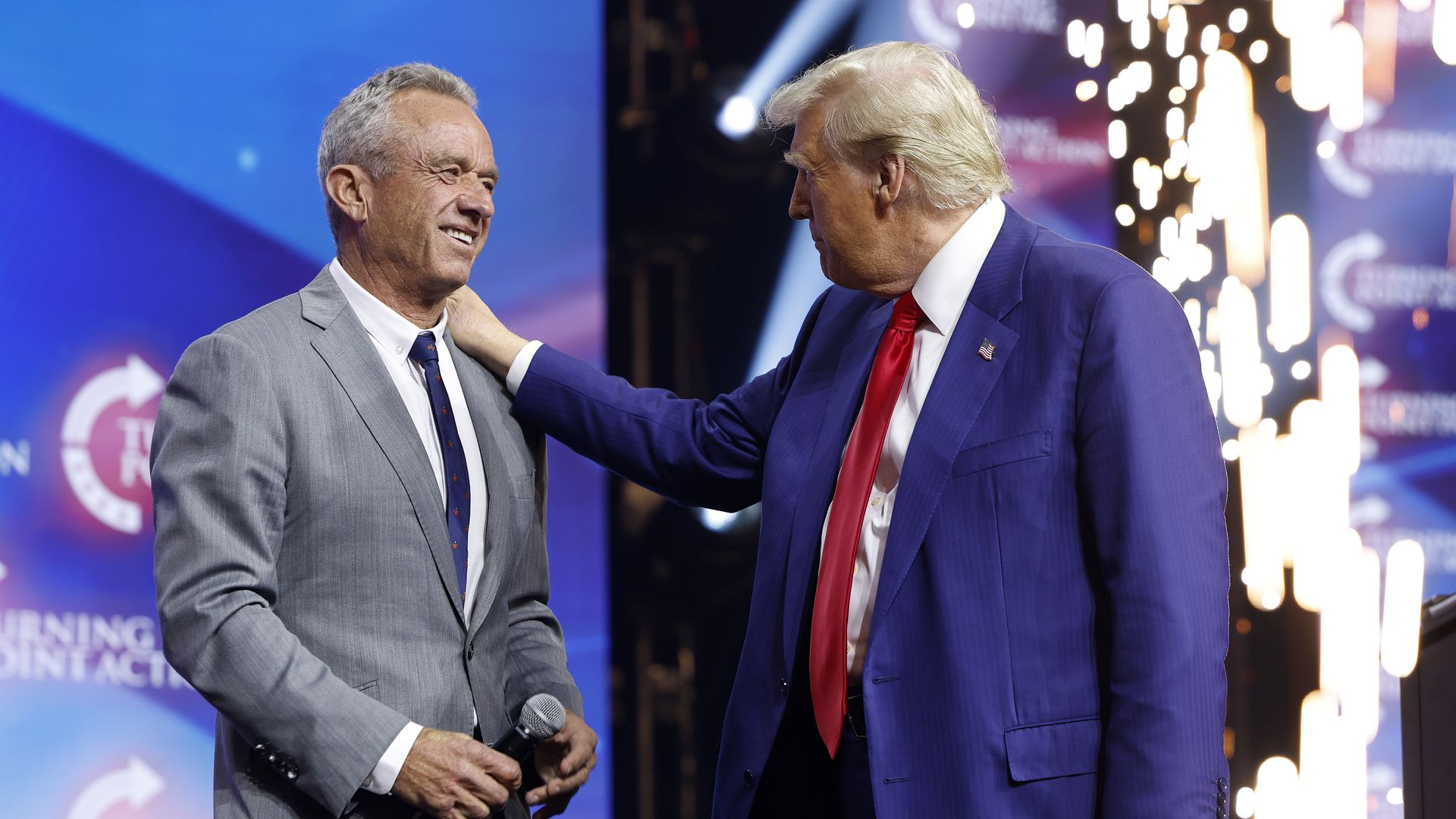
The Senate paved the way for Robert F. Kennedy Jr. to lead the Department of Health and Human Services on Wednesday, voting 53-47 along party lines to advance his nomination.
Why it matters: Kennedy now has a clear path to confirmation later this week, despite bipartisan concerns about his record as a vaccine skeptic and other questions about past stances.
Why it matters: The House is going bigger and bolder than the Senate with its proposed budget resolution to implement President Trump's legislative agenda — but they're also a step behind.
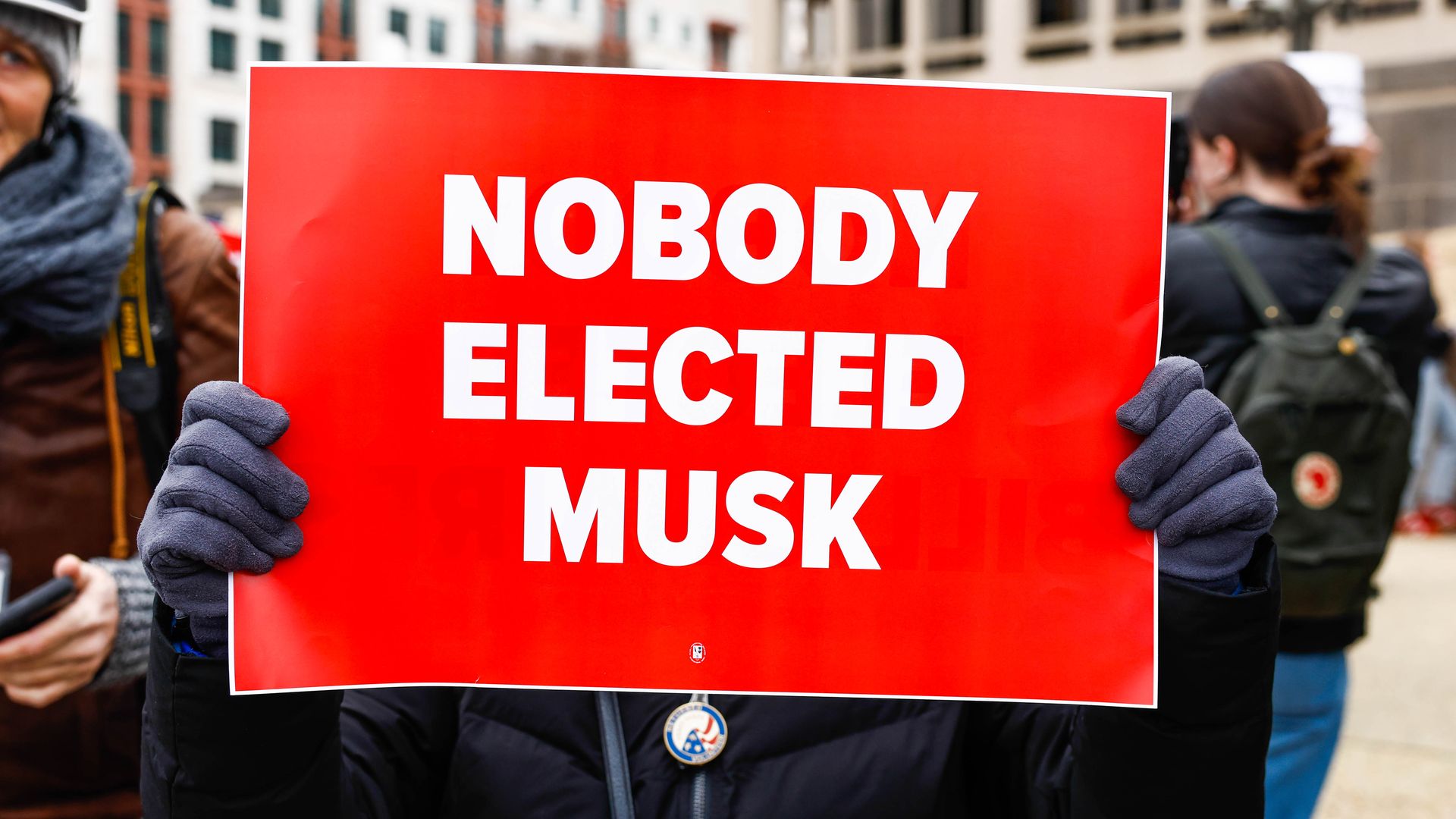
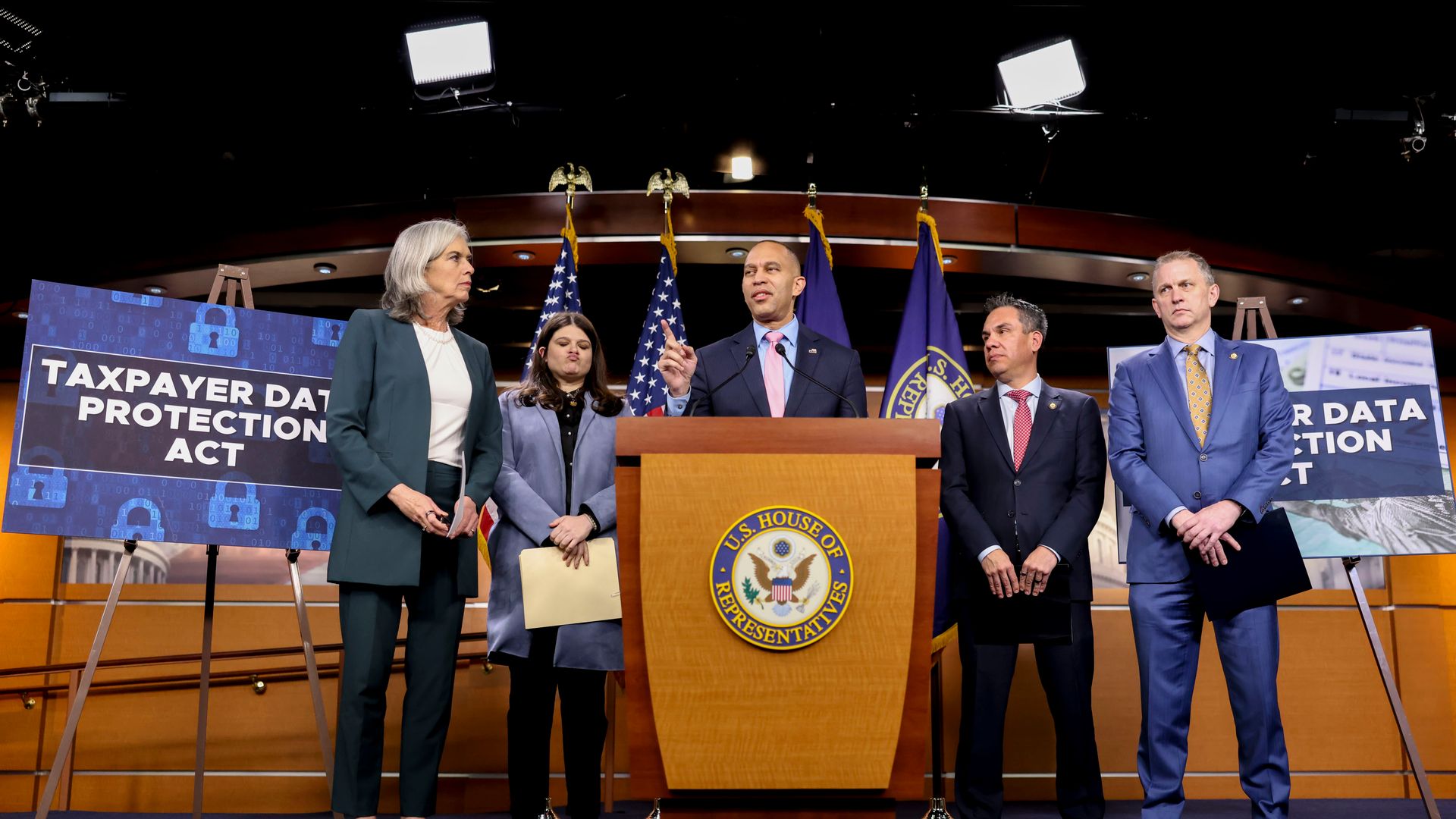
House Democratic leaders are urging their members to keep up a barrage of attacks against President Trump and Elon Musk when the chamber breaks for a week-long recess.
Why it matters: Democrats are trying to reassure their grassroots supporters that they are in full resistance mode after being caught flat-footed by DOGE's shock-and-awe tactics in the first weeks of the Trump administration.
BRUSSELS -- Defense Secretary Pete Hegseth delivered a blunt message to NATO allies Wednesday: U.S. troops will not be part of any future peace-keeping mission in Ukraine.
Nor should NATO's Article 5 protections — under which the U.S. vows to respond if an ally is attacked — apply to any European forces sent to Ukraine to secure a postwar peace settlement, he said.
Ukraine, meanwhile, should make a deal now — and give up on regaining all of its occupied territory, or becoming a member of NATO.
Inflation moved higher in January: The Consumer Price Index rose 0.5%, while a measure that strips out energy and food rose 0.4%, the Labor Department said on Wednesday.
Why it matters: It's a warning to the White House and the Fed about inflation's potential staying power across the economy.
The Department of Governmental Efficiency led by Elon Musk is using slash-and-burn tactics to radically reshape the federal government even though the limits of its authority have never been fully outlined.
Why it matters: While DOGE has little institutional authority on paper, in practice it has charged ahead with the most drastic gutting of the federal bureaucracy recent memory at President Trump's behest.
The Foreign Corrupt Practices Act stands at the center of the global fight against bribery and corruption, and for the time being, it has been largely neutralized by Donald Trump.
Why it matters: The president's executive order pausing FCPA enforcement may act as a green light for corporate executives, both foreign and domestic, who have a high risk appetite and few ethical scruples about bribes and other forms of corruption.
Some hospitals are bracing to be caught up in the Trump administration's DEI executive order, which could upend their efforts to recruit a health workforce reflective of the communities they serve.
Why it matters: Hospitals — and most of the health care sector writ large — have leaned into the belief that embracing diversity and inclusion can improve patient care, lead to better employee retention and ultimately make the health care system more equitable.
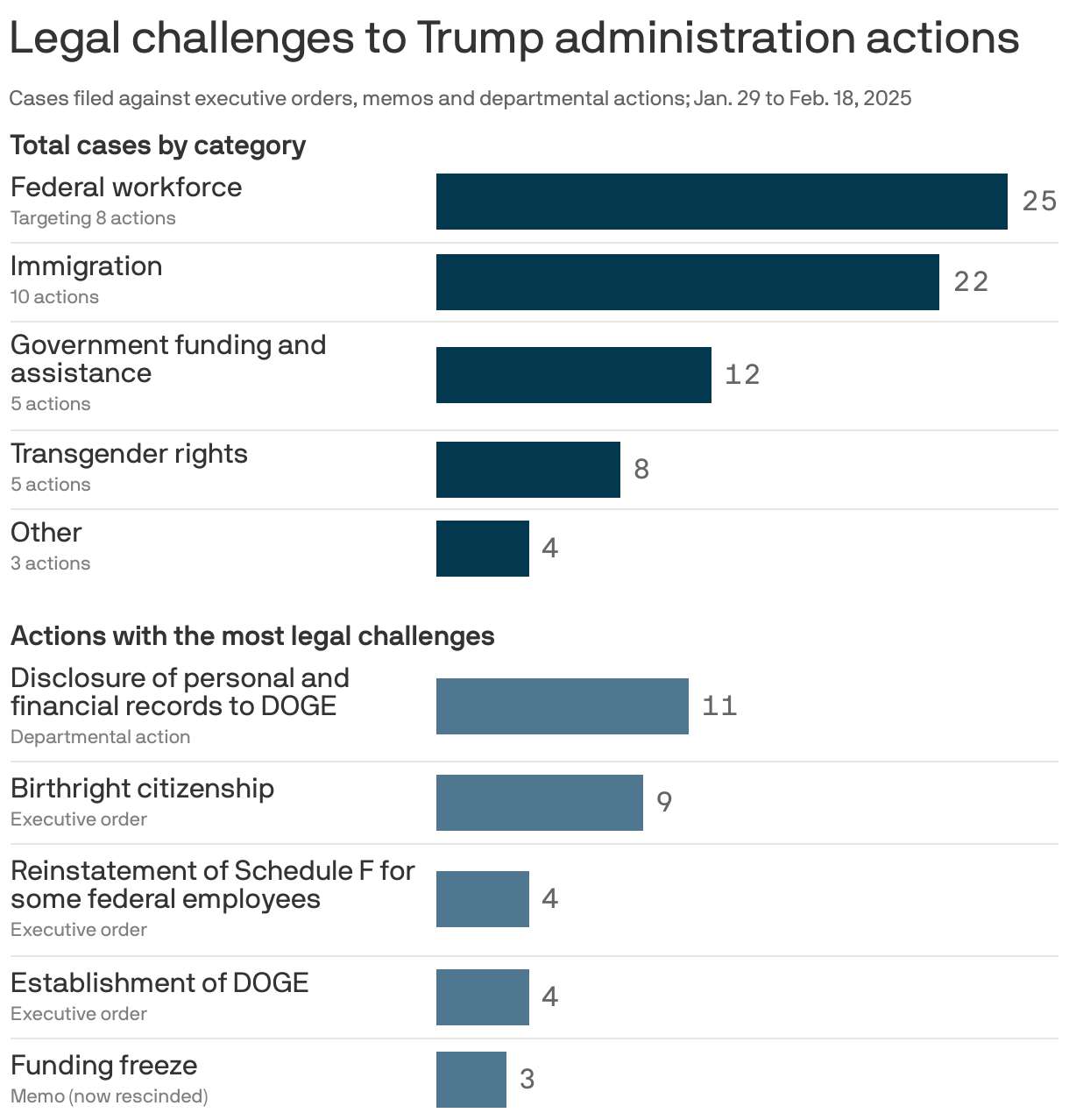
Every one of President Trump's most sweeping executive orders is now being challenged in court by multiple lawsuits.
Why it matters: They're setting the stage for historic Supreme Court showdowns that could test Trump's push to remake the federal government — and increase his power.
STUTTGART, GERMANY — The Pentagon plans to welcome Elon Musk and "the keen eye of DOGE" to scrutinize its spending "very soon," Defense Secretary Pete Hegseth told Axios on his first overseas trip since taking office.
Why it matters: At more than $890 billion, the Pentagon's budget is a behemoth — accounting for roughly half of the U.S. government's discretionary spending this fiscal year.
President Donald Trump is nominating RNC executive Sean Cairncross as his national cyber director, according to a list of new administration nominations obtained by Axios.
Why it matters: This is the first significant cybersecurity nomination of the Trump administration, and if approved, Cairncross would play a key role in the administration's cyber policymaking and response to major cyberattacks.
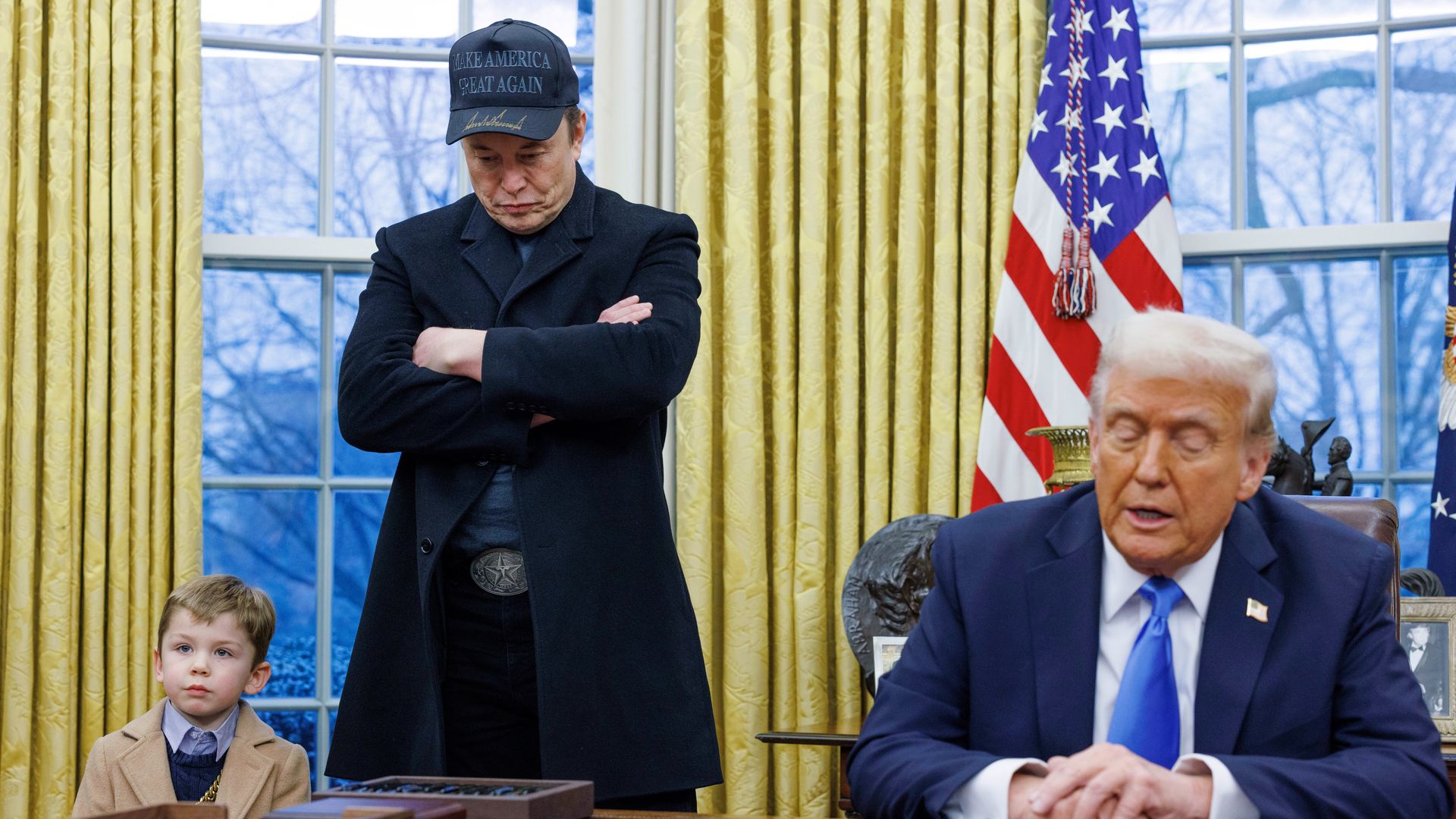
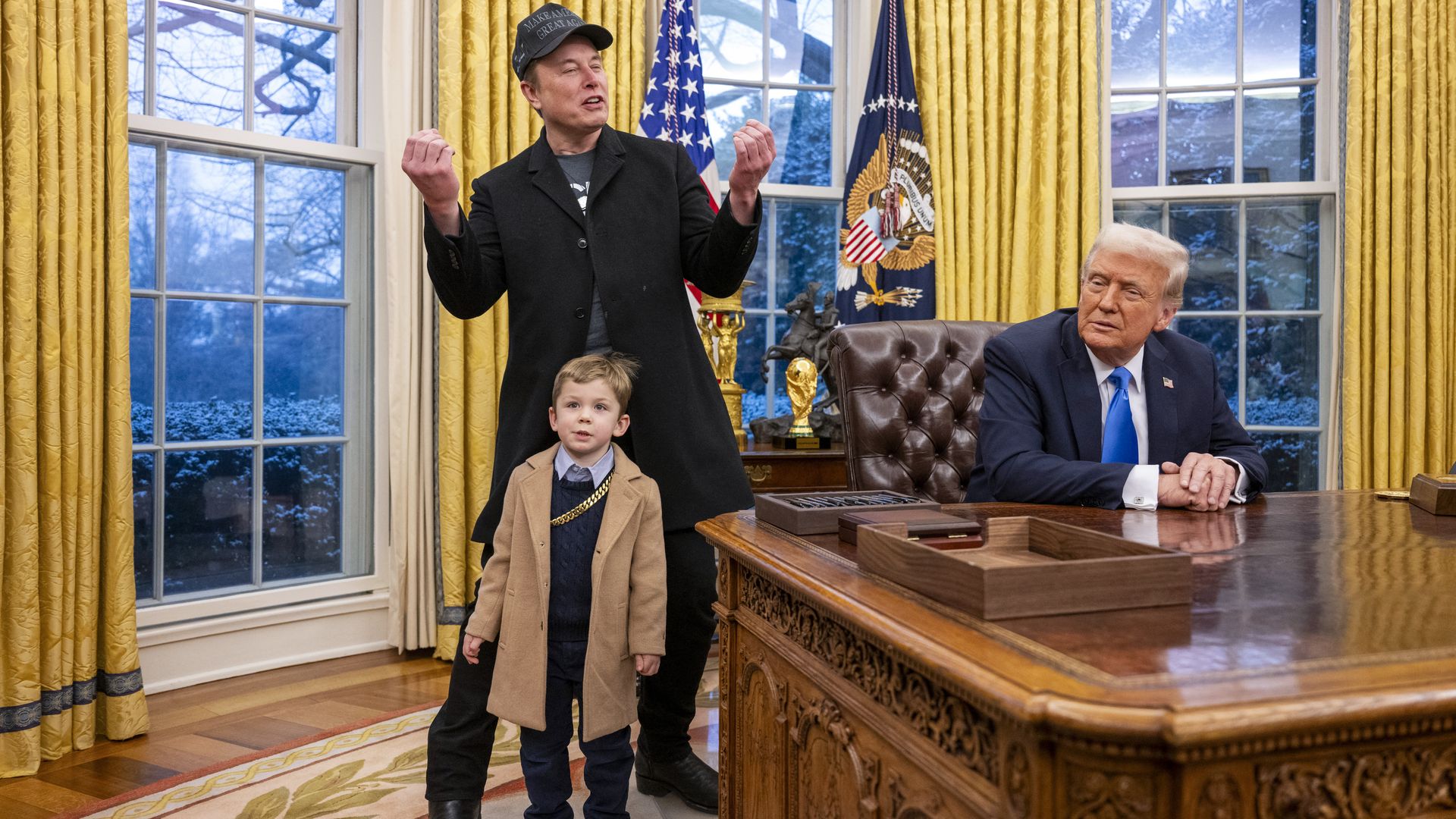
President Trump signed an executive order Tuesday requiring federal agencies to work with the Elon Musk-led DOGE to make "large-scale" workforce reductions.
Why it matters: The order that's titled "Implementing The President's 'Department of Government Efficiency' Workforce Optimization Initiative" gives DOGE even more powers, just as the Trump administration faces several lawsuits accusing it of violating privacy laws.
About a quarter of FAFSA applicants last year had difficulty submitting the new federal student aid form that was hampered by technical issues, per a Lumina Foundation-Gallup report released Wednesday.
Why it matters: Glitches and math errors in the free government application presented significant hurdles to students in the college admission process.
Marc Fogel arrived in the U.S. on Tuesday night after Russia freed him from detention following envoy Steve Witkoff's visit to Moscow for talks that the White House said helped lead to the American teacher's release.
The latest: President Trump met Fogel at the White House on Tuesday night and stressed he appreciated Russian President Vladimir Putin releasing him. "It was a fair deal", Trump said, adding he thinks Fogel's release will show goodwill on Russia's part in terms of the war in Ukraine.
AP said Tuesday it was blocked from the Oval Office after the White House threatened its access for not aligning its editorial standards with President Trump's executive order renaming the Gulf of Mexico as the Gulf of America.
Why it matters: The Trump administration has made the media a key target during its first few weeks in office, but few efforts have alarmed press freedom advocates as much as Tuesday's White House incident.
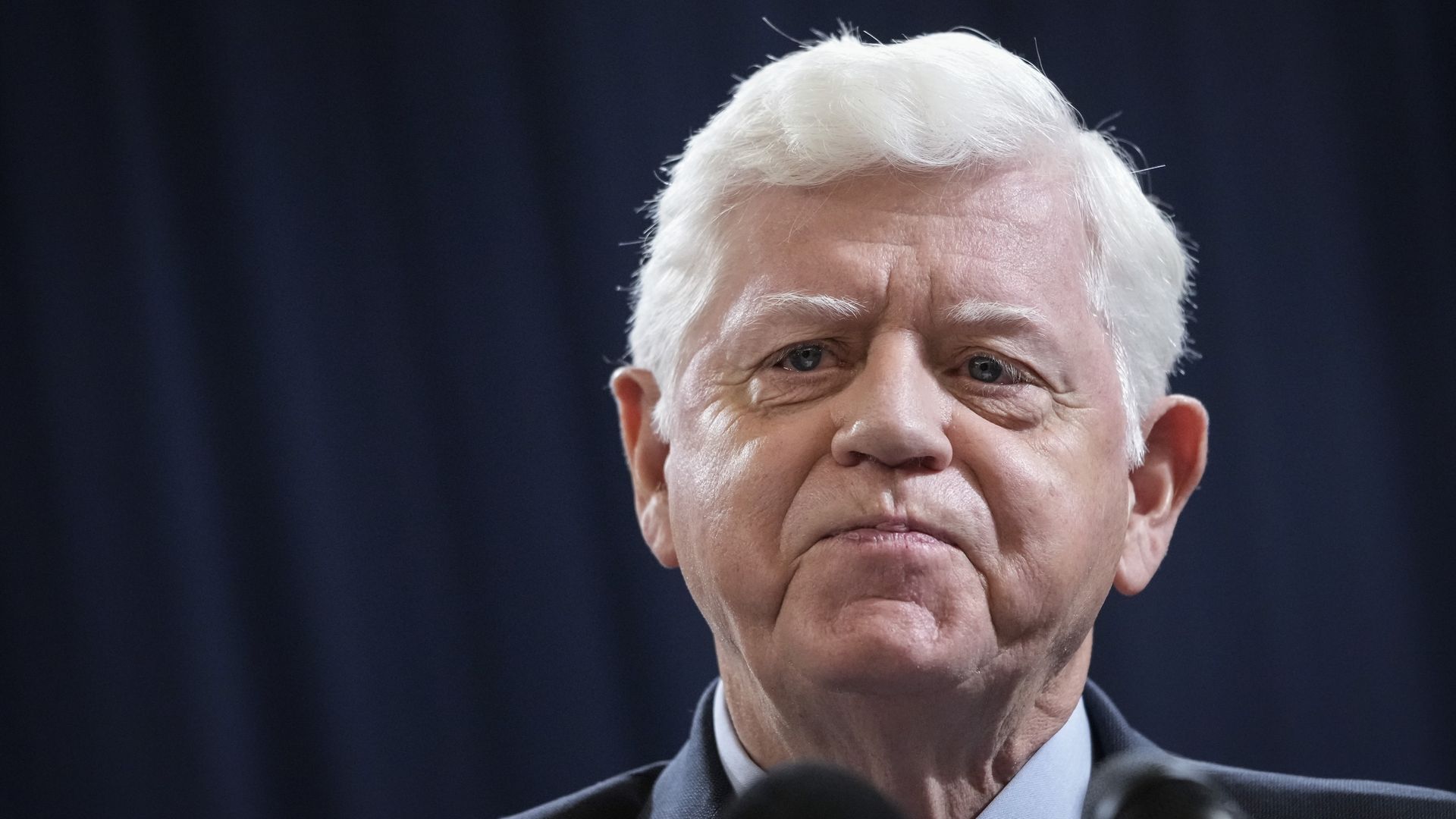
Rep. John Larson (D-Conn.) said Tuesday that a "complex partial seizure" was what caused him to seize up during a House floor speech the previous day.
Why it matters: The 76-year-old's office had initially said the incident — which quickly went viral on social media — was likely caused by an "adverse reaction to a new medication."
Elon Musk's slash-and-burn approach is giving the White House genuine street cred with House conservatives. But it might not be enough to compensate for the outrage he's provoked among House Democrats.
Why it matters: If Democrats hold the line — and withhold their votes to fund the government — it will be exceedingly difficult for House Speaker Mike Johnson to avoid a government shutdown.
A closed-door meeting for House Democrats this week included a gripe-fest directed at liberal grassroots organizations, sources tell Axios.
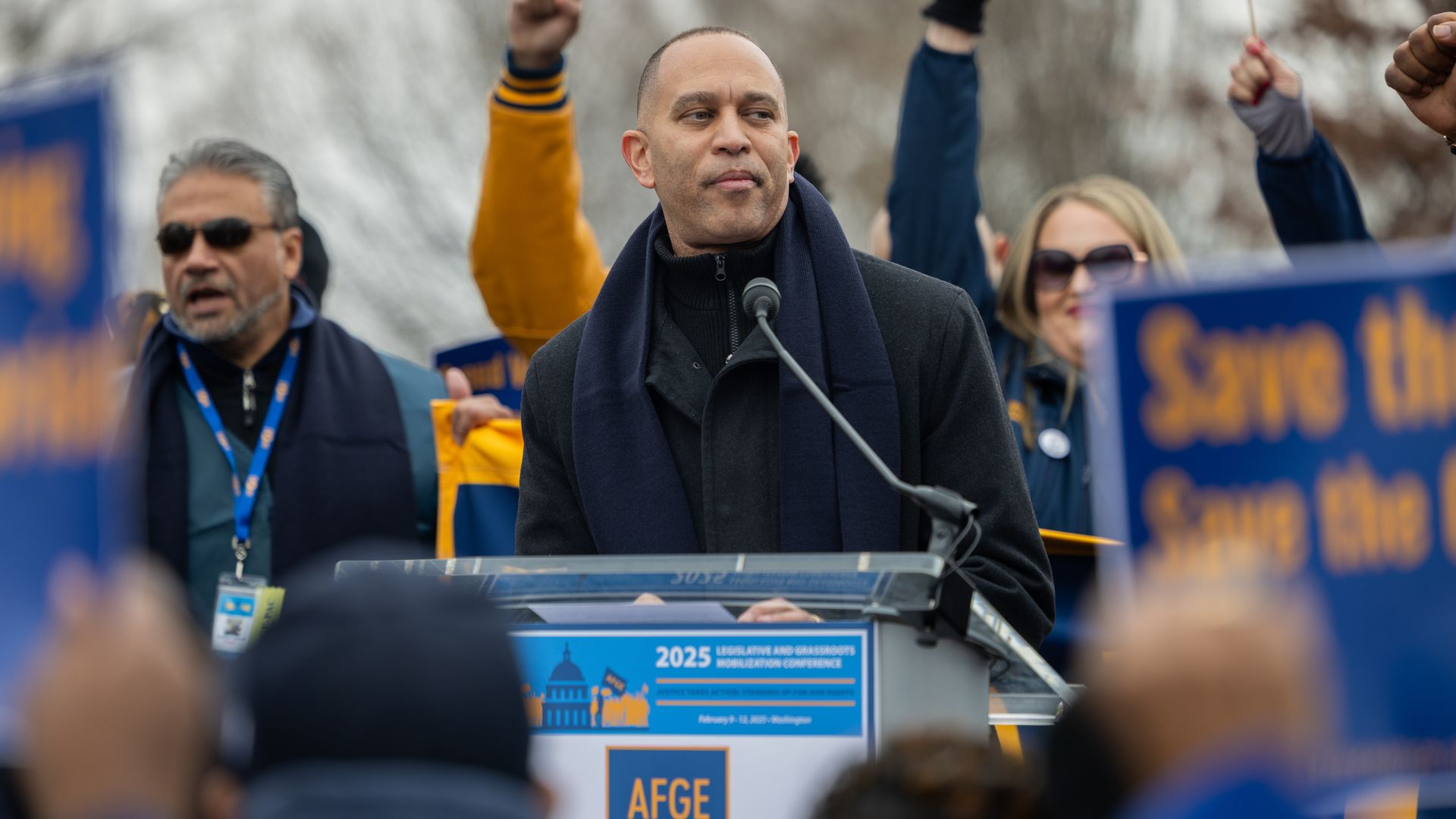
Why it matters: Members of the Steering and Policy Committee — with House Minority Leader Hakeem Jeffries (D-N.Y.) in the room — on Monday complained activist groups like MoveOn and Indivisible have facilitated thousands of phone calls to members' offices.
Democrats in Congress are growing rattled by the historic flood of calls from their grassroots supporters demanding they do more to combat the Trump administration.
Why it matters: The pressure campaign has created some internal friction as some House Democrats chafe under the tamer, more focused approach led by House Minority Leader Hakeem Jeffries' (D-N.Y.).
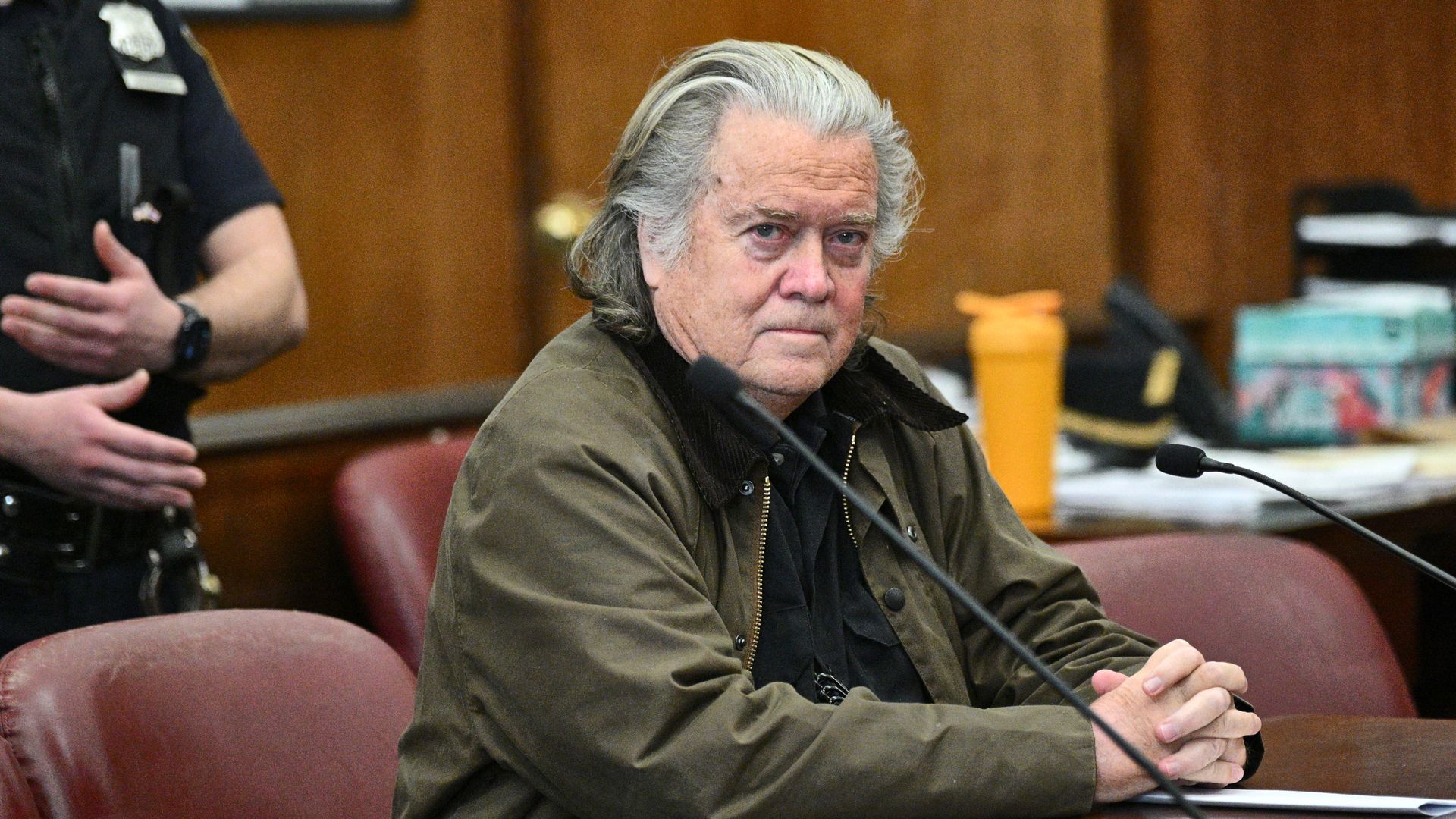
Former Trump adviser Steve Bannon pleaded guilty on Tuesday to a fraud charge related to a private fundraiser to build a wall along the U.S.-Mexico border.
The big picture: Under the plea agreement, Bannon won't be sentenced to any jail time and instead received in the New York Supreme Court a conditional discharge for three years over the "We Build the Wall" scheme.