Government agencies split on cryptocurrencies

Add Axios as your preferred source to
see more of our stories on Google.
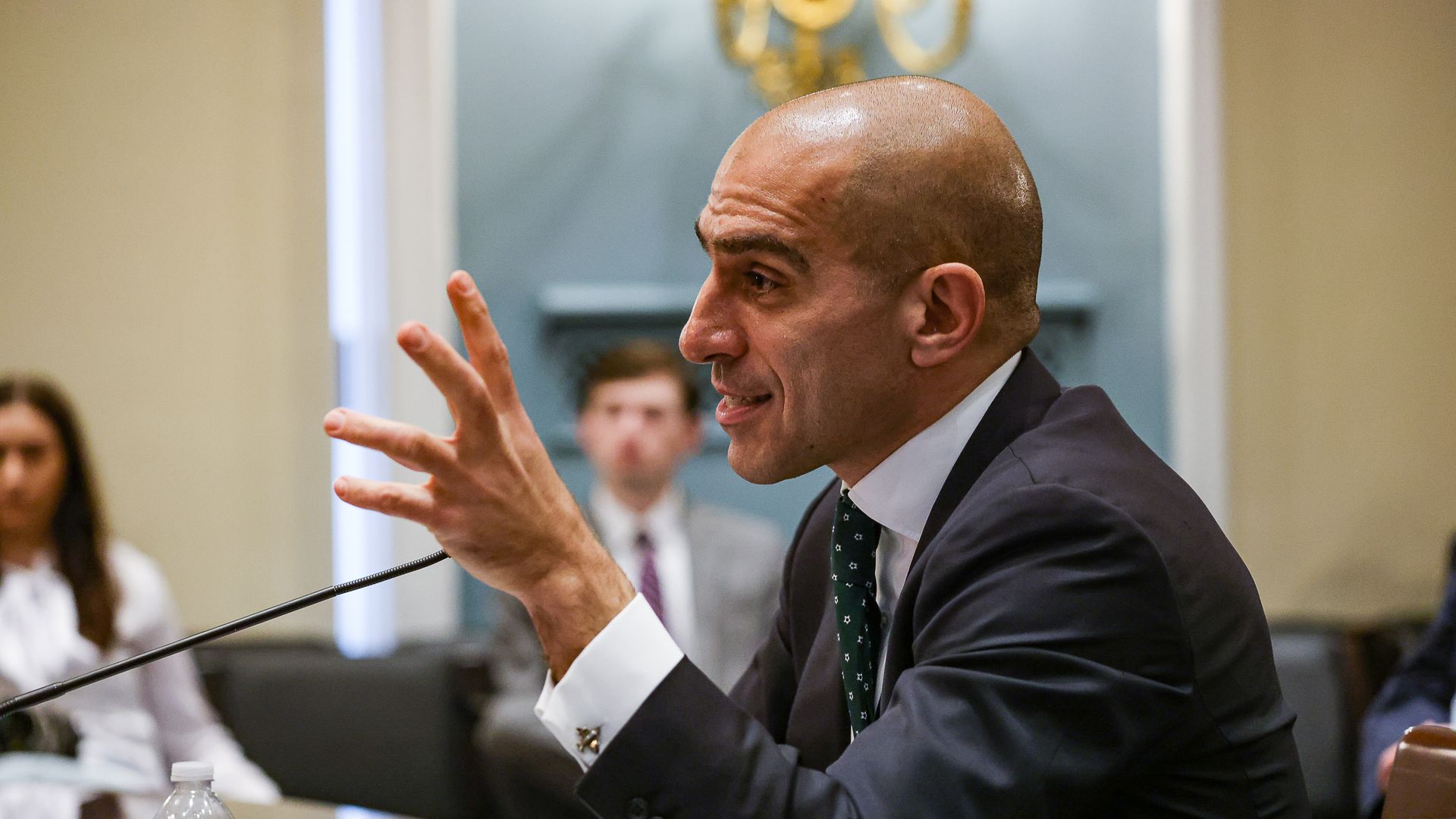
CFTC chair Rostin Behnam in March. Photo: Valerie Plesch/Getty Images
One of the U.S.'s two top investment regulators waded, once more, into the most fraught question in the blockchain business Wednesday when he said Congress needs to create a "comprehensive framework" to clarify which assets are commodities and which are securities.
Why it matters: The regulatory status of cryptocurrency has been the most fraught issue in the space going back to at least 2017, when entrepreneurs started using blockchains for capital formation en masse.
- The issue has been a dominant theme in Axios' Crypto newsletter.
Securities limit who can hold them, how they can be used, and where they can be traded. Those restrictions would severely limit the ultimate utility of cryptocurrency.
Commodities (like coffee and gold) can be held by anyone and used any which way.
"If you measure the Bitcoin economy by market capitalization, upwards of 70% to 80% of the market are non-securities," CFTC chair Rostin Behnam said as questions began following his testimony before a Senate committee.
Our thought bubble: The way he put it is a little weird. He didn't say 70% to 80% of the assets are non-securities (as some headlines have said). He seems to be talking about the market cap share.
- BTC, ETH, USDT and BNB alone make up 75% to 80% of the asset class' market capitalization.
Friction point: Behnam did not make a statement in the hearing about whether he believes ether (ETH) is a commodity, but he noted a court ruling that found it to be so.
- In the past, though, he has been clear on ether and other assets.
- Famously, House Financial Services Chairman Patrick McHenry (R-N.C.) asked SEC chair Gary Gensler whether ether was a security.
- After dodging several times, Gensler said, "Mr. Chair, I think you would not want me to pre-judge."
Zoom out: As recently as May, Gensler said he believes most tokens in the market are securities.
- Gensler has also holds that existing laws are adequate to police this market.
The intrigue: The agency recently provided notice that it would not be bringing a case against Ethereum 2.0 (also known as The Merge).
- But it did bring a case against the blockchain firm Consensys in part, for making it easy for users to access the main feature of Ethereum 2.0: staking.
Between the lines: Both agency chairs could be right. It could be true that the lion's share of crypto assets are securities, but the lion's share of the market is not.
- (As we say in Kansas: Clear as mud.)
The bottom line: "I do think given the size of the market, the number of tokens, and some of the novel legal questions, it is important that the agencies work closely together to find consensus," Behnam said when asked about the regulatory football this industry has been.
- He also said he'd be glad for the Commodity Futures Trading Commission to take on the task of regulating crypto.
