Trump's media playbook

Add Axios as your preferred source to
see more of our stories on Google.
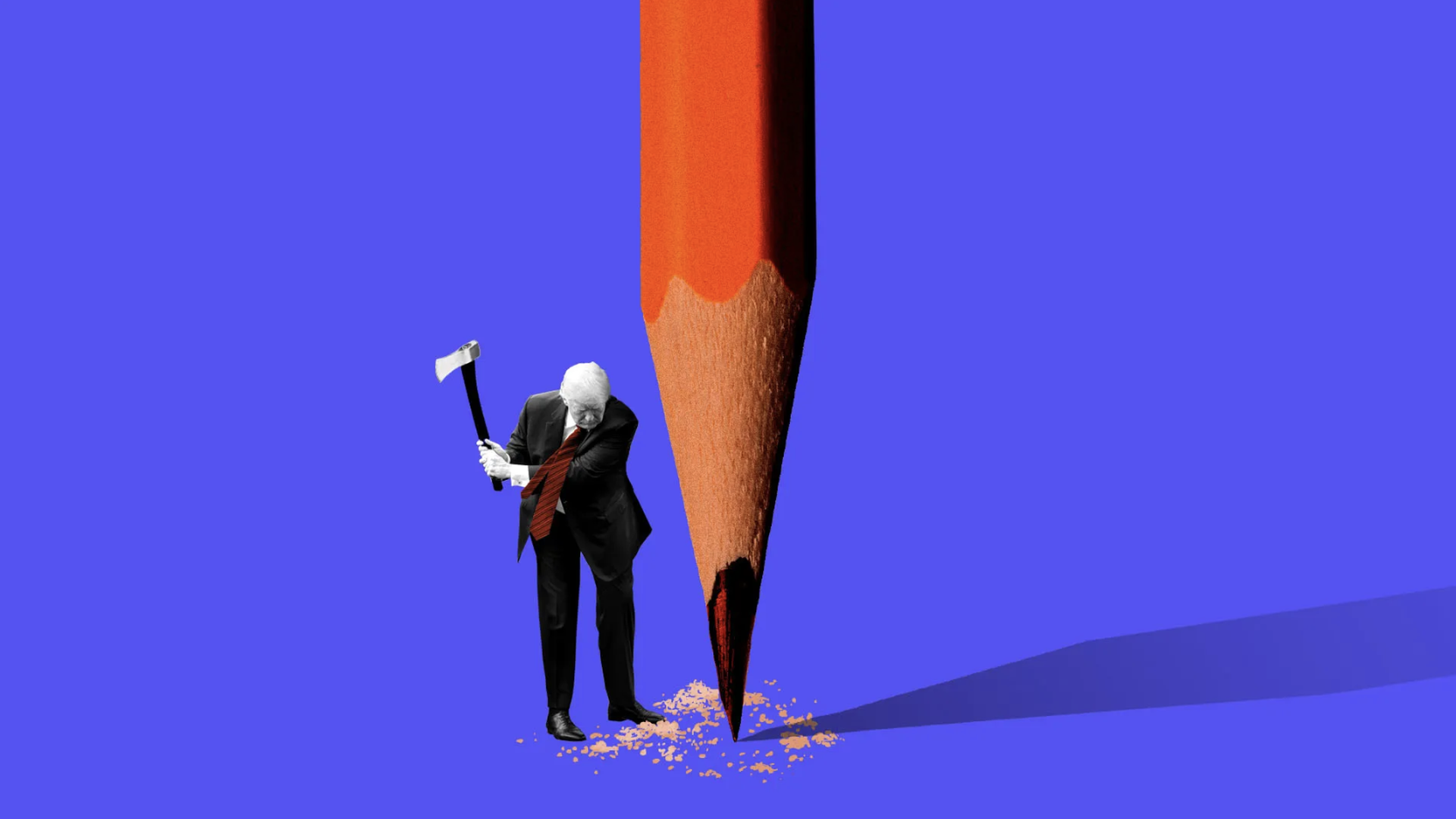
Illustration: Sarah Grillo/Axios
Former President Trump and his allies have vowed to go after the media in a second presidential term, but a strong U.S. legal and regulatory framework means bullying and harassment campaigns would probably be more effective than leveraging presidential powers.
Why it matters: Are there political levers the former president could pull to target media companies he doesn't like? Yes. But harassment campaigns and lawsuits that drain companies of time, money, resources and trust are much easier and can be just as punitive.
- "The regulatory threat is on the edges at most," said Andrew Jay Schwartzman, a veteran communications lawyer.
- "What he can do is make their lives miserable by hassling them," Schwartzman said. "He can do things to make them unhappy, but not anything that is an existential threat."
Case in point: If Trump were to lose his $10 billion lawsuit filed against CBS last week over allegedly doctoring its "60 Minutes" interview with Vice President Harris, the case would still likely cost the network money and time to litigate.
- Trump has suggested regulators should pull CBS' broadcast license, but national broadcast networks aren't licensed, their local affiliates are. Pulling broadcast licenses from local affiliates is an incredibly cumbersome process that experts say is very unlikely.
How it works: Trump could appoint Republican allies to oversee the Federal Communications Commission, but convincing those commissioners to abandon staunch conservative principles around deregulation would be tough.
- The FCC under the first Trump administration, for example, rolled back decades-old media ownership rules. That benefitted large local TV owners and introduced a new wave of local broadcast consolidation.
- Trump's former FCC chair Ajit Pai stood firmly with the First Amendment, even when pressured by Trump to go after NBC in 2017.
Reality check: A conservative FCC could be empowered to advocate for Trump within the boundaries of the law, but bending the law in favor of his efforts to undermine certain outlets is much harder and less likely.
- For example, NBC aired a message from Trump last Sunday after conservative FCC commissioner Brendan Carr criticized the network for not upholding an FCC rule that requires broadcasters to give candidates equal air time.
There are regulatory loopholes Trump could exploit to go after the media, and he has already teased some of those ideas.
- Agency independence. Last year, Trump vowed to bring the independent regulatory agencies, such as the FCC and the FTC, "back under Presidential authority, as the Constitution demands," which could make it harder for those agencies to act independently of the Executive Branch.
- War emergency powers. Former FCC chair Tom Wheeler, who served during the Obama administration, has warned that a war emergency provision within the Communications Act of 1934 could empower the president to suspend or change regulations governing broadcasters and broadband companies for purposes concerning national security or defense.
- Deal scrutiny. Trump has already shown a willingness to go after media companies by pressuring regulatory agencies to apply more scrutiny to certain mergers and acquisitions. He famously encouraged the Justice Department to probe AT&T's acquisition of Time Warner, the parent to CNN.
The big picture: Trump could try to undermine the press through some of those regulatory openings, but the U.S. court system has a strong track record of protecting First Amendment freedoms should a media firm fight back.
- The last Trump administration lost several key legal battles against the media, including pulling press credentials for reporters he doesn't like, blocking people online, and deleting online posts that are considered official presidential records.
- Attempts by the Trump administration last cycle to undermine the government-funded media arm, USAGM, were also checked in court. A Superior Court judge ruled in 2020 that former USAGM CEO Michael Pack acted unlawfully in taking control of a fund that supported internet access.
The bottom line: Trump's most dangerous weapon against the media is his words, which press freedom advocates have warned do have a significant chilling effect both at home and abroad.
- Reporters Without Borders estimates that Trump has escalated his war on the free press leading up to the campaign, verbally attacking the media more than 100 times over the past two months.
