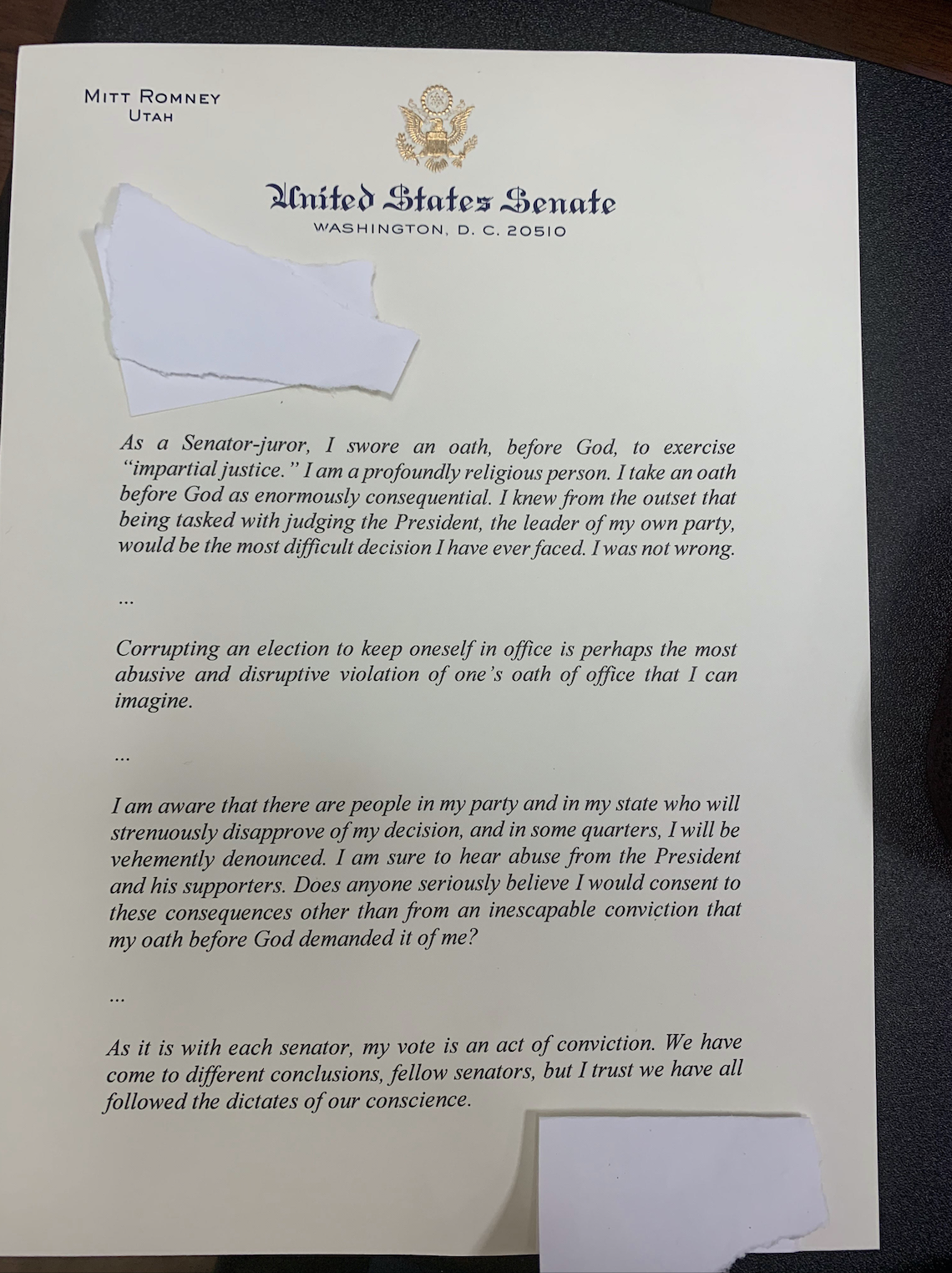
A photo of the letter provided to Axios. The letter has sections covered to conceal identifying info.
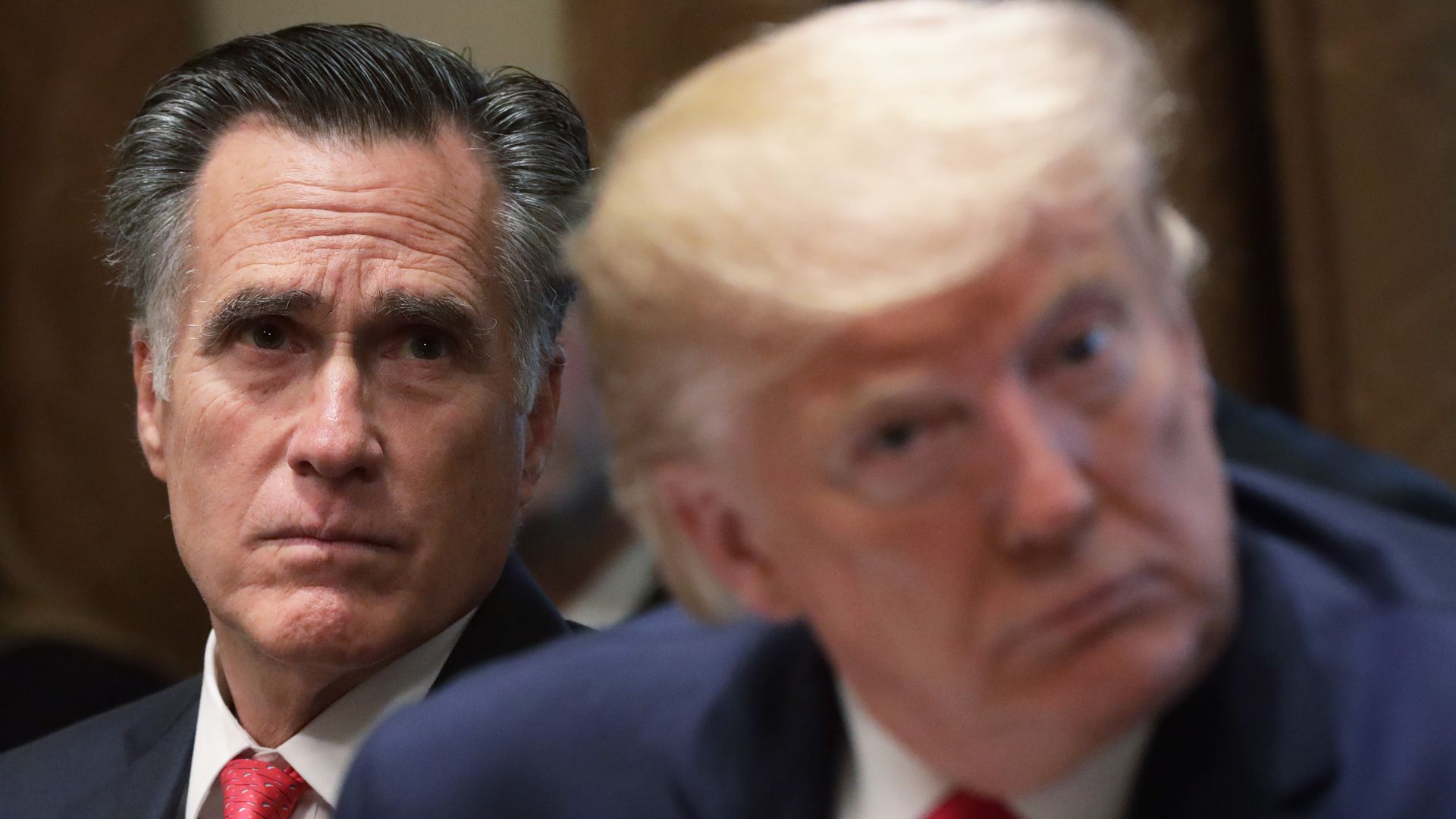
Mitt Romney explained his vote to convict President Trump in a note to his Republican colleagues, hand-signed “Mitt” in blue ink and delivered Wednesday to their individual boxes in the Senate cloakroom.
Why it matters: The Utah senator and 2012 presidential nominee was the only Republican to go against Trump during impeachment. His notes reflect how much pressure he'll be under to justify himself to a party that's pledged loyalty ahead of Trump's re-election bid.
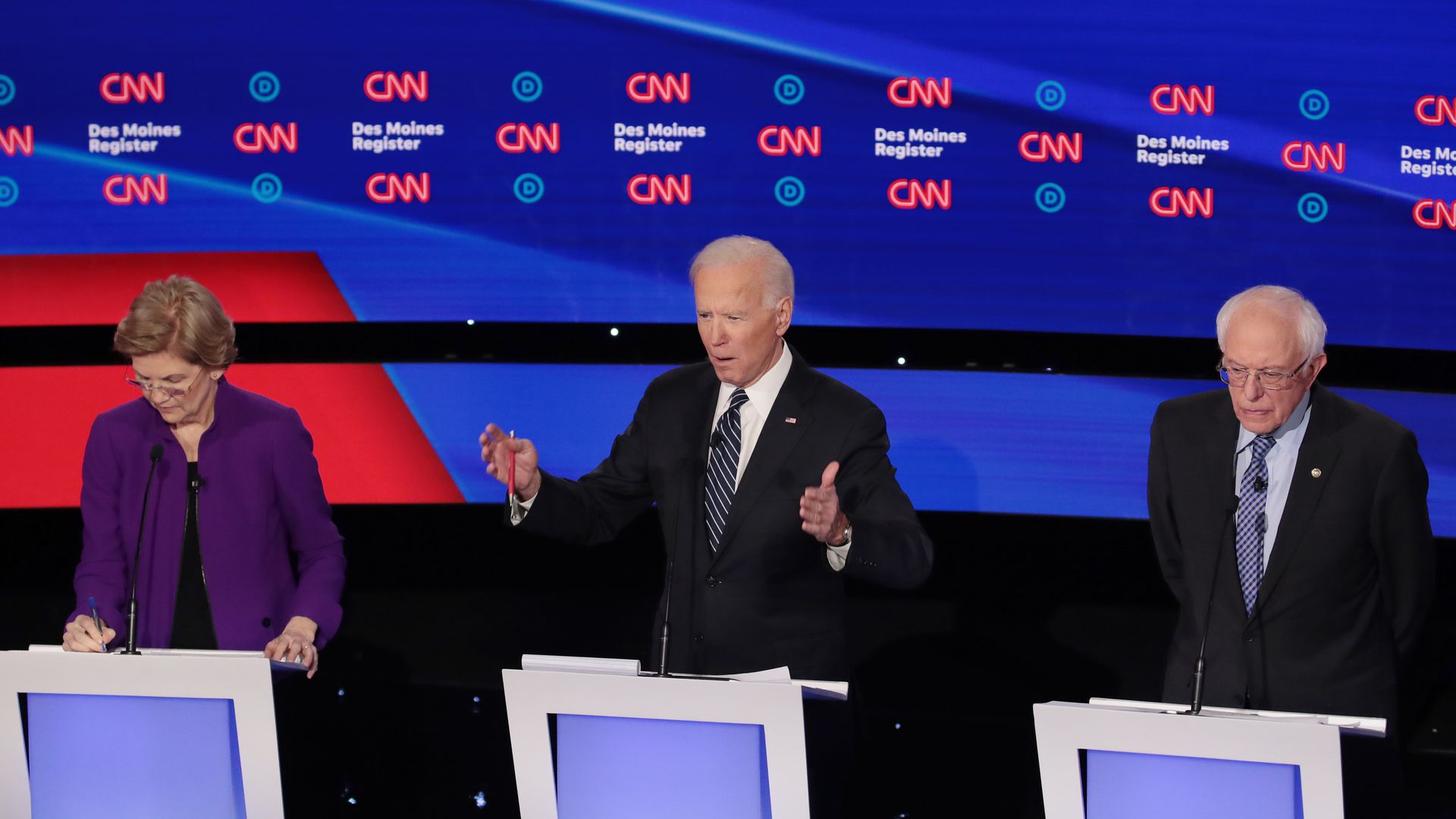
Catch up quick: Most Democratic candidates agree on two things: codifying Roe v. Wade and reversing the Trump administration's Title X gag rule. But, candidates' personal voting histories on reproductive rights remains a sticking point: Joe Biden, Elizabeth Warren and Amy Klobuchar all previously voted for the Hyde Amendment, Politico reports.
The Senate impeachment trial of President Trump is set to wrap up on Wednesday with a final on whether or not to remove him from office.
The big picture: Senate Majority Leader Mitch McConnell got the speedy, no-witness trial he wanted. Republicans officially have the votes to acquit Trump, according to a Politico analysis of public statements.
President Trump's Senate impeachment trial concluded Wednesday with a final vote (4pm ET) to acquit him on two articles brought by the House — abuse of power and obstruction of Congress — after senators continue their debate on the issue.
The big picture: Trump's acquittal was always expected, but Wednesday saw an 11th hour twist in the impeachment trial as Sen. Mitt Romney voted in favor of convicting the president on abuse of power — the only Republican senator to break ranks.
The Senate has acquitted President Trump of abuse of power and obstruction of Congress.
The big picture: This is the ending that was expected all along, but the way the Senate trial ended — with nearly every Republican declining to pursue new information about Trump's Ukraine activities — has raised alarms about the growth of presidential power and the refusal of Congress to stop it.
The Senate has voted 53-47 to acquit President Trump on obstruction of Congress, officially bringing an end to the impeachment proceedings that have roiled Washington for the past five months.
The big picture: Unlike the article of impeachment for abuse of power, which saw Sen. Mitt Romney (R-Utah) break ranks, the obstruction vote fell strictly along party lines. The charge proved to be one of the more controversial aspects of the impeachment saga, with critics calling it a product of a rushed process after House investigators declined to take White House officials to court for defying subpoenas.
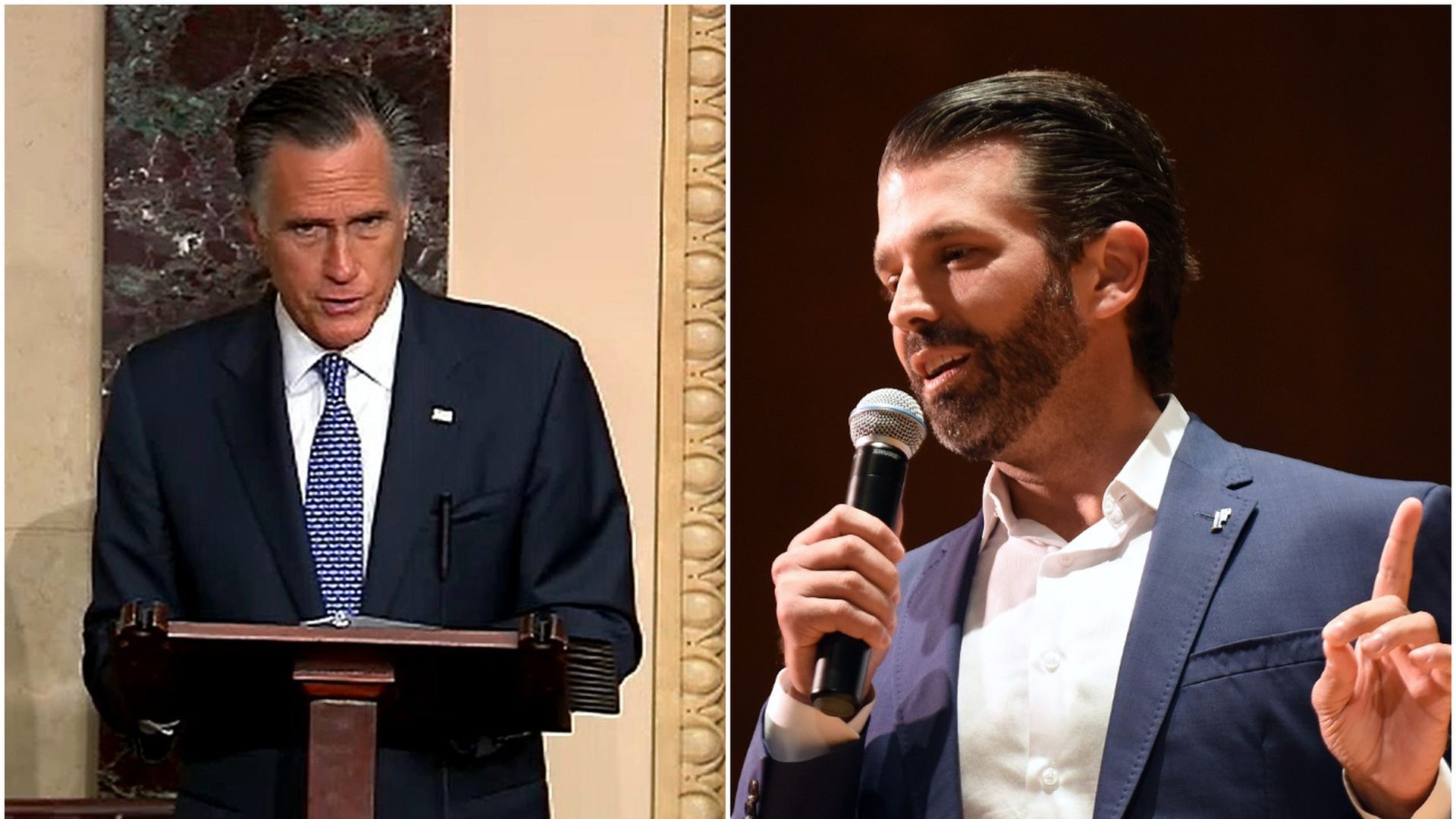
Donald Trump Jr. joined a collection of Republicans who denounced Sen. Mitt Romney (R-Utah) on Wednesday after the senator announced he would vote to convict the president in the impeachment trial.
What they're saying: "Mitt Romney is forever bitter that he will never be POTUS. He was too weak to beat the Democrats then so he’s joining them now. He’s now officially a member of the resistance & should be expelled from the @GOP," the president's eldest son tweeted moments after Romney announced his decision.
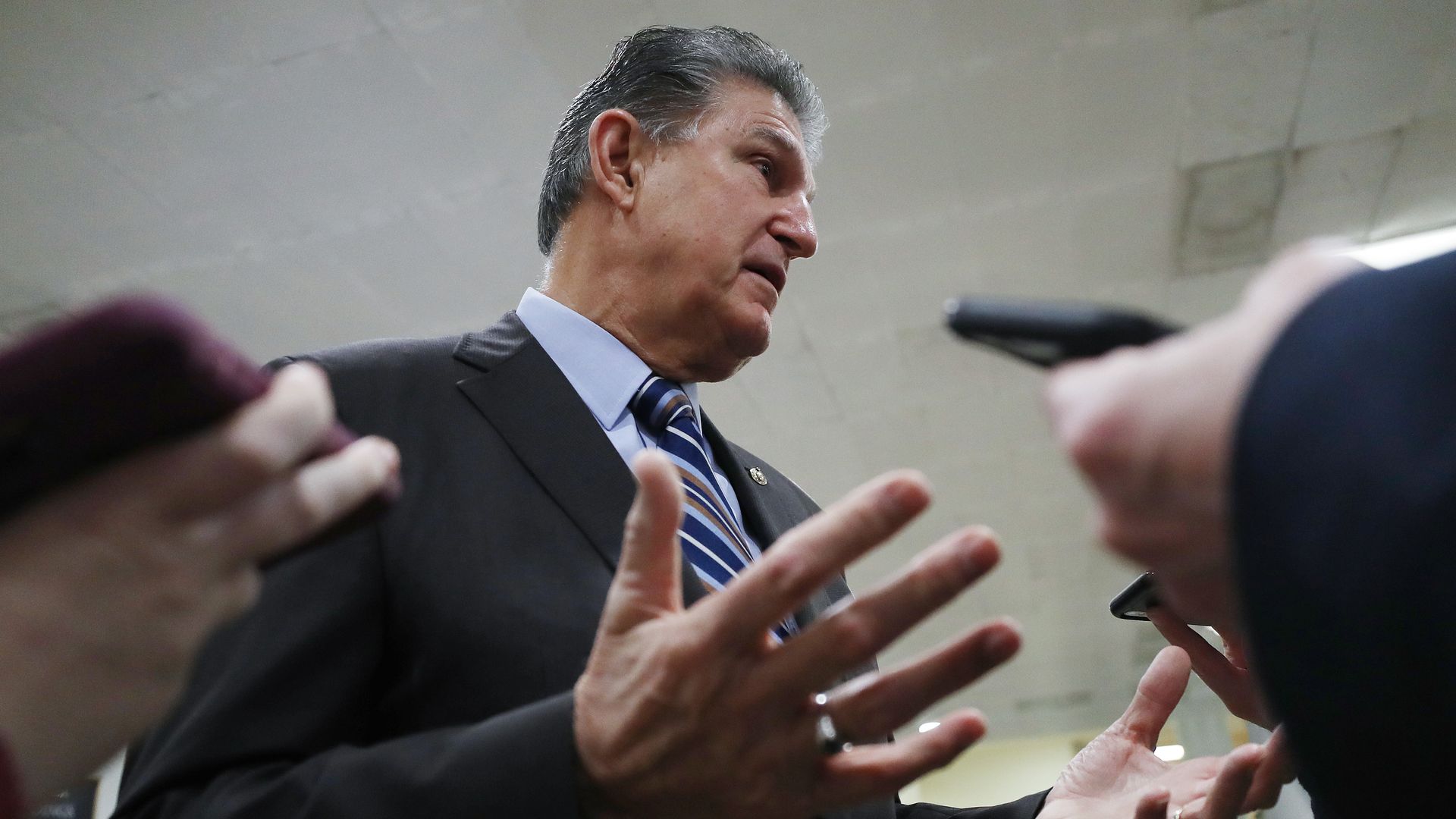
Sen. Joe Manchin (D-W.Va.) will vote to convict President Trump on both articles of impeachment.
Why it matters: The moderate Democrat's decision eliminates any possibility that Trump could receive a bipartisan acquittal. He wrote in a statement: "I have always wanted this President, and every President to succeed, but I deeply love our country and must do what I think is best for the nation."
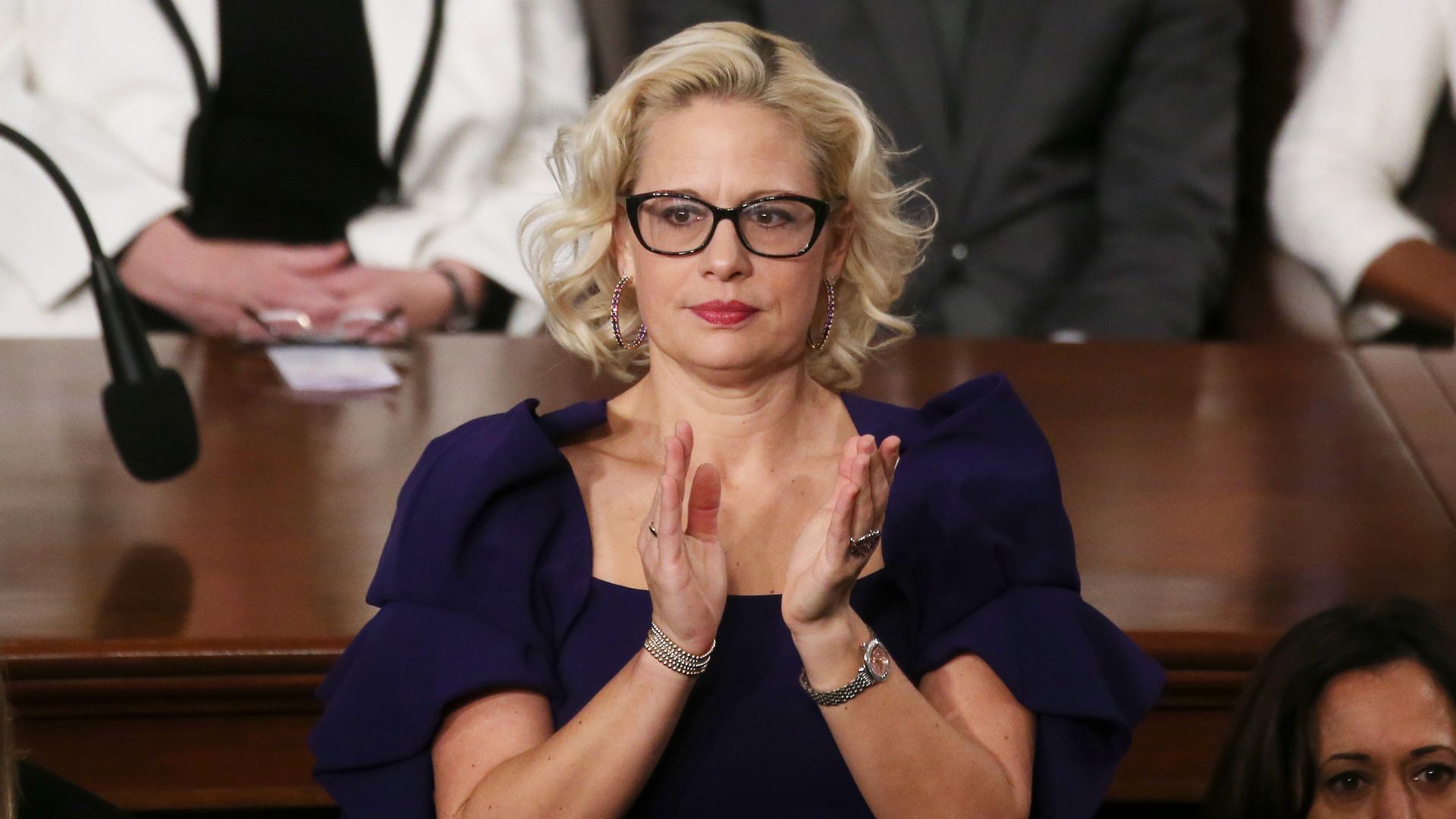
Sen. Kyrsten Sinema (D-Ariz.) will vote to convict President Trump on both articles of impeachment, according to the Arizona Republic.
Why it matters: The moderate Sinema was viewed as one of the most likely Senate Democrats to vote to acquit Trump. She joins Sen. Doug Jones (D-Ala.) in voting to remove the president, while the other possible swing vote — Sen. Joe Manchin (D-W.Va.) — has yet to announce his decision.
Sen. Mitt Romney (R-Utah) made clear in an interview with The Atlantic on Wednesday that he will not vote for President Trump's re-election in November.
Driving the news: Romney sent shockwaves through Washington after announcing he would vote to convict Trump in the impeachment trial — becoming the only Senate Republican to break ranks and vote for the president's removal from office.
Sen. Rand Paul (R-Ky.) tells Axios that a lot of time was wasted with repetitious arguments at President Trump's impeachment trial, and that any future trials should be streamlined.
What he's saying: "If you ever do impeachment again, it's got to be a lot shorter," Paul told Axios in his Senate office Monday. "After sitting through hundreds of hours, it seems like, of repetitive testimony, I think we should change the process."
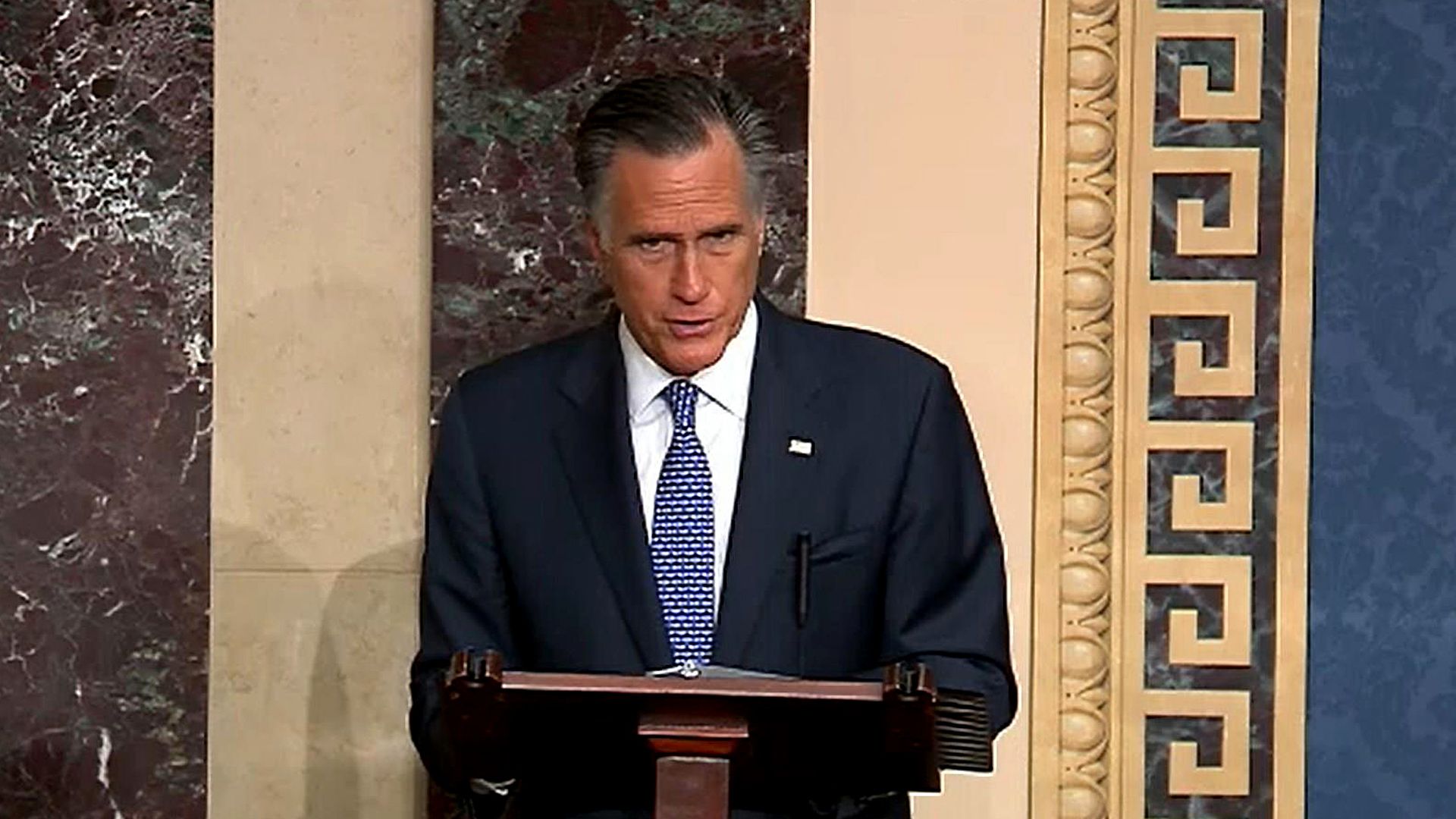
Sen. Mitt Romney (R-Utah) on Wednesday became the only Republican senator to announce that he would vote to remove President Trump from office in the Senate impeachment trial.
What he's saying: Romney said on the Senate floor that he came to his decision despite the fact that "we're all footnotes at best in the annals of history." He added, "I will tell my children and their children that I did my duty to the best of my ability, believing that my country expected it of me."
Sen. Mitt Romney (R-Utah) will vote to convict President Trump for abuse of power and acquit him for obstruction of Congress in the Senate impeachment trial.
Why it matters: Romney is the only Republican senator to break ranks and vote to remove Trump from office, though the president is still expected to be acquitted later today.
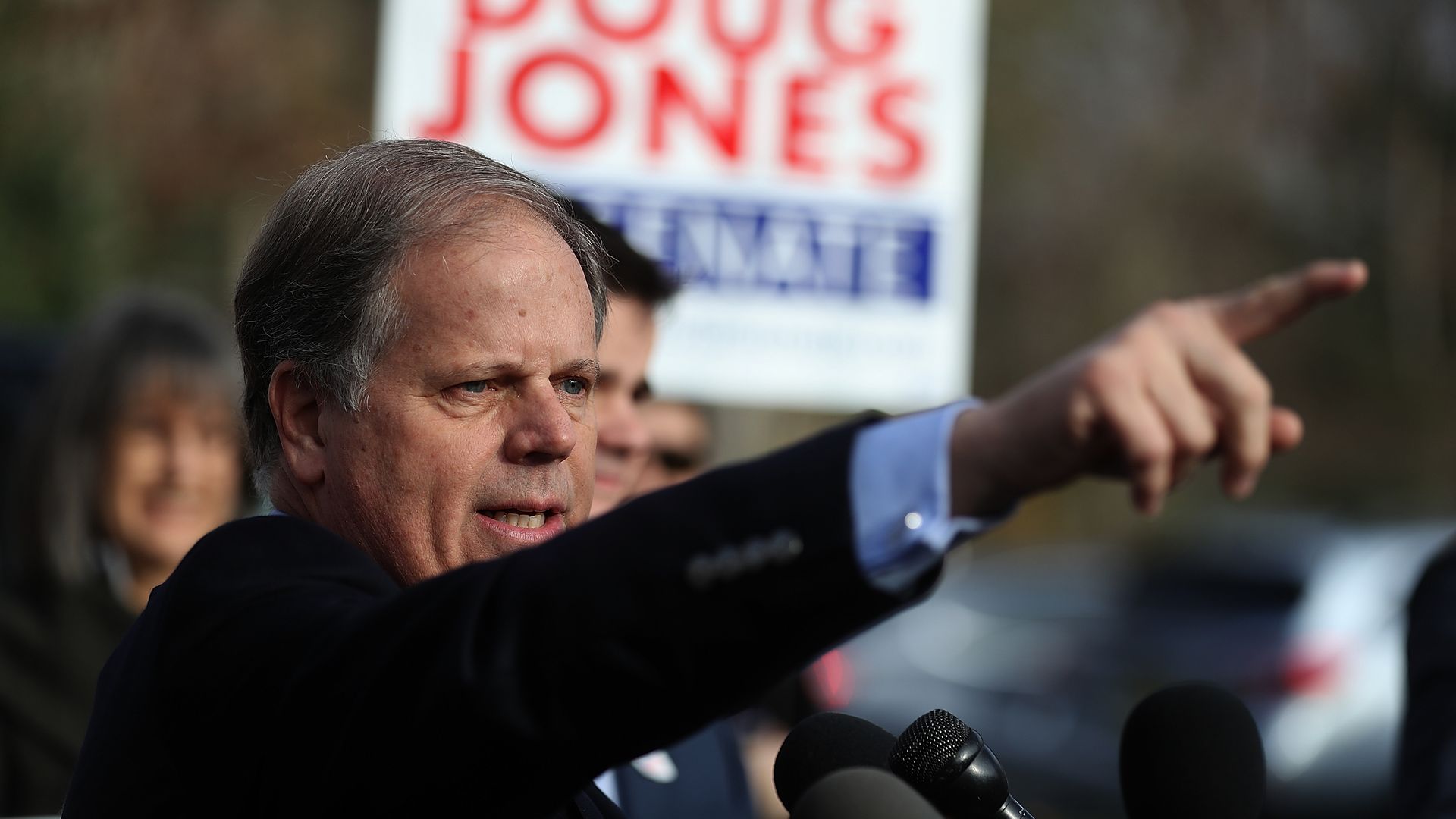
Sen. Doug Jones (D-Ala.) said in a statement Wednesday that he will vote to convict President Trump on both articles of impeachment.
Why it matters: Jones is one of the most vulnerable Senate Democrats up for re-election in 2020, and the decision to vote in favor of removing Trump from office is likely to play a significant role in the deep-red Alabama Senate campaign.
House Judiciary Chairman Jerry Nadler (D-N.Y.) said Wednesday that it is "likely" House Democrats will subpoena former national security adviser John Bolton and continue investigations into President Trump's hold on military aid to Ukraine, according to CNN's Manu Raju.
The state of play: Trump is set to be acquitted on articles of impeachment centered on the Ukraine saga, and Republican senators voted last week against calling new witnesses, including Bolton, in the impeachment trial.
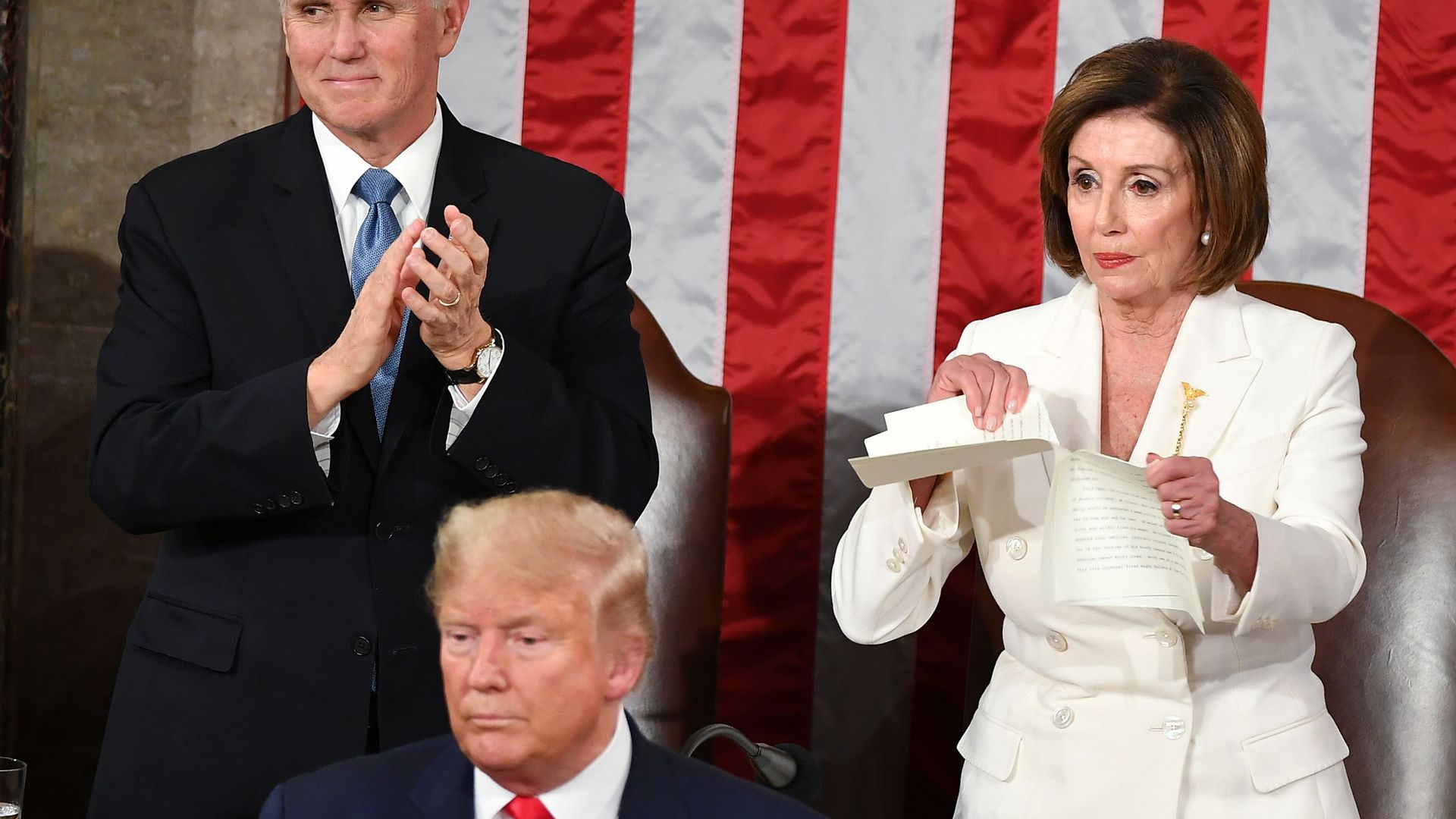
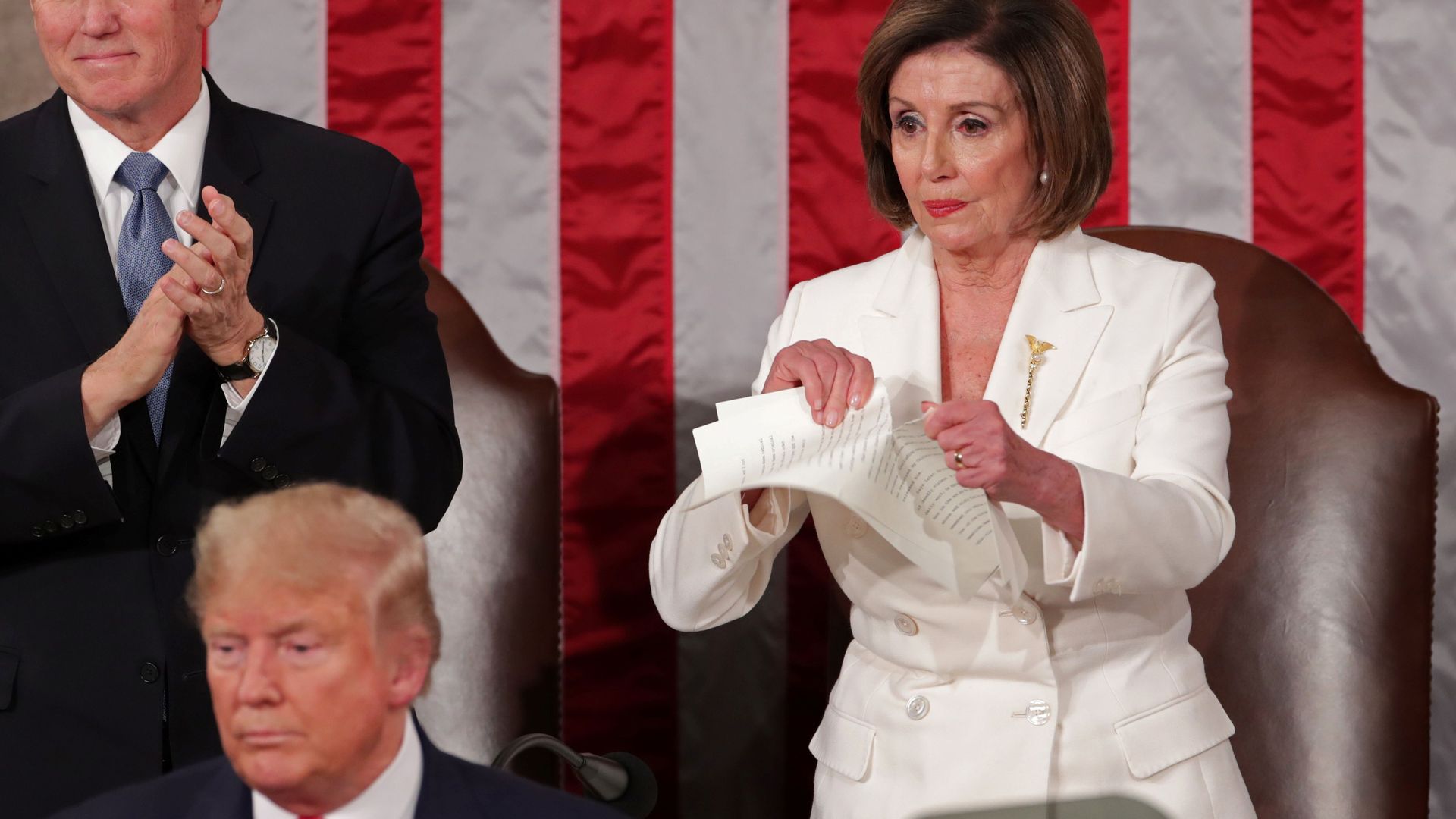
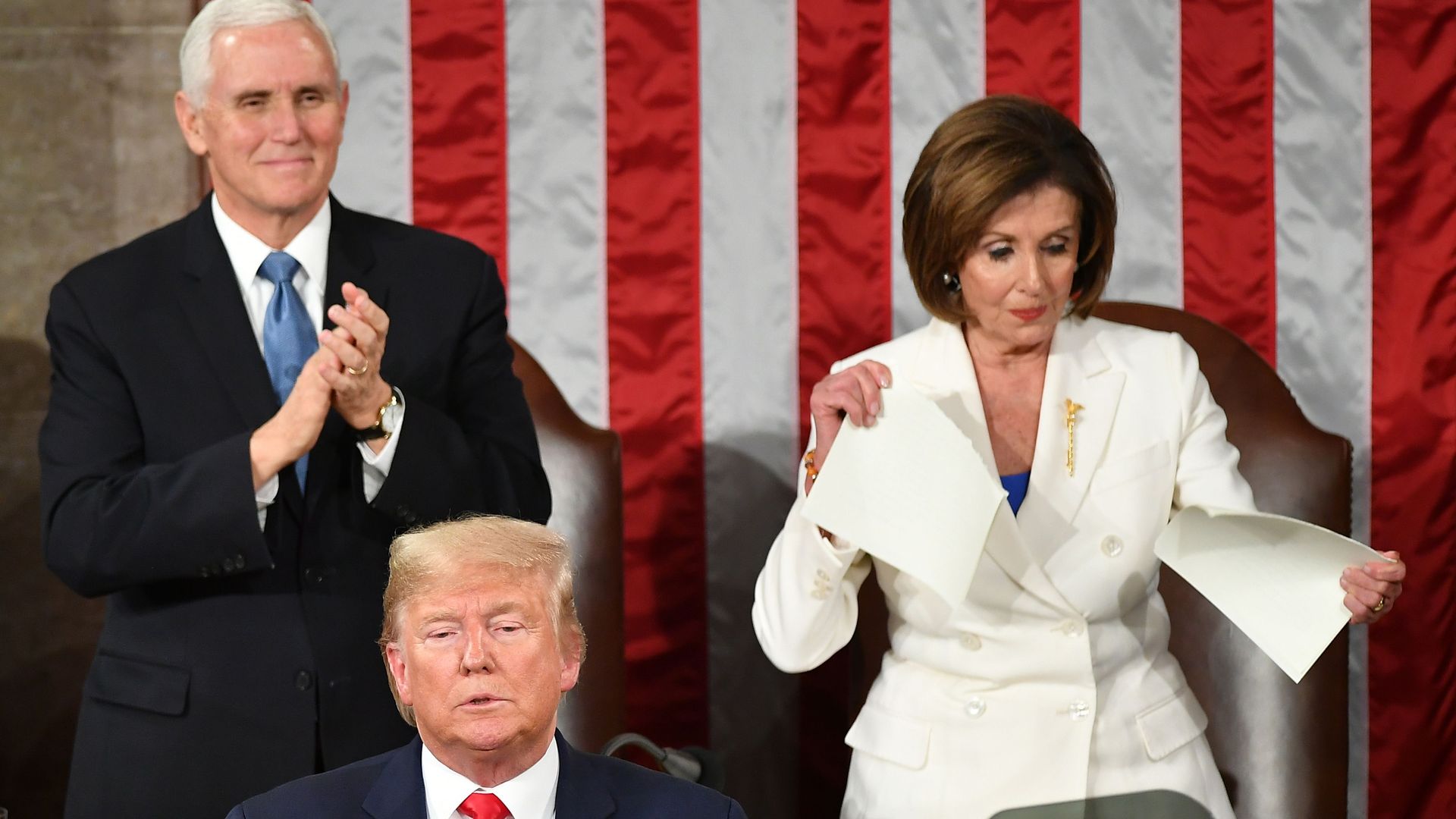
White House counselor Kellyanne Conway called Speaker Nancy Pelosi "an incorrigible child" for tearing up a copy of President Trump's State of the Union address on Tuesday night, and suggested that she be "censured."
Why it matters: Each house of Congress is responsible for censuring its own members, and it's unrealistic that Pelosi would face that kind of reprimand from a chamber that she controls. The episode Tuesday night and the subsequent fallout underscores the extreme partisan divisions between Trump and the House Democrats that voted to impeach him.
Bernie Sanders still may eke out a win in Iowa, and is the consensus front-runner in New Hampshire. But most venture capitalists investing in America's health care industry — the primary target of Bernie's ire — have shoved their heads so deep in the sand that they've found water.
Why it matters: At some point, it could become a failure of fiduciary duty.
The Boston Globe's editorial board called Wednesday for the end of the first-in-the-nation presidential votes in Iowa and New Hampshire.
The state of play: The paper is a regional powerhouse in New Hampshire and withheld its endorsement of a Democratic candidate until the state votes in its primary next week.
President Trump claimed last night during the State of the Union that he will "always protect patients with pre-existing conditions" — a statement that's misleading at best.
Why it matters: Pre-existing conditions protections are popular, and both parties are trying to claim credit for them. But only one of the parties has a track record of defending those protections, and it's not the GOP.
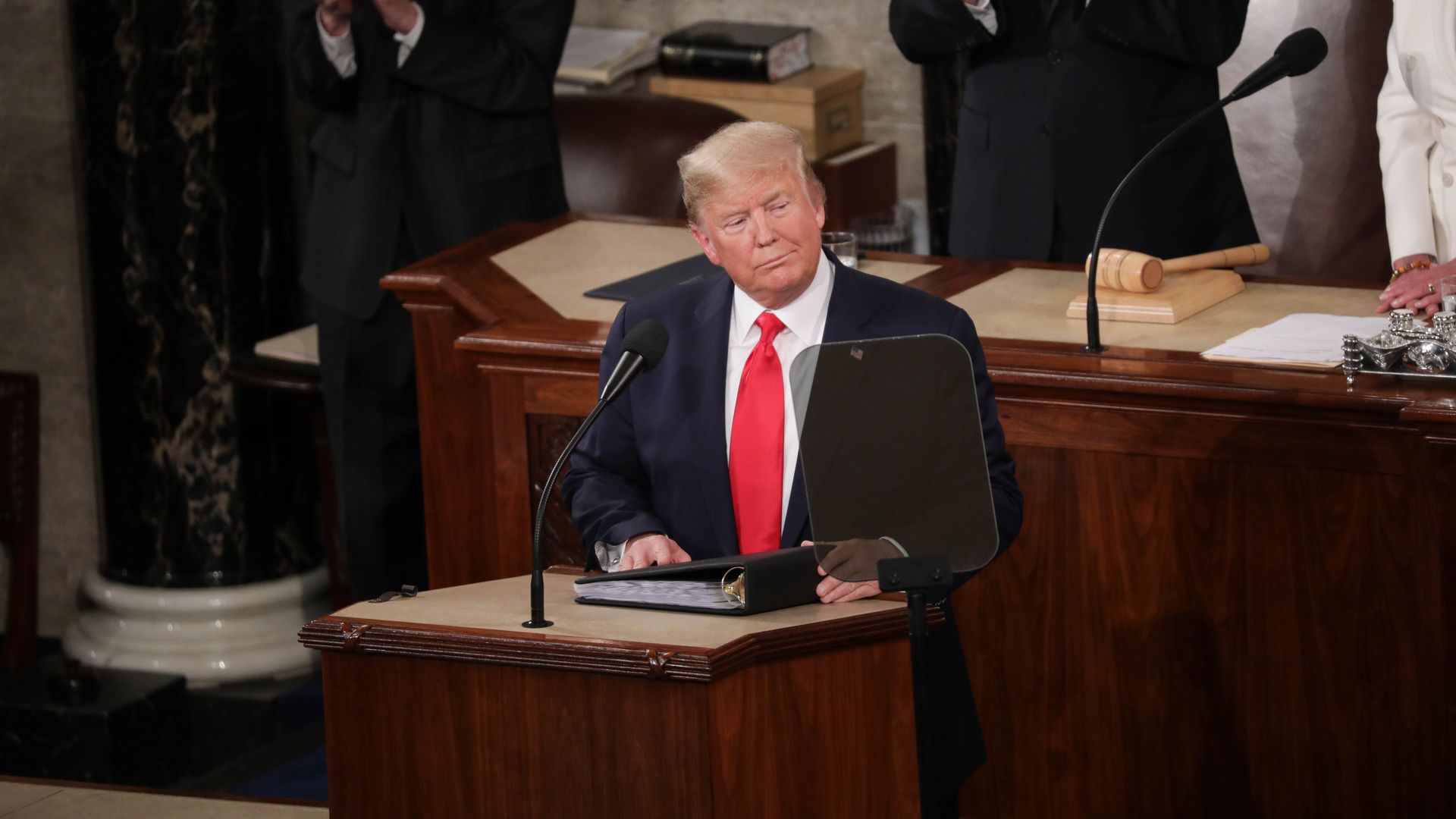
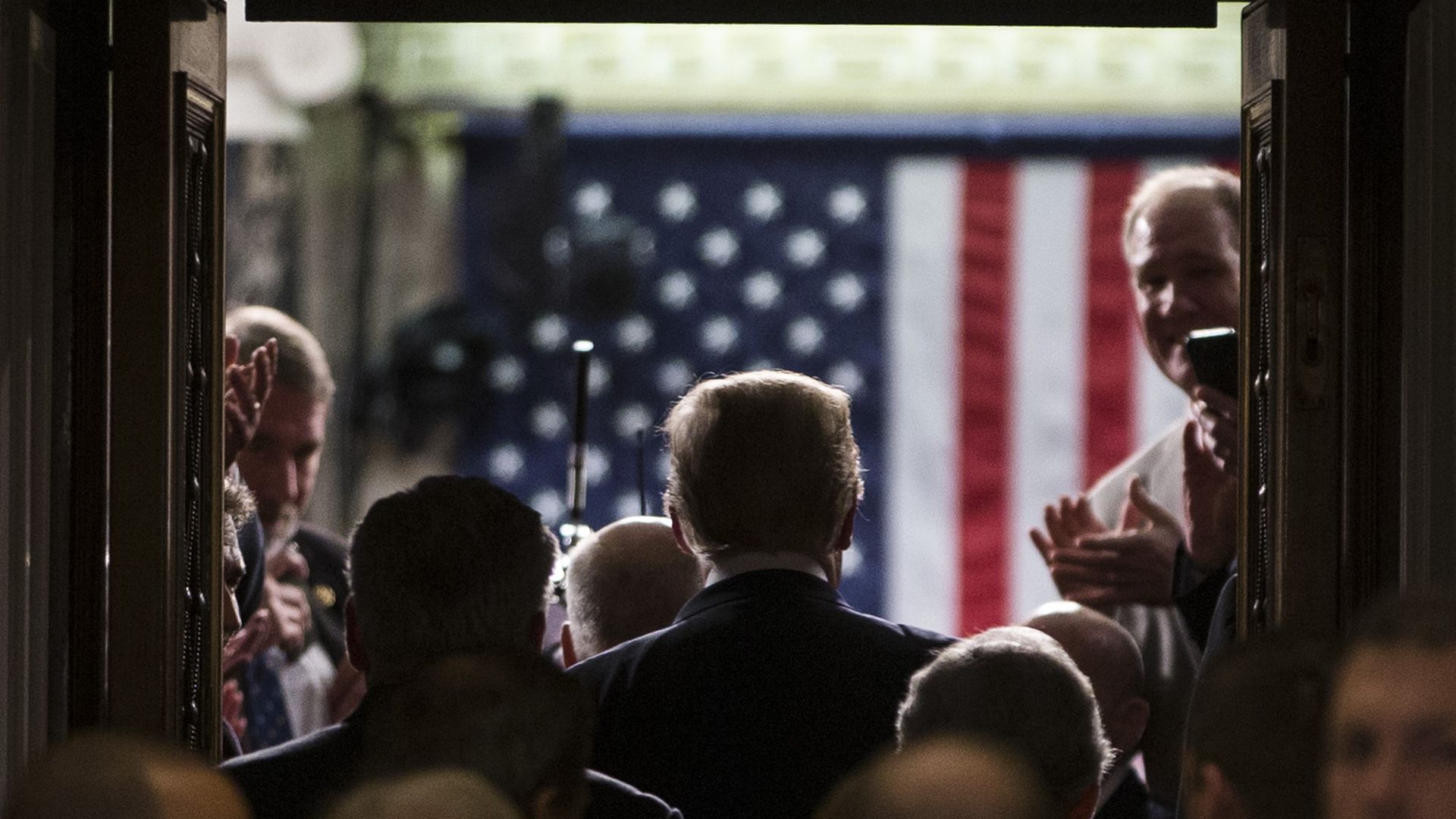
President Trump, on the eve of his impeachment acquittal, delivered a victory-lap State of the Union address in the very chamber where he had been impeached 48 days before — and just across the Capitol from where he'll be acquitted today.
The state of play: Trump never mentioned impeachment but pounded socialism, setting high-decibel themes for the 2020 campaign at a moment when his potential rivals are in disarray following the Iowa caucus debacle.
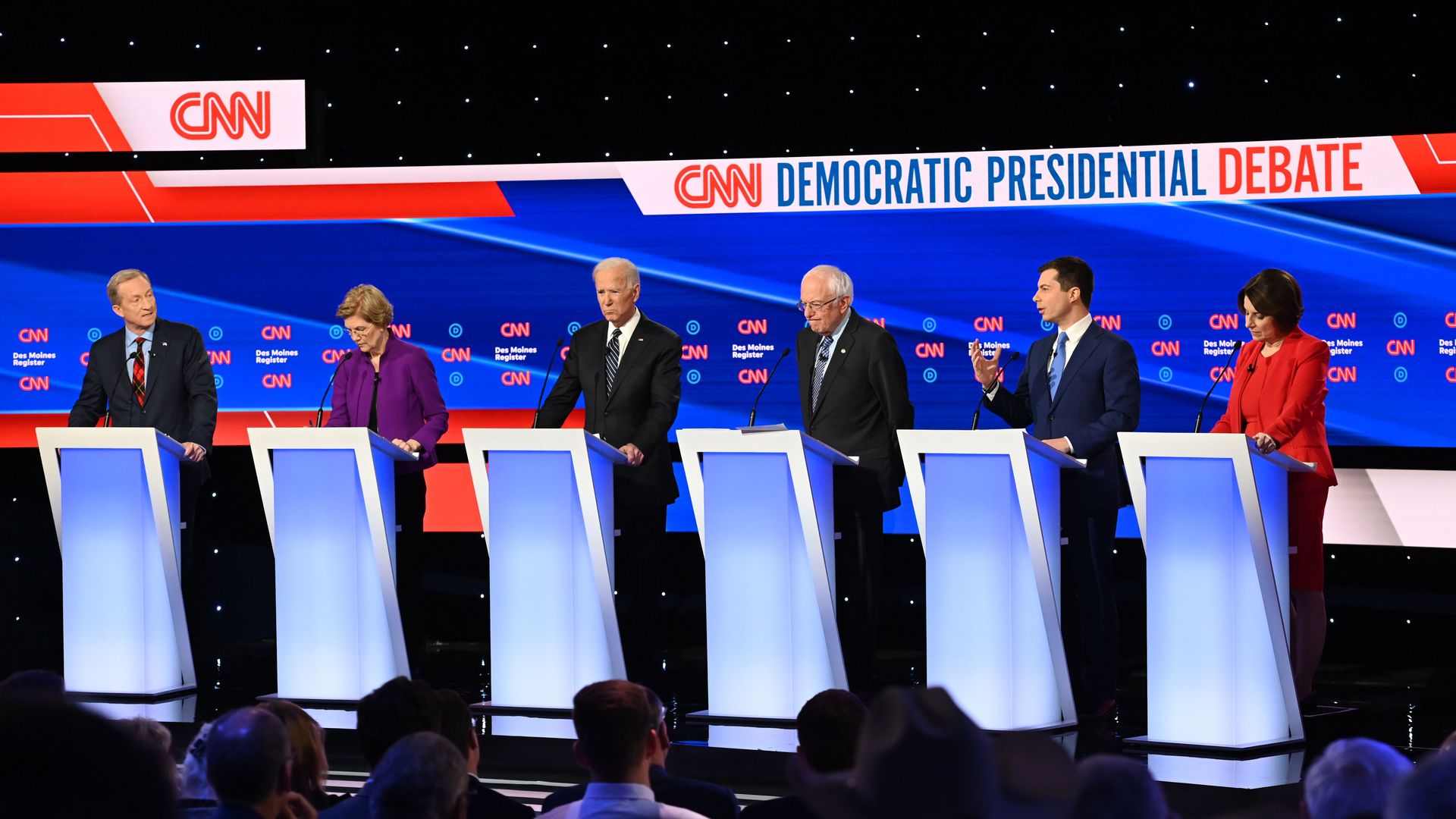
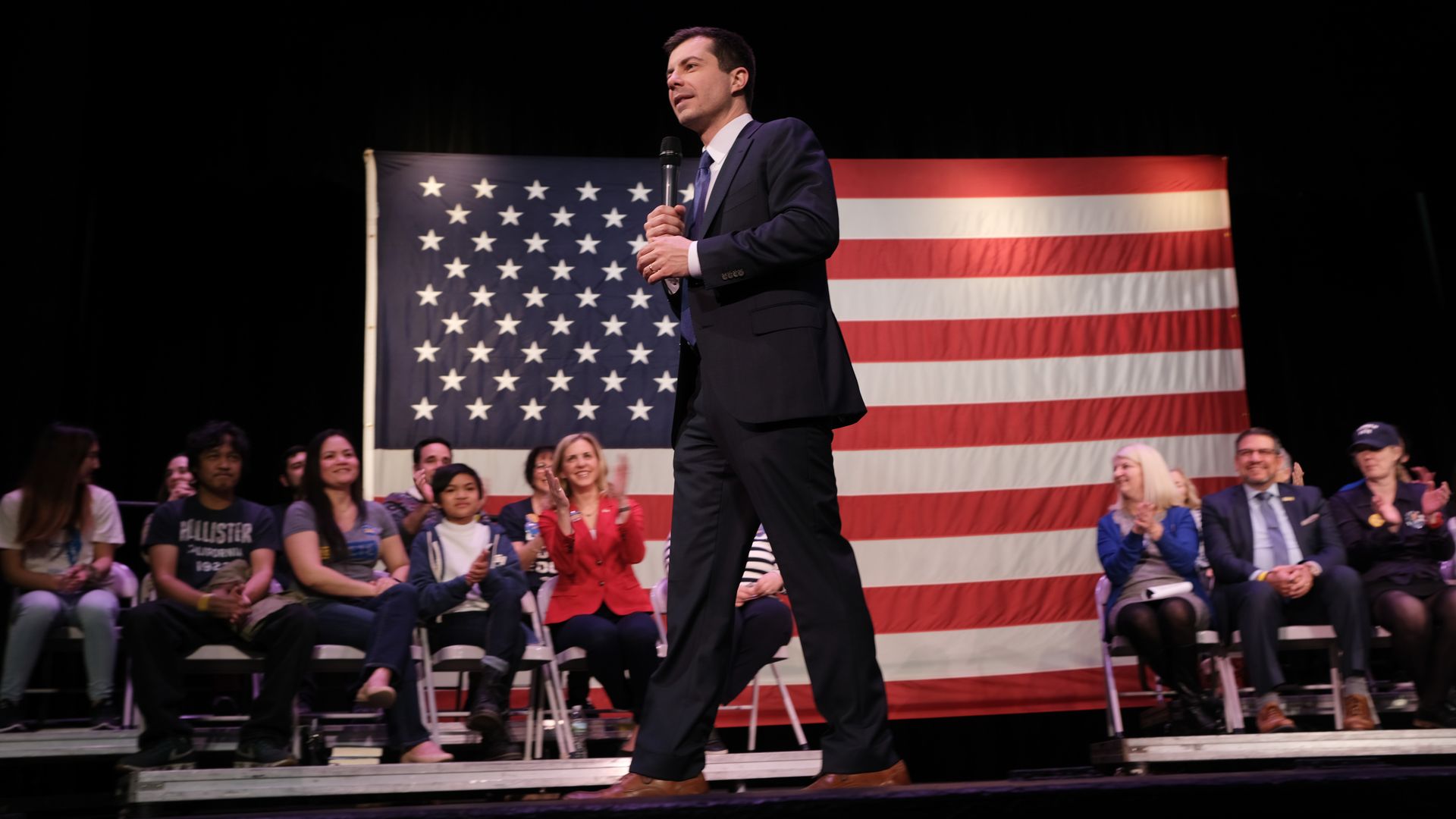
Pete Buttigieg sees a moment to overtake Joe Biden with an electability message after the scrambled Iowa results left some top Biden supporters distraught.
If the partial results released yesterday by the Iowa Democratic Party had been trumpeted Monday night instead of being delayed by the app snafu, Buttigieg would have been a national sensation.
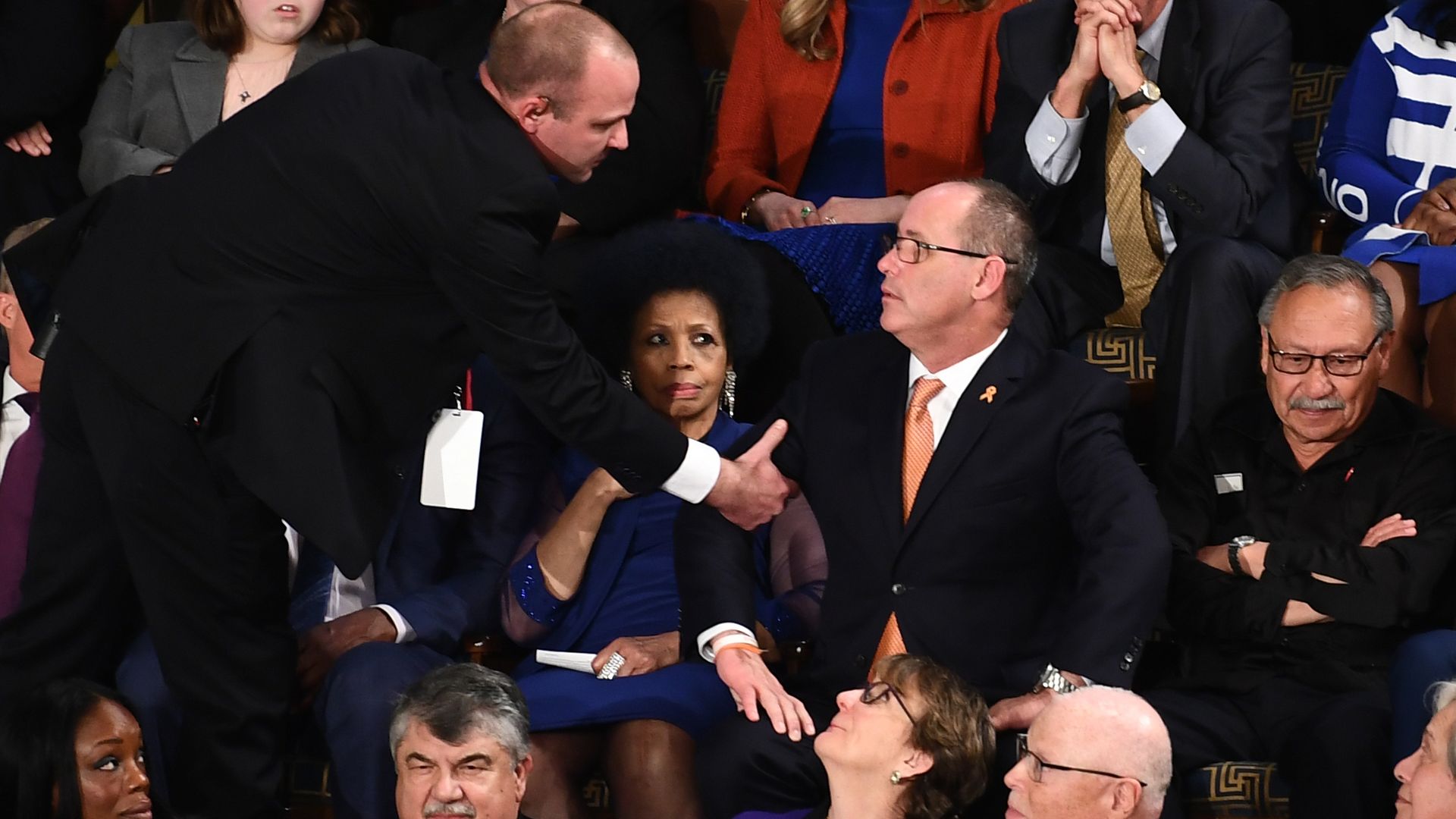
Fred Guttenberg, a gun control activist whose daughter died during the 2018 Parkland mass shooting, has spoken about being ejected from the gallery during President Trump's State of the Union address Tuesday.
The big picture: Guttenberg, who was a guest of House Speaker Nancy Pelosi, was removed by security after yelling "What about my daughter!" as Trump spoke about protecting the Second Amendment, per Newsweek. Guttenberg tweeted that it was a "rough night."
President Trump delivered his State of the Union address during what was an eventful night at the Capitol on Tuesday.
Details: From Trump appearing to snub House Speaker Nancy Pelosi's handshake before his address, to special guests appearances and Pelosi ripping up her copy of the president's speech at the end — here's how all the drama unfolded, in photos.
An impeached President Trump struck a defiant and hyperbolic tone in his third State of the Union address on Tuesday night, a day before he's set to be acquitted by the Senate.
Inside the room: Tension permeated the House chamber from the outset. Trump snubbed a handshake from Speaker Nancy Pelosi, only to be met with a retaliatory slight of his own when Pelosi failed to apply the honorific language typically used to introduce presidents at joint sessions of Congress.
House Speaker Nancy Pelosi tore up her copy of President Trump's State of the Union address on Tuesday, after sitting through an hour of the president's address on topics ranging from immigration to economic growth.
Democratic National Committee chair Tom Perez called Tuesday for the vote-tallying app that delayed results from Iowa's caucuses to "provide absolute transparent accounting of what went wrong."
The big picture: The Iowa Democratic Party has released results from 62% of the precincts that caucused on Monday, after a software error held up results from the first real test of candidates' appeal to voters in the 2020 presidential election.
President Trump gave talk show host Rush Limbaugh a Presidential Medal of Freedom at the State of the Union on Tuesday, just hours after it was announced that he'd be a recipient.
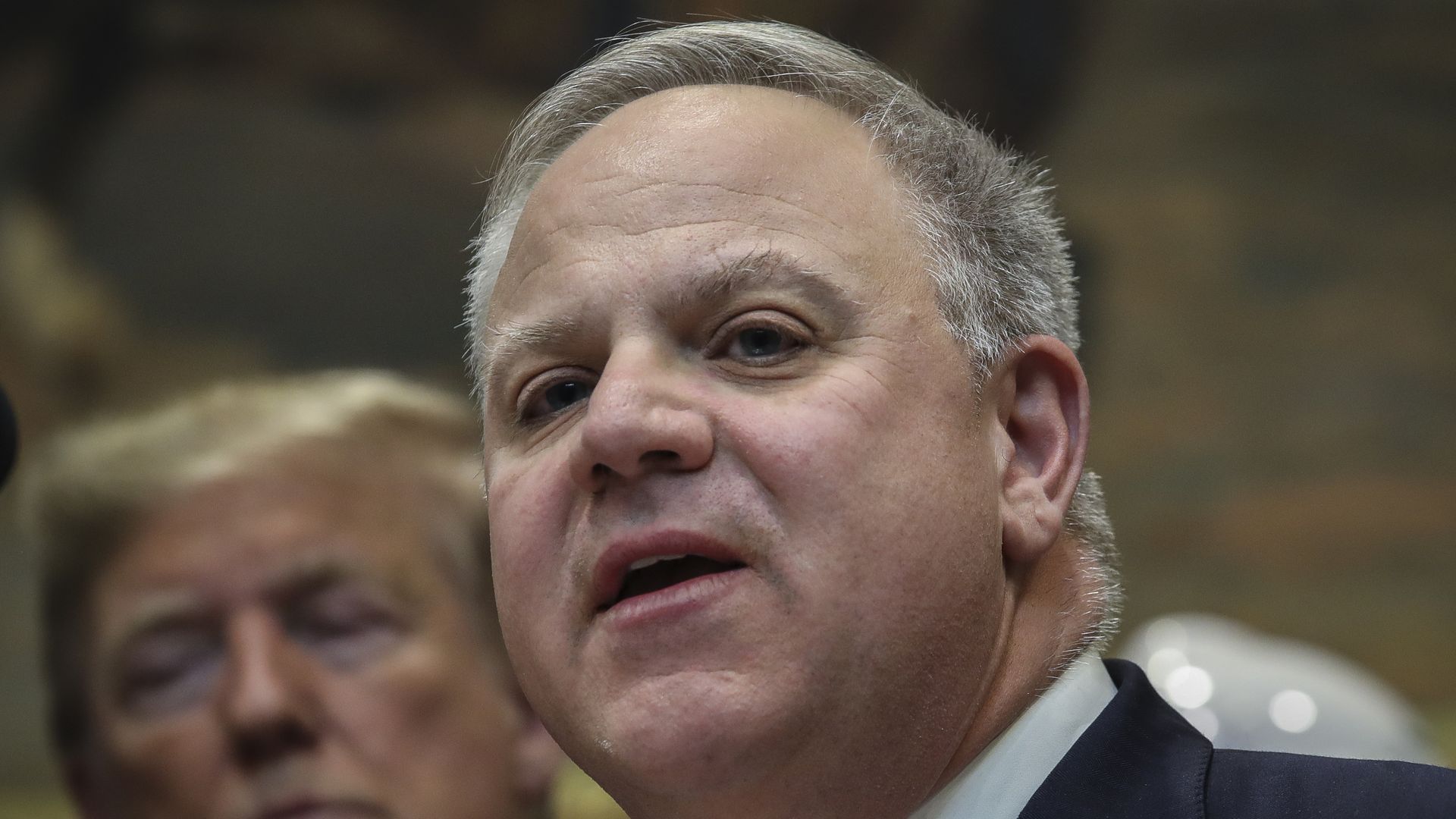
Interior Secretary David Bernhardt was named the designated survivor for this year's State of the Union address, according to the White House pool report.
What it means: Bernhardt is at a secure, undisclosed location throughout the evening and is the administration official in the line of succession who would assume the presidency in the unlikely case of disaster taking out the leaders assembled for President Trump's address.
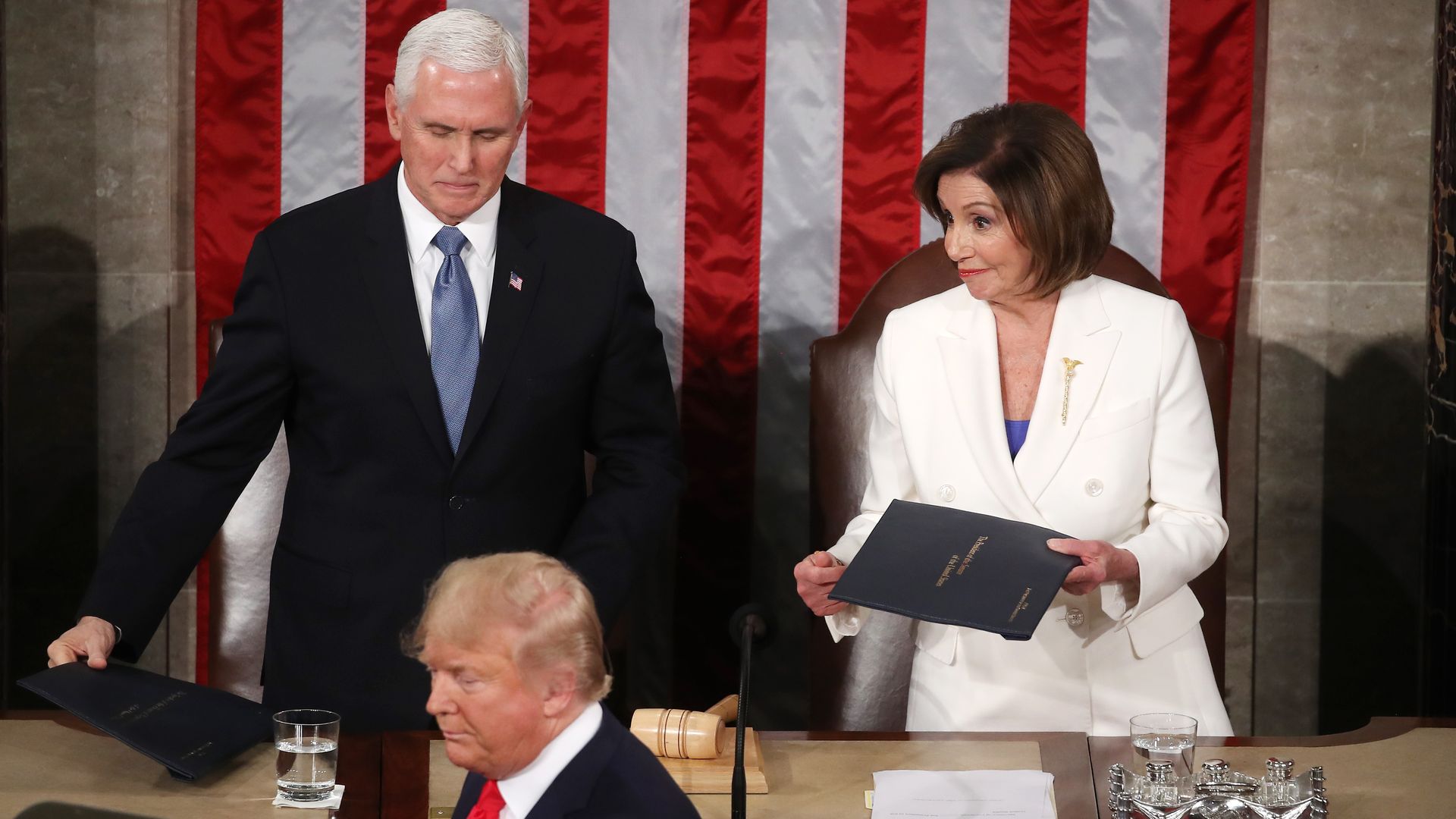
President Trump snubbed House Speaker Nancy Pelosi's handshake as he took the stage at the State of the Union address Tuesday.
The other side: Pelosi snubbed Trump back, introducing him only with the lead: "The President of the United States."
A speaker would have usually used the language: "I have the high privilege and distinct honor of presenting to you the President of the United States."
Senators spent Tuesday debating the articles of impeachment against President Trump ahead of the trial's resumption on Wednesday, when the chamber is expected to vote to acquit.
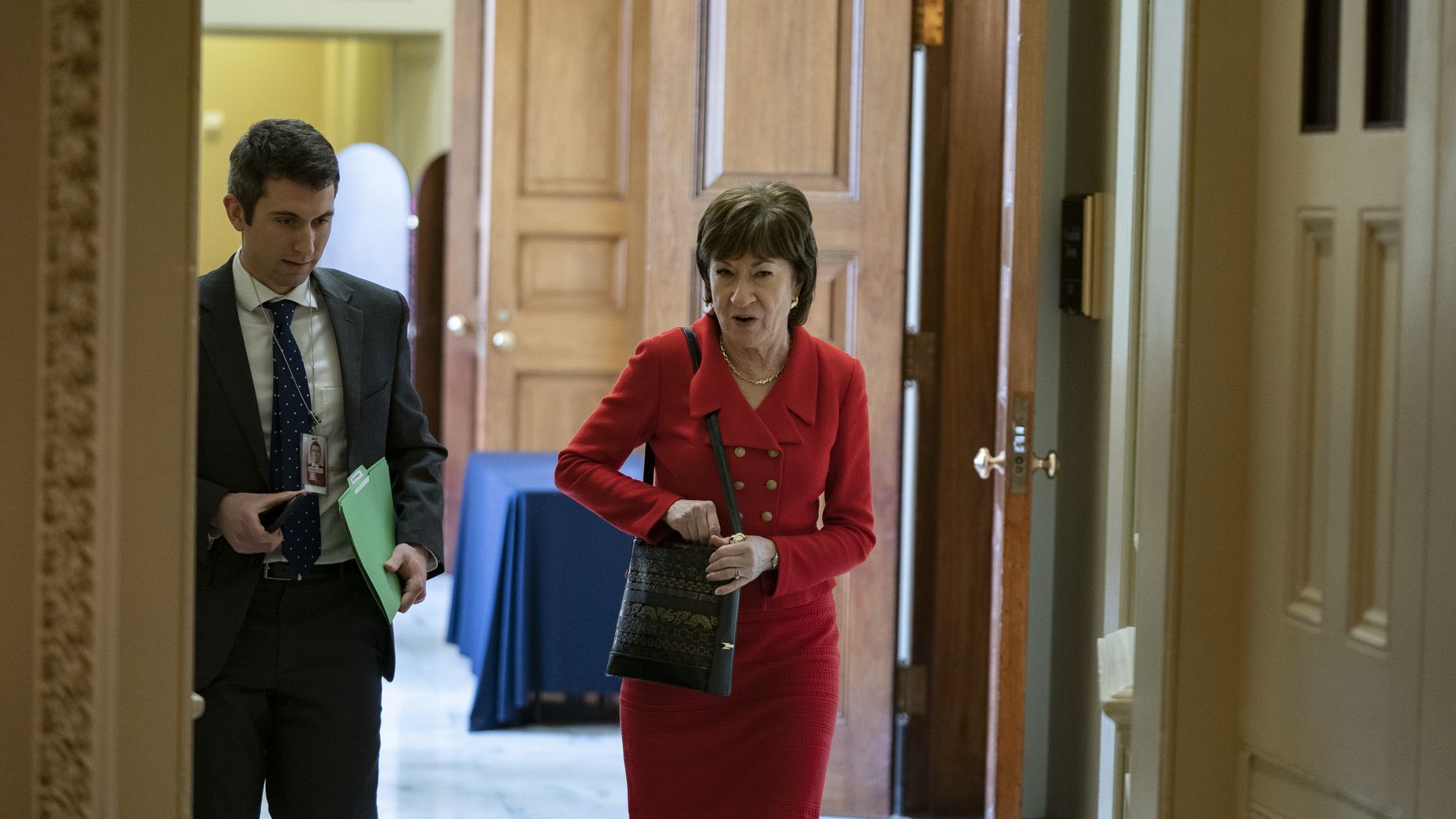
The big picture: Sen. Susan Collins (R-Maine) joined Sen. Lisa Murkowski (R-Alaska) in condemning Trump's conduct toward Ukraine as "inappropriate," but ultimately said she would vote to acquit. Sen. Mitt Romney, who along with Collins was one of two Republicans to vote in favor of witnesses, is the Democrats' last chance for a bipartisan conviction vote.
President Trump will give his third State of the Union address tonight at 9 p.m. ET, seven weeks after he was impeached by the House of Representatives and one day before he's set to be acquitted by the Senate.
Why it matters: The president typically strikes a more measured tone during formal, teleprompter-guided speeches like the State of the Union, but all bets could be off as an emboldened Trump looks ahead to a scorched earth election campaign.
The Green New Deal resolution, introduced in February by Rep. Alexandria Ocasio-Cortez (D-N.Y.) and Sen. Ed Markey (D-Mass.), has helped cement climate change as a real topic in the 2020 presidential race.
What's happening: More Democratic candidates have pitched climate change policy that goes beyond the Green New Deal, largely to prepare for events like CNN's "climate crisis" town hall. The GND — which is more of a call to arms than a strict policy proposal — outlines a 10-year mobilization plan to move the country toward a 100% carbon-free power system and a decarbonized economy.