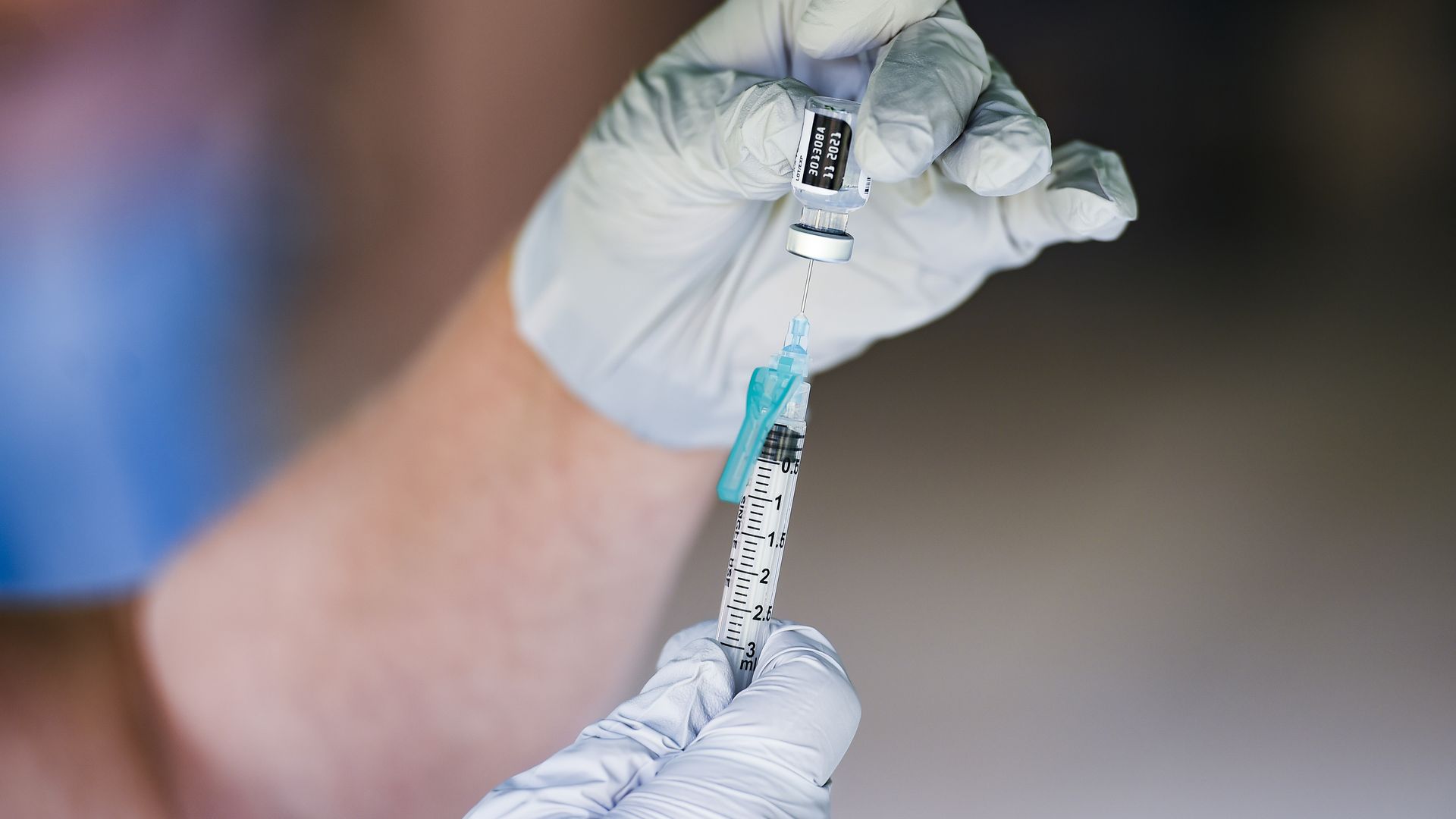
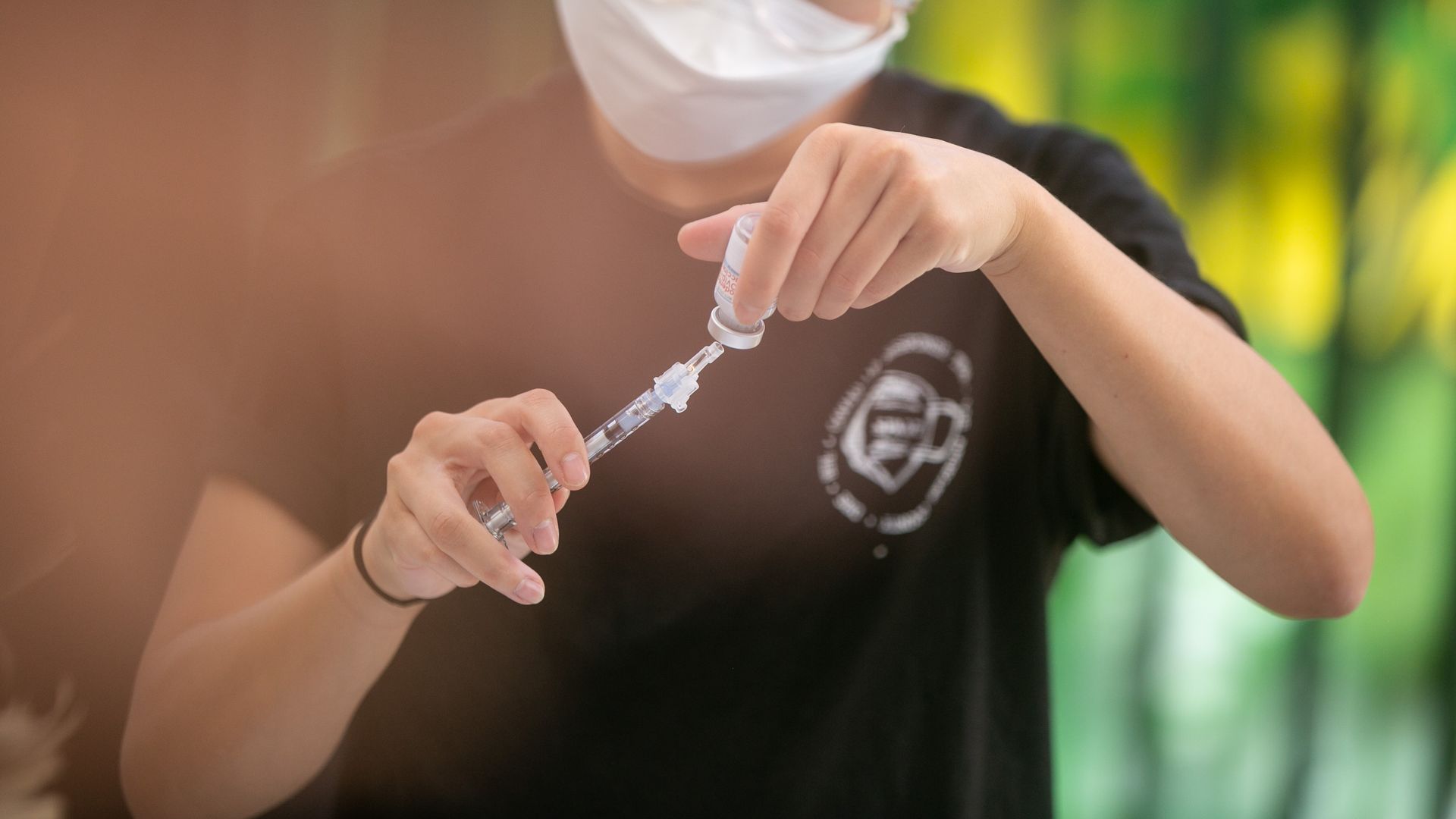
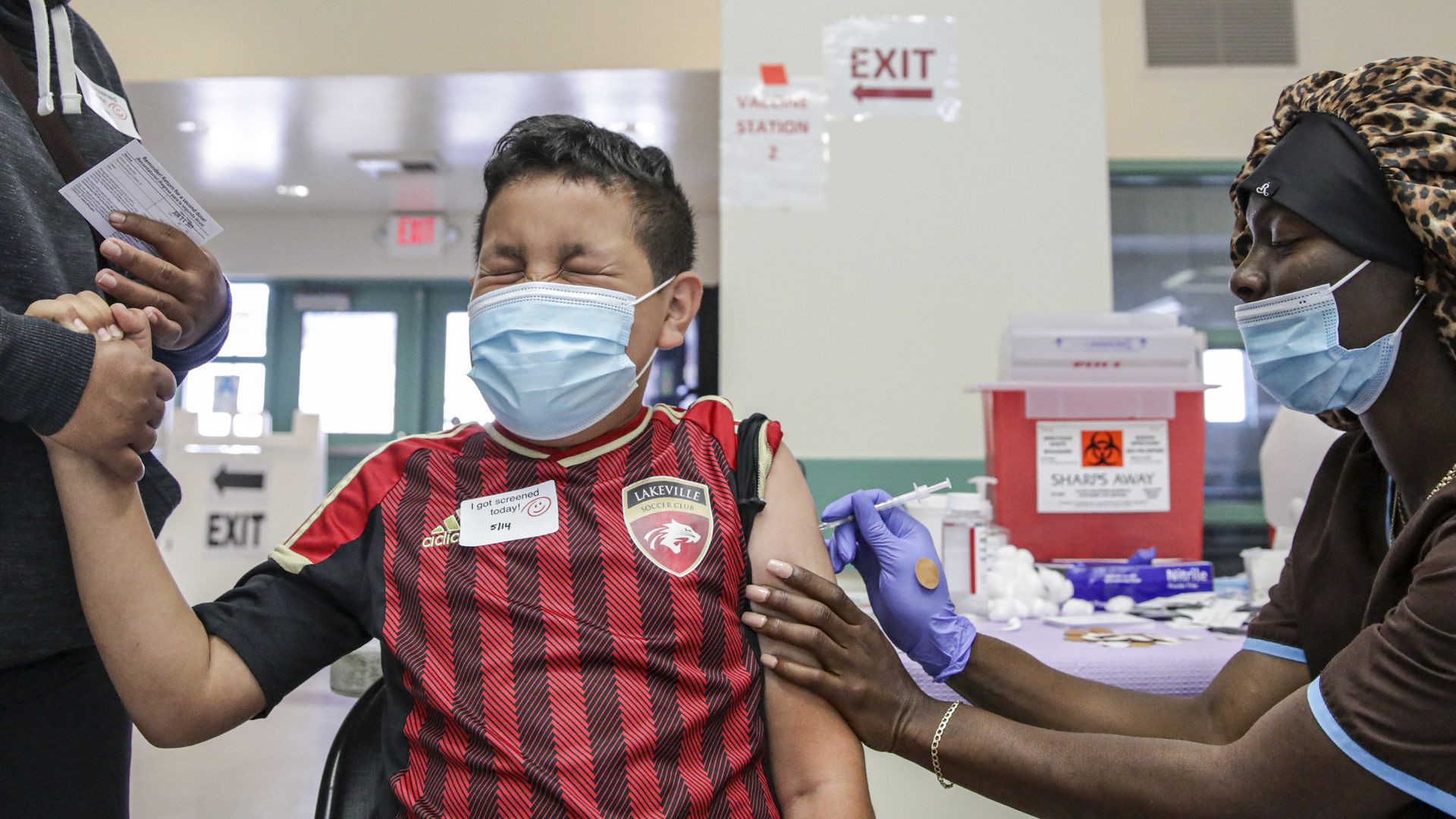
The CDC issued "an urgent health advisory" on Wednesday urging people who are pregnant or planning to become pregnant to get the COVID-19 vaccine.
Why it matters: The CDC said it "strongly recommends" vaccination because its benefits for a pregnant person and the fetus outweigh the risks. It added that pregnant people with COVID-19 are at "increased risk" of outcomes such as preterm birth, stillbirth and admission of a newborn into the ICU.
While the U.S. is inching toward expanding COVID-19 vaccines to kids younger than 11, many parents may not be eager to take advantage of them, according to the latest installment of the Axios/Ipsos Coronavirus Index.
By the numbers: 44% of parents with kids between ages 5 and 11 said they are likely or somewhat likely to get their children vaccinated, compared with 42% who said they're unlikely to.
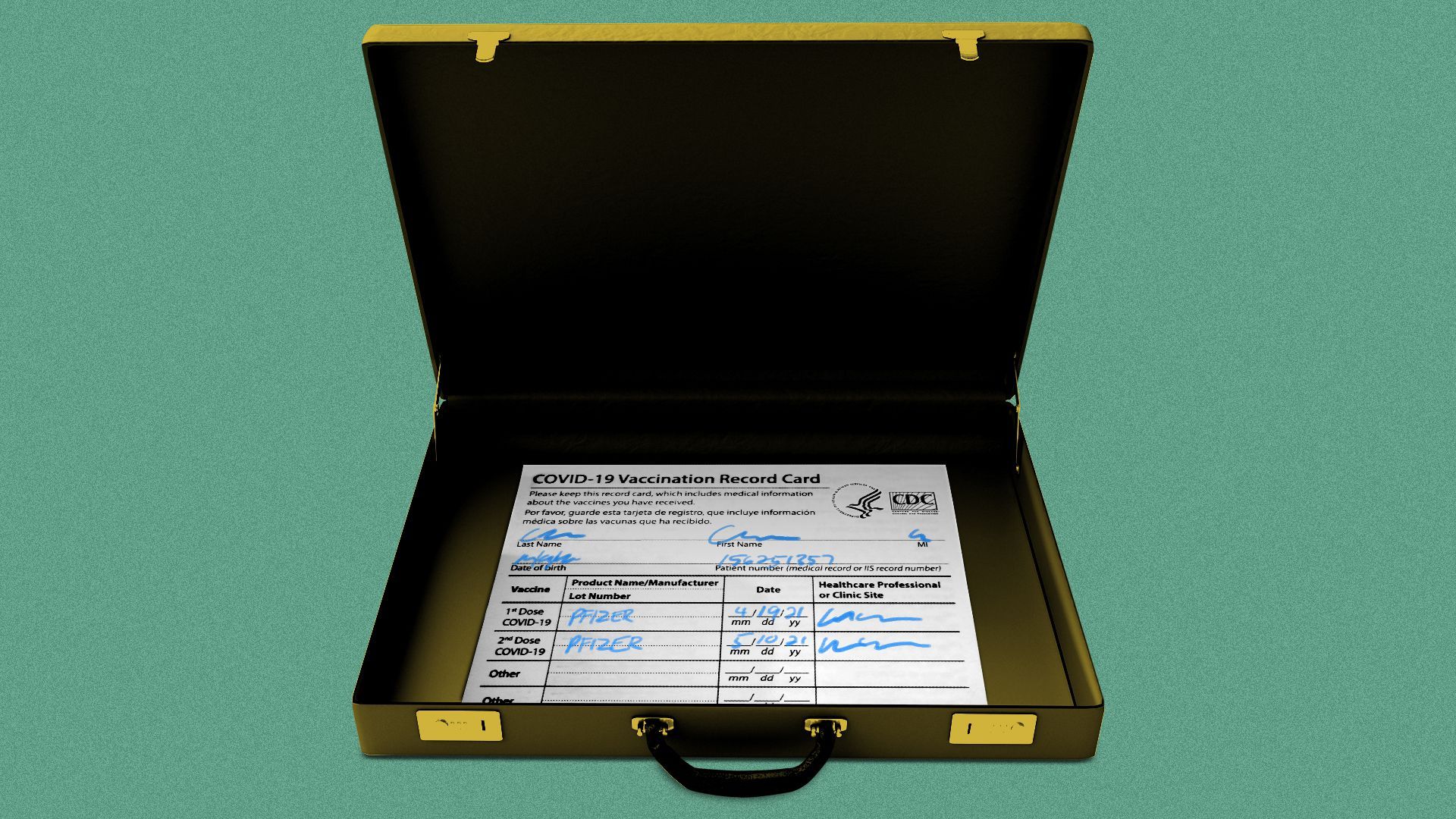
Job postings requiring employees to get vaccinated before applying are on the rise, and more and more firms say they'll terminate existing employees who refuse to get the jab.
Why it matters: Corporate America is playing a key role in upping the U.S. vaccination rate. It'll get harder for those who are hesitant to avoid the shot as vaccination status becomes increasingly linked to livelihood.
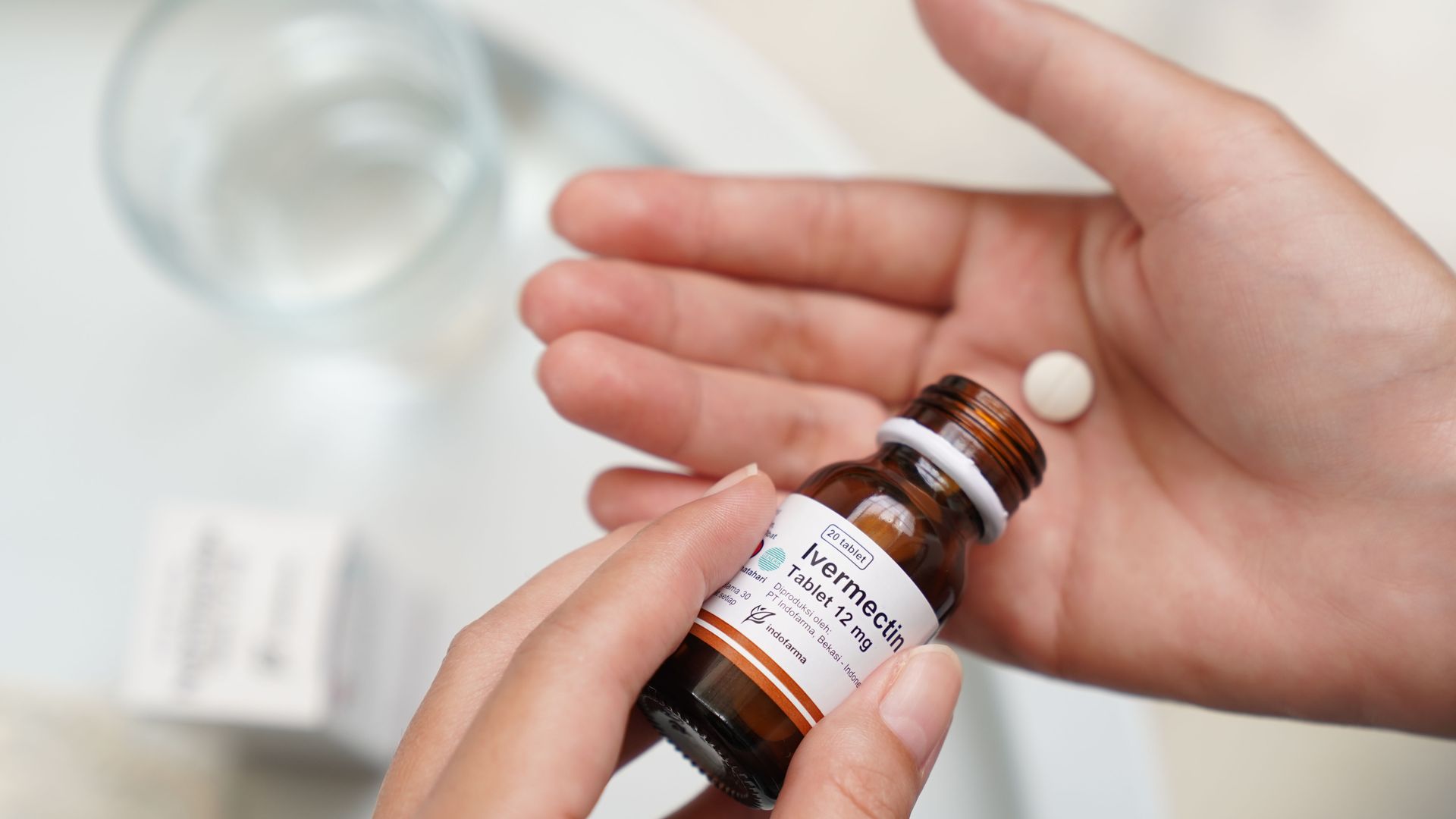
Prescriptions for Ivermectin soared more than 70% between 2019 and the beginning of 2021, according to insurance claim data compiled by Komodo Health.
Why it matters: Ivermectin — which has some dermatological uses in humans but is mostly for veterinary purposes — has not been shown to be at all effective against COVID, yet its use has soared, fueled in part by rampant misinformation.
As Democrats grapple with if and how to trim the health care components of their reconciliation bill, they have two options: to slash the value or longevity of the benefits they've proposed, or force other industries to pay up.
Why it matters: Democrats' original plan involved picking a fight exclusively with the pharmaceutical industry. But the more ground pharma gains, the more incentive Democrats will have to attract the ire of other powerful industry groups— or to forego major policy priorities.
A federal judge on Tuesday temporarily blocked South Carolina's ban on mask mandates in schools, ruling that it discriminated against students with disabilities and violated the Americans with Disabilities Act.
Why it matters: As mask bans extend to public schools around the country, parents and disability rights activists have sounded alarm bells. The ruling may signal the outcomes of legal fights playing out across the country.
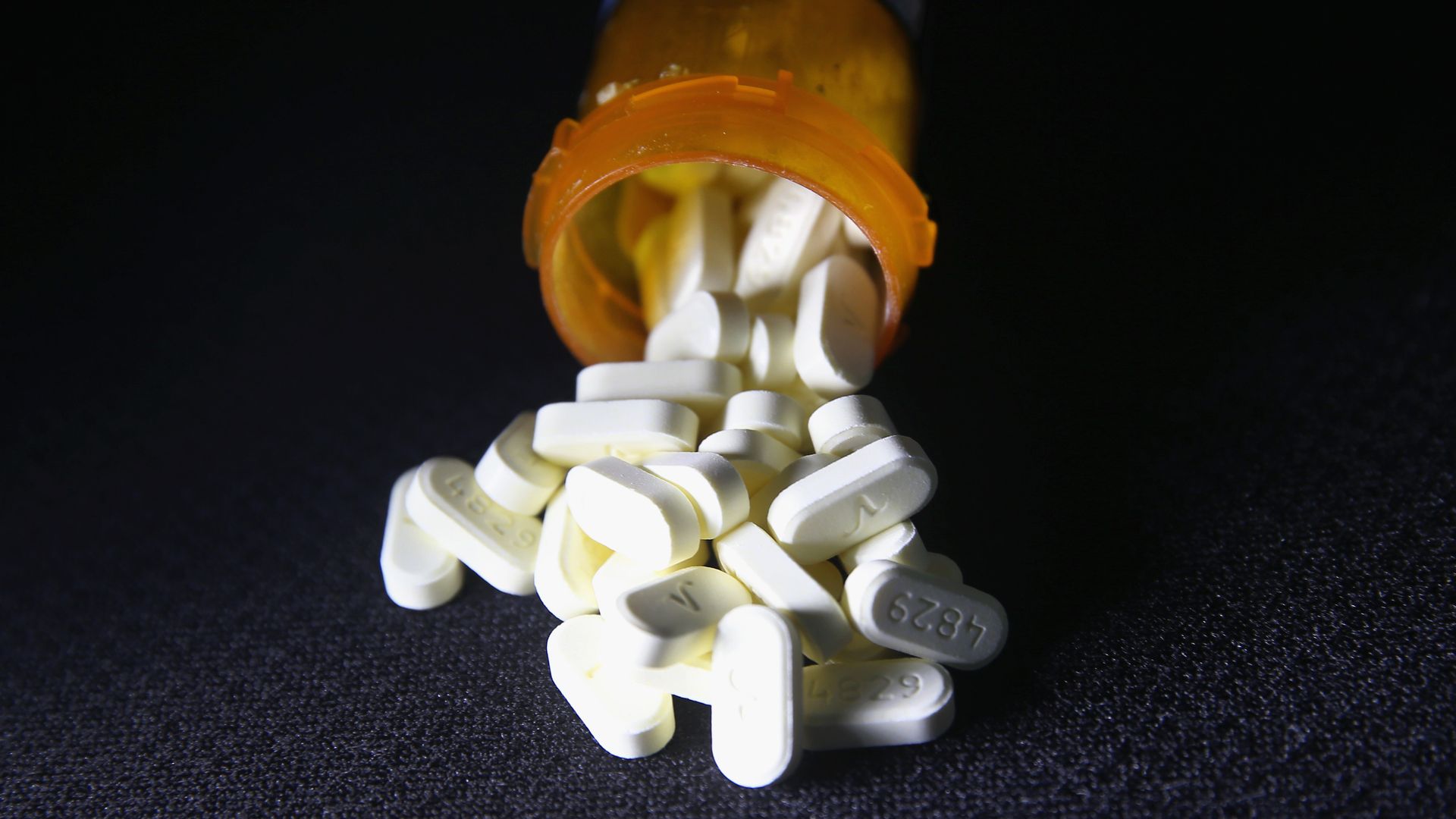
The nation's three largest drug distributors reached a $75 million settlement agreement Tuesday with the Cherokee Nation to resolve a lawsuit alleging the companies contributed to an opioid crisis in the tribe's territory.
Why it matters: This comes after the three distributors — AmerisourceBergen, Cardinal Health and McKesson — and Johnson & Johnson reached a $26 billion settlement with a group of state attorney generals to settle similar claims, but it did not include any of the nation's Native American tribes.
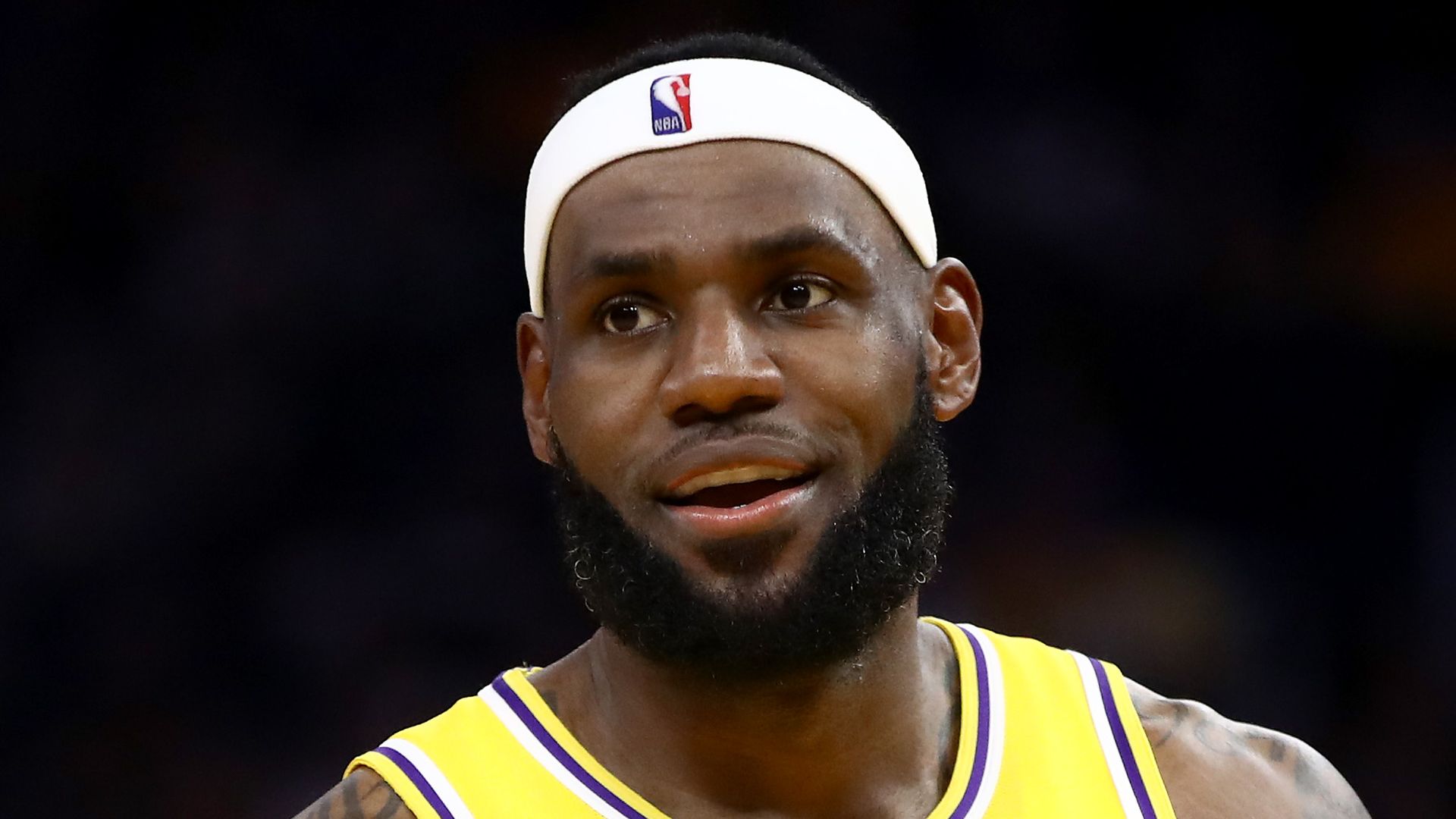
NBA star LeBron James confirmed Tuesday that he has been vaccinated against COVID-19 as the league prepares for the start of the 2021-22 season next month.
The big picture: Over 90% of NBA players are fully vaccinated, the National Basketball Players Association executive director Michele Roberts said in a statement Tuesday.
The Vatican City State said Tuesday that it will require all employees to provide proof of vaccination or documentation of a recent negative COVID test, the Washington Post reports.
Hepatitis B and C found a foe in biotech and medical researchers spearheaded or funded by a Chilean biochemist.
Why it matters: The work and research fostered by Pablo D. Valenzuela led to a groundbreaking vaccine-making technique and the treatment of those with hepatitis B or C, which each affect more than 1.5 million people worldwide every year, according the World Health Organization.
Pfizer and BioNTech on Tuesday submitted initial data on their coronavirus vaccine for children aged 5 to 11 to the U.S. Food and Drug Administration.
Why it matters: Since the start of the school year, coronavirus infections among children have been increasing. Pediatric hospitals called for federal help earlier this month, warning that "there may not be sufficient bed capacity," per NPR.
The Japanese government announced Tuesday that the country's coronavirus state of emergency will end this week.
State of play: Japanese economic minister Yasutoshi Nishimura said "[m]easures will be gradually eased out to prevent early re-infection." Prime Minister Yoshihide Suga said restrictions will end to allow people "to resume daily lives," adding that vaccination efforts will continue to prepare for a future virus resurgence, per AP.
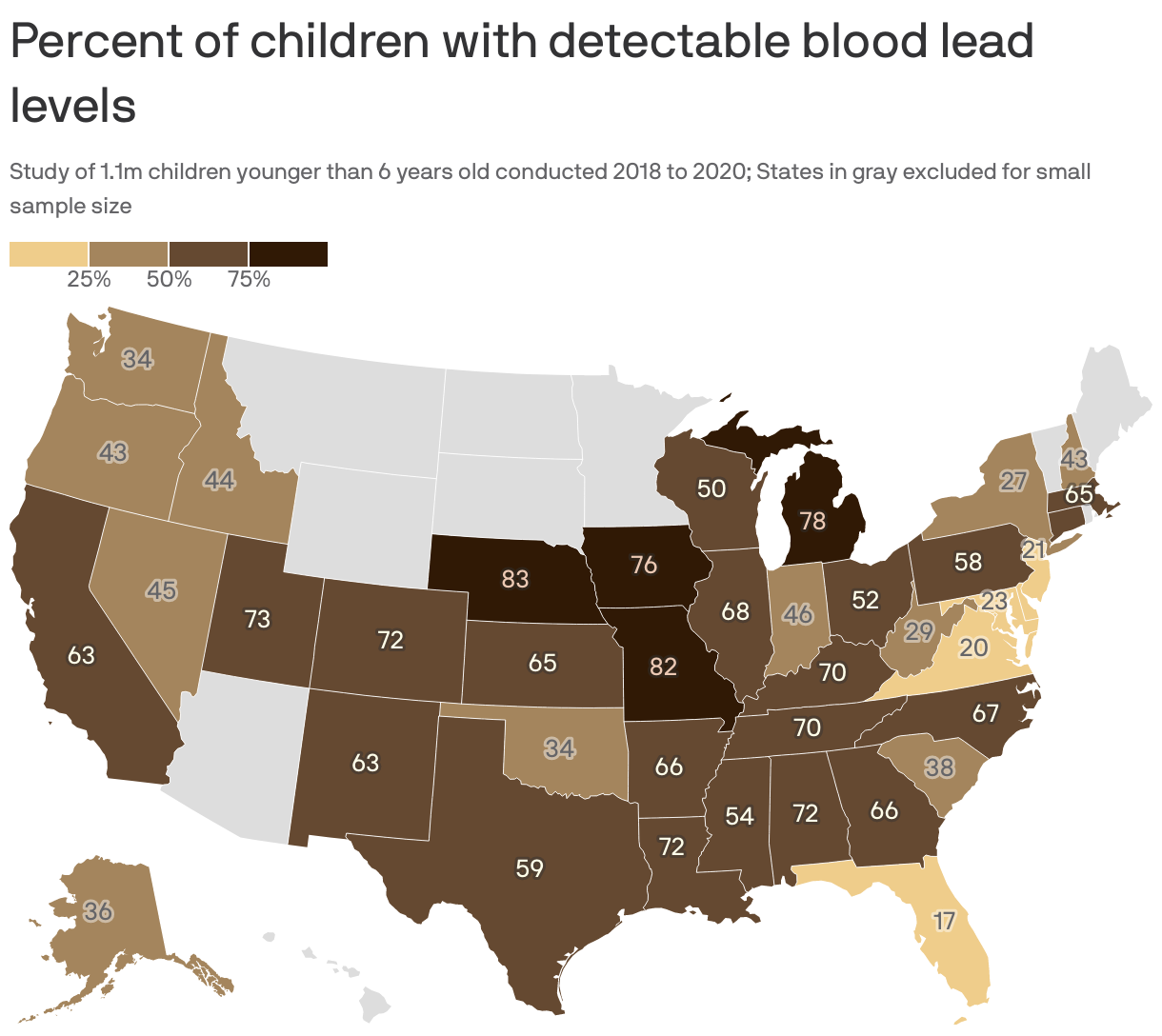
Reproduced from JAMA Pediatrics; Map: Axios Visuals
More than half of children under 6 years old in the U.S. had detectable lead levels in their blood, with exposures much higher from children in communities with pre-1950s housing or with public insurance or high poverty rates, a new study found.
Why it matters: The study, published in the peer-reviewed JAMA Pediatrics on Monday, is the first known national analysis investigating the "association of lead exposure with individual- and community-level factors."
Hospitals saw a lot fewer patients and yet a lot more death in the early part of the pandemic, according to new federal data.
The big picture: Hospitals called off less-urgent procedures to keep beds open for COVID-19 patients, but health care workers dealt with tidal waves of death from a dangerous virus that was running rampant — similar to what some areas are experiencing all over again.
For the first time in his presidency, Joe Biden faces a trust deficit among Americans when it comes to COVID-19, according to the latest installment of the Axios/Ipsos Coronavirus Index.
Why it matters: The latest findings point to malaise more than fear. But malaise could spell real trouble for a Democratic president who built his support on a pledge to steer the nation out of crisis — and whose party's bare House and Senate majorities are on the line in 2022.
Some have interpreted Gov. Gavin Newsom's win in the California recall election as a mandate for Democrats to go strong on COVID in their election campaigns.
The big picture: Supporting COVID measures to protect the public is the right stance for any elected official regardless of how the votes may fall.
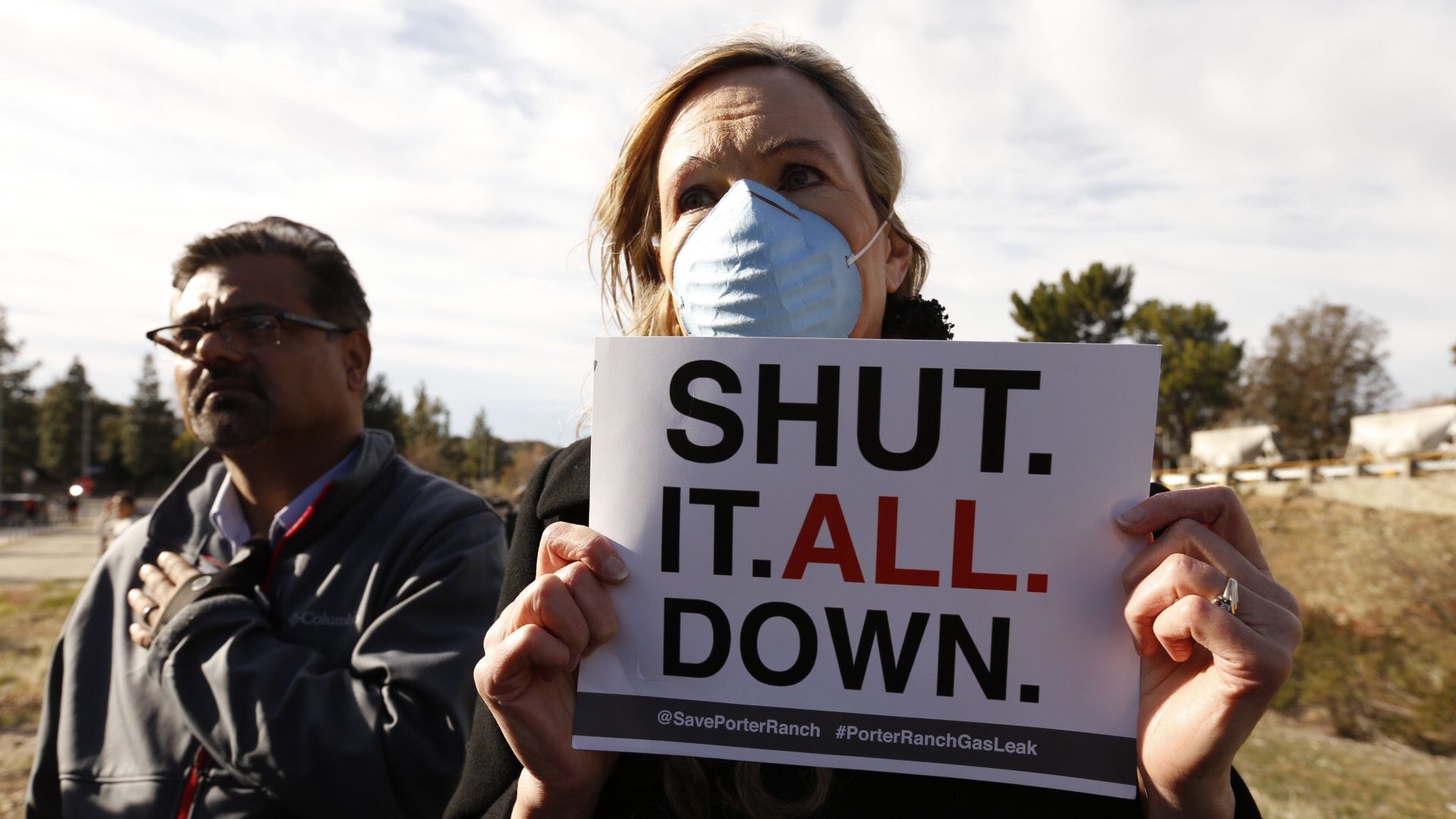
Southern California Gas and its parent company announced Monday they've agreed to pay up to $1.8 billion in settlement claims over the 2015 Aliso Canyon natural gas storage facility blowout.
Why it matters: Some 100,000 tons of methane, ethane and toxic chemicals poured into the air for 112 days, forcing over 8,000 families to evacuate from their Los Angeles-area homes and sickening many with headaches, nausea and nosebleeds, per the L.A. Times.
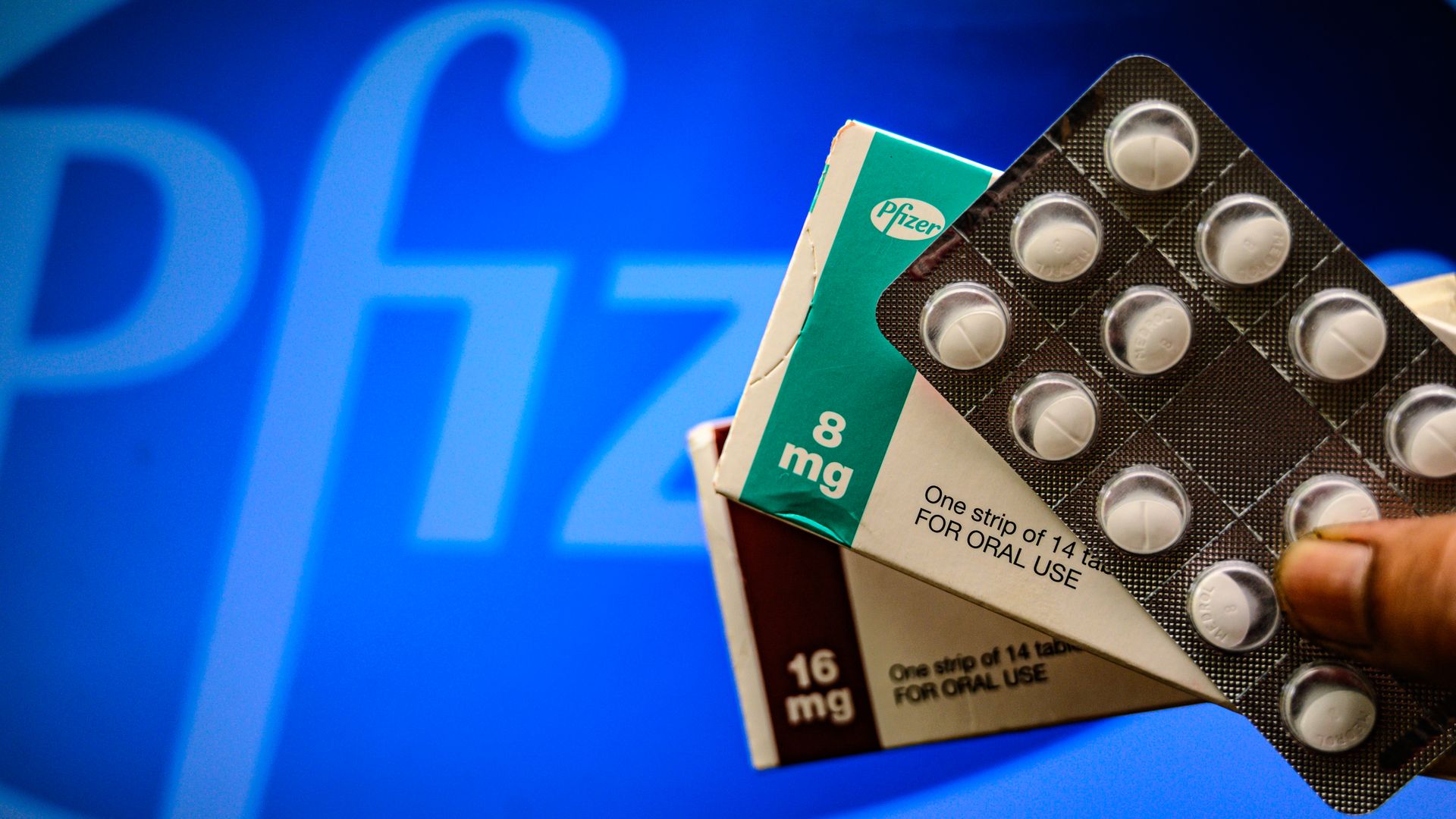
Pfizer announced Monday that it is testing an oral antiviral drug that would help prevent COVID-19.
Why it matters: This drug is one of several antiviral pills that could have a massive impact on coronavirus treatment since not everyone will get a vaccine, and it may take years to fully vaccinate people in certain countries, per Axios' Alison Snyder.