135 million people globally were affected by acute malnutrition in 2019, the United Nations' food agency said in a report released Monday — the most since the agency was formed four years ago.
Driving the news: The planet is “on the brink of a hunger pandemic" as it grapples with the coronavirus outbreak, David Beasley, chief of the UN's World Food Program told the UN Security Council Tuesday, AP reports.
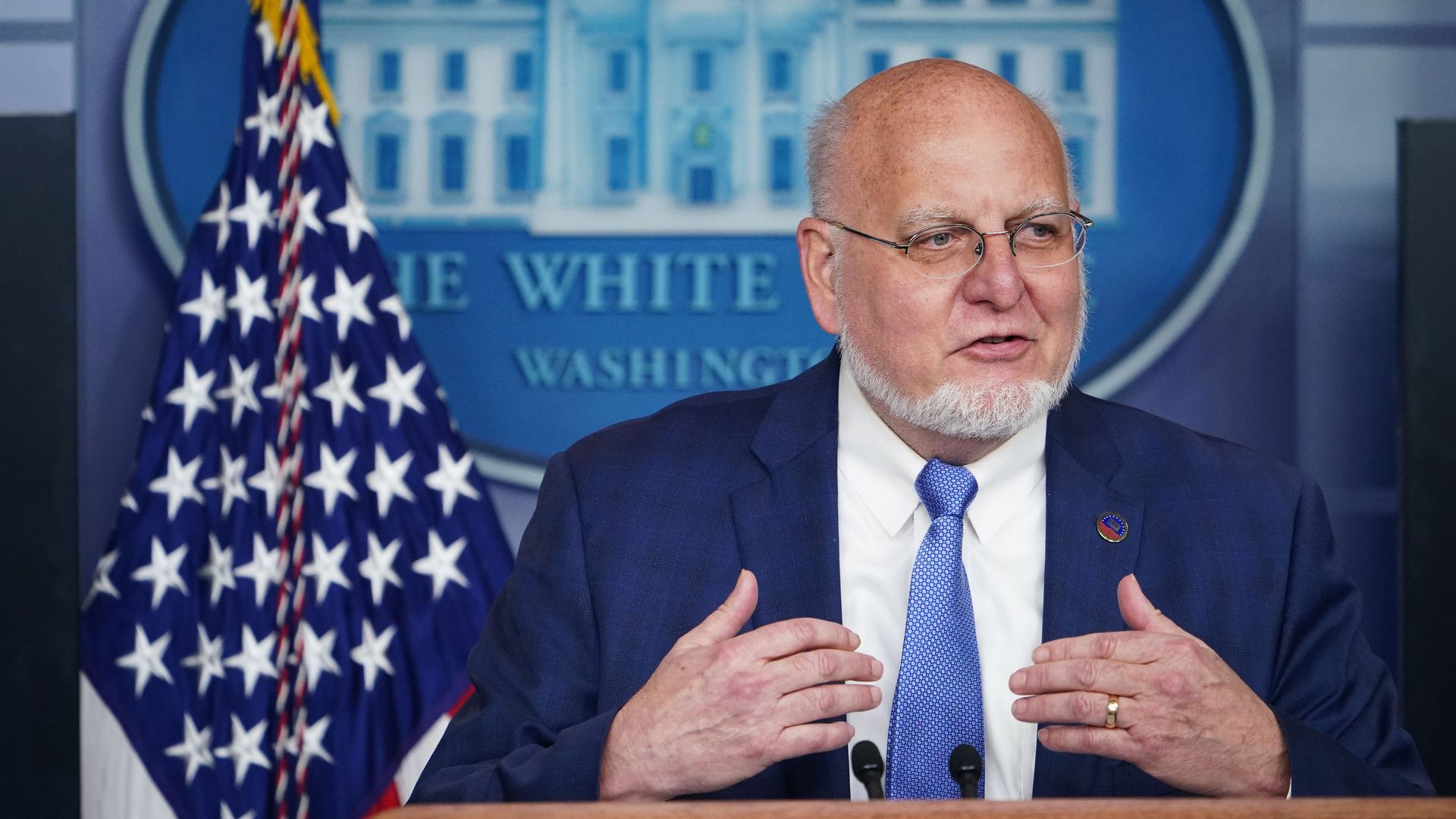
Centers for Disease Control and Prevention director Robert Redfield warned in an interview with the Washington Post Tuesday that the second wave of the coronavirus this winter could be even more deadly due to its alignment with the start of flu season.
Why it matters: Redfield urged state and federal officials to use this time to prepare by ramping up testing capacity and contact tracing. He also stressed the need for Americans to understand the importance of social distancing as states lift stay-at-home orders, calling protests against the restrictions "not helpful."
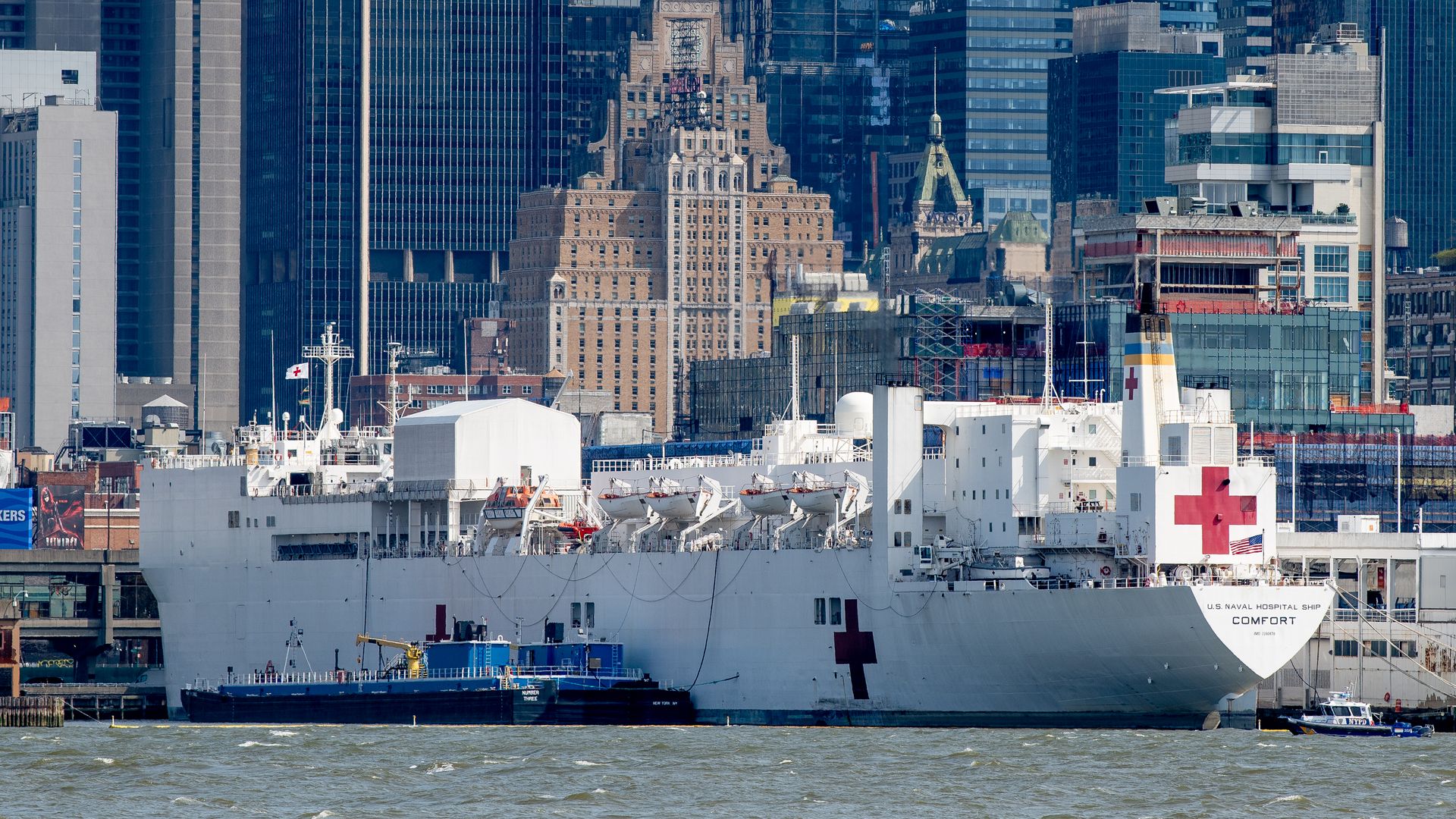
New York Gov. Andrew Cuomo said on MSNBC Tuesday that New York City no longer needs the Navy ship USNS Comfort to combat the coronavirus pandemic.
The big picture: The state, which has the most cases and deaths in the U.S., has seen a downward trend of daily hospitalizations, intubations and now deaths, a sign its social distancing measures are working. The ship provided nearly 1,000 extra beds to relieve the strain on the health care system.
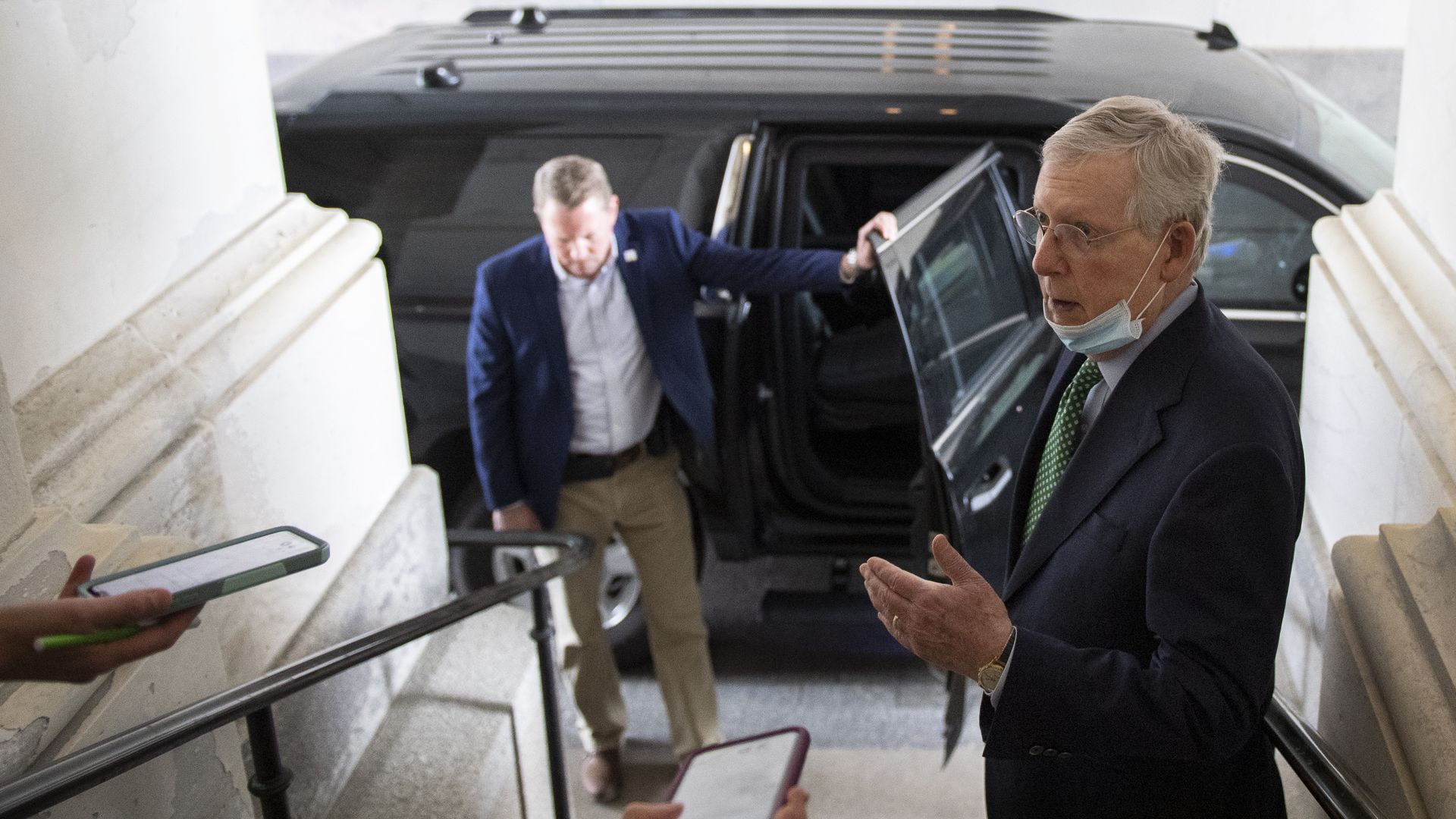
The Senate passed a $484 billion interim coronavirus funding bill via voice vote on Tuesday after more than a week of intense negotiations between the Trump administration and Congress.
Why it matters: The agreement will replenish the Paycheck Protection Program (PPP), the stimulus bill's emergency loan program for small businesses, and provide billions for hospitals and expanded coronavirus testing.
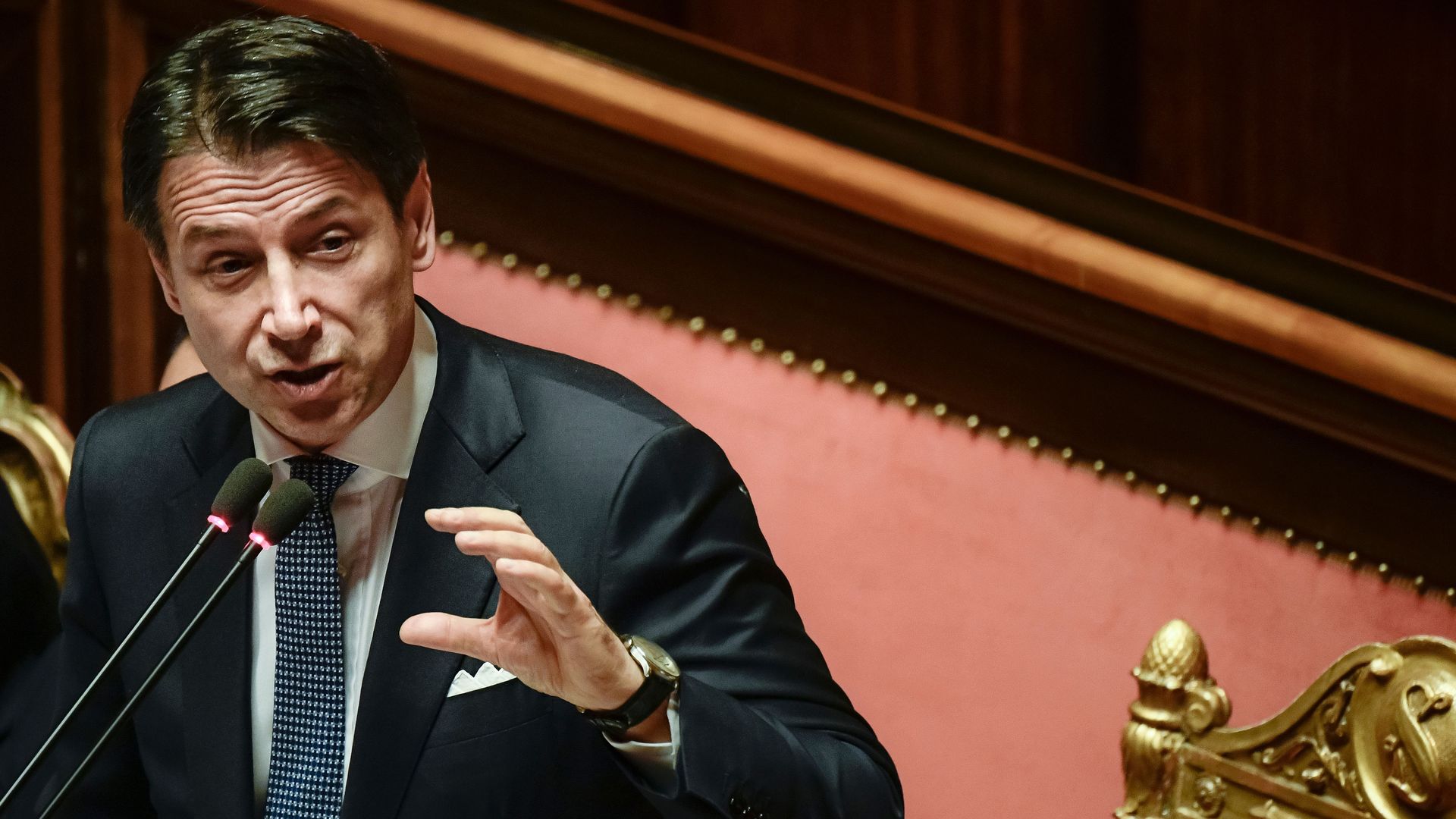
Guidelines to cautiously reopen parts of Italy will likely be applied starting May 4, Italian Prime Minister Giuseppe Conte said Tuesday in a Facebook post.
A panel of experts organized by the National Institutes of Health on Tuesday announced a "living document" of guidelines regarding treatment options for the coronavirus, but warned that the public should be wary of any informal studies touting these medicines.
The big picture: The guidelines will be updated as new information emerges from peer-reviewed scientific literature and other authoritative sources. Antivirals like hydroxychloroquineand Gilead's remdesivir, as well as immunotherapies like the transfer of plasma from former patients, are among the options under investigation.
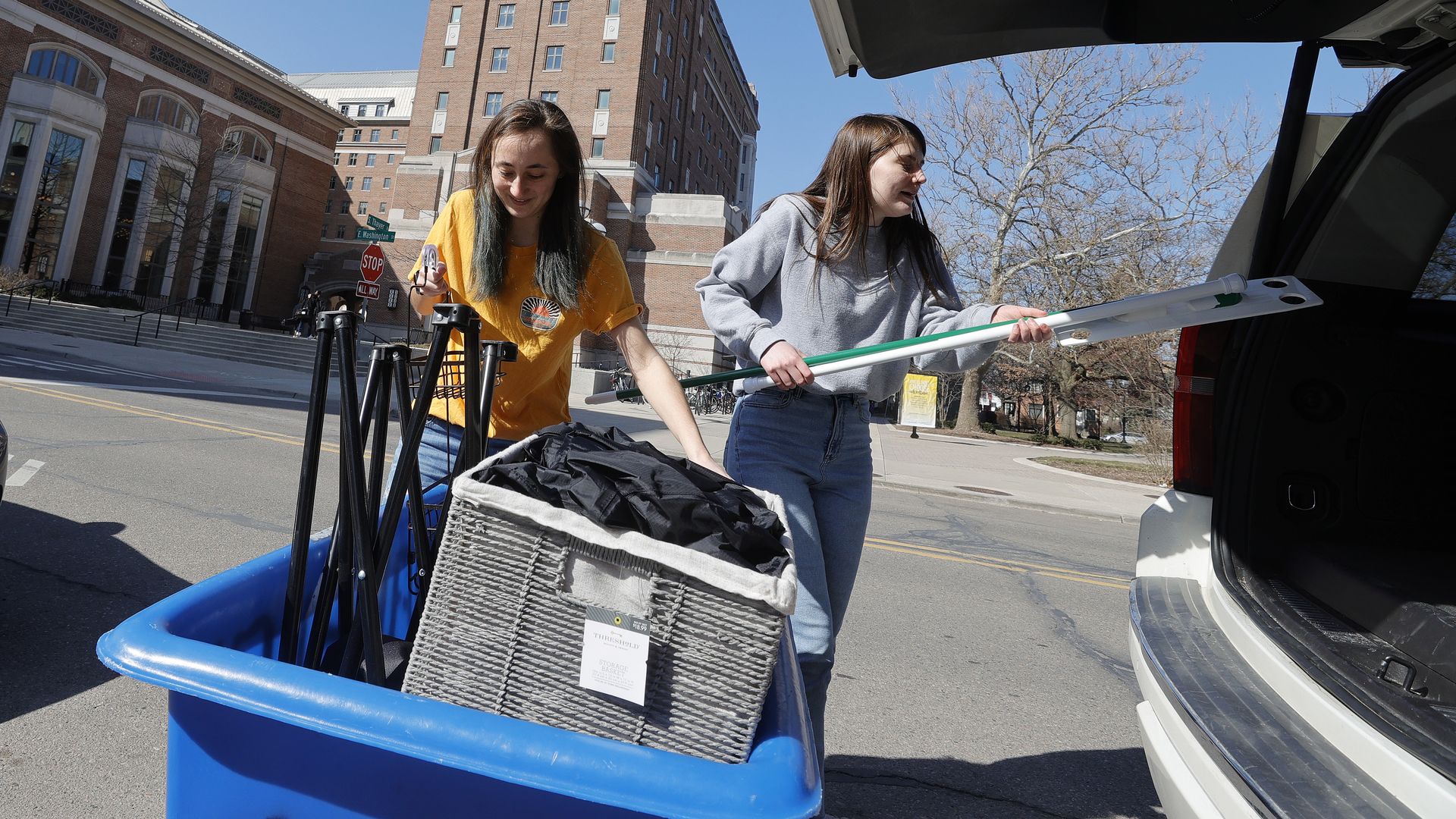
Universities across the U.S. are predicting massive revenue losses as uncertainty looms over whether it will be safe enough for students, staff and faculty to return to campus in the fall.
Why it matters: A number of colleges will furlough and lay off workers to offset budget cuts and operating costs amid the coronavirus pandemic.
Germany's Oktoberfest festival in Munich won't take place this year, the governor of Bavaria announced Tuesday.
“We are living in changed times,” said Markus Söder, the governor of Bavaria. “Living with corona means living cautiously.”
Why it matters: The iconic festival draws 6 million people a year and was supposed to start Sept. 19. Germany's ban on large public gatherings ends on Aug. 31, but authorities thought it would be difficult to enforce social distancing and require all attendees to wear masks.
Envision Healthcare, a Nashville-based healthcare staffing company owned by KKR, is considering a bankruptcy filing, per Bloomberg. A source says no such decision is imminent, as Envision continues to restructure its $7.5 billion debt-load (it recently exchanged $725 million of its $1.75 billion in unsecured notes).
Why it matters: This is a high-profile example of the cash-crunch felt by all sorts of medical groups, due to the sharp drops in everything from elective surgeries to ER visits to preventative care appointments.
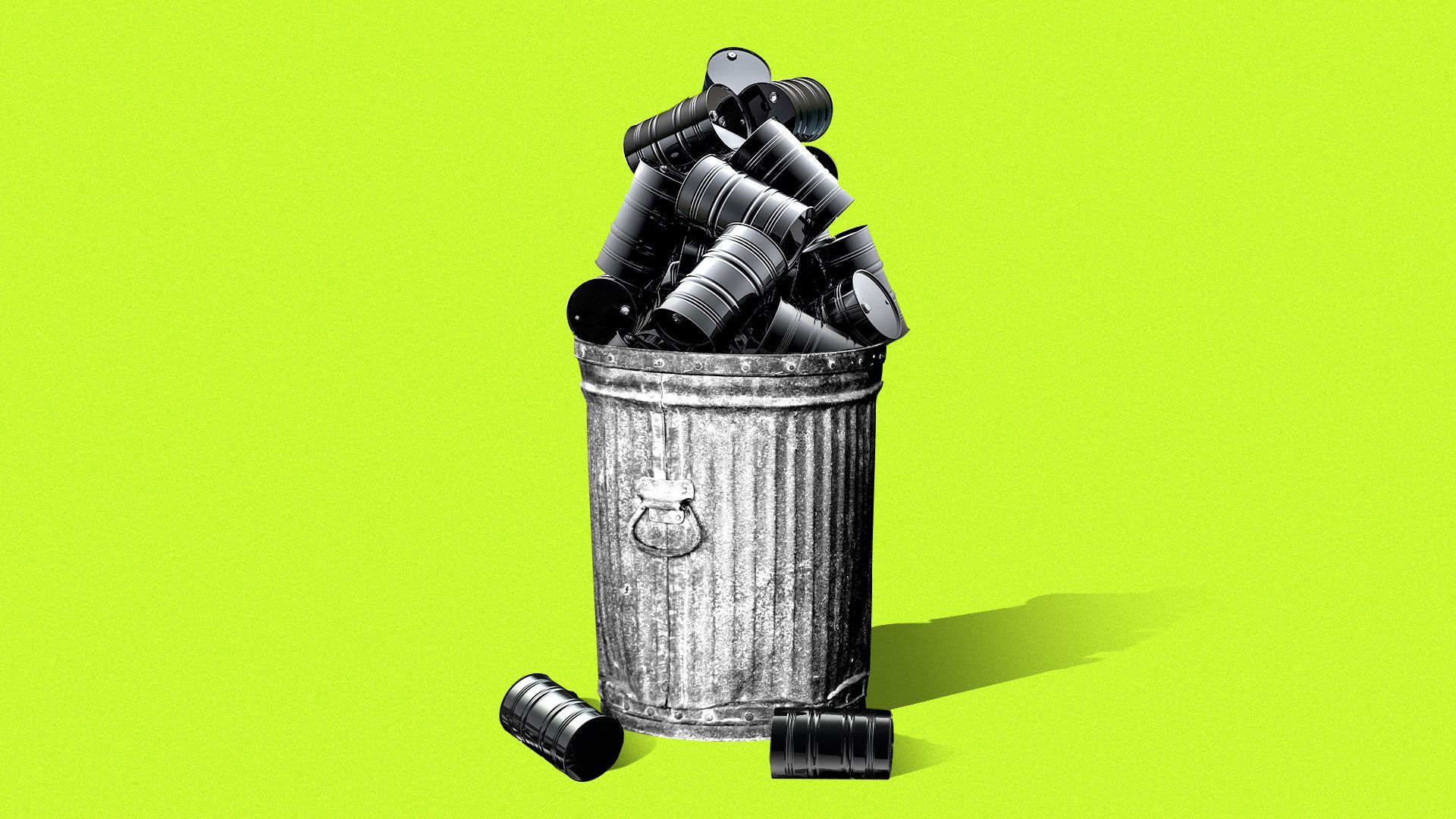
U.S. crude oil prices have soared by almost $35 per barrel since the troughs of Monday afternoon, moving all the way back to around negative $5 this morning.
Why it matters: Those numbers for West Texas Intermediate future prices aren't typos, and they reflect the wider tumult in the oil industry encapsulated in yesterday's first-ever negative futures prices.
President Trump's latest guidelines for "Opening Up America Again" may be too optimistic for things like movie theaters and concerts, analysts predict.
Driving the news: Georgia’s governor said yesterday that the state will reopen theaters on April 27, granted that they take strict social distancing and safety precautions.
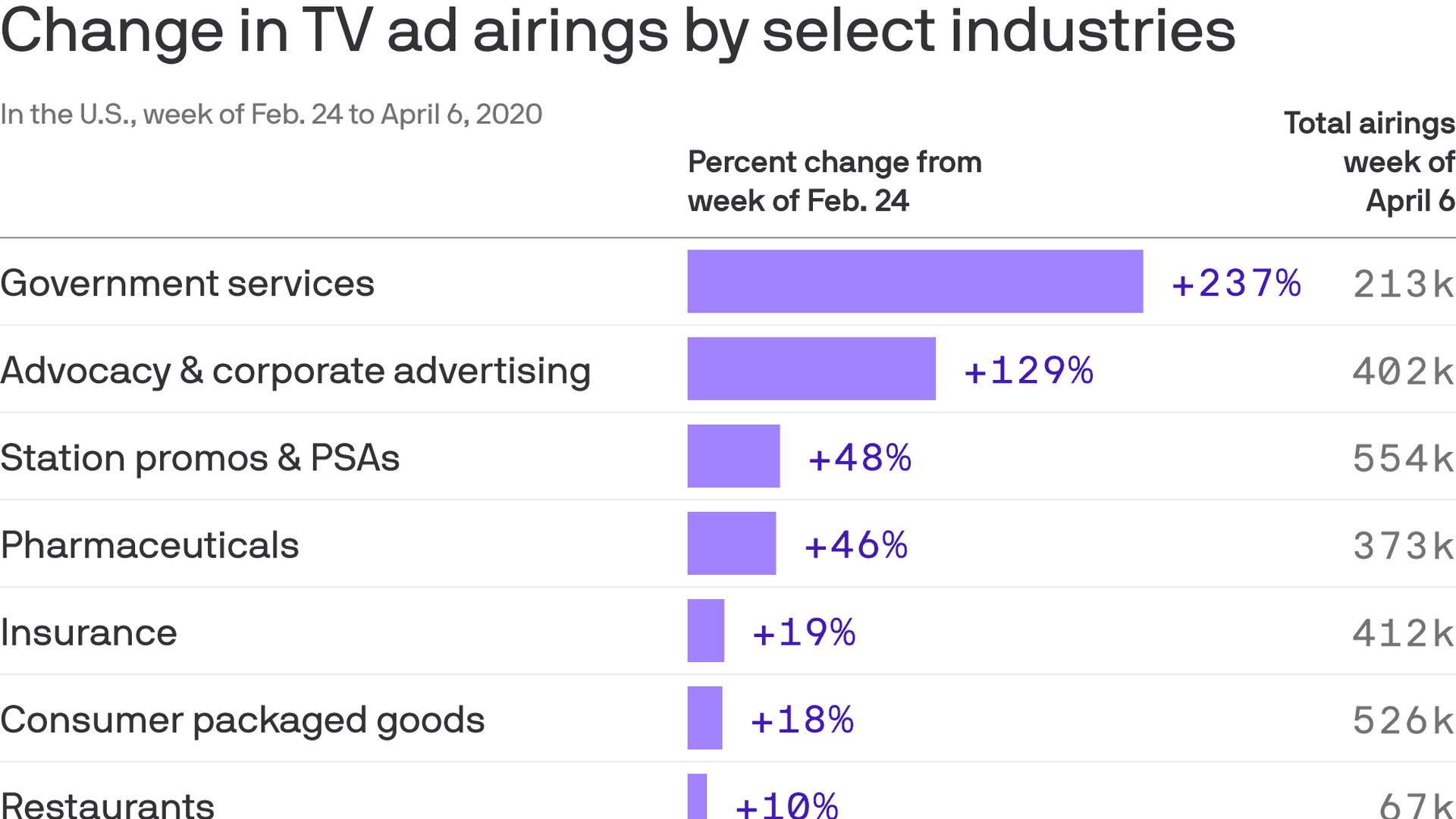
Advocacy and corporate reputation television ads are spiking, while other industries continue to pull back spend, according to data from Advertising Analytics.
Why it matters: Brands are expected by consumers to address the coronavirus issue in a direct and empathetic tone.
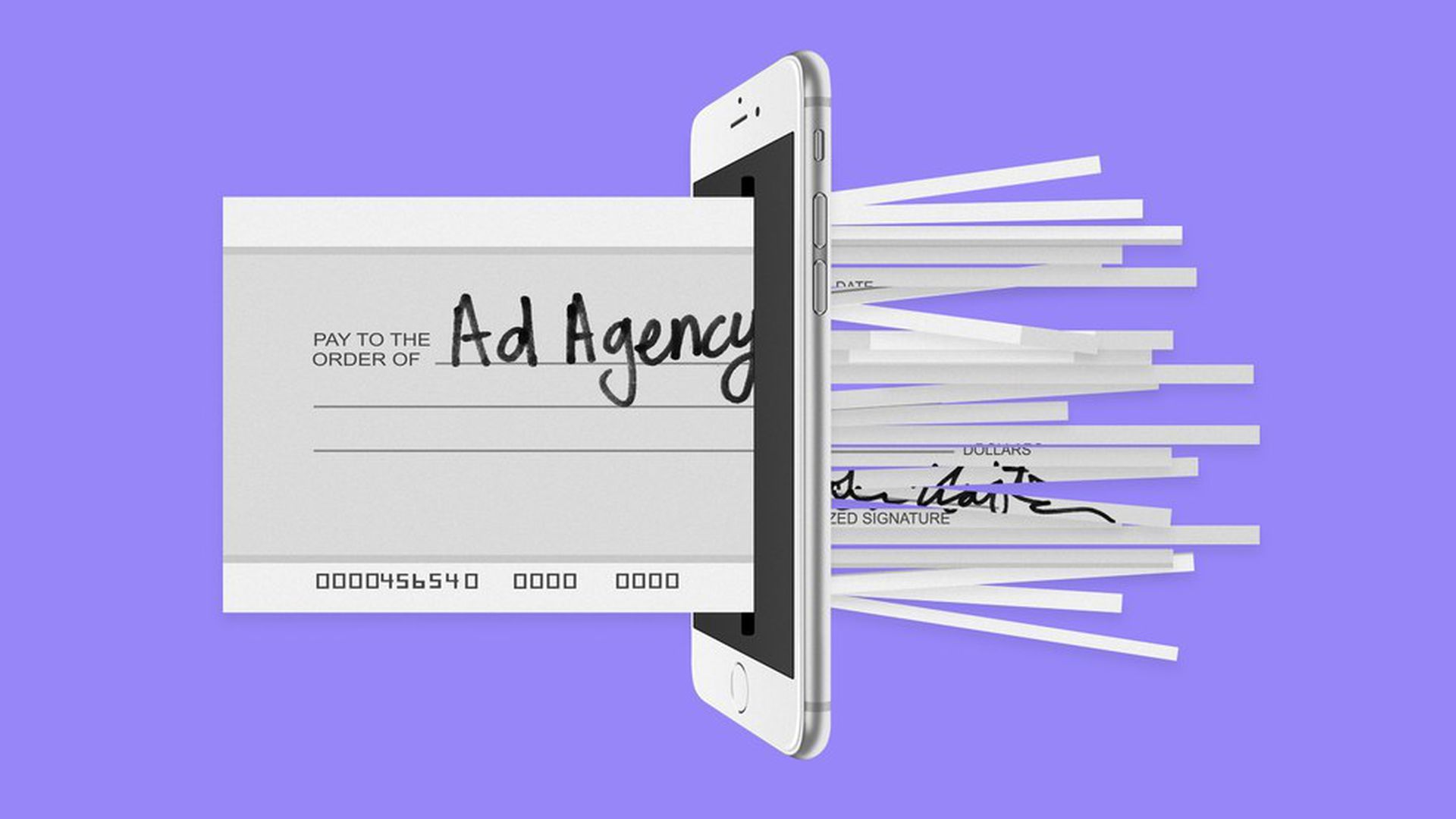
Many of the biggest advertising holding groups are forecasting that their clients will severely pull back on ad spend due to the coronavirus.
The big picture: In a note to clients Tuesday morning, MoffettNathanson senior analyst Michael Nathanson predicted the drop in organic growth during the coronavirus crisis will be steeper than the financial crisis for major ad agencies holding groups like WPP, Omnicom and Interpublic (IPG).
Local newsrooms have been hit hard by the crisis over the past month, but several are planning expansions that can provide a much-needed shot of optimism for the industry.
Driving the news: McClatchy plans to launch a new digital local news outlet called "The Longmont Leader" this spring, serving the residents of Longmont, Colorado, executives tell Axios. 6AM City, a local newsletter company, is planning expansions to new cities.
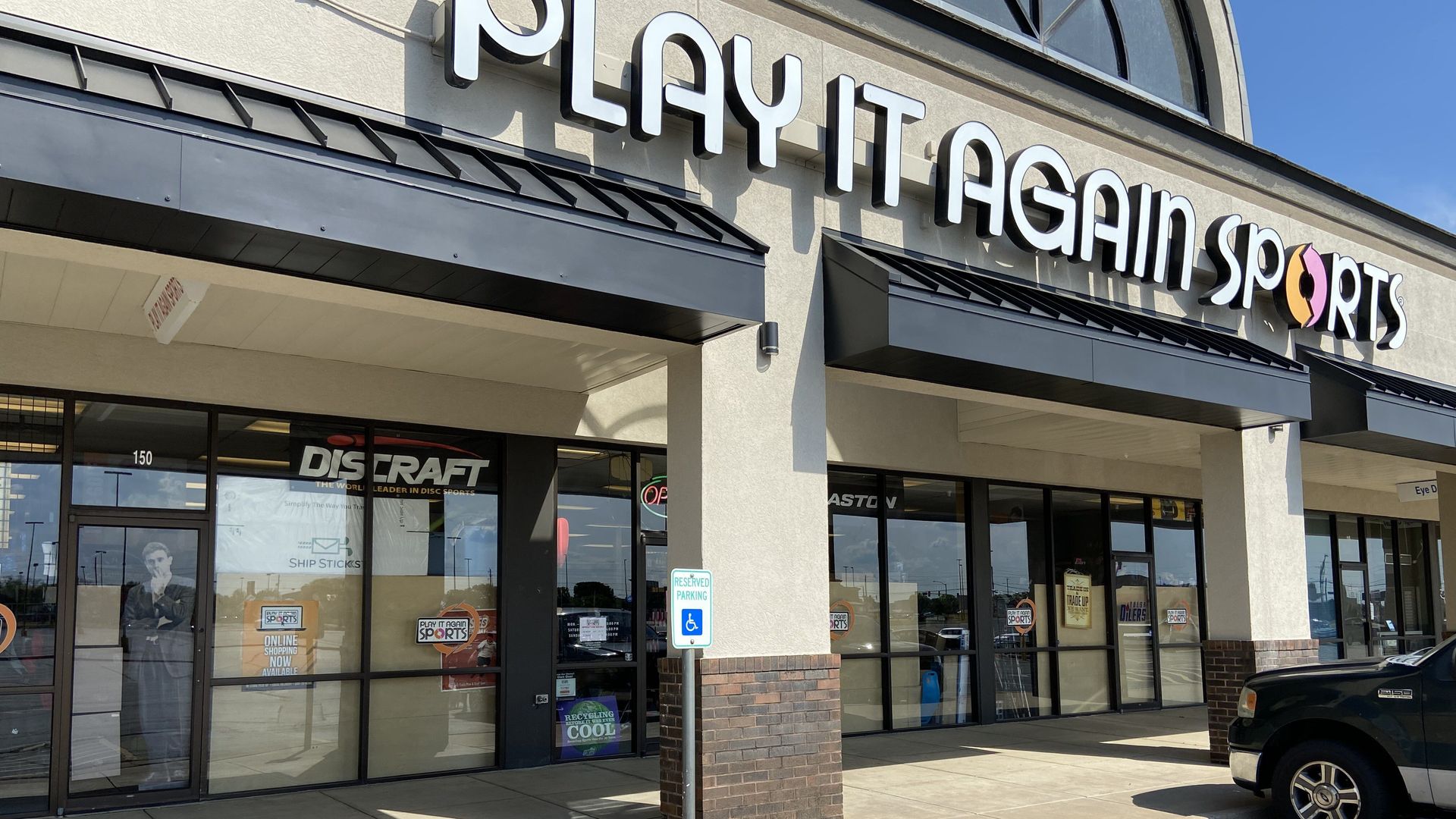
Even with organized sports on hiatus, plenty of sports-related businesses have soldiered on, hoping to weather the storm and come out the other side of this pandemic relatively unscathed.
The state of play: "We have hundreds of mom and pop stores [selling on our platform], so we've been trying to support them and put their stories front and center," Brendan Candon, CEO of online marketplace SidelineSwap, tells Axios.
As Congress pushes closer to extending a second round of relief payments to small businesses after its $350 billion Paycheck Protection Program ran out of funds in two weeks, banks are facing severe backlash over their handling of the program.
Driving the news: A class-action lawsuit on behalf of small business owners alleges JPMorgan, Bank of America, Wells Fargo and US Bank prioritized larger loan applications over small ones in order to collect larger processing fees.
The contrast between moves in oil prices and U.S. stocks has been stark. Even before Monday's once-in-a-lifetime fire sale in oil, crude prices had priced in at least some of the massive demand drop in the market while stock prices had recovered to their April 2019 level.
Why it matters: Stock prices are not reflecting the value of companies and the S&P 500 could fall hard and fast, in a miniature version of Monday's oil rout (when WTI crude futures fell from $17.85 a barrel to -$37.63) after a 25% rally since March 23.
The number of prescriptions that people are filling through the mail has skyrocketed over the past few weeks, according to data from IQVIA and Barclays.
The big picture: Total prescription volumes still have declined heavily as people have traveled to their pharmacies less frequently. People also stocked up on medications, many of which came in 90-day supplies, once the coronavirus outbreak started to worsen in mid-March and consequently haven't had to refill their prescriptions as often.
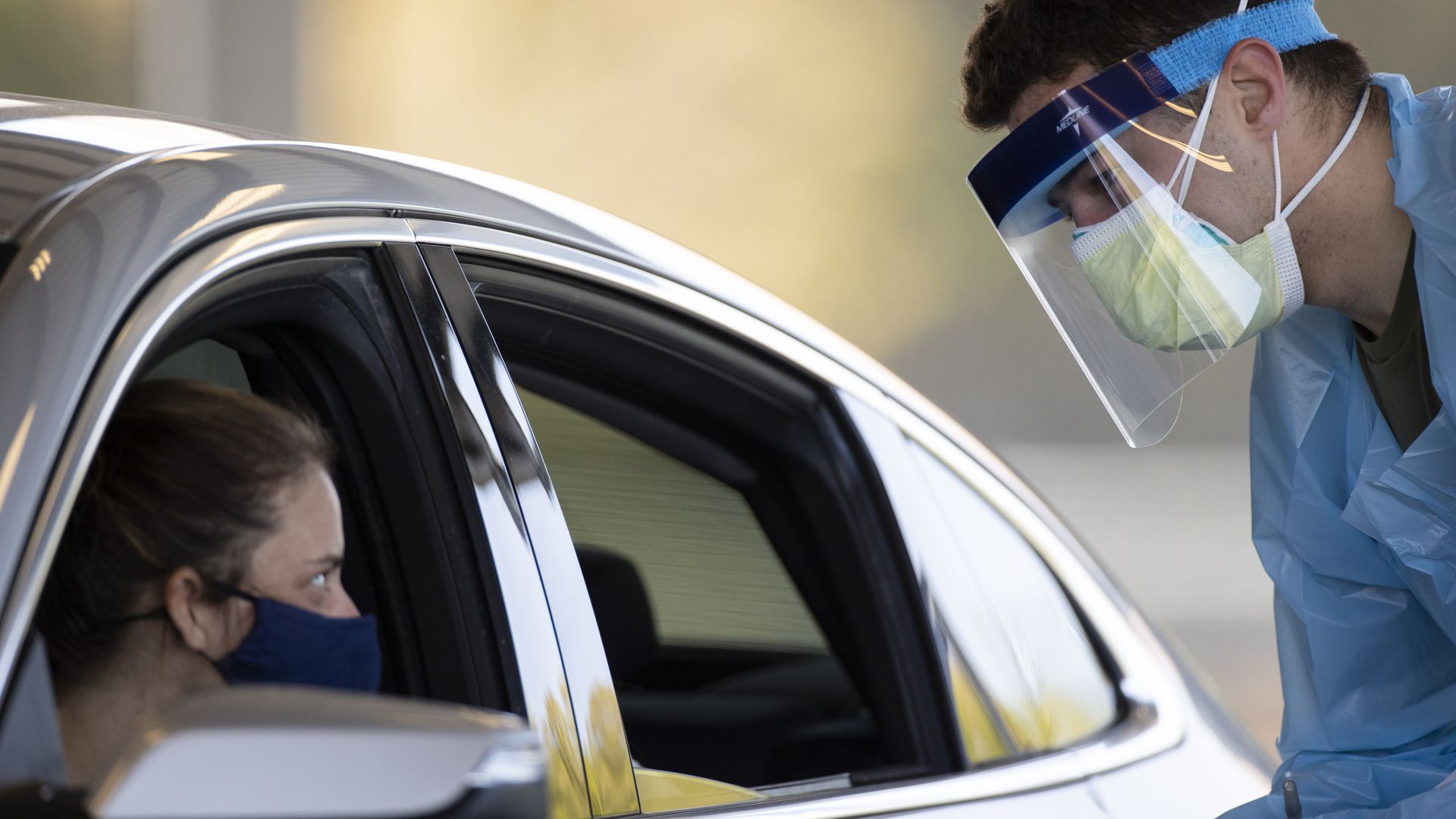
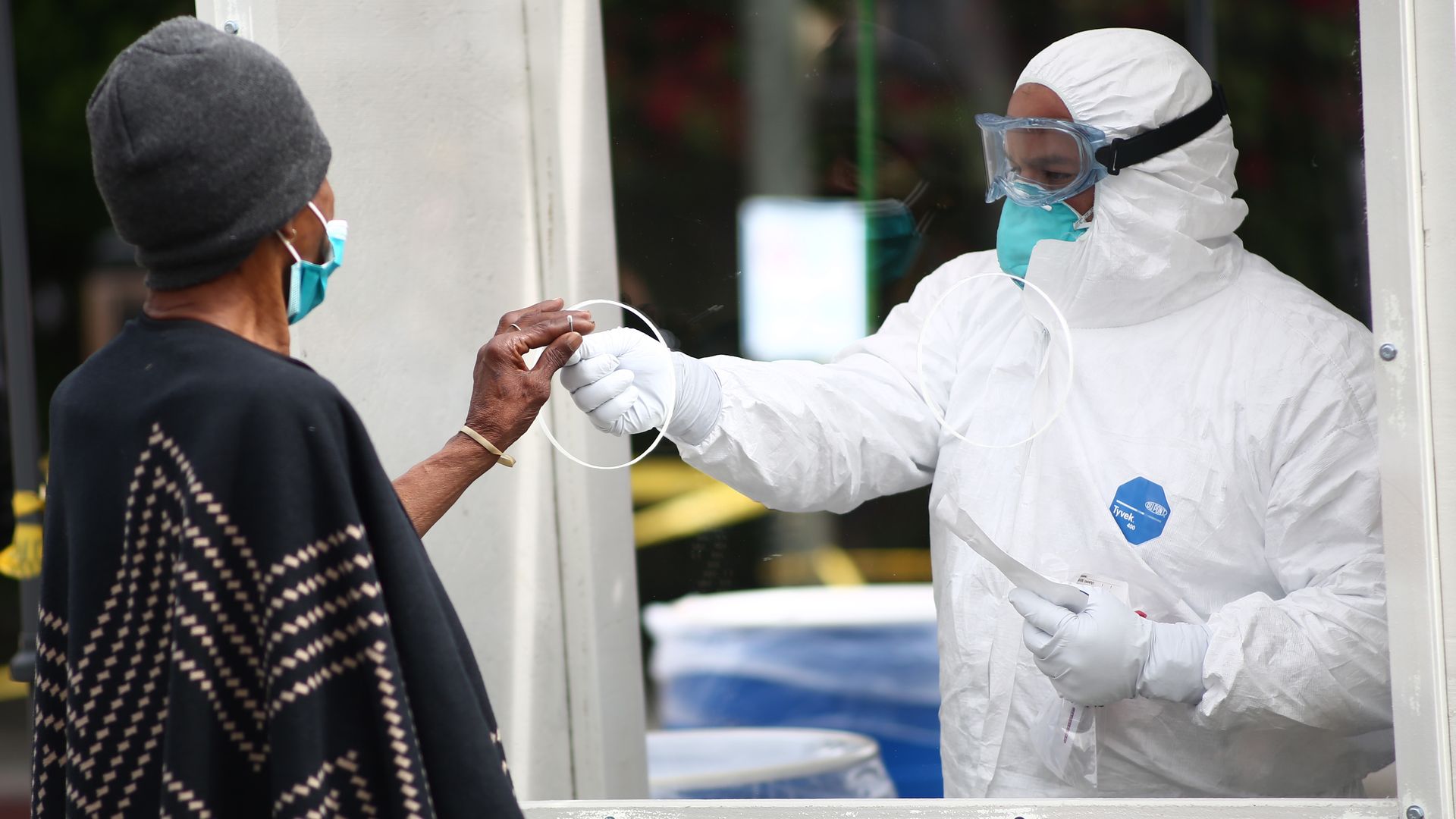
The U.S. will need to run 5 million tests a day by early June in order to safely lift social distancing measures, according to a new white paper by Harvard's Edmond J. Safra Center for Ethics, with support from the Rockefeller Foundation.
The state of play: That number will need to increase over the summer to about 20 million a day to fully reopen the economy, the authors argue.
Brace yourself for a very predictable next phase of the coronavirus crisis: the deeply partisan, parallel universe reaction to what America should do next.
Why it matters: Republicans and Democrats experienced very different realities with the emergence of the virus.
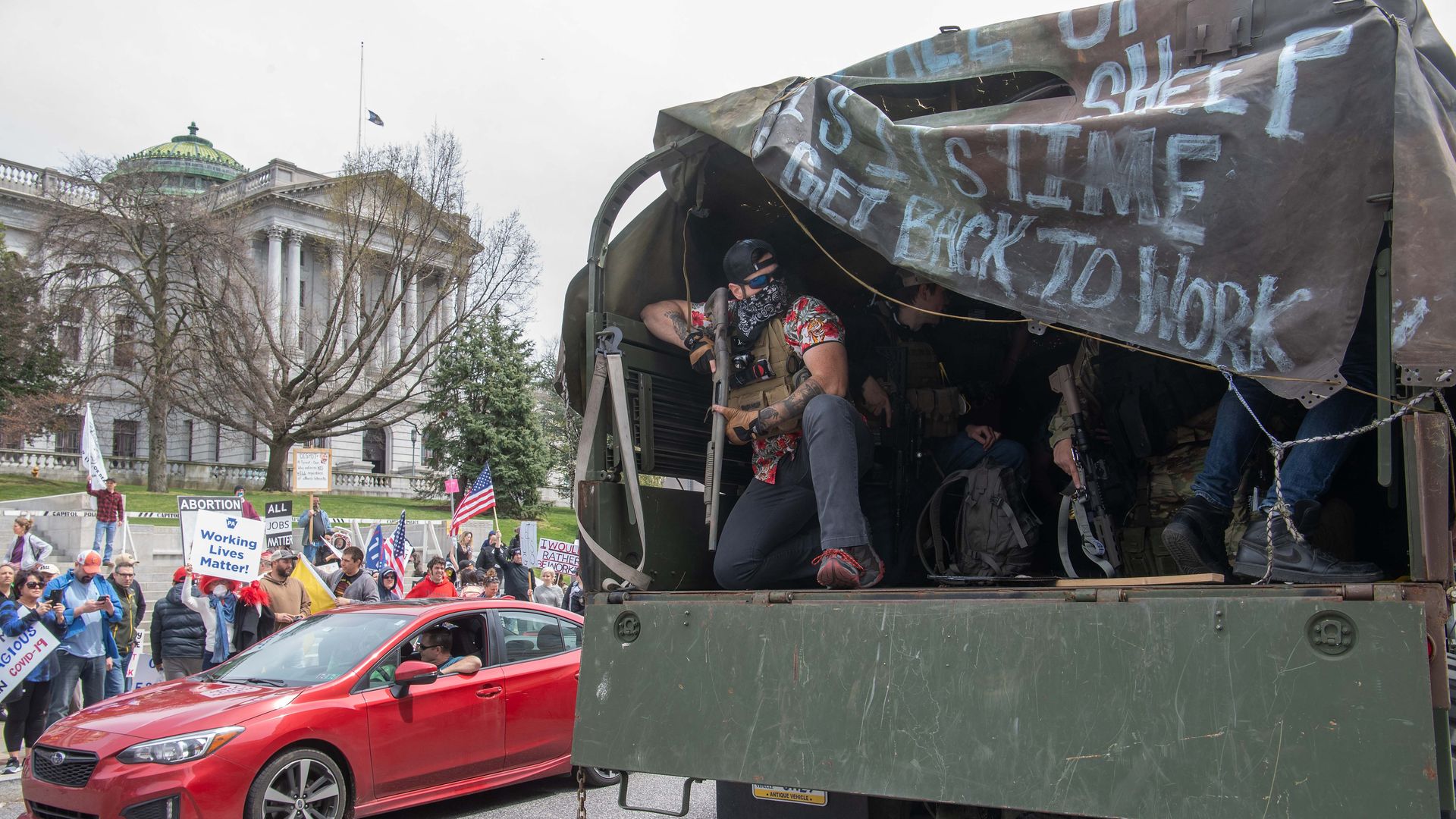
Facebook's decision to take down event listings for certain protests against state and local pandemic measures is putting conflicts between public health and free speech into stark relief.
Driving the news: CEO Mark Zuckerberg said Monday on ABC that Facebook would treat some efforts to organize protests against social distancing rules as "harmful misinformation" and take them down.
Virtual competitions, reruns of classic games and, most recently, sports documentaries are filling a void for both TV networks and fans during the coronavirus pandemic.
The big picture: All the substitute programming in the world isn't going to make up for a loss of live sports. In the past 90 days, each of the top nine cable sports networks has lost more than 25% of its audience compared to January, per data from Samba TV.
Even if some states and the federal government begin encouraging people to go back to work, employers ultimately will make the decision about when to bring their workers back to the office, and what that looks like.
Why it matters: There’s no playbook for the kinds of decisions involved in reopening a workplace during a pandemic, which range from workplace travel policies to how to monitor employees for coronavirus symptoms.
Most Americans feel it would be risky to return to "normal" life just yet and would wait indefinitely or at least for a few more months for the threat of coronavirus infection to subside, per the Axios-Ipsos Coronavirus Index.
Why it matters: President Trump has championed the idea that some states should reopen by May 1. But the latest findings from our national poll suggest most Americans aren't ready and worry it would hurt their health and well-being.
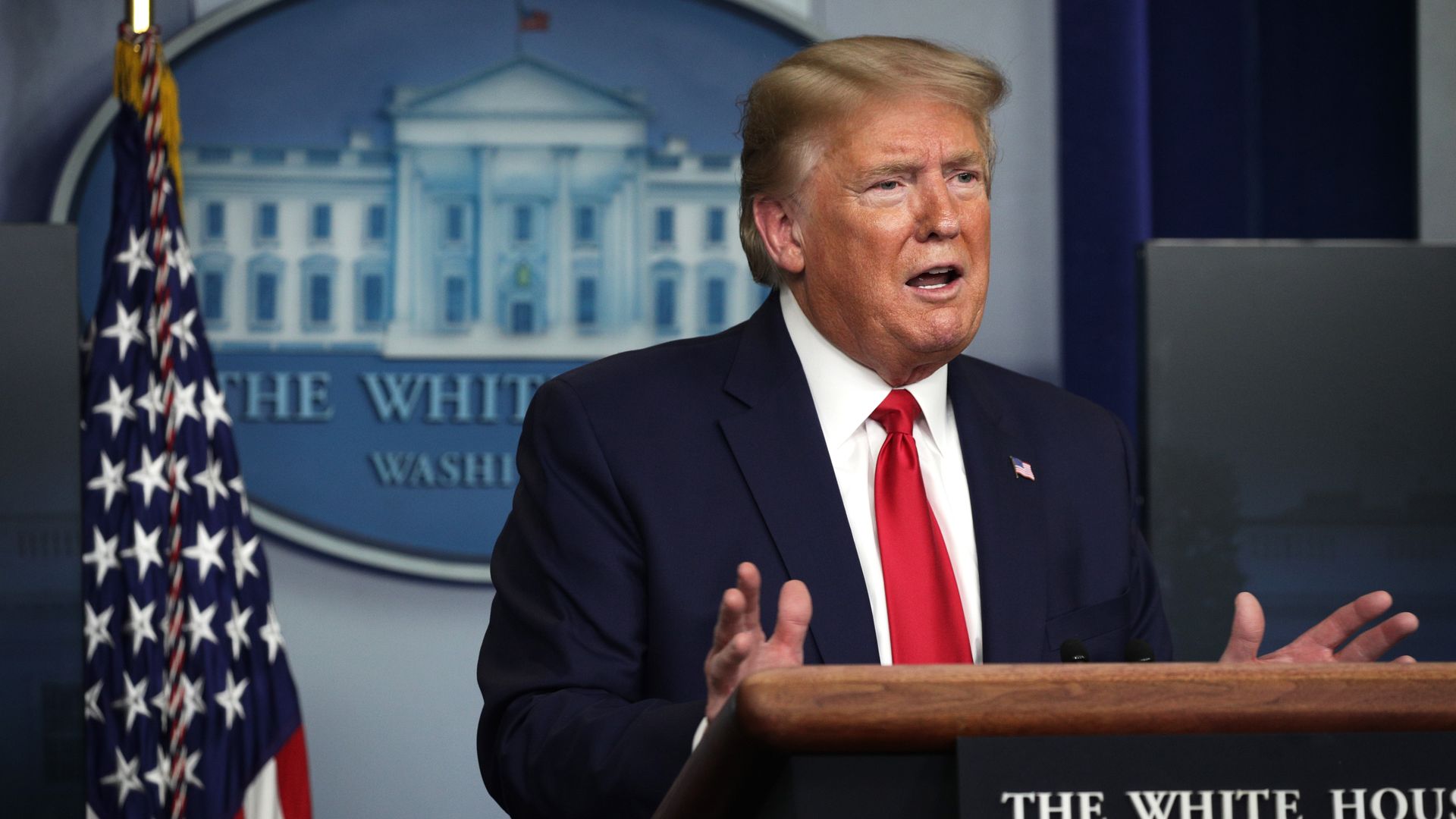
President Trump announced in a tweet Monday night that he will sign an executive order to temporarily suspend immigration to the United States in response to the novel coronavirus pandemic.
Details: "In light of the attack from the Invisible Enemy, as well as the need to protect the jobs of our GREAT American Citizens, I will be signing an Executive Order to temporarily suspend immigration into the United States!" Trump tweeted. The White House did not immediately share any detail about what such an order would state.
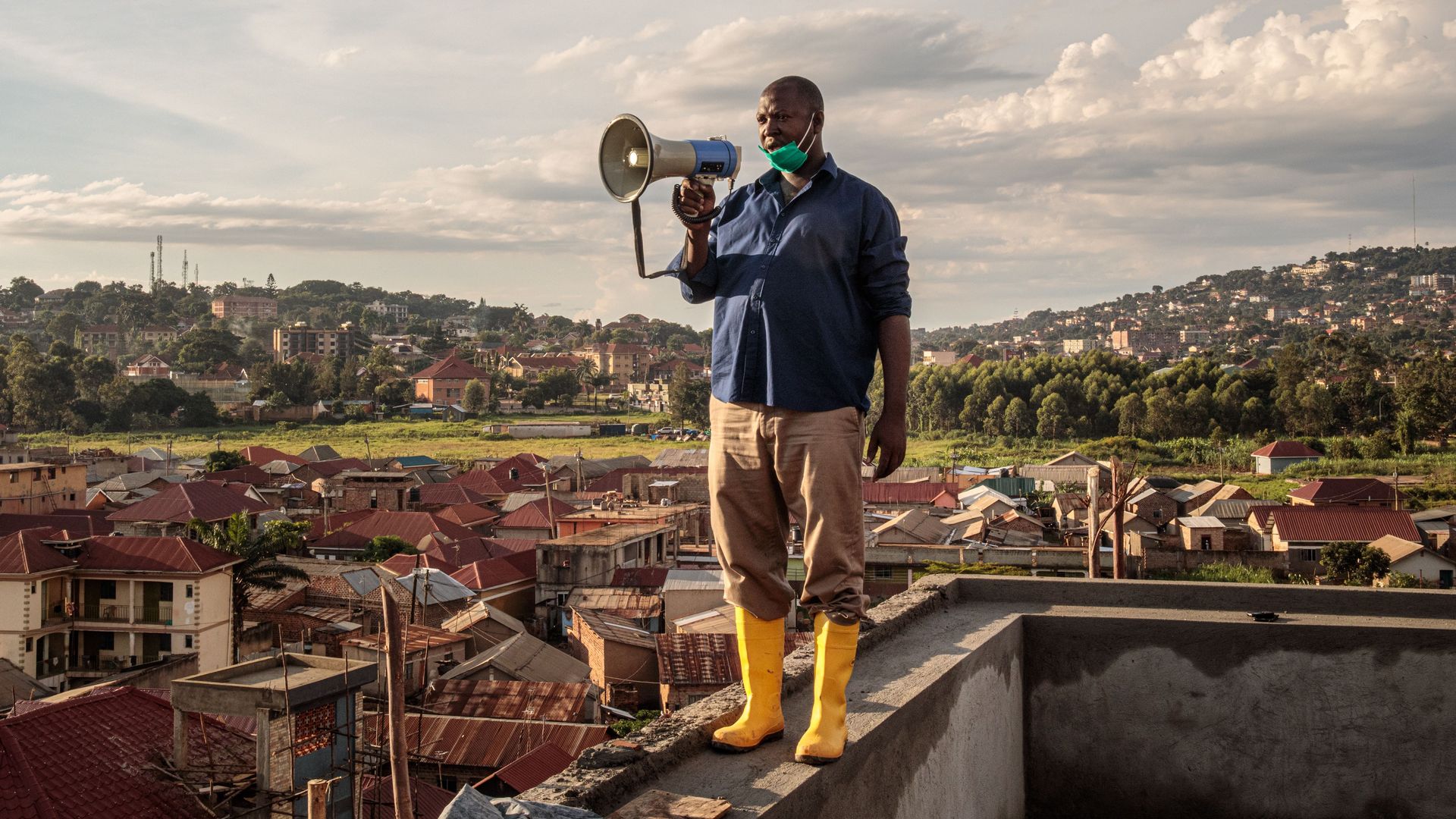
The global economy has never faced a challenge like the coronavirus, but it’s in Africa that the pain could be deepest and recovery slowest.
Why it matters: Years of progress on alleviating extreme poverty will be undone, and economies that had been among the world’s fastest growing could face deep recessions. That’s even if Africa averts a Europe-style public health catastrophe.