Italian oil major Eni has agreed to buy most of London-based oil and gas company Neptune Energy for $4.9 billion in cash from a group of private equity firms.
Why it matters: This is the largest all-cash European energy merger in years, and comes amid two countervailing trends: The need to replace lost Russian imports, and the need to reduce carbon emissions.
Biden administraion officials are taking a kitchen sink approach to boosting production of electric vehicle batteries and components — and the effects could be political as well as economic.
Catch up fast: The Energy Department on Thursday conditionally approved $9.2 billion in loans for a joint battery manufacturing venture between Ford and South Korea's SK On.
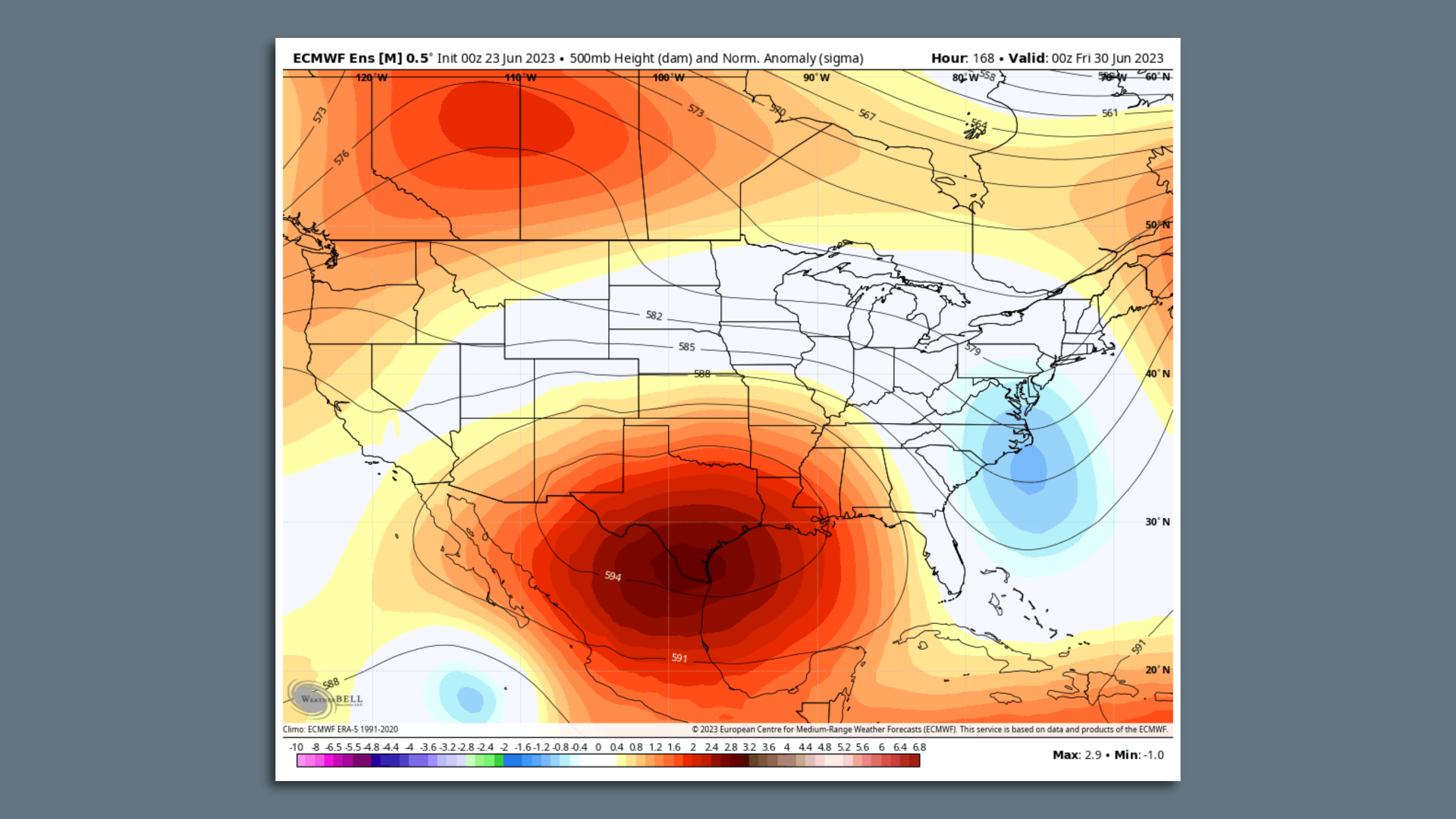
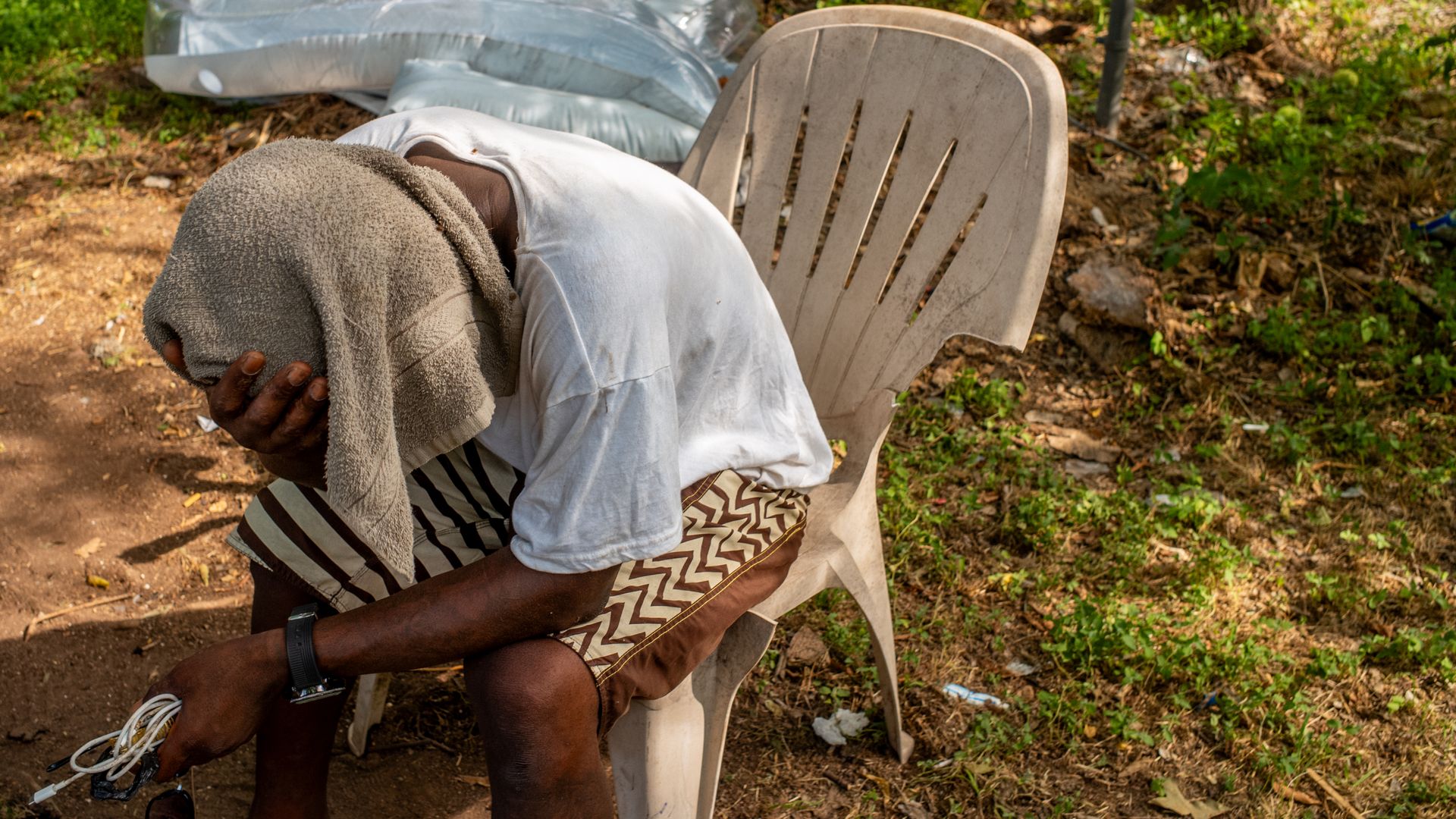
The heat wave scorching much of Mexico, Texas and parts of New Mexico is forecast to worsen and last into the week of July 4, weather forecast models and National Weather Service (NWS) guidance show.
Why it matters: Extreme heat is the top weather-related killer in the U.S., and long-duration heat with little overnight relief makes this event particularly hazardous.
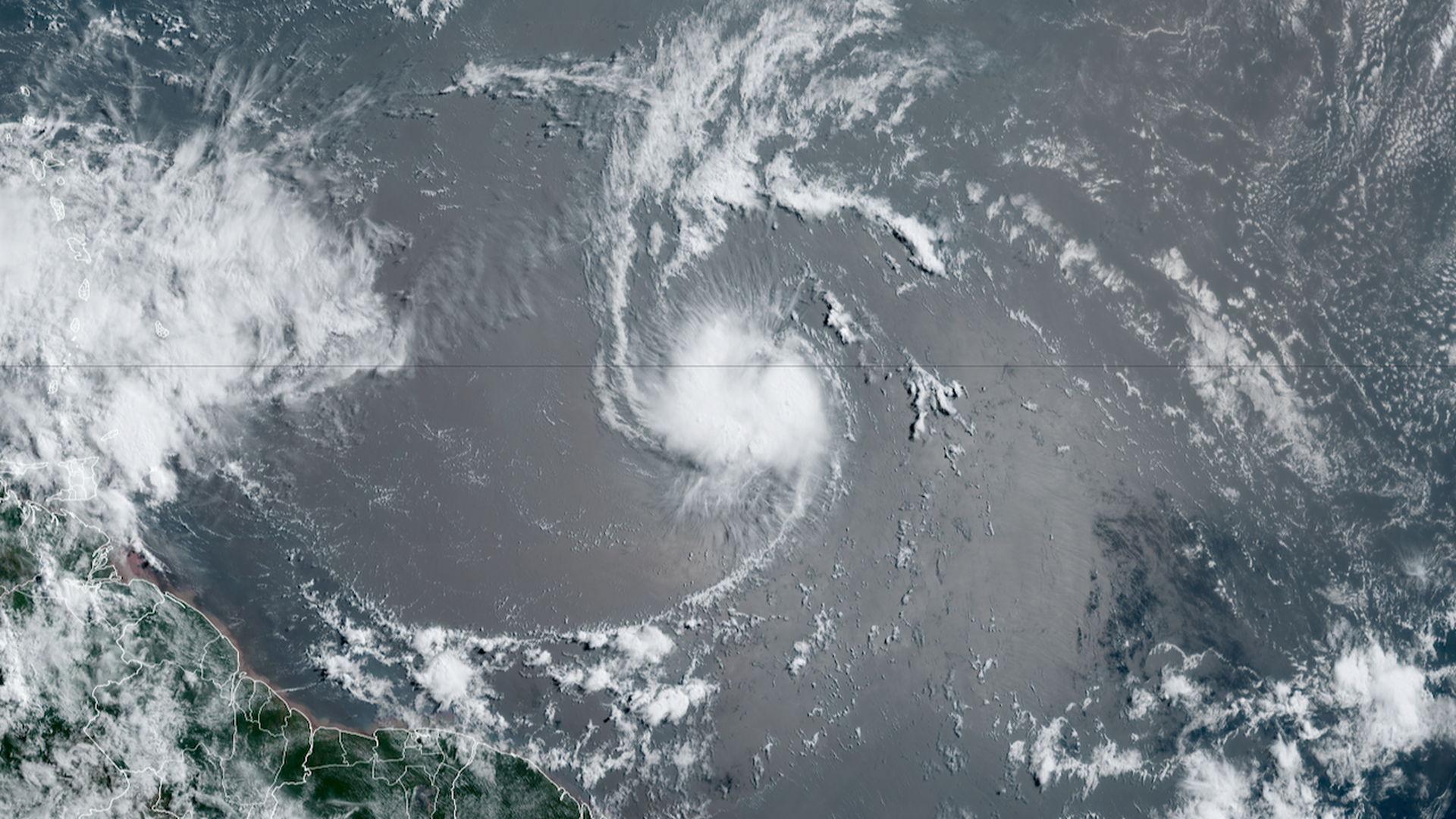
Tropical Storm Cindy formed over the central tropical Atlantic on Thursday night, becoming the third named storm of the season.
Why it matters: It's the first time on record that two Atlantic tropical cyclones have formed in June in the area known as the Main Development Region (MDR), as Tropical Storm Bret remains active in the Caribbean, meteorologist Eric Fisher noted.
Whether you're a livestock producer in Brisbane, Australia, or Shiloh, Ill., there's a brand-new app to help shield your hogs from heat.
Why it matters: As farmers worldwide deal with the impact of climate change on livestock, researchers are increasingly turning to easy-to-use tech to lessen the burden.
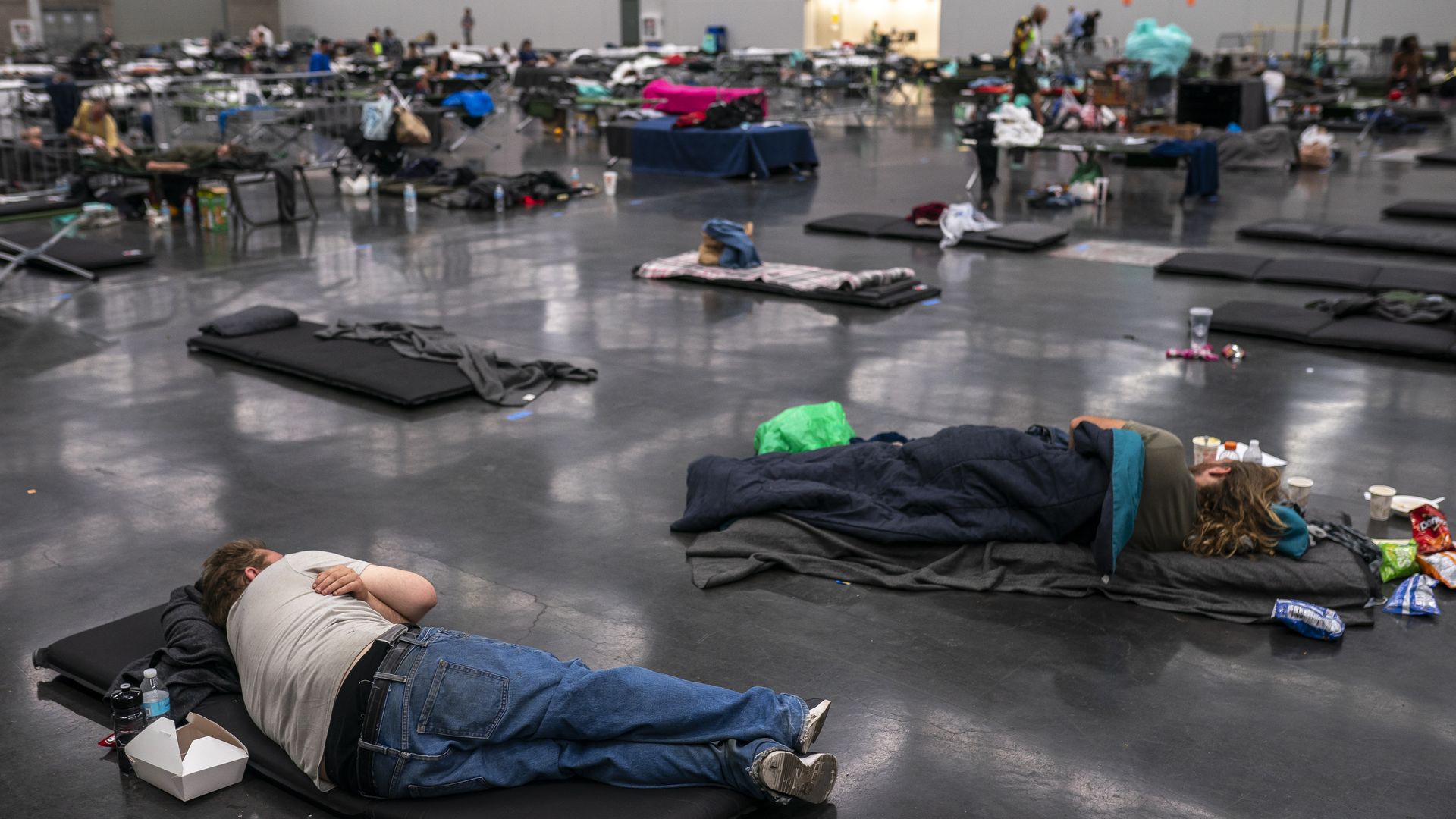
Multnomah County, Oregon — which contains most of Portland —filed a lawsuit Thursday against over a dozen fossil fuel companies and industry associations, seeking $50 million in actual damages from the June 2021 heat wave that blanketed the Pacific Northwest, sending temperatures up to 116° in the county.
Of note: The suit also seeks $1.5 billion in future damages and $50 billion to "weatherproof" the county against extreme heat.
3M has struck a $10.3 billion settlement with U.S. cities and towns over claims of water pollution from "forever chemicals," the chemical and manufacturing company announced Thursday.
Why it matters: The settlement in the per- and polyfluoroalkyl substances (PFAS) case that'd be paid over a 13-year period marks a major step in efforts to curb the threat of the chemicals that've been linked to health problems, and which were found to have contaminated drinking water systems.
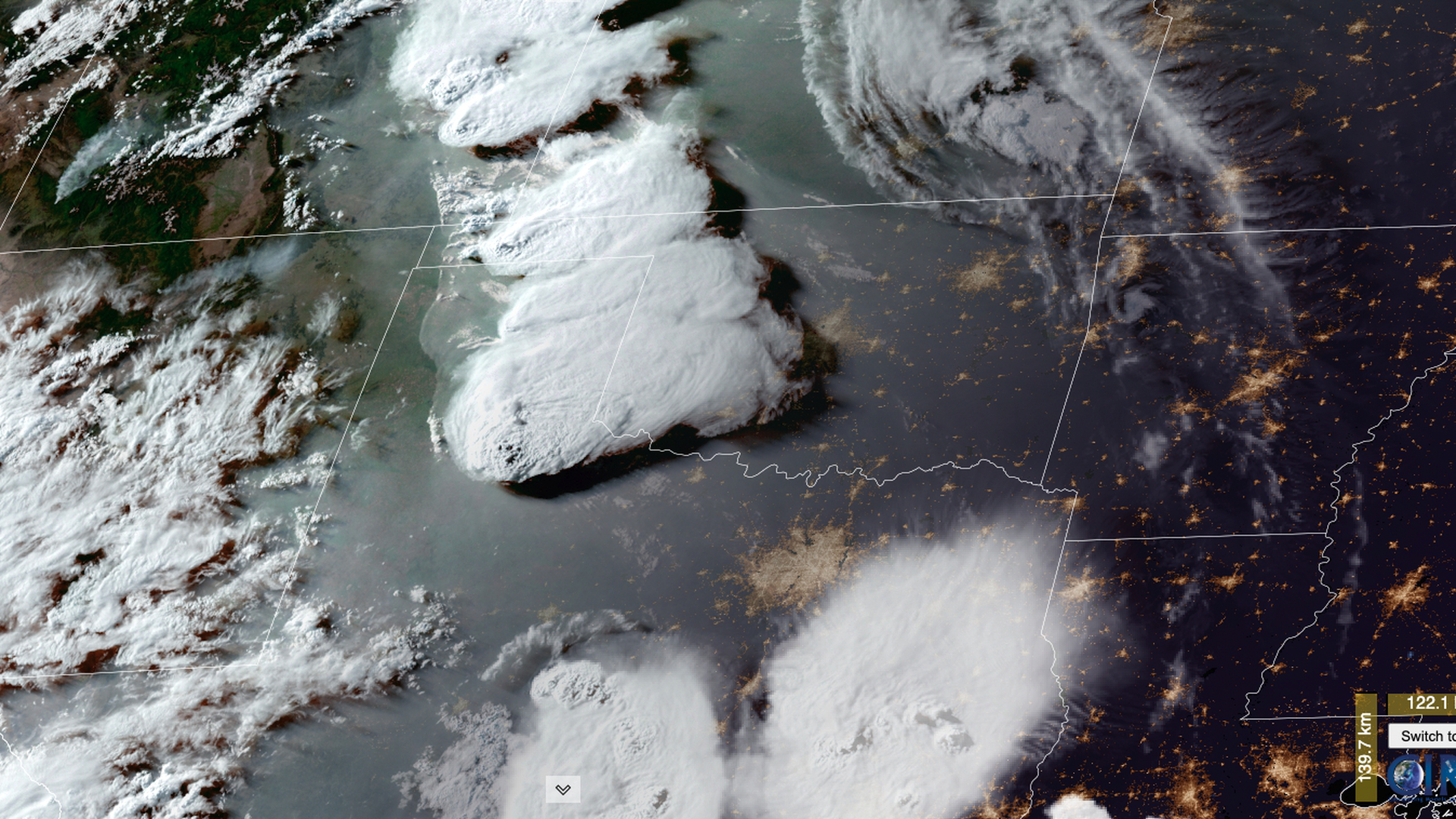
A tornado in Matador, Texas, killed at least four people and wounded10 others Wednesday night as storms spawned multiple tornadoes across the Rolling Plains amid a record-setting extreme heat wave,authorities said.
The latest: Matador has "experienced an unprecedented tornado bringing damaging winds to the town," the Lubbock Fire Rescue agency said Thursday morning.
World leaders and top figures in finance are gathering in Paris Thursday to take steps toward shaking up the world's major development banks, such as the World Bank and IMF, and get more money flowing to developing nations prone to climate disasters.
Why it matters: While firm commitments may prove elusive, the summit could nonetheless serve as a launching pad for reform in the run-up to the COP28 climate summit in Dubai later this year.
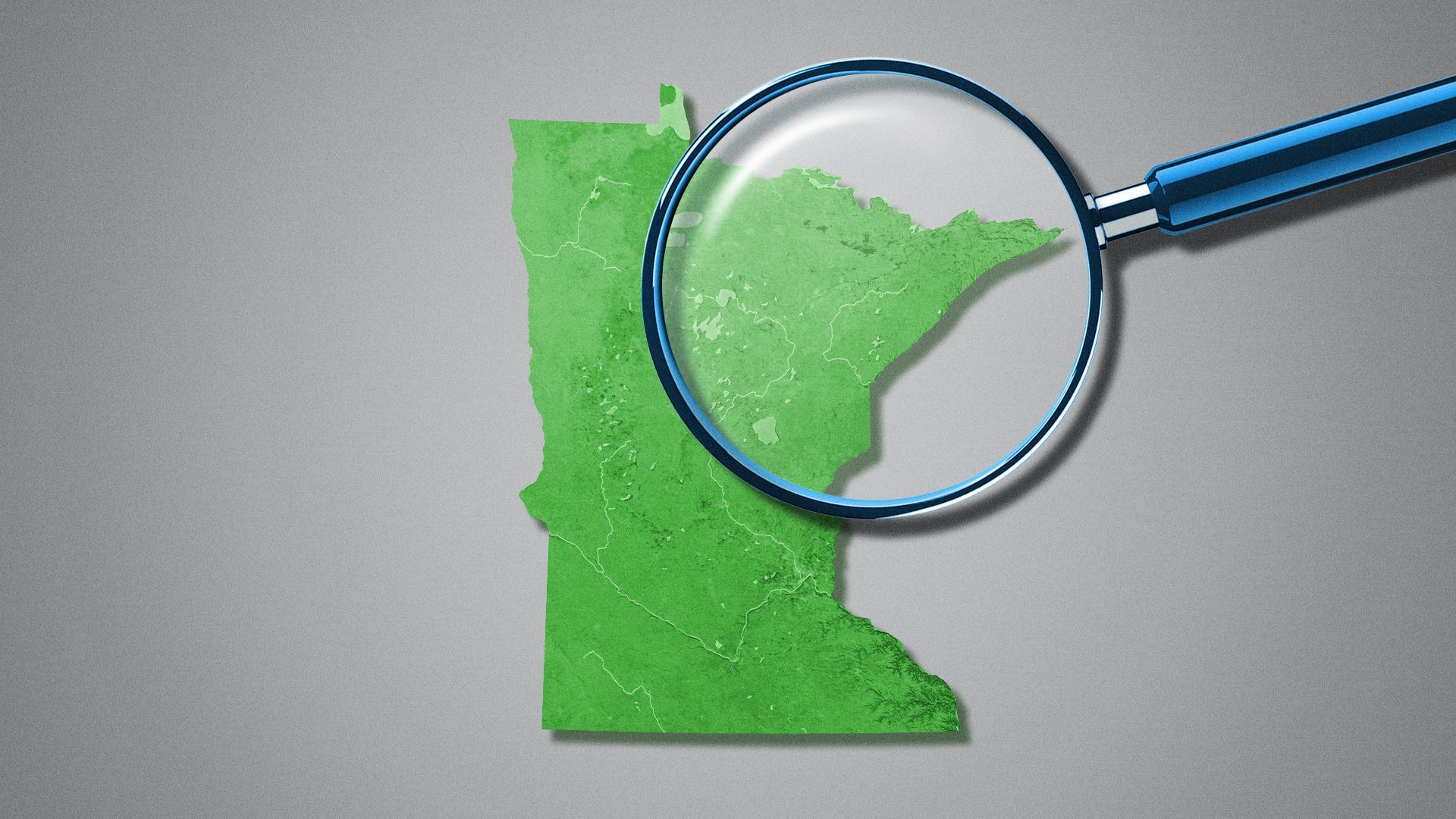
Minnesota regulators are beginning to review a key nickel mining proposal that promises to help the U.S. develop domestic supplies of raw materials for climate tech.
Driving the news: Talon Metals yesterday formally filed paperwork that will launch state environmental analysis of its proposal to build an underground mine in northern Minnesota.
The number of "mosquito days" — that is, those with the hot and humid weather the flying insects crave — has increased in many U.S. cities over the past several decades, per a new analysis.
The report, from nonprofit climate science research organization Climate Central, defines a "mosquito day" as one with average relative humidity of 42% or higher, plus daily temperatures of 50°–95° F.