Making sense of the rift over COP28

Add Axios as your preferred source to
see more of our stories on Google.
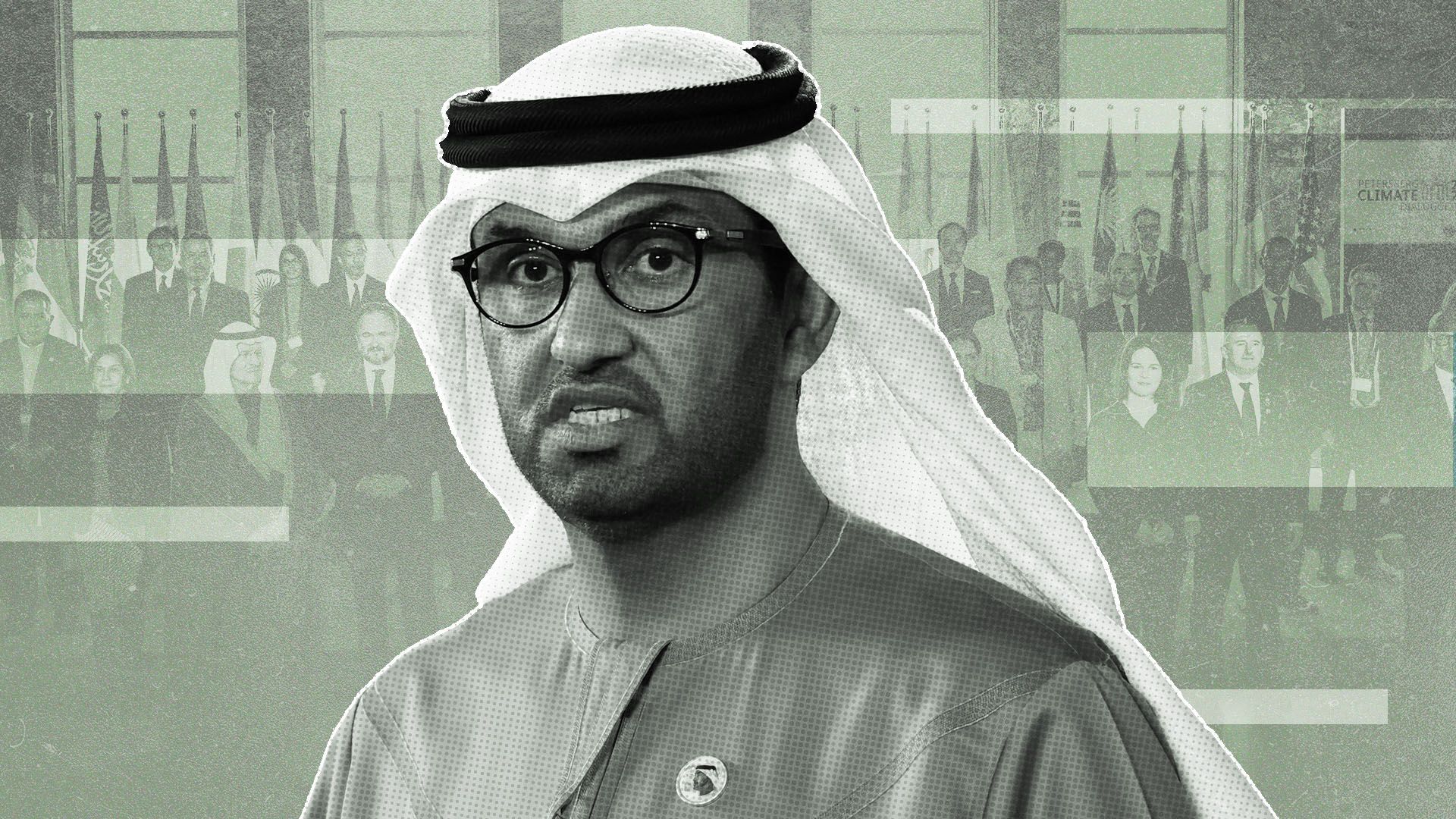
Photo illustration: Tiffany Herring/Axios; Photos: Getty Images
The new effort to jettison the head of upcoming United Nations climate talks will likely fail, but it's a revealing — and maybe even consequential — moment nonetheless, Ben writes.
🏃🏽♀️Catch up fast: Over 130 Capitol Hill Democrats and European parliament members are seeking the removal of Sultan Ahmed Al Jaber, the United Arab Emirates official who is president-designate of this year's annual summit.
- The letter from progressives — addressed to President Biden, European Commission head Ursula von der Leyen, and top UN officials — attacks Al Jaber's role as head of state oil giant ADNOC.
Threat level: Al Jaber risks "undermining the negotiations," it states.
- The letter also urges steps to "limit the influence" of fossil fuel interests in the late-2023 talks; the UAE is hosting and organizing this year's event.
State of play: The White House isn't bowing to pressure from the left.
- A U.S. official, in a statement to Axios, called the UAE a "crucial partner" on climate.
- The official called Al Jaber an "experienced diplomat and business leader," citing his chairmanship of the big renewables player Masdar.
- EU leaders haven't backed off support either.
🔍What we're watching: The drumbeat of criticism could still influence COP28 without a change at the top.
- "Whether or not this prompts the UAE to rethink [Al Jaber’s] role, it does put people on notice that there is zero appetite for any attempt to 'greenwash' the fossil fuel sector at the COP," Pete Ogden, an Obama-era climate aide who's now vice president for climate and environment at the UN Foundation, told Axios via email.
Quick take: Tussles around Al Jaber are part of a wider battle over the oil industry's role in energy transition.
- Activists fear COP28 will be vulnerable to industry influences that weaken the summit outcome.
The competing view: While the oil industry should do more, it's an indispensable player with the resources and expertise to scale tech like carbon capture.
- That's basically the view of Al Jaber, who has been welcoming of industry participation at COP28, which Andrew wrote about in March.
One big question: How much connective tissue actually exists between COP28 leadership, and steps countries take on climate?
What they're saying: Kalee Kreider, a climate diplomacy vet and president of the firm Ridgely Walsh, said she understands why there's pressure on Al Jaber, the first oil exec in the role.
- "But, we shouldn’t forget that the real power of the Paris Agreement rests with nation-state leaders to deliver on what they promised in 2015," Kreider, a former adviser to Vice President Al Gore, said via email.
- "[A]s an international agreement, Paris doesn’t have a single point of failure. The presidency rotates, the commitments are shared around the world. It’s a web, not a chain," Kreider adds.
The bottom line: UN climate summits are always fraught affairs. But the glare on this year's event is especially hot.
