Wednesday's energy & climate stories

How to protect yourself from wildfire smoke
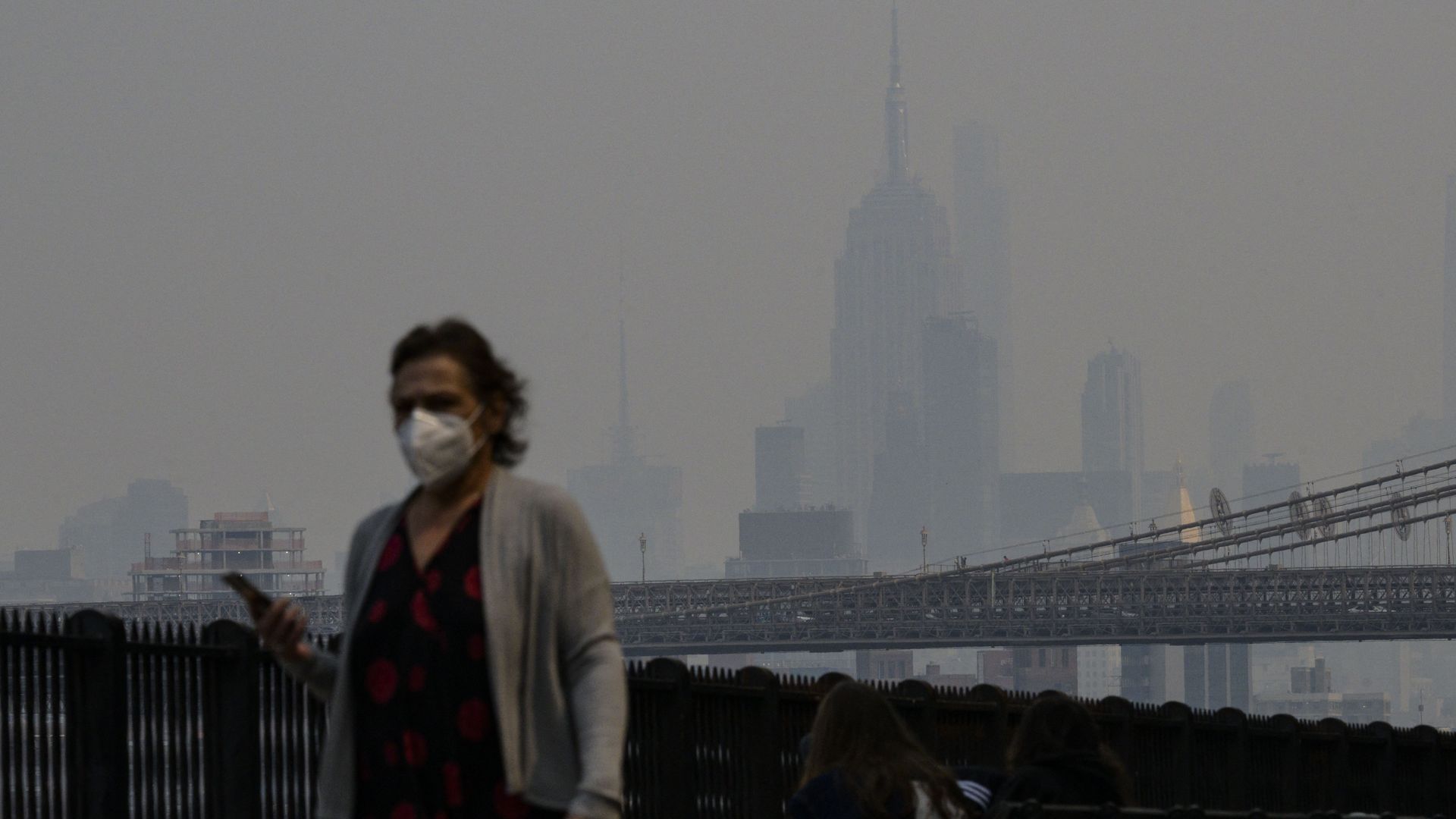
As wildfire smoke envelops sections of the U.S. Great Lakes, Northeast and mid-Atlantic, mitigating risk is essential.
Why it matters: As record poor air quality stemming from Canadian wildfires impacts the eastern U.S., pollutants in wildfire smoke can seriously affect the body — a reality the western U.S. knows well.

Chevron's CEO talks renewables, lithium and COP28

Chevron CEO Mike Wirth doesn't rule out getting into the lithium business but shows no interest in wind and solar.
Driving the news: Wirth noted lithium — a key EV battery input — can be extracted from brines produced through oil and gas development.
- “We've looked at ... adjacencies to our business, and lithium could be one of those," he told Axios exclusively on Tuesday.
State of play: Wirth cautioned he didn't want to overstate the possibility of lithium ventures (Chevron previously sold its interest in a California effort).
- But he contrasted it with wind and solar. "There's a lot of good developers out there in the U.S. and around the world that can do wind and solar projects better than we can."
Why it matters: Wirth's posture says plenty about the oil giant's wider approach to energy transition. The comments also crystallize a strategic split between Exxon and Chevron, compared with European peers like Shell and BP.
The big picture: European majors, which have been more aggressive on climate, include wind, solar and power services in their diversification efforts.
- U.S. giants are focusing more narrowly on areas they see as adjacent to their fossil fuel business and expertise, such as carbon capture, hydrogen and renewable transport fuels.
- Wirth also cited Chevron's investments in startups working on geothermal, which requires drilling and subsurface knowledge.
Here's more from Wirth, who spoke with Axios editors and reporters as smoke from Canada's wildfires drifted over the Washington, D.C., region...
🌍 UN summit: Wirth said he backs efforts by Sultan Ahmed al-Jaber, the UAE official leading this year's talks, to bring the oil and gas industry more deeply into the process — something climate activists and other critics fear will weaken the outcome.
- He argued his sector brings needed knowledge and balance sheets for large-scale projects, but that Chevron is still evaluating its participation as summit planning proceeds.
- Wirth discussed the oil and gas industry "Global Decarbonization Alliance" that's one of al-Jaber's COP28 initiatives.
- Al-Jaber's goal is to expand climate commitments and other efforts that Western majors have made to small and state-owned players, Wirth said.
- Meanwhile, he said the Washington, D.C.-based Atlantic Council is "quite involved."
🖥️ Artificial intelligence: Chevron's chief believes "there are going to be a lot of things in our industry that are going to be fundamentally changed through AI."
- "We've been working with OpenAI for multiple years now on technologies that could work in our industry," Wirth said. He noted oil giants generate immense datasets on geological characteristics and more.
- Wirth talked up AI and other advanced computing's ability to boost safety, asset reliability, geological understanding and carbon capture advances (to name a few!).
📝 Permitting: Wirth said he hopes Congress will take another swing at permitting following the "positive" but limited deal in the debt ceiling bill.
- Goals include limits on judicial challenges to projects, and a better process for permitting injection wells used in carbon storage.
- "Permitting used to be the way you build things" with proper consideration, but "permitting is now used to not build things in this country."
- The other side: Activists fear that "permitting reform" will erode protections for communities next to fossil fuel projects.
Andrew Freedman contributed.

Record hot oceans continue as weather extremes escalate


Extreme weather and climate events across the globe continue to unfold simultaneously, breaking longstanding records from Siberia and China to Antarctica.
The big picture: Global sea surface temperatures have been at record to near-record levels since mid-March.
- Record-shattering heat waves have lasted for months in parts of Asia, from Vietnam to China, in particular.
- Parts of north central Siberia hit 100°F last week, setting all-time records for those locations.
Between the lines: Notably, the record heat has been occurring ahead of the declaration of an El Niño event in the tropical Pacific Ocean.
- These naturally occurring events will most likely boost global ocean temperatures even further.
The bottom line: It's become cliche for climate stories to say that we're in uncharted territory; but in this situation, it bears repeating.
- We've never gone into an expected El Niño event with the oceans already so warm, making them prone to marine heat waves with their associated coral bleaching.
- The unusual warmth is already contributing to heat waves on land before the hottest months of July and August, and will help fuel more intense tropical cyclones and precipitation extremes in the weeks and months ahead.
The bottom line: Expect more significant extreme events, many of them without modern precedent, to occur both at sea and on land during the coming year. (WaPo has more)
New effort unveiled to speed ocean CO2 removal

A new nonprofit group called the Carbon to Sea Initiative has raised over $50 million to back research and development into potentially accelerating carbon dioxide absorption into the world's oceans.
Driving the news: The philanthropy-backed group, spun out of Additional Ventures, is focused on better understanding the scaleability and safety of "ocean alkalinity enhancement" (OAE).
- It aims to speed natural "weathering," in which alkaline minerals increase oceans' already mammoth CO2 uptake, while fighting ocean acidification.
What's next: The initiative will evaluate various OAE pathways, and "catalyze locally-owned and operated field research sites." The group also plans to "help develop responsible regulatory frameworks."
Zoom in: It has already committed $23 million in grants for four research projects, with recipients like the Woods Hole Oceanographic Institution and UC Santa Barbara.
- It's also backing plans to build five "prototype solutions" and monitor them.
- Funders include Additional Ventures, Astera, Builders Initiative, Catalyst for Impact, and the Chan Zuckerberg Initiative.
Reality check: OAE's emergence as a meaningful and safe climate tool is an "if," not a "when."
Why it matters: Carbon removal methods can compliment — but not replace —emissions-cutting tech like renewables to keep Paris Agreement temperature-limiting goals within reach, or help cool the world if they're overshot.
The bottom line: "If we find that OAE can be applied at scale, we can unlock one of the most efficient, cost-effective approaches to [carbon dioxide removal] for humanity," Mike Schroepfer, co-founder of Additional Ventures and the initiative's board chair, said in a statement.

Air quality in northern U.S. plummets from wildfires raging across Canada
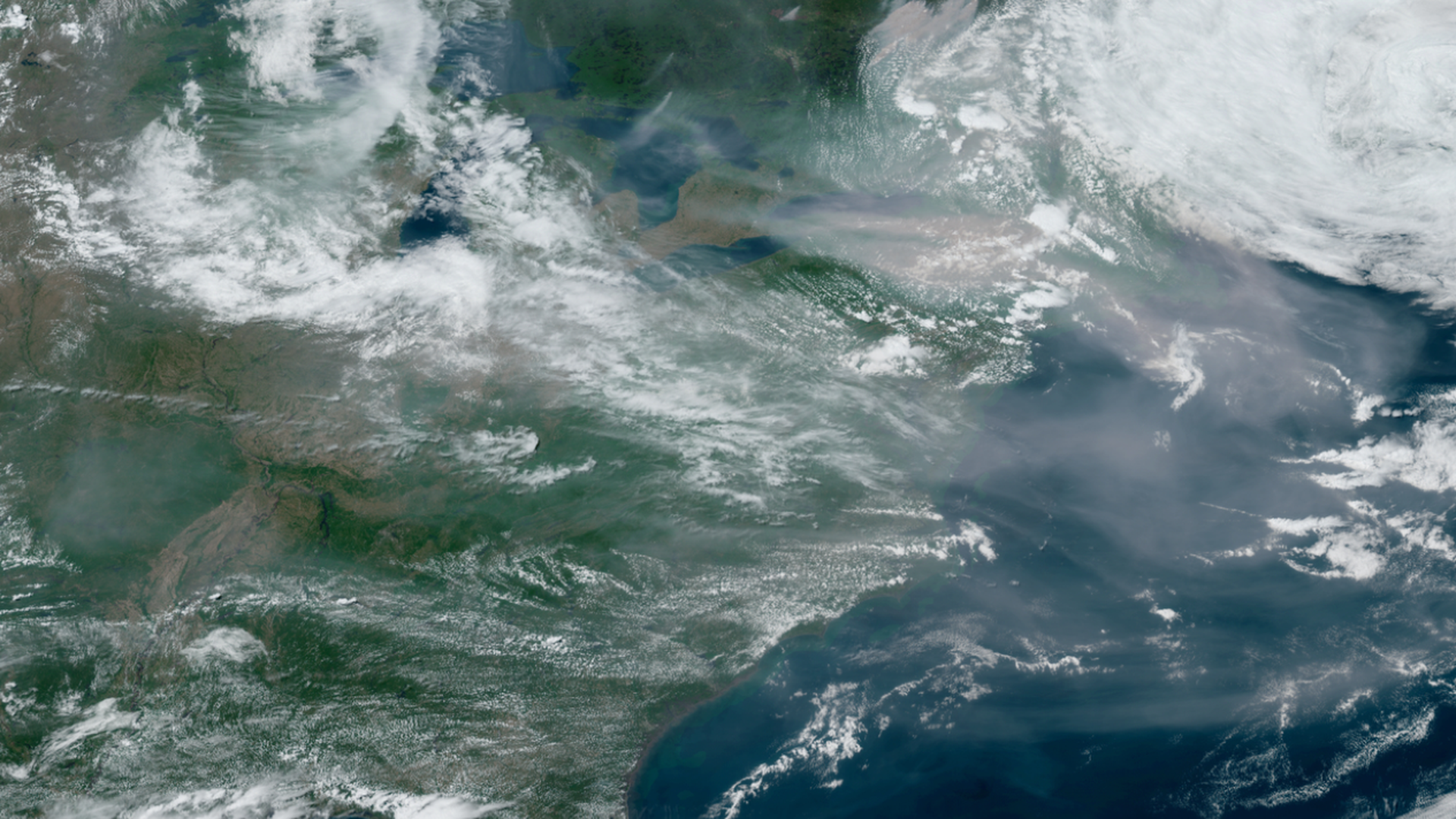
Editor's note: For the latest on this story, follow this link.
Air quality across the northeastern U.S. and Canada has plummeted to unhealthy levels due to smoke from wildfires burning from Yukon to Nova Scotia, which caused a thick haze in New York and many other cities.
Why it matters: Because of the smoke that drifted over Tuesday and other forms of air pollution, New York City, Detroit and Toronto had among the worst air quality of all cities around the world overnight.

Researchers sound alarm over "unprecedented ice-free" threat to Arctic
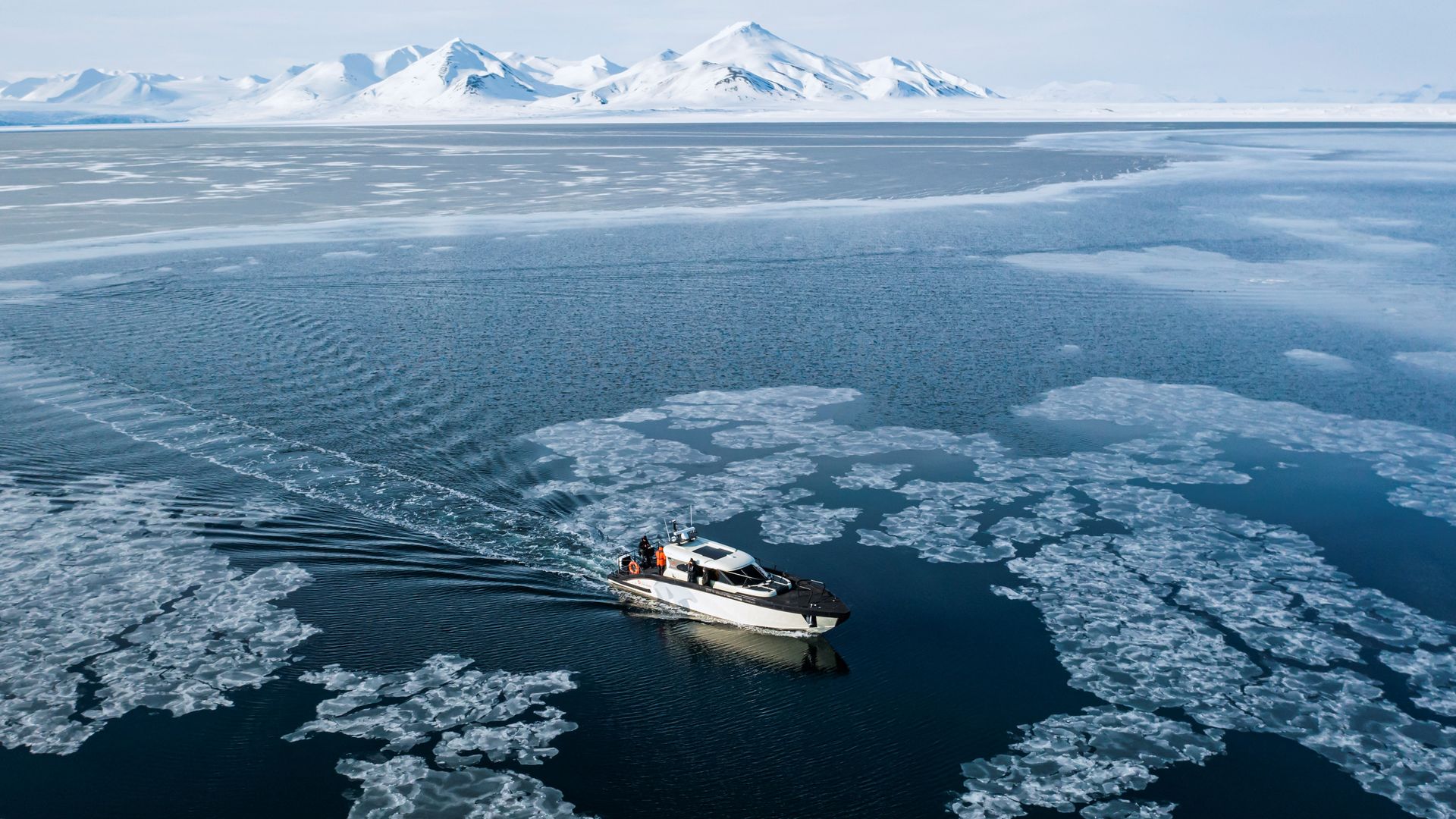
It's too late to stop summer Arctic sea ice melting — even in a low-emissions scenario that caps global warming at a 1.5°C target in line with the Paris Agreement, according to a new study.
Why it matters: The peer-reviewed findings on the effects of human-caused climate change in the region, published in Nature Communications, suggest the first ice-free summer could be in the 2030s. That's a decade sooner than previously projected.
Carbon removal player lands $100M Series B round

Charm Industrial, a carbon removal startup that counts corporate giants among its customers, has closed a $100 million Series B round.
Why it matters: It's a big expansion of Charm's resources. Prior fundraising totaled $25 million, a representative tells Axios.
The chill after OPEC's hot weekend

The White House and crude traders both had shrug-emoji responses to Saudi Arabia's oil production cut.
🏃🏽♀️Catch up fast: A contentious weekend OPEC+ meeting brought Saudi plans to slash output by 1 million barrels per day next month — and possibly longer.

AI is shattering climate language barriers

Over 500,000 words from climate change resources have been translated from English into dozens of languages, thanks to the combined forces of a global network of volunteers and one AI-powered model.
Why it matters: A fusion of tech and climate, ventures like these are eliminating hurdles that bar non-English speakers from engaging with the worldwide climate movement.