LinkedIn has its own version of Sudoku and Wordle now.
Why it matters: Taking a page from the New York Times, LinkedIn has launched games as part of its plans to boost engagement.
Zoom in: Dubbed Queens, Crossclimb and Pinpoint, the three new games that appeared today globally have been designed by the LinkedIn News division.
Players will "engage in some friendly rivalry" while the news team will create daily content around the games, LinkedIn editor-in-chief Daniel Roth writes.
💭 Hope's thought bubble: We have doubts about how successful this endeavor will be, but evolution is the only way to survive.
Why it matters: The listings follow the January launch of the U.S.'s spot bitcoin funds, yet the new products overseas show a deeper embrace of the digital assets industry and ETF innovation.
BlackRock turned heads when it partnered with a digital asset firm to launch a tokenized money market fund on the Ethereum blockchain in March. Just weeks later, that fund has become the largest.
The big picture: Overall the tokenized treasury market, at $1.3 billion, remains small compared to the $160 billion enjoyed by stablecoins.
Flashback: BlackRock partnered with Securitize Markets to put real world assets onchain, starting out with a treasury fund for qualified purchasers. Within days, it had $100 million in assets.
Franklin Templeton, however, was the first to put a registered mutual fund on-chain, according to the firm.
Of note: Not many addresses hold the BUIDL tokens, just 13, according to rwa.xyz.
Franklin Templeton's fund has the second most associated wallet addresses overall, at 404, per the research firm, just behind Ondo U.S. Dollar Yield fund's (USDY), 836.
Behind the scenes: BlackRock made a minority investment in Securitize as part of their partnership, and BlackRock's global head of strategic partnerships Joseph Chalom joined Securitize's board, per the Wall Street Journal in March.
Securitize said the firm led its $47 million fundraising round just today, referencing that investment made at BUIDL's launch.
The bottom line: Tokenizing real world assets is a work in progress, but the entry of big firms like BlackRock appears to be at least accelerating the pace of the category's growth — BUIDL is 30% of the overall category.
Nvidia founder and CEO Jensen Huang, Stanford's Fei-Fei Li ("the Godmother of AI") and OpenAI chief strategy officer Jason Kwon are among this year's Gold House A100 List honorees.
Why it matters: The list is published annually to coincide with the start of Asian American and Pacific Islander Heritage Month and recognizes individuals of Asian Pacific heritage who have had a significant impact on American culture and society.
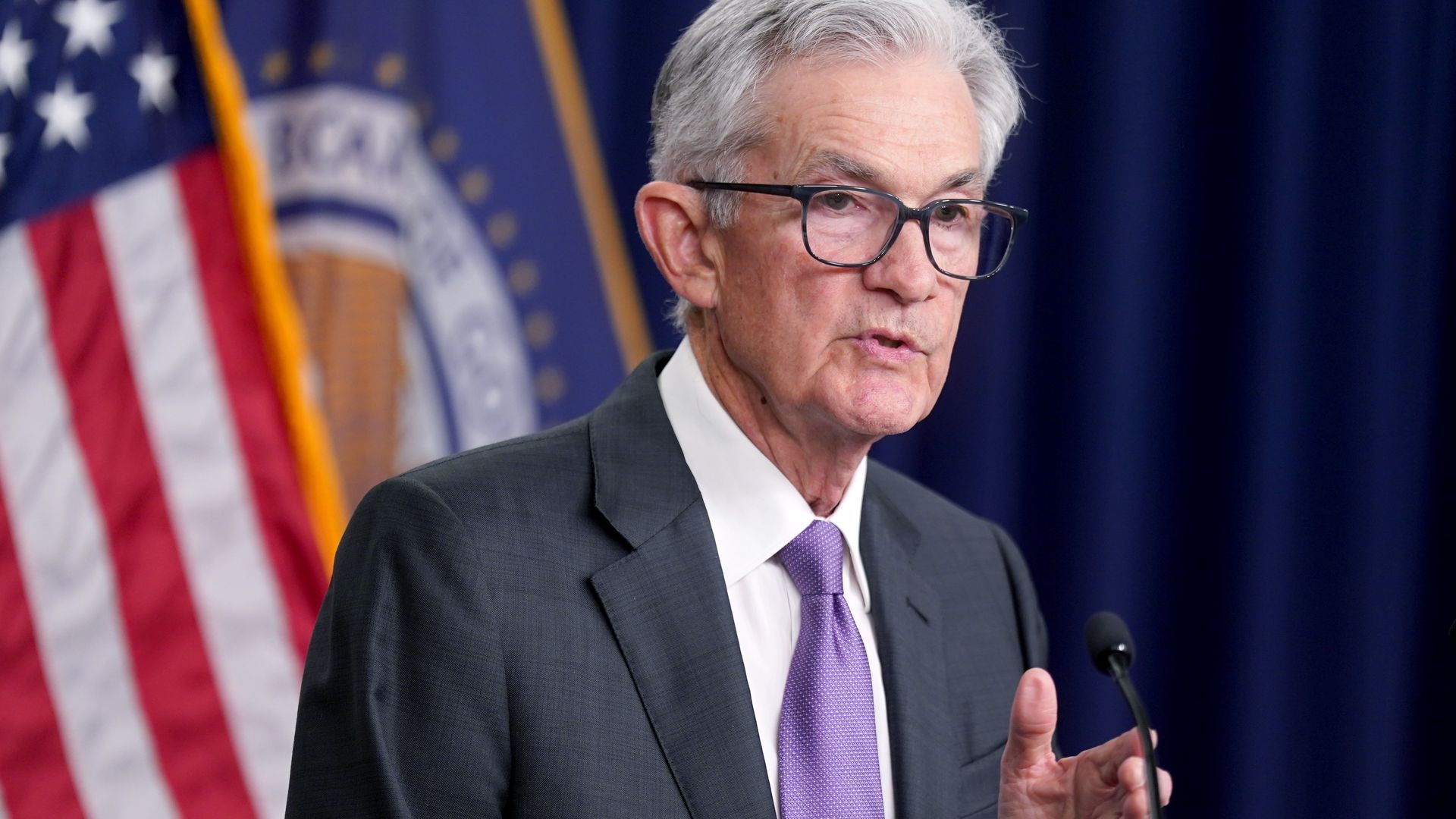
The Federal Reserve held interest rates steady on Wednesday for the sixth straight time and acknowledged a "lack of further progress" on cooling inflation.
Why it matters: The latest economic data show prices are still rising too quickly, complicating the Fed's projections of lower interest rates this year.
When you use a pressure cooker,it can take an annoyingly long time after your dish is done cooking for the pot to cool to the point where you can safely open the lid. And so it is with the U.S. job market.
Why it matters: The evidence that the labor market has moved past its overpressurized 2021-2022 levels continues to mount, but it is remarkable that it has remained this hot for this long.
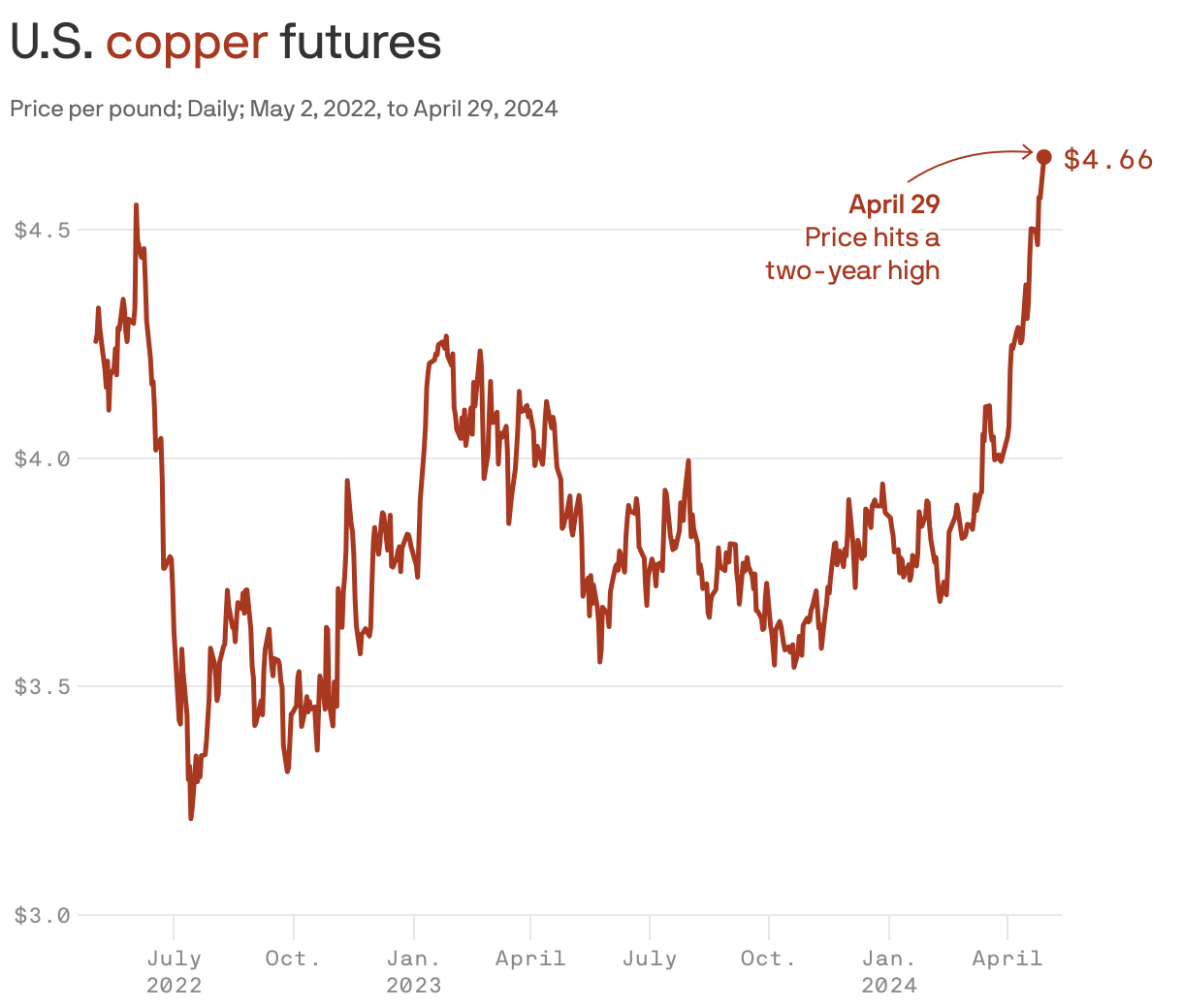
Copper prices have been on a tear, converging with a broad rally in commodities, and flirting with their highest levels since 2022.
Why it matters: Copper's versatility in construction, electronics, transportation and now AI applications makes it a go-to for industrial purposes, and as a useful gauge of economic health that's coined it the nickname "Dr. Copper."
The U.S. Drug Enforcement Agency is recommending that cannabis be reclassified as a Schedule III drug, which would codify that it has medicinal value and is less dangerous than its current Schedule I designation, Axios has confirmed.
Why it matters: The U.S. cannabis industry needed a win, just days after one of its best-known companies, MedMen, filed for bankruptcy protection.
Amazon on Tuesday reported a blowout first quarter, with its results boosted by cloud computing and advertising activity.
Driving the news: The retail giant posted $143.3 billion in revenue for the first quarter, a 13% increase from a year ago, and well above analyst expectations.
All those years playing Pac-Man might finally pay off.
State of play: Dave & Buster's will soon allow customers to bet with each other on their performance at the chain's arcade games.
Gaming tech company Lucra announced today that it will integrate the capability into the Dave & Buster's app, "allowing loyalty members to digitally compete with each other, earn rewards, and unlock exclusive perks."
💭 Nathan's thought bubble: Maybe I can get rich playing Whac-a-Mole.
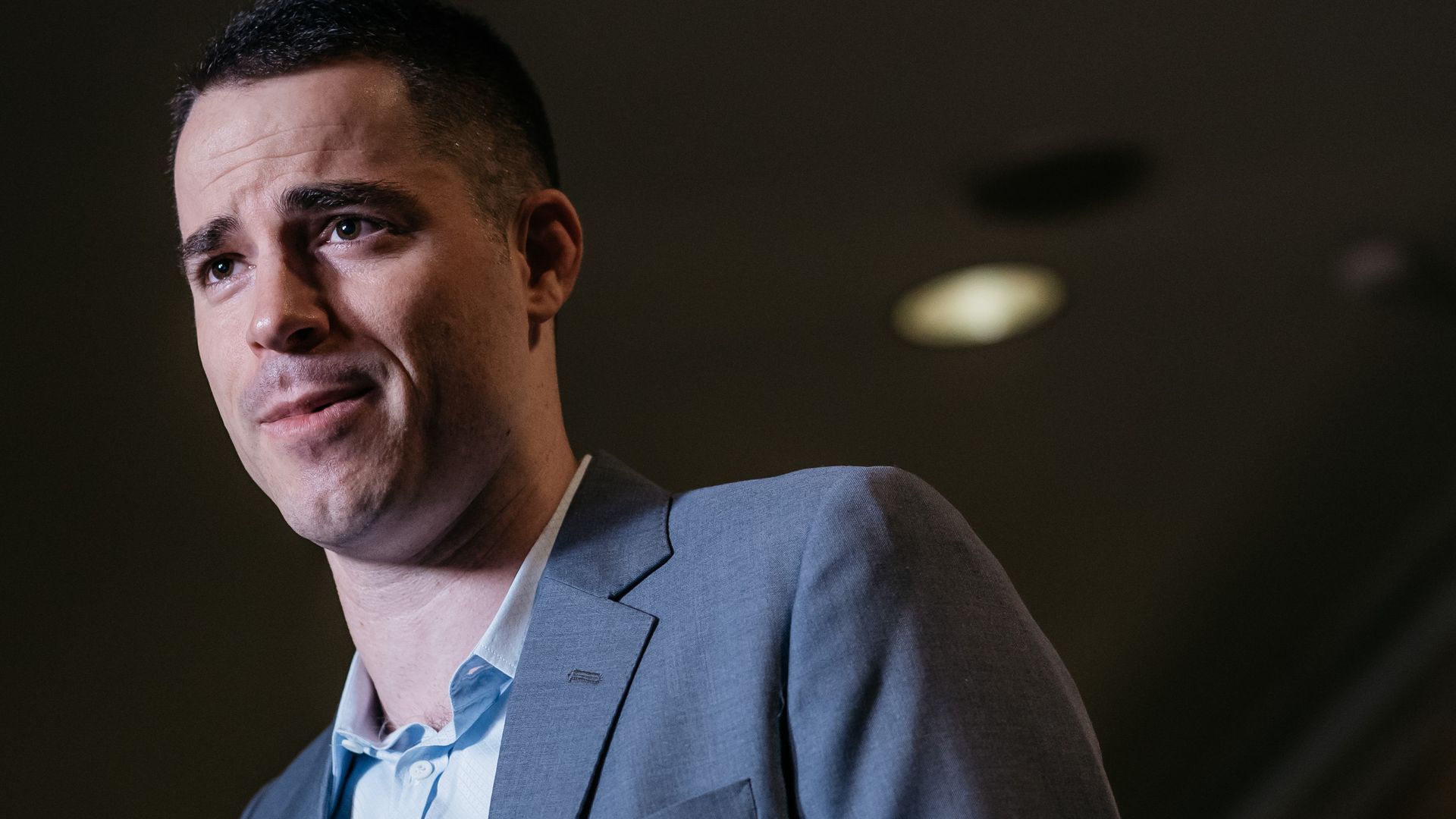
Roger Ver has been arrested for tax evasion on the sale of $240 million worth of bitcoin in Spain. He awaits extradition.
Why it matters: The 45-year-old is from an early vein of Bitcoin investors with deep allegiance to libertarian values. He renounced his U.S. citizenship in 2014, to become a citizen of St. Kitts, in the West Indies.
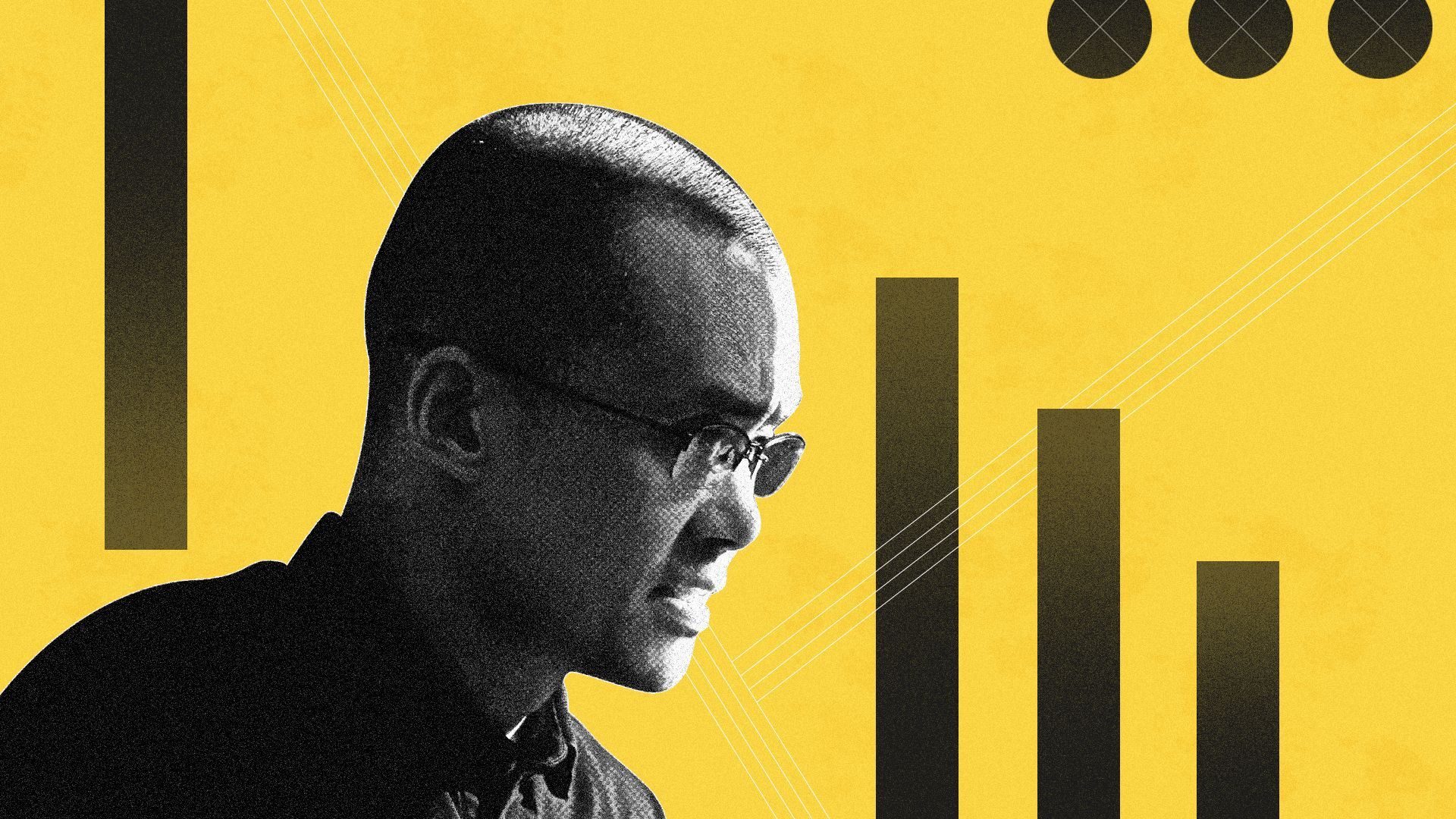
The richest man in the blockchain industry, Binance founder Changpeng Zhao (CZ), was sentenced in a Seattle federal court Tuesday to four months in prison.
If artificial intelligence providers get good at powering down quickly they can get access to a lot more sources of power, with much better terms, at least that's how bitcoin miners see it.
Why it matters: AI is projected to be one of the most transformative technologies in decades, but only if it can access torrents of new electrical power.
This new demand is a shock to the power industry, which had been retiring plants as it watched energy consumption go down in the U.S.
Friction point: Axios spoke to Bitcoin miners, an industry that lives and dies by its ability to access surplus electricity, about how AI teams can meet their need for power.
Yesterday we wrote about the new accounting standard for cryptocurrency and noted that MicroStrategy — which has lots of bitcoins — has not adopted it.
Between the lines: The tell was the latest impairment loss on its bitcoin holdings, which is how the former accounting rules worked, only permitting gains to be shown when the assets were sold.
The intrigue: The company had supported the push for new rules.
EigenLayer, the security-as-a-service protocol driving most of the demand in decentralized finance this year, has announced a token: EIGEN.
EigenLayer enables derivatives of liquid staking derivatives in order to incentivize decentralized networks of computers checking computers.
Why it matters: EigenLayer is the biggest new thing to come along in the bear market, so this token is sure to be huge.
Yes, but: Wow, are they being control freaks about it.
In the weeds: 15% of the total supply will be given to folks who have used the protocol, a third of that is set aside for "Season 1," for those who started participating before March 15.
A token called burning circle (CIRCLE) has agreed to transfer its website to Circle, the company behind the dollar stablecoin USDC.
Why it matters: The cryptocurrency world has been one that likes to play fast and loose with names and brands, especially in the slapdash world of tokens — but it has its limits.
Apparently, some of the established players in the space stopped being amused if one of them came too close to their brand identity.
The latest: On its X account, @UltraroundChaos (the only of the channel's projects that's left), there's a post describing what it has agreed to do.
In it, the project notes that it plans to comply with all requests made, including transferring the domain circlecoin.blue to Circle Financial.
As the looming electricity demand from artificial intelligence datacenters has lawmakers and grid operators scrambling for solutions, Bitcoin miners point to a partial solution: powering down when a utility needs them to.
Why it matters: AI is projected to be one of the most transformative technologies in decades, but only if it can access torrents of new electrical power.
New data on Tuesday shows workers still see faster pay growth and pricier benefits than in pre-pandemic times, as the labor market continues to flourish.
Why it matters: That is one huge factor keeping the economy healthy. But it raises red flags for Federal Reserve officials worried about lingering inflation, which now appears more difficult to stamp out than at the end of last year.
A confluence of powerful forces — including major real estate investment and more savvy fiscal management — is putting Detroit back on the map more than a decade after its historic bankruptcy.
Why it matters: The city is shining in the national spotlight after an attendance record-shattering stint as host of the NFL Draft highlighted a drastic downtown revitalization.