Health experts and the agricultural sectorare watching the bird flu outbreak in dairy cattle closely.
Why it matters: The virus has infected a range of animals and it's raising questions about the risk posed to humans.
State of play: There's been one mild human infection detected so far, in a person exposed to dairy cattle, but some researchers suspect not all cases in workers are being spotted.
U.S. regulators said this week that 30 retail store ground beef samples tested negative for the virus and that preliminary test results of other dairy products show that pasteurization inactivates the bird flu virus, Reuters reports.
I was among nearly 3,000 people who traveled from around the world to Ottawa, Canada, late last month to talk and think about the problem of global plastic pollution.
Why it matters: The United Nations has a goal of creating a legally binding global plastics treaty aimed at everything from cutting production to creating a circular economy that could impact nearly every sector — from oil and chemical to packaged goods and retail.
The big picture: Much like the energy transition, solutions to this problem will be complex, expensive and highly localized.
Coinbase Global just showed how well it can perform when crypto markets are good with Thursday's earnings results, but comments from the C-suite point to what could become its next, more meaningful growth driver.
Why it matters: The U.S's largest crypto exchange is a barometer for how the industry is doing, and where it's going. Where it's going, it appears, is payments.
The labor market isn't the turbocharged hiring machine of the last couple of years. Instead, hiring looks to be moderate, steady and solid.
Why it matters: Friday's employment report should ease fears that the job market is reaccelerating — while offering reassurance that it's still healthy, with few signs the economy is in trouble.
The fact that Telegram is based in Dubai has made a cryptocurrency linked to the mega-messaging app attractive to the original hedge fund for blockchain investment.
Between the lines: Pantera Capital yesterday announced it was backing the TON network, done through an eight-figure investment entirely in TON tokens, according to a person familiar with the matter.
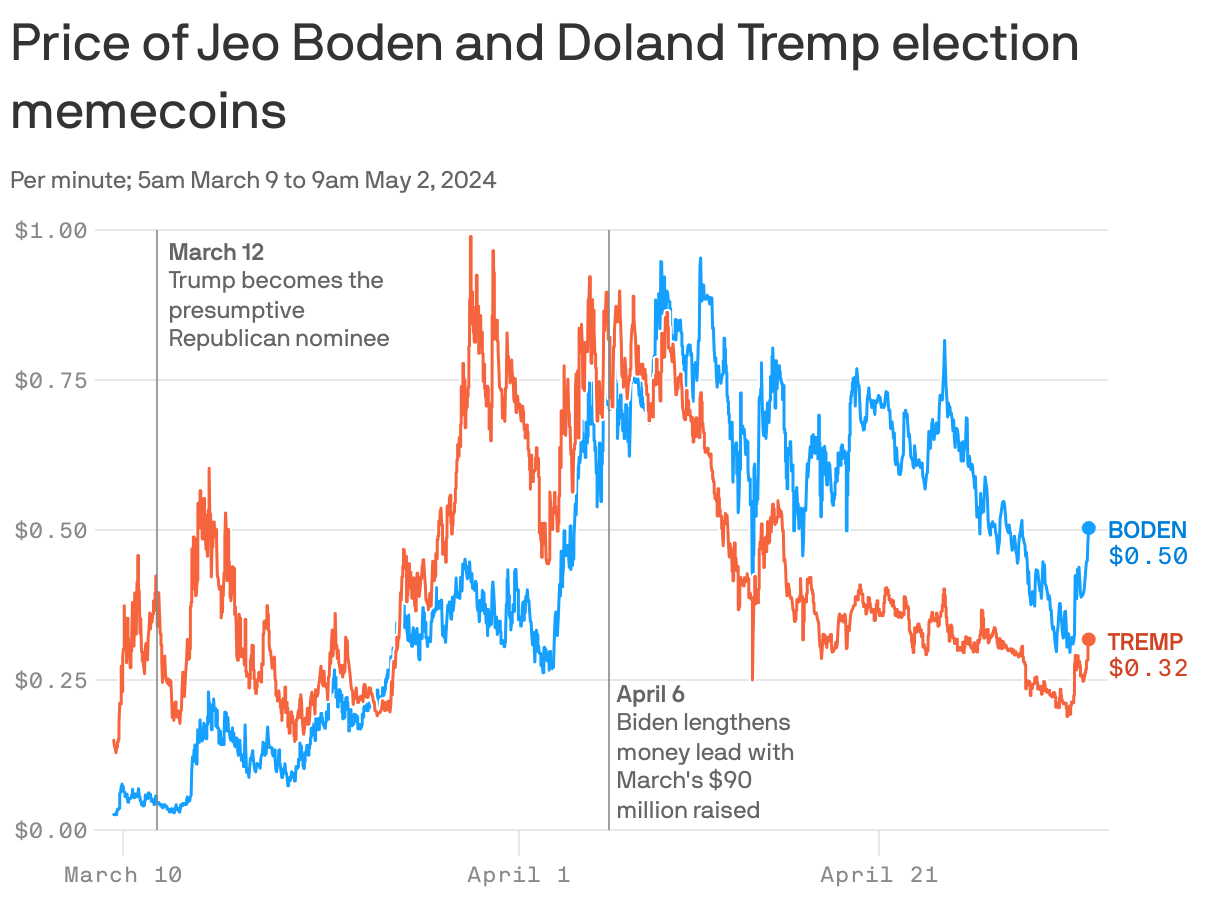
These are two Solana memecoins with intentional misspellings of the main presidential candidates' names. Data: CoinGecko; Chart: Axios Visuals
If you squint, memecoins are looking a little like a prediction market for the U.S. presidential race.
Why it matters: Polls can tell you one thing, but markets can tell you what the galaxy brain thinks will happen.
Zoom in: Memecoins are cryptocurrencies meant simply to capture an idea. Dogecoin, which has its own blockchain, has been the iconic memecoin.
Solana, however, which is built to be cheap and easy, facilitated memes as tokens. The market exploded with the launch of Pump.fun which makes creating such a token the work of mere minutes.
The U.S. economy added 175,000 jobs in April, while the unemployment rate ticked up to 3.9% from 3.8%, the Labor Department said on Friday.
Why it matters: Jobs growth slowed from the prior month's hot pace, but the data suggests that the labor market is still chugging along with healthy demand for workers.
In the U.S., where it's celebrated with tacos, tequila and margarita specials, Cinco de Mayo is often incorrectly believed to be Mexico's Independence Day.
Reality check: Cinco de Mayo — or, in English, May 5 — marks a Mexican victory over France 50 years after Mexico's independence.
One "Survivor" contestant's rabid hunger is Applebee's good fortune.
State of play: A hangry Liz Wilcox erupted with rage during Wednesday night's episode after fellow contestant Q Burdette did not invite her to an Applebee's meal as a reward for winning a challenge.
"I'm pissed!" Liz screamed in a viral rant that "Survivor" fans are calling one of the most iconic moments in the show's 46 seasons.
Zoom in: Liz couldn't eat much on the island due to severe allergies, so she was super hungry.
She also desperately wanted to go for sentimental reasons: She regularly dines at Applebee's with her daughter.
Crypto scams tend to get a lot of attention, even when they don't actually involve cryptocurrencies.
The big picture: When people discuss the risks around scams in crypto, it's often linked to digital assets' specific dangers: backdoors, anonymous founders and new ways to cover one's tracks. There are certainly scams in crypto, but there are also plain old scams that just use "crypto" as a hook.
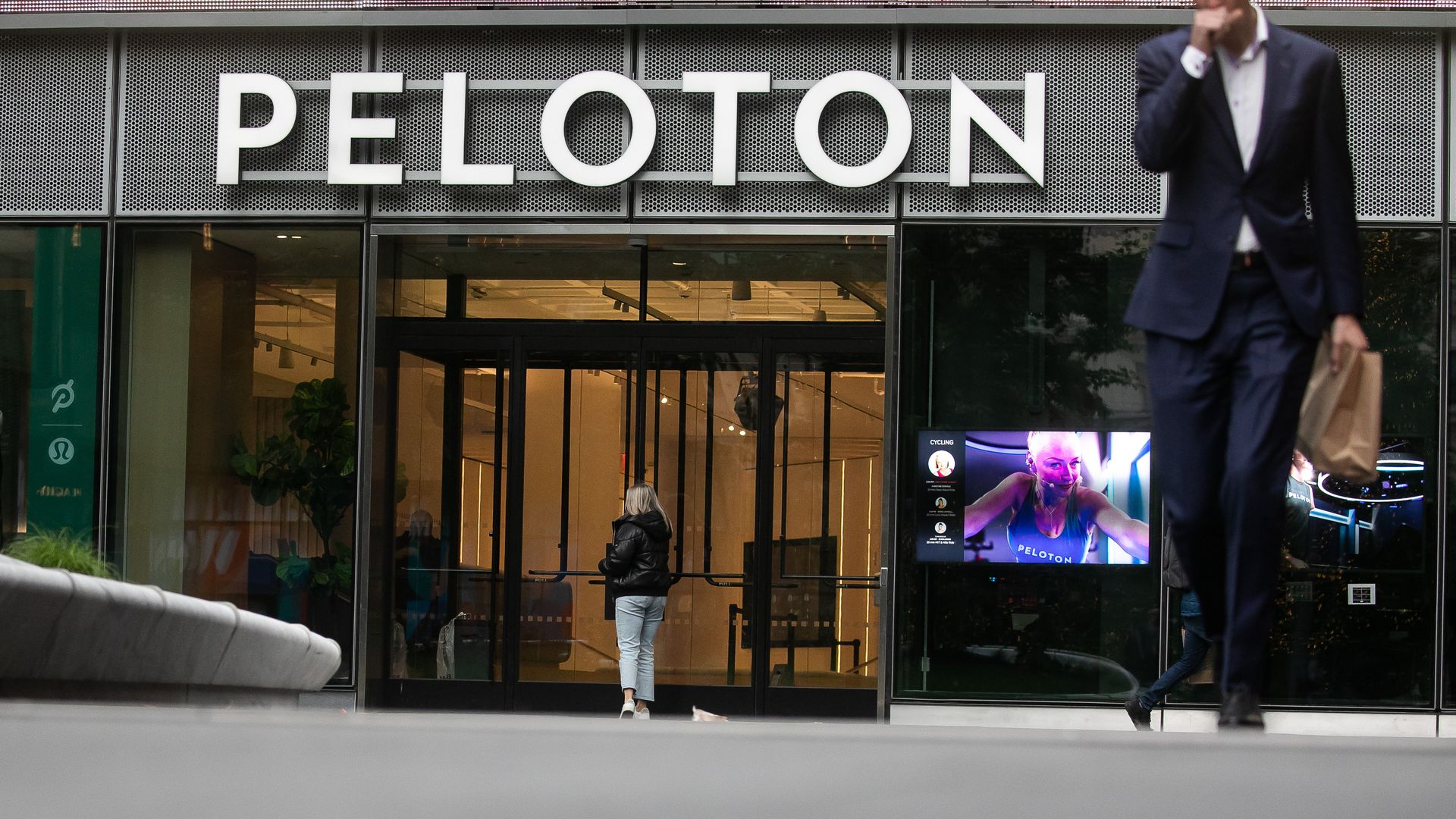
Peloton Interactive said CEO Barry McCarthy will step down from his role as the connected fitness company works to turn itself around.
Why it matters: The struggling company, whose shares are down around 90% from their 2020 peak, is searching for a replacement and slashing 15% of its workforce.
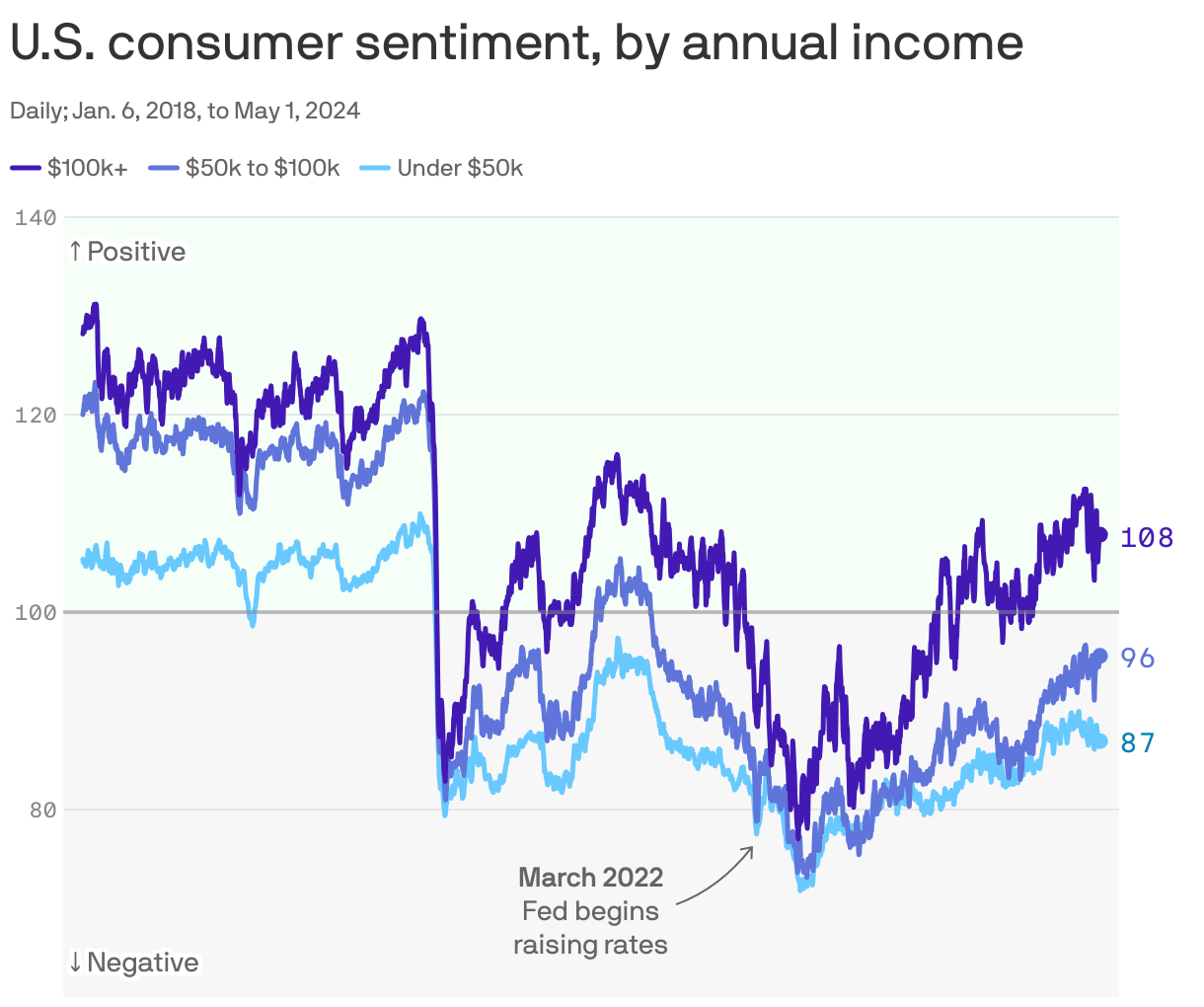
Consumer sentiment, though still lower than it was in 2019, has gone up since the Fed started hiking rates, and inflation began moving down. That holds across all income groups.
The big picture: Consumer vibes among higher earners have been at or near positive territory for the past year, per Morning Consult's sentiment index.
Middle-income Americans are getting closer to positive territory.
Those earning less than $50,000 a year are in the worst spot — likely because these are the people most impacted by inflation, particularly gas and food prices.
Massachusetts is a leader in life sciences, academia and medicine, but competing states with nicer weather and friendlier economies are breathing down its neck.
Why it matters: When Massachusetts companies in cutting-edge sectors look to grow their businesses elsewhere, it harms the local economy and the state's self-perceived reputation as home to the country's smartest workforce.
Boston is in the vanguard of cities trying to coax developers to convert office buildings to apartments, offering deep tax discounts as an incentive.
Why it matters: Office-to-residential conversions are a hot topic nationally because of how the COVID-19 pandemic forever changed the way we live and work.