The Biden administration has been looking for ways to provide more student loan borrowers with relief.
The big picture: While the Supreme Court has blocked Biden's signature student loan forgiveness plan, the administration has managed to dole out almost $132 billion in relief for more than 3.6 million borrowers – and has signaled there's more to come.
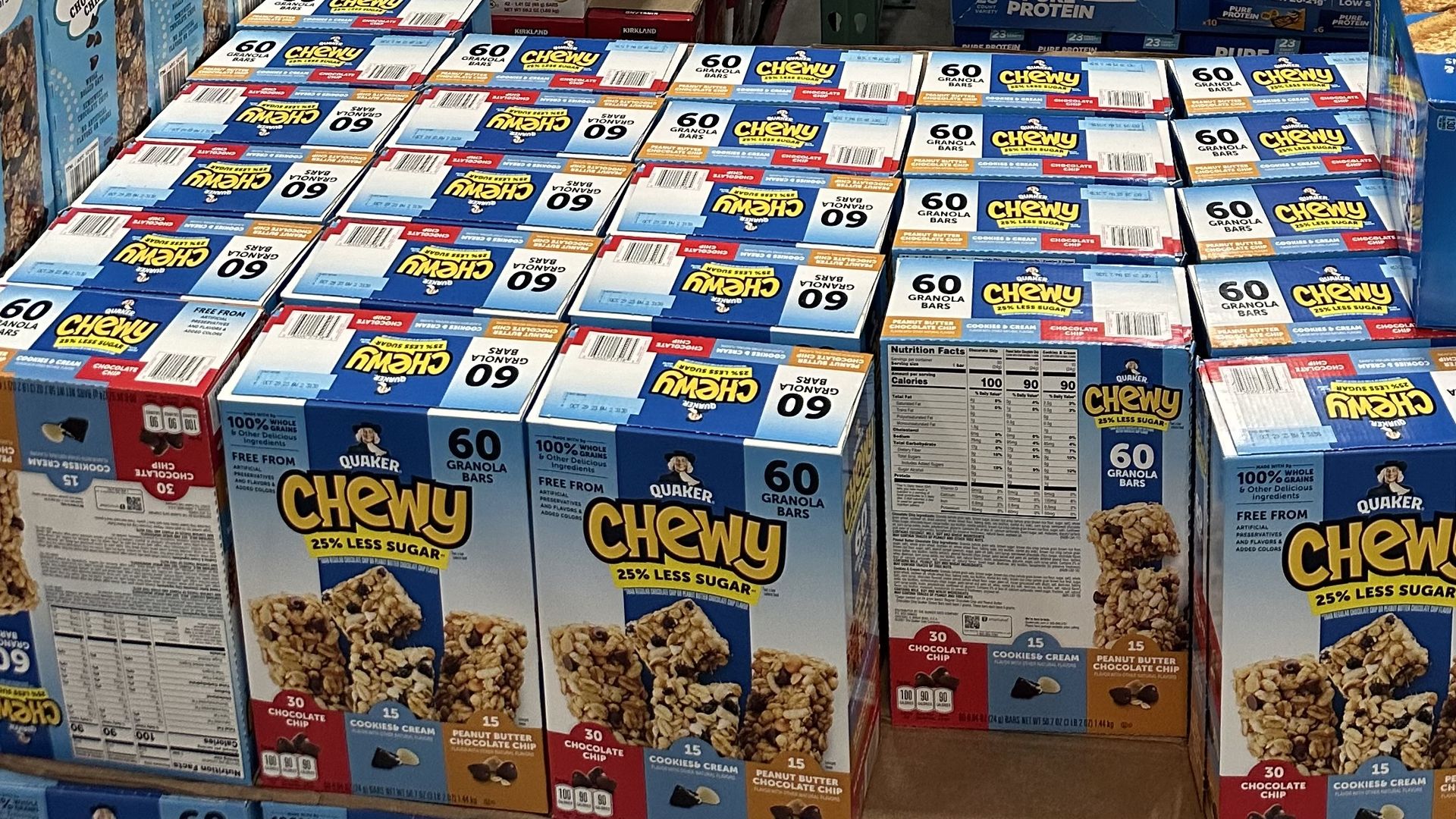
The Quaker Oats Company is recalling dozens of granola bar and cereal products for potential salmonella contamination in a new recall posted Friday.
Why it matters: The salmonella bacteria can "cause serious and sometimes fatal infections in young children, frail or elderly people, and others with weakened immune systems," the company said in its recall.
There is no greater collective action problem than global warming — and there has never been a more impressive attempt to overcome collective-action obstacles than the COP process, the latest iteration of which has just wrapped up in Dubai.
Why it matters: It's easy to be cynical about the spectacle of thousands of delegates flying atmosphere-destroying planes to a petrostate capital for a global-warming conference chaired by the head of the Abu Dhabi National Oil Company. But in a fracturing and deglobalizing world, it's worth taking stock of the degree of consensus and real progress that has been made over the past 30 years.
The price of gas is coming down — on average it's now just $3.07 per gallon, down from a high of $5.01 in June 2022. But the extra amount you have to pay to put premium high-octane gas in your vehicle only seems to ever go up.
Why it matters: Many cars these days, including pretty accessible vehicles like the Mini Cooper or the Subaru BRZ, require premium fuel.
For most of us, wealth is a backup for the risk of losing our income. For the extremely rich, however, guaranteed future income can be a backup for the risk of losing their wealth.
Why it matters: Whether you're a lottery winner or a baseball superstar, sometimes the person you can least trust with your money is yourself.
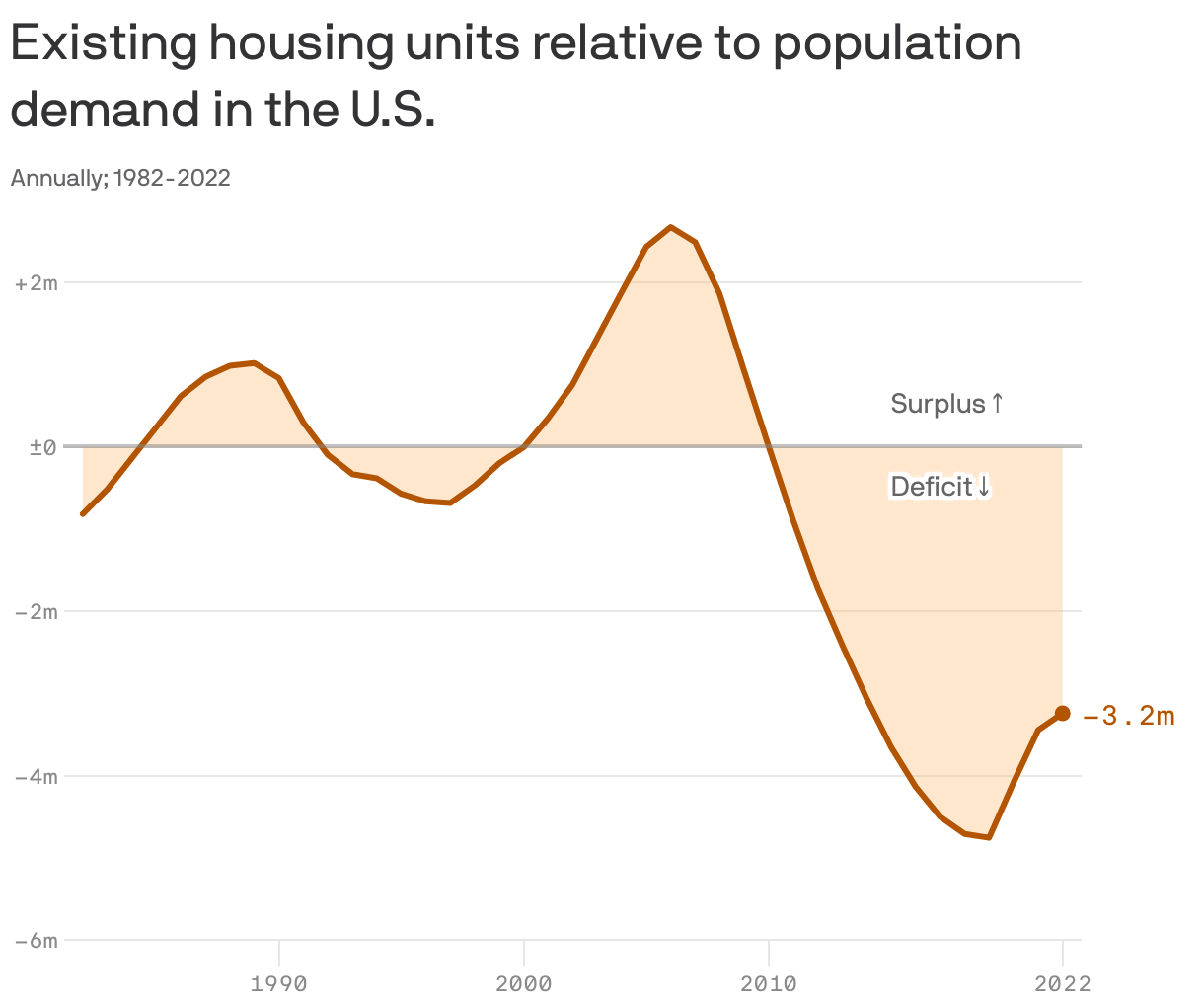
Data: Hines analysis of Census Bureau and Moody's data; Note: Population demand is a theoretical housing demand metric based on long-term household formation and homeownership rates by age cohort; Chart: Axios Visuals
That's 2.5% of existing U.S. inventory as of 2022, according to figures that Hines, a global real estate developer and investment company, shared with Axios.
Why it matters: There aren't enough homes to keep up with the increase in households.
Other estimates also put the size of the country's housing shortage in the millions.
Public, the investing startup, is getting in on the high-yield savings game, Axios' Javier E. David writes.
Driving the news: Public announced yesterday that it would offer a zero-fee, no minimum or maximum balance cash account to anyone who signs up, with a generous 5.1% annual percentage yield.
The details: Public is offering account protection for up to $5 million, multiples higher than the standard FDIC bulwark (which became a major focus after the meltdown of Silicon Valley Bank in March).
— A Pfizer employee on an internal message board, according to the Wall Street Journal, after CEO Albert Bourla announced layoffs but said the company was nonetheless positioned for growth.
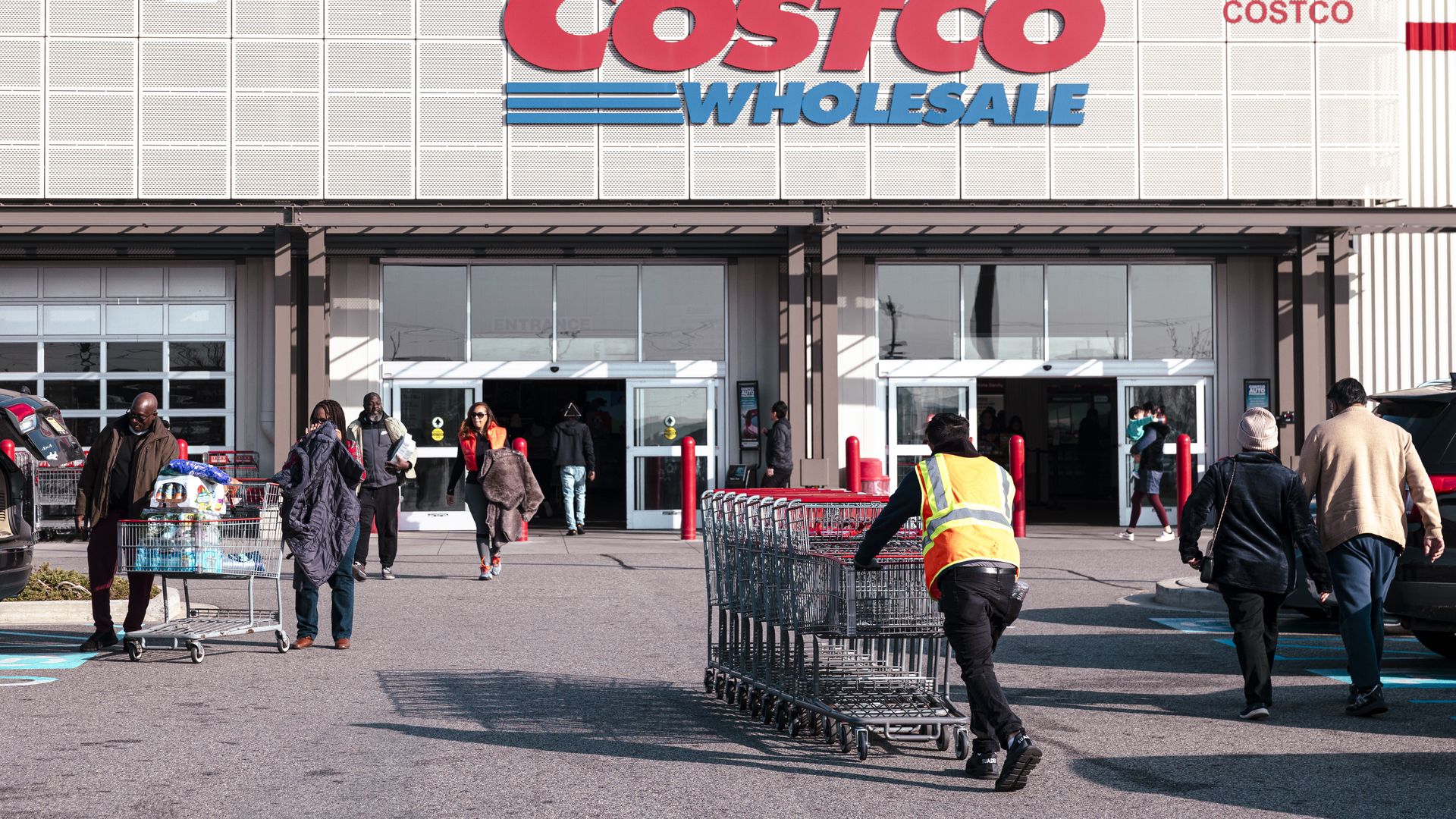
Shoppers are turning to a lesser-known gold retailer for their precious metal needs – Costco.
Driving the news: The companysold $100 million in gold bars in its first quarter ending Nov. 26, Costco CFO Richard Galanti said during an earnings call Thursday.
The U.S. economy is on track to avoid a recession next year as inflation returns to normal, according to new economic projections released by the Congressional Budget Office.
Why it matters: The nonpartisan agency expects more moderate economic conditions in 2024 — including slower growth and higher jobless rates — than previously anticipated. But its projections suggest America will skirt an all-out contraction in growth.
U.S. companies' debt default rates have been unusually low since 2021, but that's changing now.
What's happening: The default rate has been climbing all year, and in November it reached its historical average of 4.1%, according to S&P Global Ratings.
The most pronounced dynamic shaping U.S. cities heading into 2024 is "the donut effect" — a hollowing of the urban core as people, jobs and retailers flee to the suburbs and exurbs.
Why it matters: For all the talk of 2023 being the year of downtown recovery, the reality looks more like a swirl of experiments in how to attract residents, commuters and visitors to cities where the pulse beats differently than it did pre-pandemic.