Electric carsmight not have much of a future — but electric pickups and SUVs are looking promising indeed.
Driving the news: General M0tors CEO Mary Barra said Tuesday that the automaker is discontinuing the Chevrolet Bolt — both the car version and the small utility version — and will revamp the factory where the Bolt is made to assemble electric trucks.
Slumping package volume triggered a decline in UPS revenue as the shipping service felt the effects of slowing retail spending.
Driving the news: UPS said Tuesday that its domestic package volume was down 5.4% in the first quarter, compared with a year earlier — worse than Goldman Sachs' estimate of a 3.3% decline.
The proposed deal between bankrupt crypto lender Voyager Digital and Binance's U.S. unit is no more.
Why it matters: Even with bitcoin and ether bouncing back from last year's doldrums, regulatory uncertainty could put deals on ice, as some of the cryptocurrency's institutions struggle to find their footing.
Driving the news: Voyager on Tuesday afternoon said that it had received a letter "terminating" their previous purchase agreement.
In a statement, Binance U.S. explained that "while our hope throughout this process was to help Voyager's customers access their crypto in kind, the hostile and uncertain regulatory climate in the United States has introduced an unpredictable operating environment impacting the entire American business community."
State of play: The dissolution of the deal follows a months-long saga of U.S. financial regulators opposing it, with both the Securities and Exchange Commission as well as the New York State Department of Financial Services questioning the acquisition.
The intrigue: A New York court denied the government's request to halt the deal and last week, the bulk of the deal was poised to get the go-ahead.
Flashback: Reports of Binance U.S.'s interest in buying Voyager's assets started after the dramatic collapse of crypto exchange FTX.
What they're saying: "Consistent with the plan, we will now move swiftly to return value to customers via direct distributions," Voyager said in a tweet thread.
One way or another, the U.S. government is going to have to get involved in determining the future of First Republic Bank.
Why it matters: First Republic is currently in a state of limbo, its future highly uncertain — and that can't last forever. When the eventual resolution comes — in a matter of days rather than weeks, if First Republic management gets its way — it will unavoidably have government fingerprints all over it.
The first Barbie doll representing a person with Down syndrome will “allow even more children to see themselves in Barbie," toy giant Mattel said Tuesday.
Why it matters: Over the years, Mattel has been criticized for promoting what some said was a narrow, unrealistic ideal of what is beautiful but has been working to diversify by adding more body sizes and features, an array of skin tones and hair textures.
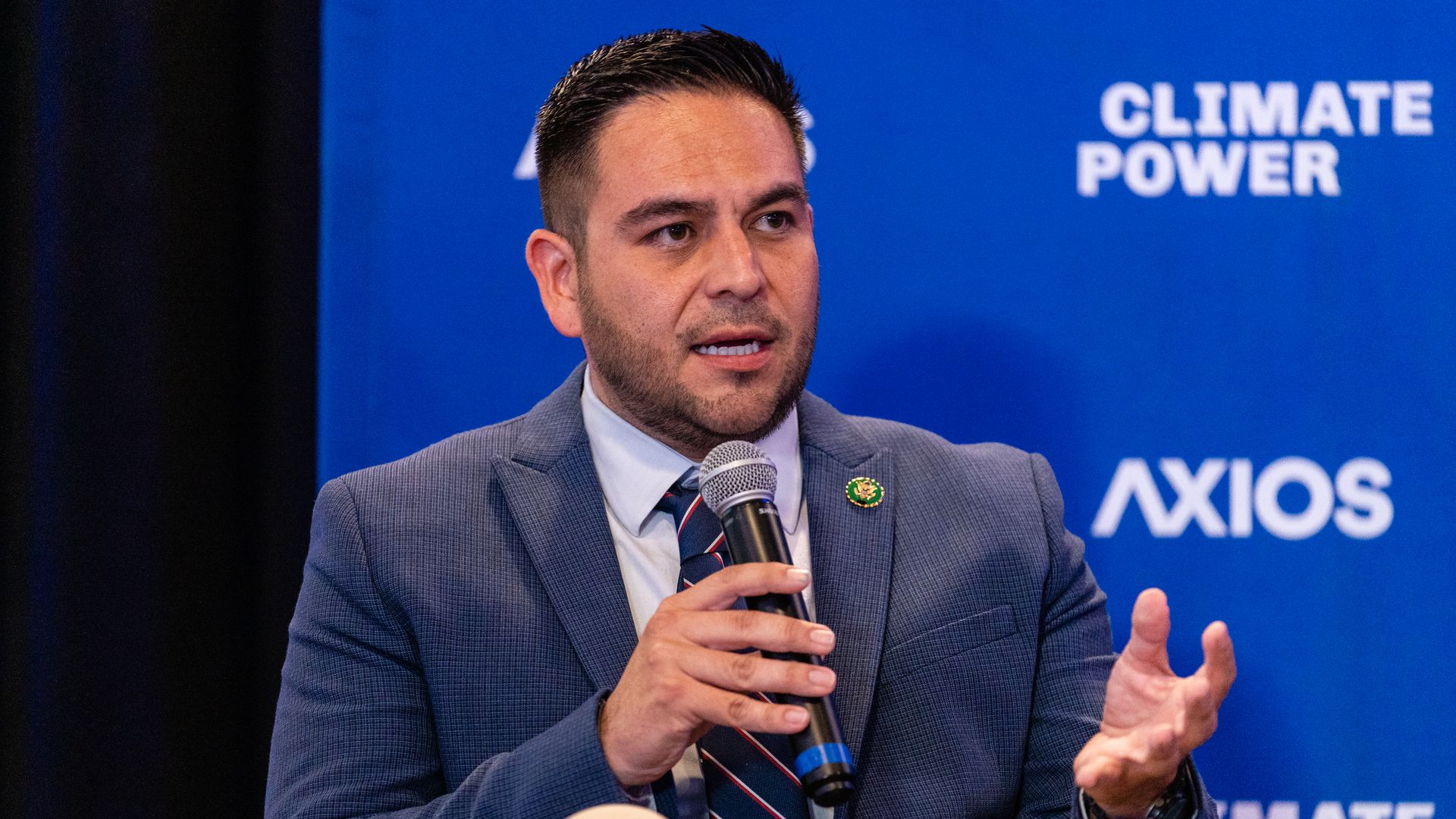
Latino workers are crucial to the oil and gas industry but remain vulnerable to pollution andthe future transition to renewable energy jobs, lawmakers and business leaders say.
Driving the news: U.S. Reps. Gabe Vasquez (D-N.M.) and Sylvia Garcia (D-Texas), both from major oil and gas-producing states, said during an Axios Latino event last week that advocates and industry leaders need to do more to engage Latinos, especially workers, on climate change.
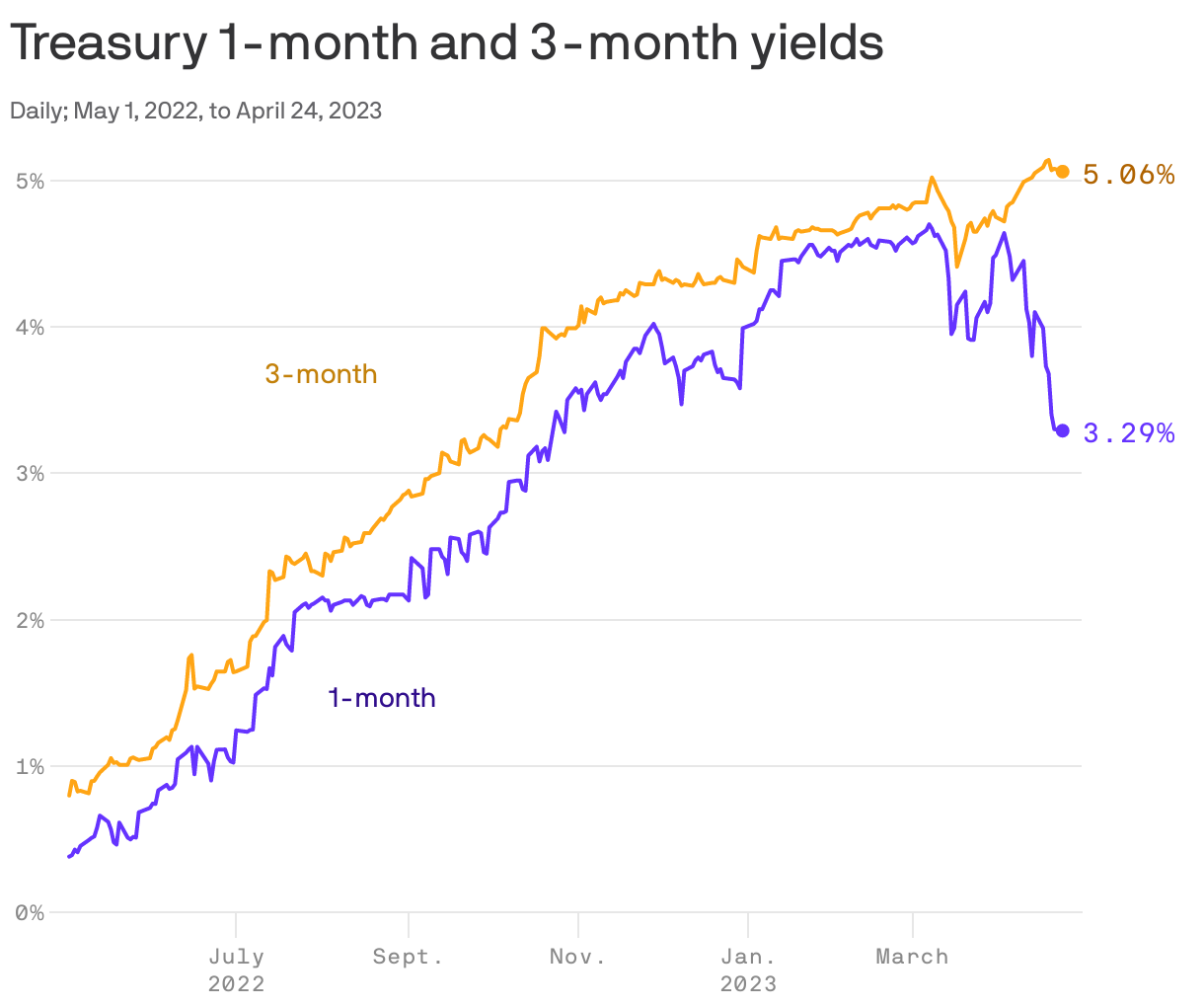
An unprecedented dislocation in the Treasury markets is a sign of extraordinary nervousness about the upcoming U.S. debt ceiling negotiations.
Why it matters: Short-term interest rates are normally the most boring and predictable part of international financial markets. The current chaos is a sign of just how seriously traders are taking the extreme level of uncertainty in Washington.
Lawmakers are far from reaching a deal to raise the debt limit, with economists warning about the potential macroeconomic consequences of a deadlock and possible default.
Driving the news: The latest warning comes from Moody's Analytics, the economic research arm of the ratings agency.
Most venture capitalists seem to believe that artificial intelligence is the most transformative tech innovation — and investment opportunity — since mobile. Or, in some cases, since the wheel.
The big picture: Their certainty doesn't extend much further.
Finastra Group, a London-based fintech owned by Vista Equity Partners, is in talks with private credit funds about a $6 billion refinancing package, per Bloomberg.
Why it matters: It would be the largest private credit deal ever, topping the $5 billion secured last summer for the leveraged buyout of Zendesk.
Americans with a bit of cash to spare could earn more than 4% interest on a plain vanilla high-yield savings account right now — but few are taking advantage of the opportunity.
Driving the news: Only 7% of Americans with short-term savings are earning that much, per a Bankrate survey last month.
Wall Street analysts are keeping an increasingly close eye on the U.S. Treasury's published finances, as they try to estimate when the Federal government could run out of money if the debt ceiling isn't lifted.
The big picture: The U.S. reached its statutory debt limit of $31.4 trillion in January, constraining the Treasury's ability to borrow.
Productivity improved considerably within the customer service department of a Fortune 500 company that used generative AI, per a new study from researchers at Stanford and M.I.T.
Why it matters: The researchers believe it's the first empirical evidence of the effects of generative AI — artificial intelligence that creates (generates) content, like text or images — on the workplace.
Spotify on Tuesday reported double-digit percentage gains for both monthly active users and premium subscribers for the first quarter of 2023. CEO Daniel Ek told Axios in an interview that the blockbuster numbers "even surprised us."
Why it matters: The numbers helped Spotify beat Wall Street expectations on gross profit margins, a key metric that investors are watching closely for signs the Swedish audio giant's operations can become more efficient.
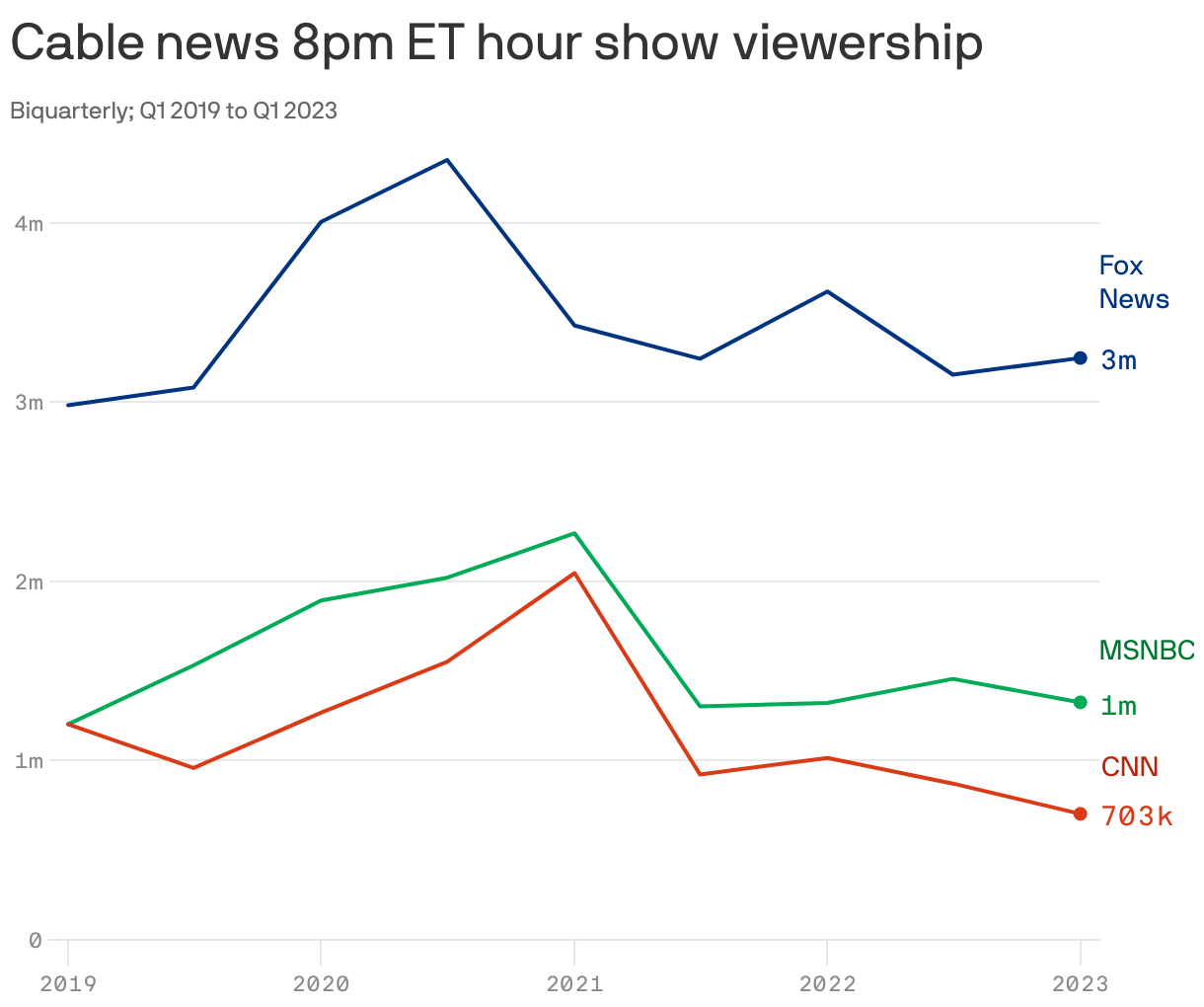
A string of high-profile media firings in the span of 24 hours has redefined the cable news industry as it enters a period of decline.
Why it matters: Cable news has been under extraordinary business pressure, leading programming to become more boisterous and opinionated. But the departure of some of the industry's most controversial figures from the major networks could now temper that ratings race.
It's OK for diners to bring dogs to restaurants' outdoor seating areas if state and local laws — and the restaurant — allow it, the Food and Drug Administration says in new guidance.
Why it matters: The agency weighed in on this hot-button issue just in time for spring, the high season for disputes over Fido's right to dine alfresco — and as cities grapple with whether to extend COVID-era outdoor dining rules.




/2023/04/25/1682448504727.gif?w=3840)










/2023/04/25/1682432277137.gif?w=3840)


/2023/04/24/1682363439014.gif?w=3840)