Ford Motor Co. poached a senior Apple executive, Doug Field, to lead efforts to make its vehicles as smart and indispensable as the iPhone.
Why it matters: Legacy automakers like Ford need Silicon Valley's software prowess as they try to navigate a historic industrywide transformation. The electric, connected and automated cars of the future will be defined by software in the cloud — not the mechanical parts under the hood.
The intrigue: The hiring was seen as a coup for Ford and a blow to Apple, where Field had been a key player on the iPhone maker’s secret car project.
Rumors about the so-called Project Titan have swirled for years, but Apple has said little about the status of its automotive ambitions.
Field wouldn't touch the topic during a briefing with reporters.
"Apple doesn’t talk about new products, and I won’t talk about it either," he said. "Apple works on a lot of great things in total secrecy."
Details: In his new role, Field will be chief advanced technology and embedded systems officer, reporting to Ford President and CEO Jim Farley.
He will lead the development of a new cloud-based, connected-vehicle platform called Blue Oval Intelligence.
It will enable customers to continually update their cars with new features — as they do their phones — or to fix warranty problems without visiting a dealership.
And it will help create new revenue opportunities for Ford through cloud-based services that consumers want.
Background: Field is a boomerang Ford employee, having started his career there in 1987.
His career includes engineering responsibility for some of the world's most iconic products: the Segway scooter, Apple’s Mac computer hardware, and Tesla's Model 3.
What they're saying: "This is a watershed moment for our company — Doug has accomplished so much,” Farley told reporters. “This is just a monumental moment in time that we have now to really remake a 118-year-old company.”
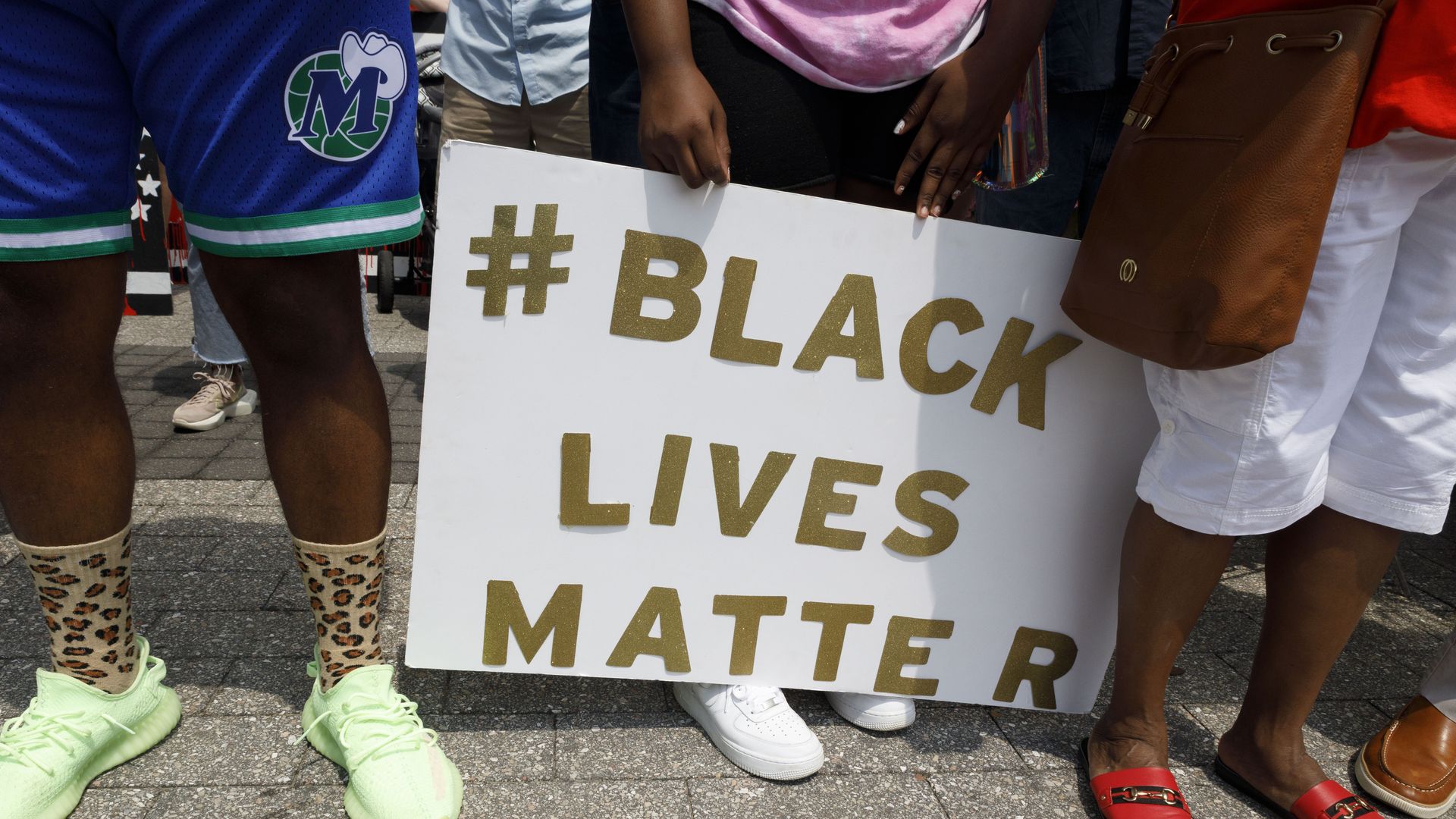
One of the world's biggest apparel companies said a board member, Veronica Wu, stepped down on Tuesday, days after emails obtained by Axios showed Wu dismissed racism in America and said Black Lives Matter activists were the "true racists."
What they're saying: VF Corp. — which owns iconic brands like The North Face, Timberland and Supreme — said Wu's decision to resign "was not the result of any disagreement with VF on any matter relating to VF’s operations, policies or practices."
New iPhones, a new Apple Watch and other products are on tap as Apple Tuesday announced a streaming-only launch event for Sept. 14 at 10am Pacific Time.
Why it matters: This year's iPhone 13 lineup is expected to be more an incremental update than a large-scale shift in direction or upgrade. But with Apple, there's always a chance for some surprises.
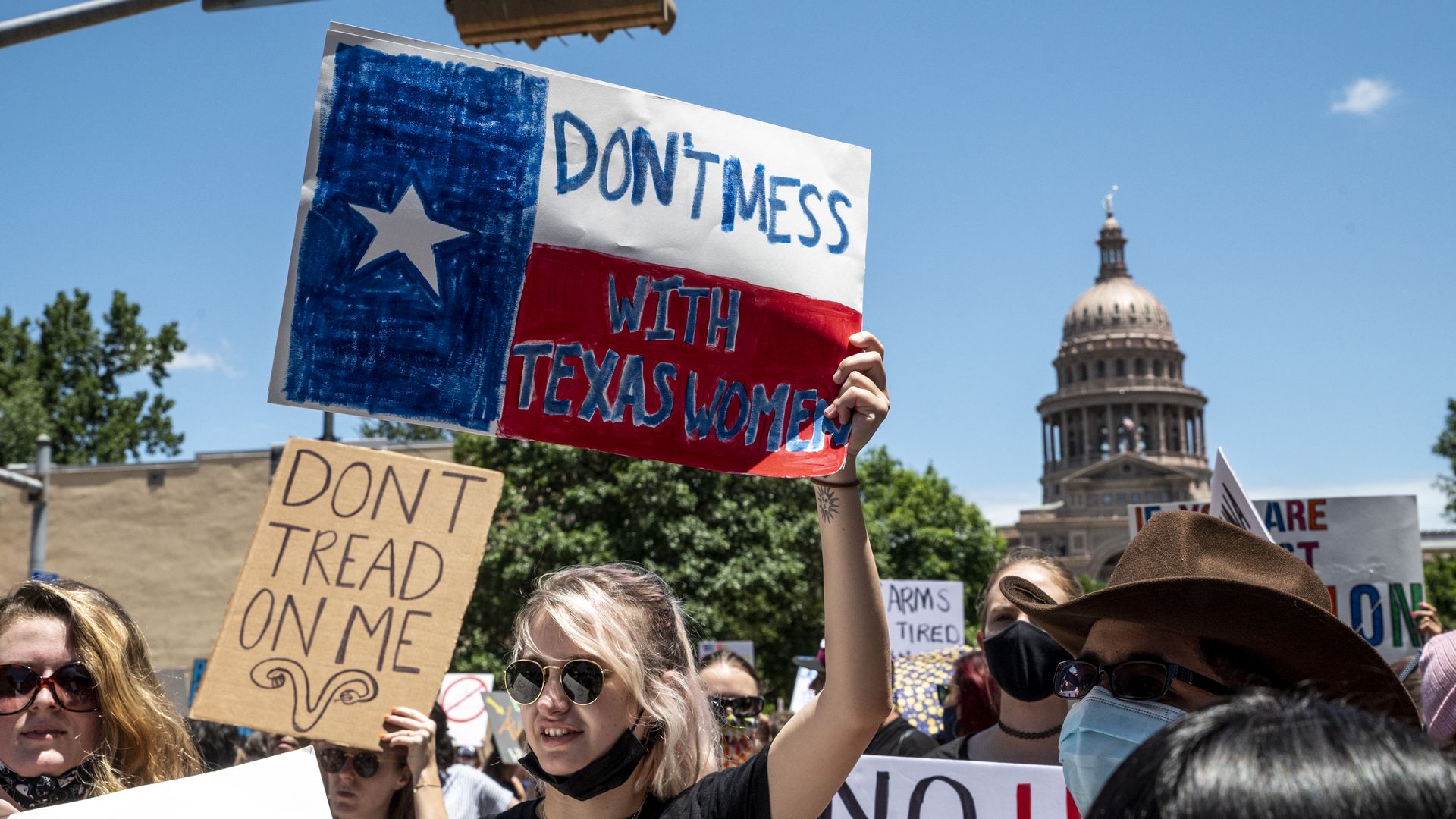
Solugen, a Houston-based chemicals startup backed by top Silicon Valley investors, plans to open a new R&D facility outside of Texas because many of the state's social policies — including its new abortion ban — are making it difficult to recruit employees.
By the numbers: Solugen currently has about 115 employees, most of whom work out of its Houston headquarters. It plans to more than double its R&D capability over the next two years, representing around 100 jobs, with most of those expected to be located in a new facility that it will locate in either California or Massachusetts.
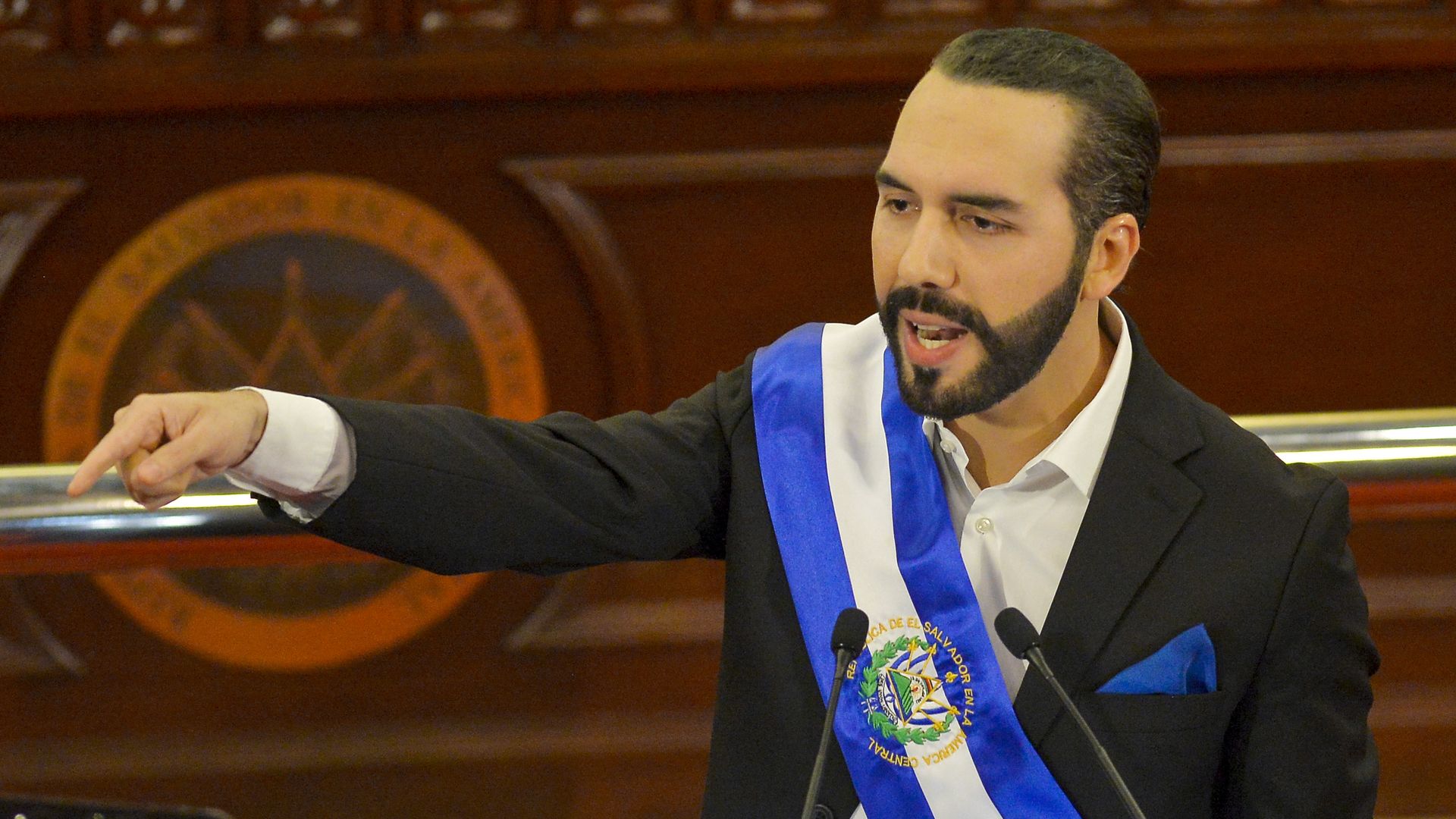
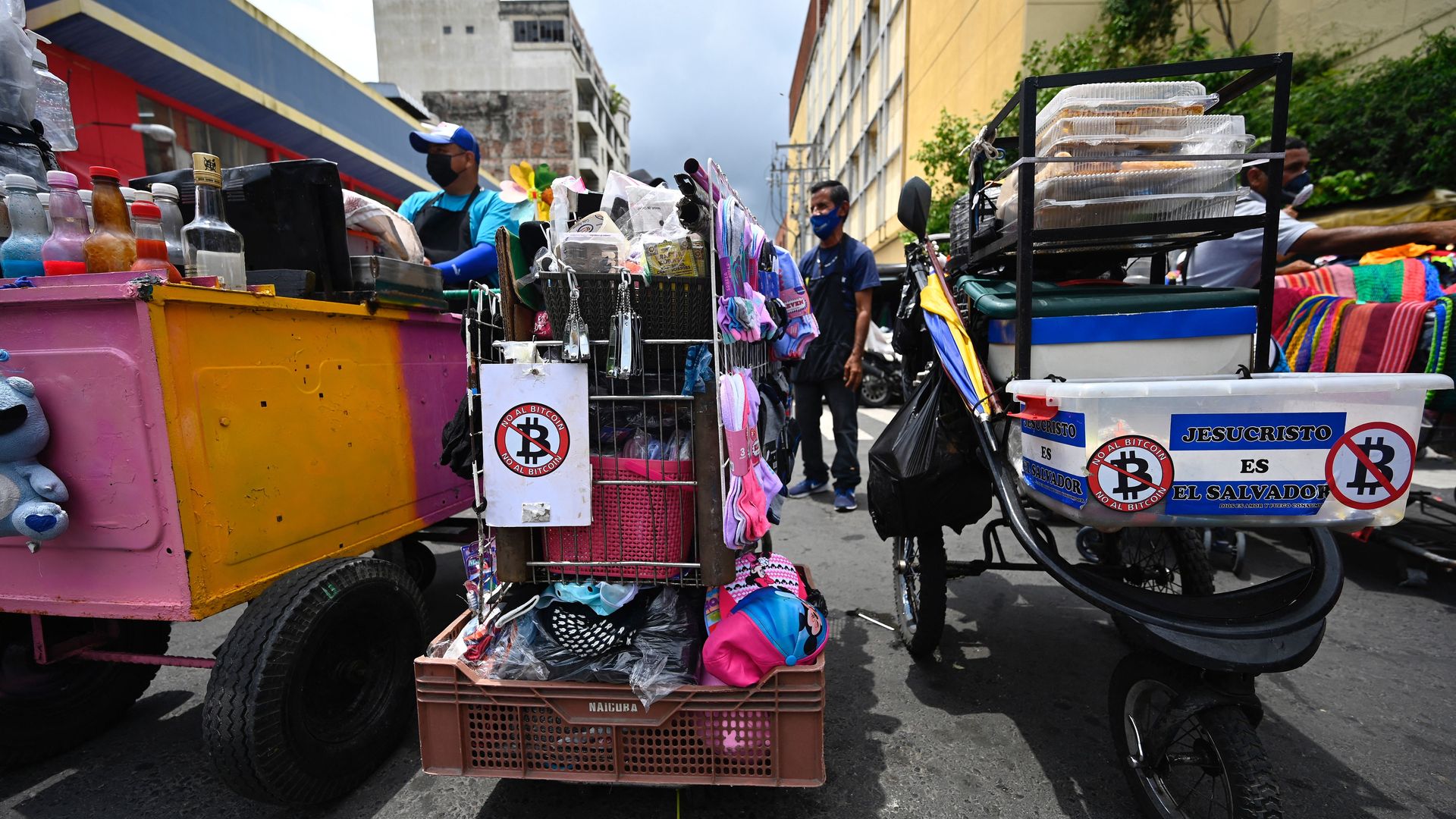
El Salvador’s law making bitcoin legal tender goes into effect today, despite skepticism that the decentralized digital coin can actually work as a country’s currency.
Why it matters: The Central American nation is the first to establish bitcoin as a formal currency.
Dotdash, the digital media company owned by IAC, is launching its first-ever standalone store pegged to its site Liquor.com, which it acquired in 2019.
Why it matters: Dotdash now makes roughly one-third of its annual revenue from commerce. It's hoping standalone e-commerce stores like The Liquor.com Store will accelerate that effort.
Up to 47 million acres of Amazonian rainforest have been damaged in fires since 2001, per a Nature study out last week, but the company Amazon and the Nature Conservancy hope a new initiative may help alleviate the situation.
Why it matters: The rainforest absorbs vast quantities of carbon dioxide and contains about 10% of all known species. But, since blazes are intentionally set to clear land for farming or livestock, some hope providing those farmers compensation may preserve the Amazon.
A longtime tension between Nielsen and major TV networks came to a head last week, underscoring the grim reality that no one in the media industry knows who to trust when it comes to measuring viewership in the digital era.
Why it matters: Nielsen has long been considered the media industry's most authoritative provider of TV measurement. But the rise of streaming and mobile video, especially in light of the pandemic, has put pressure on the company to modernize. Not everyone believes it's up to the task.
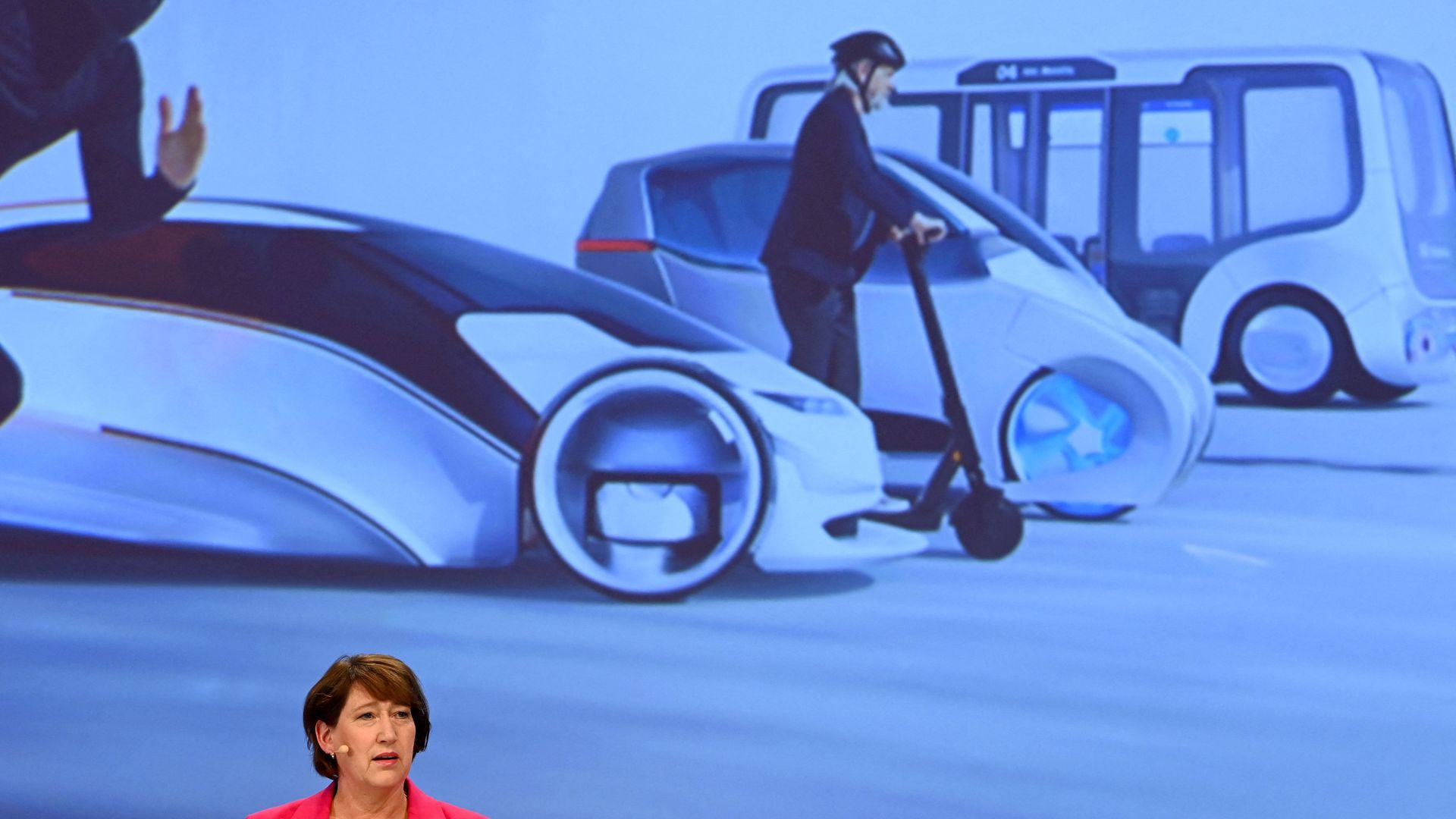
The electric future, near-term and far, is on display at the big IAA Mobility 2021 in Munich this week — even as internal combustion cars remain dominant.
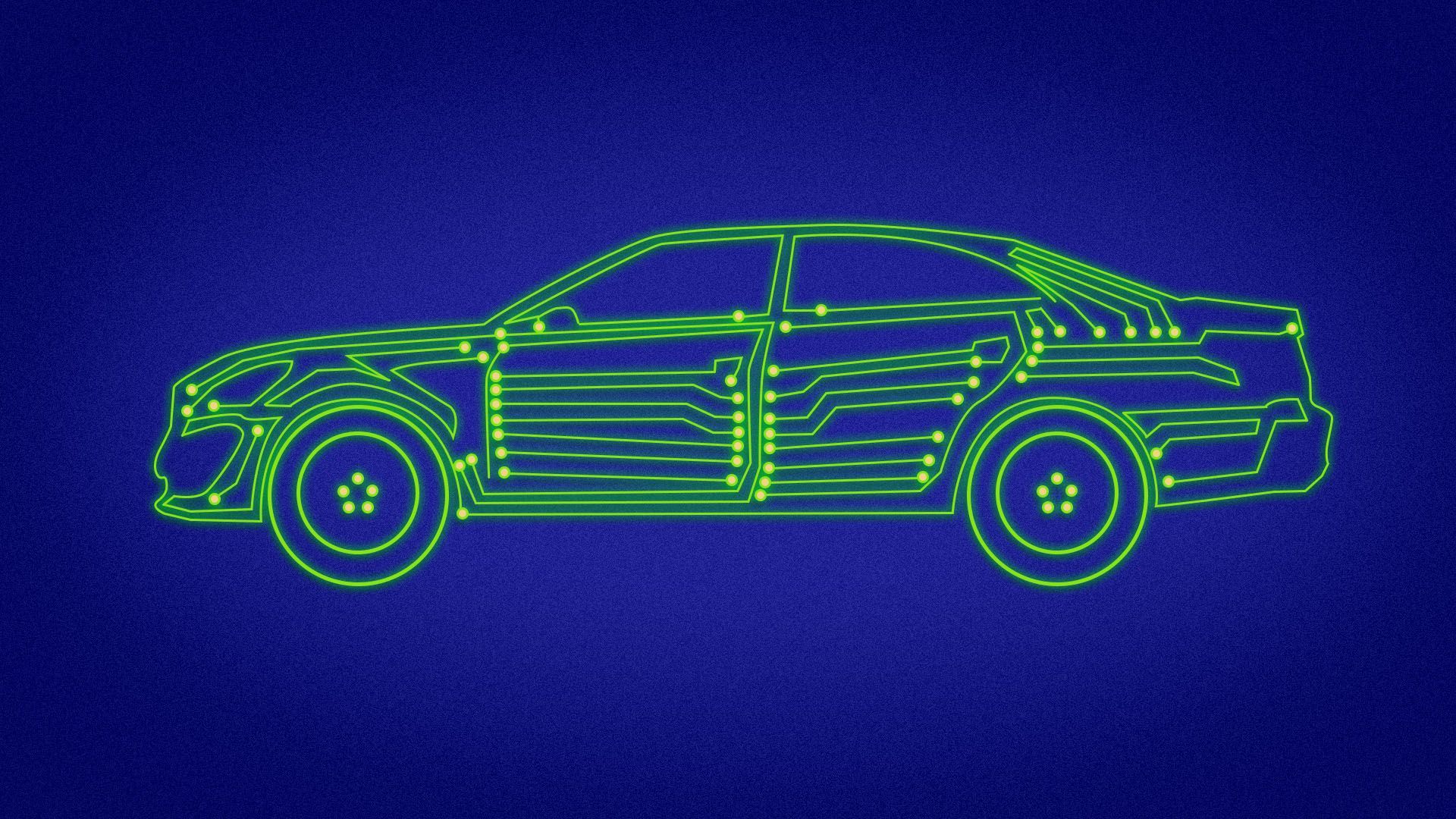
Driving the news: That image above is BMW's i Vision Circular concept, a vision for 2040 to create vehicles made of 100% recycled materials and are 100% recyclable themselves.
Enbridge agreed to buy Moda Midstream Operating, a Houston-based liquids terminaling and logistics company, for $3 billion from EnCap Flatrock Midstream.
Why it matters: This includes MEIC, the largest crude oil export terminal in the U.S. and the subject of a recent lawsuit filed by two Native American tribes over expansion plans.
COVID-era economic data tends to be noisy, and problematic to interpret. But in Friday’s disappointing jobs report, one thing was pretty clear: It’s Delta’s fault.
Why it matters: In some ways, that knowledge is a good thing: "It was definitely not as much progress as we were expecting, but the silver lining is that you can pretty clearly point to the cause of the weakness," Jeremy Schwartz, director of global strategy and economics at Credit Suisse, tells Axios.
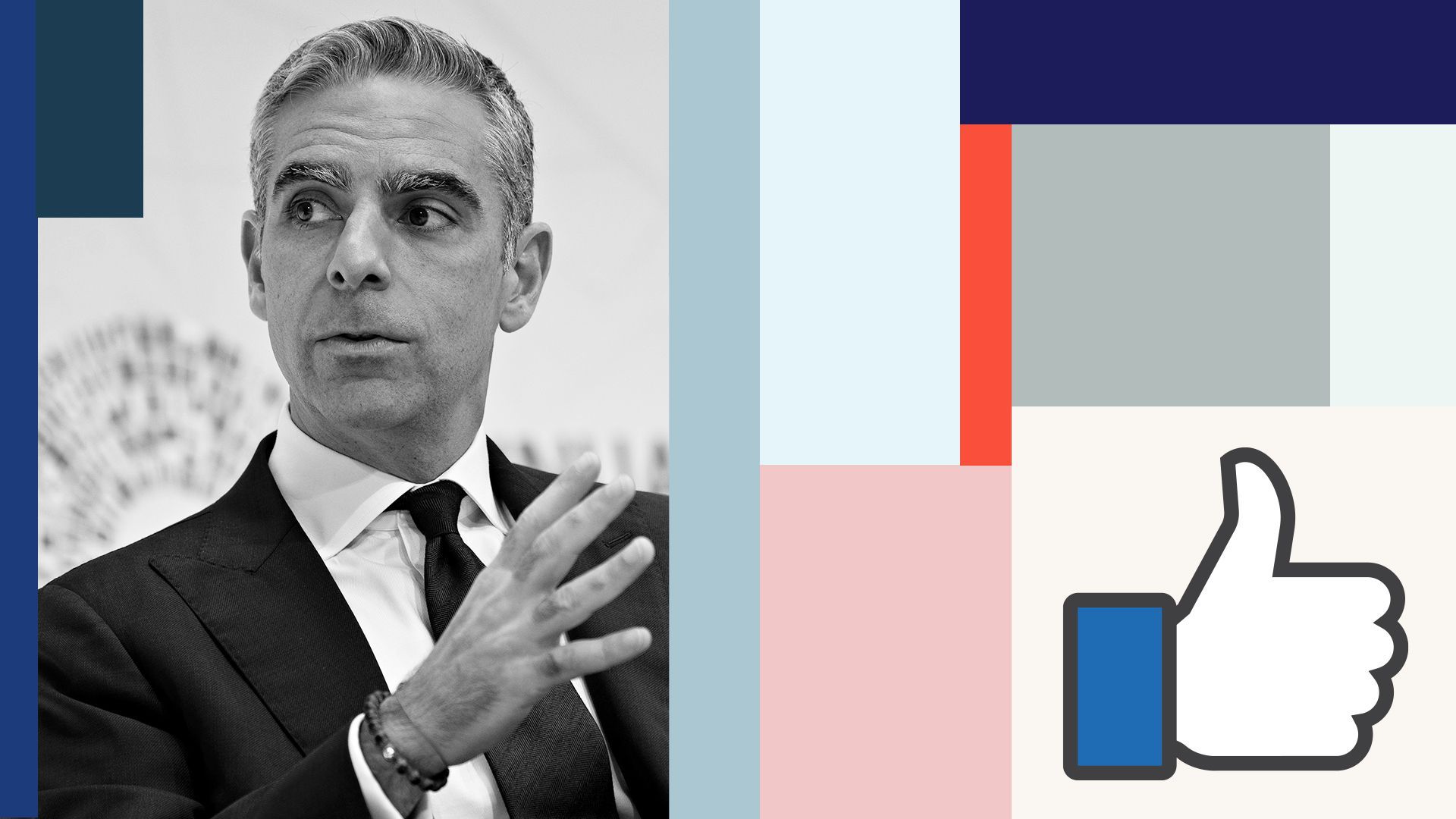
Facebook says it's finally ready to launch its most ambitious new product in years: a digital wallet called Novi. But the man leading the charge says Washington could stand in its way.
Why it matters: Facebook needs to convince regulators skeptical of its power that it's a good idea. "If there's one thing we need, it's the benefit of the doubt," Facebook's David Marcus said in an interview with Axios. "[W]e're starting with a trust deficit that we need to compensate."
Auto shows are coming back, but they don't just feature pretty cars: Now they also have hands-on experiences showcasing innovative climate-friendly technologies and new modes of mobility.
Why it matters: Big, international auto shows have been dying for years, and the coronavirus pandemic looked like it might be the final straw. Instead, they're trying to stay relevant by reinventing themselves to reflect an industry undergoing historic change.
More than 100 companies are expected to go public on U.S. stock exchanges by year-end, capping off what's already been the busiest year for IPOs since 2000.
By the numbers: 279 companies already completed U.S. IPOs in 2021, topping last year's 218.
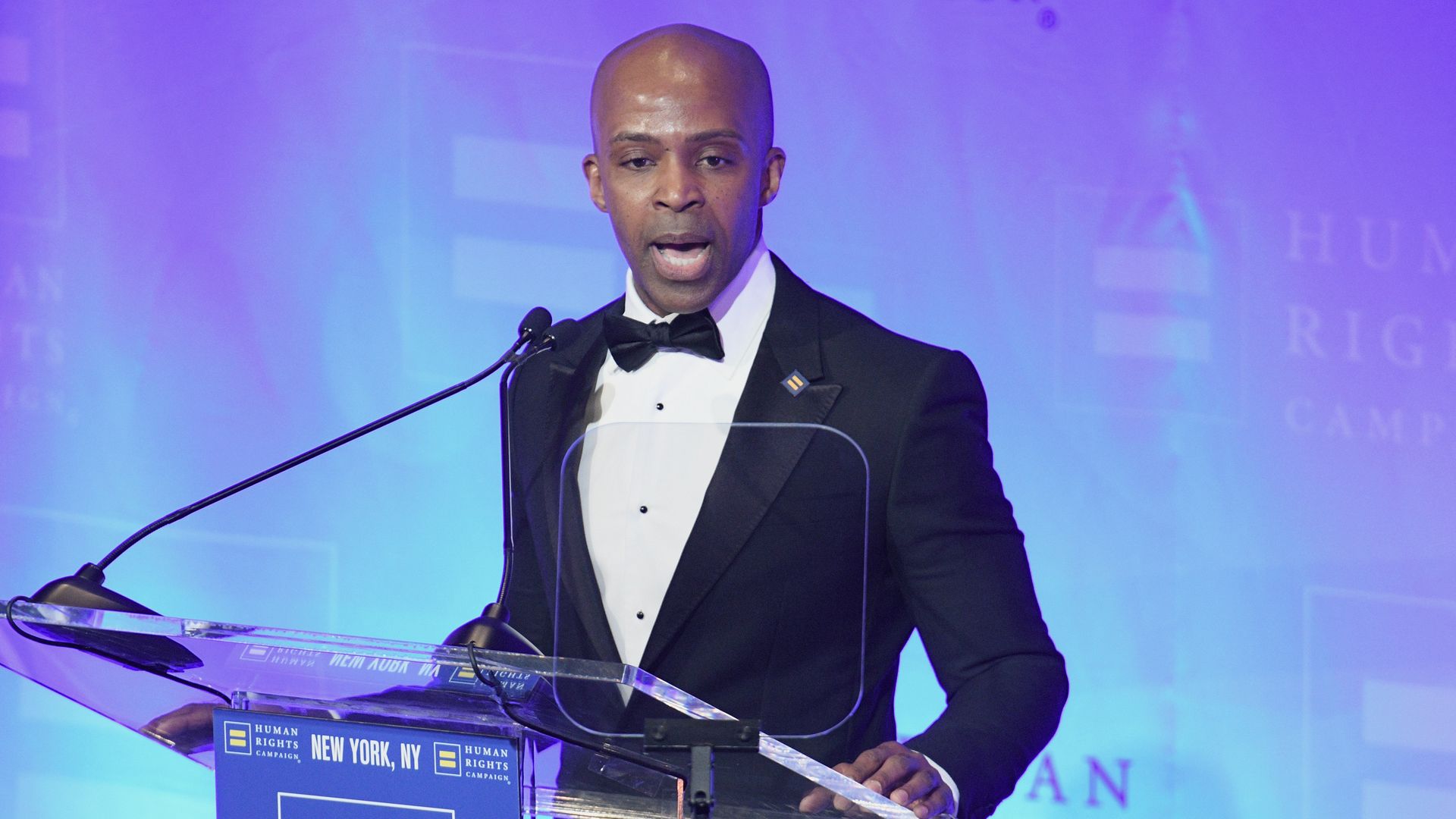
The Human Rights Campaign announced late Monday that Alphonso David was being replaced as president following an investigation into his work in helping former New York Gov. Andrew Cuomo (D) respond to sexual harassment allegations.
Why it matters: The HRC is the largest LGBTQ advocacy group in the U.S. and David was its first Black president. The HRC said its boards voted to remove him from the role "effective immediately, for violations of his contract with the Human Rights Campaign," the New York Times first reported.
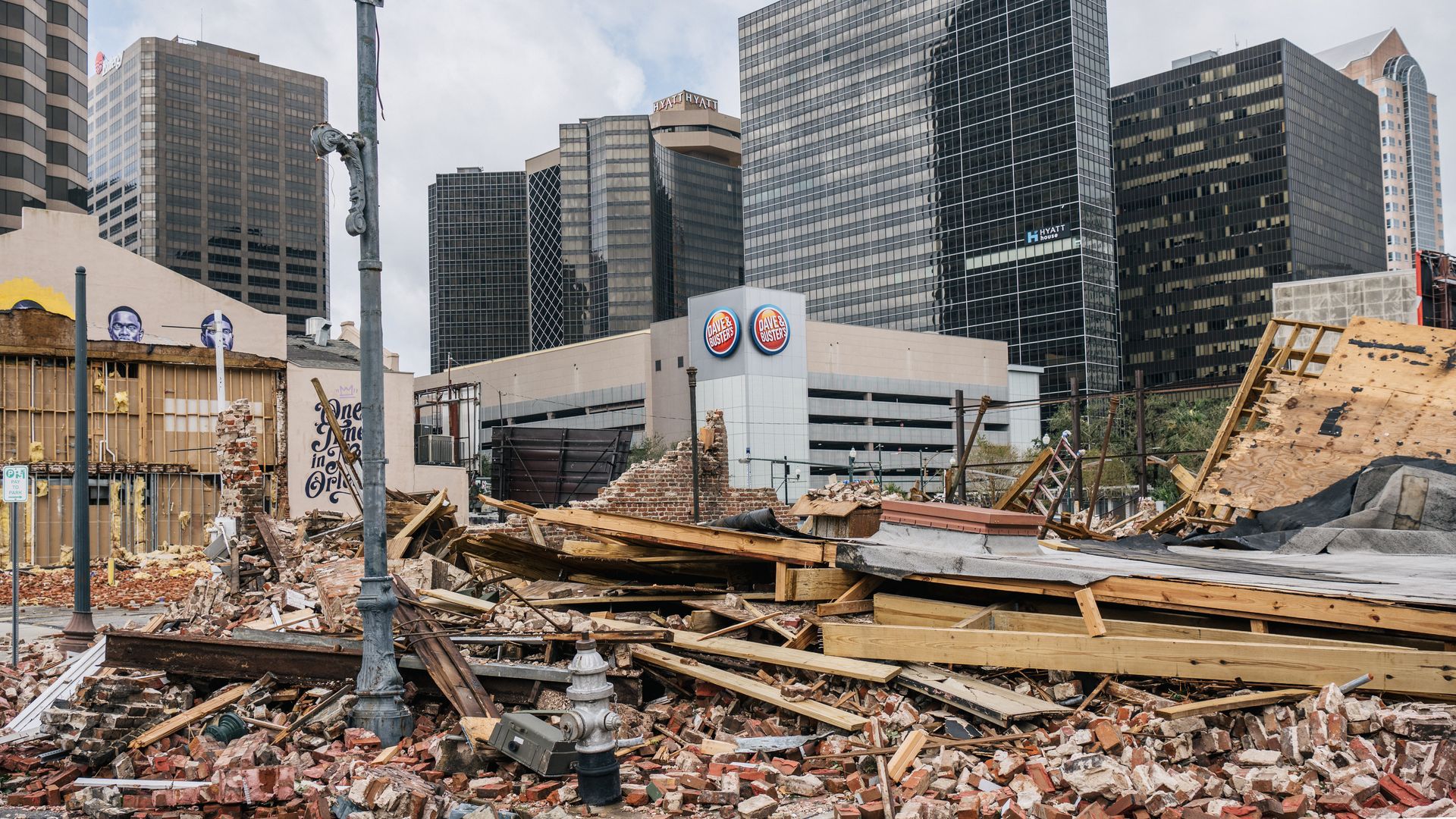
New Orleans officials are investigating what Mayor LaToya Cantrell on Monday called "unacceptable" conditions in several senior apartments, after five people were found dead in the complexes in the wake of Hurricane Ida.
Driving the news: New Orleans Health Department teams discovered the bodies during wellness checks at senior apartment complexes, which found eight facilities unfit for occupancy, per a City of New Orleans statement Sunday.
El Salvador bought its first 400 bitcoins on Monday, and President Nayib Bukele pledged to buy "a lot more" ahead of adopting the cryptocurrency as legal tender.
Why it matters: El Salvador will become on Tuesday the first country to formally adopt bitcoin — marking the "biggest test" the digital currency has faced in its 12-year history, per Bloomberg.









/2021/09/07/1631021743773.gif?w=3840)