The U.S. is deploying an additional 1,000 troops to the Middle East in response to "hostile behavior by Iranian forces and their proxy groups" that threaten U.S. "personnel and interests," acting Secretary of Defense Patrick Shanahan announced Monday.
The backdrop: The U.S.-Iran standoff is reaching uncharted waters. As the Trump administration scrambles to rally an international response to Iran’s alleged covert attacks last week, Tehran is taking a long-feared step in broad daylight — announcing it will breach the 2015 nuclear deal’s limits on enriched uranium in 10 day's time.
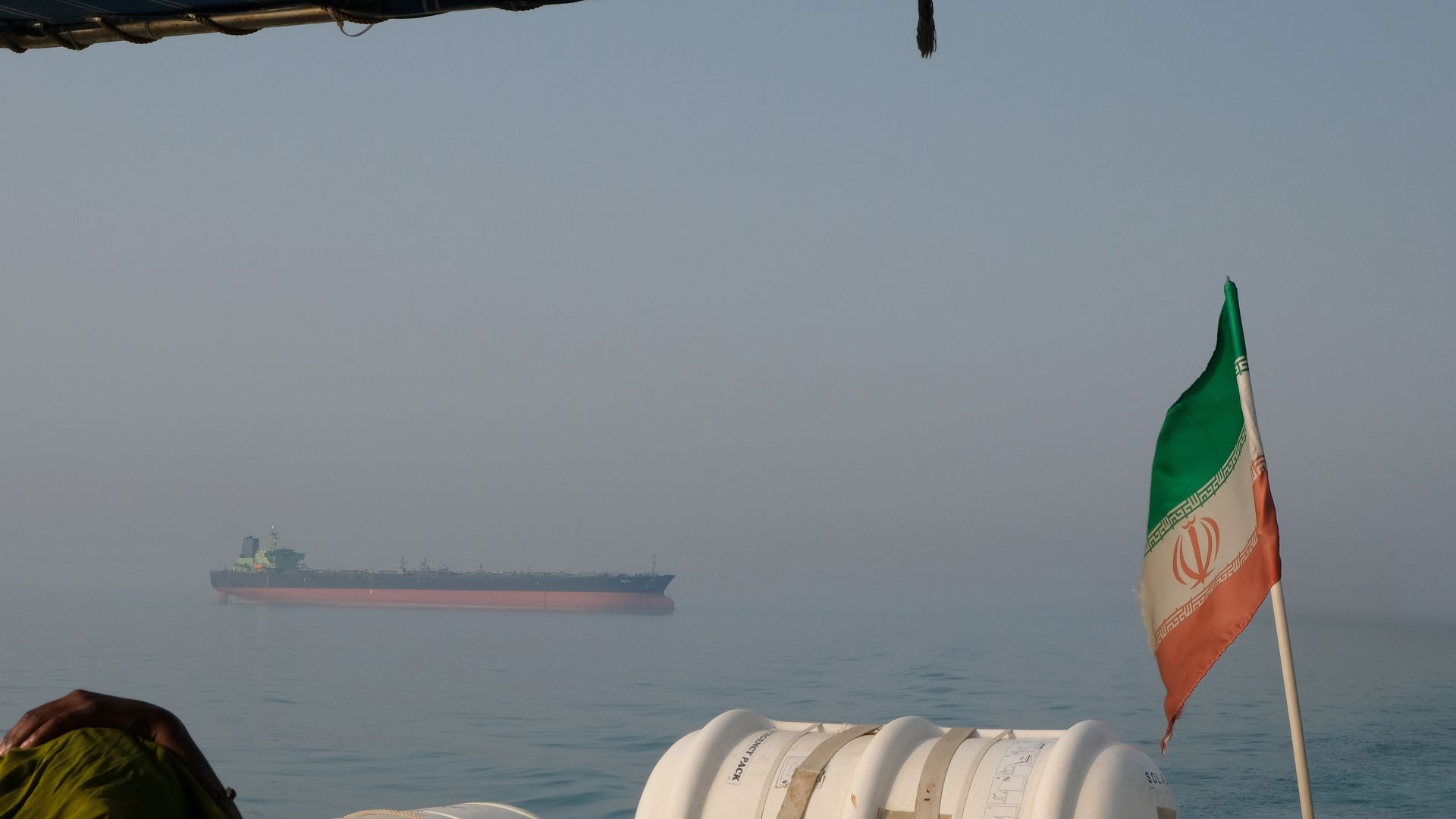
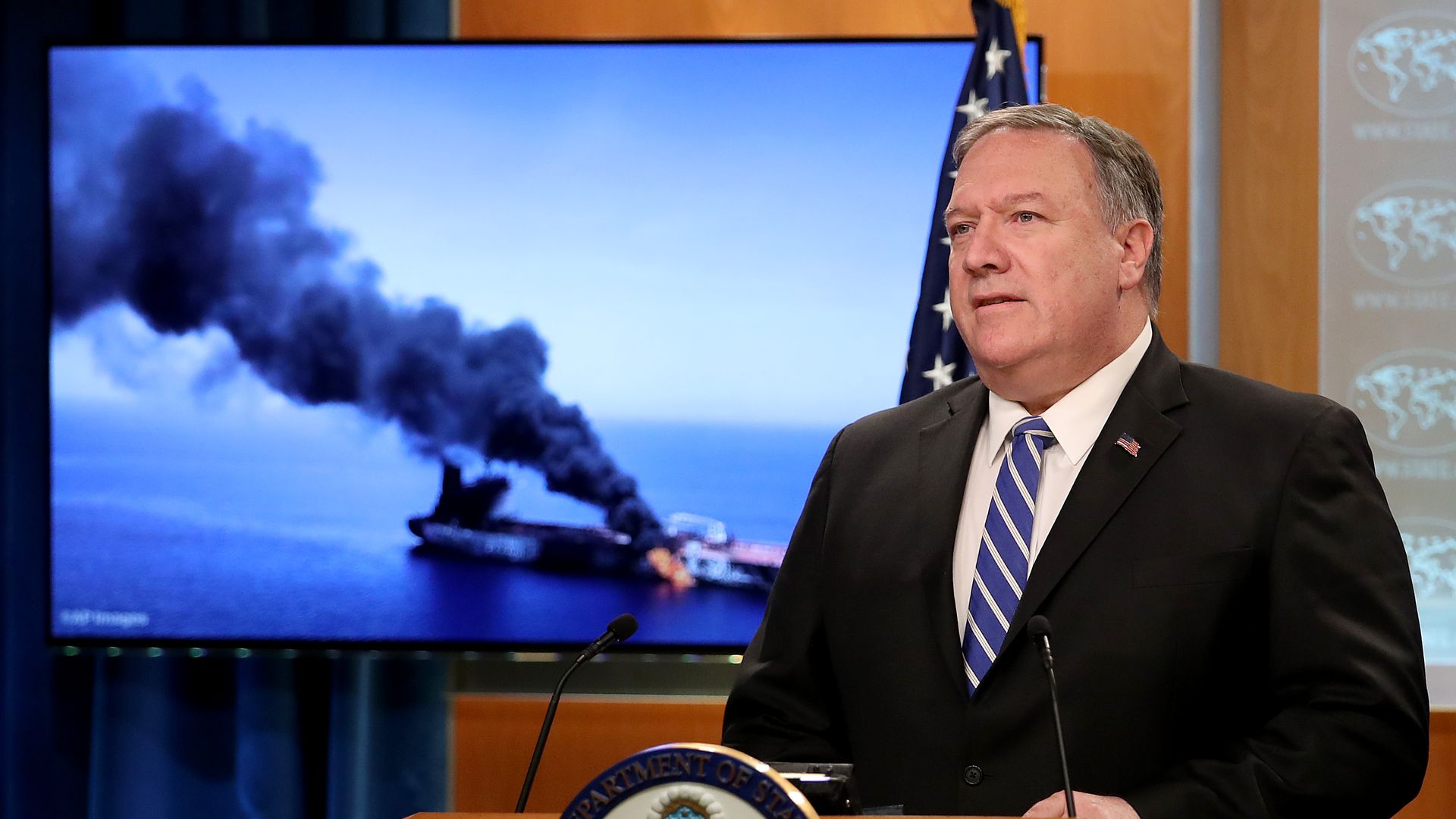
The Pentagon released more photos Monday that officials claim support allegations that Iranian forces were responsible for attacks on two oil tankers in the Gulf of Oman last week, Bloomberg reports.
"Iran is responsible for the attack based on video evidence and the resources and proficiency needed to quickly remove the unexploded limpet mine."
— U.S. Central Command
Why it matters: While the U.K., Saudi Arabia and Israel have backed the Trump administration's assessment that Iran's Revolutionary Guard was behind the attacks, domestic critics and some U.S. allies — including Germany and Japan — have demanded more evidence. Secretary of State Mike Pompeo said on Sunday that the U.S. has more evidence of Iran's culpability, but it's unclear if he was referring to these photos.
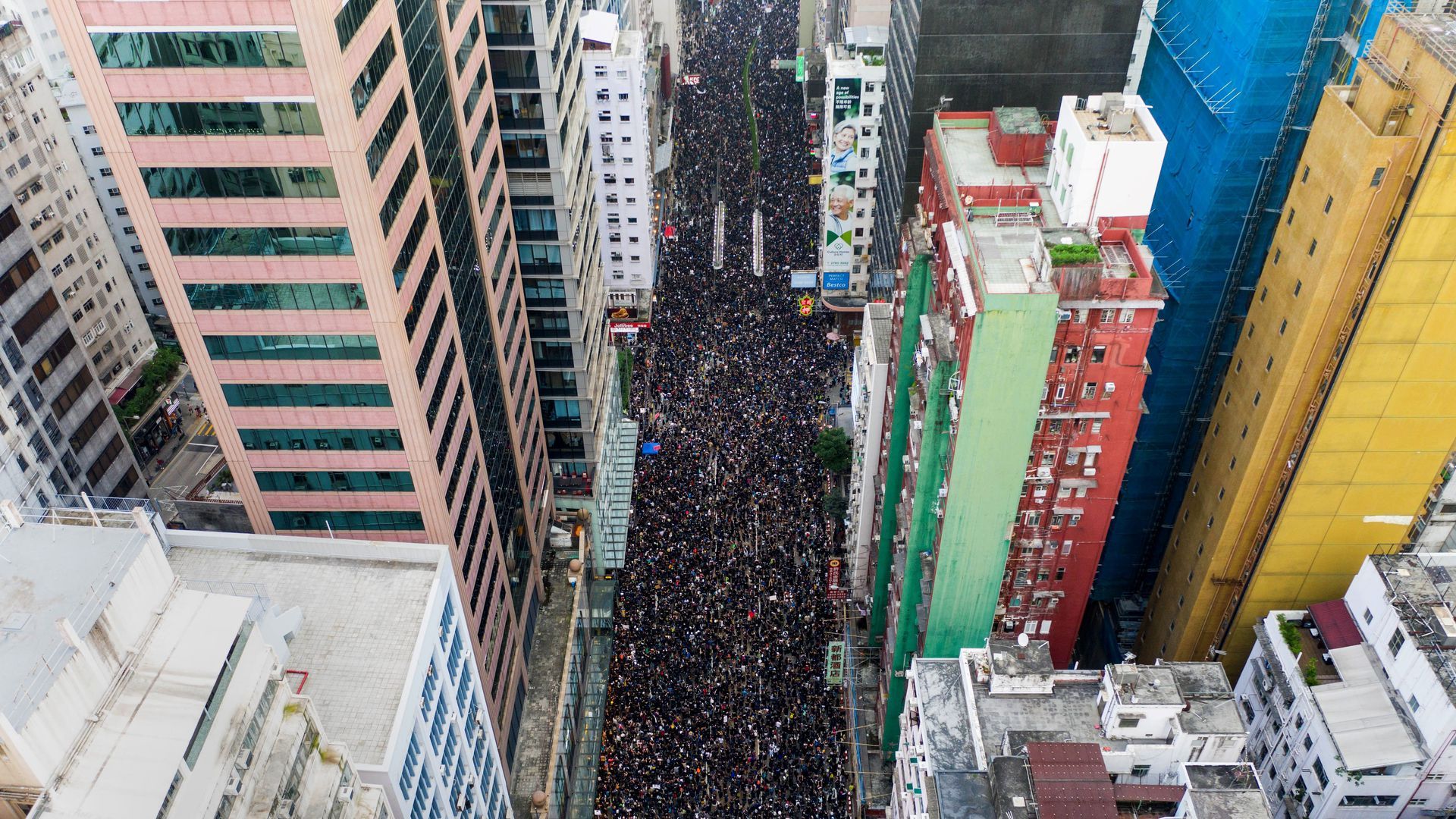
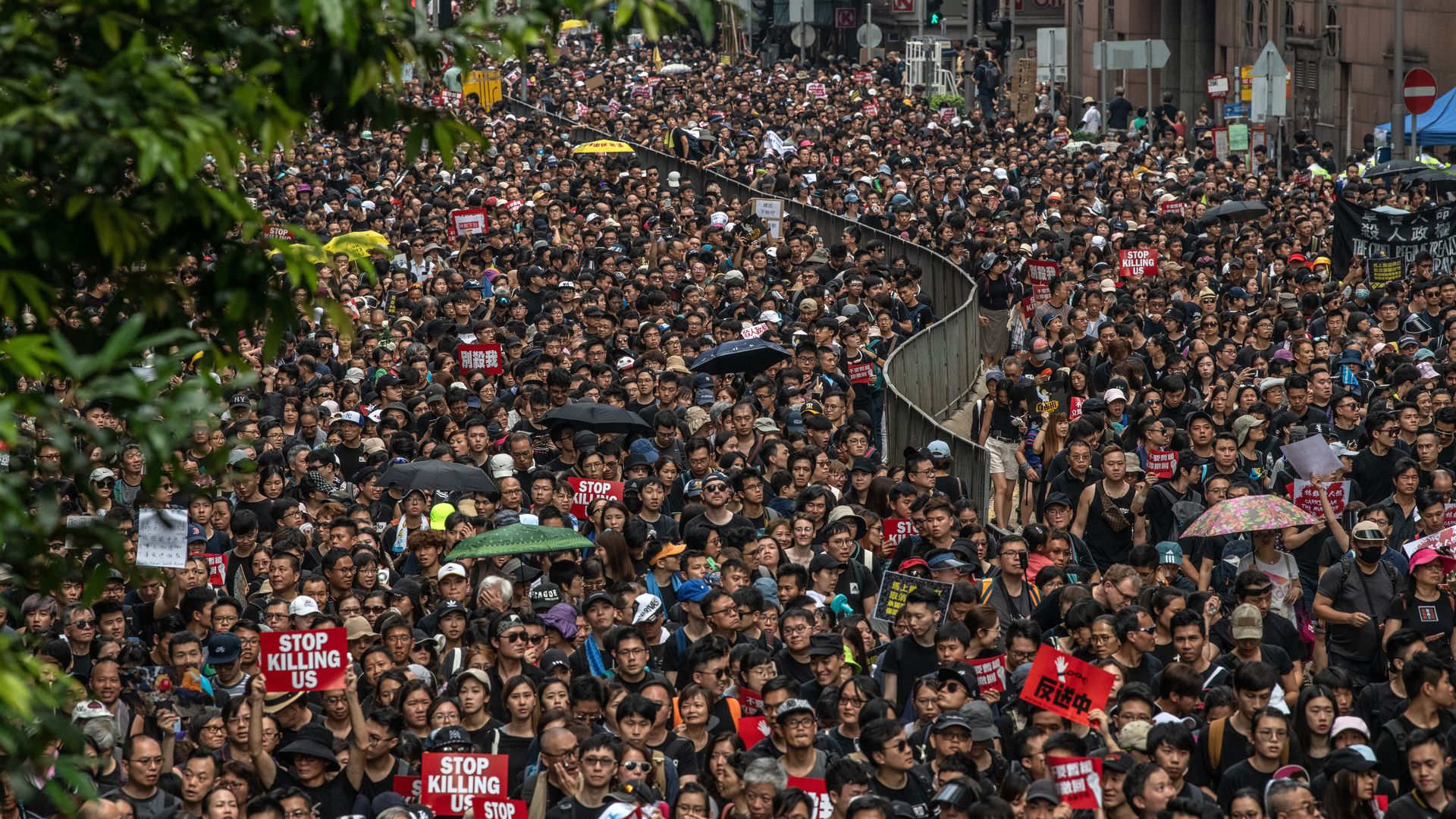
Hongkongers have won — for now — in their protests against an extradition law that drew a violent police response against crowds that reportedly numbered in the millions.
Driving the news: Earlier today, the city's head of police backed down from an earlier attempt to characterize protesters as rioters, according to the South China Morning Post. Hong Kong chief executive Carrie Lam apologized yesterday for the extradition bill, withdrawing but not killing the China-friendly effort.
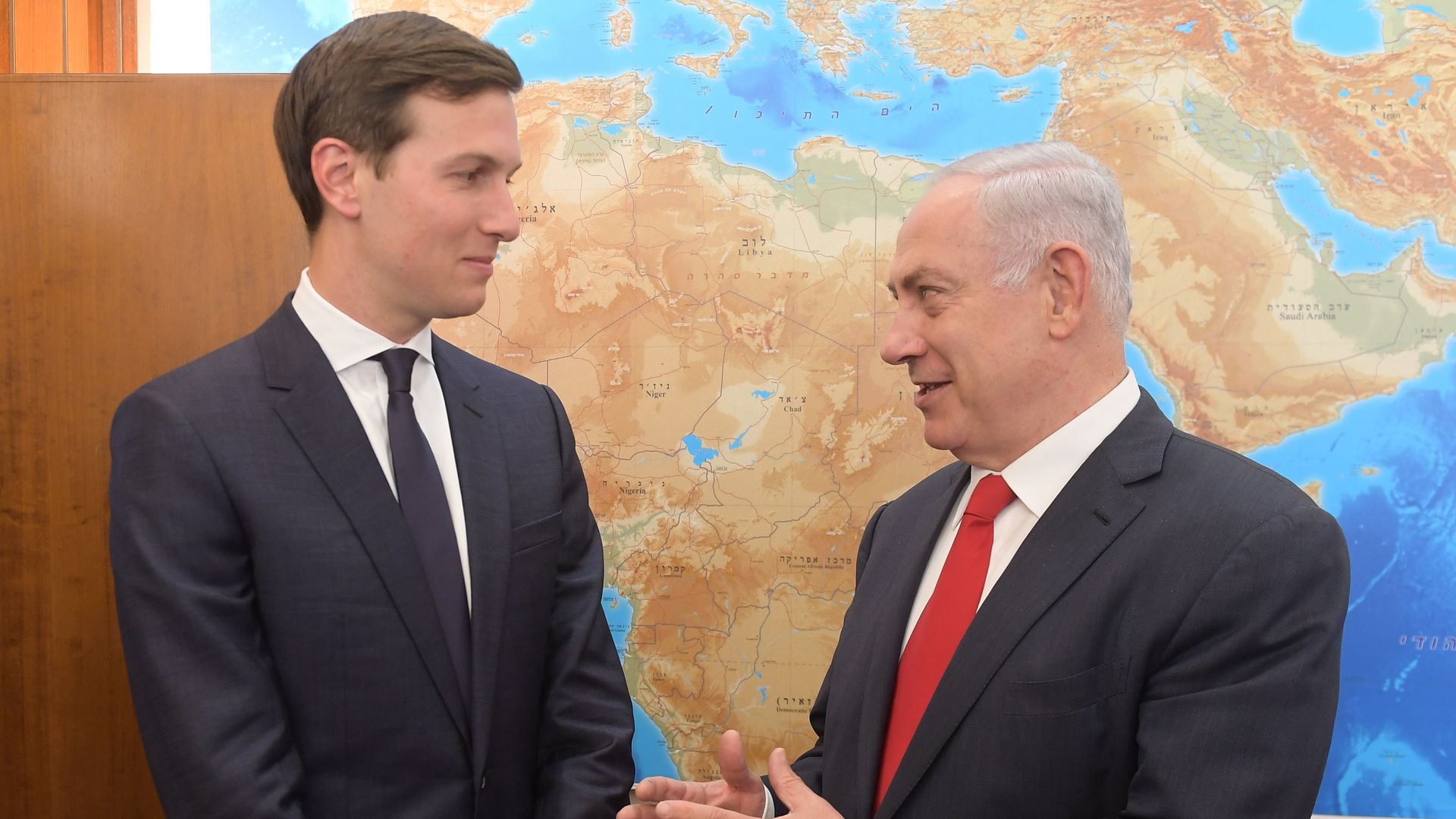
The White House has decided not to invite the Israeli Minister of Finance Moshe Kahlon or other Israeli government officials to the Bahrain conference in Manama on June 25, where it plans to launch the economic part of the Trump administration's Israeli-Palestinian peace plan, U.S. officials told me.
The big picture: The decision follows a Palestinian boycott of the conference, which has put pressure on other Arab and Muslim nations not to attend. A senior U.S. official told me: "The goal of the workshop in Bahrain is to present our economic vision for the Palestinian people. As such we want to focus on the economic aspects and not the political ones." The Bahrain conference will now take place without Israeli or Palestinian officials.
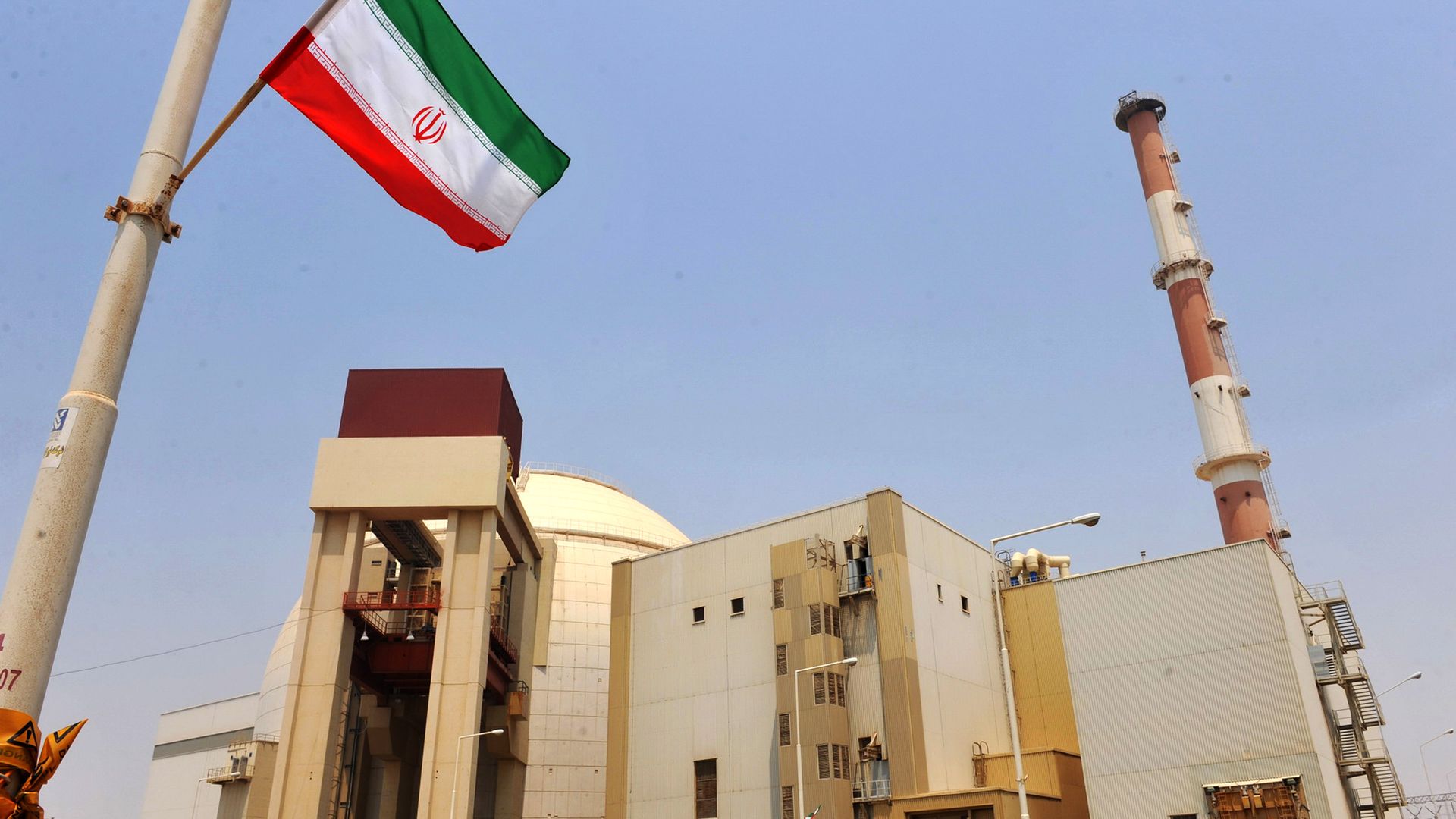
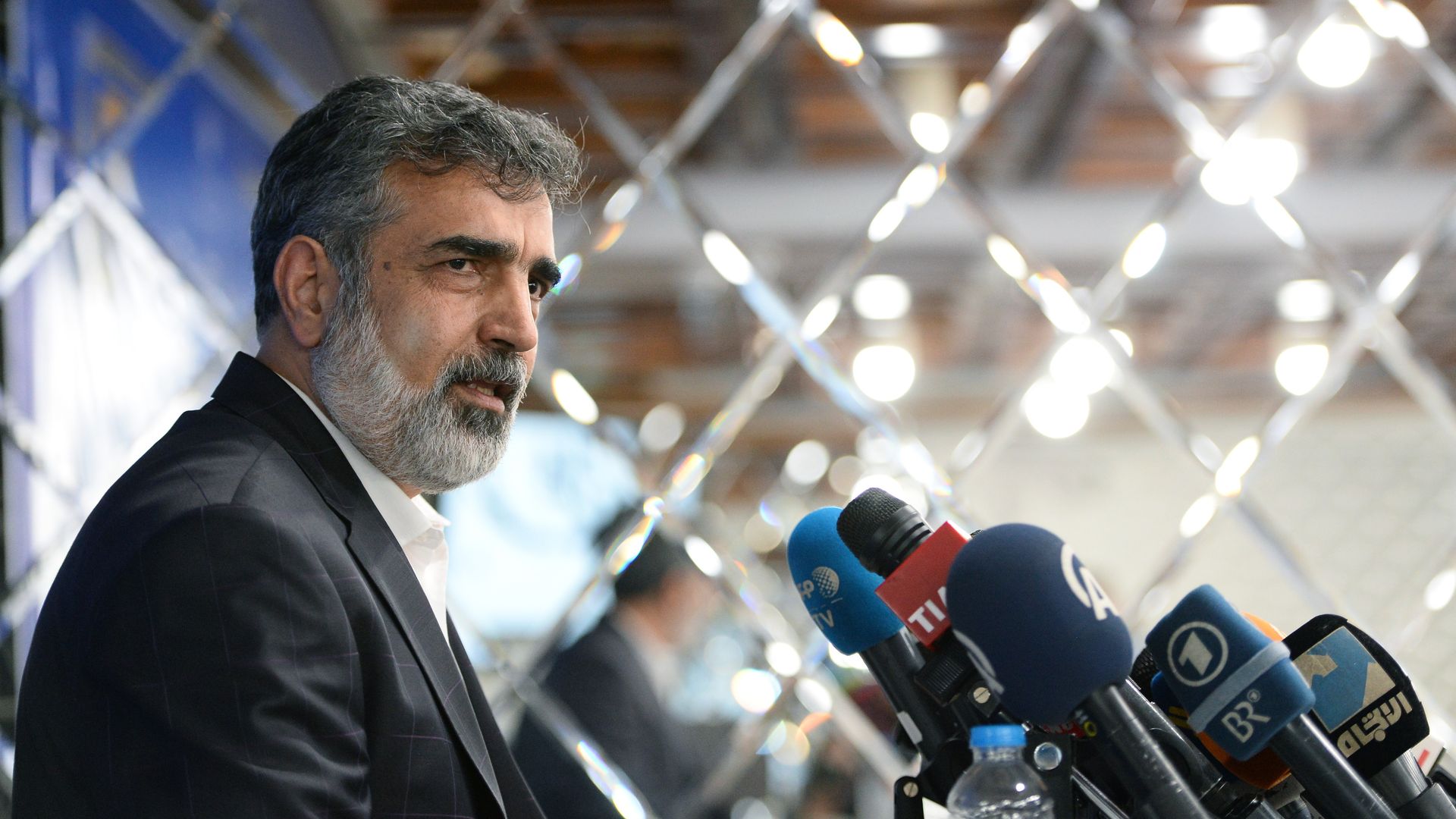
Iran announced Monday that it will break uranium stockpile limits set under the 2015 nuclear deal within the next 10 days, the AP reports.
Why it matters: The move, coming at a time of escalating tensions with the U.S., further jeopardizes a deal that European nations have worked to save after President Trump's decision last year to pull the U.S. out and impose economic sanctions that threw Iran's economy into a tailspin. President Hassan Rouhani has warned Europe that Iran will continue to increase its enrichment unless a new deal is reached by July 7, per the AP.
With its announcement Monday that it will exceed limits on the amount of low-enriched uranium allowed under the Joint Comprehensive Plan of Action (JCPOA), Iran is signaling the death of the landmark nuclear agreement reached with world powers in 2015.
Why it matters: Even if initial infringements are modest, the combination of rising tensions in the Persian Gulf, a near-total U.S. embargo on Iranian energy exports and Europe’s failure to operationalize a reliable means of trading with Iran is increasingly unstable.
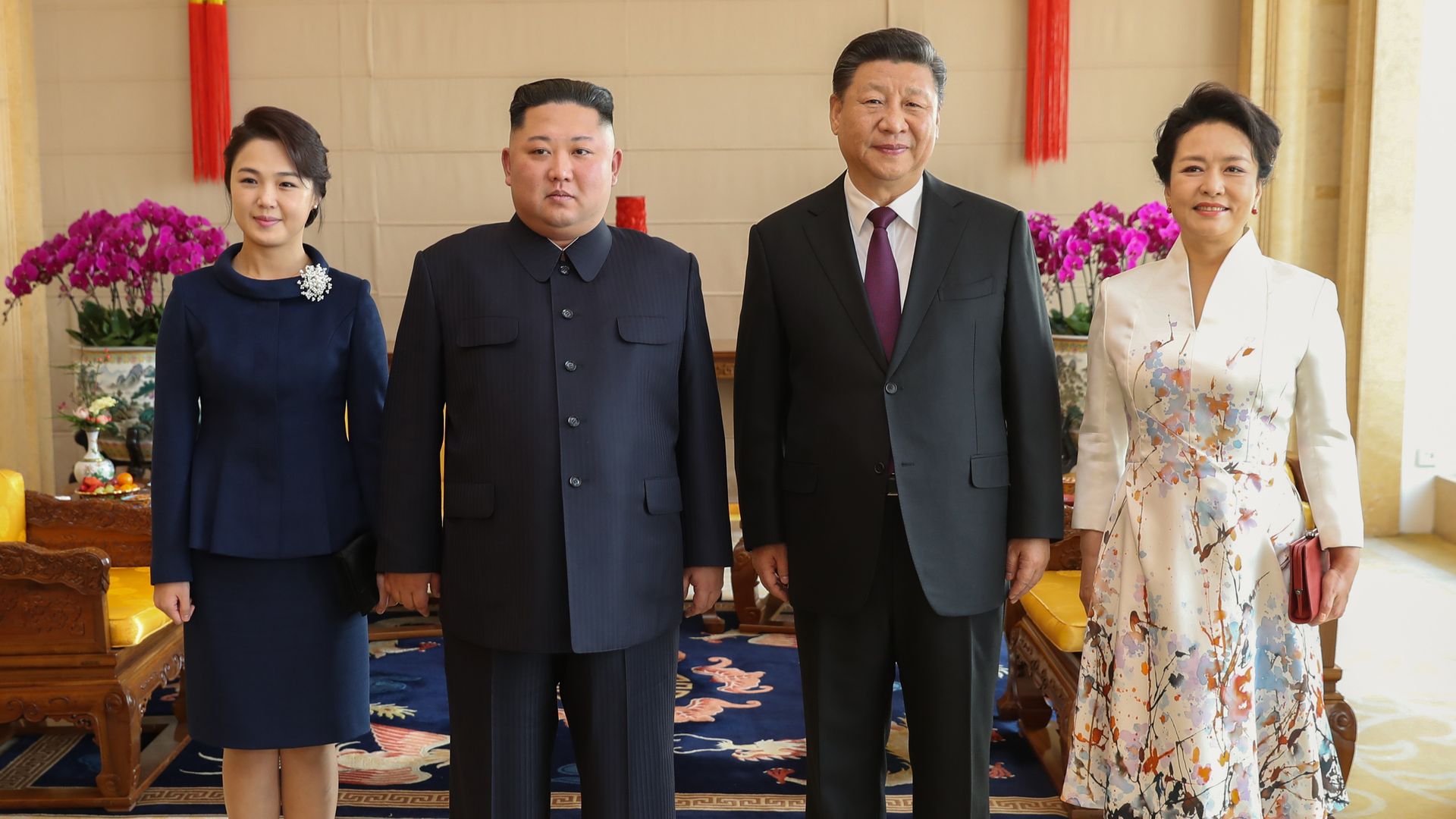
Chinese President Xi Jinping will head to North Korea this week, marking the first visit by a Chinese leader since 2005, AP reports.
The big picture: Xi's visit comes as U.S.-North Korea relations have been largely deadlocked after President Trump's Vietnam summit with North Korean leader Kim Jong-un earlier this year ended without any tangible progress on denuclearization. Xi and Kim are set to discuss their views on "the situation on the Korean Peninsula" and celebrate the 70th year of diplomatic relations between their nations.
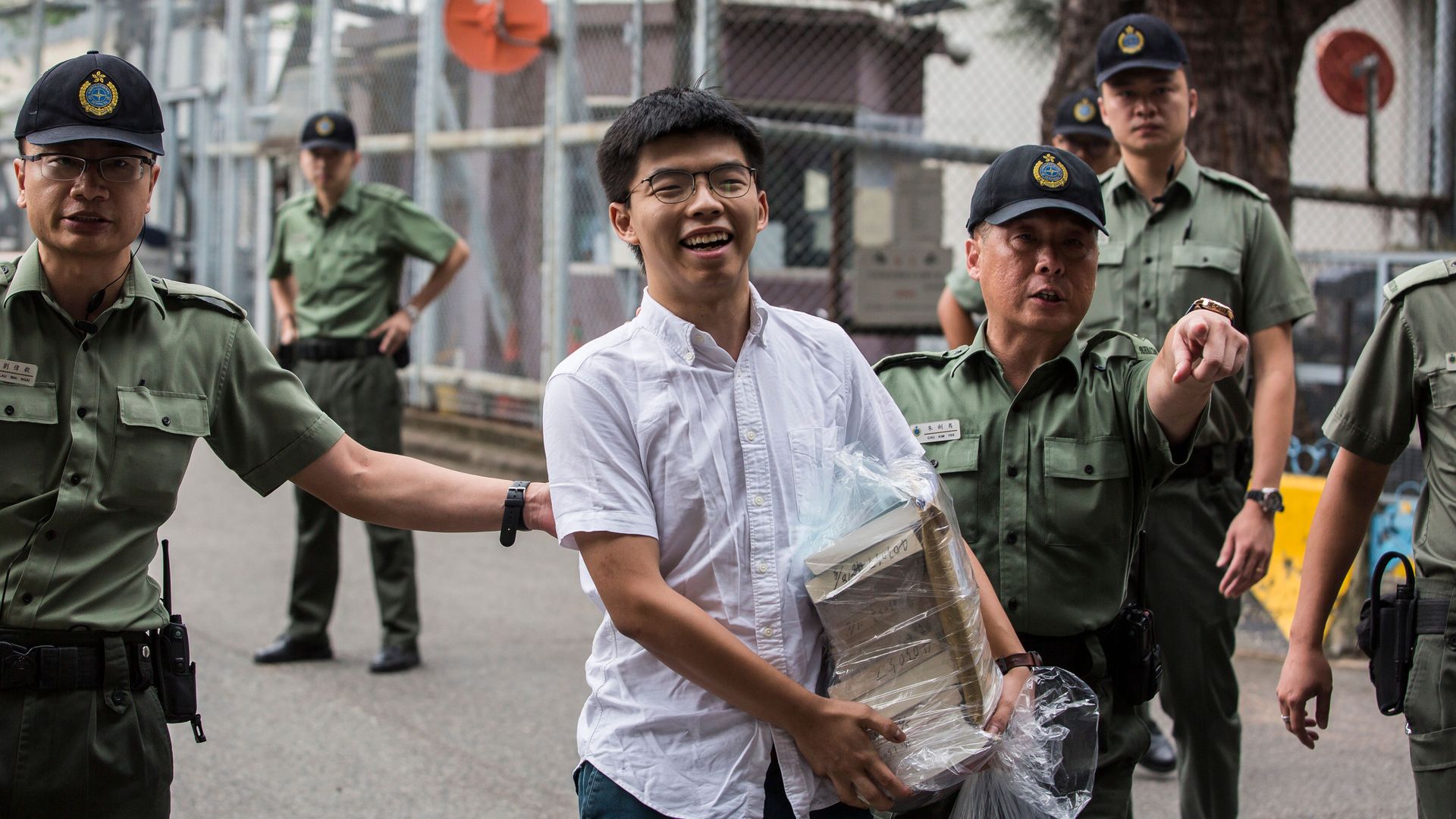
Hong Kong's most prominent student activist Joshua Wong walked free from prison Monday and called for the resignation of leader Carrie Lam, vowing to join the protest movement against the controversial extradition bill, the BBC reports.
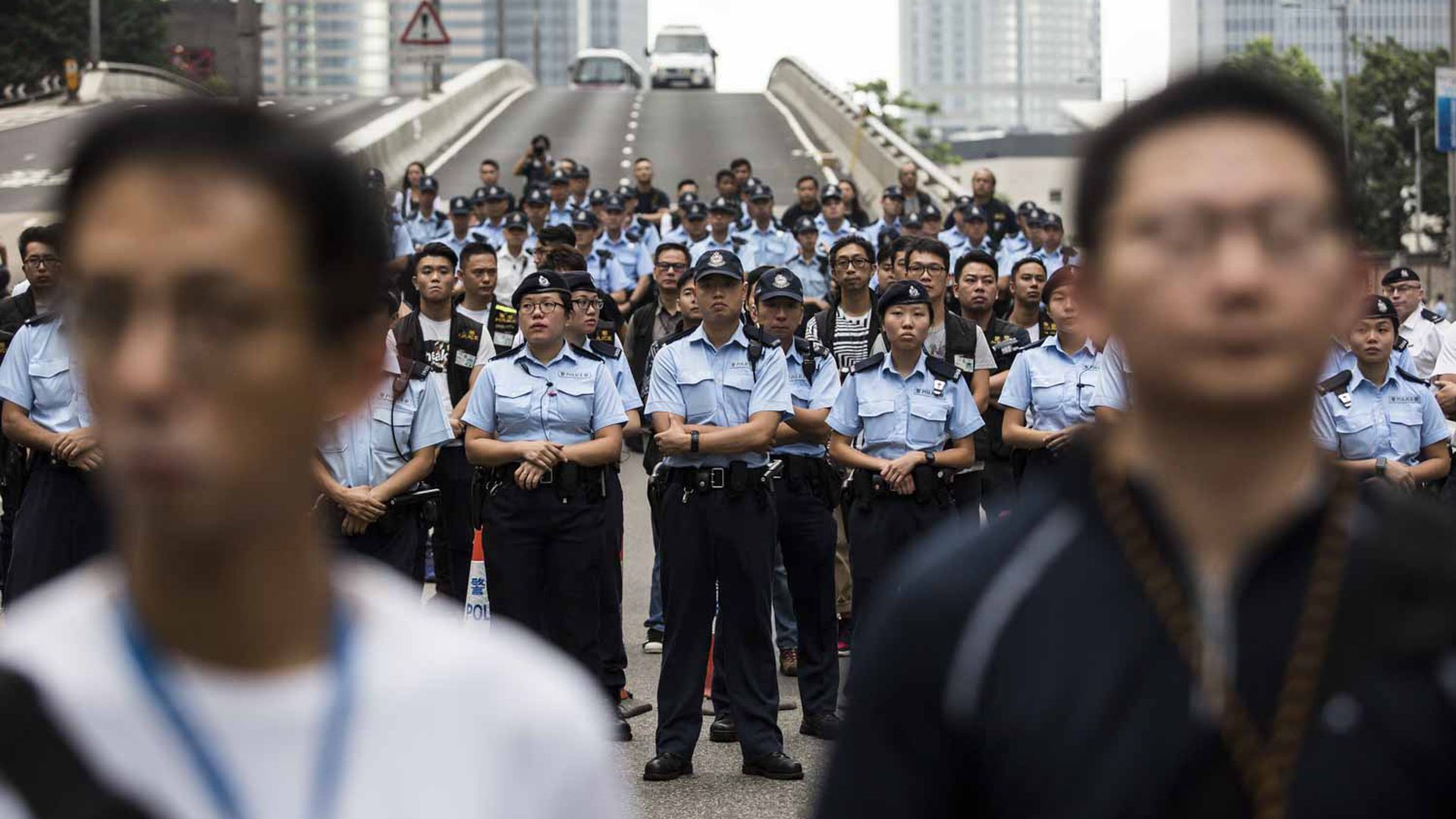
Hong Kong police were clearing streets of protesters after hundreds spent the night near the city government headquarters following the previous day's huge demonstrations against a proposed bill to extradite charged citizens to mainland China, AP reports.
Details: After an hours-long standoff, the demonstrators — many in gas masks after officers fired tear gas at them in Wednesday's clashes — moved to a park and plaza near the government, per AP. They continued to call for the resignation of Hong Kong's leader Carrie Lam, who suspended the bill that she supported indefinitely. She's apologized, but protesters are concerned she may reintroduce it, according to Reuters.
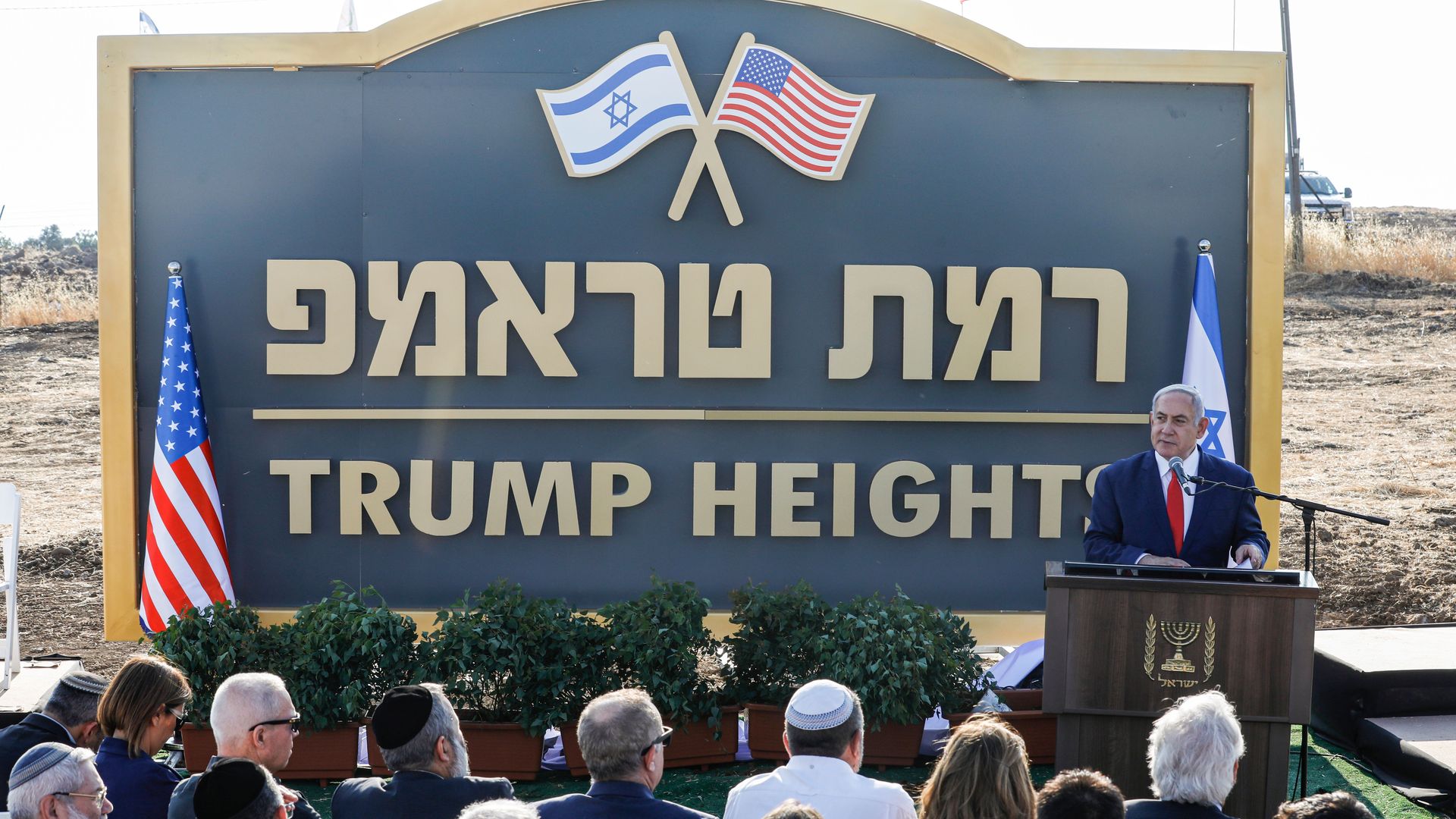
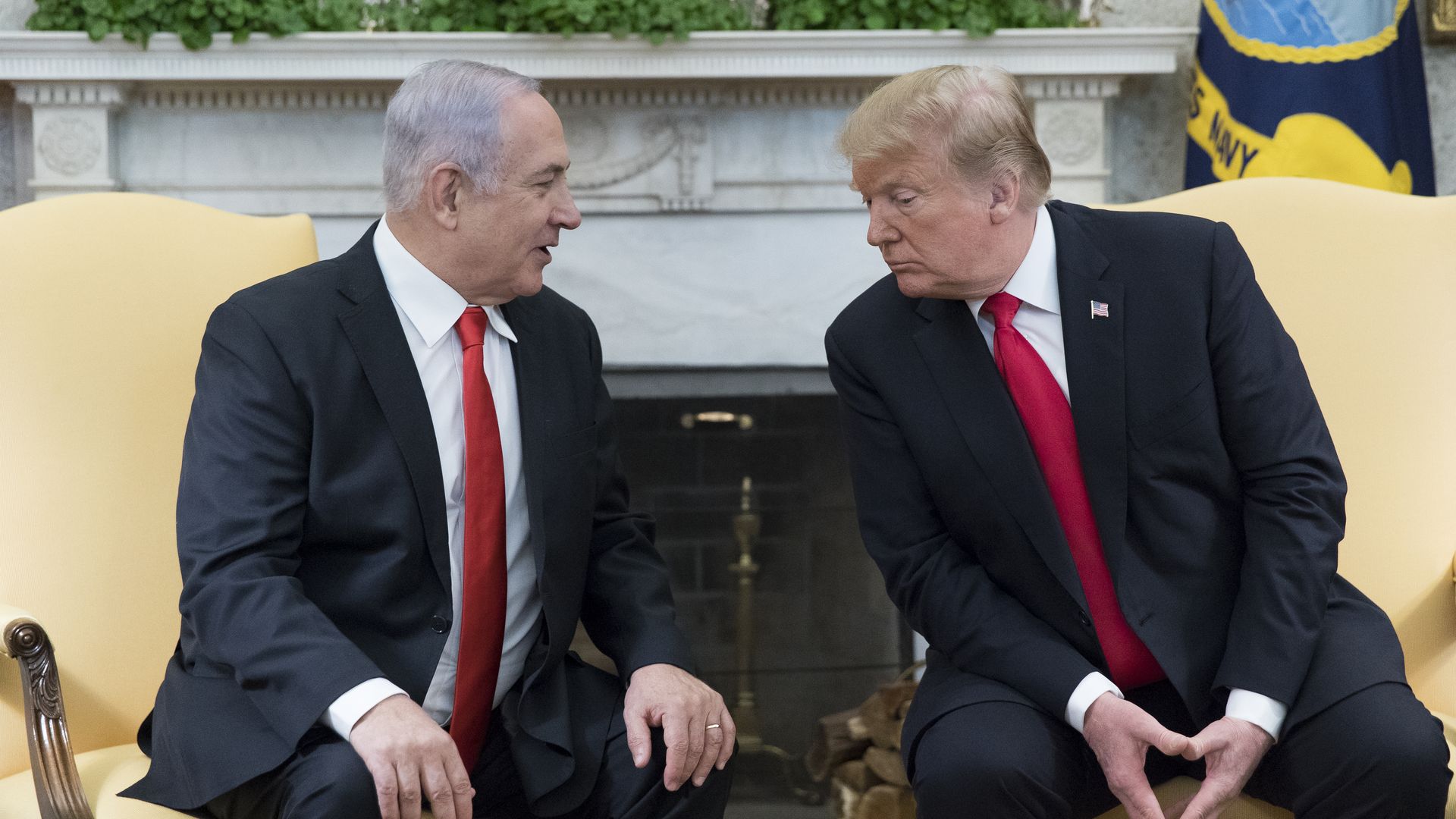
Israel's Prime Minister Benjamin Netanyahu and the U.S. Ambassador to Israel David Friedman hosted a special ceremony Sunday to dedicate a new town in the Golan Heights called "Ramat Trump," or "Trump Heights" in English. The only problem is that for now, this is only a "paper town," meaning it does not yet exist and is not even in planning stages.
Why it matters: This is a public relations stunt meant for a domestic audience on the eve of the upcoming elections. It's also significant for foreign policy reasons, intended for a target audience of one — President Trump. Trump's recognition of the Golan Heights in March gave a dramatic boost to Netanyahu's election campaign. Netanyahu will need Trump's help again soon with the new September 17 elections looming.
The White House's special envoy for Middle East Jason Greenblatt said Sunday at the Jerusalem Post Conference in New York that the Trump administration is leaning toward holding off on releasing the political part of its Israeli-Palestinian peace plan until November, when a new Israeli government is formed.
Why it matters: President Trump was frustrated by Israeli Prime Minister Benjamin Netanyahu's inability to form a coalition in May, which forced him to call a new election. Greenblatt admitted in his comments that the political developments in Israel torpedoed the White House's timetable for the peace plan.
Saudi Arabia has joined the U.S., Israel and the United Kingdom in blaming Iran for attacks on two oil tankers in the Gulf of Oman last week, the Washington Post reports.
Why it matters: Tensions between the U.S. and Iran have ratcheted up once again after the threat of war seemed to have subsided in recent weeks, with Secretary of State Mike Pompeo telling Fox News Sunday: "We’ve taken a handful of actions to increase the opportunity to convince Iran that these actions aren’t in their best interest. And it appears to be Iran that wants to escalate this conflict."
Hong Kong's leader Carrie Lam has apologized for a controversial extradition bill that prompted hundreds of thousands of protesters to take the streets on Sunday and demand for her resignation.
"The Chief Executive acknowledges that her government work has been unsatisfactory, leading to confusion and conflict in society, and leading to disappointment and heartbreak. The Chief Executive would like to apologize to the city’s citizens and is open to receiving criticism [on how to] further improve and provide better services for the broader society.”
Why it matters: Lam indefinitely suspended the bill on Saturday after violent clashes between protestors and police this week, but refused to withdraw it completely. The move did little to quell what has become Hong Kong's worst political crisis in decades.