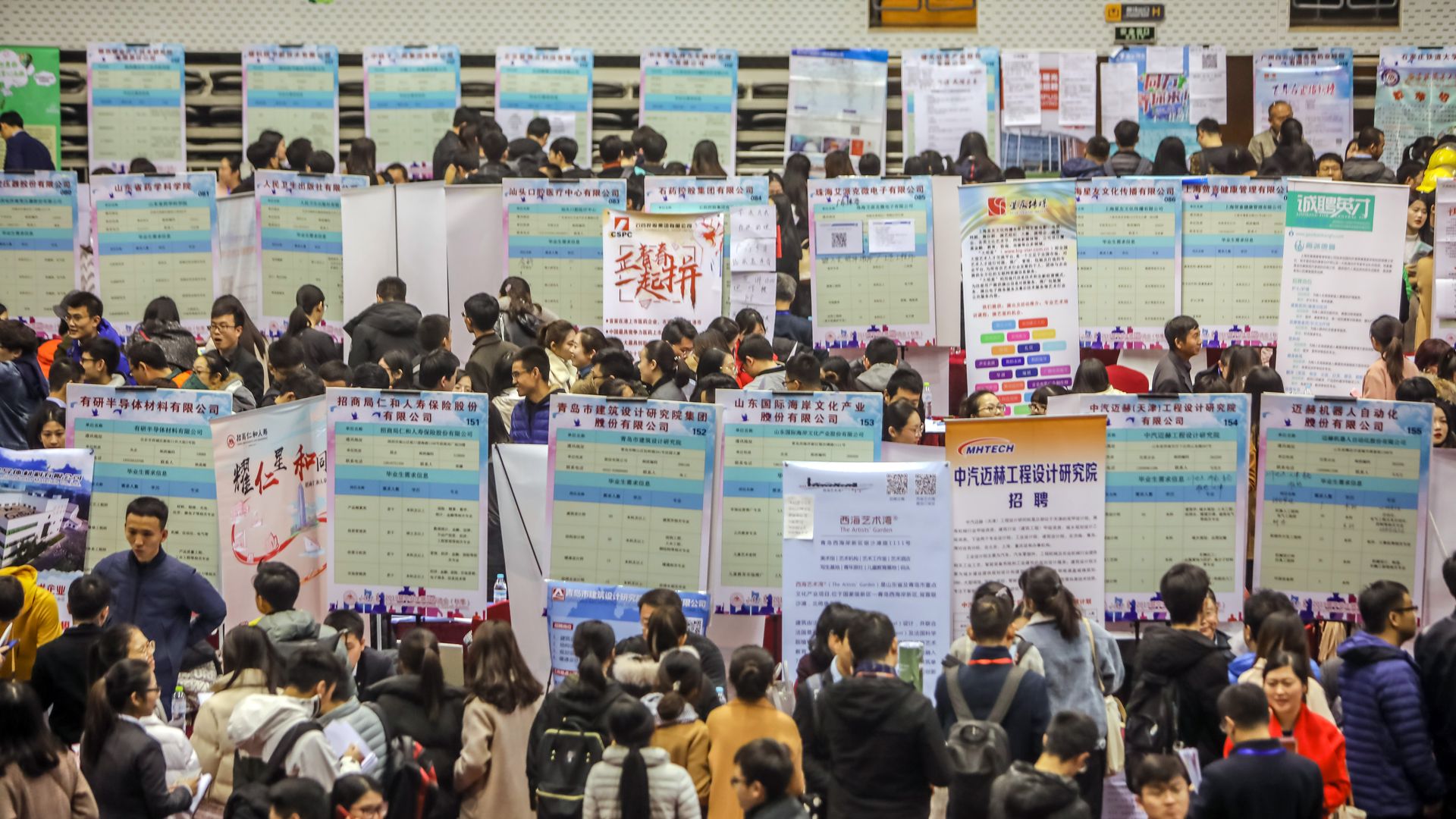
China's National Bureau of Statistics' issued a communique yesterday that provides more data on the looming demographic challenges for the country.
By the numbers: China's employment population has shrunk for the first time ever, Caixin reports...
At the end of 2018, the number of people employed fell to 776 million, a drop of 540,000 from 2017, according to annual census data...
The working-age population, or people between the ages of 16 and 59, also shrank — for the seventh consecutive year, down a total of 2.8% from 2011 to 2018, a clear sign that China’s population is aging rapidly.
Iranian President Hassan Rouhani formally rejected Foreign Minister Mohammad Javad Zarif’s resignation on Wednesday, calling the move “against the country’s interests,” and Zarif has now returned to his duties.
Why it matters: Zarif, who was instrumental to the 2015 Iran nuclear deal, benefitted from an immense outpouring of public and personal support. Had his resignation been accepted, it might have indicated an overt desire on behalf of the government to leave the nuclear deal and entertain escalation.
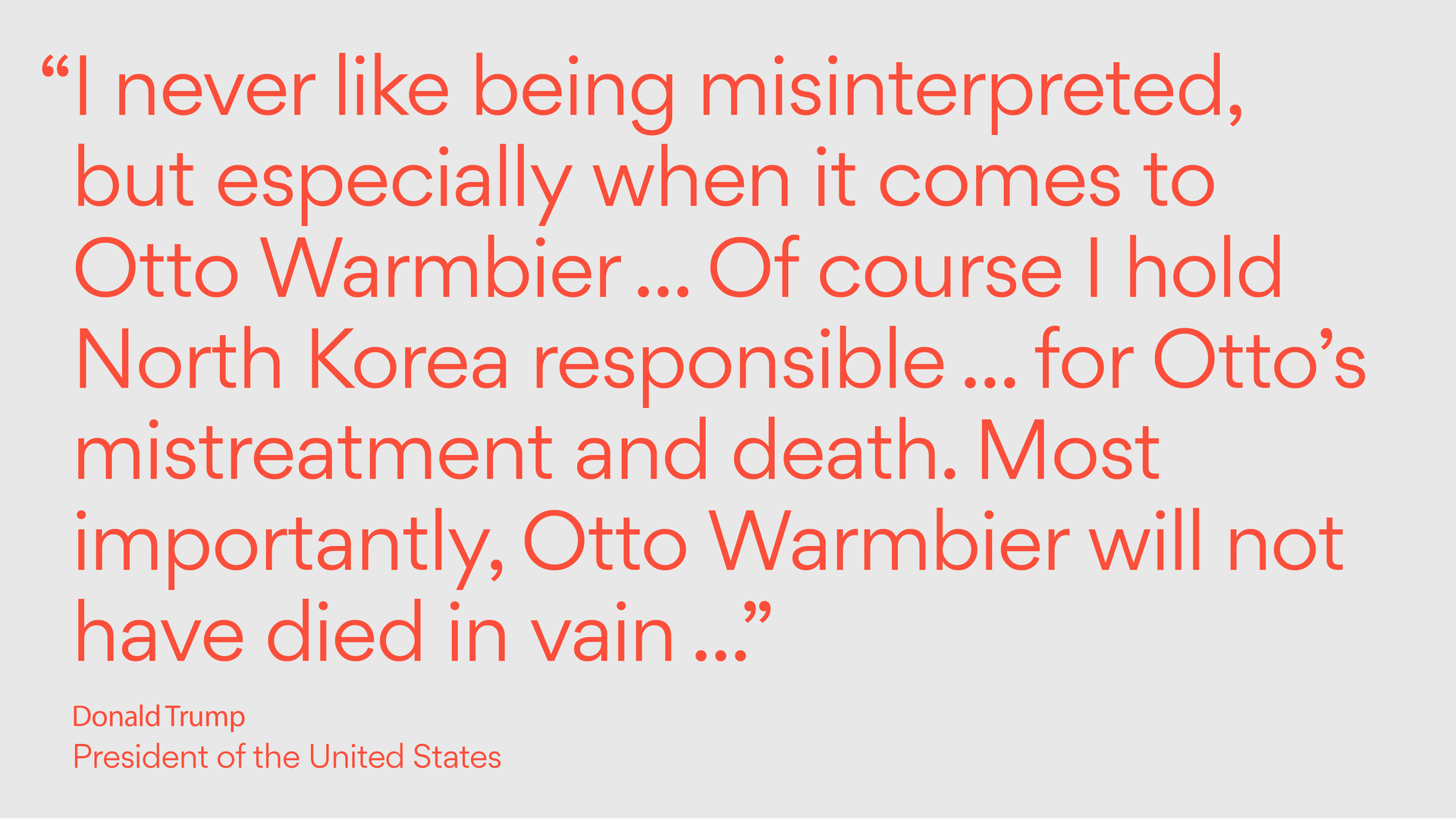
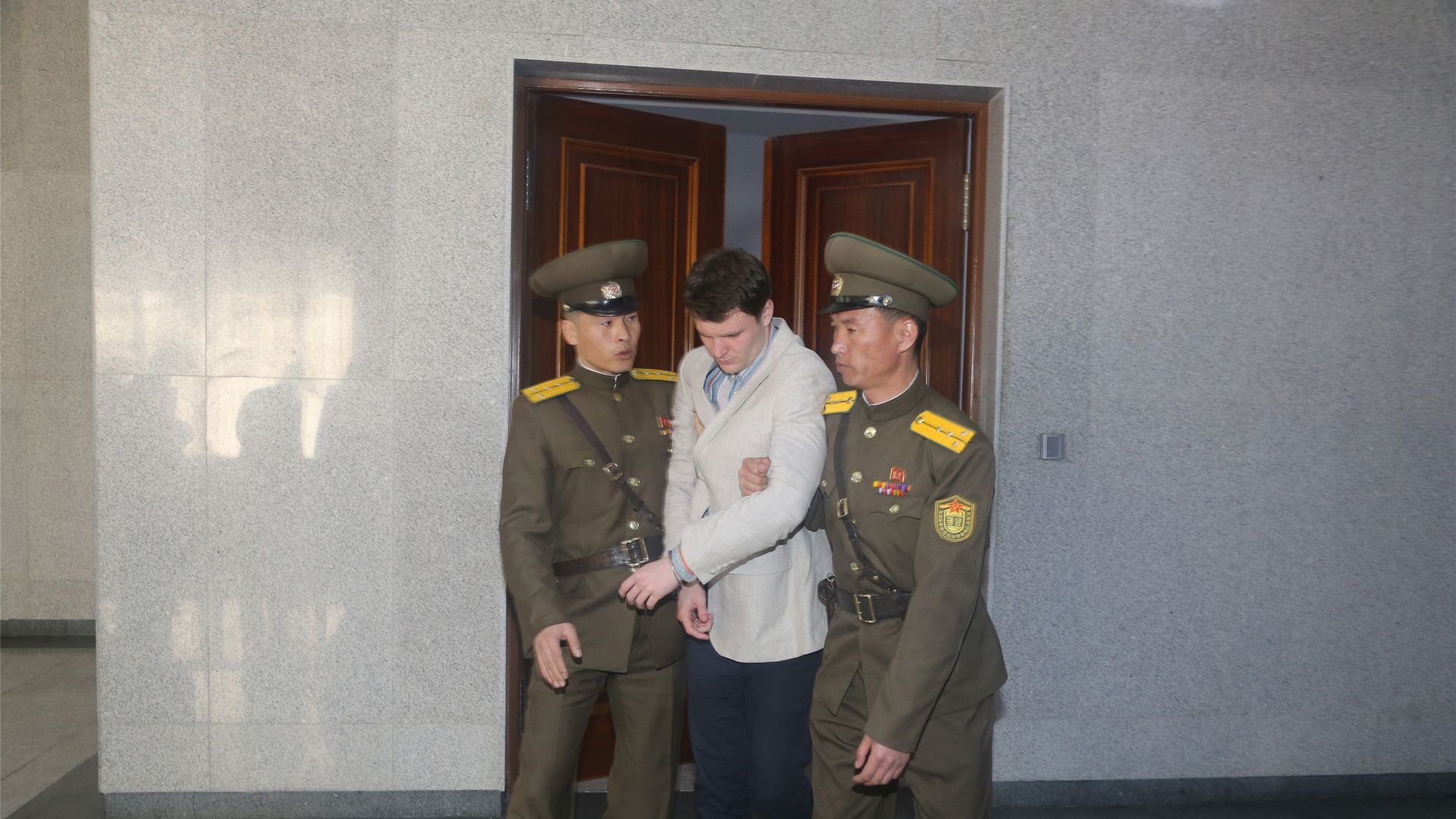
"I never like being misinterpreted, but especially when it comes to Otto Warmbier and his great family. Remember, I got Otto out along with three others. The previous Administration did nothing, and he was taken on their watch. Of course I hold North Korea responsible........for Otto's mistreatment and death. Most important, Otto Warmbier will not have died in vain. Otto and his family have become a tremendous symbol of strong passion and strength, which will last for many years into the future. I love Otto and think of him often!"
Why it matters: Warmbier's parents spoke out earlier on Friday following Trump's summit with North Korean leader Kim Jong-un, during which Kim denied guilt for Warmbier's mistreatment and 17-month captivity in his country. Trump said Thursday he believed Kim's denials.
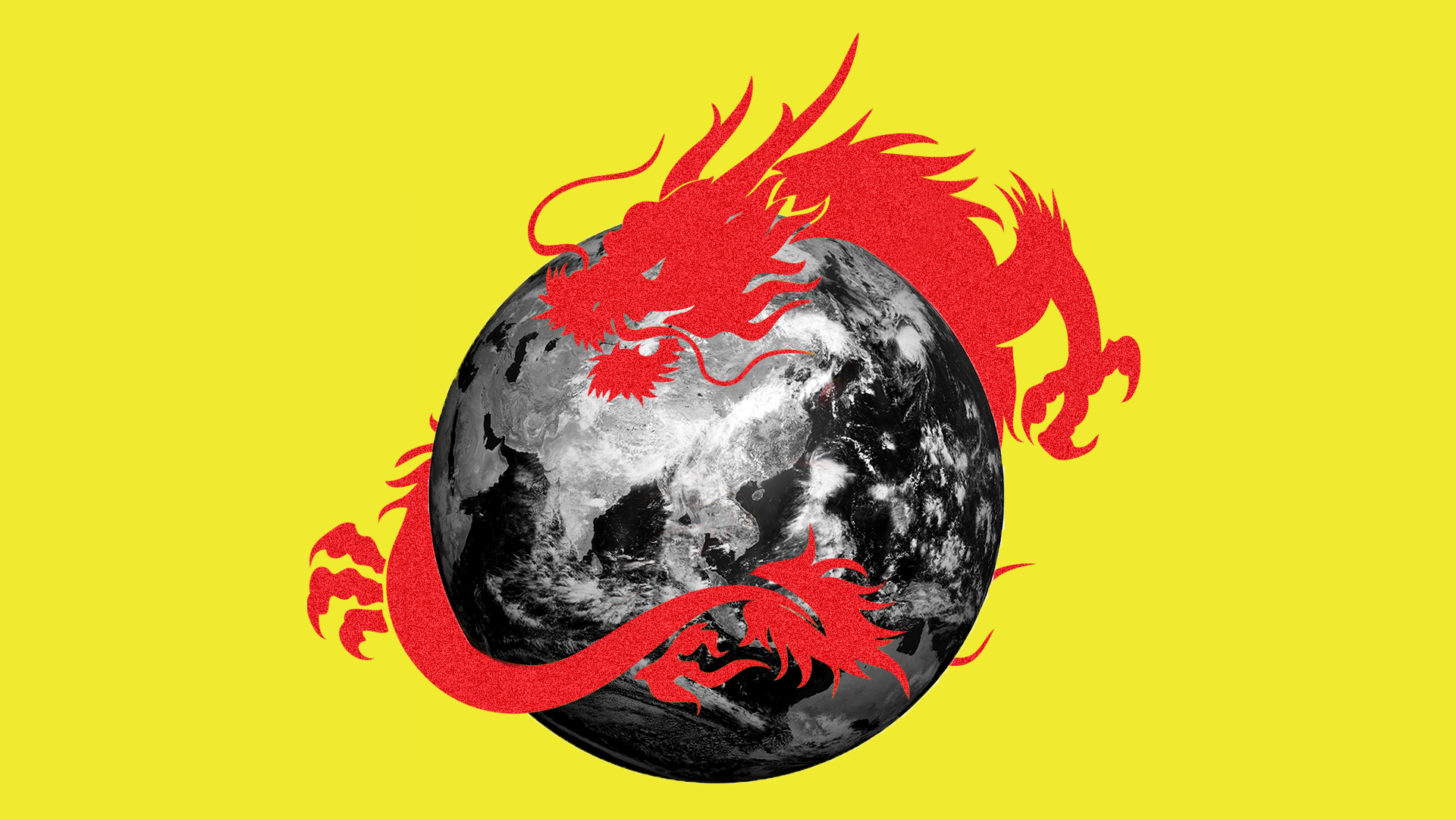
China has developed inside a global governance system that has an architecture designed with minimal input from China.
The state of play: The country justifiably wants a bigger say now, but its increasing authoritarianism is raising concerns about its efforts to reshape global governance.
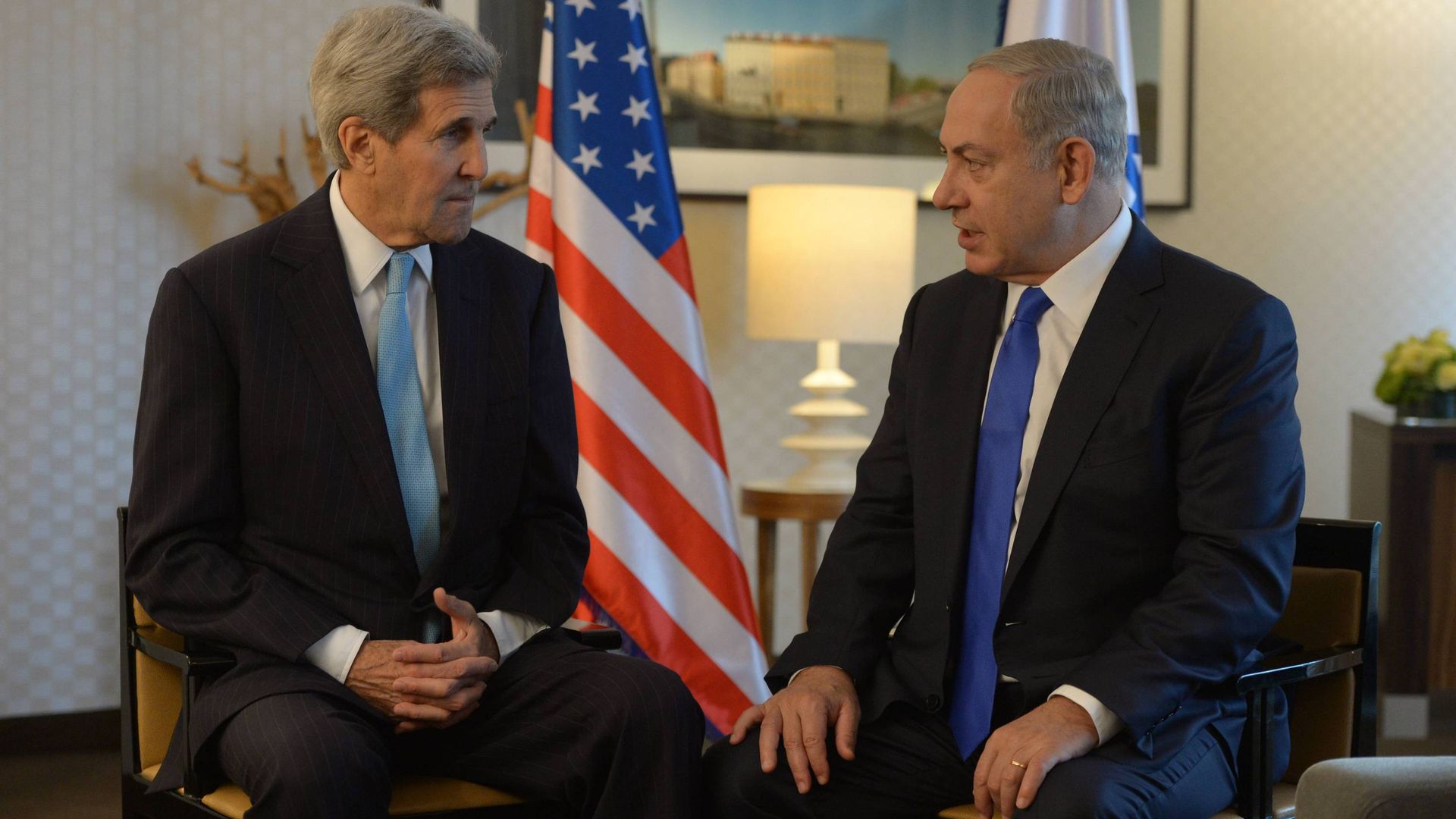
One of the indictments against Israeli Prime Minister Benjamin Netanyahu had an interesting twist involving former U.S. secretary of state John Kerry.
Why it matters: This episode was part of "Case 1000," which saw Netanyahu indicted for breach of trust and fraud after allegedly receiving shipments of expensive champagne and Cuban cigars for more than a decade from Israeli Hollywood producer Arnon Milchen. According to the indictment, the "gifts" were worth more than $130,000. In return, Netanyahu allegedly used his executive powers to help Milchen in his personal and business affairs.
Otto Warmbier's parents have spoken out after President Trump stated that he took North Korean leader Kim Jong-un "at his word" after Kim denied any hand in Warmbier's death, which occurred after the American college student spent 17 months in captivity in North Korea and was returned to the U.S. in 2017 in a vegetative state.
"We have been respectful during this summit process. Now we must speak out. Kim and his evil regime are responsible for the death of our son Otto. Kim and his evil regime are responsible for unimaginable cruelty and inhumanity. No excuses or lavish praise can change that."
Council on Foreign Relations President Richard Haass — author of "A World in Disarray" — provides his takeaways on President Trump's failed Hanoi summit with North Korean leader Kim Jong-un, which ended abruptly with no joint statement or communiqué.
Haass' bottom line: "Sometimes you have to walk," President Trump said, and he is right. This was one of those times. No deal was better than a bad deal. What's more, walking might well strengthen Trump's hand with N.K. down the road and with China now, as the trade talks reach a critical juncture.
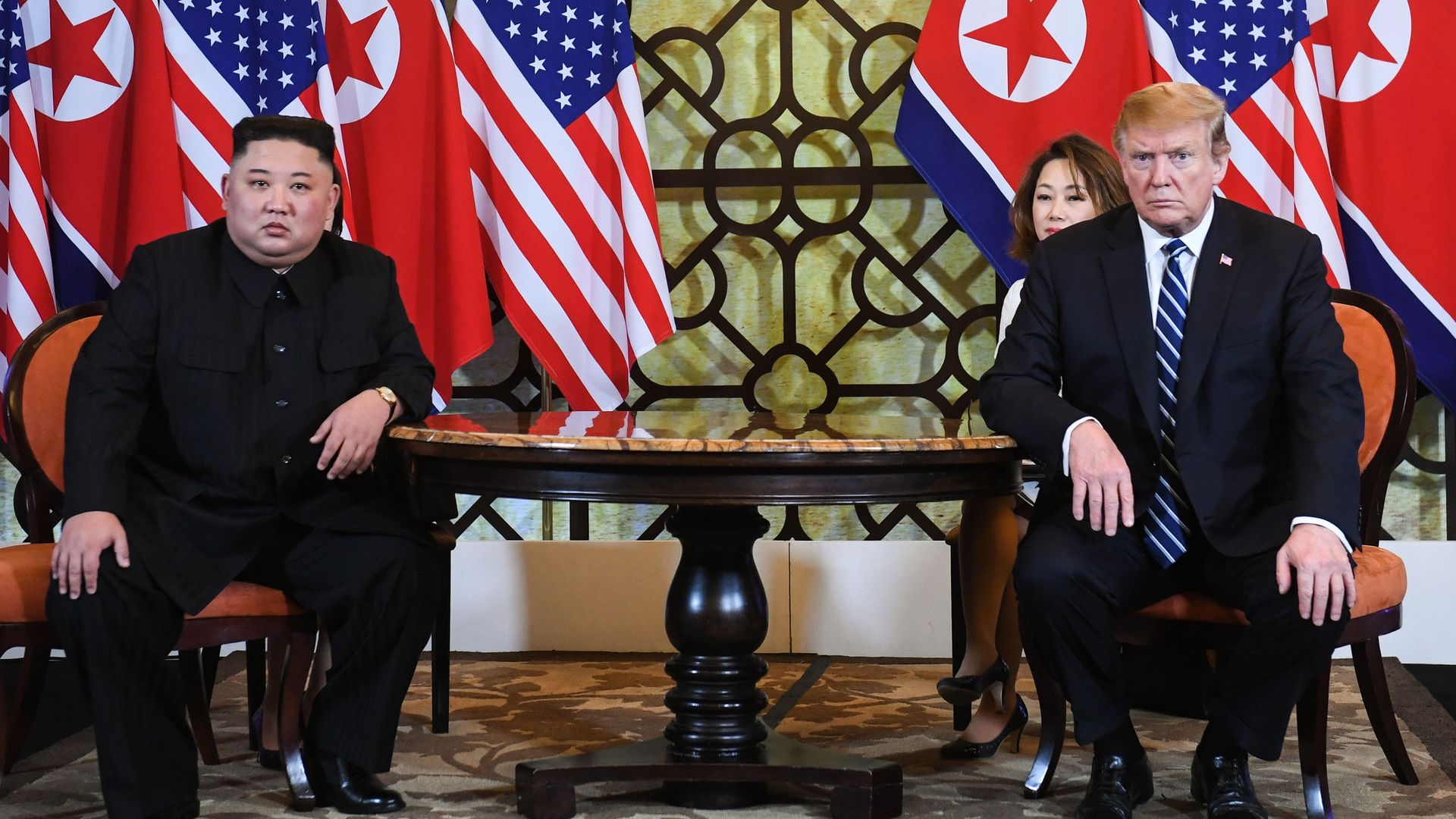
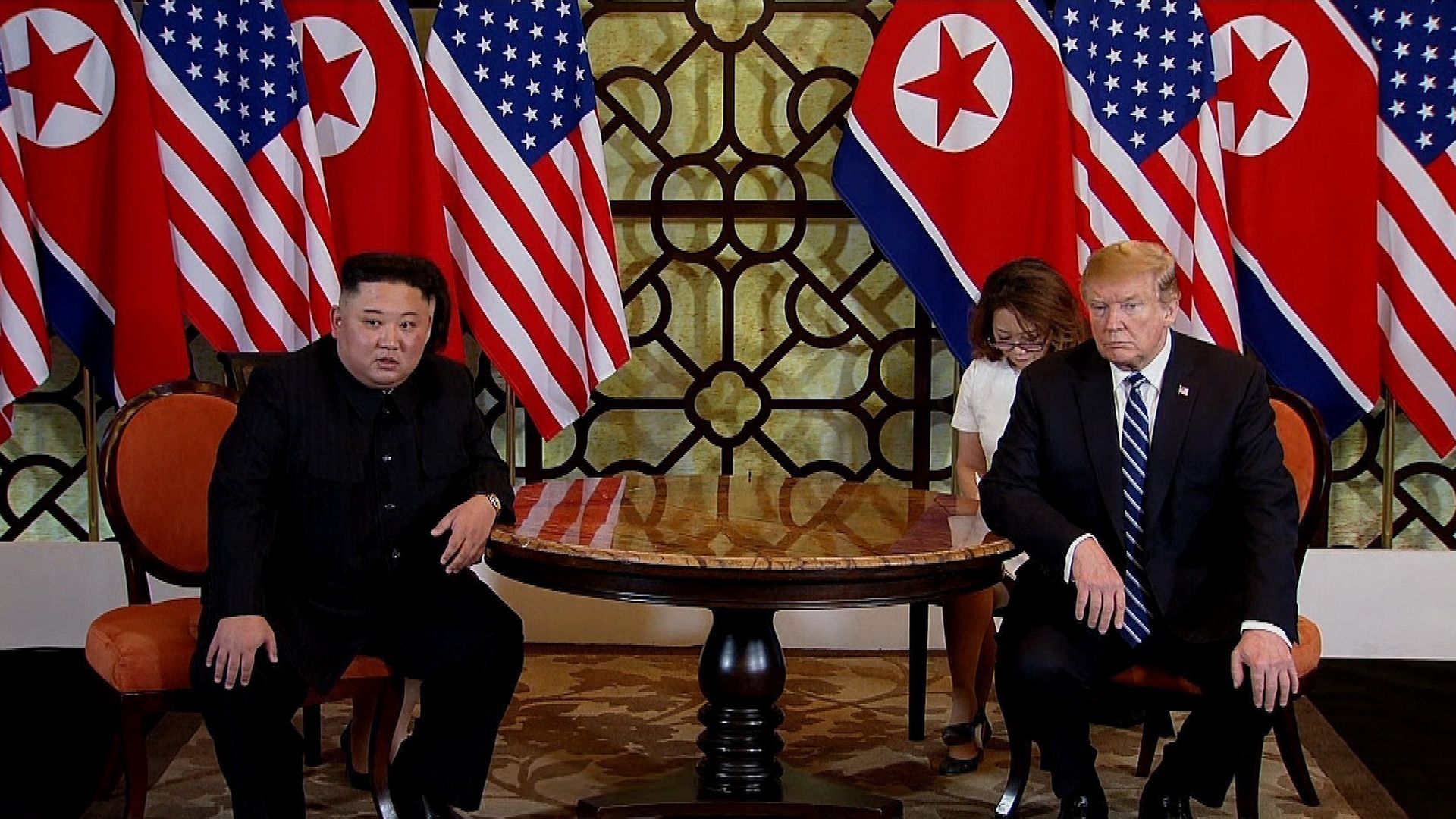
President Trump and Chairman Kim are returning to their respective capitals empty-handed, with conflicting explanations for how talks broke down and where we go from here.
Why it matters: Trump showed both flexibility — he backed off the long-standing U.S. demand that any deal requires complete and verifiable denuclearization — and a willingness to walk away. The summit also laid bare the limits to his charisma-based negotiating style and revealed how far the two sides are from agreeing to anything of substance.
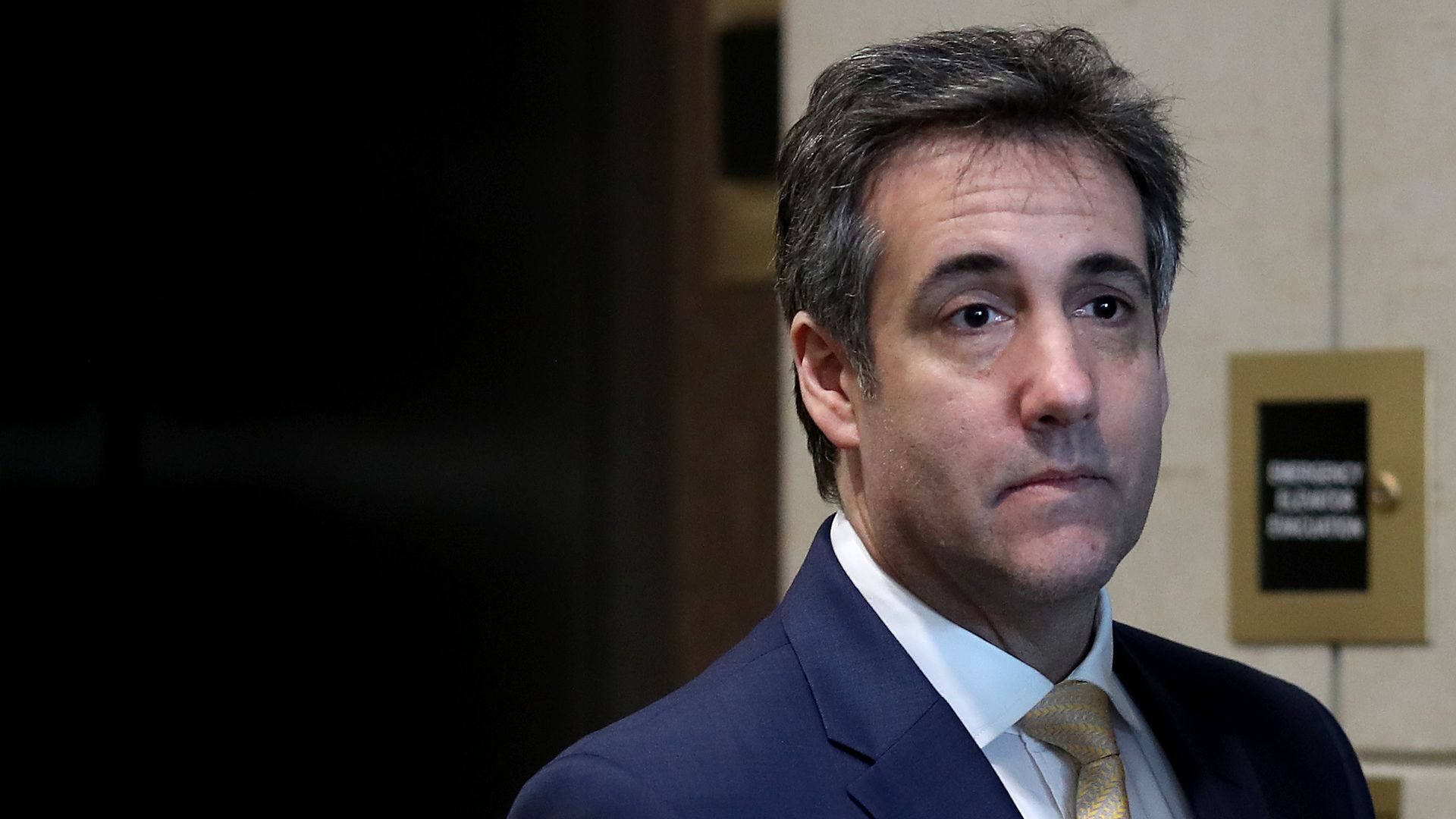
Following three straight days of testimonies before various congressional committees, President Trump's former personal attorney Michael Cohen said Thursday that he would return to the House Intelligence Committee on March 6 because there is "more to discuss."
Details: Committee Chairman Adam Schiff (D-Calif.) told reporters after Cohen's 7.5 hour testimony: "It was a very productive interview today where he was able to shed light on a lot of issues." He added that the committee plans to release Cohen's testimony publicly at some point in the future, and that Felix Sater — who worked with Cohen on the Trump Tower Moscow project — will testify publicly on March 14.
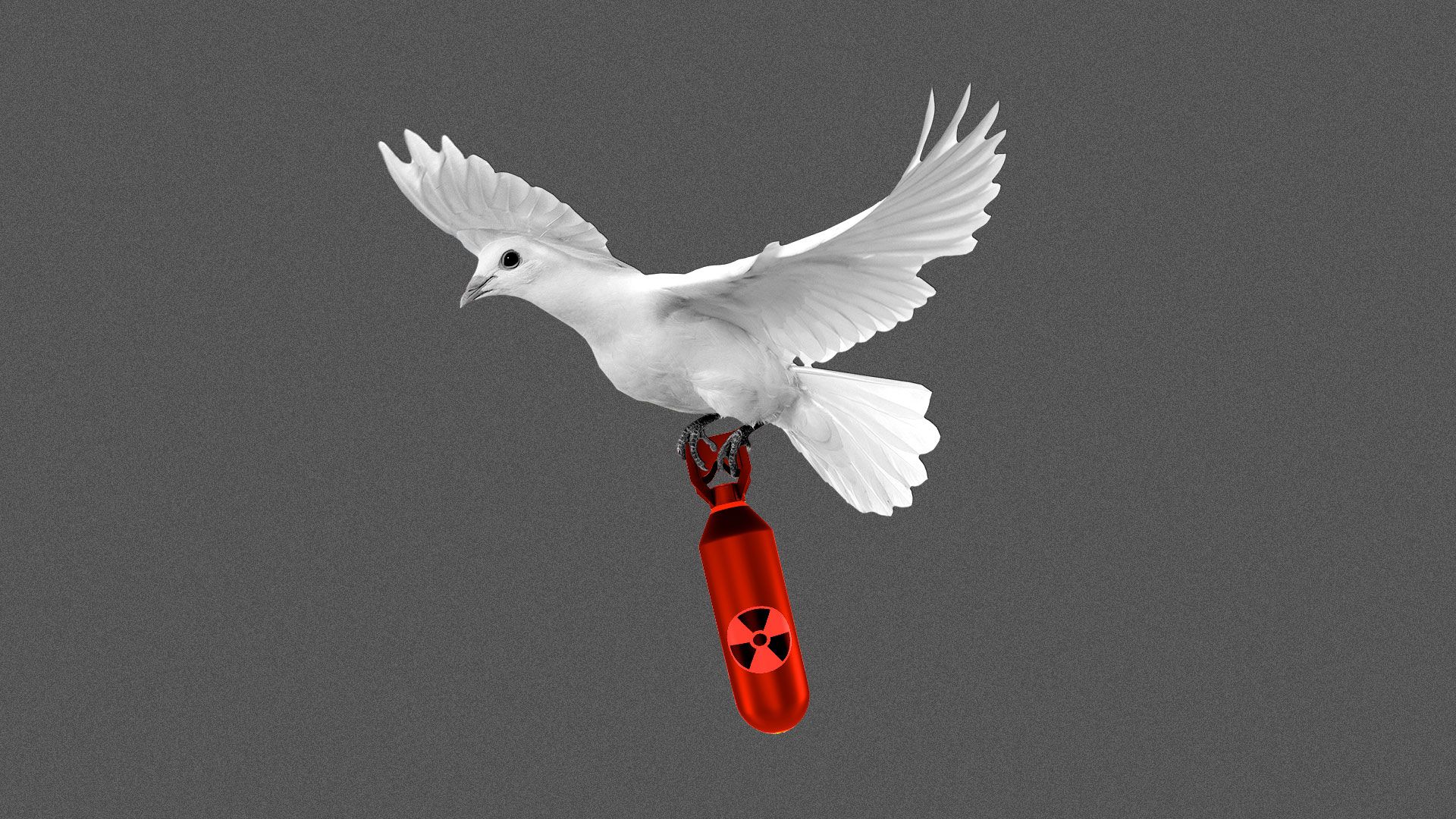
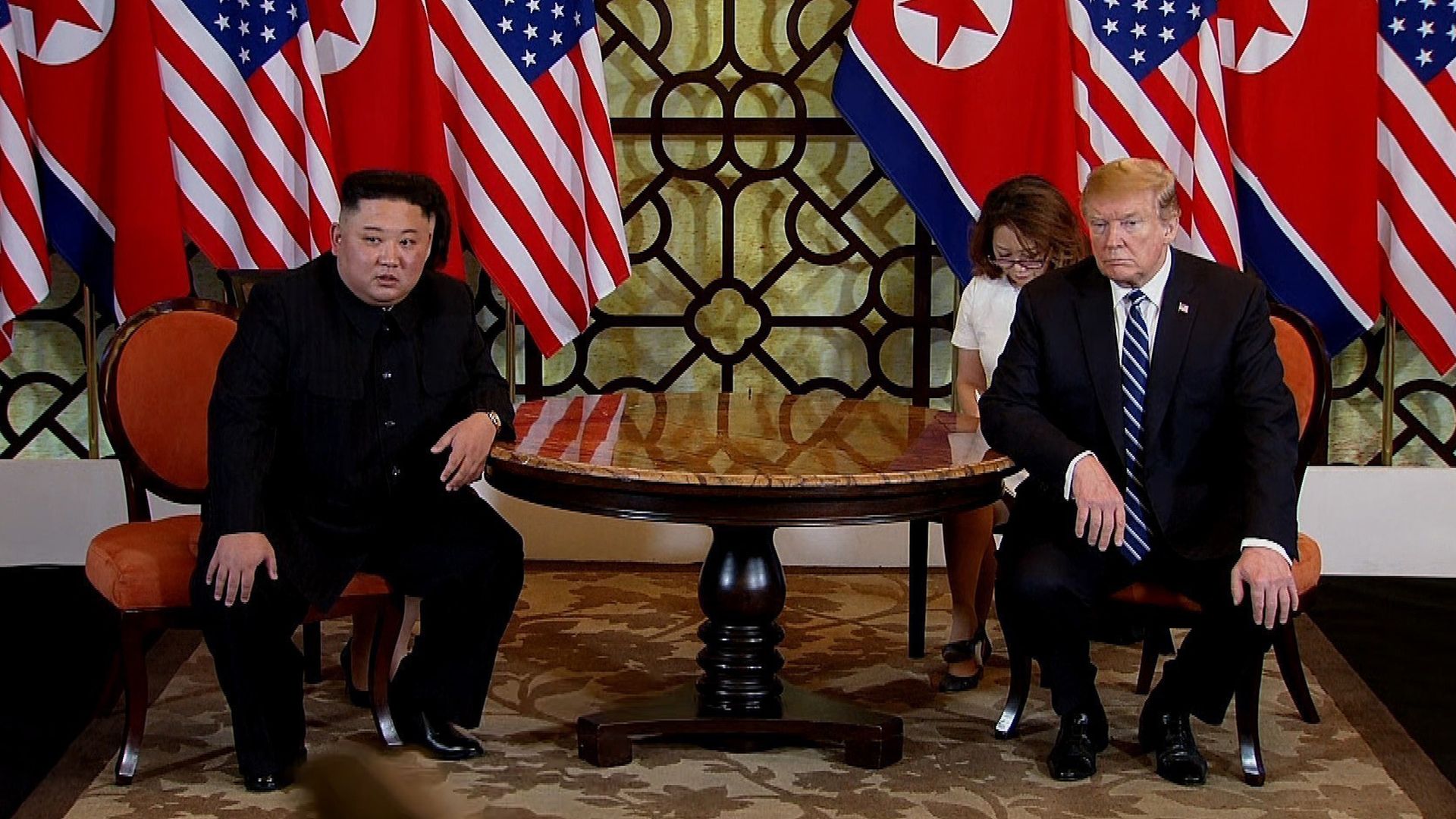
The surprise has now worn off on the abrupt end to the U.S.-North Korea summit in Hanoi, with the two sides disputing even the terms of what was being negotiated.
Driving the news: The U.S. side claims North Korea offered to close one nuclear facility in exchange for lifting all economic sanctions.The North Korean side claims it only wanted a partial reprieve from economic sanctions.
President Trump caught the world by surprise once again yesterday with a decision not to sign a deal with his North Korean counterpart, Chairman Kim Jong-un, in Hanoi, Vietnam.
The big picture: While walking away is a common tactic in working-level negotiation, what happened in Hanoi was a rare case and the least expected outcome. Nonetheless, it might have been a much-needed reality check, not a failure, for both sides in the still-early stages of a long process of negotiation.
North Korean officials said Thursday they only asked for 5 of 11 U.S. sanctions to be lifted in exchange for partial denuclearization, the Washington Post reports.
The big picture: Thiscontradicts Trump's statements that he declined a deal with the North Koreans based on their demand that the U.S. remove all sanctions. Though the highly anticipated summit with North Korean leader Kim Jong-un ended with a breakdown in talks, Trump stressed that the two leaders left on good terms and that there is no rush to an agreement. "Sometimes you have to walk,” Trump said, adding that Kim had a vision of denuclearization that's "not exactly our vision, but it's a lot closer than it was a year ago."
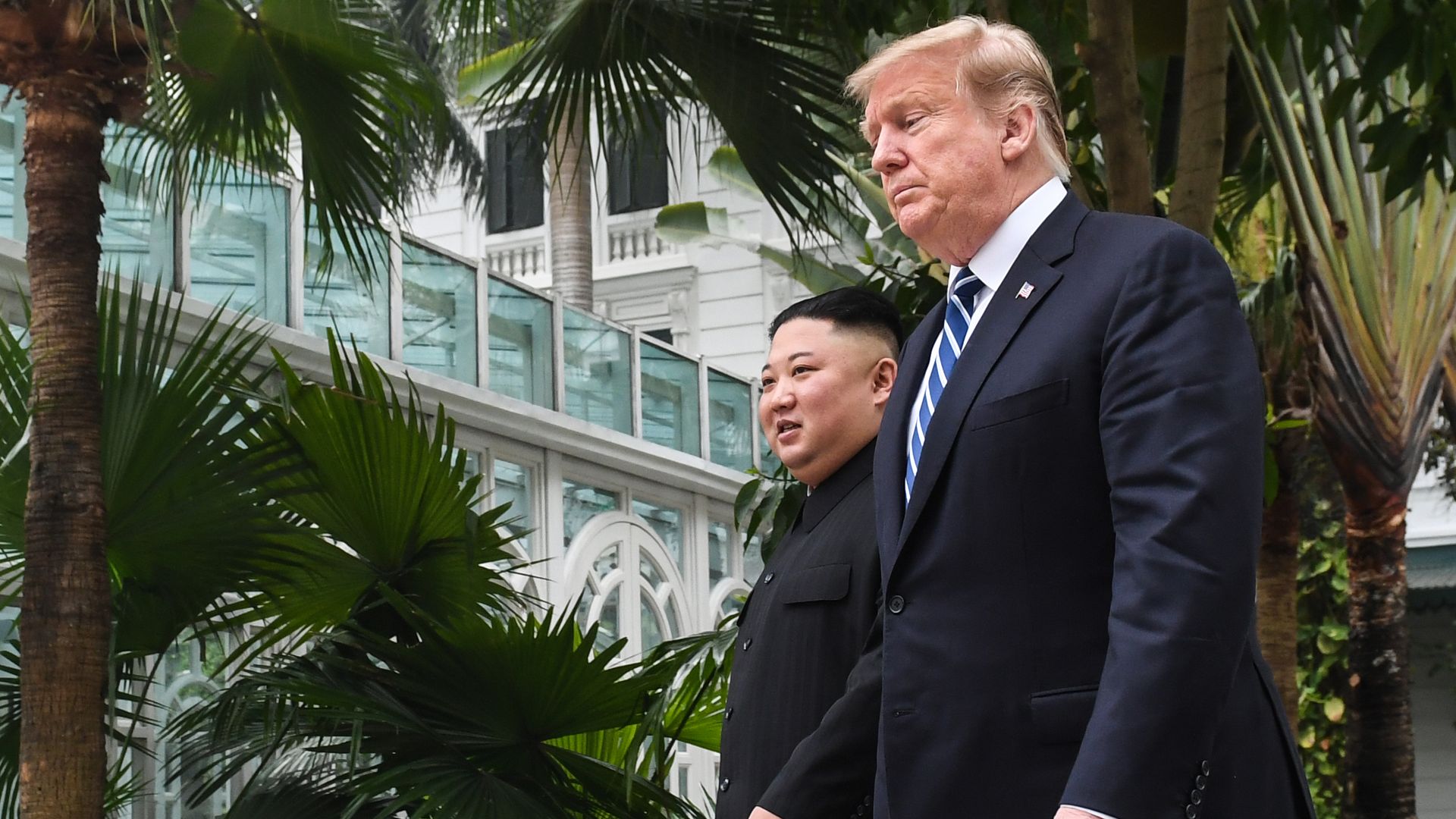
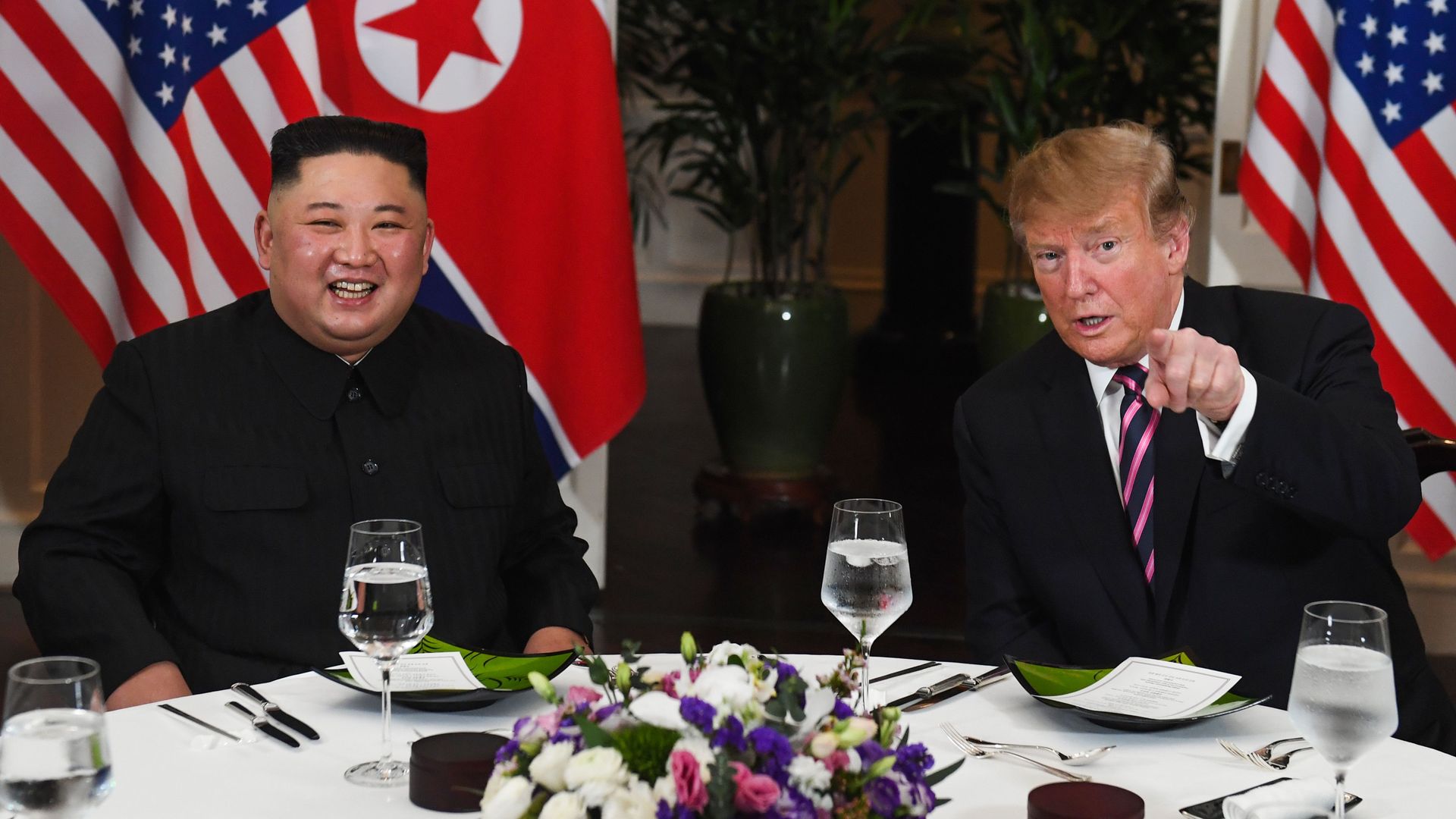
The meeting in Hanoi between President Trump and North Korean leader Kim Jong-un ended abruptly on Thursday without any breakthrough on denuclearization, the issue of utmost concern to the U.S. and its regional allies.
The big picture: For Trump, the error of relying on the power of his personal charm and negotiating skills over the counsel of intelligence and diplomatic experts was laid bare. Ultimately, effusive praise and promises of a brighter future could not shake Kim’s strategic conviction that nuclear weapons are key to his regime's survival.
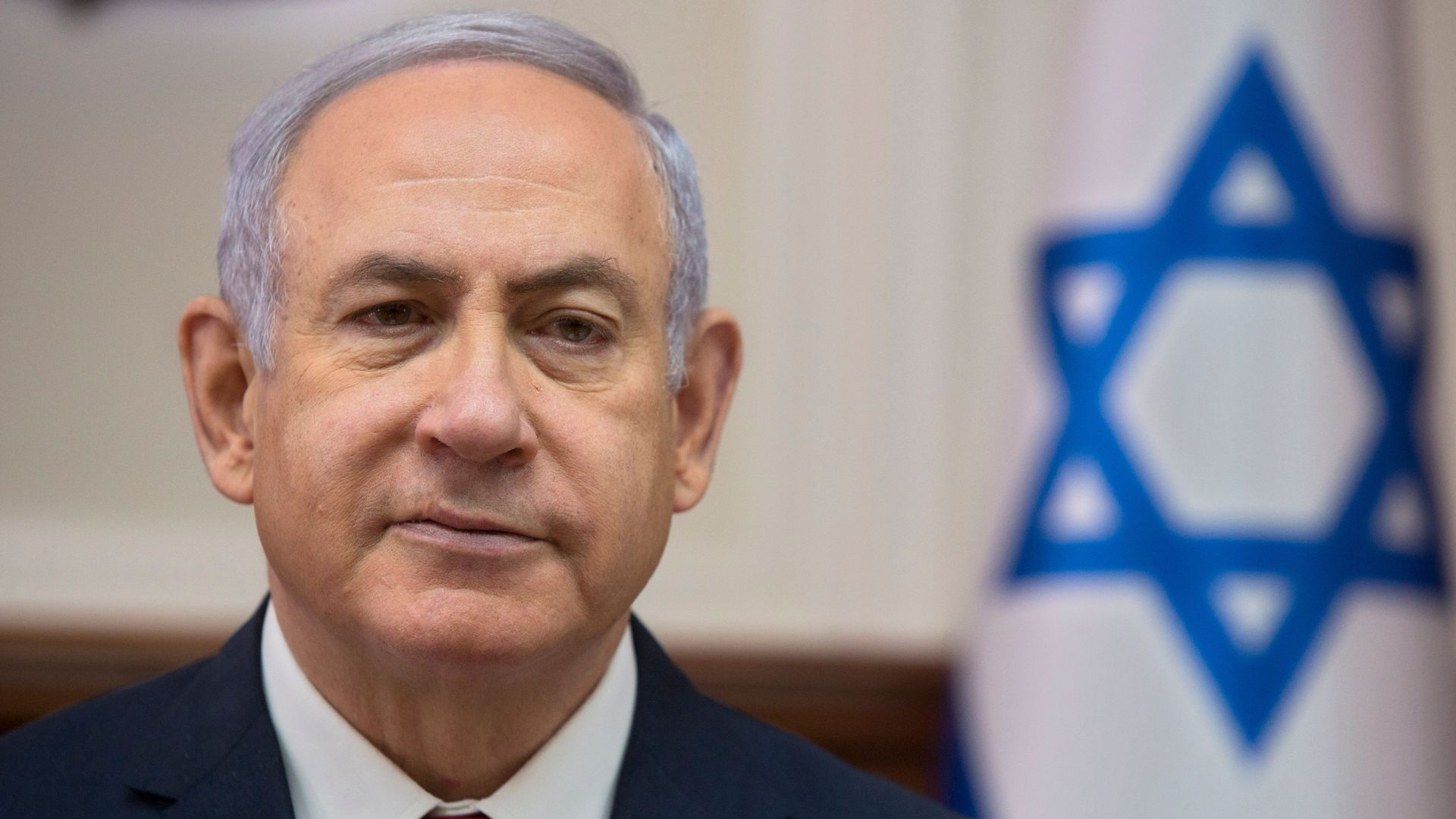
Israeli Attorney General Avichai Mandelblit announced Thursday his decision to indict Prime Minister Benjamin Netanyahu in one case of bribery and two cases of fraud and breach of trust. All indictments are pending a hearing.
Why it matters: The announcement comes after more than two years of investigations and less than two months before Israel's highly anticipated April 9 elections. It's also the first time in Israel's history that a sitting prime minister will face criminal charges.
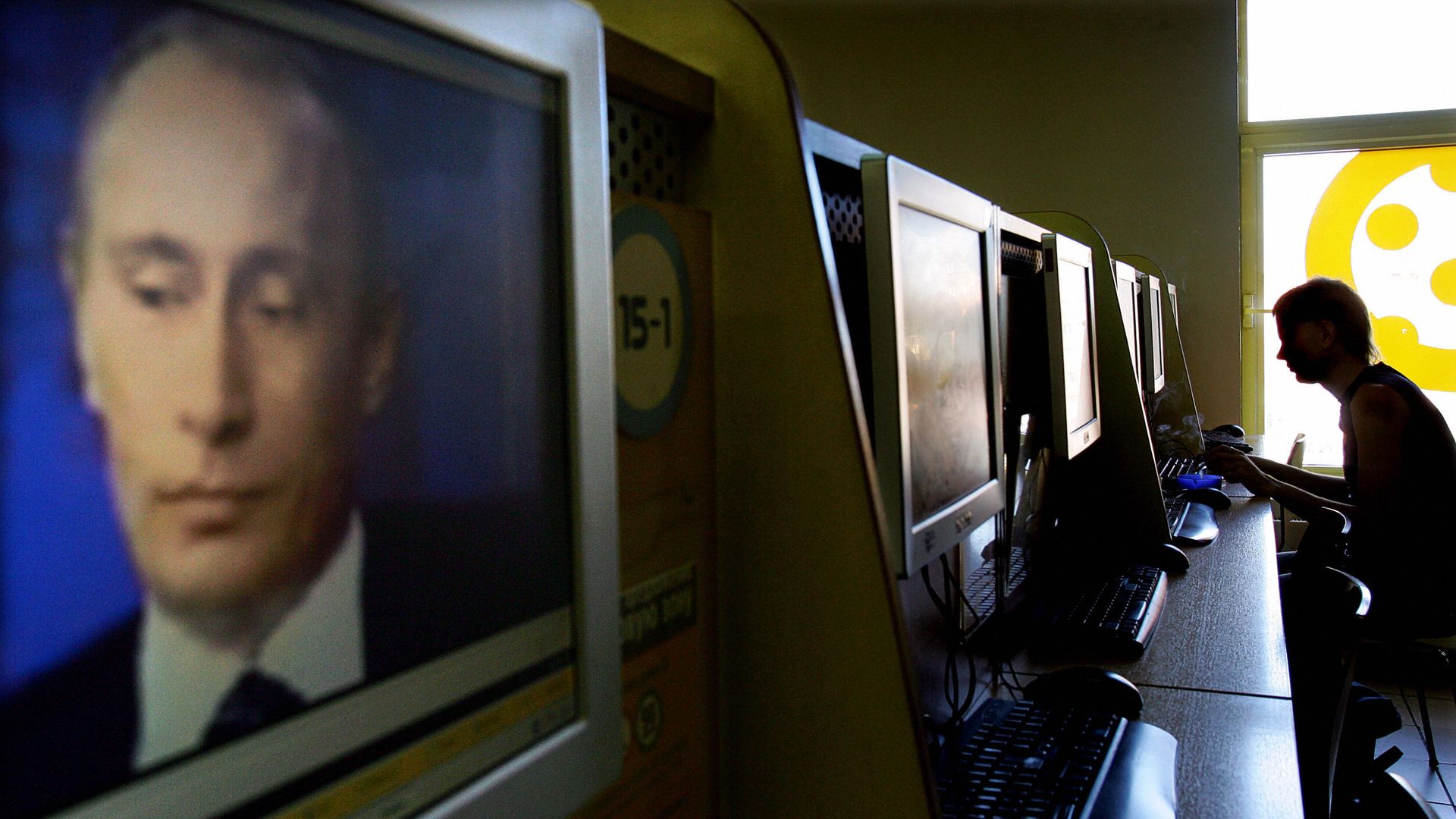
According to a Washington Post report Tuesday (and confirmations in Russian media), the U.S. Cyber Command disrupted the internet access of Russia's Internet Research Agency on Election Day in 2018 — a clear attempt to send a message to the so-called "troll farm" to back off.
Why it matters: The gambit is a public example of the Department of Defense's new "defending forward" emphasis in cyber defense, which aims to increase activities in foreign networks to disrupt potential attacks.
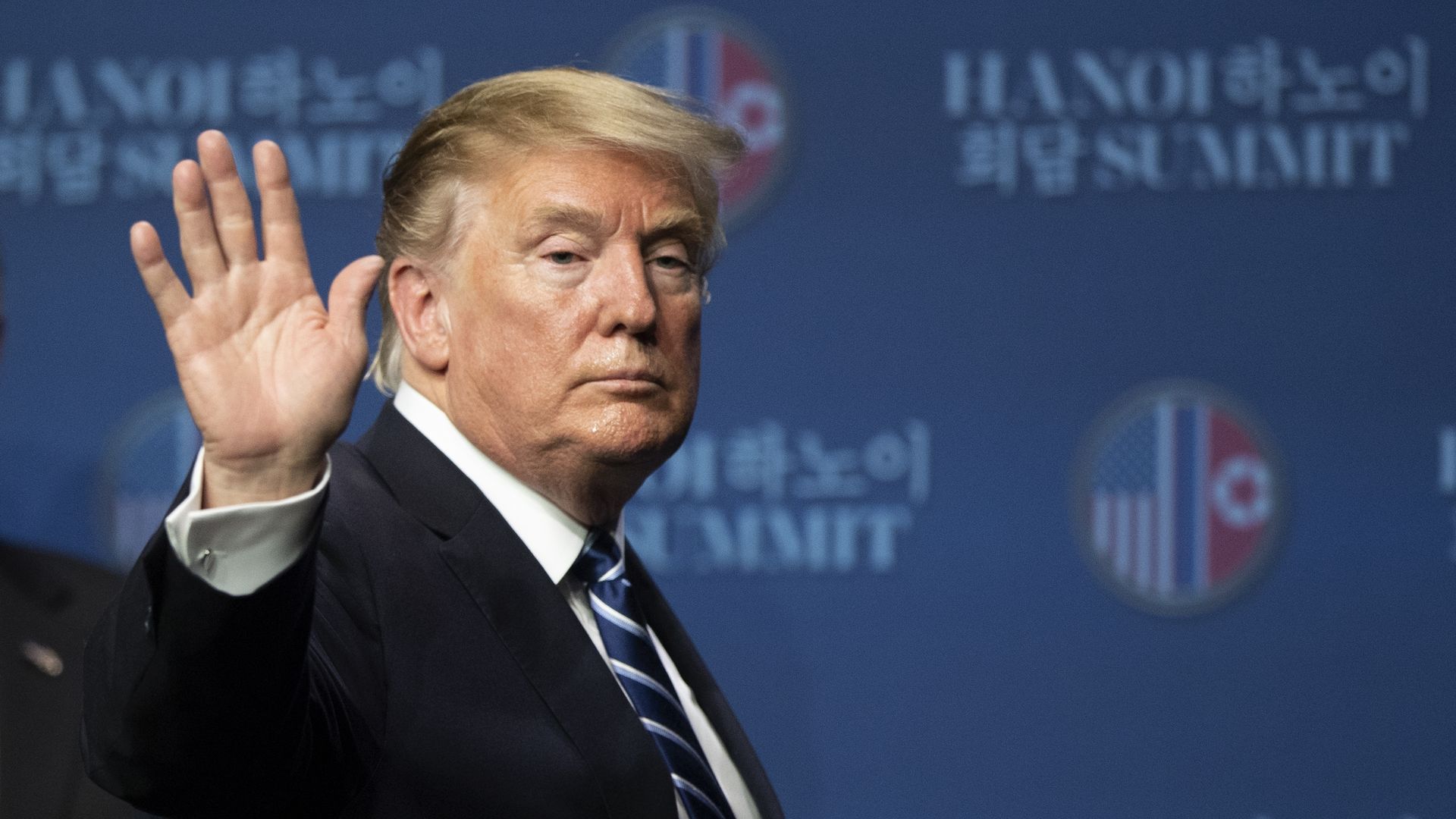
President Trump said early Thursday he failed to reach a deal with North Korea's leader Kim Jong-un because of a disagreement over sanctions, as talks abruptly wrapped up on the second day of their summit in Hanoi, Vietnam.
Why it matters: Trump said Kim pledged to dismantle the Yongbyon nuclear facility — not its entire nuclear program — if all sanctions imposed on the country were lifted first. "Sometimes you have to walk,” he said. Kim had a vision of denuclearization, that's "not exactly our vision, but it's a lot closer than it was a year ago."