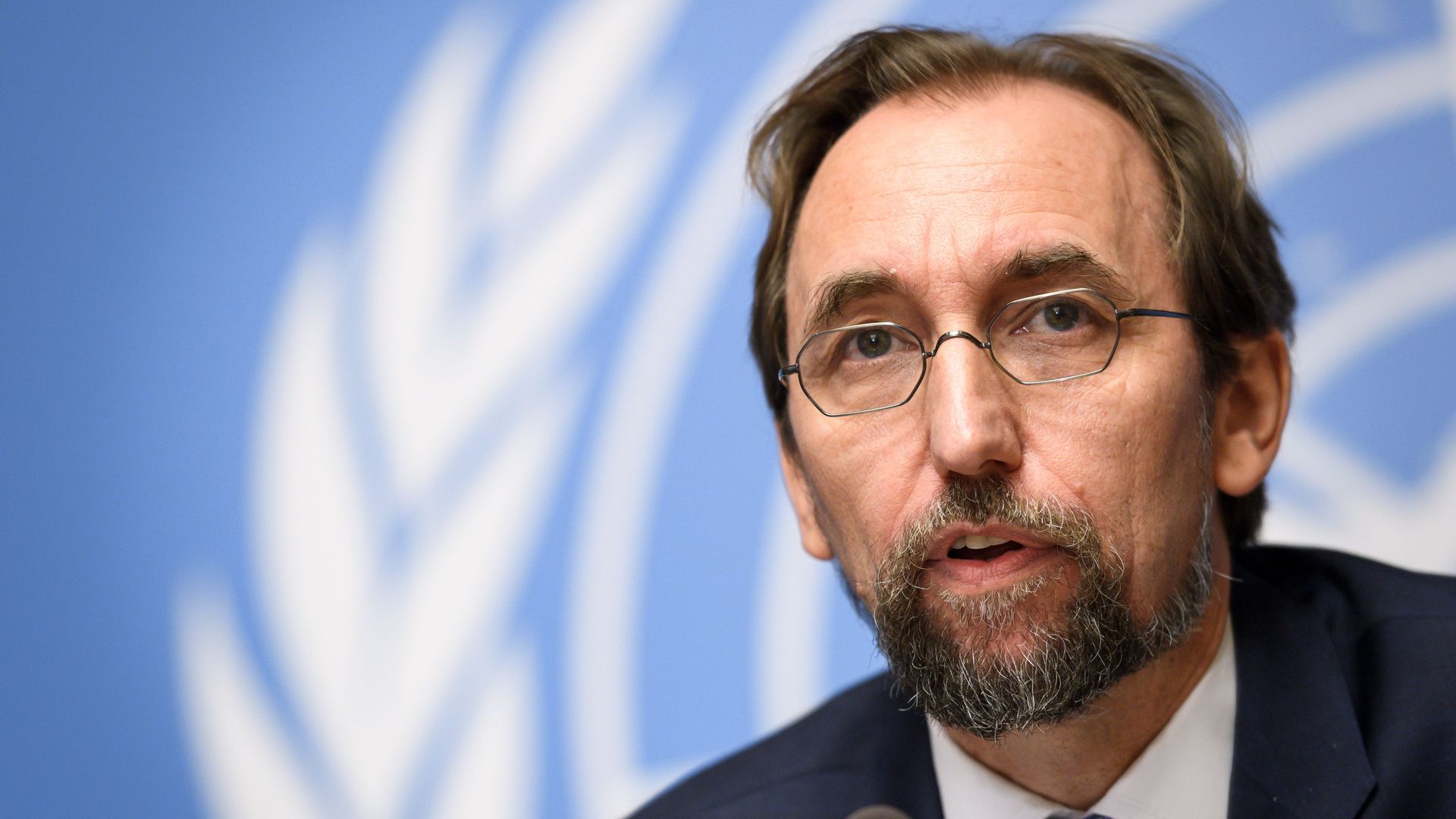
Russia used a procedural vote on Monday to prevent UN Human Rights Commissioner Zeid Ra’ad al-Hussein from presenting on human rights conditions in Syria to the UN Security Council (UNSC).
Why it matters: To date, Russia has vetoed nine resolutions aimed at intensifying pressure on Syria’s Bashar al-Assad, moves that not only counter U.S. interests but undermine the international system.
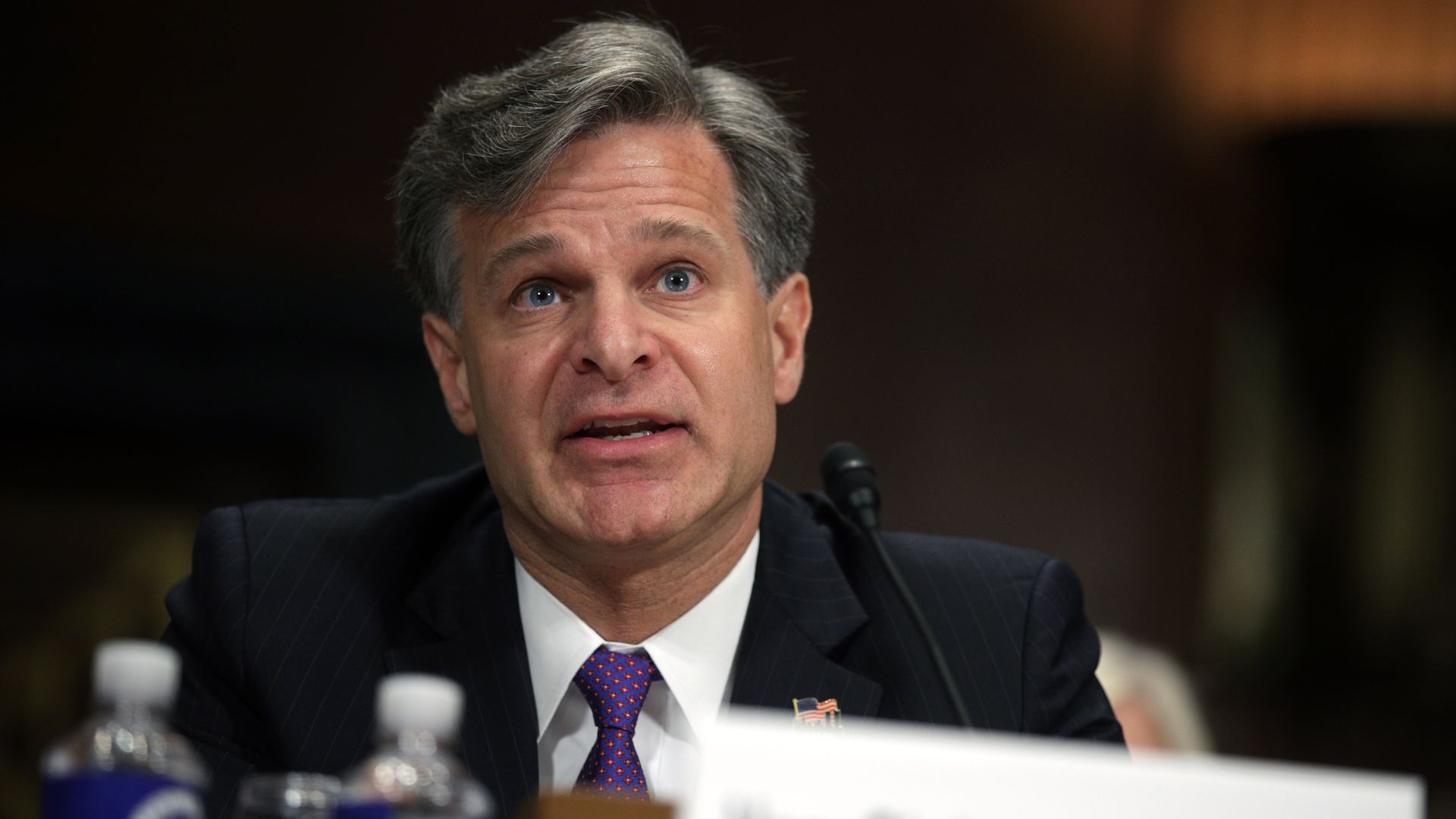
In an interview with NBC News, FBI Director Christopher Wray said the Bureau currently has more than 3,000 open terrorism investigations nationwide, all of which are full-field cases that range from suspected ISIS threats to homegrown extremism.
Why it matters: Per NBC News, this is a higher number than previously disclosed. "This is in big cities and small towns," Wray said. "It's a real problem."
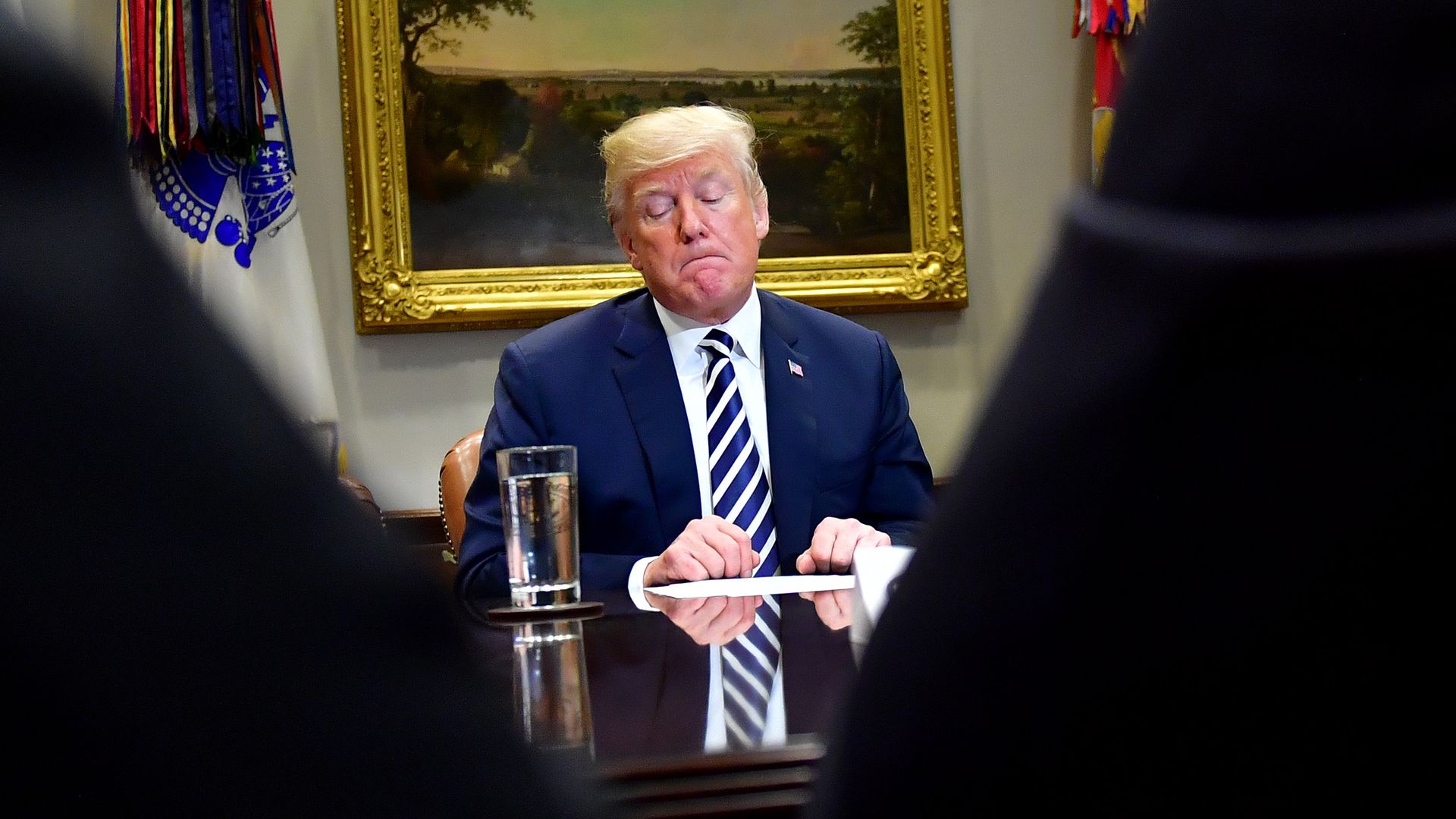
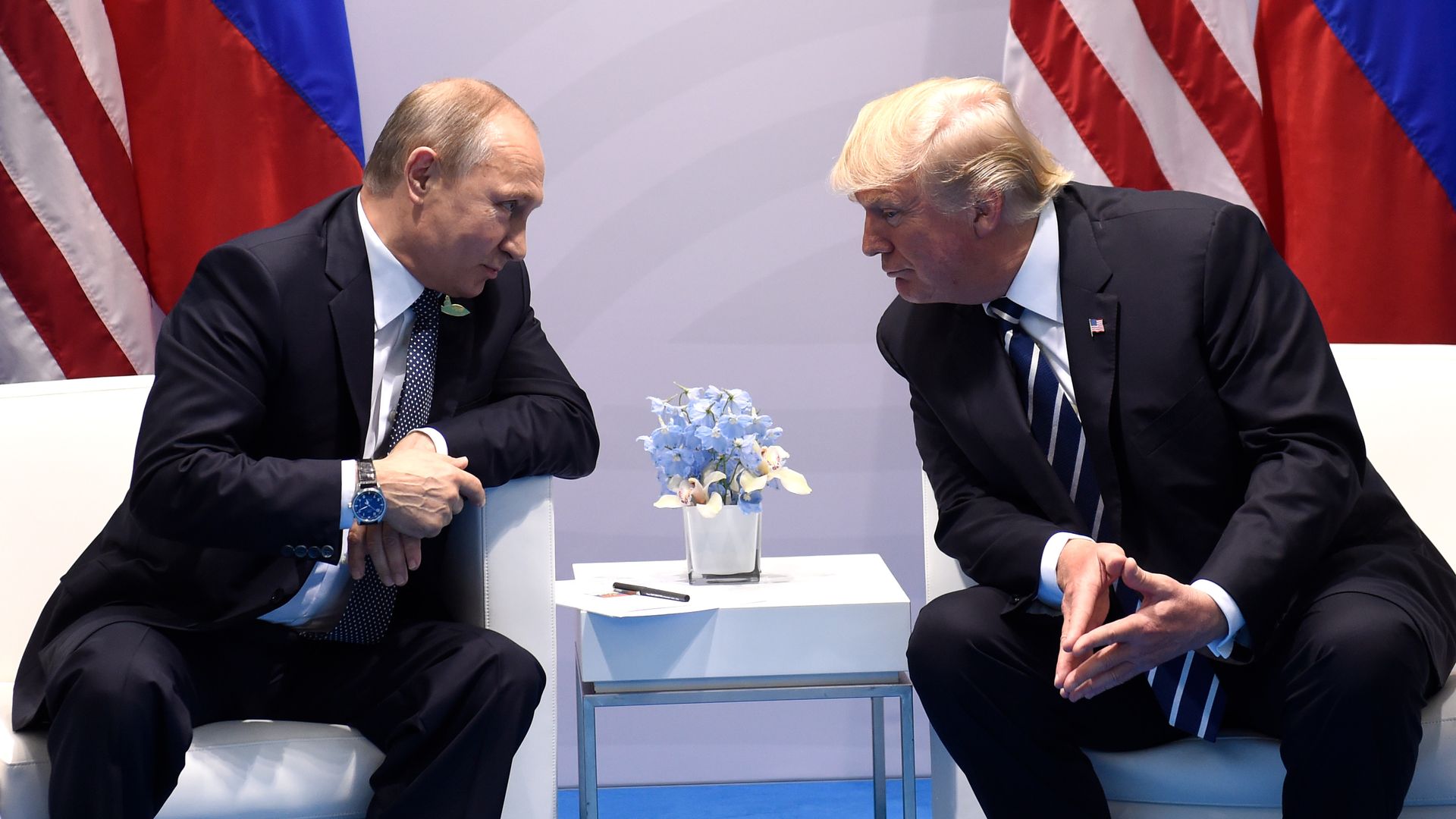
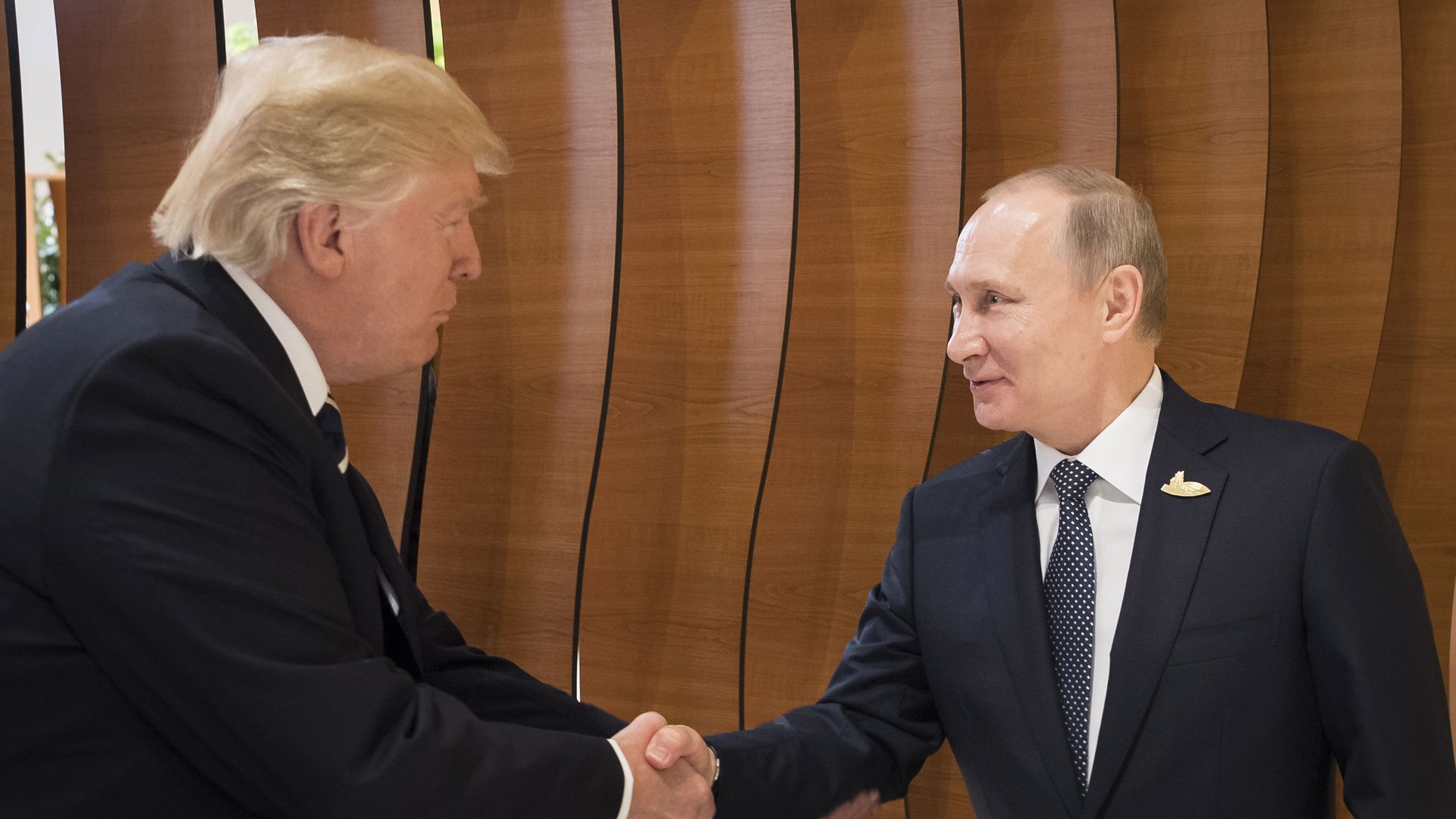
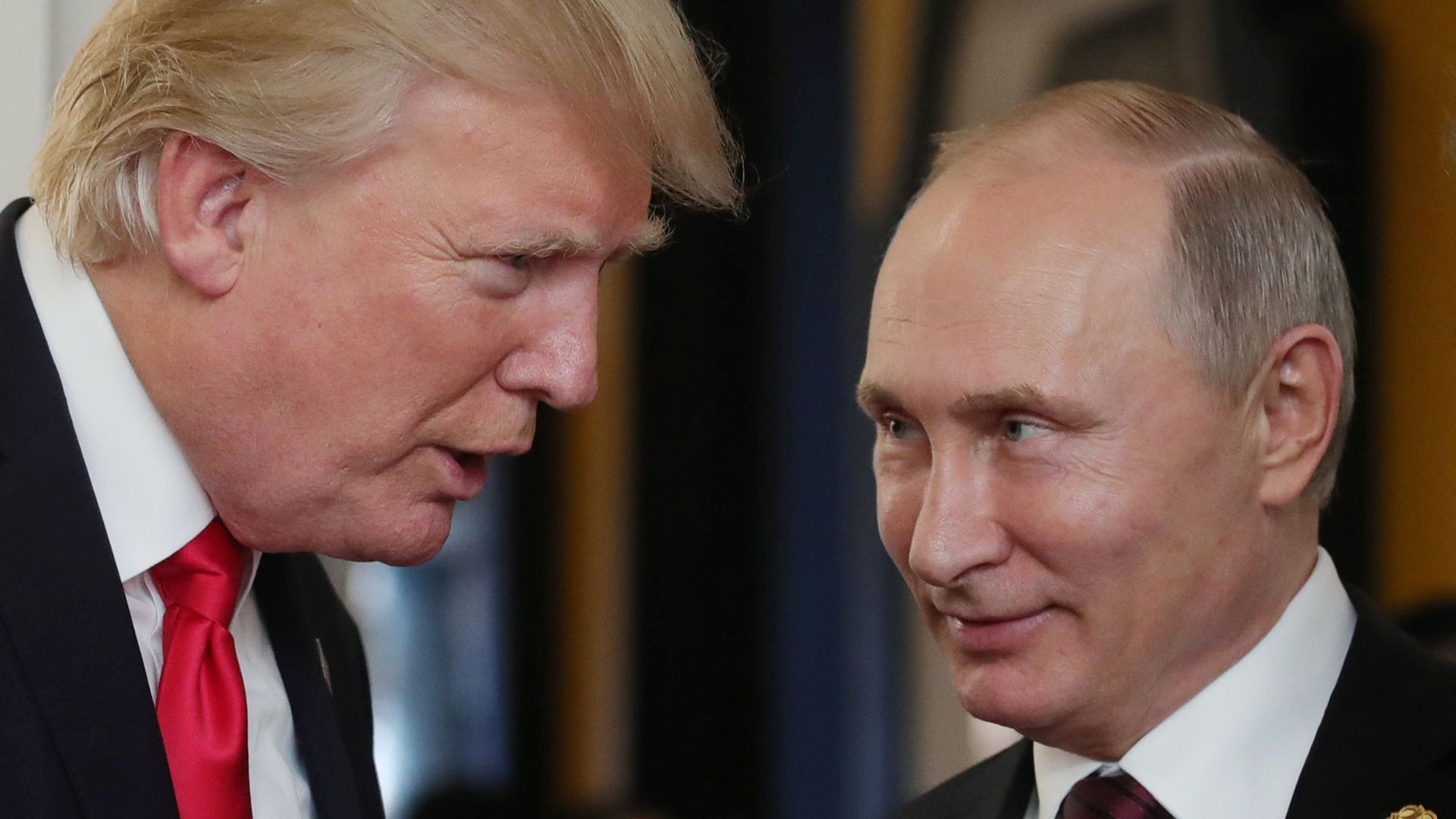
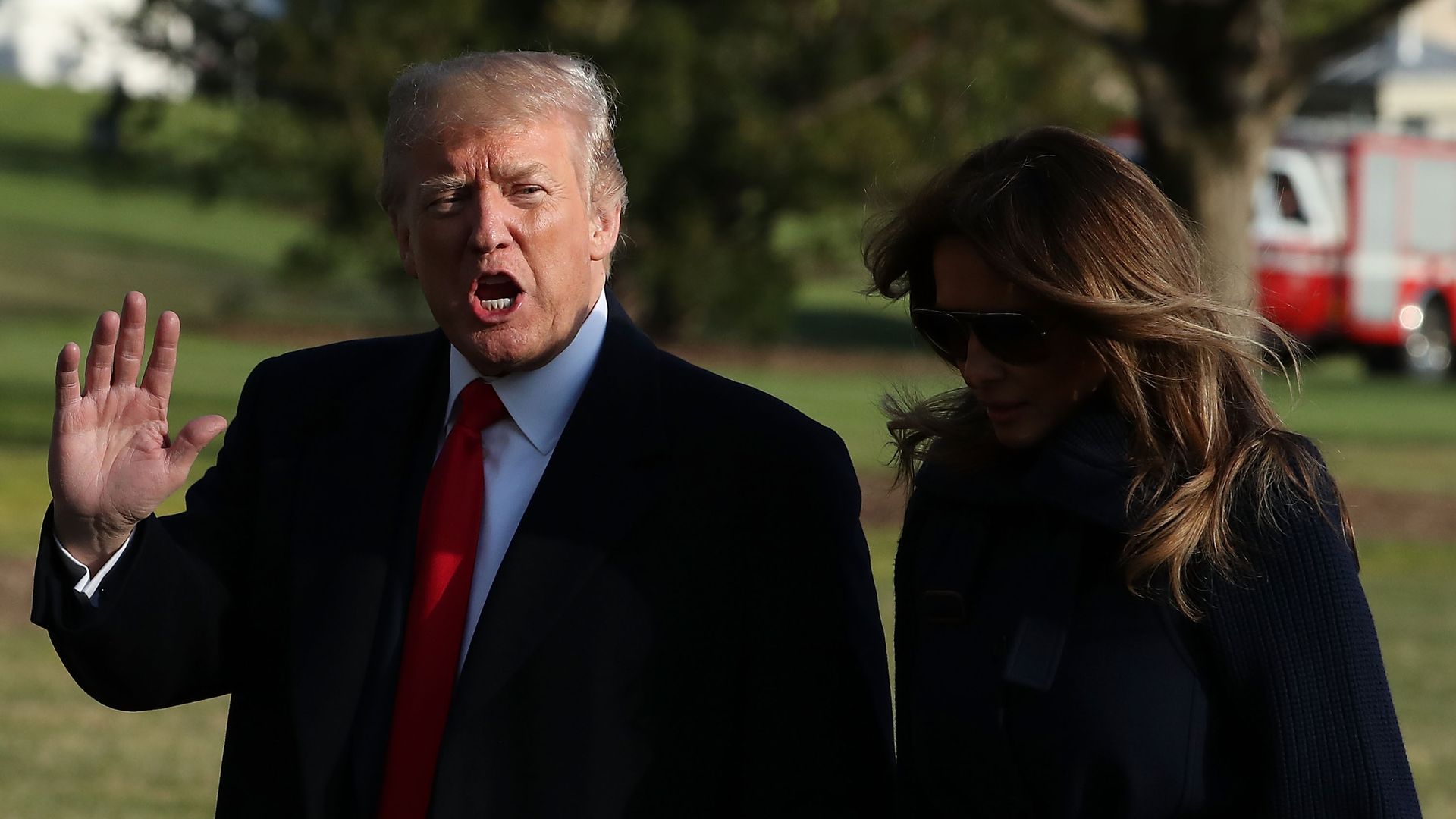
President Trump defended on Wednesday his congratulatory call to Russian President Vladimir Putin, reiterating his belief that, "Getting along with Russia... is a good thing," and adding that his "energy and chemistry" with Putin will allow for constructive relations.
Why it matters: The call was criticized by Sen. John McCain, who said a U.S. president shouldn't be "congratulating dictators on winning sham elections." And it was reported on Tuesday night that Trump's aides had explicitly warned him against congratulating Putin, writing "DO NOT CONGRATULATE" in his briefing materials.
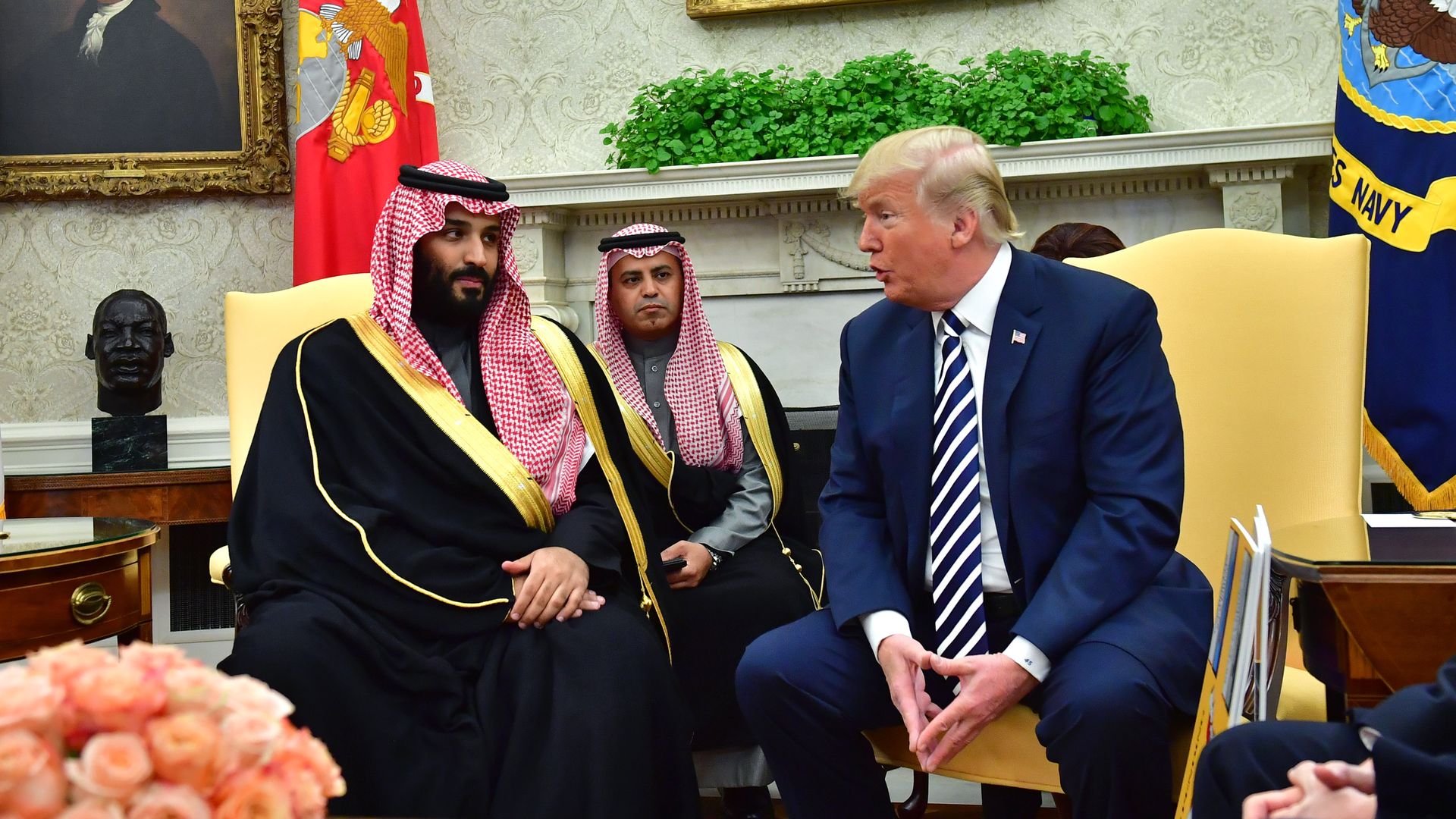
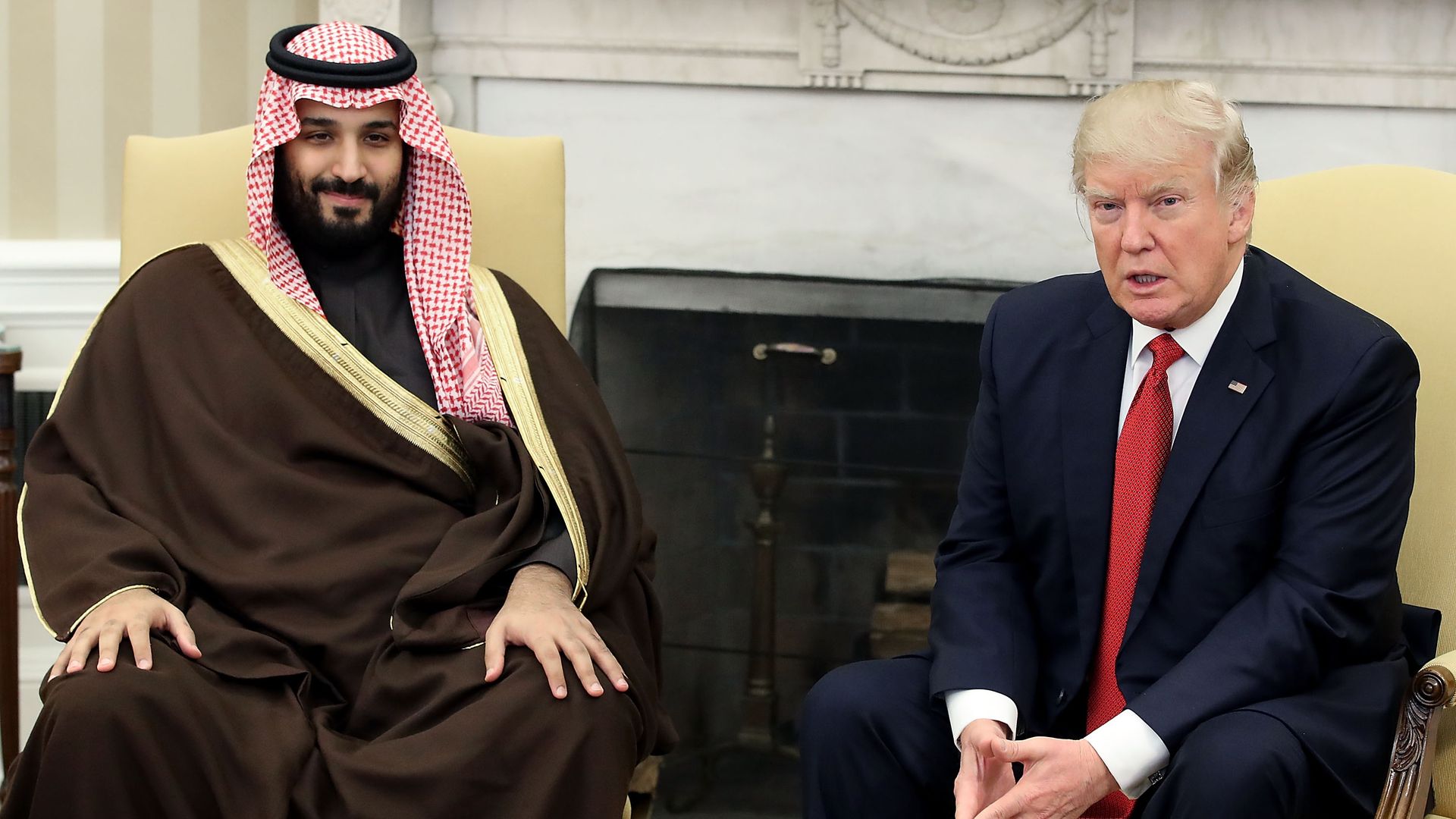
President Trump gave a warm welcome to Saudi Arabia's Crown Prince Mohammed bin Salman’s at the White House on Tuesday, sustaining what some have called an all-time high in U.S.–Saudi relations. Prince Mohammed's primary goal will be to build on the already close ties with team Trump to advance the kingdom’s economic development and diversification plans by courting investment from U.S. technology, energy, finance and entertainment companies.
Yes, but: Despite warming relations, a number of key issues — including Saudi Arabia's nuclear aspirations, involvement in the Yemeni civil war and human rights concerns — could create roadblocks.
Ahed Tanimi, the 17-year-old Palestinian girl who was jailed for slapping an Israeli soldier, has agreed to a plea deal and been sentenced to eight months in prison, NBC News reports.
Why it matters: Tanimi quickly became "a global symbol of Palestinian resistance," per NBC, and renewed focus on Israel's West Bank occupation. Right-leaning Israelis believe her actions made the military look "weak." Her deal includes "a reduced charge sheet that includes assault," NBC reports.
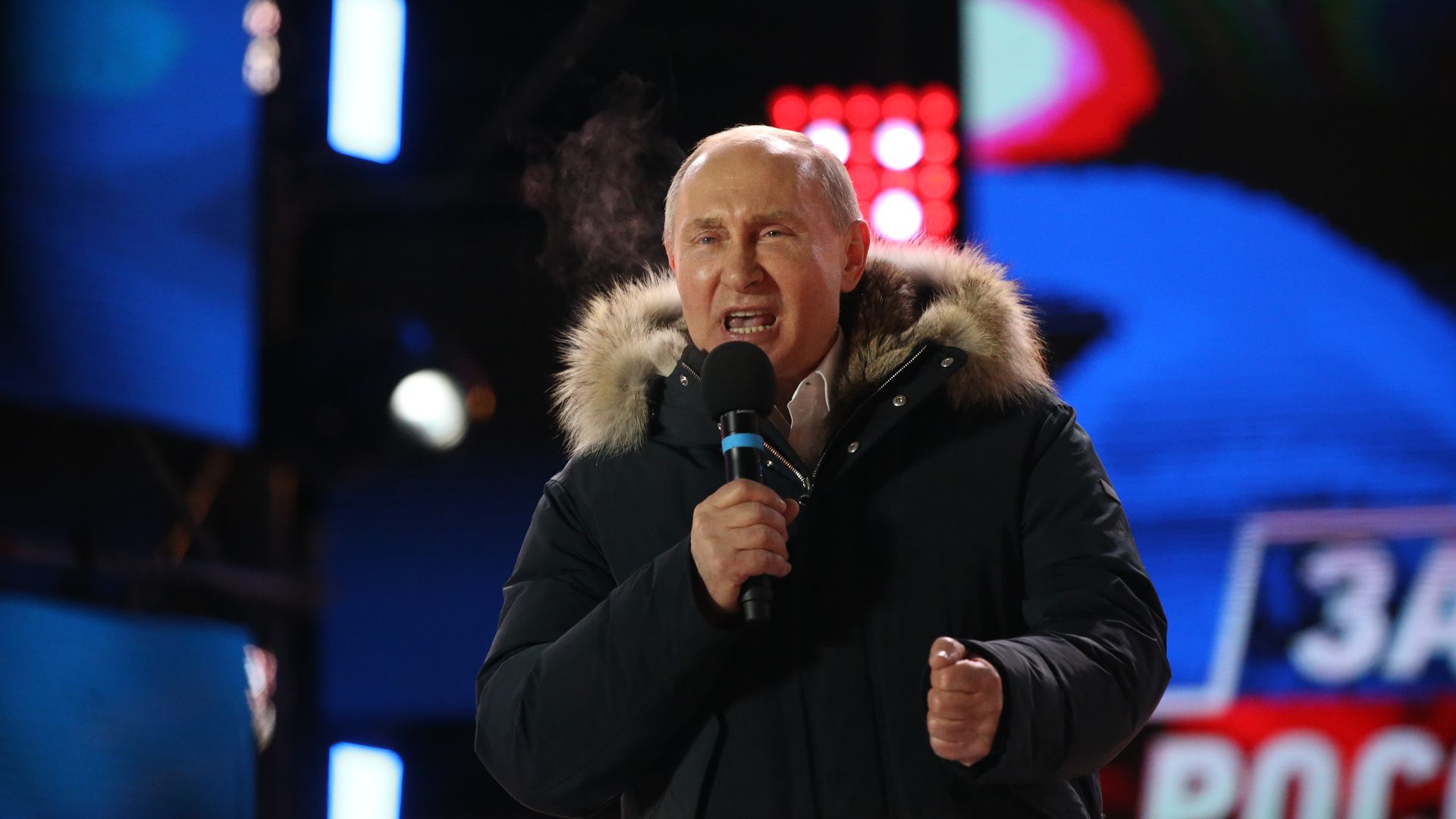
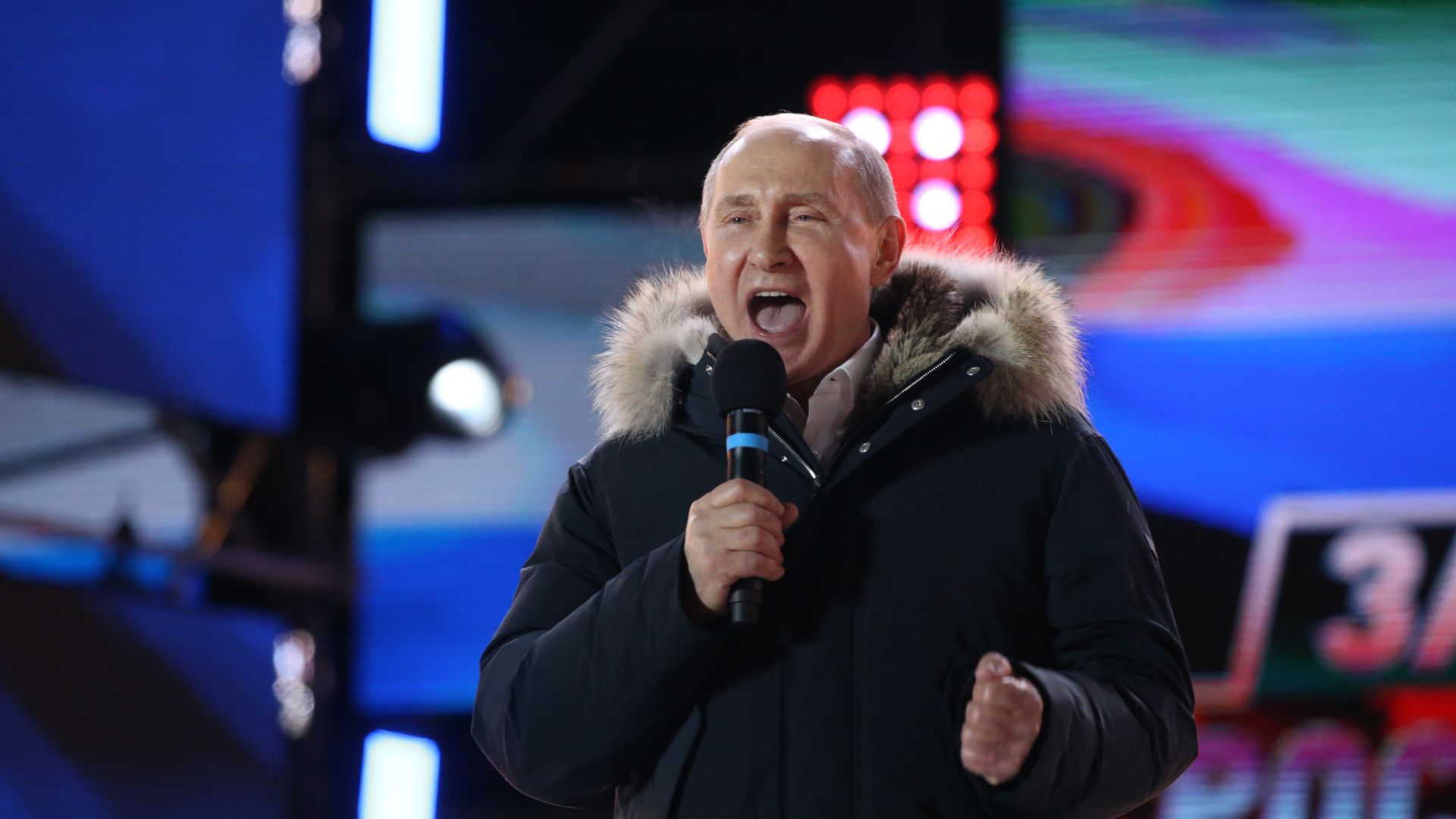
Russian President Vladimir Putin’s commanding reelection victory — 76% of the vote with 67% turnout — has been described at once as a "sham" in The Washington Post and as evidence of his “overwhelming mandate” in The New York Times. The truth is more complicated.
Why it matters: The election was marked by all the usual shenanigans: roughly 10 million suspicious votes for Putin, ballot-box stuffing and blatant bias in media coverage. But the genuine popular support Putin enjoys should not be underestimated.
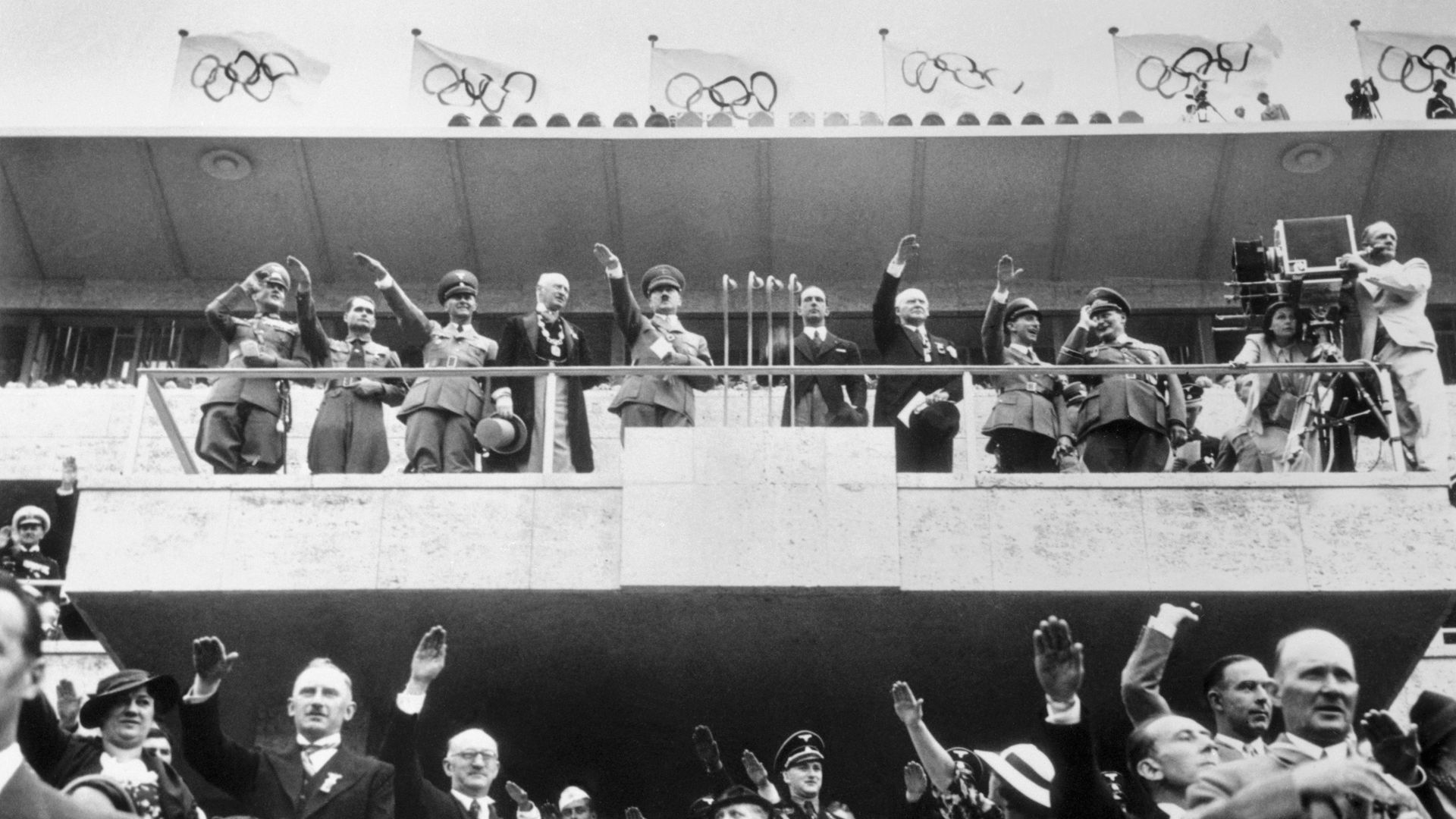
At a parliamentary committee meeting Wednesday, British Foreign Secretary Boris Johnson agreed with a member of Parliament who said that Russian President Vladimir Putin would use the 2018 World Cup in Russia "like Hitler used the 1936 Olympics" to "gloss over the brutal regime for which he is responsible."
Yes, I think the comparison with 1936 is certainly right. I think it’s an emetic prospect, frankly, to think of Putin glorying in this sporting event.
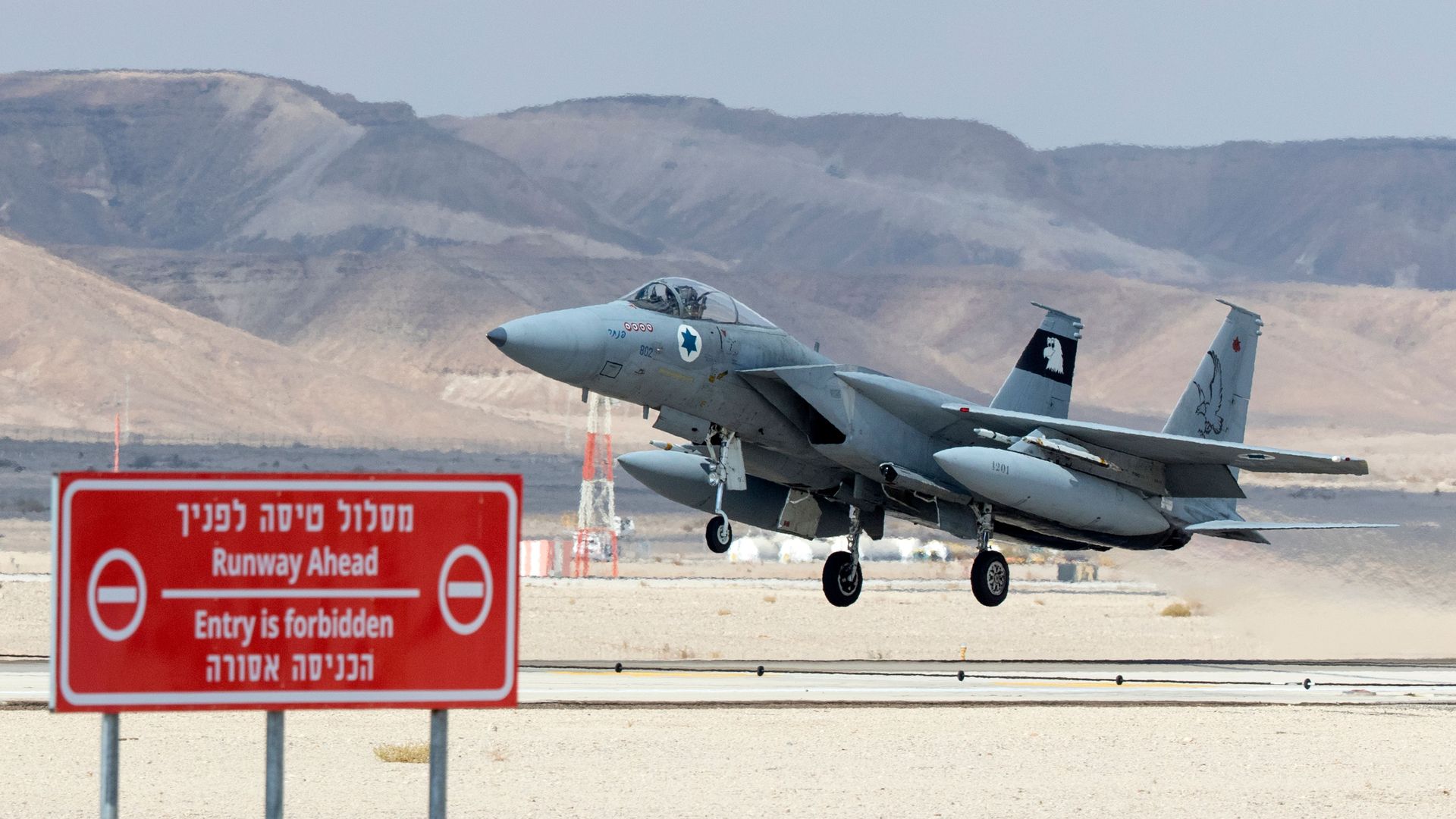
Israel's defense minister has admitted for the first time that it bombed a Syrian facility in 2007 that the International Atomic Energy Agency deemed "very likely" to have been a nuclear reactor, reports BBC News.
"The motivation of our enemies has increased in recent years, but the strength of our army, our air force and our intelligence capabilities have increased compared with the capabilities we had in 2007. This equation should be taken into account by everyone in the Middle East."
— Israeli defense minister Avigdor Lieberman
Why it matters: Per the BBC's Tom Bateman, there was never much of a doubt that Israel was behind the now-decade old attack on the Syrian facility. But the timing of Israel's admission is notable as the country accuses rival Iran of maintaining nuclear ambitions.
Kaspersky Lab’s research exposed an ongoing U.S.-led counterterrorism spying operation, CyberScoop reports. According to current and former U.S. intelligence officials, the operation was focused on ISIS and al-Qaeda.
What happened: Kaspersky announced a malware campaign called “Slingshot," an advanced, persistent threat, indicating it may have state-backing, earlier this month. They said the malware was on thousands of devices in Afghanistan, Iraq, Kenya, Sudan, Somalia, Turkey, and Yemen. Current and former U.S. intel officials told CyberScoop that Slingshot is a program that is run through the Pentagon’s Special Operations Command.
Russian government officials and businessmen helped Venezuela launch the world's first state-issued cryptocurrency last month, which is intended to help sidestep U.S. sanctions on Venezuela, TIME reports, citing anonymous officials familiar with the issue.
The backdrop: TIME's report comes a day after President Trump signed an executive order prohibiting U.S. citizens from buying the newly created 'Petro.’
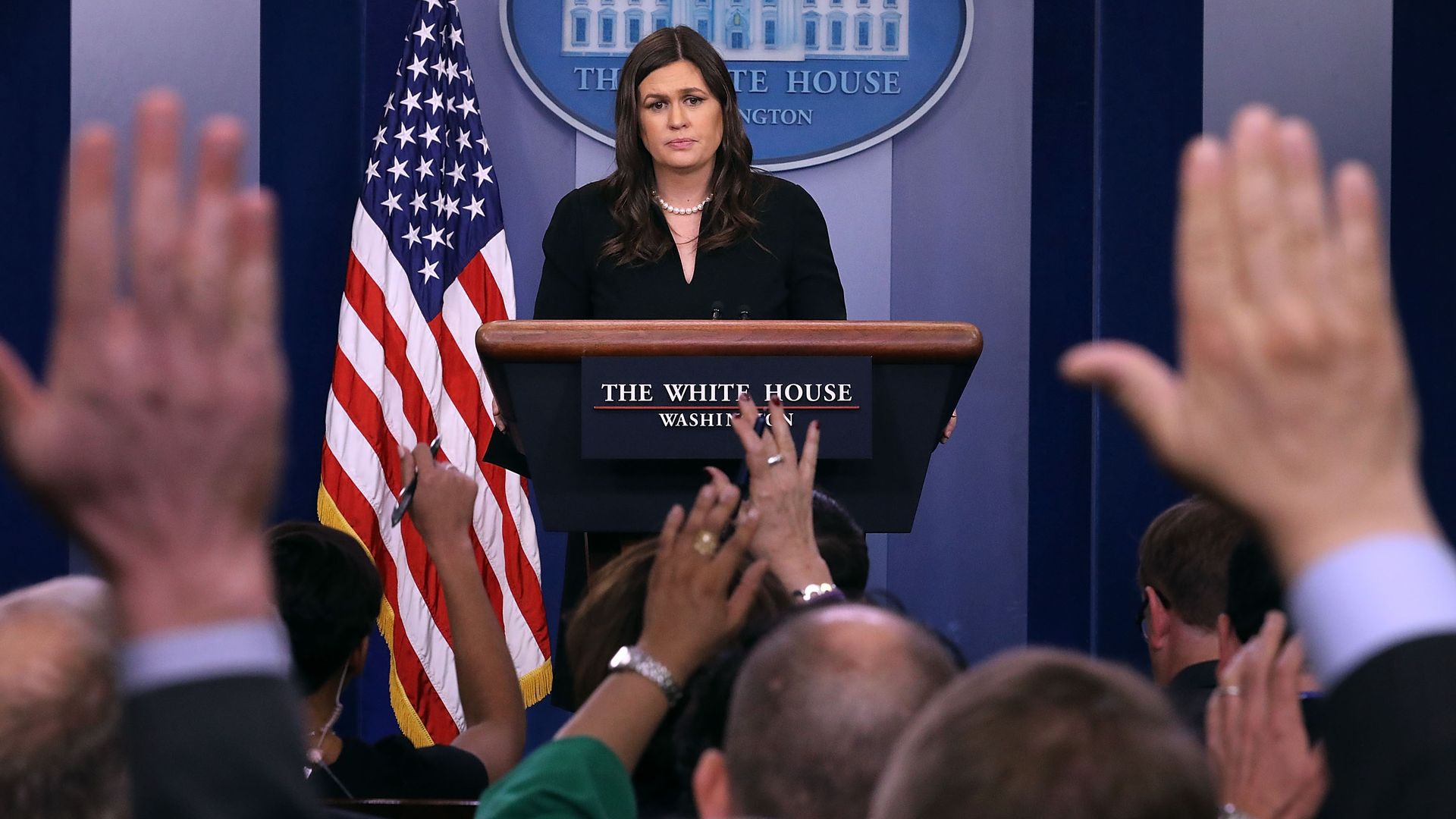
President Trump spoke with Vladimir Putin this afternoon, and congratulated him on winning re-election on Sunday. After the call, Press Secretary Sarah Sanders was asked whether Trump felt the election had been free and fair, and said it wasn’t up to the U.S. to “dictate" how Russia holds elections.
The bottom line: Trump is not alone in congratulating Putin — leaders in France, Germany and elsewhere have done so this week, as Barack Obama did in 2012. But past administrations certainly have seen it as America’s role to call balls and strikes when it comes to elections abroad, and weigh in when democratic institutions are being undermined. A departure from that approach would be welcomed not only by Putin, but other leaders of pseudo democracies around the world.
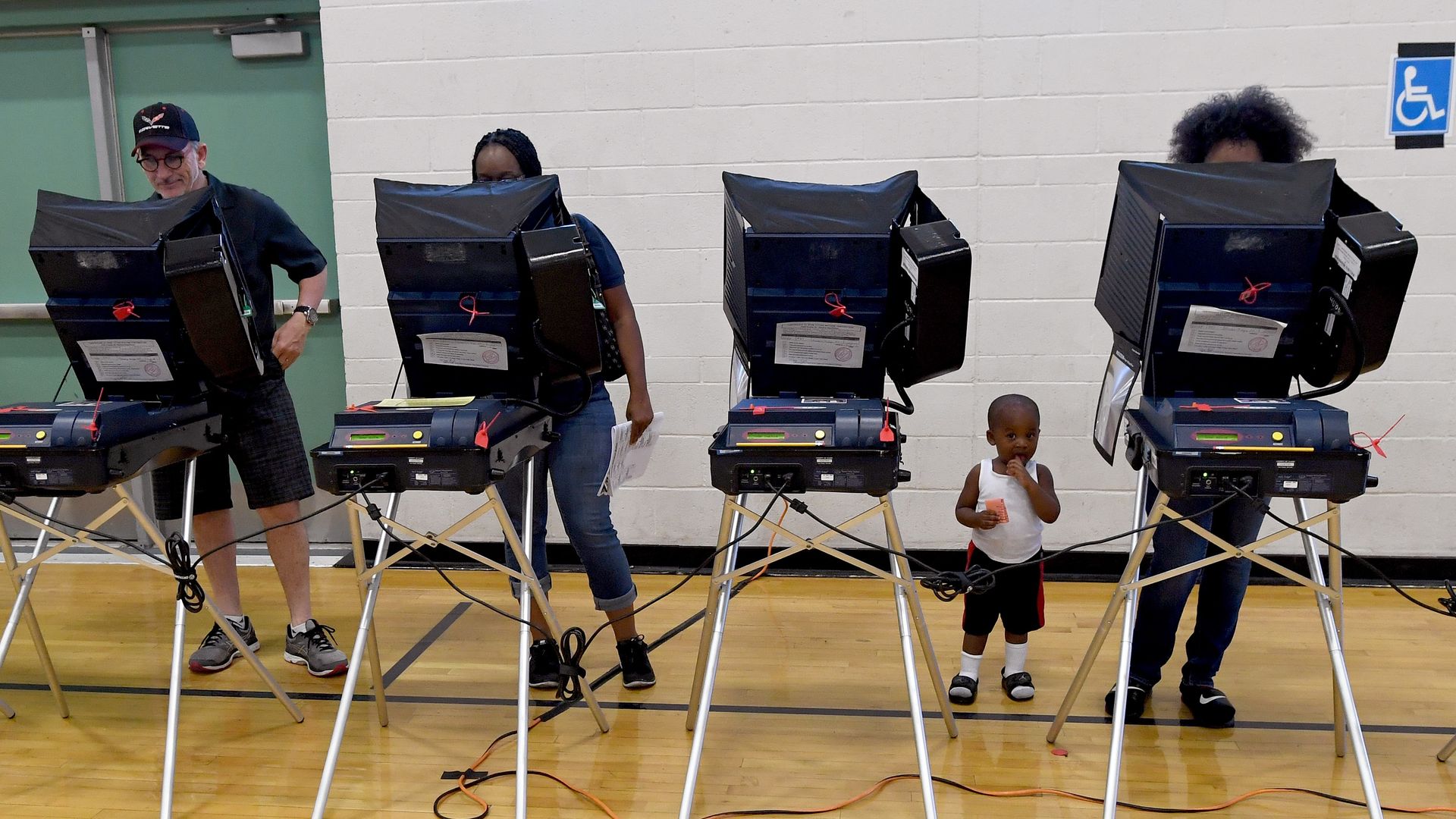
A Senate Intelligence draft report proposing an election cybersecurity strategy is getting good reviews from security experts.
What they are saying: "Wow. That is a very good set of initial findings," said Joseph Lorenzo Hall, chief technologist at the Center for Democracy and Technology who consulted on voting machine security in three states, via email.
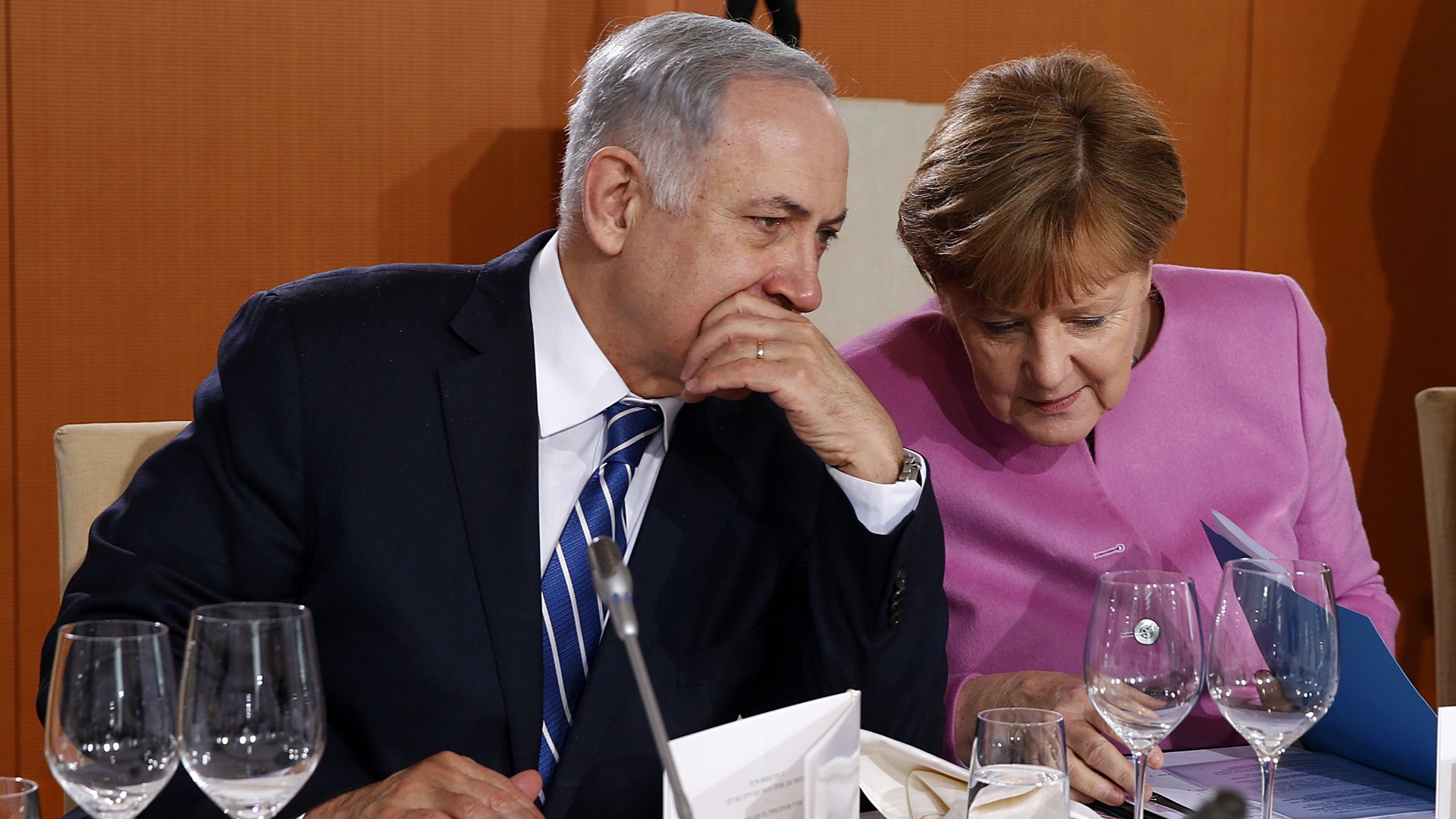
German Chancellor Angela Merkel warned Israeli Prime Minister Benjamin Netanyahu that a decision by President Trump to withdraw from the Iran nuclear deal might lead to the collapse of the agreement and, as a result, could lead to a regional war. German officials told me Merkel made this position clear when she met Netanyahu at the world economic forum in Davos Switzerland on January 24th.
Why it matters: The meeting between Merkel and Netanyahu took place two weeks after Trump announced he'd withdraw from the nuclear deal if Germany, France and the U.K. couldn't agree on significant changes to the deal by May 12th. Since then, senior diplomats have been engaged in intense negotiations to save the deal. The Europeans now believe the chances of finding a formula which will satisfy Trump are very slim.
Today's press briefing centered around President Trump's congratulatory phone call to Vladimir Putin, which Sen. John McCain had criticized, saying, “An American president does not lead the Free World by congratulating dictators on winning sham elections."
Asked whether the election had been free and fair, Press Secretary Sarah Sanders said the U.S. can't "dictate how other countries operate." She also said there were "no specific plans made at this time" for a meeting between Trump and Putin. Trump had said earlier Tuesday they'd be meeting in the "not too distant future."
President Trump congratulated Vladimir Putin for his re-election in a phone call Tuesday.
Why it matters: Putin removed all serious competition ahead of what was essentially a sham election. Still, the leaders of Germany, France and now the U.S. have congratulated Putin for securing six more years in office, as Barack Obama did in 2012. The U.K., in the midst of its diplomatic crisis with Russia, has said it will wait until the election has been assessed by the Organization for Security and Cooperation in Europe before commenting.
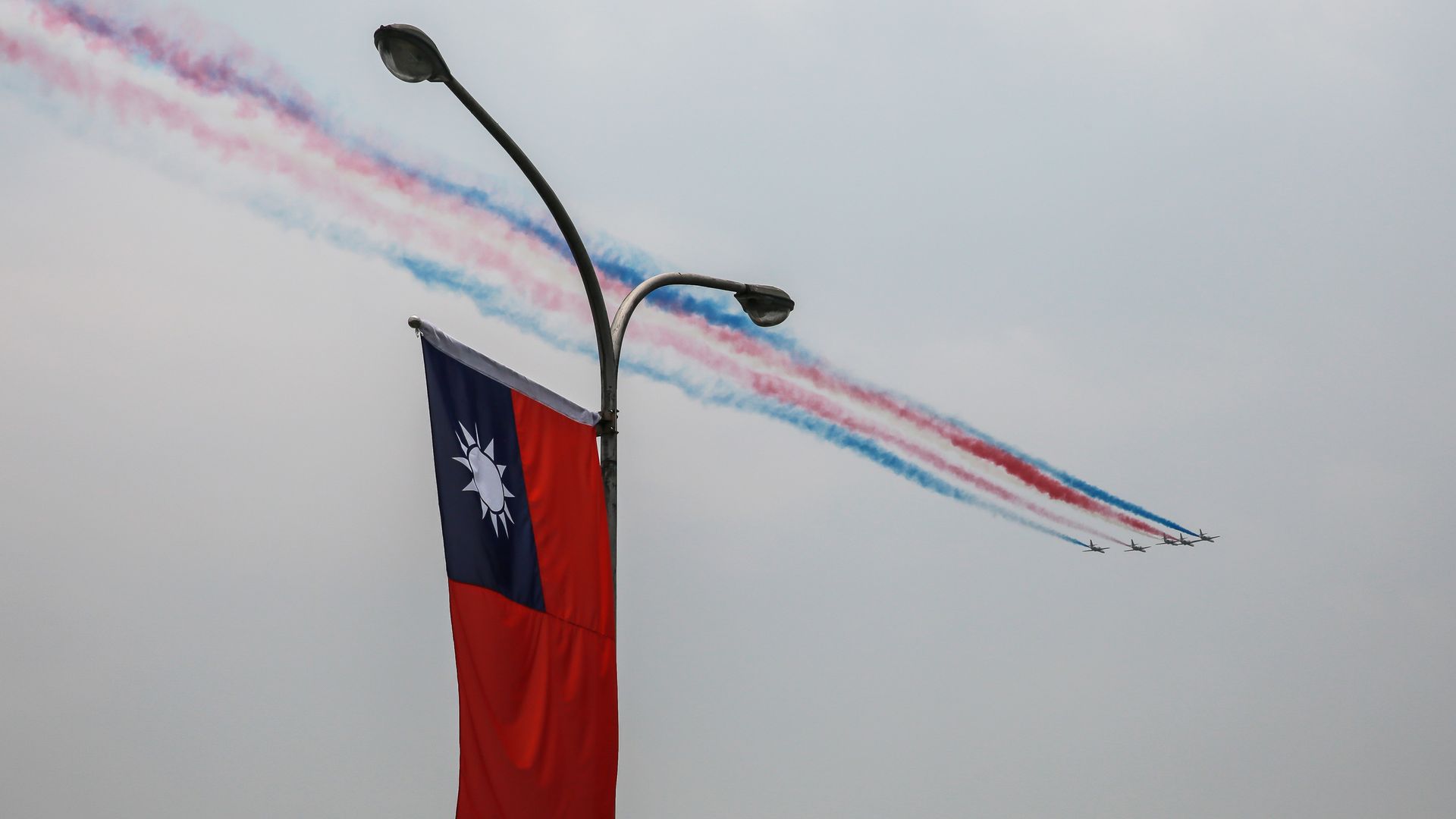
Alex Wong, deputy assistant secretary in the State Department's Bureau of East Asian and Pacific Affairs, landed in Taiwan Tuesday for a three-day trip. He's the first U.S. official to visit Taiwan since President Trump signed the Taiwan Travel Act, which "encourages visits between officials of the United States and Taiwan at all levels."
A visit at this level is far from unprecedented, but while Wong's area of expertise is security issues in the region, past visits have tended to focus on issues like trade. Wong will attend a dinner during the visit at which Taiwanese President Tsai Ing-wen is also expected to be present.
Why it matters: China is fiercely opposed to the travel act, claiming it "severely violate[s] the one-China principle." American and Taiwanese officials have said the timing is unrelated to the act.
In an Oval Office meeting with Saudi crown prince Mohammed bin Salman Tuesday, President Trump said he wants to meet Vladimir Putin in the "not too distant future" to discuss the "arms race" and North Korea. Trump also said he spoke with the Russian president earlier today and congratulated him on his recent election victory.
Vladimir Putin cruised to victory in Russia's presidential election Sunday, gaining 76.7% of the vote in a contest widely condemned for ballot stuffing and a lack of genuine competition. Nonetheless, leaders around the world have publicly and privately congratulated Russia's strongman as he embarks on his 18th year as head of state.
Why it matters: Putin's list of congratulations give a window into the geopolitical state of play in Europe and around the world. It's worth reading into the language of the leaders who chose to reach out — and, perhaps more notably, those who didn't.
In their meeting last Thursday in Berlin, U.S. and European diplomats tabled drafts for an agreement which will not nix the Iran nuclear deal or renegotiate it but still substantively turn on the pressure on the Iranian regime. A senior European diplomat who participated in the talks told me that the gaps between the U.S. and the three European powers are actually closing.
But, but, but: The French, Germans and the Brits think the chances of finding a formula which will satisfy Trump are very slim. This assessment is shared by both Israeli Prime Minister Benjamin Netanyahu and senior figures in Washington like Senate Foreign Relations Committee Chairman Bob Corker.
Saudi Arabia’s Crown Prince Mohammed bin Salman will meet with President Trump at the beginning of a multi-city U.S. tour. His agenda is expected to range from geopolitics and security to energy and investment, in addition to his signature reforms: expanding the private sector while shrinking a bloated government bureaucracy, diversifying the economy, promoting arts and entertainment, introducing taxation and loosening restrictions on women.
Why it matters: While these reforms have found support in the U.S., other Saudi initiatives, such as its involvement in the Yemeni Civil War, face serious pushback, especially from Congress.
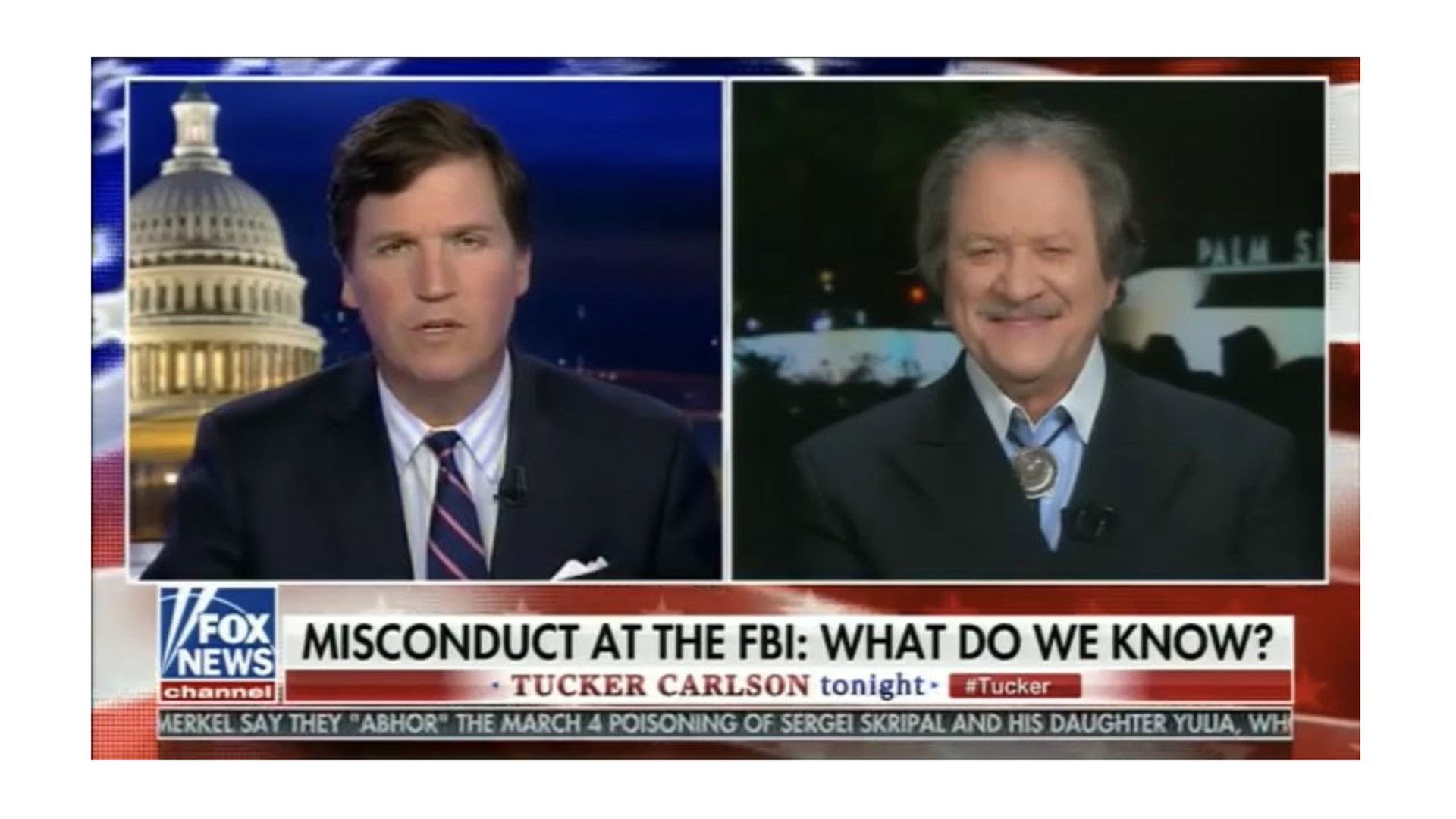
A new addition to President Trump's legal team — Joe diGenova, a former U.S. attorney who is well-known in Washington and has argued for the president on Fox News — reflects three White House realities.
The state of play: (1) The White House is digging in for a fight that looks to be longer and messier than officials had expected. (2) This is another example of the president responding to televised cues. Trump has spent most of his adult life in litigation, and obsesses about legal positioning in the same way that he is consumed by his press coverage. (3) It's another pugilistic voice at the table, and suggests that this weekend's attacks on Mueller won't be the last.