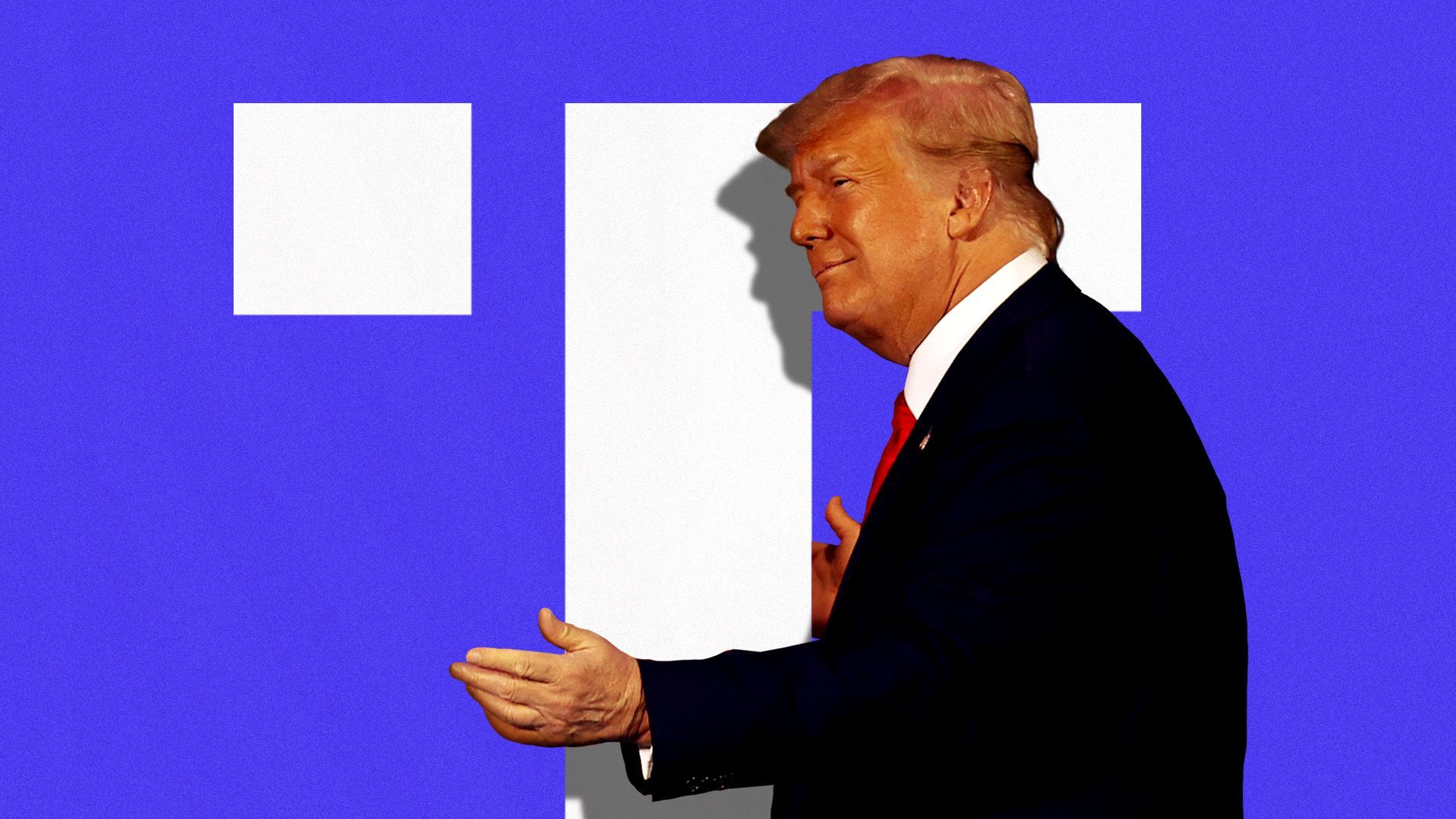
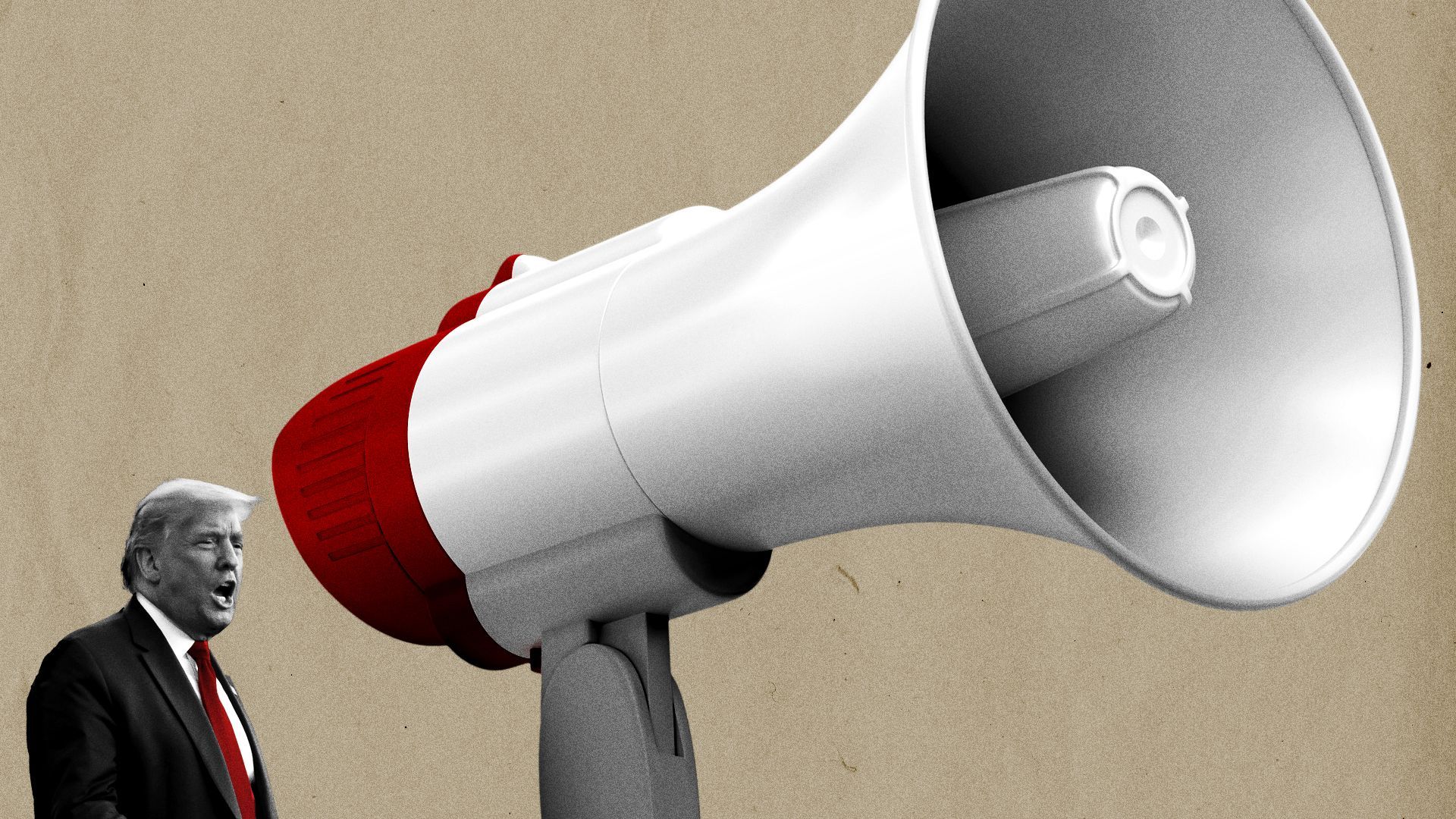
During the past 48 hours, former President Trump has boosted a barrage of social media posts that included threats to jail critics and opponents, repeated QAnon slogans and a suggestion that Vice President Kamala Harris slept her way to the top.
Why it matters: Trump's Truth Social musings and re-posts have grown more frequent and more vitriolic as new polls suggest he's losing ground to Harris — though they're unlikely to win him new supporters.
OpenAI said on Thursday that ChatGPT now has more than 200 million weekly active users — twice as many as it had last November.
Why it matters: ChatGPT remains the leader among generative AI chatbots, but it's an intensely competitive space with the other big names in tech offering frequent updates in hopes of grabbing share.
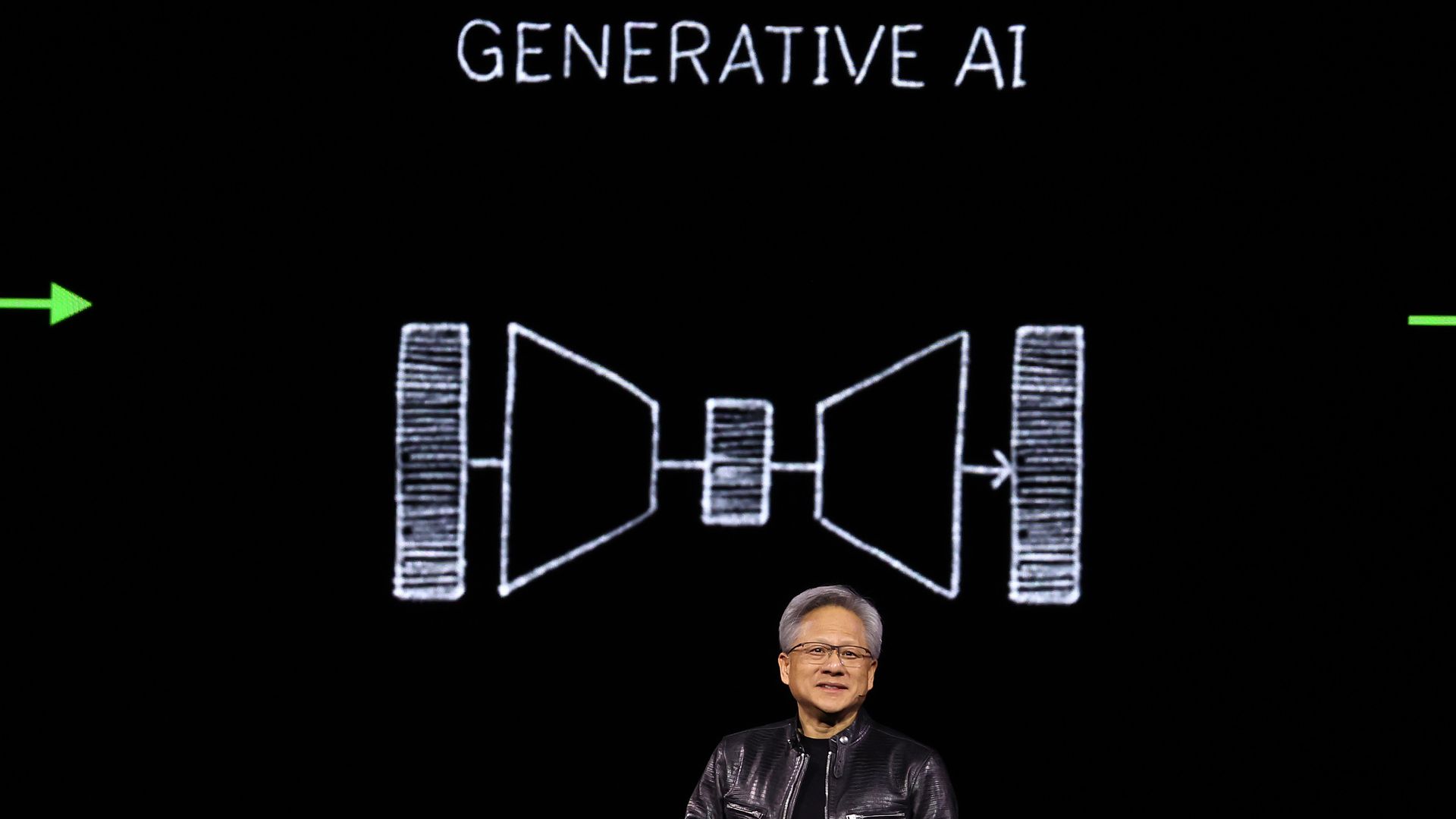
Nvidia's strong earnings report on Wednesday highlights that spending on artificial intelligence infrastructure continues to grow even amid an undercurrent of concern that generative AI may not be able to live up to all of the hype.
Why it matters: Nvidia chips have become the processors of choice for AI systems, and also made Nvidia one of the world's most valuable companies.
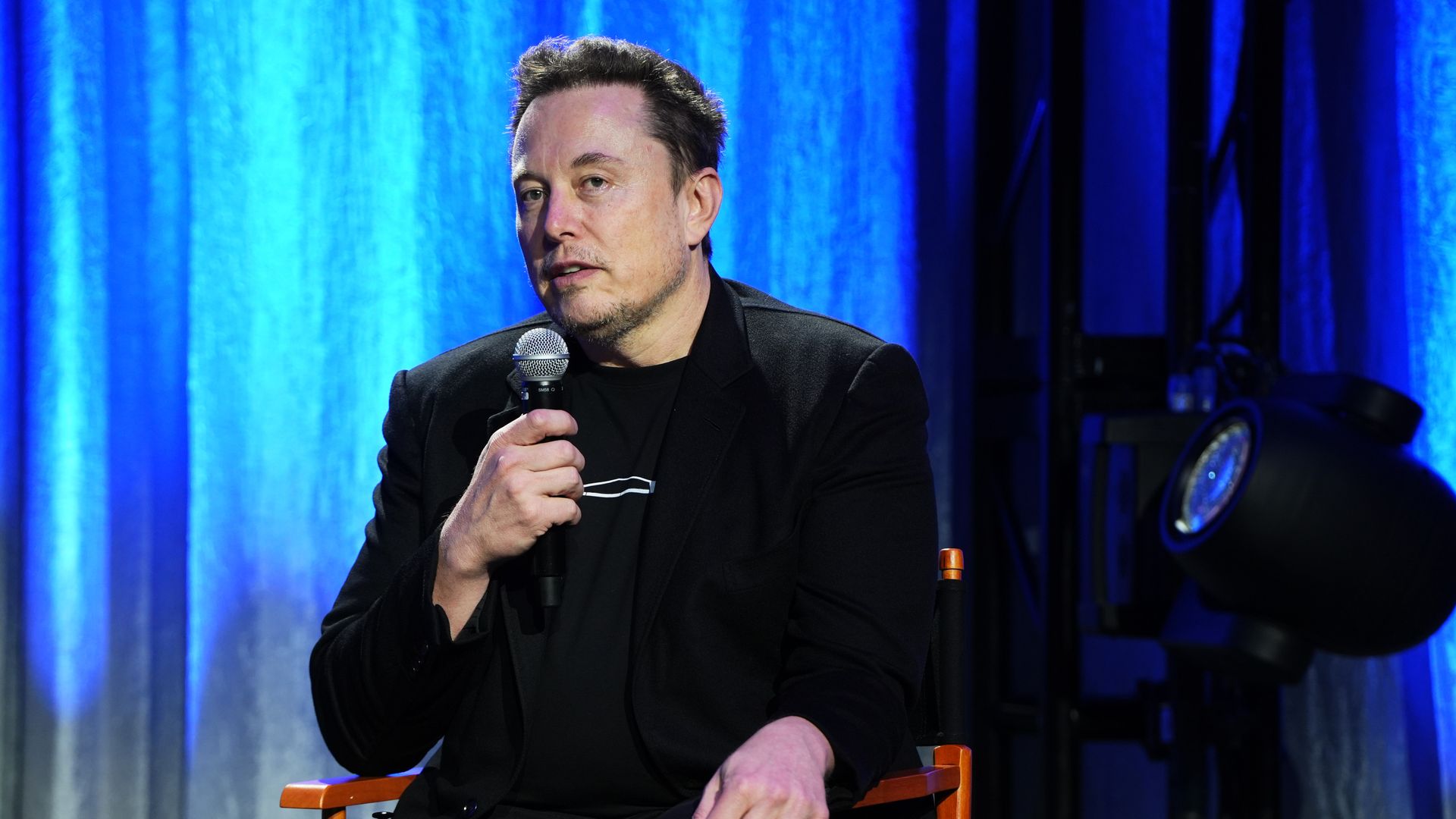
A Brazil Supreme Court judge warned Elon Musk Wednesday that he would have X suspended in Latin America's largest nation if the billionaire didn't name a legal representative for the platform in the country within 24 hours.
The big picture: Justice Alexandre de Moraes' summons alerting Musk that X has until about 8pm local time Thursday (7pm ET) to comply with the order comes after the platform announced earlier this month that it would close its operations in Brazil over what it called the judge's "censorship orders."
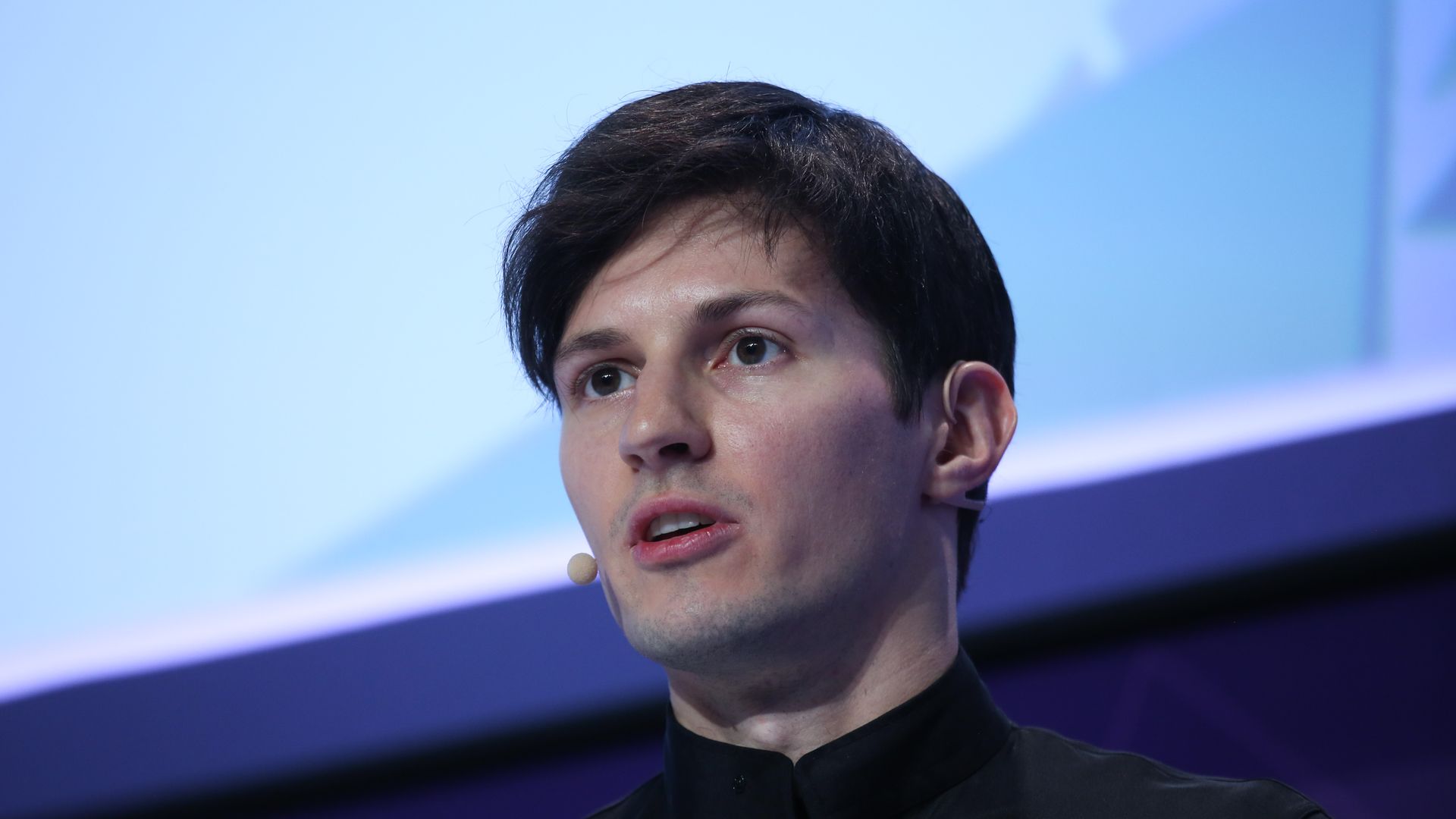
Telegram CEO Pavel Durov was issued preliminary charges in France Wednesday shortly after being released from police custody.
Why it matters: Durov's arrest in connection to illicit activity on the messaging appsparked an outcry among anti-censorship advocates. It also raised questions about how other social media companies and executives could be held accountable for the content on their platforms.
July's global IT outage sparked by a faulty CrowdStrike software update has caused some customers to hit pause on engaging with the cybersecurity company's services.
Why it matters: The scale of last month's issue exposed the risk of widespread reliance on only a handful of key tech platforms.
Yelp is suing Google, alleging in an antitrust lawsuit that the tech giant self-preferenced its own product to dominate local search and advertising markets against competitors.
Why it matters: The lawsuit by Yelp, which publishes crowd-sourced reviews about businesses, refers to a federal judge's ruling earlier this month that found Google violated U.S. antitrust rules to maintain a monopoly in the online search market.
Telegram CEO Pavel Durov's arrest in France this weekend and charges issued Wednesday have put the platform's content moderation policies and its creator's role in them back in the spotlight.
Why it matters: The case could become a free speech rallying cry while setting a precedent for other social media executives.
Nvidia, the most important stock in the world according to many on Wall Street, handily beat expectations Wednesday afternoon in an earnings report that reflects rising investments in AI across broad parts of the economy.
Why it matters: The company has become synonymous with AI, but that doesn't mean it can relax. Peers, startups and even its own customers are increasingly trying to encroach on its territory.
Cribl, a San Francisco-based data infrastructure startup, raised $319 million in Series E funding led by GV at a $3.5 billion valuation.
Why it matters: We rarely see rounds of this size anymore for Silicon Valley tech startups that aren't focused on artificial intelligence. In fact, Cribl's PR email to Axios explicitly said that it is not an AI company.
Google announced Wednesday that it is adding its latest image generator — Imagen 3 — to Gemini, and will resume the creation of images that include people.
Why it matters: Google paused the depiction of people earlier this year after it was discovered to be creating diverse but historically inaccurate images, such as Black founding fathers.
A California effort to regulate AI has divided the tech world, with some trying to squelch what they see as overreach by a single state and others supporting the bill.
The big picture: The move comes as regulators in Europe have again taken the lead on legislation but Congress has yet to act, putting U.S. states in the driver's seat.
Nvidia reports earnings later today, and experts predict "show stopper performance." (Axios)
OpenAI is reportedly close to releasing a new AI product — codenamed Strawberry — that produces fewer hallucinations and is better at reasoning through tough problems. (The Information)
Google has a new AI feature that will summarize conversations and take notes for you in Google Meet. The feature started rolling out to some Workplace customers yesterday. (The Verge)
Sources say Apple is laying off 100 people in engineering, the Apple Books app team, Apple Bookstore, Apple News and others. (Bloomberg)
Snapchat on Wednesday debuted a suite of safety tools and resources for educators trying to navigate students' wellbeing on their app and online in general.
Why it matters: Schools are wrestling with regulating cell phone use in classrooms, with some even threatening to ban phones altogether.
U.S. Army Undersecretary Gabe Camarillo envisions a future battlefield swarming with sensors and electronics, swollen with digital chatter and interference, and starving for overhead defenses.
Why it matters: The Army is putting a premium on drone and counter-drone equipment in light of the Russia-Ukraine war and is scoping out sci-fi-style energy weapons to combat aerial threats.
Jason Brown, general manager of Applied Intuition Defense, doesn't want the national security world to lose sight of a precious resource: a talented workforce.
Why it matters: New guns and things that go boom often attract the most eyes. But when "we look at what matters most, it still comes down to people, then ideas, then technology," Brown told Axios during a Q&A at the company's offices in Virginia.
Why it matters: It's a timely message from the Biden administration amid a presidential election showcasing working-class families' struggles with an emphasis on populist themes.
An anti-censorship movement born from the chaos of COVID and cultivated on platforms like X is increasingly aligning with the Trump campaign — and scoring some big wins.
Why it matters: Championed by Elon Musk, Robert F. Kennedy Jr. and disaffected liberals, this loose network of dissenters views censorship — real or perceived — as the existential question of the 2024 election.