Trump's alternative reality campaign

Add Axios as your preferred source to
see more of our stories on Google.
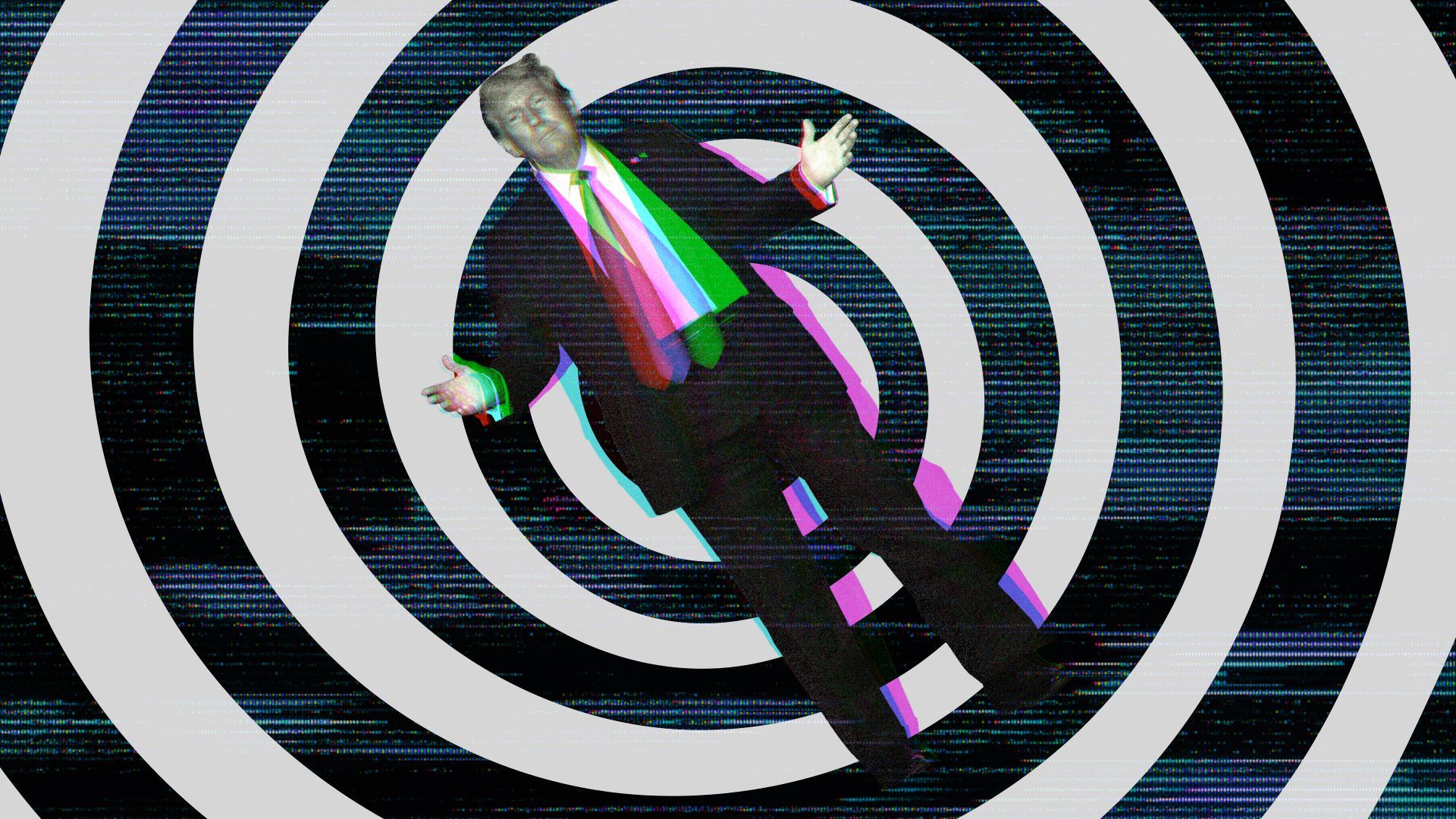
Photo Illustration: Lindsey Bailey/Axios. Photo: Stephen Maturen/Getty Images
In former President Trump's version of reality, Vice President Kamala Harris' crowds are AI-generated, he's leading in nearly all the "real" polls, and President Biden might reclaim his spot on the ticket at any moment.
Why it matters: None of those things are true. And Trump's advisers and allies worry he's spending so much time in alternative reality that it's undermining his real-world campaign.
Driving the news: Trump falsely claimed Sunday that photos showing Harris meeting a huge crowd of supporters at her rally in a Detroit airplane hangar last week were doctored.
- "There was nobody at the plane, and she 'A.I.'d' it, and showed a massive 'crowd' of so-called followers, BUT THEY DIDN'T EXIST!" Trump declared.
- He has made various unsubstantiated claims about Biden's exit from the race, including that the president's COVID diagnosis last month was faked.
More recently, Trump has fantasized that Biden will make a "comeback" at the Democratic National Convention — again substituting his preferred outcome for reality.
- As Harris' honeymoon continues, Trump has claimed anything favorable to her — from cheering crowds to her remarkable rise in the polls — is fake news.
- The Trump campaign even issued a memo on Saturday alleging a pattern of skewed public polls "released with the clear intent and purpose of depressing support" for the former president.
State of play: Most polls now show Harris leading nationwide and in the Rust Belt swing states — Pennsylvania, Michigan and Wisconsin — that make up her simplest path to victory.
- The Trump campaign insists the fundamentals of the race haven't changed, and that Harris is highly vulnerable on inflation, immigration, her history of progressive policies and her more recent flip-flops away from those positions.
- If those messages break through, Trump could potentially reclaim a lead similar to the one he held on Biden.
Yes, but: Much of Trump's rhetoric since Harris joined the race — such as using a forum intended to reach Black voters to question whether Harris is really Black — seems almost perfectly designed to turn off swing voters.
- He's also tripling down on claims of election fraud, including in front of donors who are desperate for a more policy-focused message.
What they're saying: In recent days, a growing chorus of Republican allies have urged Trump to stop leveling personal attacks at Harris and instead drill down on her record.
- "When Trump attacks Harris personally, rather than on policy, Harris' support among swing voters rises, particularly among women," former Trump trade adviser Peter Navarro said Monday.
- "Stop questioning the size of her crowds and start questioning her position" on crime and immigration, House Speaker Kevin McCarthy (R-Calif.) urged Trump on Fox News.
The other side: "Kamala Harris is a weak, failed, and dangerously liberal career politician trying to escape reality as she flip flops on every ... policy position she's ever held, hides from the press, and plagiarizes President Trump's policies," Trump campaign spokesperson Karoline Leavitt said in a statement.
The big picture: Conspiracy theories have long been core to Trump's political identity. Over the course of eight years, no adviser has proven capable of reeling him in.
The bottom line: Before Biden dropped out, Trump seemed to believe the race was all but over. "I beat Biden," Trump told Elon Musk on Monday night. He's now in a much different race — but he doesn't seem to have fully accepted that reality.
