Judge rules Google violated antitrust rules to maintain search monopoly

Add Axios as your preferred source to
see more of our stories on Google.
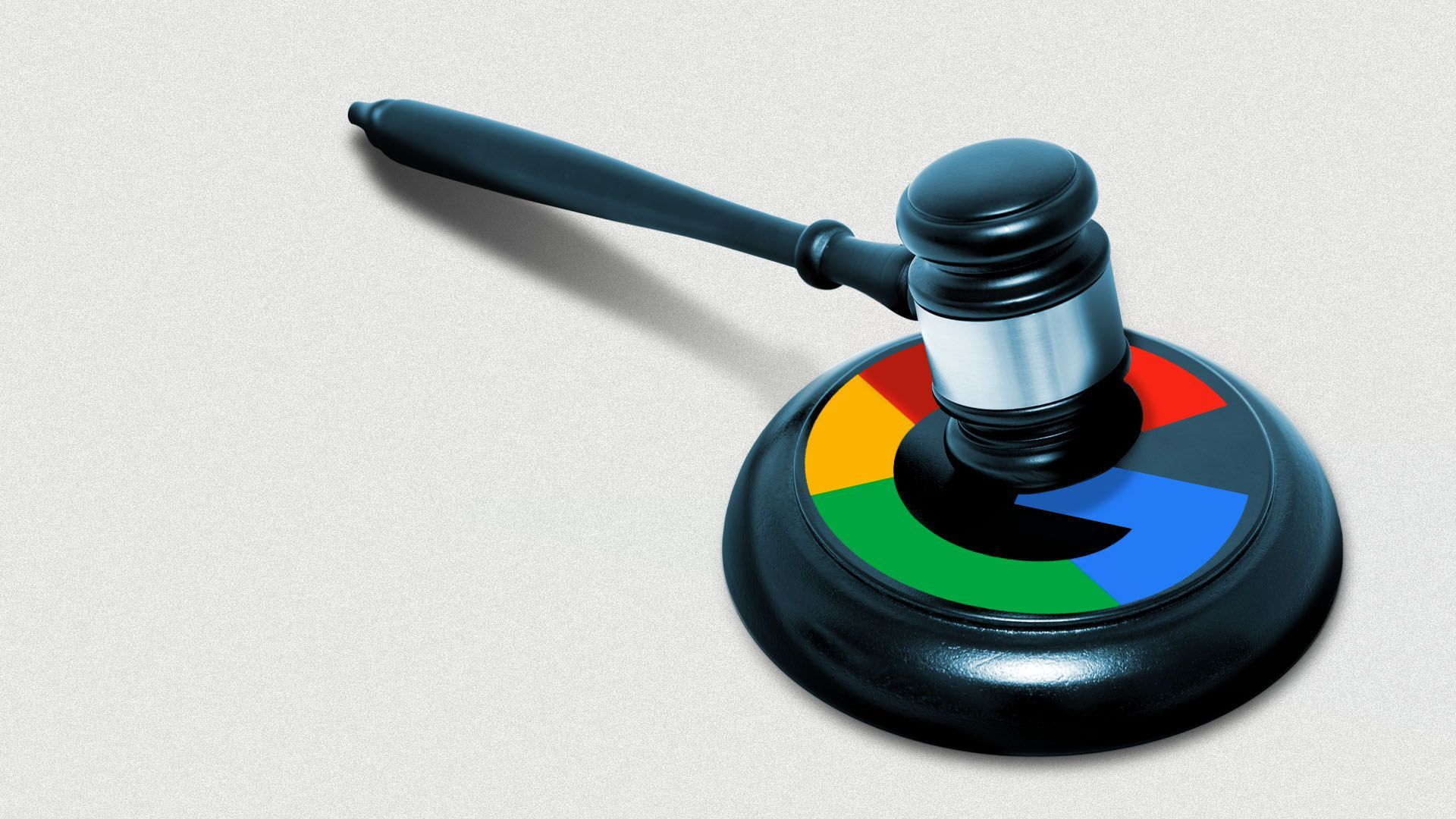
Illustration: Sarah Grillo/Axios
Google violated federal antitrust rules to maintain a monopoly in the online search market, per a federal judge's ruling issued Monday, a seismic turn of events for the tech giant that will ripple across the entire industry.
Driving the news: Judge Amit P. Mehta of the U.S. District Court for the District of Columbia said in the ruling Google has abused its position to stay at the top:
- "Google is a monopolist, and it has acted as one to maintain its monopoly," Mehta wrote.
- It's the biggest tech antitrust ruling since the Microsoft case in the 1990s.
Why it matters: The ruling is proof that current U.S. antitrust law can be successfully applied to online companies born in the digital age, and factors beyond customer price can convince a judge that a company acted as a monopolist.
- Mehta's ruling is about liability—not remedies—so it's unclear what Google will be required to do next.
- Google and the Justice Department did not immediately provide comment.
Context: The proceedings first began in 2020, when the DOJ and a number of states sued Google for illegal dominance in online search, basing their case mostly on the contracts between Google and Apple's Safari and Mozilla's Firefox, worth billions.
What they're saying: "This landmark decision holds Google accountable. It paves the path for innovation for generations to come and protects access to information for all Americans," said DOJ assistant attorney general Jonathan Kanter in a statement.
- "This decision recognizes that Google offers the best search engine, but concludes that we shouldn't be allowed to make it easily available," Kent Walker, Google's president of global affairs, said in a statement, citing the ruling's description of Google's "high quality" search engine.
- "Given this, and that people are increasingly looking for information in more and more ways, we plan to appeal," Walker said.
The other side: Google and its lawyers maintained throughout the trial that every decision made around search, and the default settings for search it paid for on Apple iPhones and Androids, were all for providing the best possible consumer experience.
- People aren't forced to use Google on their smartphones, they choose to because they think it's the best, the company repeatedly argued.
Google rivals including Microsoft and browsers including DuckDuckGo accused the company of monopolistic behavior, arguing smaller browsers can't possibly compete with Google's scale; also arguing that such dominance is sure to spill into the race to lead on artificial intelligence.
- The government accused Google of acting as a monopoly both in how it priced search ads and over the lucrative contracts with other companies.
What's inside: DOJ's ruling says that Google has monopoly power over general search and general search text ad markets, that its contracts or "distribution agreements" have anticompetitive effects, and Google did not provide a valid argument as to why they exist.
What's next: Antitrust cases against Big Tech will continue. Another DOJ case focused on Google's advertising technology will go to trial in September, and a DOJ suit against Apple is underway as well. The Federal Trade Commission has its own proceedings against Meta and Amazon.
- Mehta will next have to decide on remedies in the search case.
Editor's note: This is a developing story. Please check back for updates.
