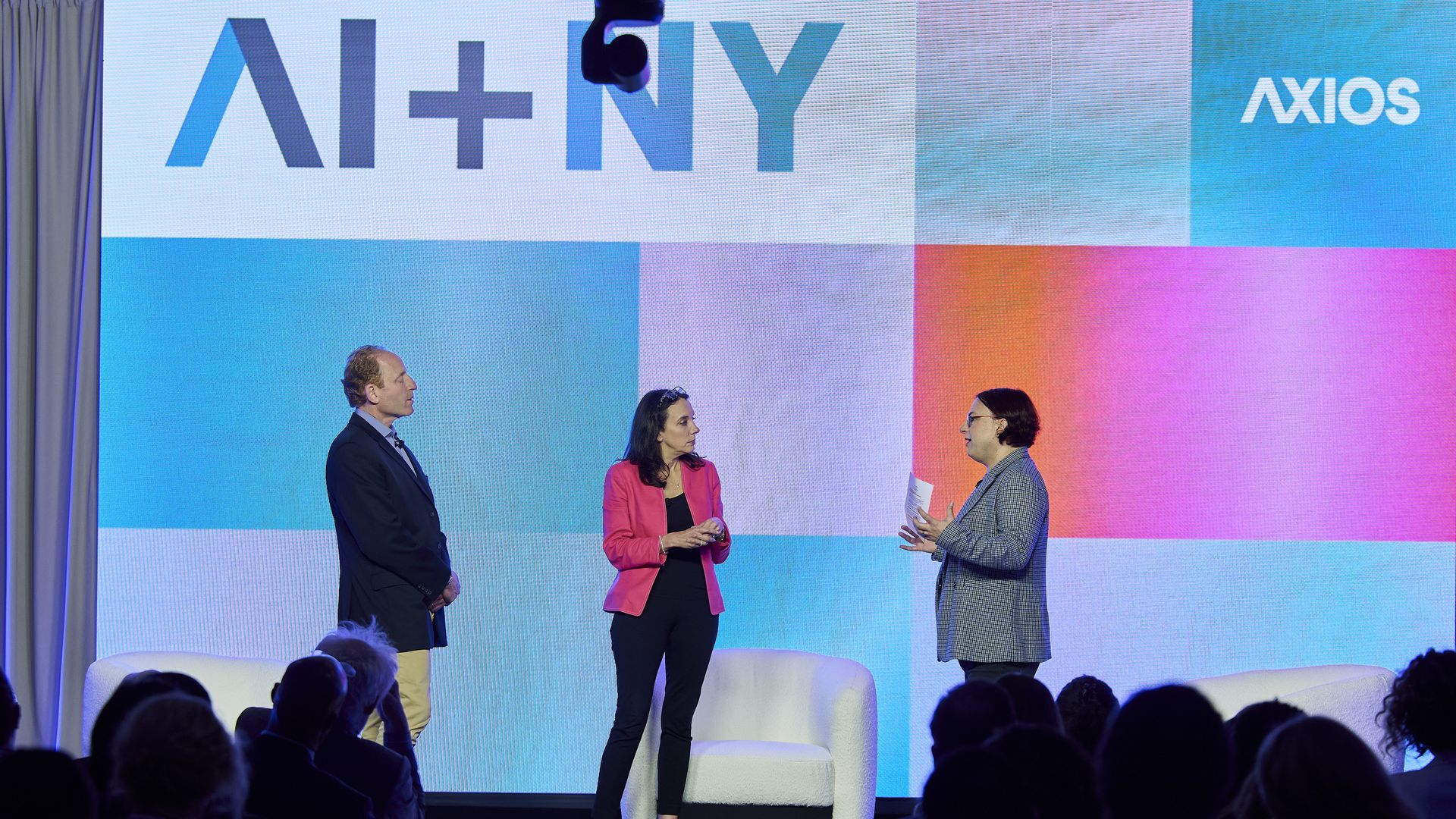
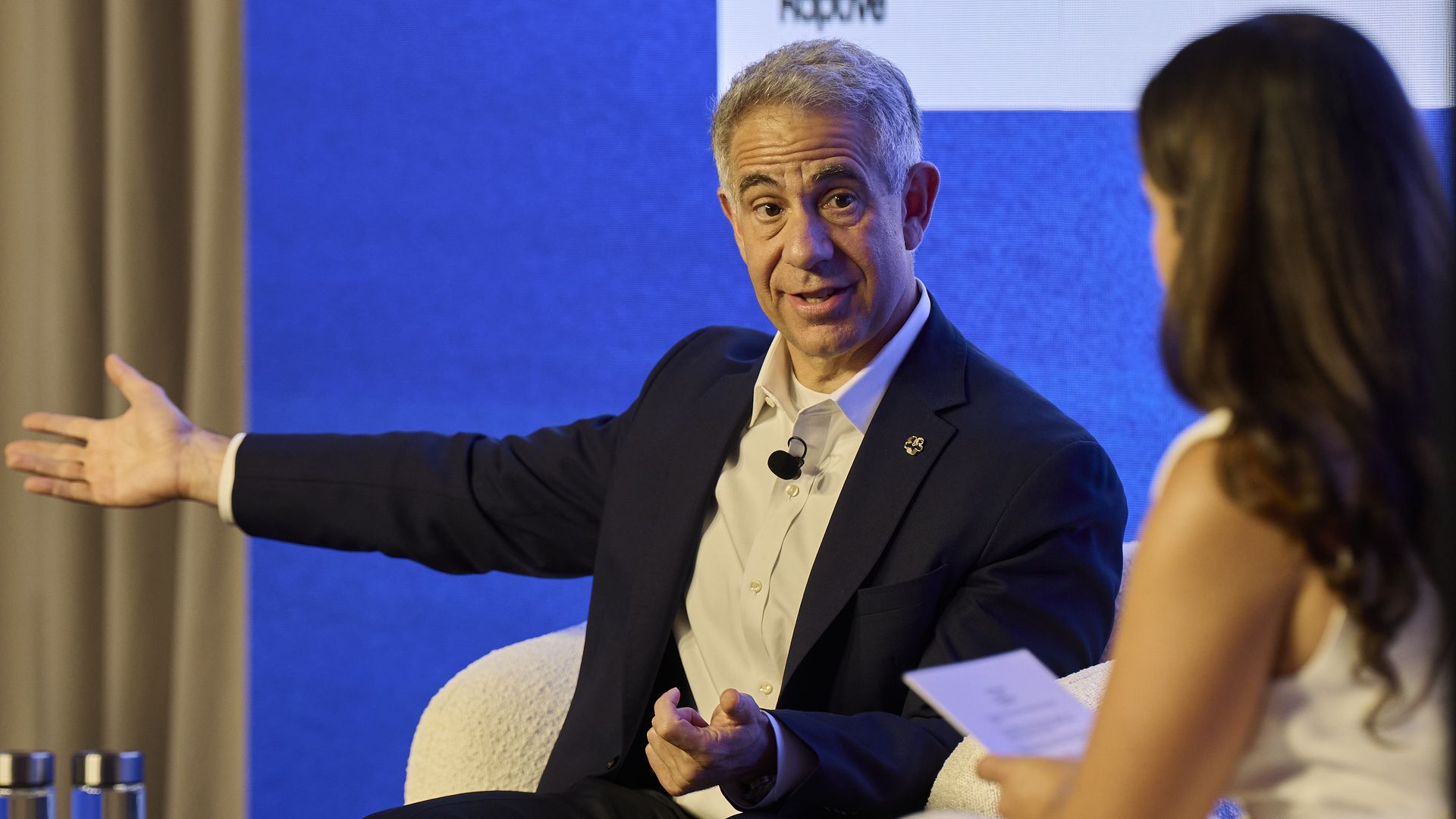
NEW YORK – Safety concerns and AI's endless potential – from sports analytics to fragrance – were highlights from top tech leaders and entrepreneurs at Axios' AI+ NY Summit on June 5th.
Encrypted messaging app Signal president Meredith Whittaker said that because the cost to create and run AI is high, tech companies will most likely sell people's personal information in order to try to pay for it.
"It costs hundreds of millions of dollars to train these models…So there is deep pressure from companies — that are basically promising God and delivering email prompts — to make some return on investment in this technology."
Whittaker also called Microsoft's new Recall feature for PCs "spyware" saying it is "a serious hijacking of trust" and "a dangerous honeypot for hackers."
How it works: Microsoft's Recall feature keeps everything someone does on their computer in an AI-searchable database.
Many people use Signal on their desktop and expect privacy and encryption, but Whittaker says Microsoft is essentially "snapshotting" the messages.
What they're saying: "I think we should be mortified. Especially those of us who have a bit of understanding of what this tech actually does and the track record of these companies and the political environment in which they're operating in."
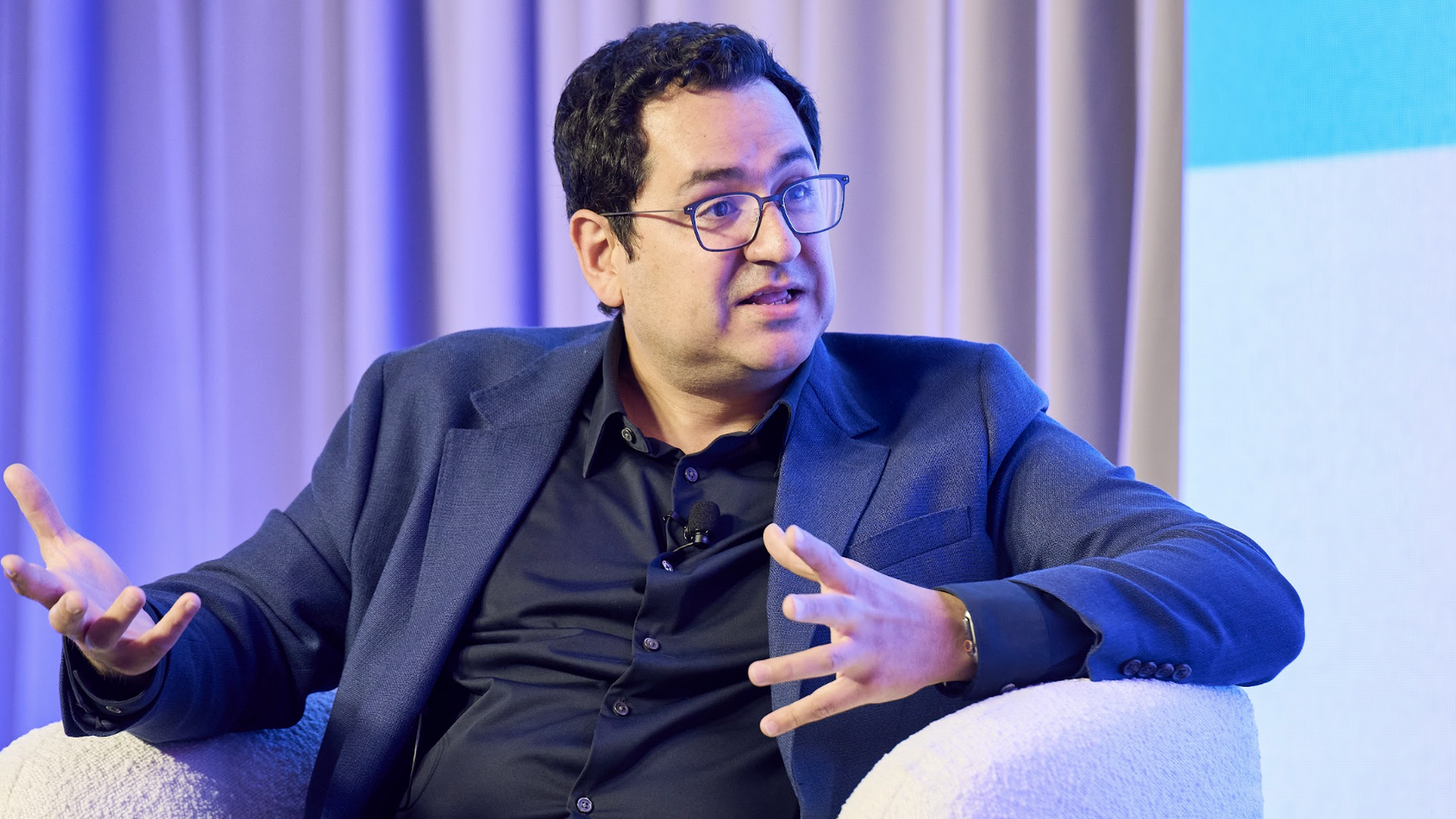
In another interview, Allen Institute for AI CEO Ali Farhadi spoke about how he thinks the tech industry broke the trust of the public by launching AI while it is still unreliable and lacks proper evaluation.
"We are in an evaluation crisis mainly because of the capability of these models. The rate at, or the pace of these capabilities, or us discovering those capabilities severely outpaced our ability to evaluate."
Separately, AI expert Helen Toner told Axios' Ina Fried that people need to think more "holistically" about the negative outcomes that could occur with AI.
She explained that sometimes people think of far out scenarios, like "robots shooting humans."
"There's a lot of other ways that AI could really take things in a bad direction, and we do ourselves a disservice by locking in these very specific stories."
Safety isn't the only concern industry leaders have, as more creators, including those who earn their livelihoods through online ventures, feel threatened by the AI.
Cookbook author and YouTuber Lisa Bryan and ad management platform Raptive CEO Michael Sanchez discussed how generative AI is using creators' work as training data, replacing them and making it more difficult for audiences to discover individual and unique creator content.
Google's newly launched AI overview search results leaves creators experiencing a decline in traffic to their websites, Bryan and Sanchez explained.
On top of that, some creators are upset because they believe companies like Google that are using generative AI, are scrapping creators' content to train their models and spit back out an AI answer that's not as good or just wrong. Bryan said it is, "one of the biggest heists of copyright infringement is happening right now."
As a solution, Sanchez wants lawmakers to do something about it.
"We've been spending some time talking to the legislators and staff on both sides of the aisle, typically the Senate and the Judiciary...both sides are very concerned about anti-competitive [behavior], copyright and fair use," said Sanchez.
On the bright side, AI is continuing to reach new heights – or more accurately, smells.
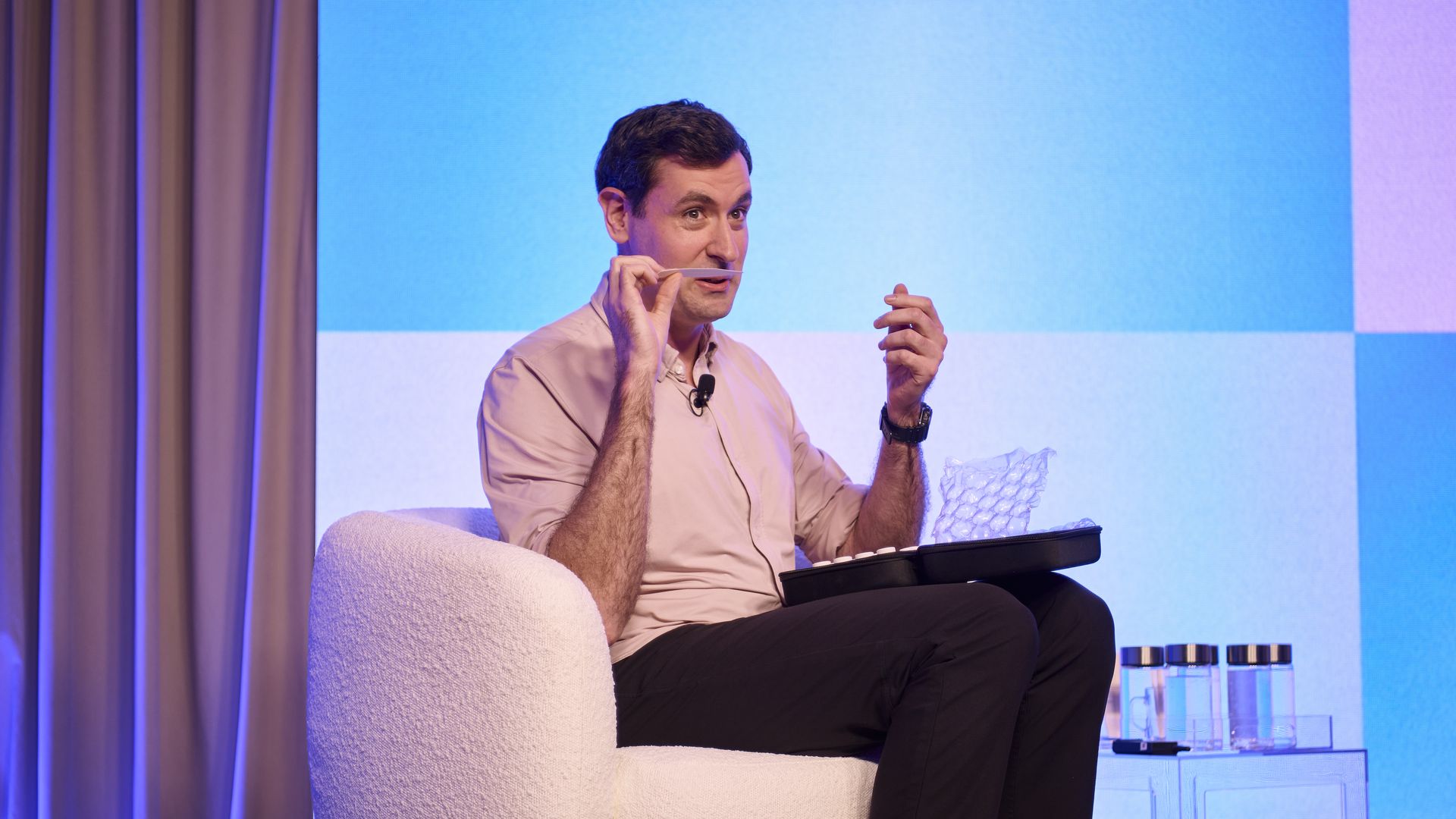
Osmo co-founder and CEO Alex Wiltschko discussed the company's innovative technology to digitize smell with the help of AI.
What they're saying: "Vision and hearing have already been digitized, but not evolution's first invention: smell. That is our first and most primary and most emotional sense and computers have no idea how to do this."
Wiltschko thinks sending a scent or a smell to someone via email or online chat is "going to happen" someday.
Amazon Web Services and the National Football League showcased their Digital Athlete product, which is an AI powered tool to see which players have the potential to be injured, or to even simulate potential rules changes in the league.
How it works: The technology is built into players' protective gear and it'll analyze millions of data points as players move around. Using that data, they'll be able to identify for example when players could be at an increased risk of injury.
Data is also being taken from cameras that are recording the football games, said Jeff Miller, executive vice president for player safety, communications, public affairs and policy at the NFL.
Miller added that clubs, trainers, and doctors also have access to this data. "We can predict their risk profiles. At what point is somebody running hot? Which receiver do you need to pull back on that week? Who's been exposed to more than they should? And we can start to govern how we manage them."
Content from sponsored segment below:
In a View From the Top conversation, IBM senior vice president of marketing and communications Jonathan Adashek and tennis star Maria Sharapova discussed how IBM has been using generative AI with their watsonx technology to collect millions of data points during professional tennis matches.
"It's all about taking the data and providing a new way to look at it and get better insights from it," Adashek said.
Sharapova explained how all that data being gathered within seconds benefits players looking to step up their game or analyze their opponents techniques.
In a separate View From the Top conversation, Meta vice president of product Connor Hayes highlighted expansion of Meta AI internationally and how the uptake has been "encouraging."
But Hayes also expressed that one of the challenges Meta is facing is also an industry wide issue of "alignment or controllability of the model."
"In a product like Meta AI, we have a set of content standards of topics that we want it to engage on and not engage on, or sort of the voice and tone of the assistant that you want to maintain consistently. And just dealing with keeping the model aligned to the sort of rules and tone that we've given it has been a big challenge."
Nvidia — the undisputed winner of the past year's AI stock boom — passed Apple to become the second-most valuable public company as of Wednesday's market close.
By the numbers: The chipmaker's market cap passed $3 trillion for the first time, putting the company a hair above Apple and behind only Microsoft.
The dramatic and unexpecteddemise of a plan to charge $15-a-car to drive in Manhattan below 60th Street ultimately came down to two red-hot electoral issues: inflation and crime.
Some New Yorkers and New Jerseyans rebelled at the idea of yet another ungodly fee for the privilege of going to work — and they don't trust the subways and other public transit to keep them safe.
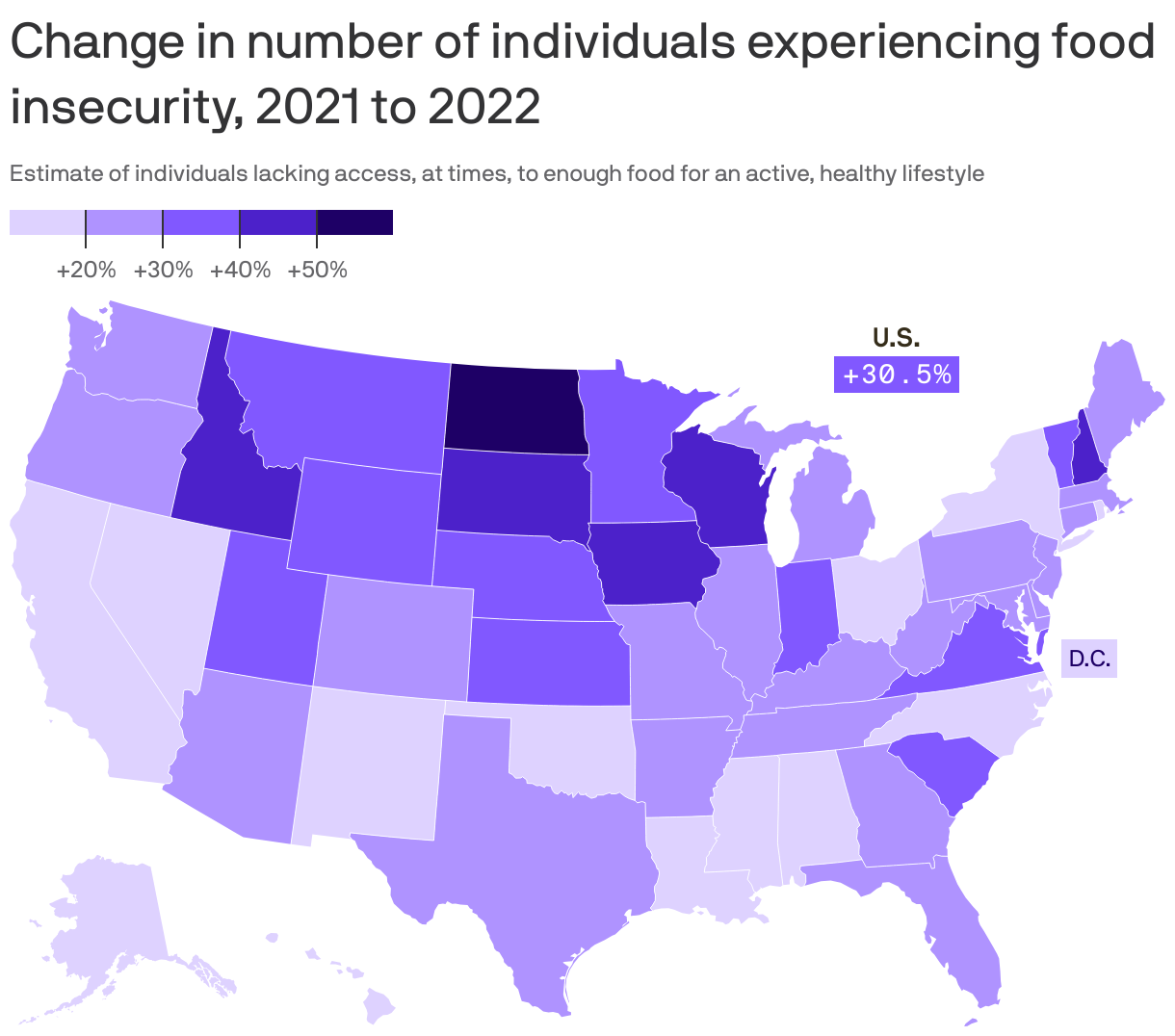
Food insecurity is worsening the most drastically in the Midwest, where the number of food-insecure people increased by over 40% in several states from 2021 to 2022, a new report finds.
Why it matters: The national rate of food insecurity is about 13% across all counties — but some areas are struggling with hunger to a much more severe degree.
Boeing's Starliner spacecraft successfully entered Earth orbit yesterday during its first crewed mission to the International Space Station after launching from Cape Canaveral.
Why it matters: A successful mission would allow Boeing to begin competing with SpaceX for additional flights to the space station.
The ChatGPT era's AI fever was engineered by tech giants who've been collecting users' personal information for the last decade, privacy expert Meredith Whittaker said at Axios' AI+ Summit Wednesday.
Why it matters: "If you close your eyes and imagine every email you've ever sent put in a database searchable by everyone, you know" why you should care about protecting your data, Whittaker said — and why you might worry about the AI era.
Sending a scent or a smell to someone via email or online chat is "going to happen" someday, Osmo co-founder and CEO Alex Wiltschko, predicted on Wednesday at Axios' AI+ Summit in New York City.
Why it matters: The current discourse around generative AI is all about digital media like text, video and music — but the physical world will be deeply impacted as well if companies like Osmo, which is developing tech to give computers a sense of smell, succeed.
By deploying artificial intelligence "prematurely at scale," the tech industry has broken trust with the public, Ali Farhadi, CEO of the Allen Institute for AI, told Axios' Ina Fried at the Axios AI+ Summit in New York Wednesday.
Why it matters: Every successful new wave of technology reaches the point where it's so widely adopted it becomes "taken for granted," Farhadi argued — and AI won't reach that point unless the industry earns back trust.
AI is threatening creators from all sides: using creators' work for training data, replacing them — and now making it harder for audiences to find their work.
Why it matters: Problematic and sometimes inaccurate AI search summaries could steal creator's livelihoods, weaken their brands and accelerate the decline of the open web.
We need to think more "holistically" about potential "civilization-scale bad outcomes" from artificial intelligence in coming decades, AI expert Helen Toner told Axios' Ina Fried at the Axios AI+ Summit Wednesday.
The big picture: Toner, the former director of OpenAI, left the San Francisco-based company behind ChatGPT after an effort to oust CEO Sam Altman failed last year.
The next recession may happen amid a new technological landscape: wide adoption of generative AI, a phenomenon untested by an economic shock.
Why it matters: The potential economic upsides of AI, including how it might fuel productivity growth, are fairly clear. More uncertain are the potential hits to labor and financial markets when the boom time ends.
Asana, the maker of project management software, is rolling out an initial version of its "AI teammates" — an artificial intelligence-based feature that aims to assist users by doing some of their tasks.
Why it matters: Business software companies are rushing to harness the current boom in generative AI technology and its promise of increasing workplace productivity.
A new AI system can spot satellites acting strangely in the increasingly congested orbit around Earth and that could be malfunctioning or have more nefarious purposes.
Why it matters: Companies are announcing plans to launch large constellations in the coming years, potentially putting more than one million satellites in space. And governments are increasingly investing in space-based electronic warfare tools, anti-satellite weapons and other spacecraft for national security that could be concealed in the mix.
Data: National Restaurant Association; Chart: Axios Visuals
2024 will be the U.S. restaurant industry's biggest year ever in sales — $1.1 trillion by the end of December, per National Restaurant Association estimates.
Why it matters: The COVID-19 pandemic devastated the restaurant industry, but sales are now far higher than before it started — and climbing.
Robotaxi company Cruise is relaunching its Dallas operations while trying to rebuild its reputation after one of its driverless cars in San Francisco dragged a pedestrian 20 feet.
Why it matters: The GM subsidiary is using Dallas and Phoenix as its proving ground for resuming autonomous service.
The latest open letter seeking to slow the runaway train of AI development is likely to prove as ineffectual as the last one.
Why it matters: The argument over AI's long-term dangers has largely lost the interest of tech companies hell-bent on dominating what they see as their industry's next big platform.















/2024/06/05/1717548726278.gif?w=3840)