The ChatGPT era's AI fever was engineered by tech giants who've been collecting users' personal information for the last decade, privacy expert Meredith Whittaker said at Axios' AI+ Summit Wednesday.
Why it matters: "If you close your eyes and imagine every email you've ever sent put in a database searchable by everyone, you know" why you should care about protecting your data, Whittaker said — and why you might worry about the AI era.
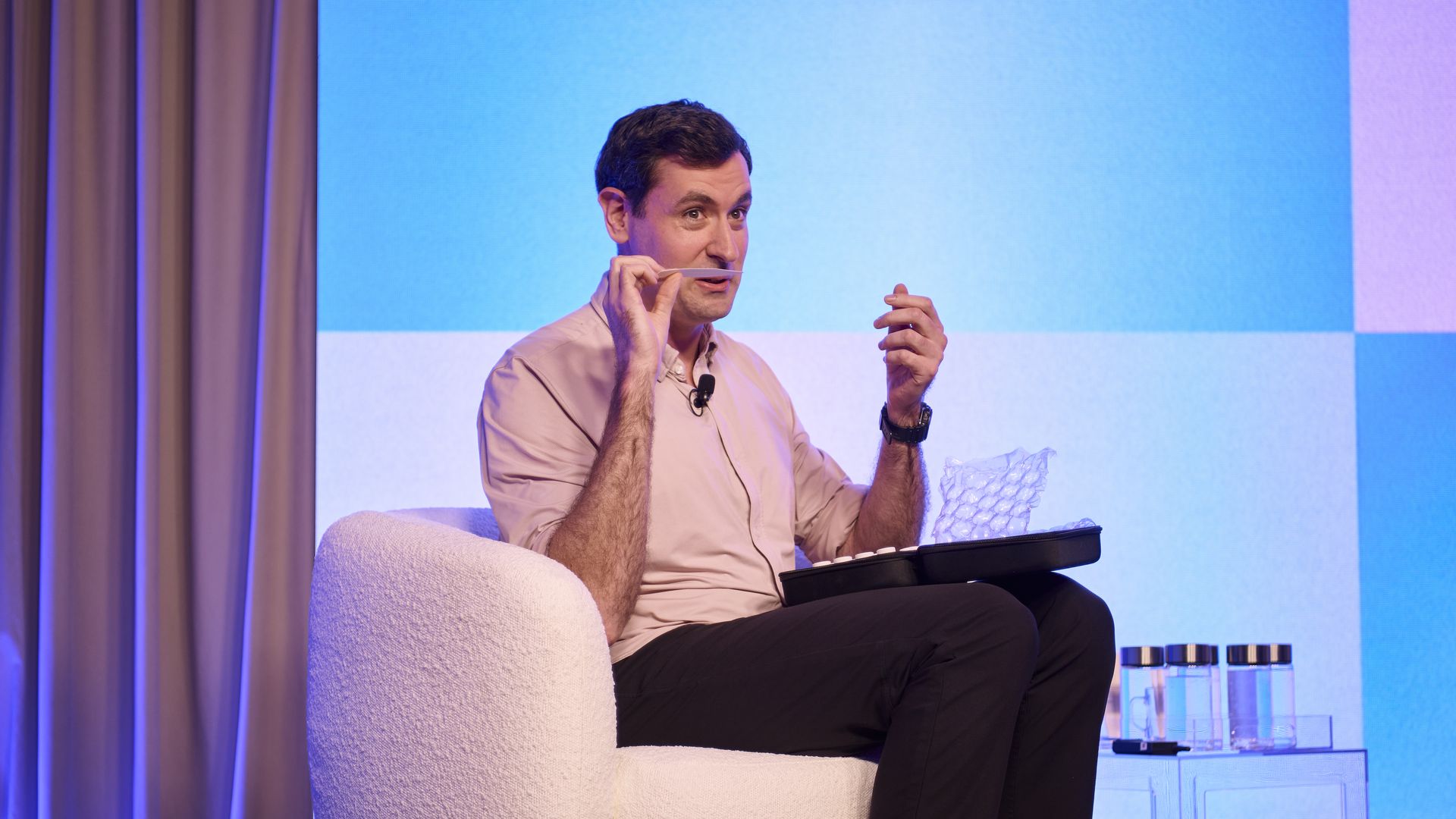
Sending a scent or a smell to someone via email or online chat is "going to happen" someday, Osmo co-founder and CEO Alex Wiltschko, predicted on Wednesday at Axios' AI+ Summit in New York City.
Why it matters: The current discourse around generative AI is all about digital media like text, video and music — but the physical world will be deeply impacted as well if companies like Osmo, which is developing tech to give computers a sense of smell, succeed.
By deploying artificial intelligence "prematurely at scale," the tech industry has broken trust with the public, Ali Farhadi, CEO of the Allen Institute for AI, told Axios' Ina Fried at the Axios AI+ Summit in New York Wednesday.
Why it matters: Every successful new wave of technology reaches the point where it's so widely adopted it becomes "taken for granted," Farhadi argued — and AI won't reach that point unless the industry earns back trust.
AI is threatening creators from all sides: using creators' work for training data, replacing them — and now making it harder for audiences to find their work.
Why it matters: Problematic and sometimes inaccurate AI search summaries could steal creator's livelihoods, weaken their brands and accelerate the decline of the open web.
We need to think more "holistically" about potential "civilization-scale bad outcomes" from artificial intelligence in coming decades, AI expert Helen Toner told Axios' Ina Fried at the Axios AI+ Summit Wednesday.
The big picture: Toner, the former director of OpenAI, left the San Francisco-based company behind ChatGPT after an effort to oust CEO Sam Altman failed last year.
The next recession may happen amid a new technological landscape: wide adoption of generative AI, a phenomenon untested by an economic shock.
Why it matters: The potential economic upsides of AI, including how it might fuel productivity growth, are fairly clear. More uncertain are the potential hits to labor and financial markets when the boom time ends.
Asana, the maker of project management software, is rolling out an initial version of its "AI teammates" — an artificial intelligence-based feature that aims to assist users by doing some of their tasks.
Why it matters: Business software companies are rushing to harness the current boom in generative AI technology and its promise of increasing workplace productivity.
A new AI system can spot satellites acting strangely in the increasingly congested orbit around Earth and that could be malfunctioning or have more nefarious purposes.
Why it matters: Companies are announcing plans to launch large constellations in the coming years, potentially putting more than one million satellites in space. And governments are increasingly investing in space-based electronic warfare tools, anti-satellite weapons and other spacecraft for national security that could be concealed in the mix.
Data: National Restaurant Association; Chart: Axios Visuals
2024 will be the U.S. restaurant industry's biggest year ever in sales — $1.1 trillion by the end of December, per National Restaurant Association estimates.
Why it matters: The COVID-19 pandemic devastated the restaurant industry, but sales are now far higher than before it started — and climbing.
Robotaxi company Cruise is relaunching its Dallas operations while trying to rebuild its reputation after one of its driverless cars in San Francisco dragged a pedestrian 20 feet.
Why it matters: The GM subsidiary is using Dallas and Phoenix as its proving ground for resuming autonomous service.
The latest open letter seeking to slow the runaway train of AI development is likely to prove as ineffectual as the last one.
Why it matters: The argument over AI's long-term dangers has largely lost the interest of tech companies hell-bent on dominating what they see as their industry's next big platform.













/2024/06/05/1717548726278.gif?w=3840)