Michael Lynch was found not guilty by a San Francisco jury of defrauding Hewlett-Packard during the $11.7 billion sale of Autonomy, an enterprise software company he co-founded and led.
Why it matters: This was Silicon Valley's largest financial fraud case ever, in terms of alleged dollars lost.
NEW YORK, NY – AI needs open source models to advance, but some fear it could bring danger in the hands of bad actors without regulation, said attendees at Axios' Expert Voices roundtable on June 5th.
The details: Tech leaders and experts gathered for a private roundtable at Axios' AI+ NY Summit to discuss the benefits and risks of open source models, and what's next.
IBM sponsored the event, which was part of Tech Week NYC.
Open source isn't up to par when it comes to performance compared to other models, said Duolingo head of AI Klinton Bicknell.
"Right now, the very best performing models are closed. The next best performing models are open access. And the least performing models at the moment are the ones that are fully open source."
Bicknell clearly defined open source as having the "recipe" to the model, for example, knowing where the data came from and how one used the data to train the model. Open access is getting to see the model and its large set of numbers at the end, but not how those numbers were processed.
Open source may never catch up to the other better performing models, and one reason could be the cost.
In a world full of technological advances, AI differs from some past innovations because of the high cost to train models, Bicknell explained.
"There are economic incentives, where if you're going to spend close to a billion dollars training a model, you kind of have to get some sort of return from that, that is measurable. And limiting access is one way of ensuring that," said Bicknell.
Some fear that open source models bring security risks as the world moves into the AI era. But these security concerns have historically occurred during many technological advances, according to Jerry Levine, chief evangelist & general counsel at ContractPodAi.
"Whether it was the printing press, books, the internet…This is an argument that we're never going to get rid of and we've dealt with it in human history. The only issue is that now we can see people doing things that we didn't and we're more connected as a humanity than we ever were before," said Levine.
Levine noted that you "can't put the genie back in the bottle" and that companies and governments have to work together to come up with guidelines to help circumvent the risks of open models.
Open source guidance is lacking, according to Red Hat AI Business Unit VP and GM Steven Heuls.
"There is no widely accepted open source governance framework, set of communities and primitive libraries that people are building upon."
Heuls believes monitoring and governance will be the next "big area of explosion" for open source.
As the world begins to discover the possibilities of AI, open source has a role to play in helping other countries, like the global south, that have "typically been locked out of a lot of technological innovation," said Daniel Dobrygowski, head of governance and trust at the World Economic Forum.
Scale AI head of federal communications Heather Horniak explained the need for U.S. open source models to be available so that other countries can use American technology rather than depend on others, like China.
Separately, Insight Partners managing director George Mathew thinks there are times when export controls need to be regulated, particularly with collapsing GPUs.
"Should GPUs end up in certain countries that are generally just known as bad actors? I think that's an area that we think should have a little bit more regulatory focus."
"It's out there and there's no corporate structure that's actually preventing a model with weights that are available to them to be used in a much more nefarious way independent of whatever the corporate structure might be."
Yes, but: Dobrygowski pointed out that laws for technology already exist and can be applied to AI right now. And if existing laws are lacking, more laws can be made.
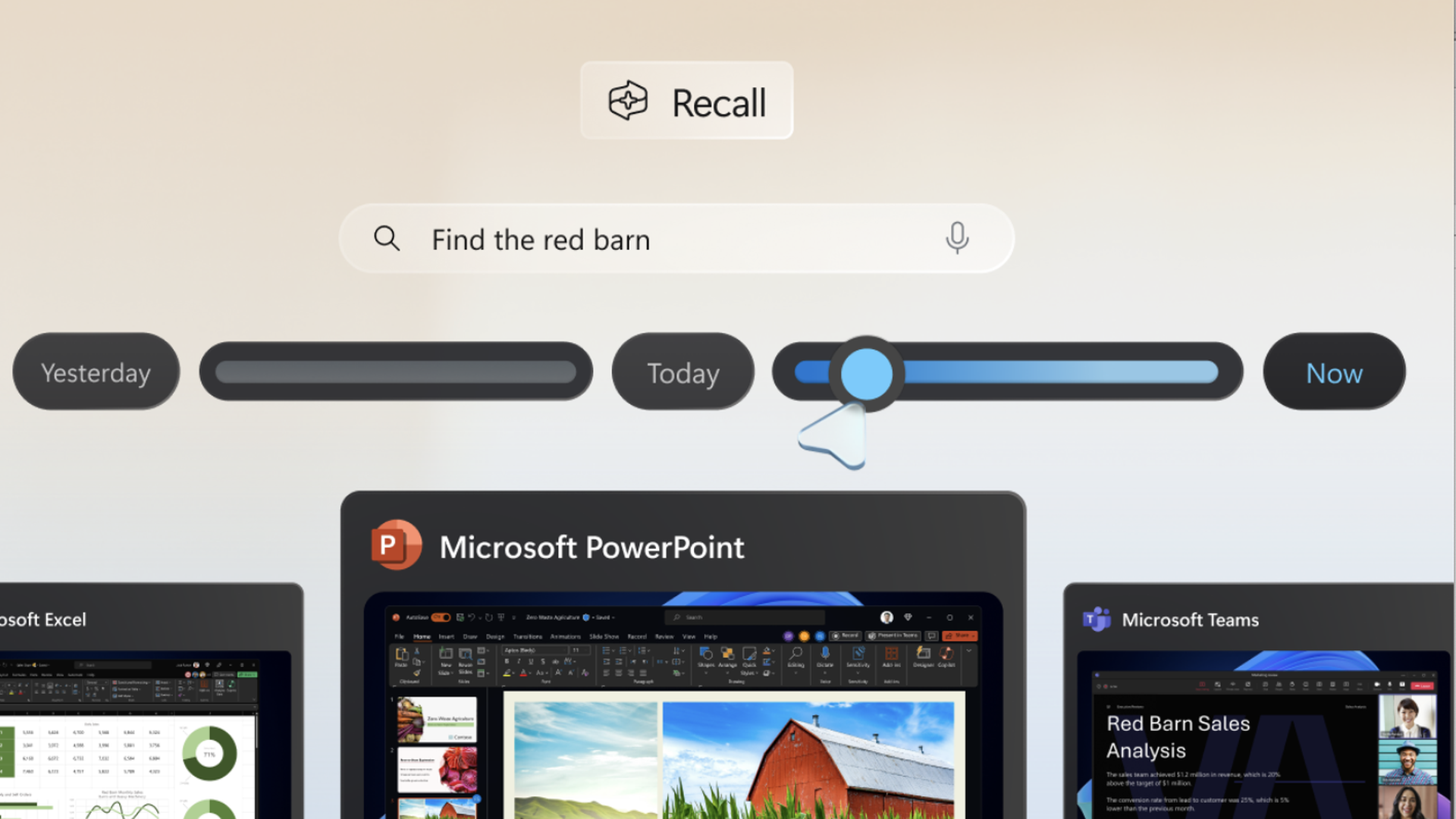
Microsoft said Friday that it would turn off its forthcoming Recall feature by default and make other changes amid criticism from security and privacy experts.
Why it matters: The feature, launching in preview, is designed to make it easier for PC users to find information they've seen while using their computer, but the company has faced concern that, as initially described, the feature could allow hackers easy access to a treasure trove of private information.
Advance Auto Parts is investigating a potential data breach linked to the recent Snowflake cyber incident, a spokesperson said yesterday.
Why it matters: A recent listing on a dark web hacker forum suggests that malicious actors may have stolen information about at least 380 million customers from the automotive supply retail chain.
Video games, TikTok and YouTube are getting a new generation interested in classic cars — but they're gravitating toward different rides than older car lovers.
Why it matters: Despite predictions that combustion-engine car culture would die out with the old codgers, young people are now poised to carry the torch.
Two-thirds of Americans see climate change as a threat to human health, and most are bracing for a summer of extreme weather they expect will be as bad as or worse than last year, according to the latest Axios/Ipsos American Health Index.
The big picture: There's a perception that last year's record heat, wildfires, floods and other extreme weather events created a new baseline.
Far-right groups and white nationalists have responded to last week's guilty verdict against Donald Trump with vague threats of violence and racist posts about people of color, monitoring groups say.
Why it matters: Trump himself has repeatedly made threats about prosecuting opponents, used bigoted language to describe immigrants and suggested a loss in November may result in violence.










/2024/06/06/1717705353358.gif?w=3840)