Just days after exiting China, Amazon has spotted an open lane in another populous part of the world: the Middle East.
Why it matters: Analysts and Amazon executives don't often cite the Middle East as a region the behemoth hopes to crack, focusing instead on India, Brazil and China. But Arab countries are filled with millions of potential new Prime members — and there's little local competition to contend with.
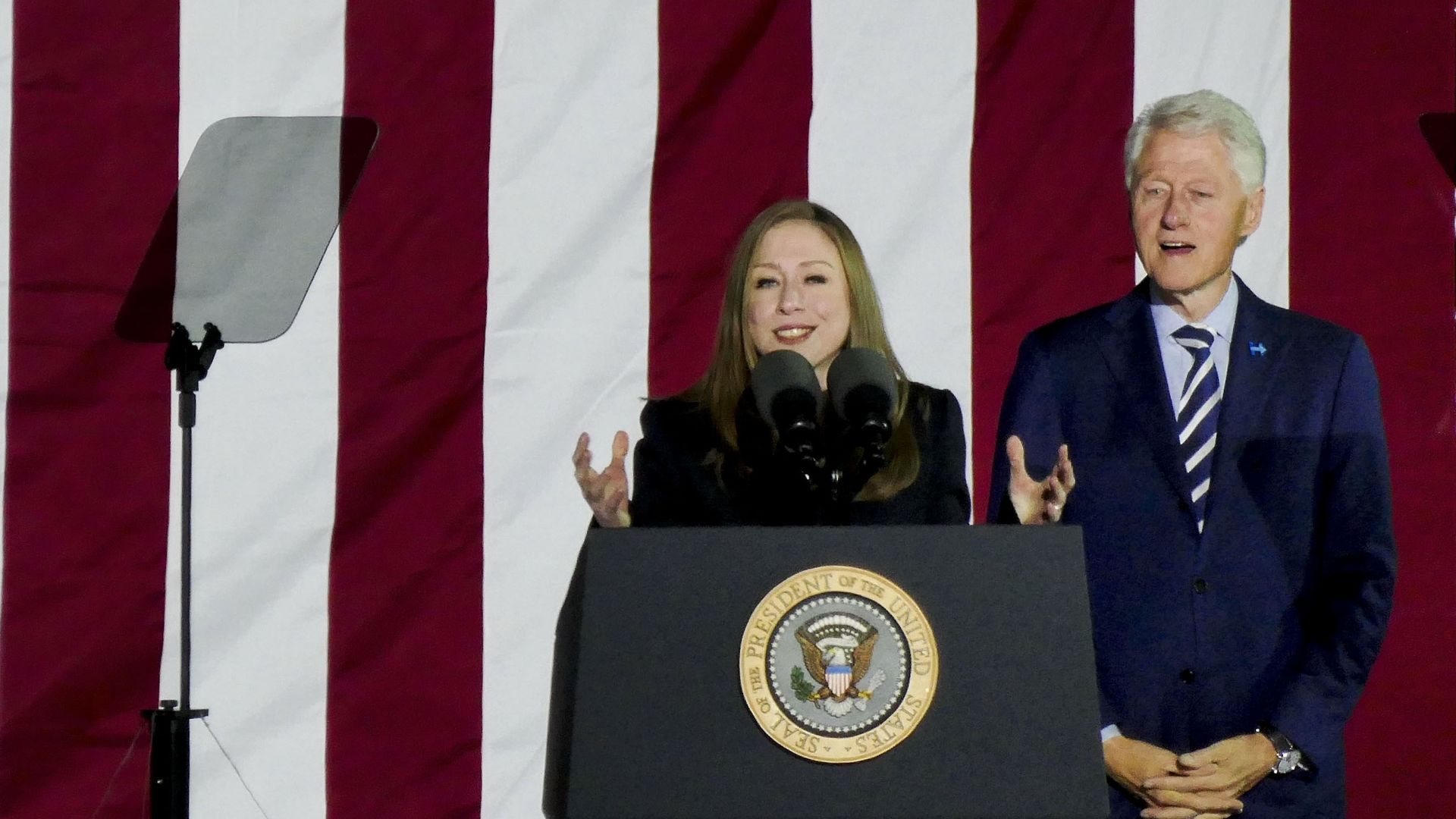
Former President Clinton and his daughter Chelsea are launching a podcast to be called "Why am I telling you this?" detailing the work of the Clinton Foundation on Apple's iTunes store.
"Growing up in Arkansas just after World War II in a family that didn't have a lot of money, most of our entertainment revolved around storytelling."
— Former President Clinton said in a trailer for the audio program
Infectious disease experts tell Axios they agree with a dire scenario painted in the UN report posted earlier this week saying that, if nothing changes, antimicrobial resistance (AMR) could be "catastrophic" in its economic and death toll.
Threat level, per the report: By 2030, up to 24 million people could be forced into extreme poverty and annual economic damage could resemble that from the 2008–2009 global financial crisis, if pathogens continue becoming resistant to medications. By 2050, AMR could kill 10 million people per year, in its worst-case scenario.
"There is no time to wait. Unless the world acts urgently, antimicrobial resistance will have disastrous impact within a generation."
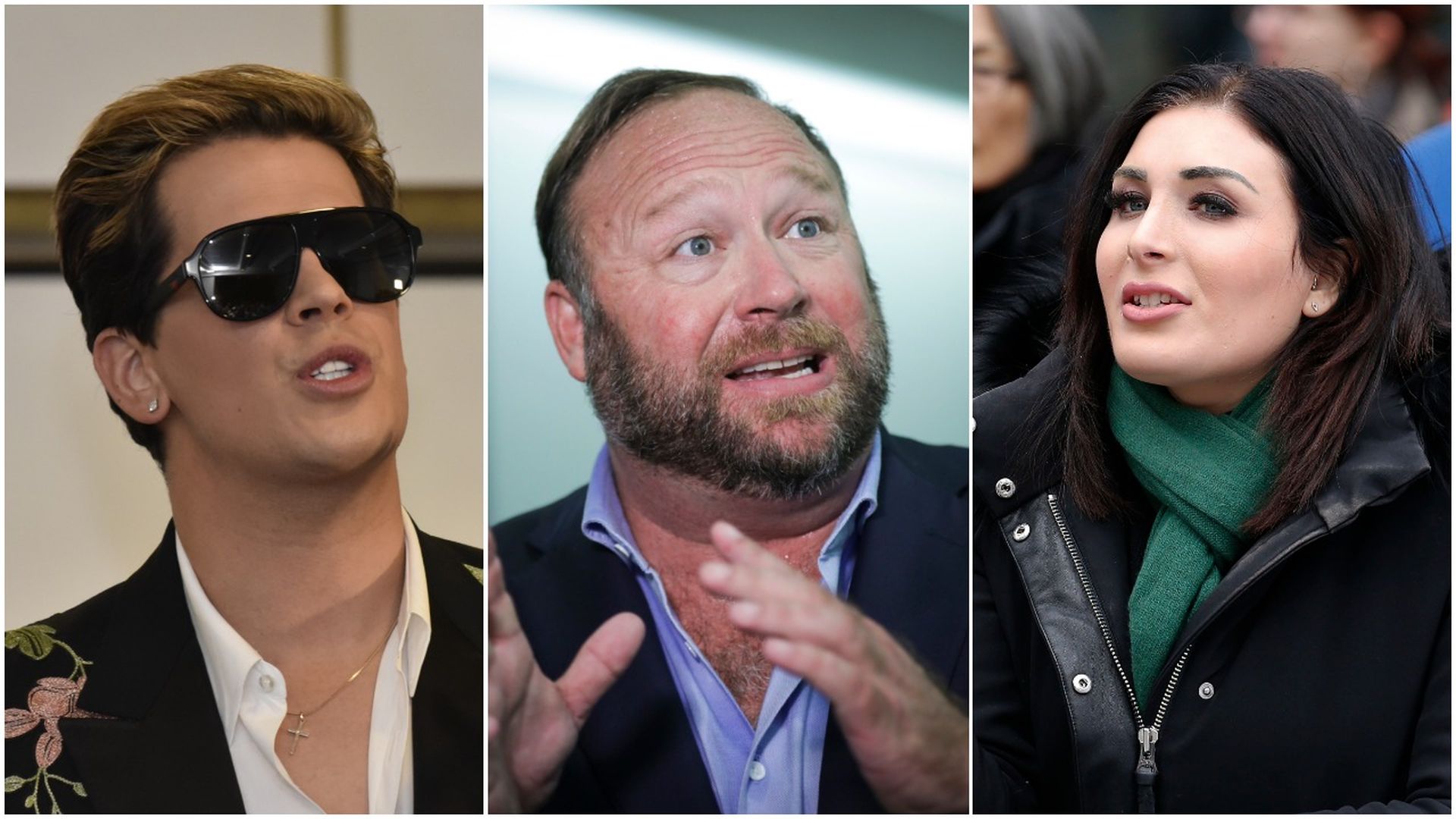
Facebook announced on Thursday it will ban a string of people from its platforms deemed "dangerous." The list includes Milo Yiannopoulos, Louis Farrakhan, Alex Jones (and InfoWars), Paul Joseph Watson, Laura Loomer and Paul Nehlen.
Why it matters, per Axios' Sara Fischer: Facebook has for years been hesitant to outright ban these actors, due mostly to the fact that they didn't explicitly violate Facebook's loose content rules. But real-world hate crimes are putting pressure on Facebook and other platforms to crack down on pages and accounts that have repeatedly shared false information or hate speech.
Bloomberg reported Tuesday that Vodafone's Italian division had discovered "backdoors" in its Huawei-brand telecommunications equipment in 2011 and 2012.
But, but, but: The story did not play well in the security community, where the evidence is seen as insufficient to the central claims. It didn't make a strong case that the "backdoor" was anything more than a minor, unintentional problem. Vodafone's official stance was it wasn't.
The U.S. is having a "Huawei moment," as security concerns prompt the Trump administration to try to block allies from using 5G equipment produced by the Chinese company. But policymakers and experts also fear the U.S. is ill-prepared to challenge Chinese dominance in the next waves of technology — opening the U.S. to another round of national security worries.
Why it matters: Today, neither the United States nor its closest allies manufacture 5G telecom equipment to compete with Huawei for global business. The same dynamic will play out with 6G and other markets unless the U.S. takes long-term measures today to challenge China's manufacturing power and prepare for the next Huawei moment.
Facebook’s annual developer conferences, F8, continued for a second day Wednesday with a focus on more technical news announcements, particularly around AI.
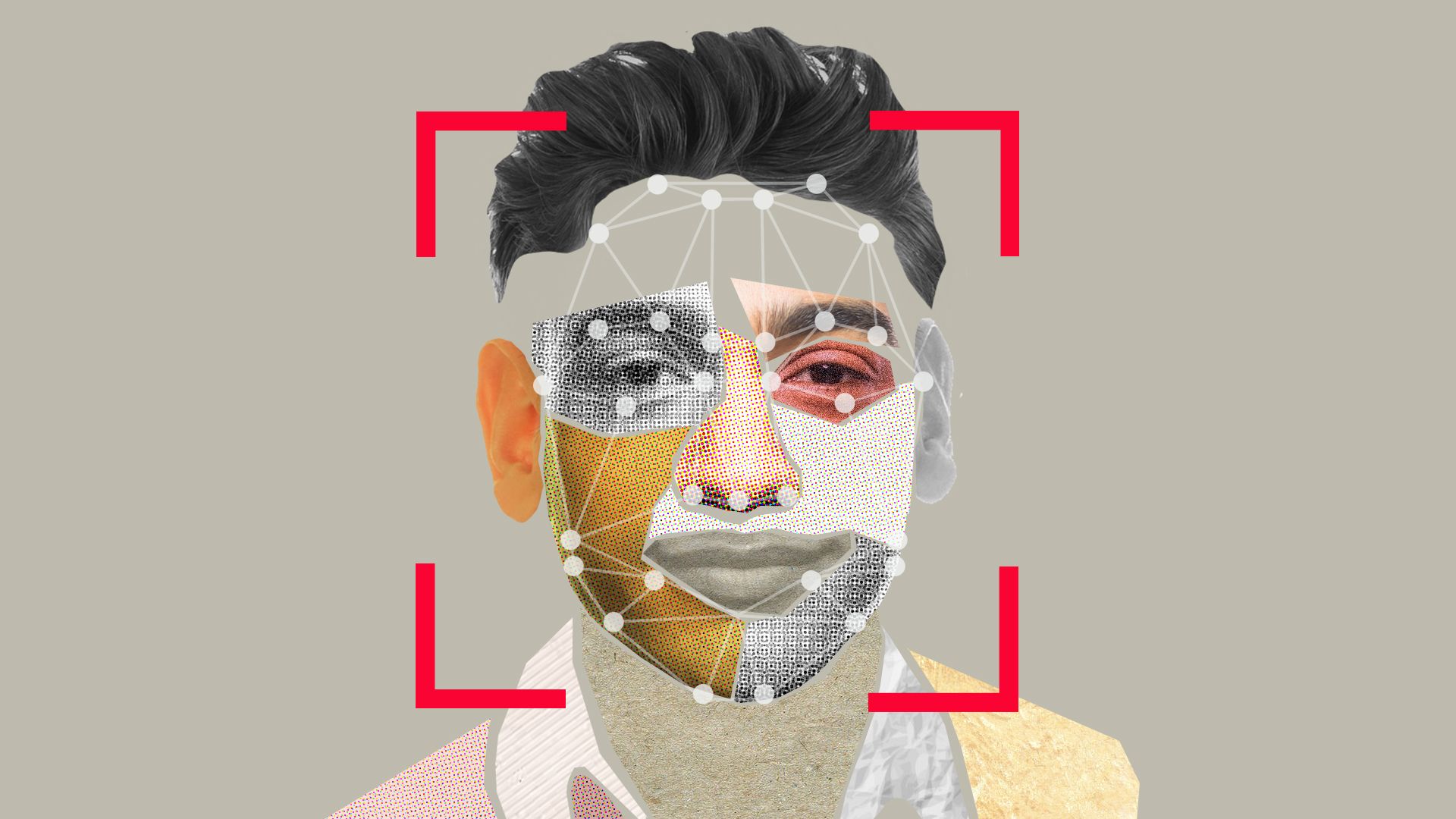
The bottom line: The company announced new AI tools for moderating content and for training facial-recognition software to accurately detect all people on its Portal screens.
Depending on how much you shop, watch and read with Amazon, the e-commerce behemoth may know more about you than any other company on earth.
The big picture: Naturally, they know what you've browsed or bought on their main service. They also know what you've asked Alexa, watched on Prime, and read on your Kindle. They know even more thanks to their ownership of Whole Foods, Ring, Eero, Twitch, Goodreads, IMDB and Audible.
What do you do with a technology that could restore the voices of people who have lost theirs — but also sow chaos and incite violence?
What's happening: A growing group of companies are walking this tightrope, betting they can deploy deepfakes — videos, audio and photos that are altered or generated by AI — as a force for good, or at least non-malign purposes, while keeping the technology away from those who would use it to do harm.
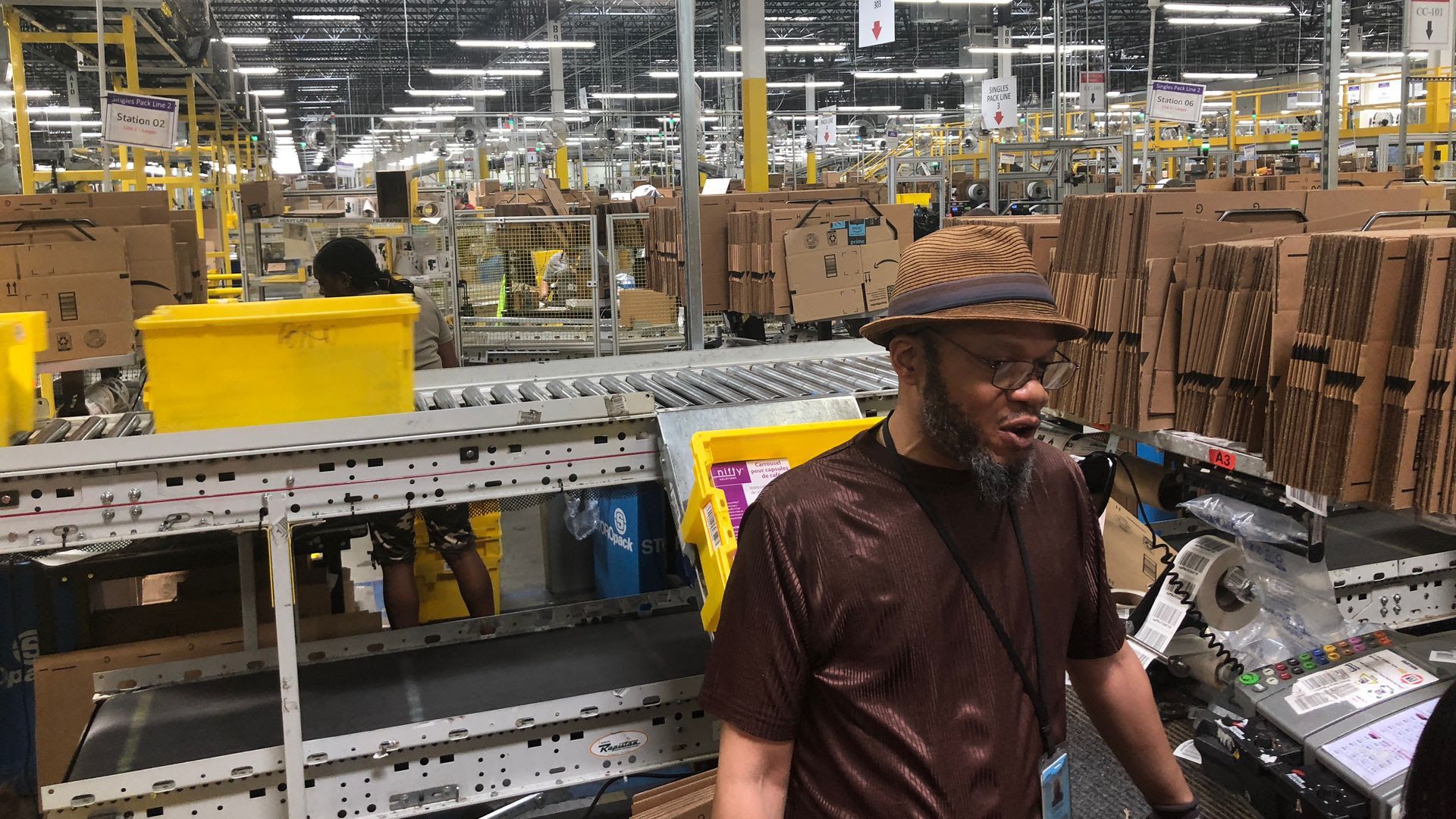
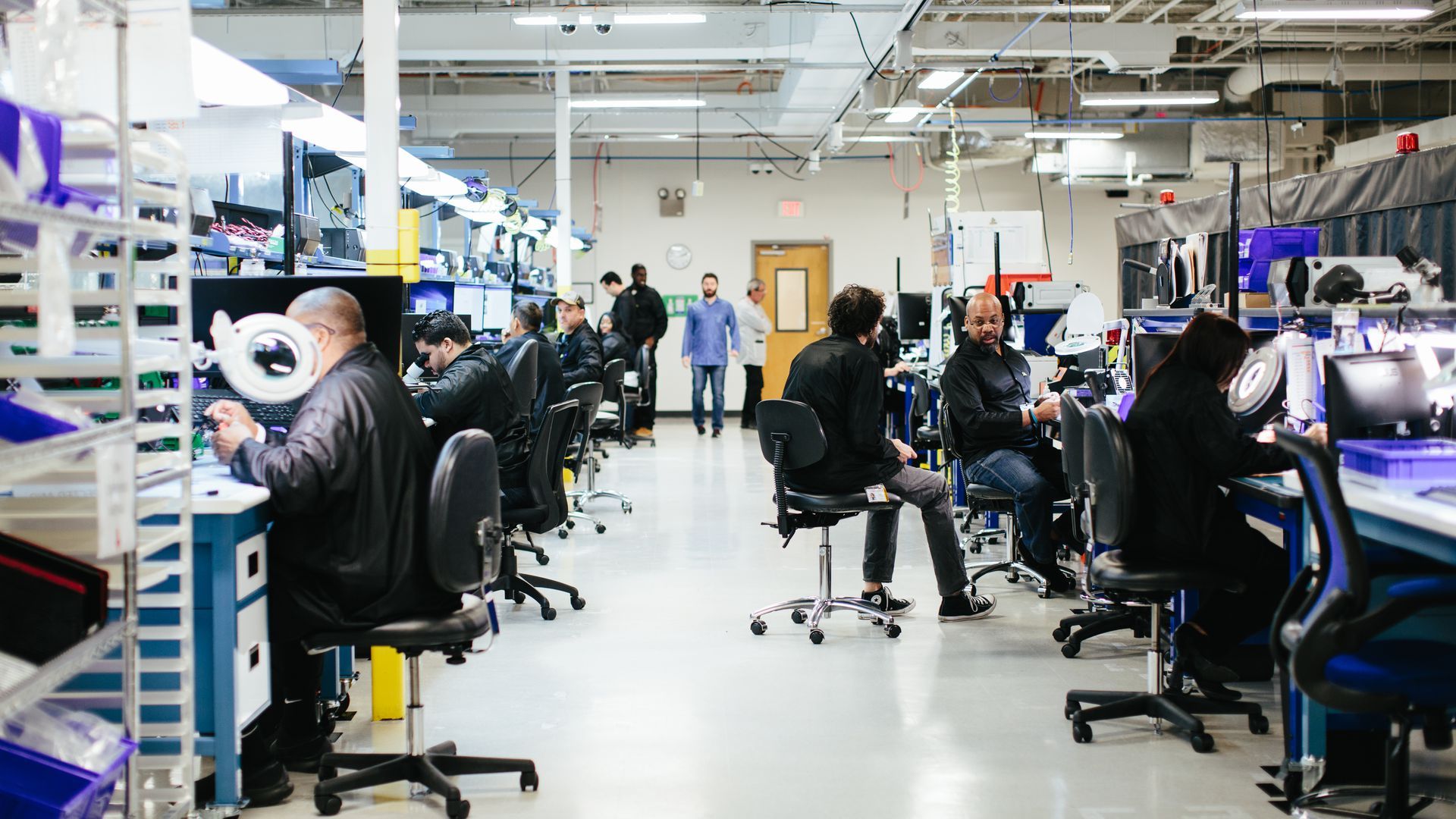
Yesterday, I spent an afternoon at a 1-million-square-foot Amazon warehouse in Baltimore, where over 2,500 workers assemble, package and ship out orders every day.
Details: I asked Cliff Knight (above), who works at a packing station, if I could attempt to pack one of the boxes. He cautiously agreed.
In its quarterly earnings released today, Qualcomm said it would record $4.5-$4.7 billion revenue in the coming quarter as part of its settlement of a long-running intellectual-property quarrel with Apple.
The revenue "includes a cash payment from Apple and the release of related liabilities," Qualcomm said.
The two companies had previously declined to specify the economic impact of the settlement, other than to say Apple would make a one time payment to Qualcomm as part of the broader agreement.
Many health-related AI technologies today are biased because they're built on datasets largely comprised of men and individuals of European descent.
Why it matters: An AI system trained to identify diseases, conditions and symptoms in people in these datasets could fail when presented with data from people with different characteristics.
Why it matters:The rules New York City passed were notable as ride-hailing companies have historically resisted such regulation. While Lyft and Juno objected to the driver minimum wage, rival Uber filed a suit over the new vehicle cap imposed.
Editor's note: The story has been corrected to show that Juno sued along with Lyft (not Via).
U.K. Defense Secretary Gavin Williamson was fired by Prime Minister Theresa May on Wednesday over his role in a leak of secret information regarding the role of China's Huawei in building out British 5G networks, the BBC reports. He was replaced by Secretary of International Development Penny Mordaunt, the first woman to hold the position.
The big picture: May told Williamson in his firing letter that the investigation into the leak provided "compelling evidence suggesting [his] responsibility for the unauthorized disclosure." The leak came from the U.K.'s National Security Council, "a forum where secret intelligence can be shared by GCHQ, MI6 and MI5 with ministers, all of whom have signed the Official Secrets Act," per the BBC.
Future residents of the 60-story Paramount Miami World Center won't have to bother with trying to hail a ride at street level. Instead, they can take a glass-enclosed elevator up to the rooftop skyport and be whisked off by a flying car.
Why it matters: South Florida is a prime market for VTOL (vertical take-off and landing) air taxis because of the region's congested highways and affluent population, says Daniel Kodsi, developer of the center.
Training a new driver is straightforward — make them practice until they can master basic skills well enough to pass a driver's license exam. But there are no such tests for automated vehicles, leaving it up to AV developers to decide when their technology is safe enough to deploy.
Why it matters: AVs could reduce the number of traffic deaths and increase mobility for those who can't drive, but only if the public trusts them. With no prescribed validation methods — and regulators largely on the sidelines as the technologies are advancing — it's difficult to know how safe is safe enough.
Google CEO Sundar Pichai's total earnings in 2018, after calculating older stock that vested, topped $470 million in 2018, according to the latest proxy statement from Google's parent company, Alphabet.
The big picture: Pichai's compensation is one of the highest of 2018, surpassing the $302 million Netflix CEO Reed Hastings took home. Pichai has now made $878 million since 2015. Alphabet's stock price stayed above $1,000 per share in 2018, even as Google faced criticism over antitrust concerns and user privacy.
ORLANDO, Fla. — Luminar, the lidar company trying to build the "eyes" for autonomous vehicles, plans to turn its central Florida headquarters into a hub for advanced manufacturing and process engineering as it moves toward mass-production by the "early 2020s," says Luminar co-founder and CTO Jason Eichenholz.
Why it matters: There's plenty of competition in this area, with biggest rival Velodyne announcing a mass-production deal with Nikon last week. Still, Eichenholz thinks Luminar will have an edge in enabling systems like driverless trucks, robotaxis and driver-out-of-the-loop systems, partly because of its location.
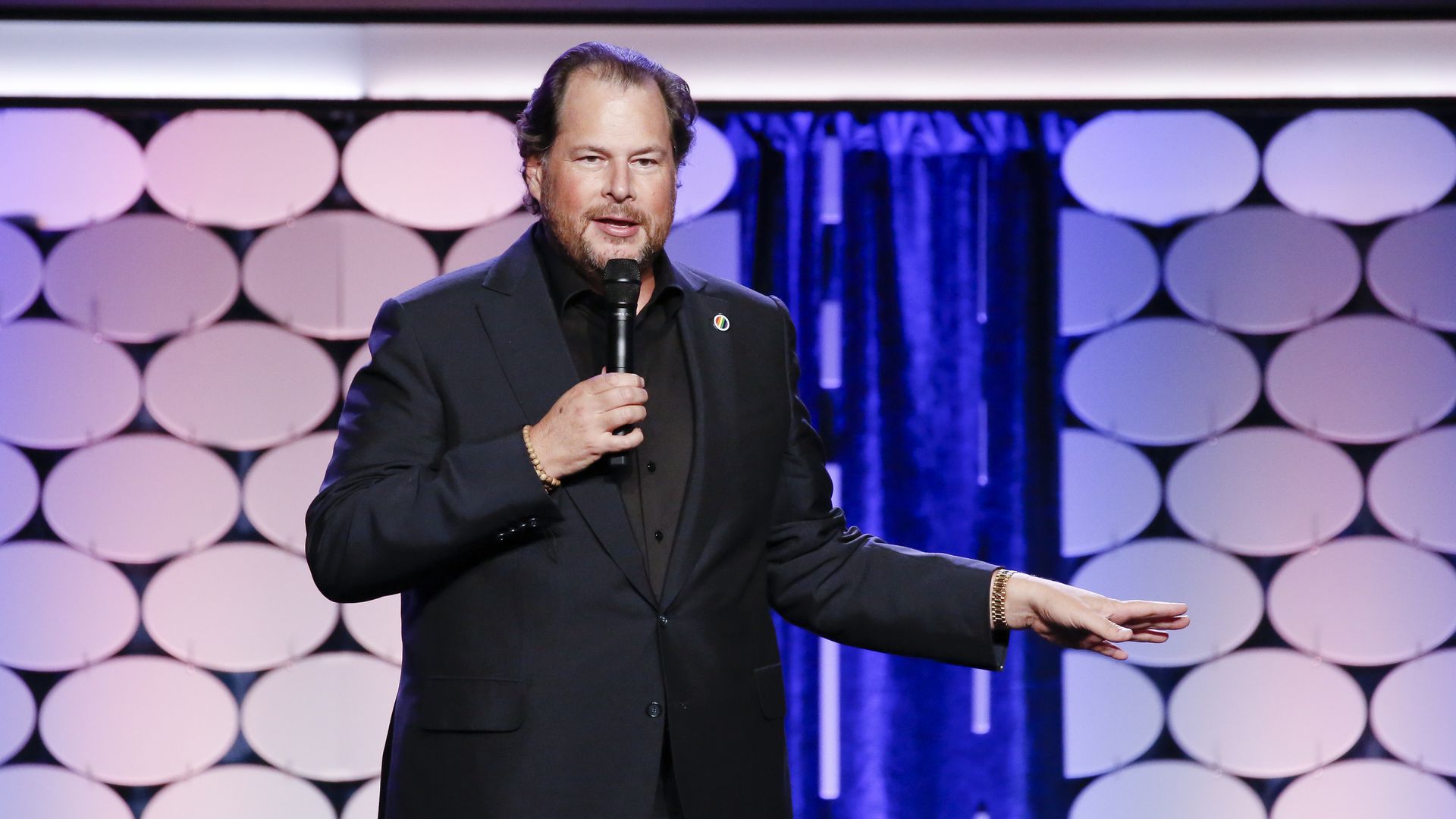
Salesforce founder Marc Benioff and his wife Lynne have donated $30 million to UC San Francisco to establish a center to study the causes of homelessness and the best means of reducing and alleviating it.
Why it matters: It's believed to be the largest private donation toward research to combat homelessness and comes as San Francisco struggles with a growing housing crisis amid skyrocketing rents.
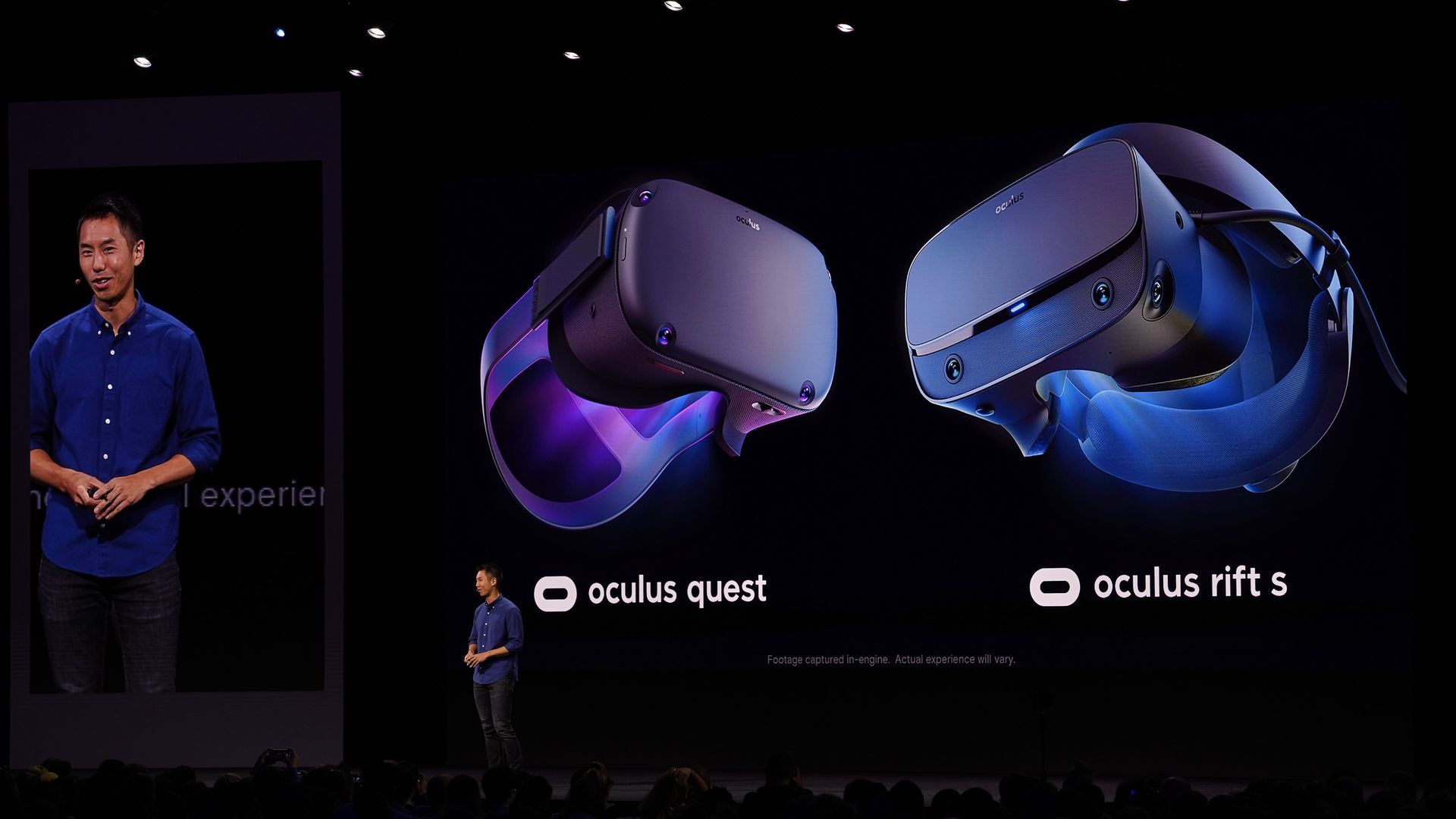
While much of the focus at Facebook's F8 conference was on the changes it's making to the core platform and its messaging apps, its moves in virtual reality highlight a new wave of products coming to market.
Why it matters: The last coming of VR fell far short of estimates. HTC, Valve and Facebook's Oculus all have new and improved hardware, but it's unclear whether consumers and content developers are ready to take another plunge.
Facebook announced Tuesday that it's creating health support groups where users will be able to ask administrators to post questions on their behalf, Stat News reports.
Our thought bubble, via Axios tech editor Scott Rosenberg: Facebook's "pivot to privacy" has a long way to go to persuade users that the social network is a safe place to share their information.
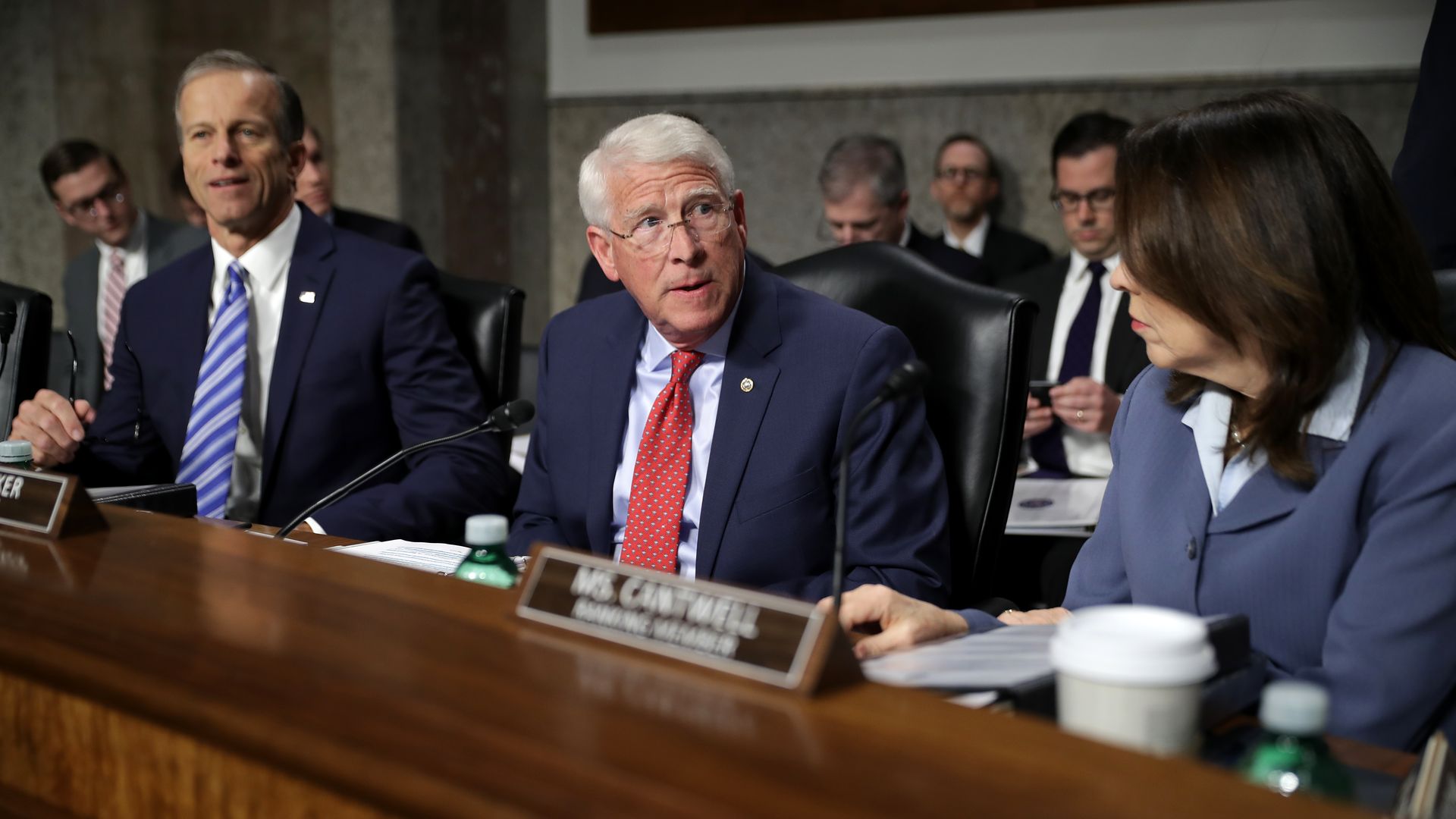
Two more lawmakers have joined a Senate effort to craft a bipartisan online privacy bill, but the group still seemed far from releasing legislation as they huddled on Tuesday.
The bottom line: Congress isn't going to move quickly on this issue, even if lawmakers are facing pressure to pre-empt state privacy measures like the one that goes into effect in California next year.
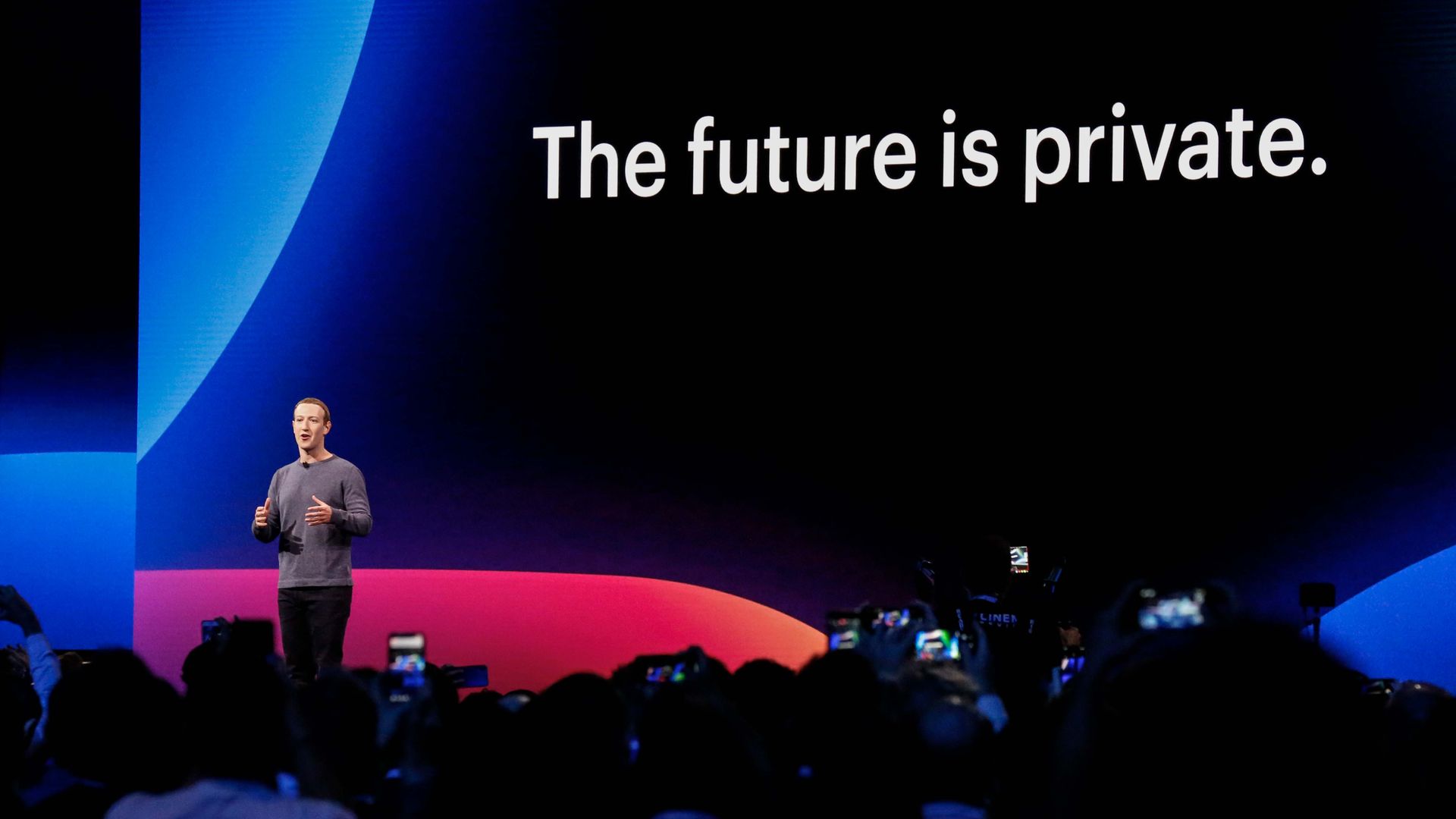
As Mark Zuckerberg filled in the details of his new, privacy-oriented vision of Facebook at the F8 developers conference Tuesday, he left out a key episode from the past: Long before Facebook's pivot to privacy, the company pivoted to make everything more public.
Why it matters: There's a reason Facebook's new "digital living room" where you are "free to be your true self" sounds familiar. You've already been there, if you were one of the hundreds of millions of people who used Facebook before roughly 2010.