Facebook announced Thursday that its video platform "Watch" has more than 400 million monthly users, and 75 million daily visitors.
Why it matters: That's a small number given how big Facebook's total audience is, but Facebook says that small number is highly-engaged, which will help it sell more ads.
Delivery startup Instacart announced Thursday that it will kill its four-year partnership with Whole Foods, the U.S. grocery chain acquired by Amazon in 2016, Bloomberg reports.
The big picture: Amazon's push into brick-and-mortar food sales with its Whole Foods purchase prompted other big retailers, like Walmart, to jettison their use of Amazon's AWS for their e-commerce platforms last year. Instacart's move away from Whole Foods is similar as the startup is wary of Amazon's own delivery capabilities.
Uber and Getaround, a startup known for its peer-to-peer car rental service, are extending a partnership that rents cars to ride-hailing drivers. The joint effort, which debuted in the Bay Area last year, is expanding to Los Angeles and San Diego, and soon to D.C. and Philadelphia.
The big picture: Driver supply has long been a problem for Uber. The company has experimented with various ways to provide vehicles to potential drivers, including its now-defunct car leasing division and its partnerships with Hertz, General Motors and Getaround.
Uber and Getaround, a startup known for its peer-to-peer car rental service, are expanding a partnership that rents cars to ride-hailing drivers. The service, which debuted in the Bay Area last year, will expand to Los Angeles, San Diego, and soon Washington, D.C. and Philadelphia.
The bigger picture: Driver supply has long been a problem for Uber. The company has experimented with various ways to provide vehicles to potential drivers, including its now-defunct car leasing division and its partnerships with Hertz, General Motors, and Getaround.
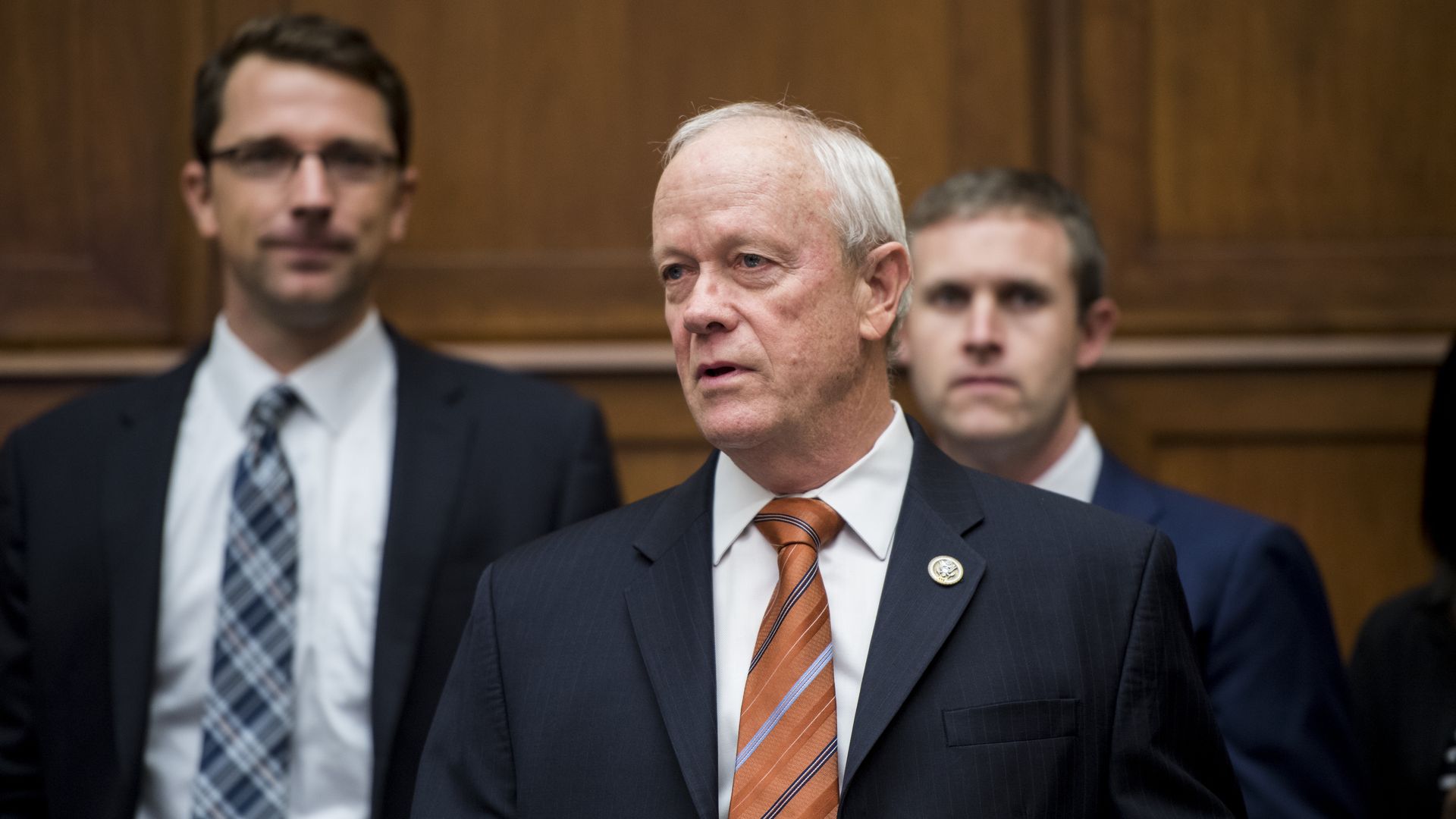
Rep. Jerry McNerney (D-Calif.) will become the next co-chair of the bipartisan Congressional Artificial Intelligence Caucus, current co-chair Rep. Pete Olson (R-Texas) announced Thursday at an Axios event about the future of AI.
The big picture: Rep. John Delaney (D-Md.), the founder of the caucus, will be stepping down to concentrate on his presidential run.
Autonomous vehicles are widely expected to reduce traffic fatalities, though the number of lives they could save is debated. When accidents do happen, however, self-driving cars aren't likely to present liability issues that current laws can't handle.
The big picture: The legal system already considers semi-autonomous vehicle technologies like anti-lock brakes, adaptive cruise control and electronic stability control. Although AVs may shift more liability risk to manufacturers, current laws around negligence and product liability should suffice for further increases in vehicle automation.
Live from Washington D.C., Axios Managing Editor Kim Hart speaks with members of the Artificial Intelligence Caucus Rep. Pete Olson (R-TX), Rep. Debbie Dingell (D-MI) and Rep. John Delaney (D-MD) for a discussion on the impact of AI. She is also joined by Axios Future Editor Steve LeVine.
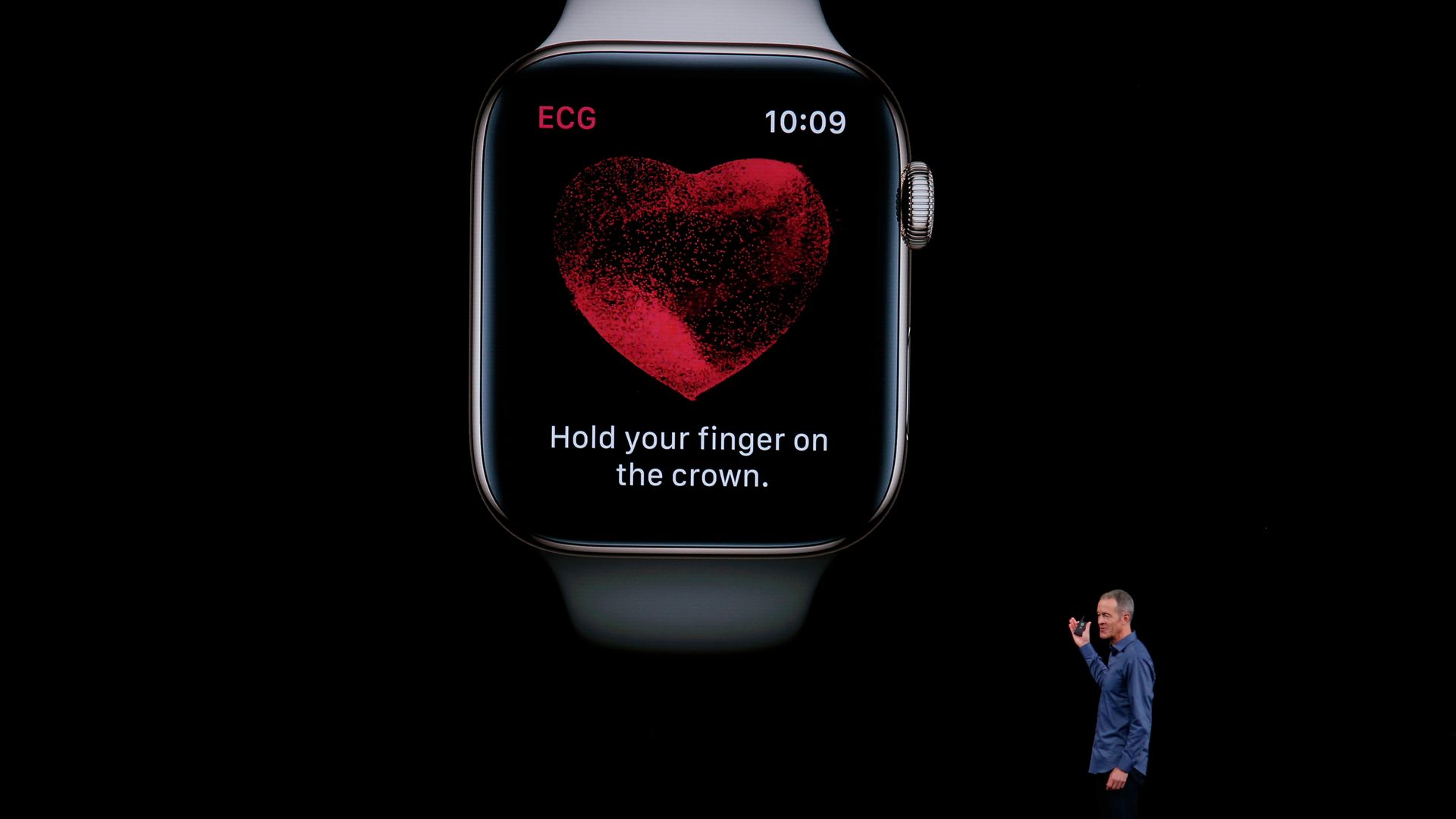
Apple quietly employs dozens of doctors, "an indication that Apple is serious about helping customers manage disease, and not just wellness or fitness," CNBC's Christina Farr reports.
Why it matters: Apple has already begun to roll out a handful of health-related offerings — mainly its tool for electronic medical records and the new heart-monitoring capabilities on Apple Watch. But having a fuller staff of doctors on board (good ones!) signals bigger aspirations.
Apple has been rallying publishers to join a new premium bundle offering from Apple News that will launch next spring under the banner of Texture, a startup that Apple acquired earlier this year, Bloomberg reports.
Why it matters: Media companies, particularly those with dwindling print income, are desperate for new revenue but afraid of giving up control. Apple is a tempting partner, but publishers are wary of participating in "all-in-one" services that take a slice of subscription fees and control distribution.
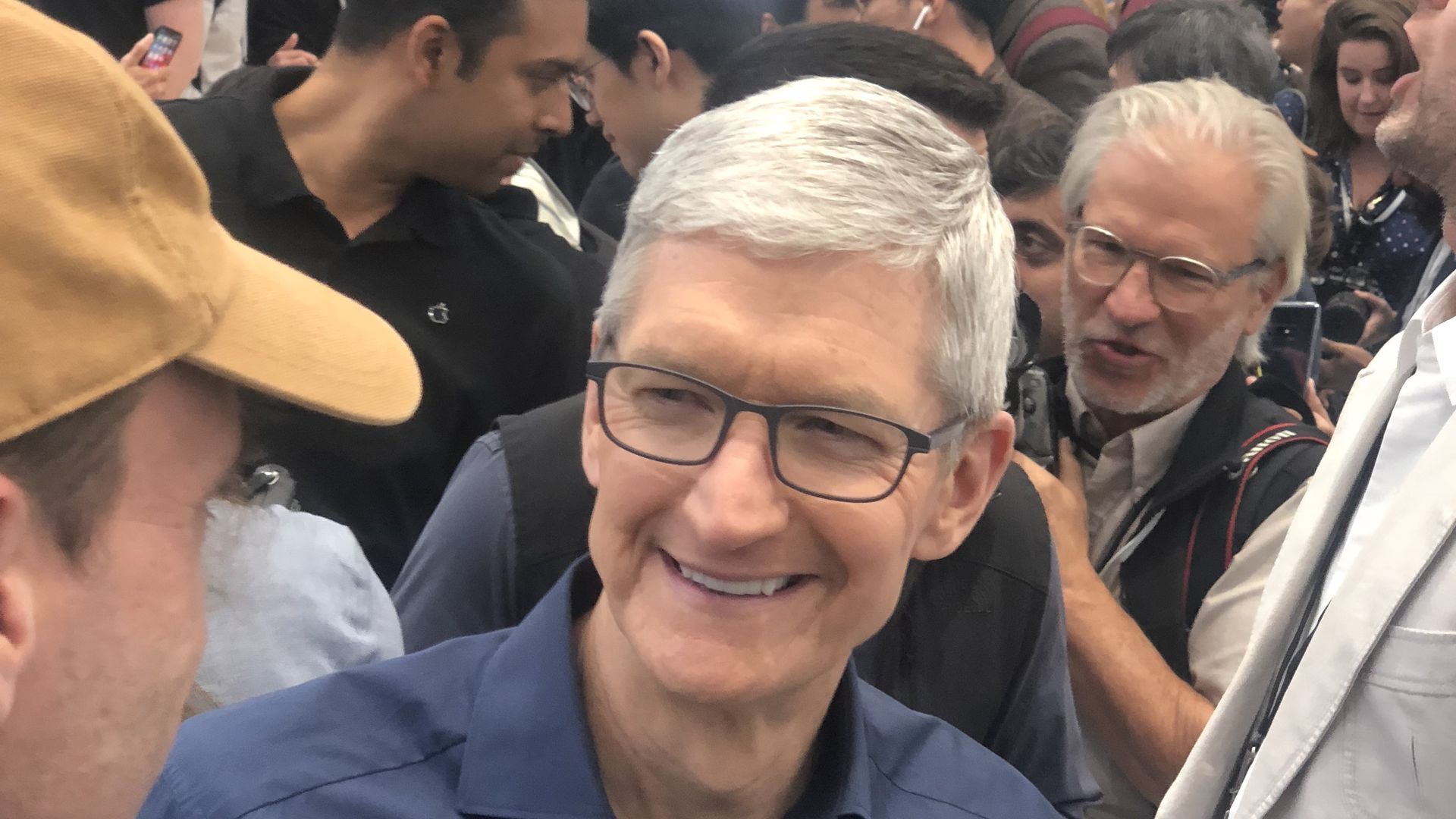
Apple plans to build a new $1 billion campus in Austin, Texas, adding thousands of jobs, while also setting up new large offices in Seattle, San Diego and the Los Angeles area.
Big picture: Apple said in January that it would look for a new area to set up shop outside of California and Texas. For now, though, the company is doing most of its growing in those two states, while also adding and expanding smaller offices elsewhere.
In 2000, when the Clinton administration was intent on breaking up Microsoft, CEO Bill Gates said his company only looked unassailable. Microsoft, he said, was actually vulnerable to being toppled by any number of as-yet-unseen Davids. Government anti-trust lawyers — and much of the country — scoffed. Just a few years later, in walked Google.
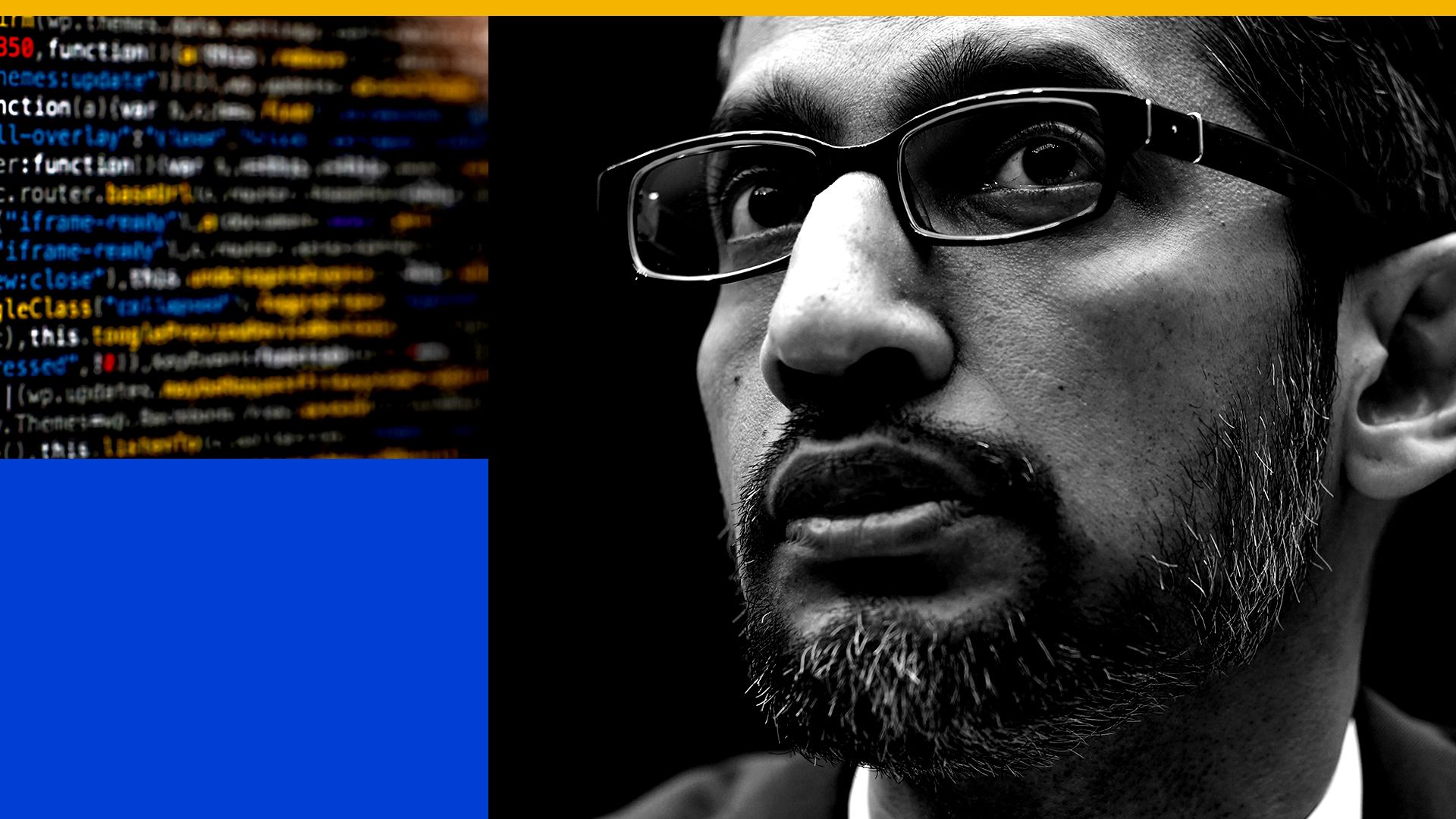
Driving the news: Now Google seems unassailable and, against fierce criticism that it is far too big, CEO Sundar Pichai is arguing much the same as Gates — that his company only seems impregnable.
Attracted by promising advances, high-profile companies like BMW and Goldman Sachs are pouring investment money into quantum technology or hiring their own talent in a long-shot bet that the field will be big.
Quantum computing is unproven, and even if it can be made to work at the levels experts think is possible, no one knows how just it might be used in business. But, disregarding the massive uncertainties, big companies for the first time are putting down stakes, fearful of being left behind ifquantum becomes the next big thing.
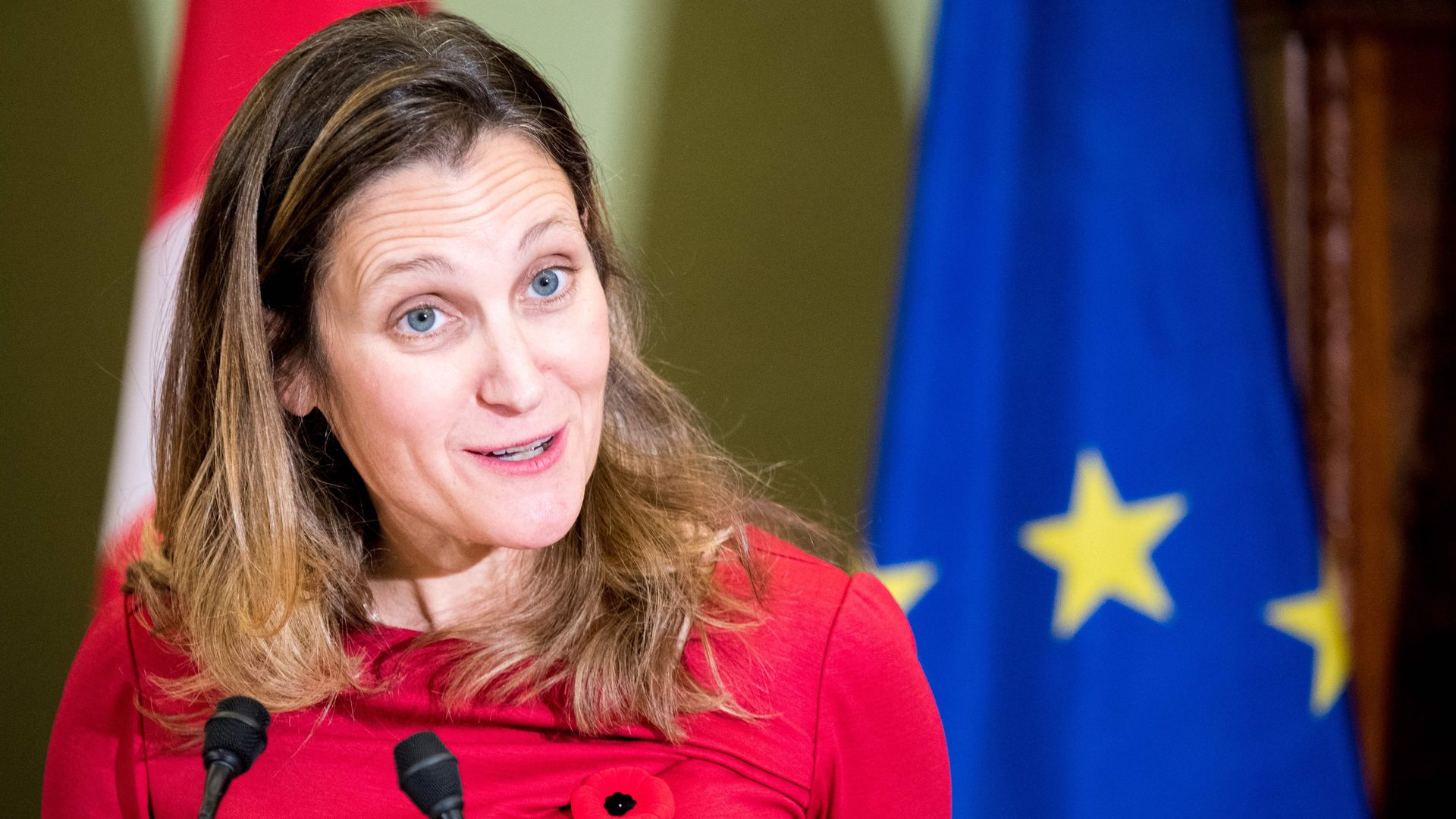
Canadian Foreign Minister Chrystia Freeland said Wednesday that Canada is trying to gain access to a Canadian ex-diplomat and employee of the International Crisis Group who was reportedly detained by Chinese security services in Beijing. She also revealed that the government has been unable to reach a second Canadian who was questioned by Chinese authorities.
Why it matters: This all comes after Canada arrested Meng Wanzhou, CFO of Chinese tech giant Huawei. Meng was released on bail yesterday, but faces extradition to the U.S. on fraud charges tied to the alleged evasion of U.S. sanctions on Iran. It's unclear what the connections are between these cases and the Huawei incident, but China had warned of "serious consequences" if Meng was not freed.