Saturday's technology stories

Technology has over-saturated us


For millennia, technology, in terms of its big-picture impact, was, well, meh. Look at the straight line in the chart — that includes every major invention since the year 1 AD, including the printing press.
- Then James Watt triggered the Industrial Revolution by reinventing the steam engine, and before you knew it we all owned iPhones.
The big picture: It's all come too fast. We are saturated with life-rattling new technologies, yet more is on its way — artificial intelligence, quantum computing, robots and greater use of cyber weapons.

YouTube's video takedown and other tech news this week
Google CEO Sundar Pichai refuted conservative claims of search bias in front of Congress this week. Here are five other stories in tech you may have missed.
Catch up quick: YouTube took down more than 58 million videos that violated its policies; nearly half of cloud databases aren't encrypted; Facebook wants to become a streaming destination; Apple courts publishers for new Apple News bundle; and Bitcoin spammers sent bomb threats to businesses and schools worldwide.

Understanding a world in upheaval
Rarely has the world witnessed so much unsettling change so fast in so many nations for so many reasons.
- A torrential decade has unleashed massive financial, political and technological crises, crises of trust, truth and untethered populations.
- People are irate and balkanized, and provocateurs, itching to make them more so, keep stirring the pot.
Why it matters: Never in recent memory has the danger of some imminent, undefined catastrophe felt so genuinely palpable.

The Reality of the Artificial
Thursday morning, Axios Managing Editor Kim Hart hosted a conversation with some of the Hill's leading voices on AI, digging into how this new technology is poised to change our jobs, economy, and lives.
Why it matters: Kim heard how these leaders are thinking about and approaching AI from a policy perspective, with all of them advocating for the American people to embrace, rather than fear, this rapidly advancing technology.
Rep. Pete Olson

Rep. Olson, who is the co-chair of the House's AI Caucus, told Kim about his caucus, why he is passionate about AI, and how and why America as a country should embrace it.
- What inspired the A.I. Caucus: “AI is the future of not just America, but the entire world.”
- The caucus' motto: "Educate before we legislate."
- Cancer, cyber-attacks, and drunk driving, were all mentioned by Rep. Olson as problems that AI has the potential to solve.
- Rep. Jerry McNerney (D- Calif.) will be Rep. Olson's next AI Caucus co-chair, replacing Rep. John Delaney as he gears up for his presidential run.
Rep. Debbie Dingell
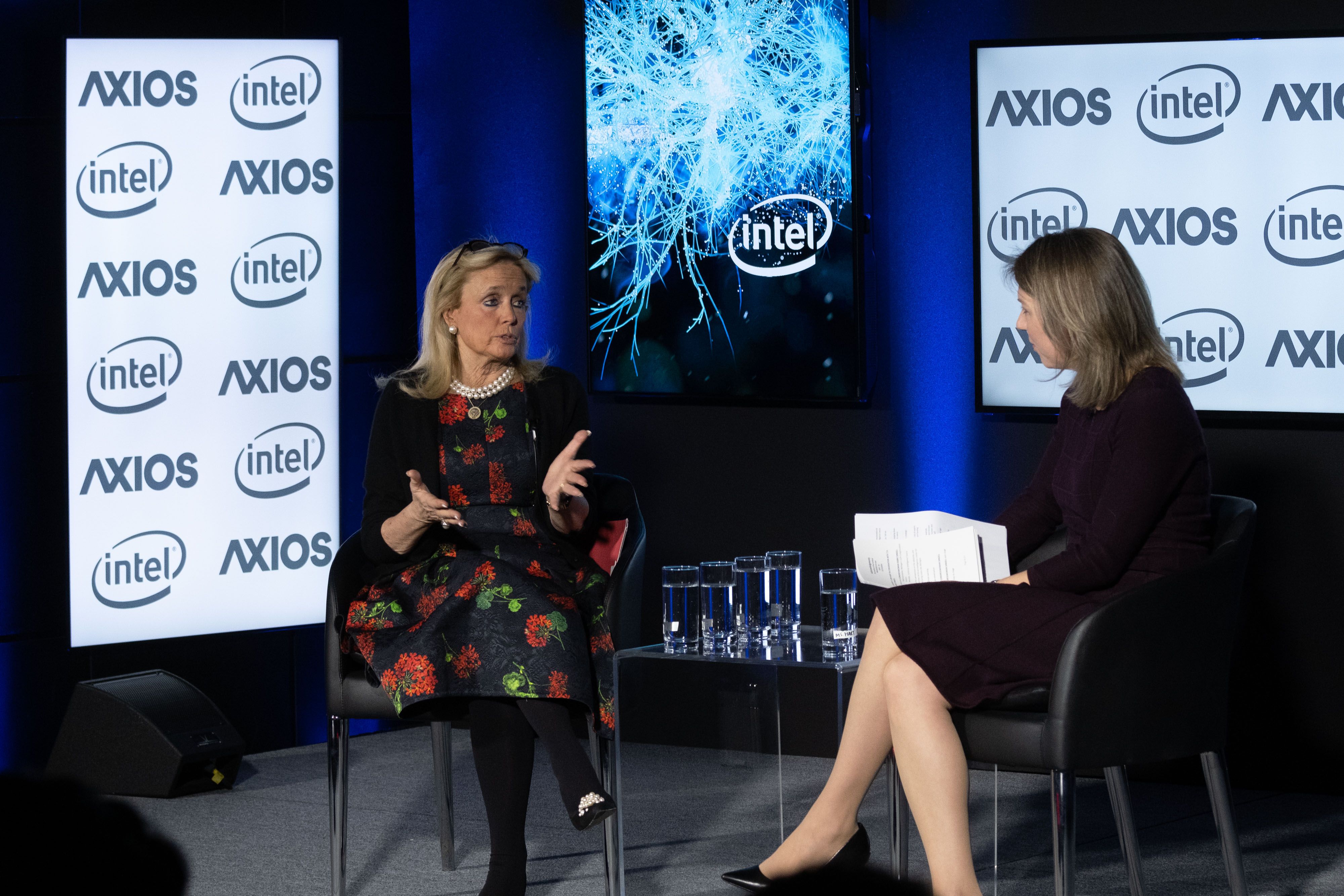
Rep. Dingell of Michigan, spoke about how she is embracing AI despite warnings that this technology could displace jobs in manufacturing states like her own.
- How AI, which will be an essential part of Autonomous Vehicles, will change Michigan: "Detroit was the birth place of the automobile and ... we are going to be the leaders in autonomous vehicles."
- Policy's role in AI: “One of the challenges, as we’re talking about AI, is how you create a regulatory environment for technology that is so rapidly changing ... at all times we have to make sure that the consumer is safe.”
- "AI is exciting. It's the future. We shouldn't be afraid of it. It's going to create jobs ... but there are a lot of issues we need to talk about."
Rep. John Delaney

Rep. Delaney, who is stepping down as co-chair of the House's AI Caucus as he begins his run for president, discussed the importance of innovating, while protecting consumers and also spreading the wealth.
- AI is a critical issue. "There are three or four issues that will be incredibly important to the 2020 election and [AI] is one of them."
- Learning from the past to prepare for AI: "If you don't prepare your country for change it acts like a great sorting machine of winners and people who get left behind ... In the last couple decades we had great innovation, but we didn't do the right things in policy to spread them out."
- Balancing innovation and regulation: “I think we can have extraordinary innovation and put consumer safeguards in place at the same time … it starts with giving individuals some control over their data, so they have a sense for what it’s being used for.”
Why it Matters with Steve LeVine

Kim closed out the event with Axios Future Editor and AI expert Steve LeVine, analyzing why this conversation mattered and what he sees as the future of AI.
- How the AI narrative evolved: “First we had this narrative 'apocalypse soon'. Then, for the past year we’ve been inundated with the narrative 'calm down, everything’s going to be fine — not only will we not lose our jobs, we’re going to have better jobs,' and that’s not true.”
- Where we go from here. "The way tech always happens, it goes slow and then really fast. We're in the slow period. We're seeing the impact on flat wages. No one disputes that over the next decade we're going to see a tornado rip through the workplace."
- "The optimistic take is that if we are super vigilant we can figure out how to re-skill these workers and new workers into other kinds of jobs."
- Eventually, AI will be commonplace. "[AI] is a technology that over the coming decades is going to be infused in all businesses — a general purpose application like electricity.
Thank you Intel for sponsoring this event.


Facebook bug exposed photos for up to 6.8 million users
A Facebook bug in late September allowed outside apps to access photos they weren't supposed to, including some that users uploaded but hadn't posted. Facebook said on Friday.
Why it matters: Facebook is already facing skeptical users and regulators who believe it doesn't respect user privacy.

The hidden risks of remote software updates
To get a car with the latest automated driving features all it takes in some cases is a couple of software updates — a growing trend with potential safety and cybersecurity risks.
Why it matters: Using a built-in wireless connection to fix a bug or add new functions can be a welcome convenience that can also prompt people to make needed repairs. But if it means instantly handing over more of the driving task to your vehicle, you could be putting yourself at risk if the new software is glitchy or you don't understand and misuse the car's new capabilities.

What passenger and industrial AVs can learn from each other
The future of AVs is a whirl of hype and uncertainty, but AV technology has been used in mining and construction for decades — an often overlooked point of reference.
Why it matters: Developers of passenger AVs should be working more closely with the heavy equipment industry, which has learned key lessons about developing functional, fully autonomous vehicles, and how to prepare people for the technology.

To avoid driving blind, AVs will have to clear blocked sensors
Inclement weather presents numerous challenges for AVs, including sensor obstructions caused by raindrops and ice — one reason U.S. developers most often test them in states with dry, sunny weather.
Why it matters: Obstructions from environmental conditions or physical damage to the sensor can impair an AV's navigation and decision-making, but developers are still learning how best to prevent and deal with them.

Facebook looks for new income as display ads stagnate
Three different recent moves by Facebook suggest the company is looking to aggressively expand its business beyond selling mostly display ads — the visual ads that appear in between "Stories" or as sponsored posts on Facebook and Instagram.
Why it matters: Executives have been warning investors for months that these ads are nearing a growth ceiling on its main app. And analysts say engagement on Facebook's main app (where it sells most of these ads) is declining, which puts even more pressure on the tech giant to quickly find new sources of revenue.


/2018/12/13/1544736572262.gif?w=3840)