Apologizing for past lapses, Twitter pledged to do a better job of keeping users safe on the social media platform and offered a calendar of planned enhancements.
"This won't be a quick or easy fix, but we're committed to getting it right," the company said in a blog post. "Far too often in the past we've said we'd do better and promised transparency but have fallen short in our efforts."
Why it matters: Twitter has a reputation for promising to improve safety, but not for accomplishing much in terms of reducing harassment and hate speech on its platform.
President Trump has selected the next FTC chairman and minority commissioner. The White House announced Trump plans to nominate Joseph Simons, a Washington antitrust attorney who's served two tours at the FTC, to the chairmanship. Rohit Chopra, a senior fellow at the Consumer Federation of America, will be nominated as a commissioner.
What to expect: Simons is seen as a traditionalist when it comes to enforcing antitrust laws, meaning he likely won't revamp the way the government defines markets when looking at the dominance of large tech companies. He'll undoubtedly be questioned on the topic during his confirmation hearing.
Google, Facebook and Twitter will all send their top lawyers to testify before Capitol Hill investigators looking into Russian election meddling at public hearings in early November. Google confirms it is sending General Counsel Kent Walker, Twitter has chosen its acting General Counsel Sean Edgett and Facebook General Counsel Colin Stretch was confirmed as the company's pick Wednesday morning.
What it tells us: In sending their top legal executives, the companies are acknowledging the seriousness of the investigation at hand.
Samsung's developer conference is always interesting because it's put on by a giant company that invests a ton of money, but doesn't always get a following for all its efforts.
The good: Samsung is working to get its many different divisions talking together, which could make life easier for developers and give it some needed scale. There were some impressive small efforts on display in the exhibit space, including a partner using virtual reality to help people recover from strokes. Another one tries to "epicycle" old Galaxy smartphones into everything from a security camera, to a pet feeder, to part of a bitcoin-mining server. (That last one requires a lot of old smartphones.)
Facebook General Counsel Colin Stretch will testify for the social giant at two Capitol Hill hearings next month on Russian meddling, per the company. NBC News first reported the news.
The bigger picture: By sending its top lawyer — rather than a lower-level policy staffer — the company is trying to project that it's taking the investigations being conducted by the House and Senate Intelligence Committees seriously.
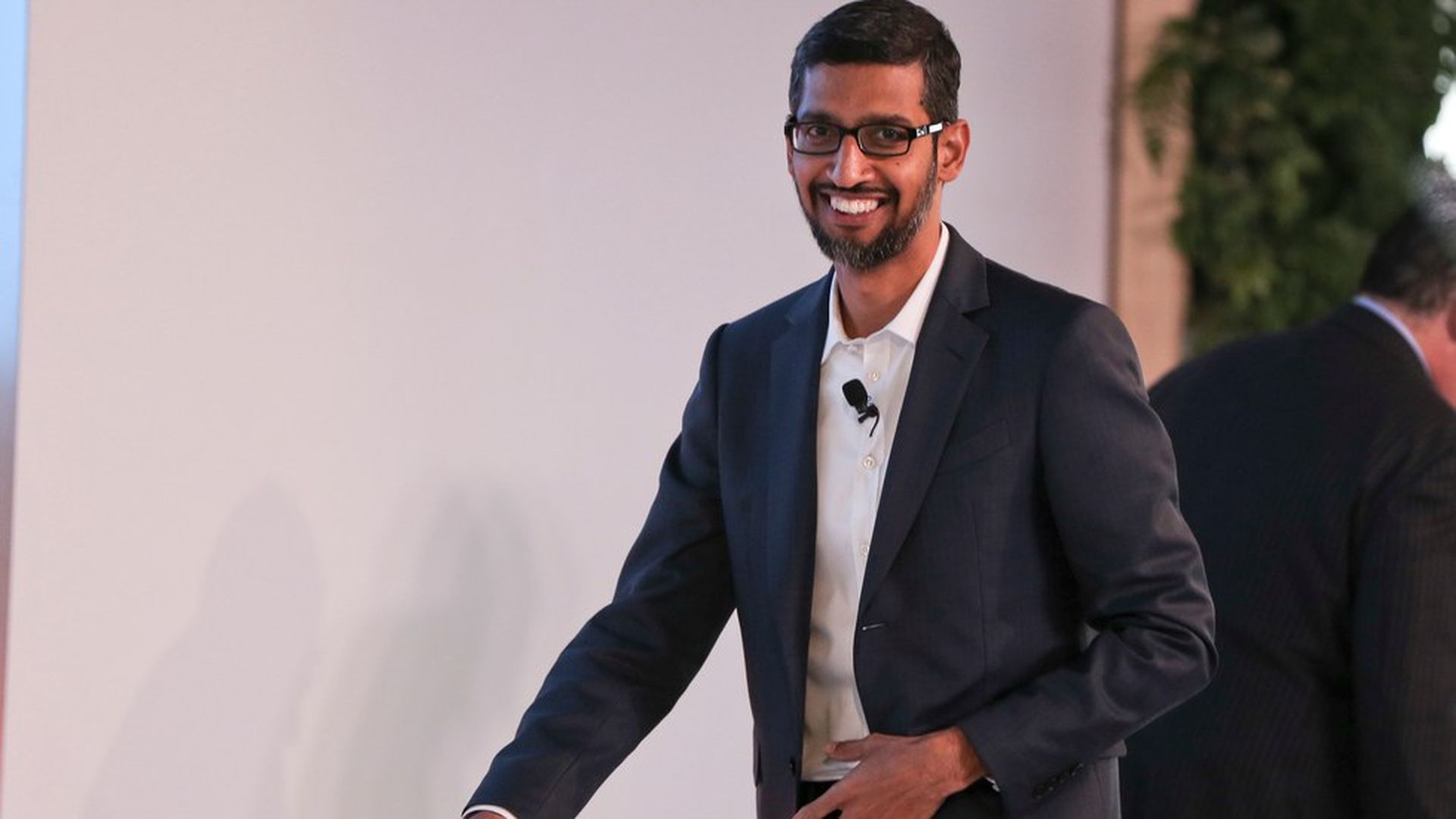
"Everyone's Mad at Google and Sundar Pichai Has to Fix It: The CEO is increasingly boxed in by regulators, tech critics on both the right and the left, and even his own employees," Mark Bergen and Brad Stone write on the cover of Bloomberg Businessweek. There's fake news to deal with, the limits of AI to sift out hateful material, Russian use of Google's AdWords, not to mention regulation in Europe.
"Pichai has ... recast Google's mission in the most dramatic way since the search engine went live 20 years ago. Inside and outside the company, he's elevated the role and glorified the promise of artificial intelligence — the ability of advanced computers to make independent decisions."
"Those decisions might be as small as when to flag a calendar appointment, or as consequential as how a multibillion-dollar hedge fund might trade."On Russian use of Google's AdWords and YouTube last year: "There's clearly stuff which shouldn't be happening which happened, so we should fix it ... Anytime we make a mistake, it's very public for the world to see."Scott Galloway, a New York University professor and author of The Four, a critical book about big technology companies, says "Google would be the scariest company in the world if you didn't believe they had adult supervision."
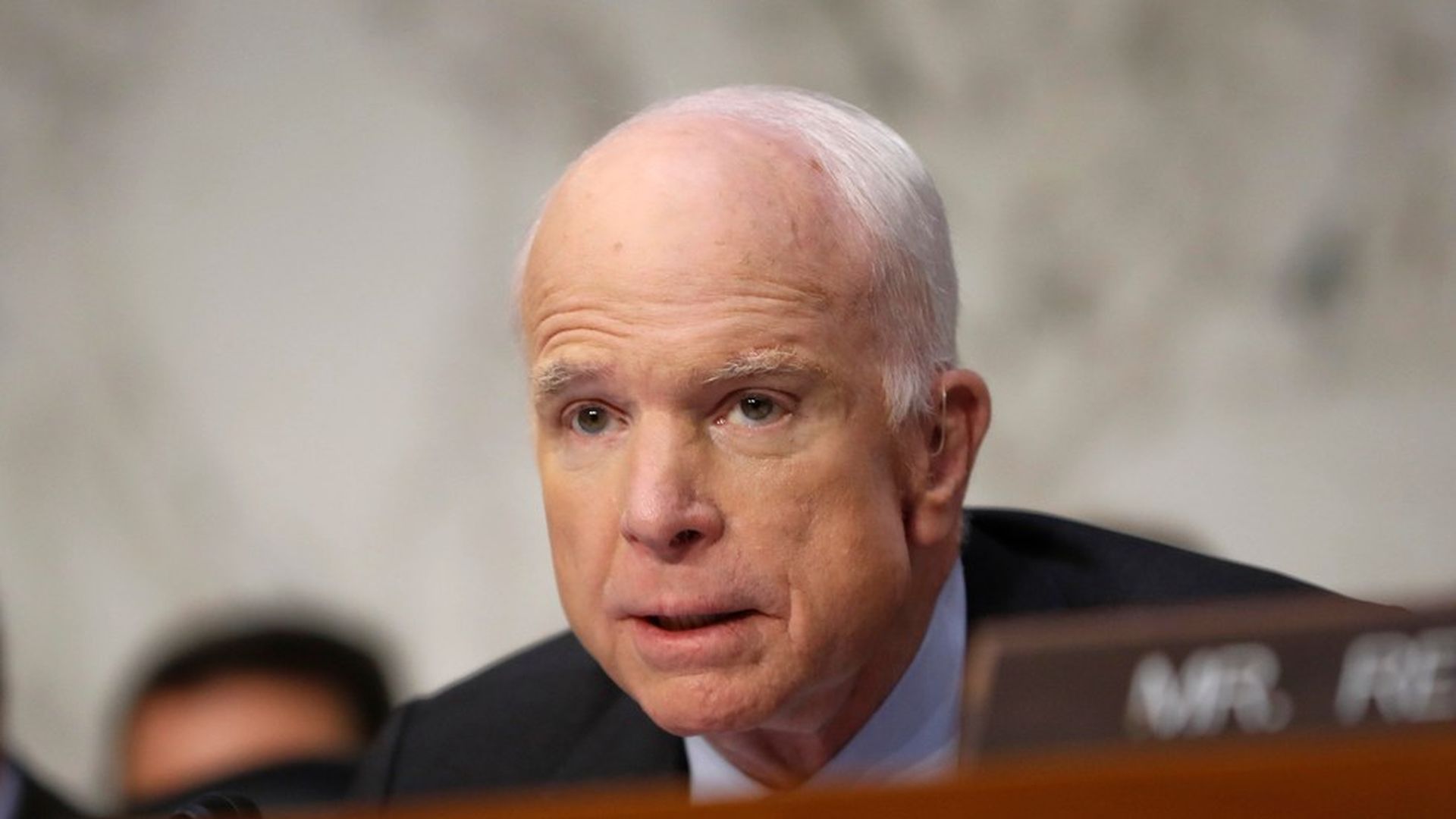
Republican Sen. John McCain (Ariz.) knows his time in the public eye is short, so his big statements in recent weeks are especially resonant. Today, McCain will join with two Democrats — Sens. Mark Warner (Va.) and Amy Klobuchar (Minn.) — to give bipartisan imprimatur to the first of the "Facebook bills," responding to last year's election interference.
Axios has a sneak peek at provisions of the Honest Ads Act, which would increase disclosure requirements for online political ads like the ones Russians surreptitiously bought, putting the rules on par with those for radio and TV ads.
Why it matters: This is the first in a wave of legislative and regulatory proposals we can expect in response to the disclosures that Russian agents used tech platforms to meddle in the 2016 election.
Cities across the country are falling over themselves to score the winning ticket in the biggest local lottery — Amazon's second North American Headquarters. Today's the deadline for them to submit proposals. But luring Amazon's promised 50,000 jobs comes with costs that may outweigh the benefits for some cities.
Why cities care: Mayors see dollar signs in Amazon's pledge to bring 50,000 jobs that pay an average salary of $100,000 to the winning city. They know "HQ2" will instantly put even the most obscure city on the map as a tech hub that will attract more businesses and talent. But an influx of people brings higher costs, and probably only marginal increases in local taxes thanks to the tax breaks most cities are prepared to offer.
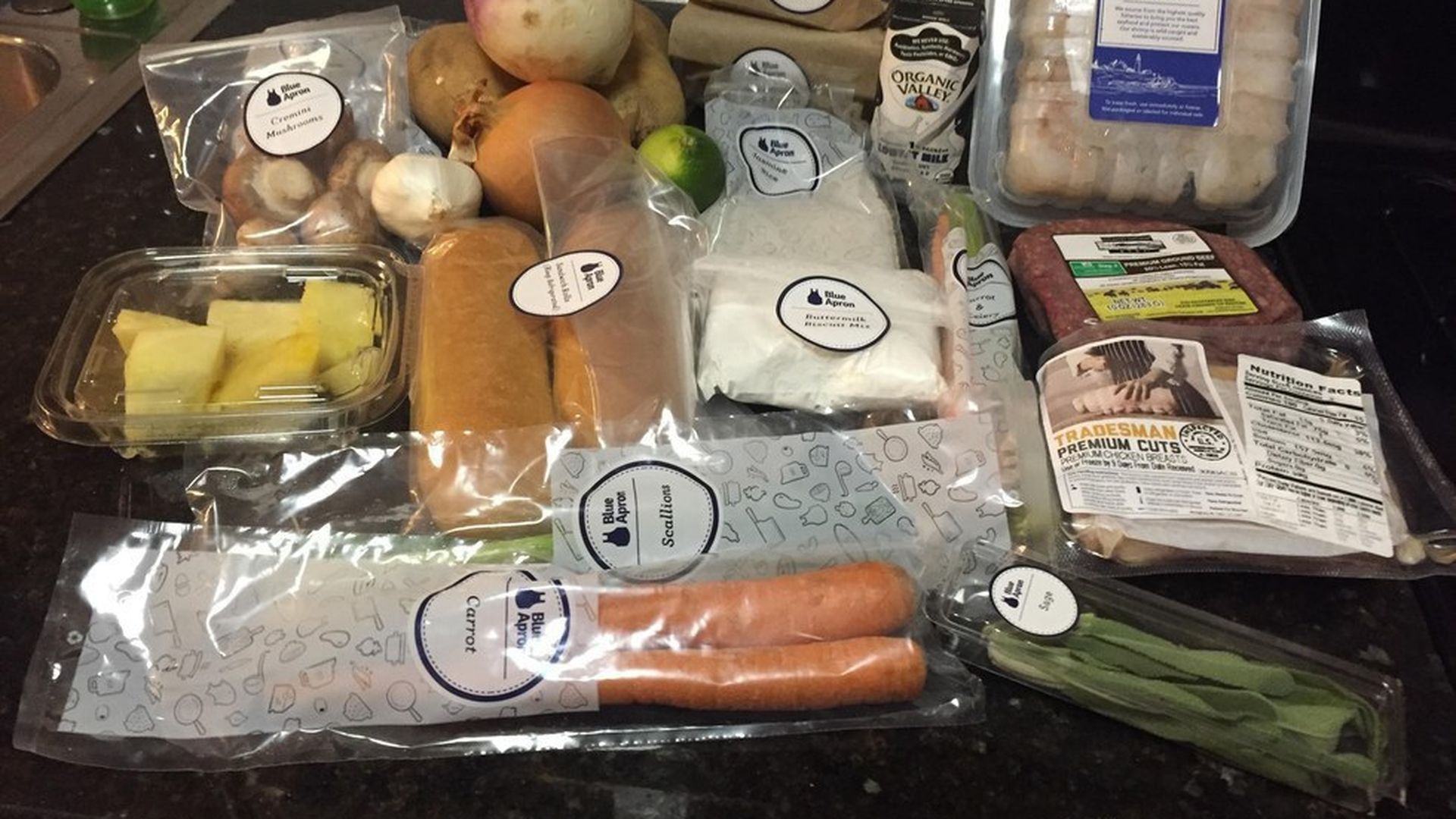
Blue Apron, the meal kit company that went public earlier this year, announced on Wednesday that's its cutting about 6% of its staff company-wide, according to a new SEC filing. The layoffs will cost the company $3.5 million in expenses such as severance packages.
Background: Blue Apron, which ships individually packaged kits for preparing meals, has been struggling since it went public in June. Shortly after, Amazon announced its plans to start selling meal kits, and at last two groups of shareholders later filed lawsuits against Blue Apron, alleging it misled investors about its business before going public.
Samsung announced a second version of its Bixby voice assistant as it looks to make its entry into the crowded space more powerful and open to developers. The company is also using its annual developer conference to unify several different cloud efforts from various subsidiaries.
Why it matters: As mobile chief DJ Koh told Axios yesterday, Samsung wants to show it is more than a hardware company and is capable of working as a single company when it needs to. However both issues remain challenges for the Korean electronics giant.
UNION CITY, NJ — Visit Boxed headquarters, and you'll find lighthearted employees working right alongside an automated picking machine that retrieves items without human help, two miles of conveyor belts that move items faster than people can, and other robotic devices. The online retailer, a competitor of Costco and Sam's Club, has attracted years of fawning publicity for carrying out all this automation at its warehouses without laying off a single employee. Plus, it is even raising salaries.
The cruel twist: Boxed is already shrinking the number of added workers required for expansion — one executive said that to triple business at the warehouse, he'll only need to hire 33% more labor. That aligns with an axiom of automation — that jobs offering the best chance of rising pay are usually in industries that are growing and adding labor-saving technologies at the same time, before the number of jobs eventually declines.
In a Sept. 20 speech in New York, Masayoshi Son, founder of the Tokyo company SoftBank, forecast that by 2047, the Earth will be populated by equivalent number of humans and robots — 10 billion each. And the robots, he said, will be "smarter than mankind." Over the last year, Son has been investing in that moment.
Data: Crunchbase; Axios reporting; Chart: Chris Canipe / Axios
Why it matters: Son appears intent on becoming as big in artificial intelligence as the U.S. and Chinese tech titans that have dominated AI research — Alibaba, Facebook, Google, Microsoft, Tencent and so on. Toward that aim, over the last year, Son's $93 billion Vision Fund has put down large investments in at least a dozen promising AI startups.
GE and Apple announced a deal on Wednesday that will see iPhones and iPads running the Predix software that GE customers use to control everything from elevators to jet engines to oil refineries.
As part of the deal, GE will also adopt the iPhone and iPad for part of its 330,000-person workforce and make Macs an option for all employees
Why it matters: Although iPhones are already widely used in business, Apple has been steadily trying to increase enterprise adoption. Apple already has deals with IBM, Cisco, Accenture, SAP and others.
When people think of Samsung, they think more about specific pieces of hardware than they do about a platform with a thriving developer ecosystem. But, the Korean electronics giant would very much like to change that and hopes that today's Samsung Developer Conference in San Francisco marks a turning point.
Samsung mobile chief DJ Koh sat down with Login on Tuesday to talk about the company's work to unify its far-flung divisions, its relationship with Google and how the company has moved forward from the disastrous Galaxy Note 7 scandal.
The bottom line: The company is the dominant player in Android and a force in appliances and home electronics, but has a ways to go to be seen as a serious player in software and AI. Its initial efforts with Bixby got off to a slow start amid delays.