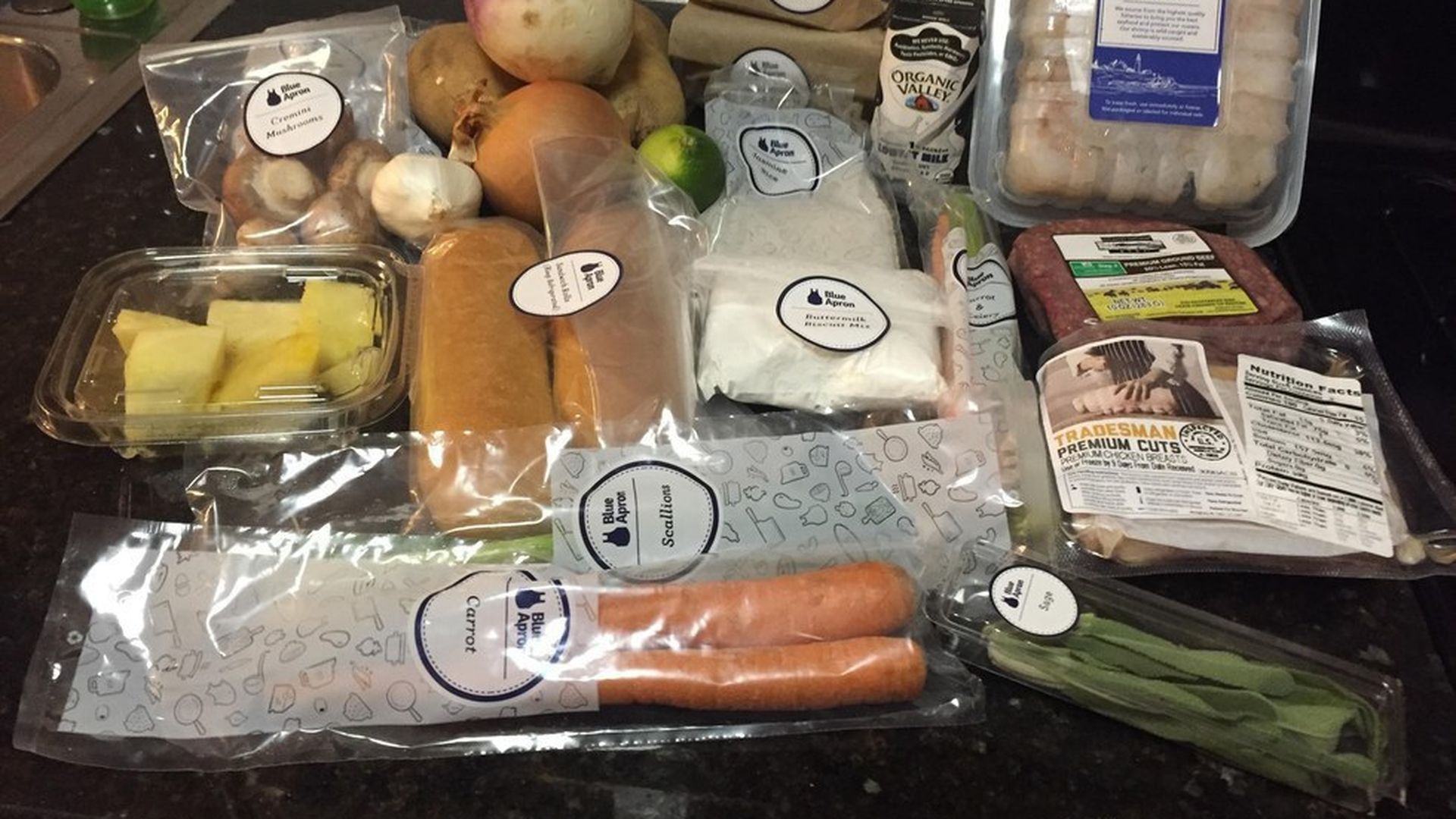
Blue Apron, the meal kit company that went public earlier this year, announced on Wednesday that's its cutting about 6% of its staff company-wide, according to a new SEC filing. The layoffs will cost the company $3.5 million in expenses such as severance packages.
Background: Blue Apron, which ships individually packaged kits for preparing meals, has been struggling since it went public in June. Shortly after, Amazon announced its plans to start selling meal kits, and at last two groups of shareholders later filed lawsuits against Blue Apron, alleging it misled investors about its business before going public.
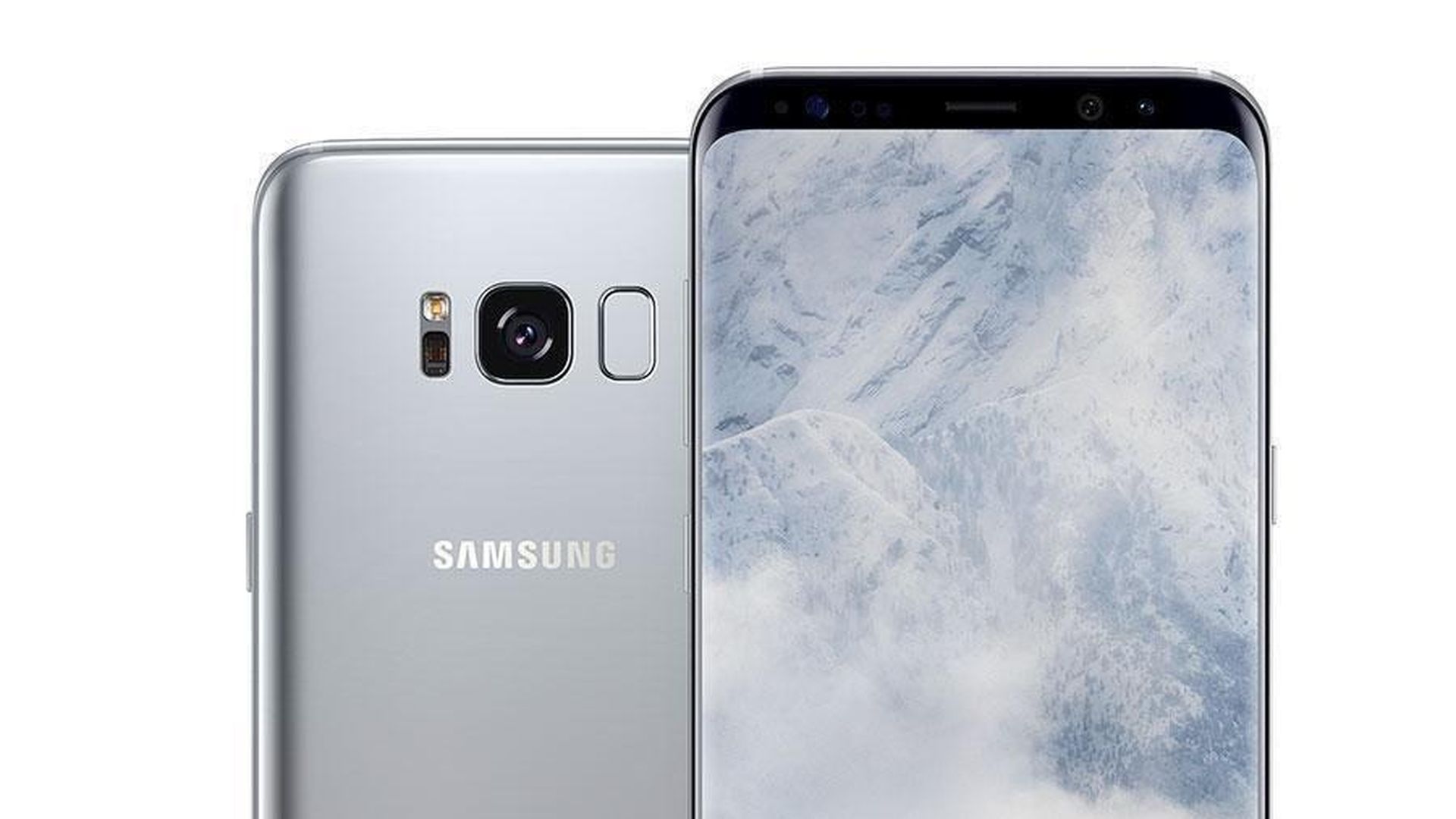
Samsung announced a second version of its Bixby voice assistant as it looks to make its entry into the crowded space more powerful and open to developers. The company is also using its annual developer conference to unify several different cloud efforts from various subsidiaries.
Why it matters: As mobile chief DJ Koh told Axios yesterday, Samsung wants to show it is more than a hardware company and is capable of working as a single company when it needs to. However both issues remain challenges for the Korean electronics giant.
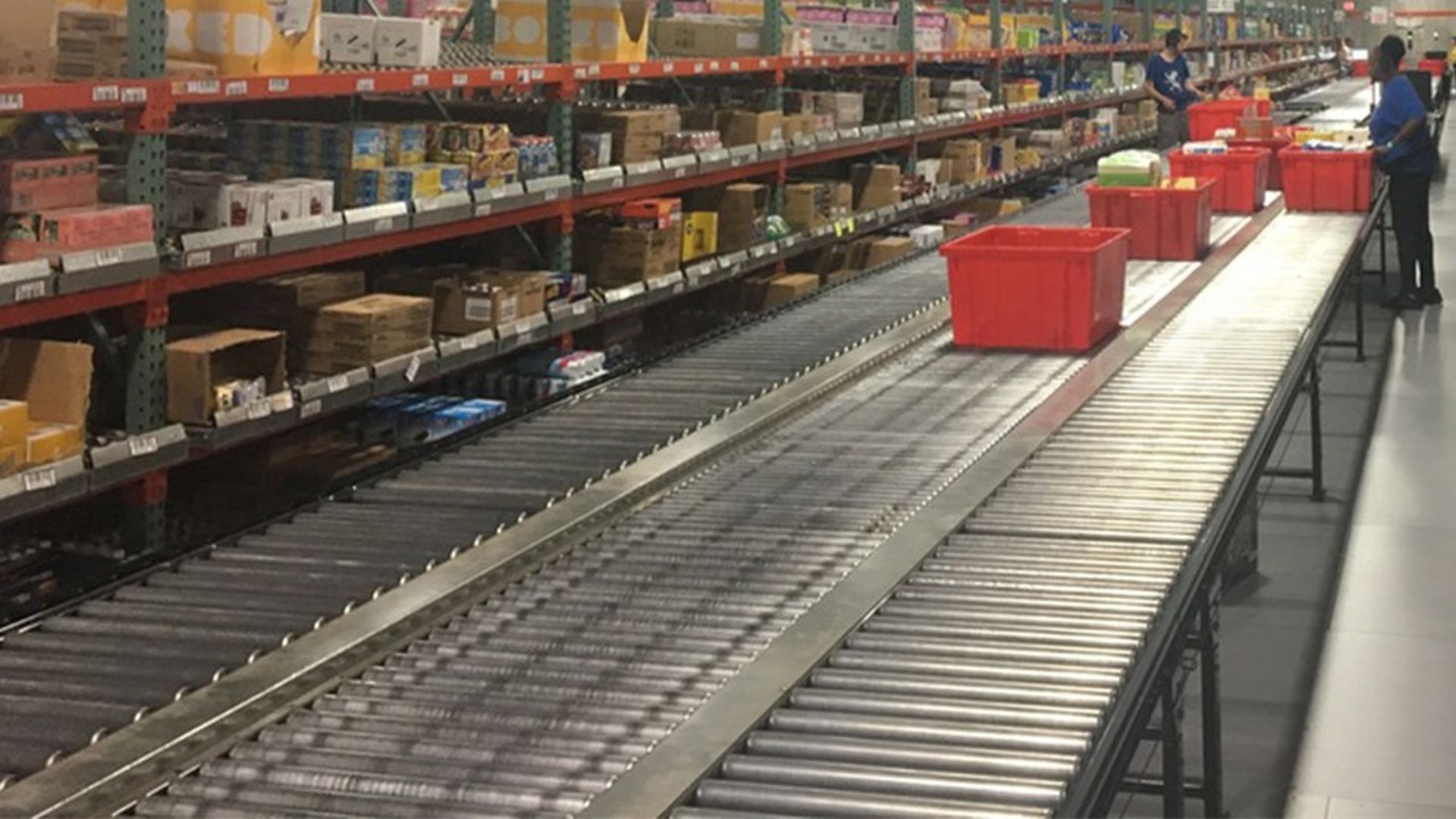
UNION CITY, NJ — Visit Boxed headquarters, and you'll find lighthearted employees working right alongside an automated picking machine that retrieves items without human help, two miles of conveyor belts that move items faster than people can, and other robotic devices. The online retailer, a competitor of Costco and Sam's Club, has attracted years of fawning publicity for carrying out all this automation at its warehouses without laying off a single employee. Plus, it is even raising salaries.
The cruel twist: Boxed is already shrinking the number of added workers required for expansion — one executive said that to triple business at the warehouse, he'll only need to hire 33% more labor. That aligns with an axiom of automation — that jobs offering the best chance of rising pay are usually in industries that are growing and adding labor-saving technologies at the same time, before the number of jobs eventually declines.
In a Sept. 20 speech in New York, Masayoshi Son, founder of the Tokyo company SoftBank, forecast that by 2047, the Earth will be populated by equivalent number of humans and robots — 10 billion each. And the robots, he said, will be "smarter than mankind." Over the last year, Son has been investing in that moment.
Data: Crunchbase; Axios reporting; Chart: Chris Canipe / Axios
Why it matters: Son appears intent on becoming as big in artificial intelligence as the U.S. and Chinese tech titans that have dominated AI research — Alibaba, Facebook, Google, Microsoft, Tencent and so on. Toward that aim, over the last year, Son's $93 billion Vision Fund has put down large investments in at least a dozen promising AI startups.
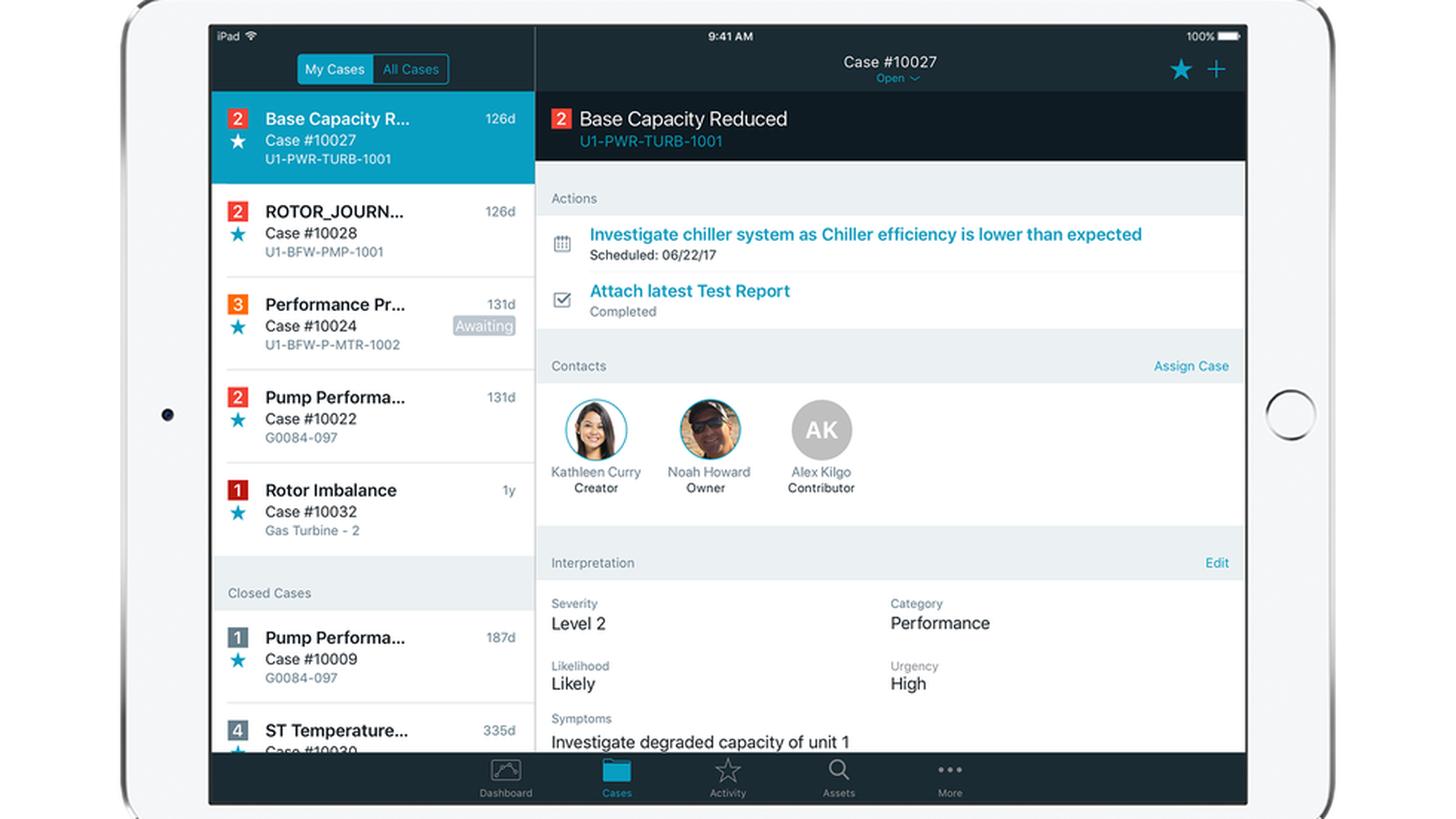
GE and Apple announced a deal on Wednesday that will see iPhones and iPads running the Predix software that GE customers use to control everything from elevators to jet engines to oil refineries.
As part of the deal, GE will also adopt the iPhone and iPad for part of its 330,000-person workforce and make Macs an option for all employees
Why it matters: Although iPhones are already widely used in business, Apple has been steadily trying to increase enterprise adoption. Apple already has deals with IBM, Cisco, Accenture, SAP and others.
When people think of Samsung, they think more about specific pieces of hardware than they do about a platform with a thriving developer ecosystem. But, the Korean electronics giant would very much like to change that and hopes that today's Samsung Developer Conference in San Francisco marks a turning point.
Samsung mobile chief DJ Koh sat down with Login on Tuesday to talk about the company's work to unify its far-flung divisions, its relationship with Google and how the company has moved forward from the disastrous Galaxy Note 7 scandal.
The bottom line: The company is the dominant player in Android and a force in appliances and home electronics, but has a ways to go to be seen as a serious player in software and AI. Its initial efforts with Bixby got off to a slow start amid delays.
The head of Facebook's skunkworks division Building 8 will leave the company. Regina Dugan said in a statement given to Recode that there's "is a tidal shift going on in Silicon Valley, and those of us in this industry have greater responsibilities than ever before" and that the "time feels right" to be "thoughtful about new ways to contribute in times of disruption." She said in a different post that she will be in charge of a "new endeavour."
Why it matters: Dugan arrived at Facebook last year to lead a division tasked with projects like building a way to type with your mind. Her departure comes as the company faces enormous pressure over its role in an increasingly unequal and divided society.
Magic Leap, the secretive "mixed reality" startup, announced on Tuesday that it has raised $502 million in new venture capital funding led by Singapore sovereign wealth fund Temasek. This is the same round that Axios discussed last week, based on a Delaware regulatory filing (which authorized up to $1 billion in new shares at an increased valuation). The post-money valuation appears to be around $5 billion.
Bottom line: Investors clearly keep seeing something they like in Magic Leap, but consumers are still waiting for the Florida-based company's first product to debut.
Cruise, General Motors' self-driving car unit, says it plans to test a fleet of autonomous Bolt vehicles in a section of Manhattan in early 2018. The company will be the first to test fully autonomous cars in the state. Cruise has already been testing its vehicles in its hometown, San Francisco, as well as in Arizona and Michigan.
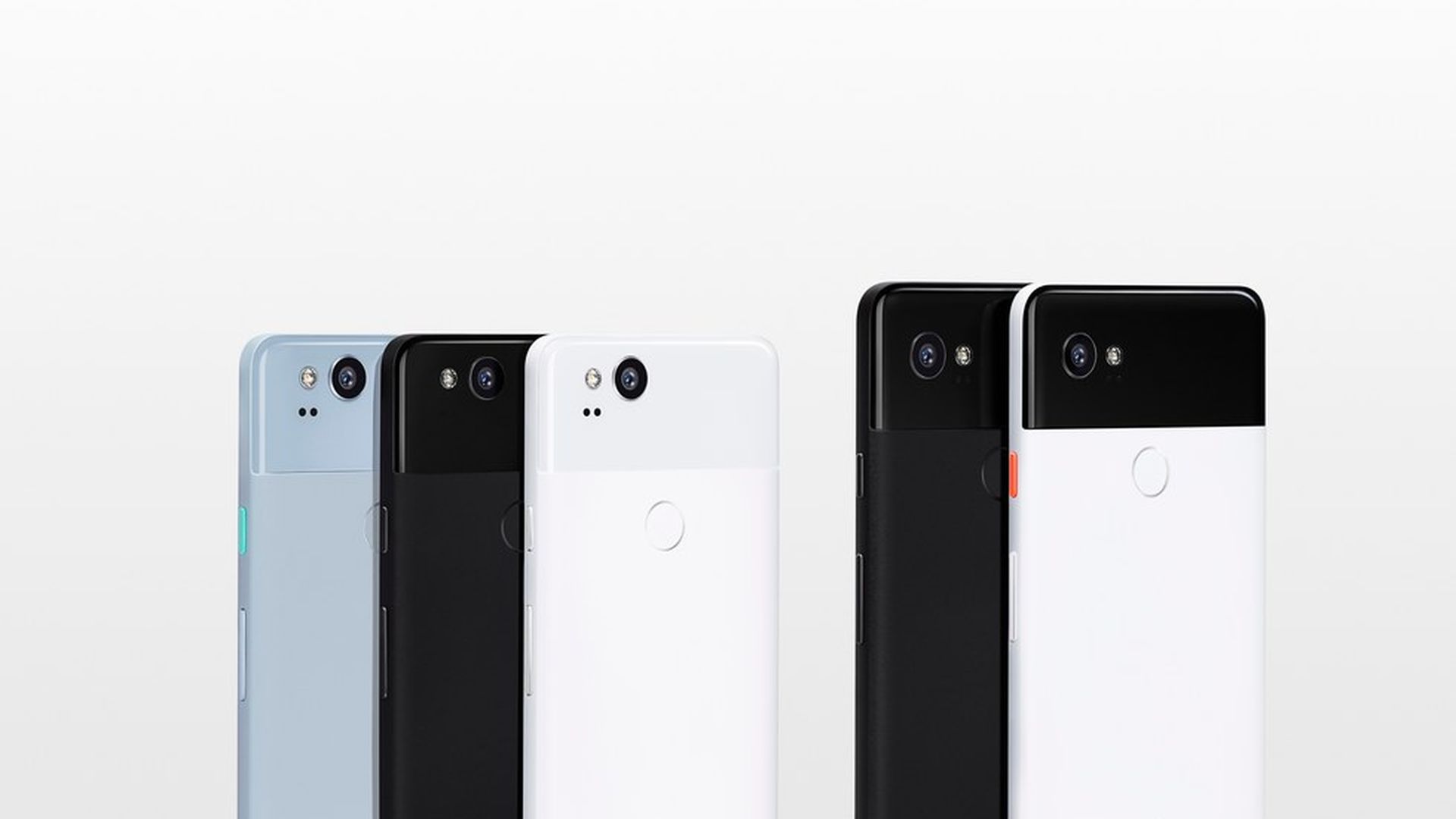
From the leaked images and rumored specifications, I fully expected Google's Pixel 2 to underwhelm. To be sure, it doesn't have the sexy curves or edge-to-edge screen of the Samsung Galaxy S8, LG V30 or Apple's iPhone X.
But in using the phone, I found it to be one of the most comfortable, powerful and no-hassle Android phones I've used.
Our Take: Google's second Pixel improves on the strengths of the first model by replacing a great camera with an even better one, making the device waterproof and adding several improvements on the software side. It offers a comfortable, if not dazzling design at a price that won't break the bank.
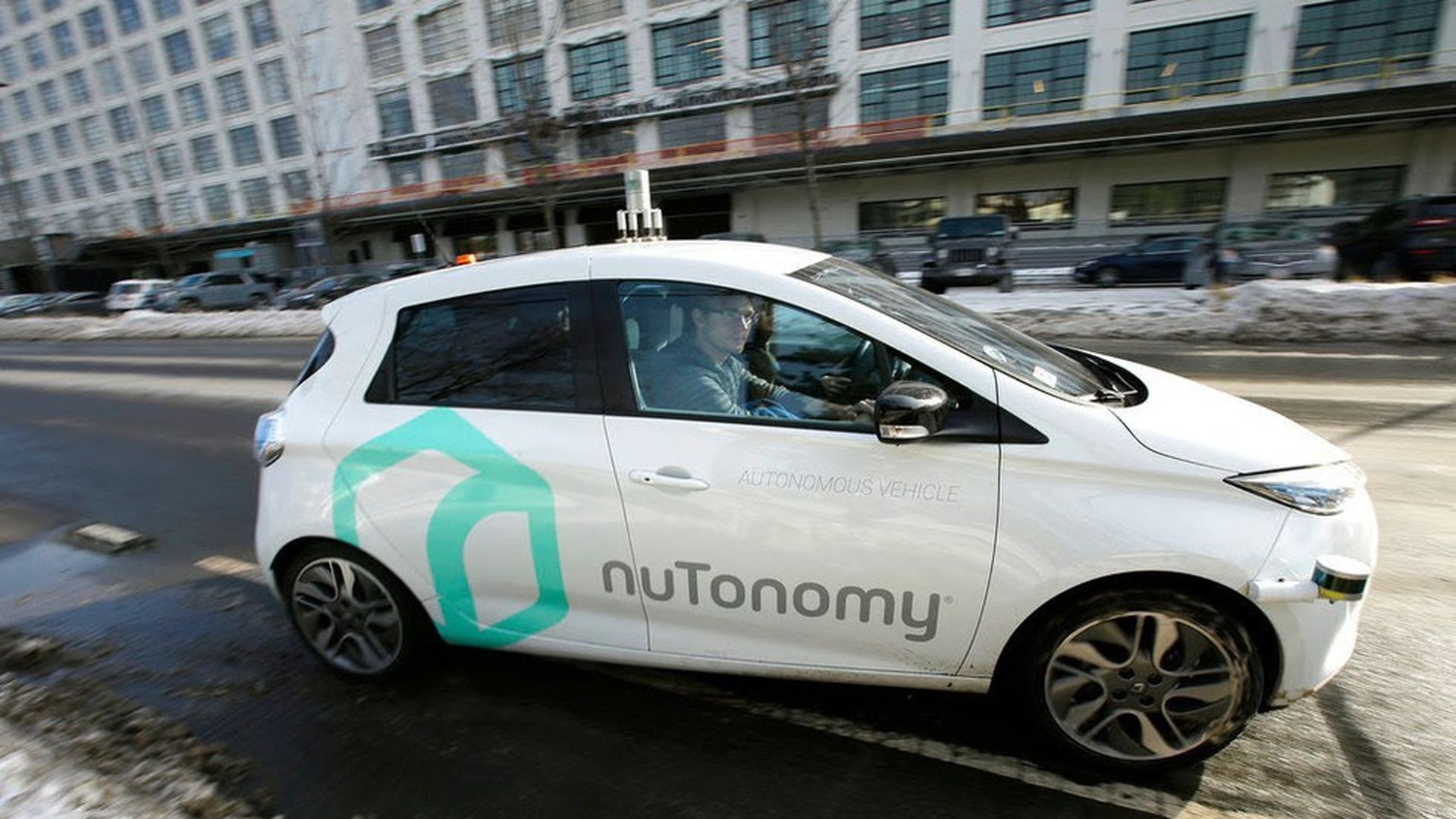
Self-driving cars could ease traffic but increase urban sprawl because commutes are less painful, AP reports. Computer simulations, released today by the Boston Consulting Group and the World Economic Forum, find the technology "would likely add vehicles to roads while simultaneously reducing traffic time."
But the view that autonomous vehicles will create "super-commutes" and "a new class of exurbs" is disputed, in part because younger generations prefer walkability and urban accessibility, and therefore might not choose to endure longer commutes.